Step-by-step VIN lookup: your complete guide to safer used car buying
Check a vehicle before you buy
Enter a VIN for a free instant preview — accidents, title brands, mileage, liens & open recalls.
TL;DR:
- Physically verify the VIN at multiple locations before running online checks.
- Use both free official tools and paid reports for comprehensive vehicle history.
- Mismatched or tampered VINs indicate fraud and should lead to walking away.
You find a used car that looks perfect. The price feels right, the seller seems honest, and the exterior looks clean. Then two weeks after signing the paperwork, the engine light comes on and your mechanic breaks the news: the car was in a major flood. That $9,000 purchase just became a $14,000 problem. This guide shows you exactly how to run a thorough VIN lookup before handing over a single dollar, so you walk away with a car you can actually trust.
Table of Contents
- What you need before starting your VIN lookup
- Step 1: Locate and verify the VIN in multiple spots
- Step 2: Decode the VIN and check for errors
- Step 3: Run a vehicle history check using official tools
- Avoiding common mistakes and troubleshooting VIN lookup problems
- Our perspective: the VIN lookup step most buyers rush past
- Get a full vehicle history report for $19.99
- Frequently asked questions
Key Takeaways
| Point | Details |
|---|---|
| Check all VIN locations | Verifying the VIN in multiple spots helps you avoid fraud and costly mistakes. |
| Validate VIN authenticity | Using the check digit and free tools ensures your VIN is not fake or invalid. |
| Use official lookup tools | Access free government resources for trustworthy records before buying. |
| Watch for red flags | If VINs don’t match or show tampering, walk away to protect your investment. |
What you need before starting your VIN lookup
Before you can look up any vehicle’s history, make sure you have everything you need. Showing up unprepared to inspect a used car is one of the most common ways buyers miss critical red flags. A little organization before you go saves a lot of frustration later.
Here’s what to bring to every used car inspection:
- A flashlight (even a phone flashlight works) to illuminate engine bays and door jambs
- A smartphone or pen and paper to record the 17-digit VIN exactly
- Stable internet access to run online lookups on the spot
- A copy of the vehicle’s registration or title if the seller provides one in advance
- A notepad or notes app to record any discrepancies or questions
Knowing VIN numbers explained before you arrive helps you understand what you’re looking for and why each location matters.
Where to find a VIN on any vehicle
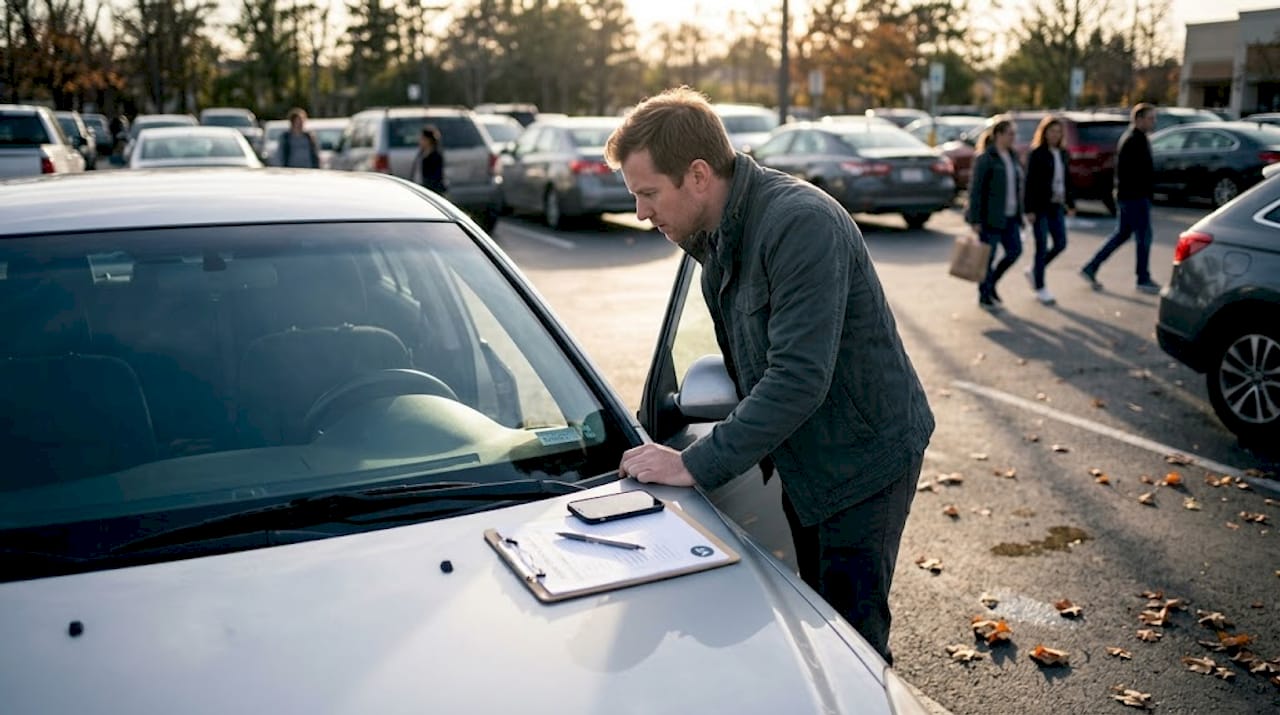
The VIN (vehicle identification number) is a 17-character code that serves as a car’s fingerprint. No two vehicles share the same VIN. Manufacturers stamp this number in several places to make it harder for thieves or fraudulent sellers to alter or replace it. Locating the VIN in multiple spots, including the driver’s side dashboard through the windshield, the driver’s door jamb sticker, under the hood, and in registration paperwork, is the first step to detecting tampering.
| VIN location | How to find it | Why it matters |
|---|---|---|
| Driver’s side dashboard | Look through the windshield at the lower corner | Most visible and commonly referenced |
| Driver’s door jamb sticker | Open the door and check the white sticker | Should match dashboard exactly |
| Engine bay | Look on the firewall or near the front strut tower | Harder to alter without obvious damage |
| Registration/title documents | Printed on official paperwork | Confirms what the seller has disclosed |
Pro Tip: Always run your lookup on the spot, while you’re still in front of the car. Sellers who pressure you to “just trust them” and move on quickly are worth being cautious about.
Step 1: Locate and verify the VIN in multiple spots
Once you’ve gathered your tools, it’s time for the first critical step: physically finding and checking the VIN. This is not optional. Skipping this physical inspection and jumping straight to an online search is a mistake that can cost you thousands.
Here’s how to do it properly:
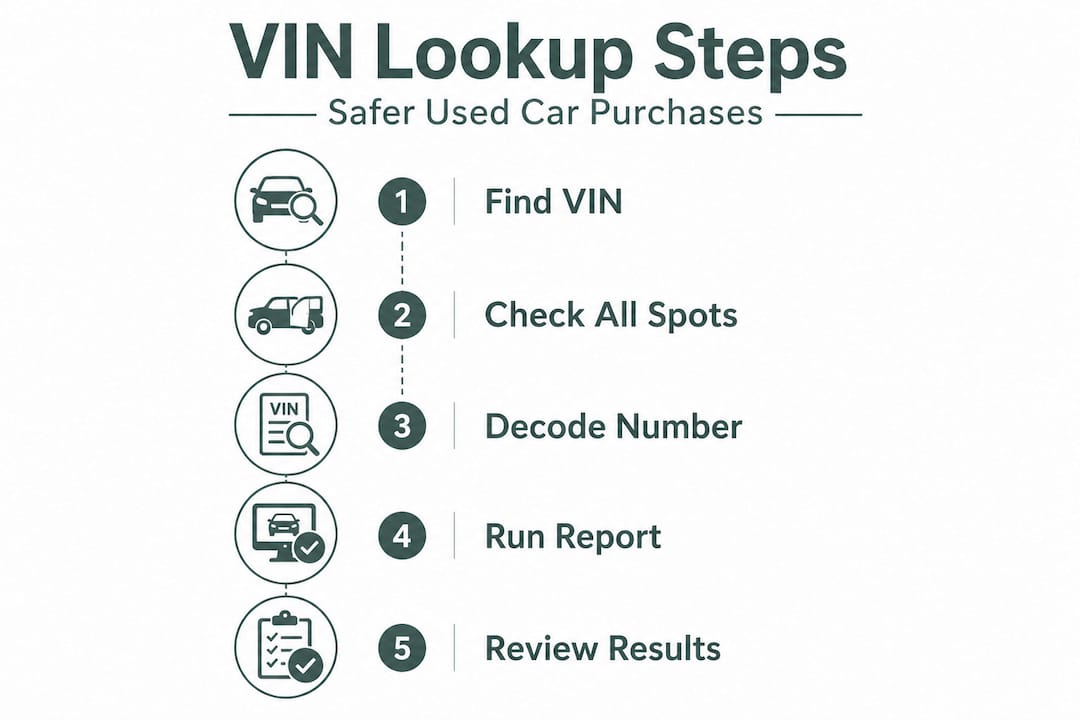
- Check the dashboard VIN first. Stand outside the car on the driver’s side and look through the windshield at the bottom corner. The 17-digit number should be clearly visible on a metal plate or sticker.
- Open the driver’s door and inspect the jamb sticker. This sticker includes the VIN, tire pressure recommendations, and other factory data. It should not appear peeled, re-glued, or reprinted.
- Open the hood and locate the VIN on the engine bay. Common spots include the firewall (the metal wall between the engine and the cabin) or the top of the front strut towers. Use your flashlight here.
- Compare the VIN on all paperwork. The seller’s title, registration, and any service records should all show the same number.
- Record the full 17-character VIN. Write it down or photograph it. Double-check each character carefully because the number “0” and the letter “O” can look identical at a glance.
This vehicle VIN lookup guide explains why each location matters and what to look for when the numbers don’t add up.
What tampering looks like
Knowing how VIN protects buyers means understanding that fraudulent sellers actively try to defeat these protections. Watch for these warning signs:
- Rivets that look scratched, stripped, or replaced on the dashboard plate
- A door jamb sticker that appears to have different printing quality or font compared to other stickers nearby
- Characters that are unevenly spaced or slightly different in size
- Painted-over areas near the engine bay VIN location
- Any situation where the VINs at multiple locations do not match exactly
If even one VIN location doesn’t match the others, treat the vehicle as compromised until proven otherwise. This is not paranoia. It is the single most effective way to avoid buying a stolen or rebuilt vehicle being passed off as clean.
Pro Tip: Photograph each VIN location separately with your phone before you leave. If you discover a problem later during your online lookup, you’ll have clear evidence to reference.
Step 2: Decode the VIN and check for errors
With a confirmed, untampered VIN in hand, your next move is to make sure the code itself is valid and unlock basic vehicle information. A valid VIN tells you a surprising amount about the car before you even pull a history report.

How a VIN is structured
Every VIN follows a standardized 17-character format set by the National Highway Traffic Safety Administration (NHTSA). Here’s how it breaks down:
| VIN segment | Characters | What it tells you |
|---|---|---|
| World Manufacturer Identifier (WMI) | 1-3 | Country of origin and manufacturer |
| Vehicle Descriptor Section (VDS) | 4-8 | Model, body type, engine, restraints |
| Check digit | 9 | Mathematical validation digit |
| Model year | 10 | Year of manufacture |
| Plant code | 11 | Assembly plant |
| Production sequence | 12-17 | Unique serial number for that vehicle |
The check digit mechanics use a weighted modulo 11 calculation that validates approximately 90% of common VIN errors, including transposed characters and fabricated numbers. This makes it a powerful first-line filter before you spend time or money on a history report.
How to use a free VIN decoder
Free tools from official government sources let you quickly confirm a VIN’s validity and pull basic vehicle specifications. This is a smart step before purchasing any paid report.
- NHTSA VIN Decoder: Enter the VIN at the NHTSA portal to get the manufacturer-confirmed specs, including make, model, engine, trim, and any associated safety recalls.
- VIN segment tools: Several free websites let you decode each character group so you can confirm the year, model, and assembly plant match what the seller claims.
- Watch for red flags: If the decoded specs don’t match the car sitting in front of you (wrong model year, wrong engine type), stop and investigate further before continuing.
This VIN decoding guide walks through each segment in plain language so you know exactly what you’re reading.
One thing to keep in mind: the VDS segment (characters 4 through 8) is manufacturer-specific. That means a free decoder can tell you the model and body type, but for granular specs like specific transmission codes, you may need OEM documentation or a detailed history report.
Step 3: Run a vehicle history check using official tools
Now that you know your VIN is genuine and valid, you’re ready for the real value: accessing complete history and ownership records. This step transforms raw numbers into a full picture of the car’s past.
Start with free official tools
There are two essential free resources every used car buyer should use before buying:
- NHTSA VIN Decoder at vpic.nhtsa.dot.gov: This government decoder reveals the vehicle’s factory specs, safety equipment, and any open safety recalls that haven’t been addressed. An open recall is a legitimate safety concern and a useful negotiating point.
- NICB VINCheck: The National Insurance Crime Bureau’s free tool checks whether the vehicle has been reported stolen or declared a total loss by an insurance company. You can run a theft check through NICB for free, though the service caps use at five lookups per day per user.
What a full history report covers
Free tools are a solid starting point, but they don’t reveal the full picture. A paid vehicle history report fills in the gaps that government sources leave open. Here’s what a complete report typically shows:
| Data point | Free tools | Paid history report |
|---|---|---|
| Open safety recalls | Yes (NHTSA) | Yes |
| Theft/total loss records | Yes (NICB) | Yes |
| Accident history | No | Yes |
| Title branding (salvage, rebuilt, flood) | No | Yes |
| Odometer readings over time | No | Yes |
| Number of previous owners | No | Yes |
| State-to-state title transfers | No | Yes |
| Lien/loan status | No | Yes |
Pro Tip: When you check a car VIN for accidents, pay special attention to whether reported accidents involved airbag deployment. That level of damage almost always affects the vehicle’s long-term structural integrity, even after repairs.
Interpreting what you find
Reading a vehicle history report isn’t complicated, but knowing what to prioritize helps. Title branding is the most important section. A “salvage” title means an insurer declared the car a total loss. A “rebuilt” title means it was repaired and passed inspection, but the salvage history never disappears. “Flood damage” branding is particularly serious because water damage causes long-term electrical and mechanical problems that are difficult to detect and expensive to fix.
Odometer discrepancies are another major flag. If the reported mileage at a 2022 inspection is higher than the reported mileage at a 2023 inspection, the odometer was rolled back. That’s a federal crime and a sign the seller cannot be trusted.
Avoiding common mistakes and troubleshooting VIN lookup problems
Even with clear steps, it’s easy to hit snags or overlook a critical detail during your VIN lookup. Here’s how to avoid those pitfalls.
The most common VIN lookup mistakes
- Misreading characters: The number “1” and the letter “I,” or the number “0” and the letter “O,” are frequently confused. Always record the VIN character by character and double-check before submitting it.
- Skipping the physical inspection: Running an online lookup without physically verifying the VIN in multiple locations means you might be researching a different car entirely, especially if the dashboard plate was swapped.
- Using only one lookup source: No single tool provides complete data. Free government tools miss accident history. Paid reports without cross-referencing may miss stolen vehicle flags from databases not covered by their source network.
- Trusting a report provided by the seller: Sellers can and do provide outdated or selectively cropped reports. Always run your own lookup independently.
What to do when something doesn’t look right
If you enter the VIN and the decoder returns an error or “no results found,” verify VIN authenticity through the NHTSA API before running any history report. An invalid result usually means a typo or a fabricated VIN. Try re-entering the number carefully. If the error persists, the VIN may not be legitimate.
Understanding why VINs matter for your investment helps you take these warning signs seriously rather than dismissing them as minor technical glitches.
If a VIN appears to have been physically altered on the car, do not proceed with the purchase. Report the vehicle to local law enforcement or the NICB. Buying a car with a tampered VIN can result in legal complications for you as the buyer, even if you had no knowledge of the fraud.
Pro Tip: If you’re looking at multiple vehicles in one day, keep a separate note for each car’s VIN and your observations. It’s easy to mix up details between two similar-looking trucks when you’re making decisions under time pressure.
Our perspective: the VIN lookup step most buyers rush past
Most buyers spend hours researching makes, models, and pricing. Then they spend about three minutes on the VIN. That’s backwards. The market value of a car matters very little if the vehicle has a hidden flood title or a rolled-back odometer. Those problems don’t show up in a test drive. They show up two months later when something fails.
The physical VIN inspection is the step we see buyers skip most often. They assume that running an online report is enough. But an online report is only as accurate as the VIN you enter, and it’s only relevant if the VIN hasn’t been swapped or altered. A seller who has replaced the dashboard VIN plate with one from a legitimate vehicle can effectively launder a stolen car past any online check if you don’t verify every physical location yourself.
The other overlooked step is using multiple sources. Free government tools tell you about recalls and theft records. A paid history report tells you about accidents, title branding, and odometer history. Neither replaces the other. The buyers who end up with the cleanest outcomes use both, in that order.
Spending 20 minutes on a thorough VIN process before any negotiation isn’t excessive caution. It’s the minimum standard for protecting yourself in a private party or used dealership transaction.
Get a full vehicle history report for $19.99
You’ve done the physical inspection. You’ve confirmed the VIN is valid and untampered. Now you need the complete picture that free tools can’t provide.
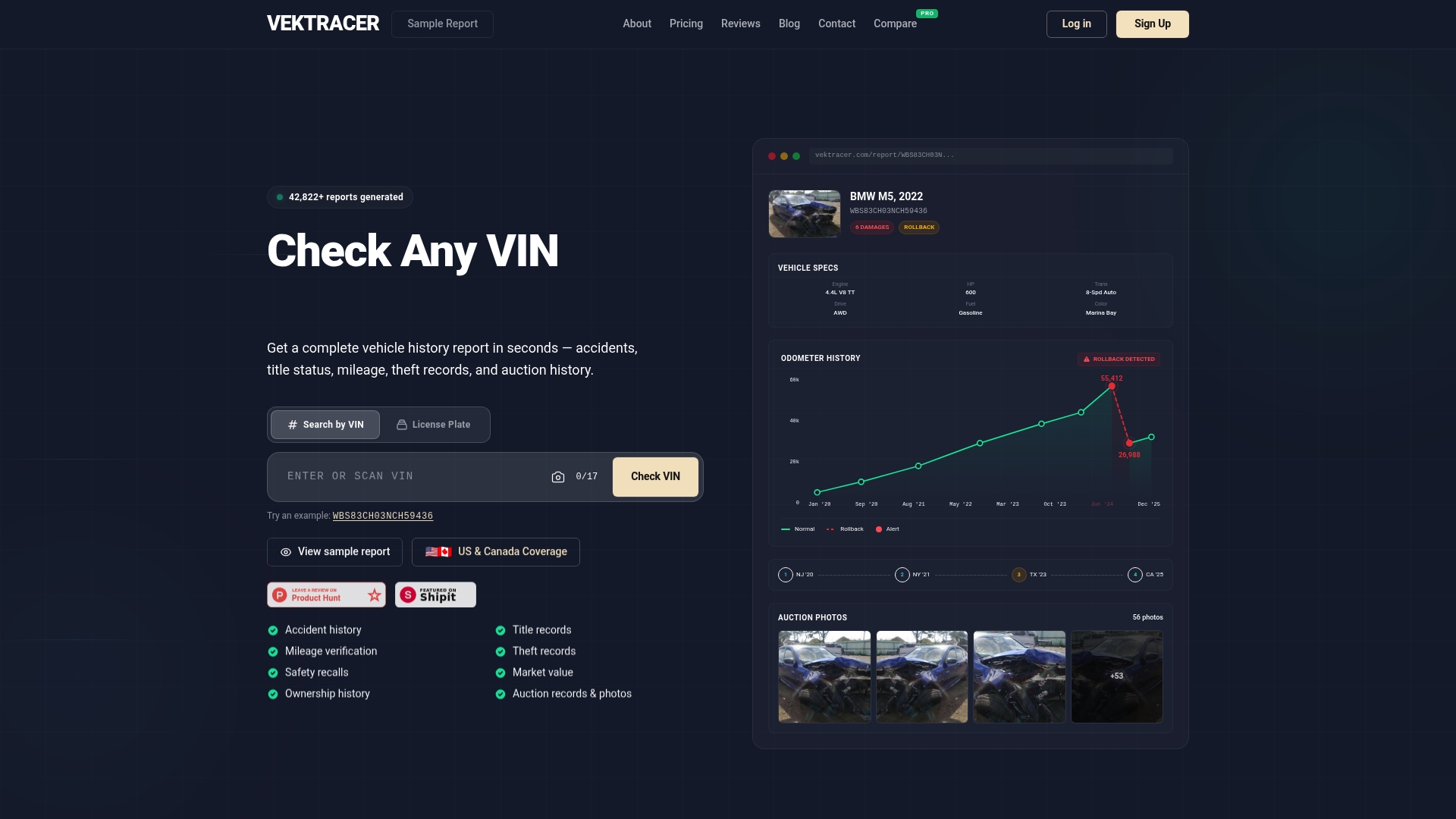
At Vektracer, our vehicle history reports start at just $19.99 and include everything you need to buy with confidence: accident history, title records, odometer verification, theft checks, safety recalls, and current market value data. Our reports pull from NMVTIS-connected sources, the same national database that powers law enforcement and insurance investigations. That’s the same core data as Carfax ($44.99) or AutoCheck ($24.99) at a fraction of the price. Visit vektracer.com to run your report before the deal closes.
Frequently asked questions
Where can I find my car’s VIN?
You can typically find your VIN on the driver’s side dashboard through the windshield, the door jamb sticker, under the hood, and in your registration documents. All locations should show identical numbers.
Is it safe to use free VIN lookup sites?
Yes, official sites like the NHTSA VIN Decoder and NICB VINCheck provide government-backed tools that reveal specs, open recalls, and theft or salvage records at no cost. They don’t replace a full paid history report, but they’re a reliable starting point.
What does it mean if the VIN doesn’t match in all locations?
Mismatched VINs at different physical locations are a serious red flag for tampering or fraud. The safest course of action is to walk away from the vehicle entirely.
How accurate are check digit validations in a VIN?
The check digit calculation catches approximately 90% of common VIN errors using a weighted modulo 11 formula, making it a reliable first test of VIN legitimacy before you run any history report.
Recommended
Ready to check a vehicle?
Enter any 17-character VIN for a free instant preview — no account needed.