Vehicle Lien Search by VIN: A Practical How-To Guide
Check a vehicle before you buy
Enter a VIN for a free instant preview — accidents, title brands, mileage, liens & open recalls.
You're standing in a parking lot, the seller is holding a title that looks clean, and you're trying to decide whether to hand over money. The short answer is this: a vehicle lien search by VIN is not one simple lookup. It's a cross-check process. The VIN is the starting point, but the actual lien record usually lives in a state title file, a provincial personal property registry, or another jurisdiction-specific system. If you stop at one report, especially on a vehicle that has moved between states or crossed the U.S.-Canada border, you can miss the loan that still follows the car.
That's where most buyers get tripped up. They assume a VIN report can “tell them everything.” In practice, the safest approach is to verify the VIN on the vehicle, identify every state or province tied to the title and registration history, then check the official record in each relevant jurisdiction before you rely on any commercial history report.
Table of Contents
- Why a Vehicle Lien Search by VIN Is More Complicated Than It Looks
- What You Need Before You Run a VIN Lien Search
- Official Databases That Hold Lien and Title Status
- Step-by-Step Process for a VIN Lien Check
- 1. Search the current title jurisdiction first
- 2. Check the history trail before you assume the first result is enough
- 3. Run NMVTIS for title history, not as the final lien answer
- 4. Search every prior state or province that still matters
- 5. If the result shows a lien, verify payoff and release documents line by line
- 6. Log each search before you move on
- Reading the Results and Title Brands Correctly
- Red Flags and Gaps Official Lookups Can Miss
- Using Vektracer to Strengthen the Search and Your Next Steps
Why a Vehicle Lien Search by VIN Is More Complicated Than It Looks
Marcus is in a grocery store lot buying a pickup from a private seller. The title in front of him doesn't show an obvious lien on the face of the paper. The seller says the truck is “paid off,” then changes the story and says the bank “just hasn't sent the release yet.” That's the moment a real lien search begins.
A clean-looking paper title doesn't always settle the question. What matters is where the lien was recorded, whether the release was processed, and whether the vehicle has lived in more than one jurisdiction. The VIN ties those records together, but the records themselves are scattered.
Why one lookup often fails
In the United States, lien status is commonly tied to state title records, not to one national public registry. In Canada, the framework is province-based rather than national, and the government advises that you need the VIN to search lien records through personal property security systems. CARFAX Canada also explains that its lien search checks government records in the provinces and territories where a vehicle is currently and historically registered, excluding the Northwest Territories, and it can't check Canadian liens on vehicles with no Canadian registration history, as outlined by the Government of Canada's guidance on car liens.
That means the same car can leave footprints in several places:
- A state DMV title system may show the lender recorded on title.
- A provincial personal property registry may show a security interest.
- A vehicle-history report may summarize title or brand data, but not provide legal certainty.
- A federal title-history source may show brands and title state, while missing lien data entirely.
Practical rule: Treat every “no lien found” result as jurisdiction-specific, not universal.
Cross-border moves create the biggest blind spots
A vehicle that started in one U.S. state, spent time in another, then got exported to Canada is where buyers get false confidence. Independent market guidance notes that U.S. title and lien searches often pull from all 50 states and NMVTIS-linked records, and it also notes that if a lien exists on a U.S. vehicle being exported, a lienholder authorization letter may be required and filing with U.S. Customs must happen at least 72 hours before export, as described in ClearVin's overview of title and lien checks.
The practical takeaway is simple. A VIN search is the thread. Work is following that thread through the right offices, in the right order, until the title, lien status, and seller's paperwork all say the same thing.
What You Need Before You Run a VIN Lien Search
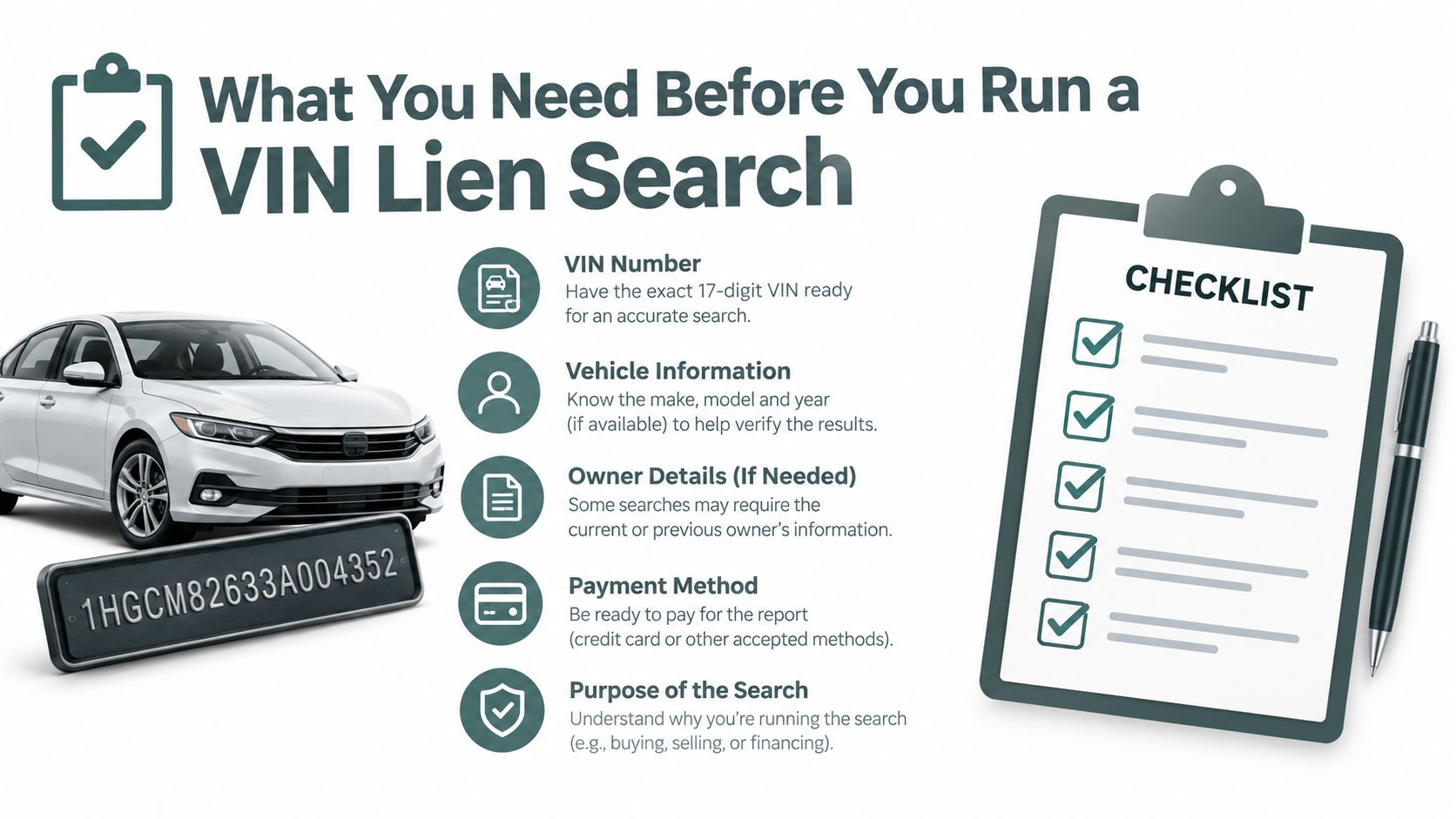
Before you open any DMV portal or registry page, get the vehicle and paperwork in front of you. Most bad searches start with sloppy inputs, not bad databases.
Verify the VIN on the car first
Check the VIN in more than one place. On most vehicles, the easiest spots are the dashboard plate at the base of the windshield and the driver-side door jamb label. If the seller has an insurance card or registration, compare those too.
Watch for signs that someone has tried to make one number match another. A repainted door jamb, a label that looks newer than the surrounding paint, or a dashboard plate that doesn't sit quite right deserves a pause. If the VIN on the car and the VIN on the title don't match exactly, stop there.
Gather the documents that answer follow-up questions
You don't need a huge file, but you do need the basics:
- Current title or registration: This tells you which state or province issued the record you need to check first.
- Seller's ID: The name on the ID should line up with the title owner or the person legally authorized to sell.
- Bill of sale draft: Helpful if you're still sorting out whether the seller is transferring clear title.
- Any payoff letter or lien release paperwork: If the seller says the loan is being satisfied, this document matters more than the verbal story.
If the seller says, “The bank has been paid, it just hasn't updated yet,” ask for the payoff document before you ask another question.
List every jurisdiction that needs checking
Start with the issuing state or province shown on the title. Then look for clues that the vehicle has been elsewhere. Registration history, inspection stickers, service records, and prior history reports can all point to another state or province that needs its own search.
The easiest mistake is entering one VIN into one portal and accepting the result. The fastest way to get a false clean answer is to run a clean search on the wrong jurisdiction, or on a VIN captured with one bad character.
Official Databases That Hold Lien and Title Status
A VIN lien search stops being simple the moment a vehicle has crossed a border or changed hands in more than one place. The record you need may sit in a U.S. state title file, a Canadian provincial personal property registry, or nowhere a consumer-facing report can show cleanly in one pass.
That fragmentation is the part many buyers miss.
In the U.S., the primary lien record usually lives with the state DMV, motor vehicle agency, or title bureau that issued the current title. If a lender was recorded properly, that office is where the lien attaches to the title record. Public access varies a lot. Some states give you an online status check. Others give limited data, require a written request, or make you handle it at the counter.
A second lane exists through UCC filing systems run by a Secretary of State or similar office. I use those as a pressure test, not as proof of clear title. They can help in commercial deals, dealer inventory disputes, or situations where the borrower name matters as much as the VIN. They do not replace the title record.
NMVTIS covers a different slice. It helps confirm title history, brands, odometer entries, salvage signals, and the state that most recently reported the title. It does not function as a live lien registry, which is why buyers should separate title-history data from lien verification. This overview of what buyers should know about NMVTIS car history reports is useful if you want the limits spelled out before you rely on a report.
Canada uses a different path. The lien question usually runs through a provincial Personal Property Registry, sometimes called a PPSA or PPR search depending on the province. That search can reveal registered security interests in that province, but it will not clear the vehicle for every other province. If the car spent time in Ontario and then moved to Alberta, one provincial result is only one piece of the file.
Lien and Title Data Sources Compared
| Source | What It Shows | What It Misses | Access |
|---|---|---|---|
| State DMV or title agency | Current title status, recorded lienholder details where public disclosure is allowed, some title-related flags | Records from other states, non-title secured interests, delays after payoff or release processing | Online in some states, otherwise mail, phone, or in person |
| UCC filing system | Secured-interest filings tied to a borrower, business, or collateral description | Clear title status, whether a title lien was actually released, many consumer auto liens | State filing office search workflow |
| NMVTIS provider report | Reported title state, prior title events, brands, odometer history, salvage or total-loss indicators | Current lienholder data and some very recent updates | Through approved report providers |
| Provincial PPR in Canada | Registered security interests in that province | Other provinces, bad VIN entries, unregistered interests, title status outside the registry scope | Provincial registry search |
| Commercial vehicle-history report | Combined history signals from several data feeds | Legal certainty by itself, lien perfection status, gaps where a jurisdiction did not report | Online report purchase or preview |
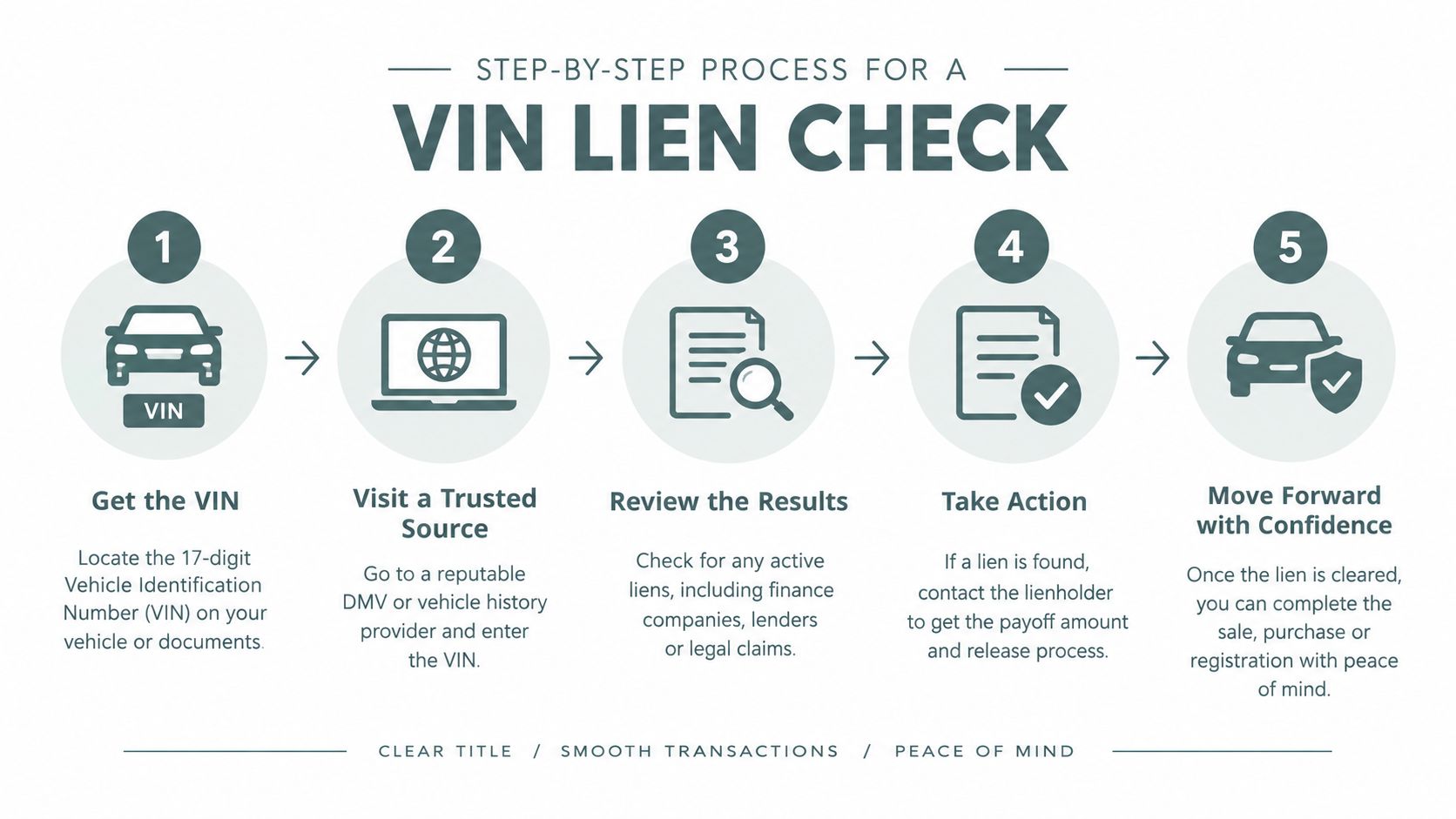
The practical sequence is simple even if the systems are not. Start with the current title jurisdiction. Then check any prior state or province suggested by the paperwork or history trail. Use NMVTIS to confirm title history and brands, not to answer the lien question by itself. That cross-check sequence catches problems that a single VIN lookup misses.
Step-by-Step Process for a VIN Lien Check
A buyer shows up with a clean-looking title, a matching VIN plate, and a seller who says the loan was paid off last month. At the counter, that is not enough. A proper VIN lien check works as a sequence across jurisdictions, because the current title state, NMVTIS, and any prior U.S. state or Canadian province can each show a different piece of the record.
Start with the paperwork in front of you. Confirm the full 17-character VIN against the dashboard, door label, and title. Then check the seller name, title issue date, plate or registration paperwork, and any payoff or lien-release letter. One wrong digit sends you into the wrong file, and one stale title can make a released loan look active.
1. Search the current title jurisdiction first
Use the issuing state or province shown on the title, not where the seller lives now. That registry is the first place likely to show whether a lien is still attached to the title record.
Some systems accept a VIN alone. Others ask for the make, model year, plate number, or title number to narrow the match. Enter the data exactly as it appears on the vehicle and title. Do not fill gaps from memory or from a listing.
Save or print the result. Capture:
- lienholder name
- status wording
- file or reference number
- title number if shown
- issue date, effective date, or discharge date
- jurisdiction searched
2. Check the history trail before you assume the first result is enough
A vehicle can carry a clean current title record and still deserve another search if the paper trail points elsewhere. Look at prior registration cards, service records, auction disclosures, Carfax-style history, import paperwork, and the seller's own story. If the SUV was titled in Ohio, spent two years in Alberta, and is now being sold on a Washington title, that is three separate record systems with three different chances for delay or omission.
Buyers skip work and get burned.
3. Run NMVTIS for title history, not as the final lien answer
Use an approved NMVTIS report to confirm title states, brand history, and timing. It helps you build the jurisdiction list in the right order. It does not replace a state DMV or provincial registry search for an active lien.
In practice, NMVTIS is the map. The title office or PPR is the file cabinet.
4. Search every prior state or province that still matters
Run the VIN through each prior title or registration jurisdiction suggested by the title trail. In the U.S., that usually means state DMV title-status systems or a manual title-record request. In Canada, it often means the provincial personal property registry, where you are checking for a registered security interest rather than a title-brand screen.
The trade-off is time versus certainty. A one-state search is faster. A multi-jurisdiction search is how you catch the loan that was registered in one place, moved to another, and not reflected cleanly in the current paperwork yet.
5. If the result shows a lien, verify payoff and release documents line by line
Do not stop at "seller says it will be paid at closing." Match the lender name on the search result to the payoff letter or release. Check the VIN on the release paperwork. Check dates. If the release is pending, ask who is holding the title and how the release will be recorded.
At a DMV counter, the sticking point is often timing. A bank may have sent the release, but the title record has not updated. That does not always mean fraud. It does mean you should not hand over full payment as if the title is already clear.
6. Log each search before you move on
Keep a simple record of what you searched, where, and what came back. A screenshot folder is usually enough. If a dispute comes up later, you want proof that you checked the issuing jurisdiction, checked the prior jurisdictions the trail suggested, and compared the results to the title in hand.
That is the process that holds up in real transactions. One VIN, several systems, and no assumption that a single lookup settles the lien question.
Reading the Results and Title Brands Correctly
The screen result matters less than the wording on it. Buyers get into trouble when they see “no record,” “discharged,” or a clean title brand section and assume all three mean the same thing. They don't.
Lien language and what it means
An active lien registration means a lender or secured party still appears on the record. A released, satisfied, or discharged record usually means the debt has been cleared, but you still need to compare that result with the actual title document in hand.
In some systems, an older discharged filing can still appear in search results because registry records aren't always displayed the way buyers expect. That's why the result has to be read alongside the title issue date, seller name, and any release paperwork.
Interpreting Lien and Title Brand Results
| Result Status | Where It Appears | What It Means for the Buyer |
|---|---|---|
| Active lien | DMV title status or provincial registry result | Don't pay as if the seller has clear title unless the payoff and release process is documented |
| Released or satisfied lien | Title record, release letter, or registry status | Promising, but verify the VIN and release details match the current vehicle and title |
| Discharged registration | Provincial PPR result | The debt may be cleared, but confirm the current title trail before closing |
| No lien found | Search result from one state or province | Only means no lien found in that searched jurisdiction or database |
| Salvage or rebuilt brand | Title history or brand report | Vehicle may be legal to own and register, but value, insurability, and repair confidence change |
| Flood, hail, lemon, or odometer issue | Brand or title-history record | These are title or history warnings, not lien results, but they can change whether the deal makes sense |
Brands travel differently than liens
Title brands such as salvage, rebuilt, flood, hail, lemon, and odometer-related warnings can stay tied to the vehicle's record long after a loan is paid off. Those brands come from title and reporting systems, not from the same legal mechanism that creates a lender claim.
That's why a buyer should separate two questions. First, is there money still owed against the vehicle. Second, does the title history show structural, insurance, or mileage damage that affects value and risk. If you need a cleaner explanation of brand language, this guide on what a branded title means is useful context.
A report that looks clean on liens can still be a bad buy if the title history is dirty.
Red Flags and Gaps Official Lookups Can Miss
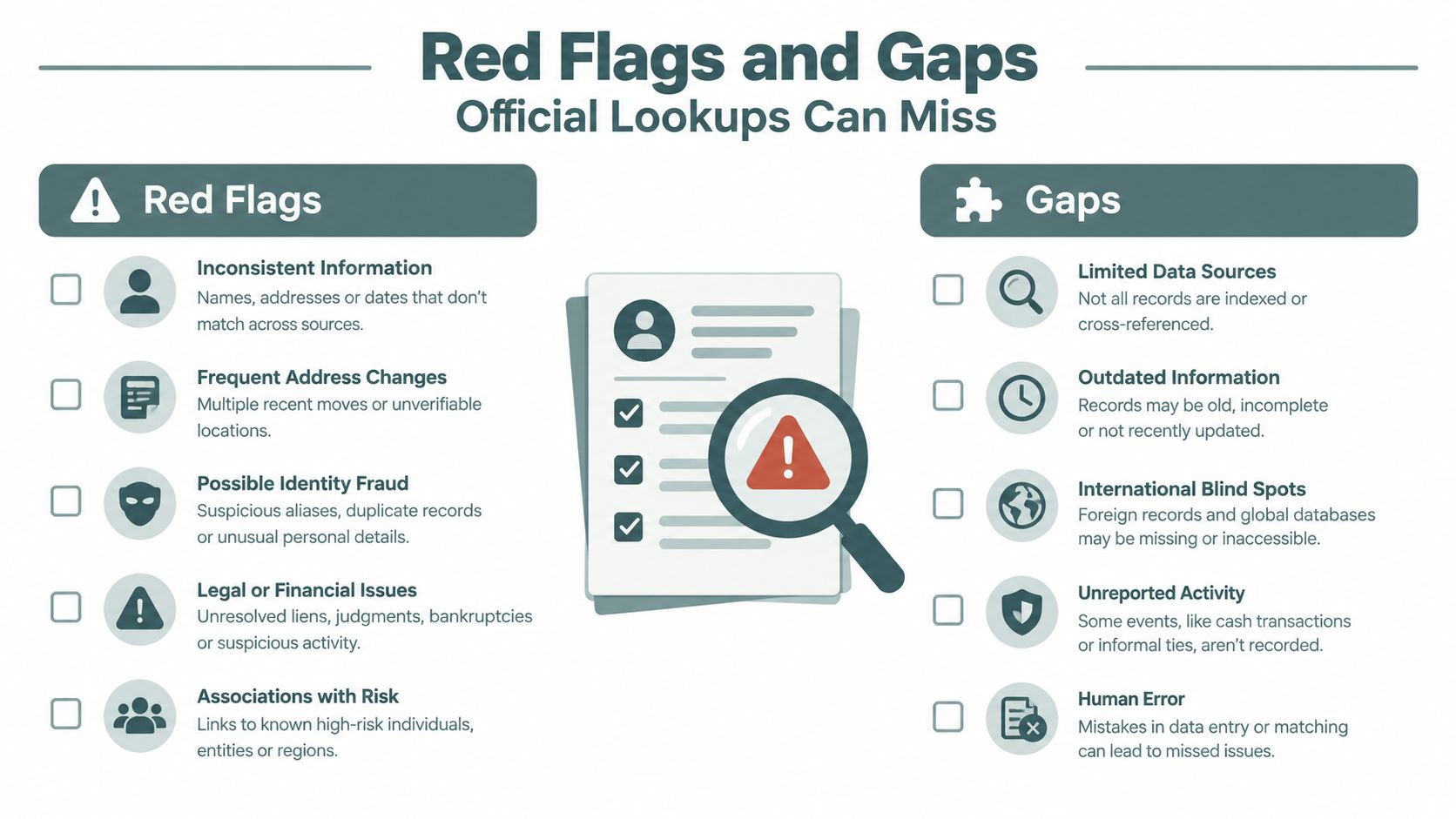
The most common mistake is trusting the first official answer too much. Official systems are necessary. They still have blind spots.
Where clean results can still be misleading
A vehicle can be financed in one place and sold in another. A U.S. vehicle can be exported to Canada. A damaged car can pass through an out-of-state auction before showing up on a local lot. Each move creates another chance for the next buyer to search the wrong office and get a result that is technically accurate, but incomplete.
CARFAX Canada notes that its lien search depends on the vehicle's registration history in each province and territory it checks, excluding the Northwest Territories. It also notes that completeness depends on where the vehicle has been registered, and New Brunswick's registry language indicates that a serial-number search returns exact and close matches, which means a bad VIN entry or different match logic can produce a false negative, as explained on CARFAX Canada's lien check page.
Common gaps buyers overlook
- Cross-border history: A search in the current state or province may miss the earlier lien trail.
- Wrong record type: Some buyers run only a history report when the lien lives in the title or PPR system.
- Input errors: One mistyped VIN character can make a risky car look clean.
- Timing windows: A payoff may exist, but the title office may still show the lien as active until processing catches up.
- Auction assumptions: A bill of sale from an auction or dealer doesn't automatically prove the prior lender's interest is gone.
Follow-up checks worth doing every time
For vehicles with any complexity, add a second layer:
- Call the lender listed on the record: Confirm the payoff status if the seller presents a release or payoff letter.
- Compare seller name to title owner: If they don't line up, ask why before discussing payment.
- Ask for a current title reprint if release is recent: That removes a lot of ambiguity.
- Review ownership and auction history together: A quick sequence of transfers can signal paperwork churn rather than clean title flow.
The point isn't that official checks are weak. It's that they answer narrow questions. Buyers get burned when they expect one narrow answer to settle the whole file.
Using Vektracer to Strengthen the Search and Your Next Steps
Official registries answer the legal question in each jurisdiction. A commercial report helps you spot where to look next. Those are different jobs.
Where a broader report helps
If you're bouncing between title offices, brand checks, and auction breadcrumbs, a consolidated report can save time by showing title history, auction records, odometer chronology, ownership context, theft indicators, and cross-jurisdiction signals in one place. That helps you decide whether the “official” search list should stop at one state or expand.
One option is Vektracer's lien check tool, which is useful as a screening layer before or alongside official DMV or provincial registry checks. For this specific issue, the fields worth prioritizing are title status, reported lien entries where available, brand history, auction appearances, ownership gaps, and any registration trail that suggests another state or province needs a direct lookup.
A payoff-verification checklist before money changes hands
If the seller says the loan is paid or nearly paid, keep the process tight:
- Confirm the payoff letter by phone: Call the lienholder using contact information you verify independently.
- Match the VIN on every document: The title, release, and payoff letter must all point to the same vehicle.
- Check the release date against the title status: If the timing is recent, expect a delay and ask for updated proof.
- Request a title reprint showing release if possible: That's cleaner than relying on verbal assurances.
- Don't hand over full payment until title and seller authority are clear: The seller's name should be on the title, and encumbrances should be resolved or handled through a documented payoff at closing.
A vehicle lien search by VIN works best when you treat it as a sequence, not a button. Start with the VIN, verify every jurisdiction, read the exact status wording, and use a broader history report to catch movement, brands, and auction clues that tell you where the official search needs to go next.
If you're checking a used car before a private-party deal, dealer purchase, or auction bid, Vektracer can help you see the wider history around that VIN before you rely on one local record. Use it to spot title brands, ownership gaps, auction activity, and cross-border clues, then follow up with the right DMV or provincial registry before you sign or pay.
Ready to check a vehicle?
Enter any 17-character VIN for a free instant preview — no account needed.