BC Personal Property Registry Vehicle Lien Search
Check a vehicle before you buy
Enter a VIN for a free instant preview — accidents, title brands, mileage, liens & open recalls.
You're standing beside a clean-looking used car in British Columbia, the seller has the keys ready, and the price seems fair. Before you transfer money, run a BC Personal Property Registry vehicle lien search using the vehicle's exact VIN. The search is a necessary first title-risk check, but it isn't a complete vehicle history report. A safe purchase requires both a precise PPR search and broader checks for accidents, title brands, mileage, ownership context, and records from other jurisdictions.
Table of Contents
- Why the BC PPR Matters for Used Car Buyers
- Access Options and Official Search Fees
- Navigating the Registry Interface and Avoiding False Negatives
- The Gap Between a Lien Check and Full Vehicle History
- Handling Active Liens and Cross-Border Timing Risks
- Finalizing Your Pre-Purchase Due Diligence
Why the BC PPR Matters for Used Car Buyers
A polished exterior, a recent test drive, and a convincing seller don't prove that a vehicle has clear title. The previous owner may have used the car as collateral for financing, and a registered security interest can remain relevant after the vehicle changes hands. That's why a private buyer should treat the registry check as part of the purchase process, not as an optional add-on.
British Columbia's Personal Property Registry, or PPR, is the province's central database for liens, security interests, and encumbrances filed against personal property, including motor vehicles. The government says the registry can be used to search for registered security agreements and liens, as well as to register, amend, renew, or discharge them. BC Registries and Online Services also identifies cars, boats, and trailers as property against which liens can be registered to secure repayment of a debt or loan.
What the search is designed to answer
The PPR answers a narrow but important question: does the registry contain a security interest or lien connected with this vehicle or its debtor information? It doesn't tell you whether the engine is healthy, whether the car has hidden collision damage, or whether the odometer reading is trustworthy.
For a buyer, the correct order is straightforward:
- Verify identity first: Match the VIN on the dashboard, door-area label, registration documents, and sale paperwork.
- Search the registry: Use the exact serial information and review the returned records carefully.
- Resolve every match: Identify the secured party, registration details, collateral description, and current status before paying.
- Investigate the vehicle separately: Check accident, title, mileage, theft, recall, auction, and maintenance information through appropriate history sources.
A useful explanation of the underlying risk appears in this guide to what a lien on a vehicle means. The practical lesson is simple: a buyer who skips the PPR may pay the seller while leaving a creditor's claim unresolved.
Practical rule: Never rely on the seller's statement that the loan is paid off. Verify the registry record and obtain documentation showing that any relevant registration has been discharged.
Access Options and Official Search Fees
The official search is relatively accessible. British Columbia's fee schedule lists a Personal Property Registry search at $10, while a combined Personal Property Registry and Manufactured Home Search is $15. These amounts are stated in the province's Personal Property Registry fee and service guidance.
You can request a search through several channels. The government says searches can be completed in person at Service BC, through third-party providers, or by mail. Mailed requests are sent back to the client by return mail. Online access is useful when the seller is waiting and you need to review the result before closing, but convenience doesn't remove the need to check every field.
The information you need depends on the search route and the vehicle. Start with the complete VIN, copied directly from the vehicle rather than typed from memory. Keep the make, model year, and registration documents available so you can compare the registry result with the actual car. If the seller's ownership history is unclear, debtor information may help confirm whether a matched registration relates to the transaction.
Jurisdiction changes the answer
A BC search is not automatically a Canada-wide search. ICBC explains that liens for BC-registered vehicles are searched through the PPR in Victoria. If the vehicle came from outside British Columbia, the buyer needs a lien search in the location where the vehicle was previously registered.
That distinction matters for imports, out-of-province private sales, auction purchases, and dealer inventory assembled from several provinces. A vehicle can have a clean result in one jurisdiction while requiring another search because its earlier registration history falls elsewhere. The BC VIN lookup and lien-check guidance can help organize the vehicle identifiers, but it shouldn't be treated as a replacement for the official provincial registry search.
The government check is inexpensive because it covers a specific legal record type. That narrow scope is its strength, but it also defines its limit. Budget for broader history research whenever the vehicle has moved between provinces or the seller can't clearly explain where it was previously registered.
Navigating the Registry Interface and Avoiding False Negatives
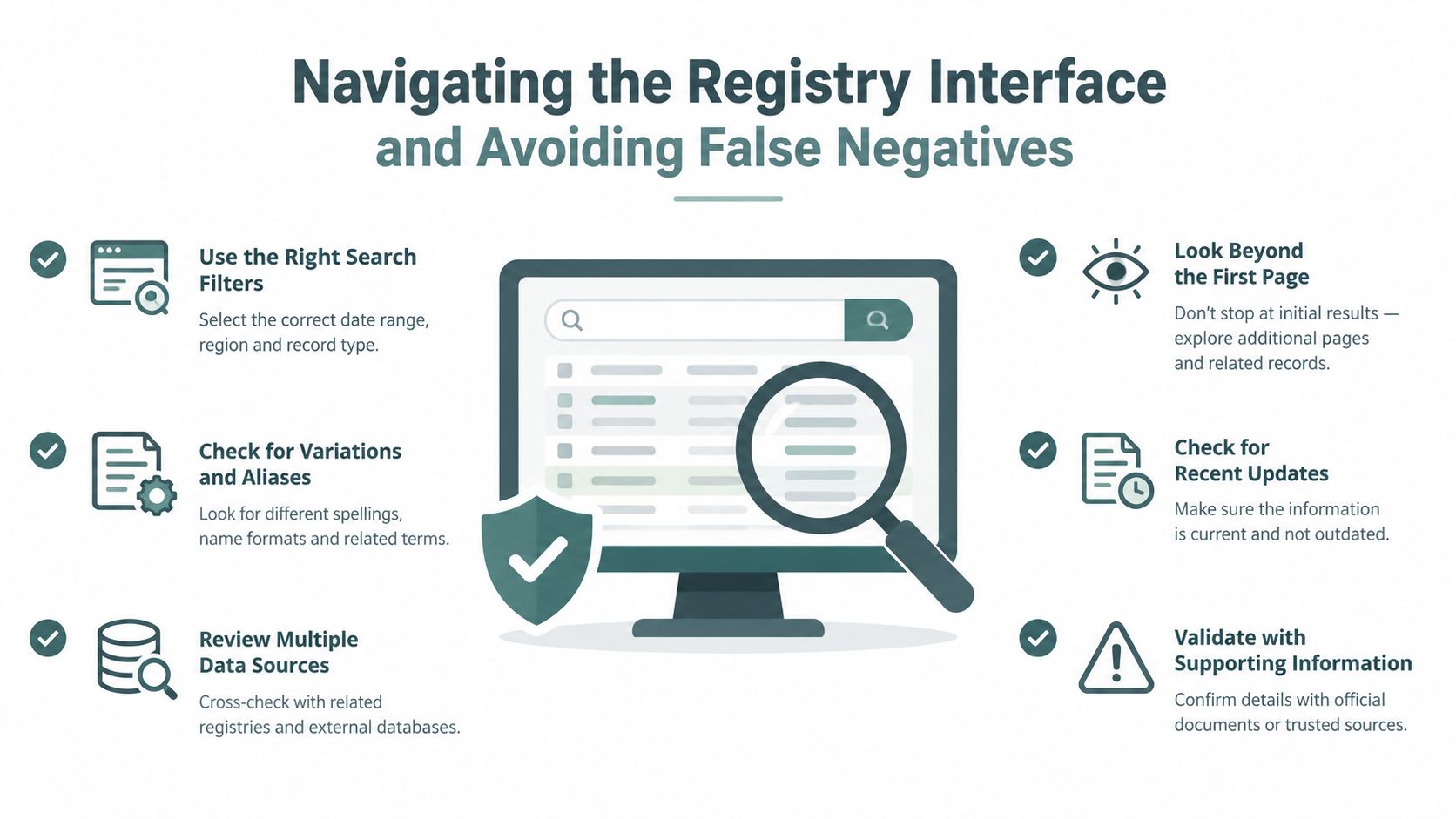
A blank-looking result isn't automatically proof that the vehicle is free of liens. The registry interface requires disciplined matching, and the practical outcome depends on entering the right data against the right asset. The Vehicle Sales Authority notes that the search system offers six search paths and can return selection lists when similar matches exist, as described in its guidance on buying a vehicle privately in British Columbia.
Why a single VIN entry can fail
VINs are unforgiving. One transposed character, a missing character, or an entry made under the wrong asset type can produce a result that doesn't answer the buyer's real question. Similar debtor names create another problem. The system may present several possible matches, and the user must manually select the record that corresponds to the vehicle or seller.
Treat the interface as a record-review tool, not a simple yes-or-no scanner.
- Read the VIN from the vehicle: Compare the dashboard identifier with the door label and documents. Don't copy a seller's text message without checking it physically.
- Review selection lists: If the system displays similar names or serial matches, inspect each candidate rather than choosing the first familiar-looking entry.
- Use more than one search key when needed: The registry supports searches by serial number, debtor name, and registration number. A debtor-name search can add useful validation when the ownership chain is unclear.
- Check the asset description: A matched registration must make sense for the vehicle, its VIN, and the debtor connected with the sale.
- Confirm the status: Determine whether the registration remains active, has been amended, or has been discharged before drawing a conclusion.
Professional review beats fast review
The dangerous workflow is to enter a VIN, see no obvious result, and immediately send payment. A better workflow records the exact VIN used, saves the resulting search document, and investigates any ambiguity while the seller and secured party can still be contacted.
A search result is only as reliable as the identifier and match selection behind it.
License plates can help identify a vehicle for broader research, but a plate isn't the same as the registry's serial-number search key. Plates can change, while the VIN is intended to identify the vehicle itself. Use the VIN as the anchor, then use debtor and registration information when the record requires confirmation.
The Gap Between a Lien Check and Full Vehicle History
The PPR and a full VIN report solve different problems. The registry focuses on registered security interests and liens. It doesn't function as an accident database, maintenance log, odometer timeline, salvage-brand index, or complete ownership history.
ICBC explains that Canada-wide vehicle history reports can include B.C. lien information, while also clarifying that a PPR lien search isn't the same as a full vehicle history report. The PPR is limited to registered security interests and liens, not accident or maintenance history, as outlined in ICBC's vehicle history report FAQ.
| Feature | BC PPR Search ($10) | Full VIN History Report |
|---|---|---|
| Registered BC security interests and liens | Yes, within the PPR's scope | May include B.C. lien information when reported through relevant sources |
| Accident and damage records | No | May show reported accident or damage events |
| Maintenance history | No | May show service records when reported |
| Odometer history | No | May provide chronological mileage records where available |
| Salvage, rebuilt, flood, or other title brands | No | May identify reported title or brand events |
| Auction records and historical photos | No | May include records where available |
| Cross-border context | Limited to the applicable registry search | Can consolidate records from multiple jurisdictions, subject to coverage |
| Best use | Checking a specific legal title-risk category | Understanding the vehicle's broader past before purchase |
What a clean PPR result cannot establish
A vehicle can have no matching PPR registration and still have prior collision damage, a branded title, inconsistent mileage, or an out-of-province history that demands further investigation. The reverse is also important: a history report may surface B.C. lien information, but the buyer should still perform the official PPR search when the transaction involves a BC-registered vehicle.
For salvage and auction buyers, broader records can be particularly useful. Auction images may reveal damage that was repaired before resale, while title-brand and mileage records can change how you value the vehicle. Independent dealers and brokers also need to distinguish a legally clear title from a vehicle that merely lacks a visible PPR match.
The practical comparison is not government versus commercial. It's legal lien screening versus broader vehicle-risk screening. Use each for the question it can actually answer.
Handling Active Liens and Cross-Border Timing Risks
A lien hit doesn't always end a transaction, but it changes who must be involved before money changes hands. Start by reading the registration details and identifying the secured party. Then ask the seller to explain the debt, provide payoff information, and arrange a discharge through the creditor rather than offering a verbal assurance.
The registry permits filings to be renewed, amended, changed, or discharged. That means an old result can mislead a buyer if it's treated as a current answer without checking its status, as explained in the BC registry guidance for motor vehicles and equipment.
A safer transaction sequence
Keep the vehicle and the paperwork together. Compare the VIN, seller identity, registration details, and collateral description. If the registration appears connected to the vehicle, don't release the full purchase price until the lender's discharge process is confirmed.
A practical approach is to require:
- Written lender information: Obtain the secured party's name and current contact details from the registry record.
- A documented payoff arrangement: Confirm how the outstanding amount will be paid and who will send the funds.
- Proof of discharge: Ask for evidence that the registration has been discharged, then perform a fresh search before closing.
- A clear paper trail: Keep the search result, bill of sale, seller communications, and discharge documentation with the purchase records.
The buyer shouldn't assume that a seller's promise to discharge the lien later transfers the risk away. If the seller refuses to involve the secured party, can't explain the registration, or pressures you to pay immediately, walking away is usually the cleaner decision.
For a practical explanation of how to check whether a vehicle lien was released, focus on the current registration status rather than an old email or receipt. Cross-border vehicles require the same discipline at a wider scope. Search BC records where applicable, identify the previous registration jurisdiction, and obtain additional provincial or Canada-wide coverage when the vehicle's history warrants it.
Finalizing Your Pre-Purchase Due Diligence
Use a short closing checklist on the day you buy:
- Inspect the VIN physically and compare it with the registration, bill of sale, and seller-provided information.
- Run the official BC PPR search and review selection lists, debtor matches, serial details, and registration status.
- Search other jurisdictions if the vehicle was previously registered outside British Columbia.
- Order a broader VIN history report for accidents, title brands, odometer records, theft information, auction history, ownership context, and maintenance records where available.
- Resolve every discrepancy before signing or transferring funds.
- Save the documents so you can show what you checked and when you checked it.
The key distinction is scope. The PPR is an essential legal-record check, but it can't certify the vehicle's mechanical condition or complete history. A buyer who combines precise registry matching with broader VIN research is far less likely to confuse a narrow clean result with a clean vehicle.
Vektracer compiles VIN-based records into a structured report that can add accident, title-brand, mileage, theft, ownership, auction, and cross-border context beyond a BC PPR search, where records are available. Enter the vehicle's VIN or license plate at Vektracer to review the available history before you commit to the purchase.
Ready to check a vehicle?
Enter any 17-character VIN for a free instant preview — no account needed.