NMVTIS in car history reports: what buyers must know

Check a vehicle before you buy
Enter a VIN for a free instant preview — accidents, title brands, mileage, liens & open recalls.
Not all vehicle history reports are created equal. You might pull a report on a used car and feel confident, only to discover later that the title was fraudulent or the odometer was rolled back across state lines. That gap in information is exactly where buyers lose money. The National Motor Vehicle Title Information System, known as NMVTIS, is the federal database designed to close that gap. Understanding what it covers, what it misses, and how to use it alongside other tools can be the difference between a smart purchase and a costly mistake.
Table of Contents
- What is NMVTIS and why does it matter?
- Core data in NMVTIS car reports: What you get and what’s missing
- How NMVTIS compares to Carfax, AutoCheck, and private reports
- How NMVTIS protects buyers: Real-world impact and smart strategies
- How to get an NMVTIS-backed report and protect your next car purchase
- Frequently asked questions
Key Takeaways
| Point | Details |
|---|---|
| Essential title check | NMVTIS is the foundation for verifying vehicle titles and legal history before purchase. |
| Not a full history | NMVTIS covers title, brands, odometer, and theft—not accident or service records. |
| Cost-effective solution | NMVTIS-backed reports are affordable and offer core protection against title fraud. |
| Best when combined | Savvy buyers use NMVTIS first and layer with Carfax or inspection for high-value or suspicious cars. |
| Choose reputable sources | Only use certified NMVTIS providers to reduce the risk of incomplete or faulty reports. |
What is NMVTIS and why does it matter?
NMVTIS stands for National Motor Vehicle Title Information System. It is a federally mandated database created under the Anti Car Theft Act of 1992 and later strengthened by the Anti Car Theft Improvements Act of 1996. Its core purpose is to combat title fraud, vehicle theft, and the illegal movement of stolen or salvaged cars across state lines.
Every state is legally required to participate. When a title is issued or updated, that information flows into NMVTIS. Insurance companies that declare a vehicle a total loss must also report to the system. Junk and salvage yards are required to submit data as well. This creates a national picture of a vehicle’s legal standing that no single state database can match.
Here is what NMVTIS tracks:
- Title records from all participating states
- Title brands such as salvage, flood, junk, or rebuilt
- Odometer readings at the time of title transfer
- Total loss declarations from insurers
- Basic theft information when available
As confirmed by Pennsylvania DMV’s NMVTIS page, NMVTIS data includes title records, brands, odometer readings, total loss from insurers, and basic theft info when available.
One of the biggest threats NMVTIS addresses is title washing. This is when a salvage or branded title is “cleaned” by re-registering the vehicle in a state with looser regulations. NMVTIS blocks this by requiring states to verify title status before issuing a new one. According to the NMVTIS State Data Reporting Guide, states must check NMVTIS for brands, odometer data, and liens before issuing titles, with data updated anywhere from real-time to 24-hour batches.
“NMVTIS is the legal backstop of vehicle history. It does not tell you everything, but it tells you what the law requires every state to know.”
For anyone doing vehicle history checks on a used car, NMVTIS is the foundation you build on.
Core data in NMVTIS car reports: What you get and what’s missing
Knowing what NMVTIS contains is just as important as knowing its limits. Here is a clear breakdown:
| Data category | Included in NMVTIS? |
|---|---|
| Title records from all states | Yes |
| Salvage, flood, junk brands | Yes |
| Odometer at title transfer | Yes |
| Total loss declarations | Yes |
| Theft records (basic) | Sometimes |
| Accident or repair history | No |
| Service records | No |
| Auction data | No |
| Ownership count | No |
NMVTIS does not report routine accidents unless the vehicle was declared a total loss. A car that was rear-ended, repaired, and resold without an insurance claim will show nothing unusual in NMVTIS. That is a real limitation buyers need to understand.

Some VINs may also return incomplete or empty reports. This can happen with older vehicles, motorcycles, or cars that were never properly titled in a participating state. It does not automatically mean the car is clean. As AAMVA’s NMVTIS FAQ notes, NMVTIS has no repair or accident details unless a vehicle is branded or declared a total loss, and data lags exist in some states.
Pro Tip: If an NMVTIS report comes back empty on a vehicle that should have a history, treat it as a red flag, not a green light. Ask the seller for title documentation and consider a physical inspection before moving forward.
You can learn more about how NMVTIS reporting works and what data flows into a report before you run your first check.
How NMVTIS compares to Carfax, AutoCheck, and private reports
NMVTIS is a government database. Carfax and AutoCheck are commercial products. The distinction matters because they serve different purposes and carry different price tags.
| Feature | NMVTIS | Carfax | AutoCheck |
|---|---|---|---|
| Title and brand records | Yes | Yes | Yes |
| Odometer history | Yes | Yes | Yes |
| Accident history | Limited | Yes | Yes |
| Service records | No | Yes | Yes |
| Auction data | No | Yes | Yes |
| Ownership history | No | Yes | Yes |
| Typical price | $2 to $20 | $44.99 | $24.99 |
Commercial providers like Carfax and AutoCheck incorporate NMVTIS data alongside broader sources including dealer networks, auctions, and repair shops. NMVTIS is their legal title foundation, but they layer additional data on top.
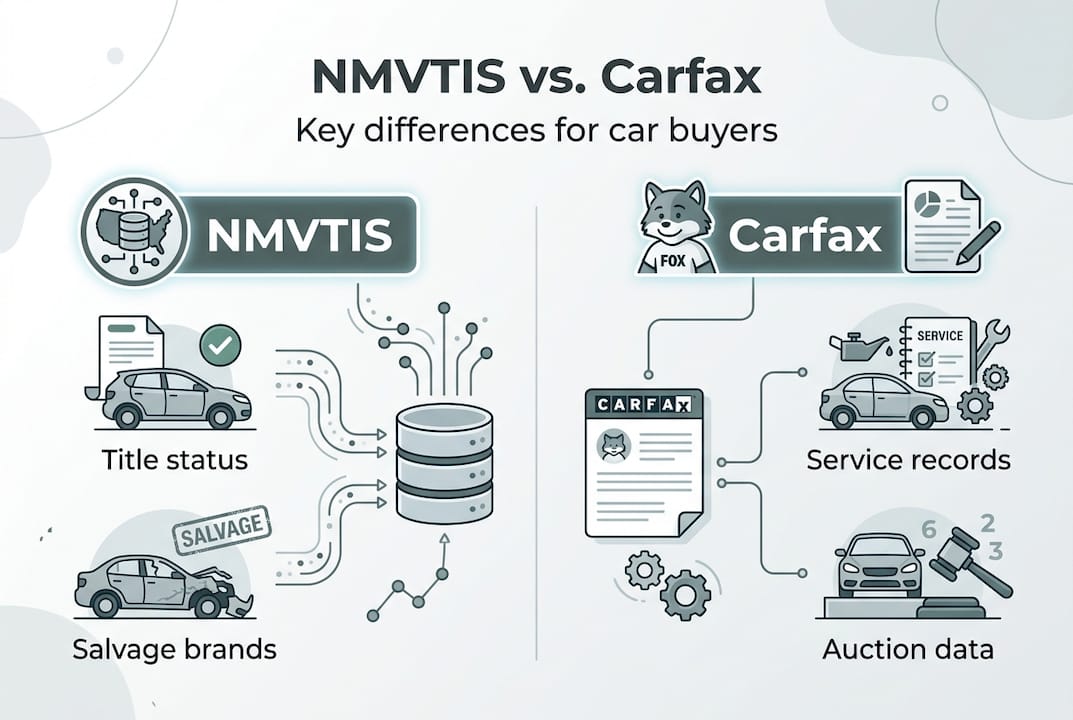
Here is a common myth worth addressing: many buyers assume that because Carfax is more expensive, it must be complete. It is not. Carfax can miss accidents that were never reported to insurance. NMVTIS can miss accidents that did not result in a brand. Neither is a substitute for a physical inspection.
For a deeper look at whether premium reports justify the cost, the Carfax value debate is worth reading before you spend $44.99.
Here is how smart buyers approach this:
- Start with an NMVTIS-based report to verify legal title status and check for brands.
- If the title looks clean, run a comprehensive vehicle check for accident and service history.
- For high-risk or high-value purchases, stack both report types.
- Always follow up with a physical inspection from a trusted mechanic.
- Explore Carfax alternatives that offer similar data at lower cost.
“Mechanics recommend using both NMVTIS and commercial reports for high-risk purchases,” according to RideCheckPro’s Carfax alternatives guide.
Pro Tip: For any car priced over $10,000 or flagged with a suspicious title, stack an NMVTIS report with a commercial report. The combined cost is still far less than a bad purchase.
If you want to compare your options side by side, check out this 2026 guide to Carfax alternatives for a current breakdown.
How NMVTIS protects buyers: Real-world impact and smart strategies
NMVTIS is not just a theoretical safeguard. It has measurable, real-world results. After Virginia implemented NMVTIS-connected title verification, the state saw a 17% drop in vehicle theft. States like Arizona, Florida, and Virginia have used NMVTIS to identify cloned VINs, where a stolen car is given the identity of a legally registered vehicle. These are exactly the kinds of fraud that look clean on a surface-level check.
Title washing is another threat NMVTIS directly prevents. Without a national database, a salvage-titled car in one state could be re-registered in another state with no record of the brand. NMVTIS closes that loophole by requiring every state to check the system before issuing a new title.
That said, fake or invalid VINs can sometimes generate empty or incomplete NMVTIS reports. This is why choosing a reputable provider matters. A trustworthy service will flag anomalies rather than return a falsely clean result.
Here is a practical checklist for using NMVTIS in your buying process:
- Run the VIN through an NMVTIS-connected provider before visiting the seller
- Check the title brand for salvage, flood, junk, or rebuilt designations
- Verify the odometer reading against what the seller claims
- Look for total loss records from insurers
- Cross-reference with a commercial report if anything looks off
- Schedule a mechanic inspection regardless of what the report shows
For buyers watching their budget, affordable history reports that use NMVTIS data are a smart first step. You can also learn exactly how to obtain a report before you commit to a purchase. The VekTracer platform makes this process straightforward and accessible.
How to get an NMVTIS-backed report and protect your next car purchase
You now know what NMVTIS covers, where it falls short, and how to use it strategically. The next step is putting that knowledge to work before you hand over any money.
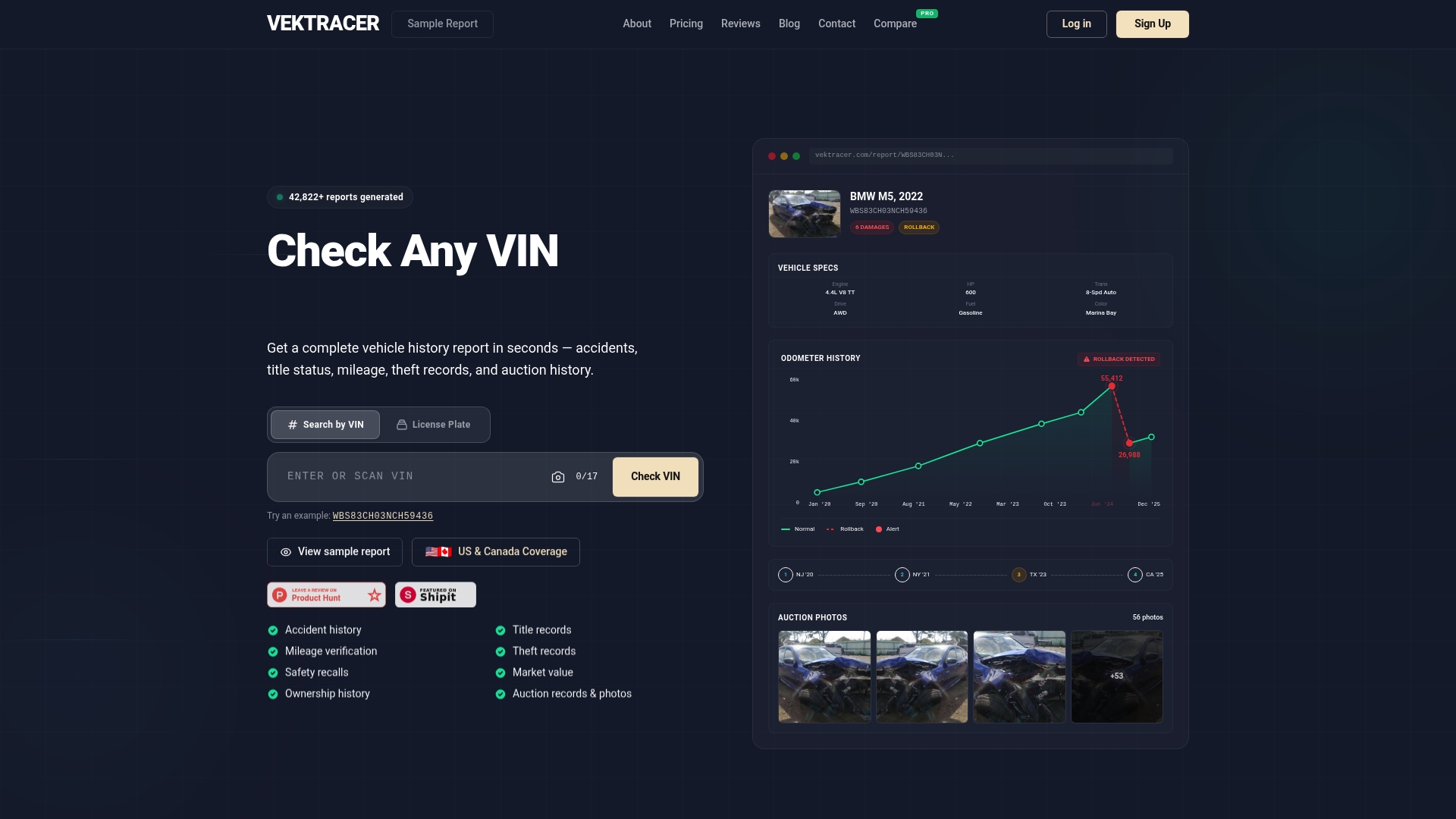
At Vektracer, our reports are built on NMVTIS-connected sources and include title records, odometer history, theft checks, safety recalls, and market value data. Our pricing starts at just $19.99, which is less than half the cost of a Carfax report. You can review a sample report before you buy so you know exactly what you are getting. And if you want to understand the process first, our how it works page walks you through every step. For any major purchase, we recommend pairing your Vektracer report with a physical inspection to cover every angle.
Frequently asked questions
Which states report to NMVTIS and how current is the data?
All U.S. states are required by law to participate in NMVTIS. Data is updated anywhere from real-time to within 24-hour reporting batches, though frequency can vary by state.
Can NMVTIS reports show accident or repair history?
NMVTIS only reflects accident involvement if the vehicle was declared a total loss or received a brand. Routine repairs and unbranded accidents are not captured in the system.
Is NMVTIS a replacement for Carfax or AutoCheck?
No. NMVTIS focuses on legal title status, while services like Carfax add auction records, service history, and accident context. Commercial reports use NMVTIS as a foundation but layer in additional data sources.
Can fake or invalid VINs appear clean in NMVTIS?
Yes. Some fake or invalid VINs may return empty or incomplete results. This is why you should always use a reputable NMVTIS provider that flags anomalies rather than returning a falsely clean report.
What is the biggest benefit of checking NMVTIS before buying?
NMVTIS lets you verify a car’s legal title status and check for hidden brands or total loss history before spending more on a full commercial report. It is your first and most affordable line of defense against title fraud and odometer fraud in the used car market.
Recommended
Ready to check a vehicle?
Enter any 17-character VIN for a free instant preview — no account needed.