RDPRM Vehicle Lien Search Quebec: A Step-by-Step Guide
Check a vehicle before you buy
Enter a VIN for a free instant preview — accidents, title brands, mileage, liens & open recalls.
An RDPRM vehicle lien search in Quebec is a $4 VIN-based official check of the Register of Personal and Movable Real Rights that shows whether a road vehicle has been published as security for a loan, hypothec, or long-term lease. It doesn't show loan balances, accident history, or mileage.
You're standing beside a private seller's car, the test drive went well, and the seller wants a deposit before someone else takes it. The cleanest way to slow the transaction down without losing control is to verify the vehicle's legal risk before paying. In Quebec, that starts with the RDPRM, then continues with identity checks, ownership documents, vehicle-history research, and an inspection.
A registry result can tell you whether a security interest has been published against the vehicle. It can't tell you whether the car was previously crashed, stolen, rebuilt, imported from another province, or sold with altered mileage. Treat the RDPRM as a focused title-risk screen, not as a complete vehicle report.
Table of Contents
- What the RDPRM Is and Why Quebec Buyers Use It
- Information You Need Before Running the Search
- How to Use the RDPRM Site Step by Step
- Fees and Search Options for Buyers
- How to Read the RDPRM Search Results
- Limits of an RDPRM Lien Check and Timing Risk
- Clearing Liens and Next Steps After the Search
What the RDPRM Is and Why Quebec Buyers Use It
The Registre des droits personnels et réels mobiliers, commonly called the RDPRM, is Quebec's official registry for rights affecting movable property. Its public guidance covers road vehicles, business assets, and other movable property, and the registry gives public notice of security interests recorded against those assets. You can review the official RDPRM registry guidance before starting a search.
For a vehicle, the relevant record may involve a movable hypothec, a loan-related security interest, an extended payment arrangement, or a long-term lease. Quebec law gives a movable hypothec without delivery its full effect against people other than the debtor when it's published in the RDPRM. That legal publication is why a buyer shouldn't rely only on the seller's registration papers or a signed bill of sale.
Practical rule: A private seller can honestly believe the car is paid off and still have a creditor's registered right attached to it. Verify independently before releasing funds.
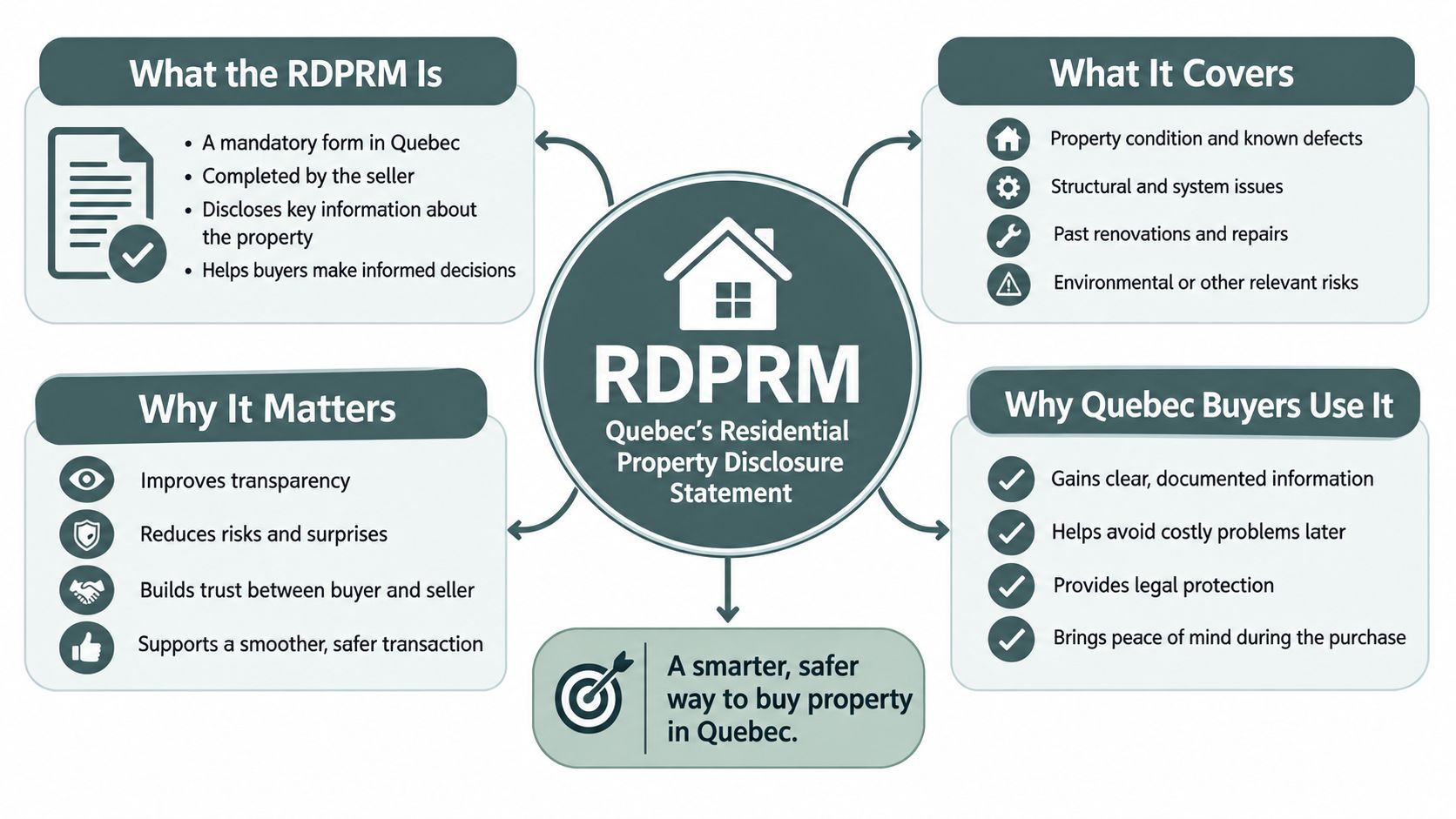
Quebec uses the RDPRM for movable hypothecs rather than the personal-property registry structure used in many other Canadian provinces. That creates a clear province-wide starting point for Quebec-registered vehicles, but it also creates a boundary. The registry is designed to answer, “Is a published right recorded against this vehicle?” It isn't designed to answer, “What has happened to this vehicle over its entire life?”
A commercial history report may add accident, title-brand, odometer, theft, auction, ownership, or cross-border context. Those products solve a different problem and shouldn't replace the official lien search. Buyers who want a Quebec-specific starting point can also review Vektracer's Quebec lien-check guidance, then confirm the result through the official registry.
Information You Need Before Running the Search
Gather the documents before opening the search form. The central identifier is the vehicle's 17-character VIN, which you'll usually find on the dashboard near the windshield, on the driver-side door jamb, and on the Quebec registration document. Compare those locations instead of copying the number from an advertisement or text message.
For an individual owner, the RDPRM workflow also uses the owner's name and date of birth. The name should match the registration and the seller's identity documents as closely as possible. A nickname, shortened name, incorrect spelling, or business name can create a mismatch, and a search that misses the correct registrant can give false reassurance.
The official RDPRM questions and answers explain that a road-vehicle consultation uses the 17-character VIN and, for an individual owner, the owner's name and date of birth. The registry can be consulted through official online channels, by phone, or through a certified statement. Review the RDPRM's search requirements if the seller's ownership structure is unusual.
RDPRM Search Inputs and Why Each Matters
| Input Field | Required? | What It Does | Common Buyer Mistake |
|---|---|---|---|
| VIN | Yes for a road-vehicle search | Identifies the specific vehicle and connects the search to registrations published against it | Copying one character incorrectly or using a VIN from the listing |
| Owner's full legal name | Required when searching an individual owner | Helps identify the registrant associated with the vehicle | Using a nickname, initials, or a partial name |
| Date of birth | Required for an individual owner | Helps distinguish people with similar names | Guessing the date or entering the seller's information instead of the registered owner's |
| License plate | Not the standalone online vehicle key | Can help with follow-up through official channels when the plate is relevant to the request | Assuming a plate lookup replaces a VIN search |
| Registration document | Strongly recommended | Lets you compare the VIN and registrant details before payment | Accepting a photo that doesn't match the vehicle |
If the registration lists a company or another legal entity, don't force an individual-name search. Ask the seller to explain the ownership and obtain the information needed for the appropriate official consultation. A mismatch is a reason to pause, not a reason to assume the registry is clean.
How to Use the RDPRM Site Step by Step
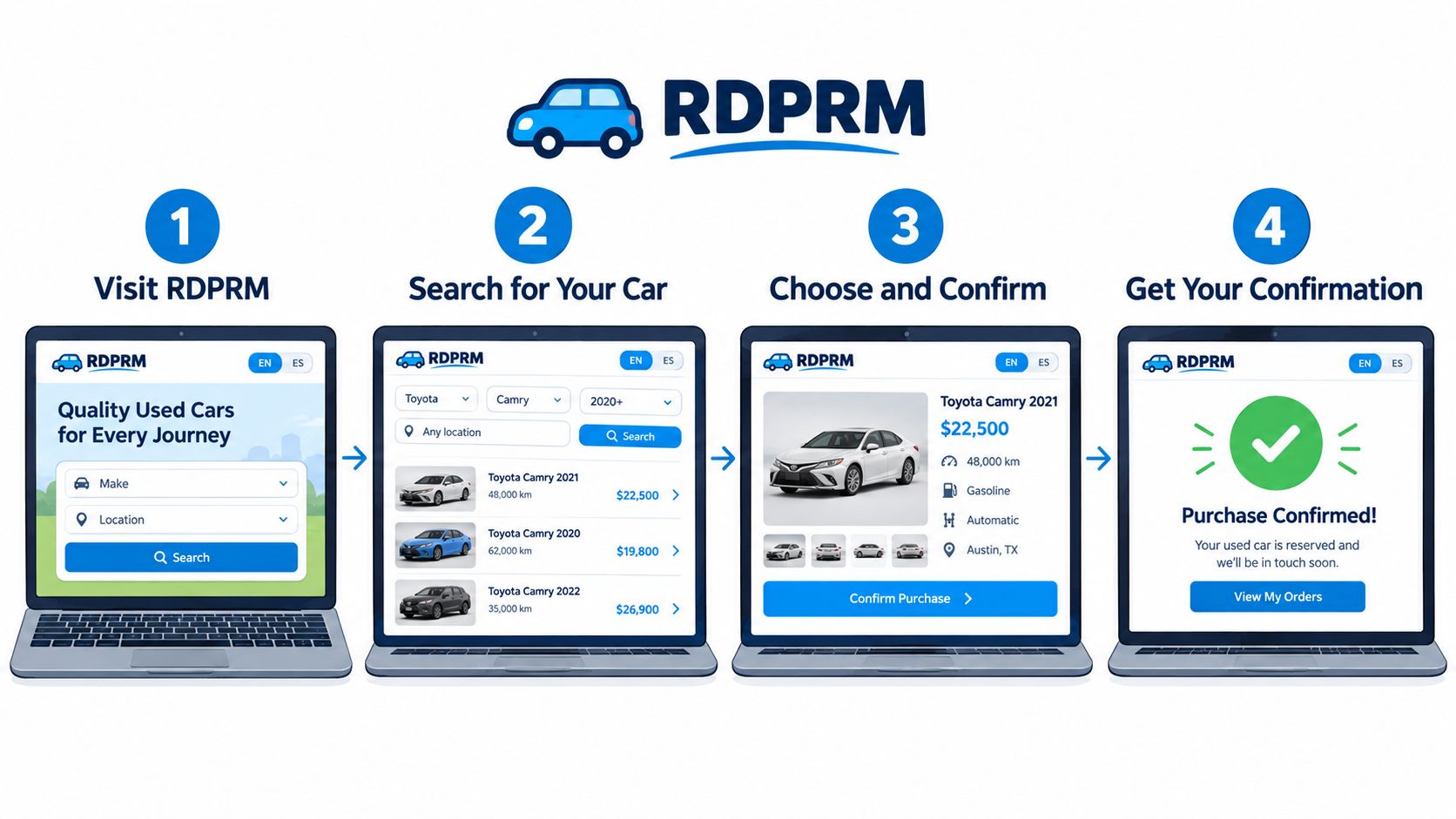
Start at rdprm.gouv.qc.ca. The site offers a language toggle near the top right, so choose English or French before navigating. On the homepage, select Search the register, or Recherche dans le registre in French, then choose the vehicle or road-vehicle area rather than a general movable-property search.
Select the online consultation option and prepare the VIN, the registered owner's name, and the date of birth where the owner is an individual. Enter every character carefully. Compare the confirmation details with the dashboard VIN and registration before you authorize payment.
A practical online sequence
- Open the official portal. Use the RDPRM website rather than a page that only summarizes the registry.
- Choose the vehicle consultation. Make sure the request is for a road vehicle and not another category of movable property.
- Enter the VIN. Use the complete 17-character identifier and check it against the physical vehicle.
- Enter registrant details. Use the full legal name and date of birth shown in the registration information.
- Review the confirmation screen. A typo caught here is cheaper than a wrong result relied on later.
- Pay for the online consultation. The verified buyer guidance identifies the VIN-based search as a low-cost official check, commonly cited at $4.
- Save the result. Download or print the state of rights and retain it with the advertisement, registration copy, seller messages, and bill of sale.
The online result is a consultation record, not the same thing as a certified statement. If a lender, legal adviser, or transaction file requires formal certification, ask the RDPRM about the certified product and the current delivery method. Product names, fees, and processing details can change, so confirm the current terms on the official site before relying on an older guide.
For a broader explanation of how an official registry search differs from other checks, see this guide to checking a vehicle lien by VIN.
Fees and Search Options for Buyers
A clean RDPRM result can cost little and still leave a buyer exposed if the search is treated as the whole investigation. For a private Quebec purchase, the online VIN consultation is usually the practical first screen for registered rights. Quebec consumer and legal guidance has cited a $4 fee for a VIN-based vehicle search RDPRM official website, while a separate name search has been cited at $11 RDPRM official website. Check the RDPRM's current tariff before ordering, since fees and product names may change.
The VIN consultation focuses on rights published against the vehicle. It does not show the seller's remaining loan balance or replace a lender's payoff statement. If the seller says only a small amount remains, require written confirmation from the lender rather than relying on the registry entry alone.
RDPRM Search Products and Fees for Buyers
| Channel | Typical Fee (CAD) | Turnaround | What You Get |
|---|---|---|---|
| Online VIN consultation | $4 RDPRM official website | Online access | A non-certified view of rights published against the road vehicle |
| Online name consultation | $11 RDPRM official website | Online access | A name-based consultation for movable-property records |
| Official certified statement | Varies by current RDPRM tariff | May be issued through official channels | A certified document for a file or transaction |
| Phone or in-person request | Varies by current RDPRM tariff | Depends on the selected service | Official assistance or a certified document where available |
| Mail request | Varies by current RDPRM tariff | Slower than online access | A paper-based official response |
The $4 VIN search is generally the sensible starting point for a private buyer. A certified document has more value when formal proof is required, a dispute is developing, or another party requests an attested record.
Keep the search in its proper place within the buying process. It screens for title and financing risk. Separate checks still need to address accidents, mileage, theft, vehicle condition, and registration or lien history outside Quebec. A low fee should support careful due diligence, not justify a rushed payment.
How to Read the RDPRM Search Results
A result showing no published right against the searched vehicle is useful, but read it alongside the search inputs. Confirm that the displayed vehicle information matches the physical VIN, make, model year, and registration documents. If the identity details were wrong, a clean screen may just be a clean result for the wrong search.
A result with a registration requires follow-up before payment. Look for the secured party, the nature of the registration, the vehicle identifier, and any information showing that the debtor relationship has changed. A hypothec, conditional sale, prior claim, judicial hypothec, or lease entry can each affect the transaction differently.
Three results buyers commonly encounter
A clean result means the search didn't identify a published right against the vehicle under the information entered. It doesn't certify the condition, mileage, accident history, theft status, or prior registration outside the relevant Quebec record.
An active hypothec usually means a creditor has published a security interest. Stop the payment process and ask the seller for a current payout statement from the lender. The safest arrangement is documented coordination with the creditor, rather than sending the full purchase price to the seller and hoping the debt gets cleared later.
A debtor-change entry can indicate that a prior debtor has been released or that the registration record has changed. Don't interpret the wording from memory. Ask the secured party or RDPRM officials to clarify what the entry means and whether the current vehicle is free of the creditor's rights.
A lease registration, including a regular credit-bail arrangement, should receive the same caution. The lessor may still have rights even when the person presenting the vehicle appears to be its everyday user.
Read the result as a legal-status document, not a mechanical inspection. It tells you about published rights. It doesn't tell you whether the engine is healthy or whether the odometer is credible.
The RDPRM doesn't display the remaining loan balance, payment history, payoff date, accident damage, mileage readings, or stolen-vehicle status. Those omissions aren't defects in the registry. They reflect its limited purpose, which is to publish rights over movable property.
Limits of an RDPRM Lien Check and Timing Risk
A clean result is a useful checkpoint, not a final safety certificate. Registry information is tied to the search and the jurisdiction involved. A new financing arrangement, a newly published right, or a registration update can change the picture between the search and the moment you pay.
The timing issue is especially important in a private sale. A buyer who searches early, negotiates for several days, and then pays without refreshing the record is relying on an older snapshot. Canadian consumer guidance recommends checking the province where the vehicle is registered and searching a previous province too when the vehicle moved between provinces. It also recommends checking on the day of purchase because lien status can change. Read the federal guidance on car-lien risks.
What the registry cannot establish
- Accident history: A clean lien result doesn't show collision repairs or insurance claims.
- Odometer reliability: The RDPRM doesn't reconstruct mileage readings or identify rollback patterns.
- Theft status: A registry search isn't a police theft clearance.
- Salvage or rebuilt history: Brand status and reconstruction history require different records.
- Cross-border history: A Quebec result may not reveal an earlier security interest published in another province or jurisdiction.
- Mechanical condition: No registry entry can substitute for an independent inspection.
Here is a vehicle-history report that can add context. Vektracer compiles VIN-based records into a structured report that may include accident and damage events, title brands such as salvage or rebuilt, mileage readings, theft checks, ownership and registration history, auction records, historical photos, recalls, and service information when reported by its sources. It remains a commercial report, not a government lien certificate, so use it alongside the official RDPRM rather than instead of it.
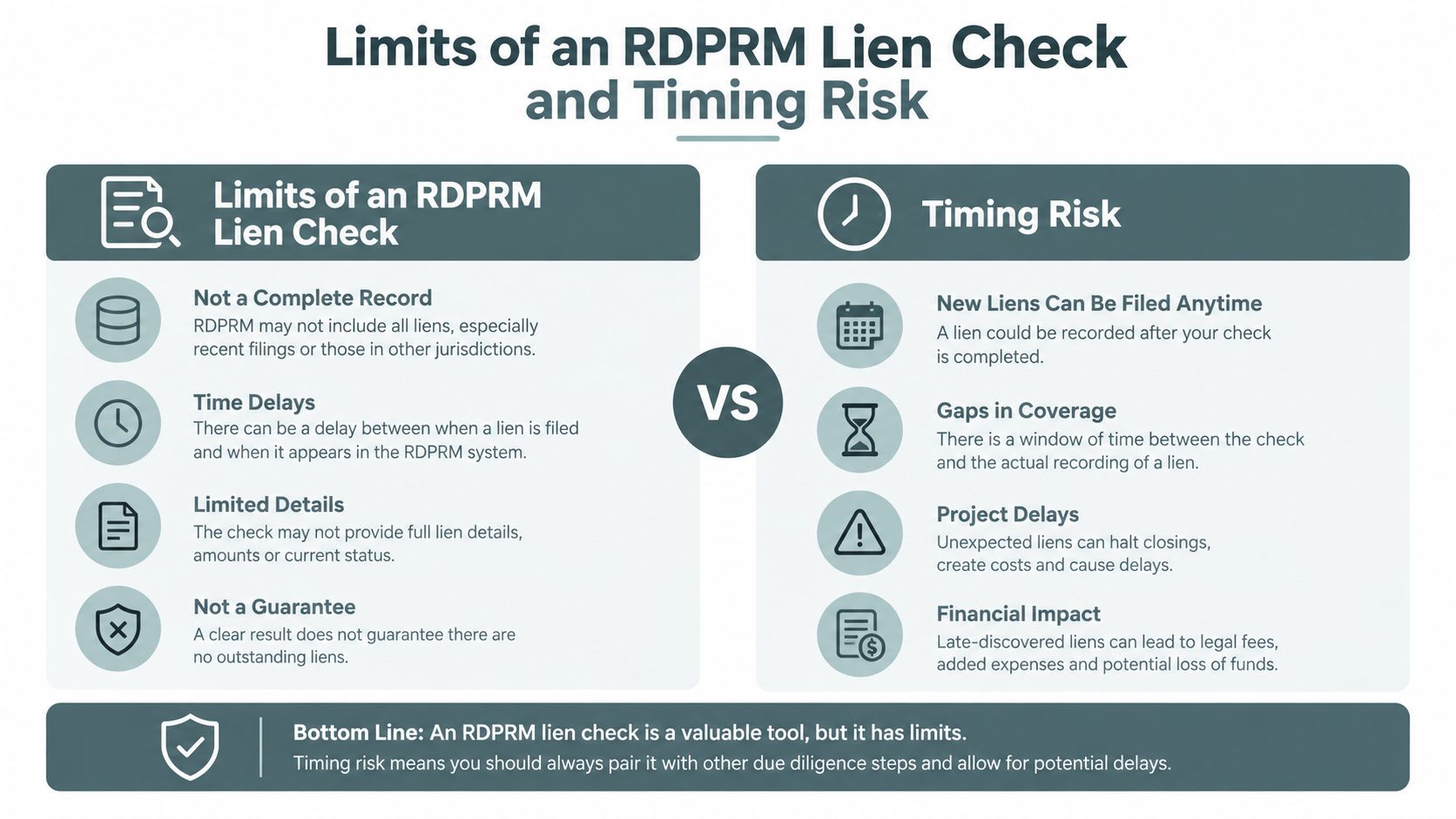
A vehicle that moved from Ontario, another Canadian province, or the United States deserves additional scrutiny. Ask where it was previously registered, compare that answer with ownership and auction records, and search the relevant previous registry when the history indicates a move. A single Quebec result can be accurate and still incomplete.
Clearing Liens and Next Steps After the Search
A clean RDPRM result lets you continue the purchase process. It doesn't eliminate the need to verify the seller, match the documents, inspect the vehicle, and investigate history. The seller should be able to explain who owns the vehicle, why the name on the registration matches the person selling it, and whether the car has ever been financed or leased.
If the result shows a registration, ask for documentation from the secured creditor. A seller's promise to pay later isn't equivalent to a filed discharge. A lender can provide a payoff statement or pre-payout letter, and the buyer can arrange for the financing institution to receive the relevant payoff directly as part of a documented closing.
Use a documented lien-release process
- Identify the secured party. Record the creditor's name and the registration details from the search.
- Request a current payout statement. The lender should state the amount required to settle the debt and the conditions for release.
- Verify directly with the lender. Use contact information obtained independently, not only a phone number supplied in a message.
- Obtain the release paperwork. In Quebec, a creditor's release, or mainlevée, must be registered against the vehicle in the RDPRM to clear the published right.
- Refresh the registry result. Don't assume that repayment and registry updating happen simultaneously.
- Keep the evidence. Save the search, payout confirmation, release document, correspondence, and signed sale contract.
Ask the seller for the relevant SAAQ ownership documentation and any available certificate showing the vehicle's status. Put the seller's representation about encumbrances in writing, and use a properly drafted sale contract. For a significant transaction or a disputed lien, legal advice is more reliable than a casual template or verbal assurance.
A third-party history report earns its place when the car came from outside Quebec, appears in an auction listing, carries a salvage or rebuilt concern, has inconsistent mileage, or comes with a vague ownership story. It can reveal context that the RDPRM was never designed to provide. The guide to checking whether a lien was released can help organize that follow-up.
Walk away, or pause the deal, when the seller refuses to provide the VIN, won't show registration, pressures you to pay immediately, gives an identity that doesn't match the documents, or dismisses a registered right as “already handled” without proof. A clean registry result doesn't cure those warning signs.
Run the official RDPRM VIN search before paying, then use a broader vehicle-history check to investigate accidents, title brands, mileage, theft, ownership, auction, and cross-border context. Visit Vektracer to enter the vehicle's VIN or license plate and review the available history before you finalize the Quebec purchase.
Ready to check a vehicle?
Enter any 17-character VIN for a free instant preview — no account needed.