How to Check if a Lien Was Released Before You Buy
Check a vehicle before you buy
Enter a VIN for a free instant preview — accidents, title brands, mileage, liens & open recalls.
Check the state DMV title and lien status by VIN or title number first, then confirm the recorded release or termination in the filing office and with the lienholder before you pay or transfer title. A paid loan isn't enough by itself, because the title can still show an active encumbrance until the release is properly filed and indexed.
You may be looking at a private-party listing where the seller says, “The loan was paid off years ago,” while the title still names a bank. Or you may be buying a salvage vehicle from an auction and relying on a VIN lookup that shows no obvious current lien. In either situation, the safe question isn't whether someone says the debt is settled. It's whether the public title record, the relevant filing index, and the lender's paperwork all show that the lien was released.
The verification chain is straightforward: start with the state DMV, check the physical title, review any applicable Secretary of State or UCC record, and obtain written confirmation from the lienholder. A commercial VIN history report can add cross-state context, but it doesn't replace the official title record.
Table of Contents
- What a Released Lien Actually Means for Your Title
- Where to Check If a Vehicle Lien Was Released
- How to Use Official Records and VIN History Together
- Why a Lien Still Shows Open and How to Fix It
- Avoiding Mistakes When Searching Lien Release Records
- Final Checklist Before You Buy or Transfer the Title
What a Released Lien Actually Means for Your Title
A buyer arrives to complete a private-party sale. The seller produces a payoff receipt from a lender and explains that the vehicle loan has been closed. The DMV record, however, still lists the lender as lienholder. That sale isn't ready to close just because the balance is zero.
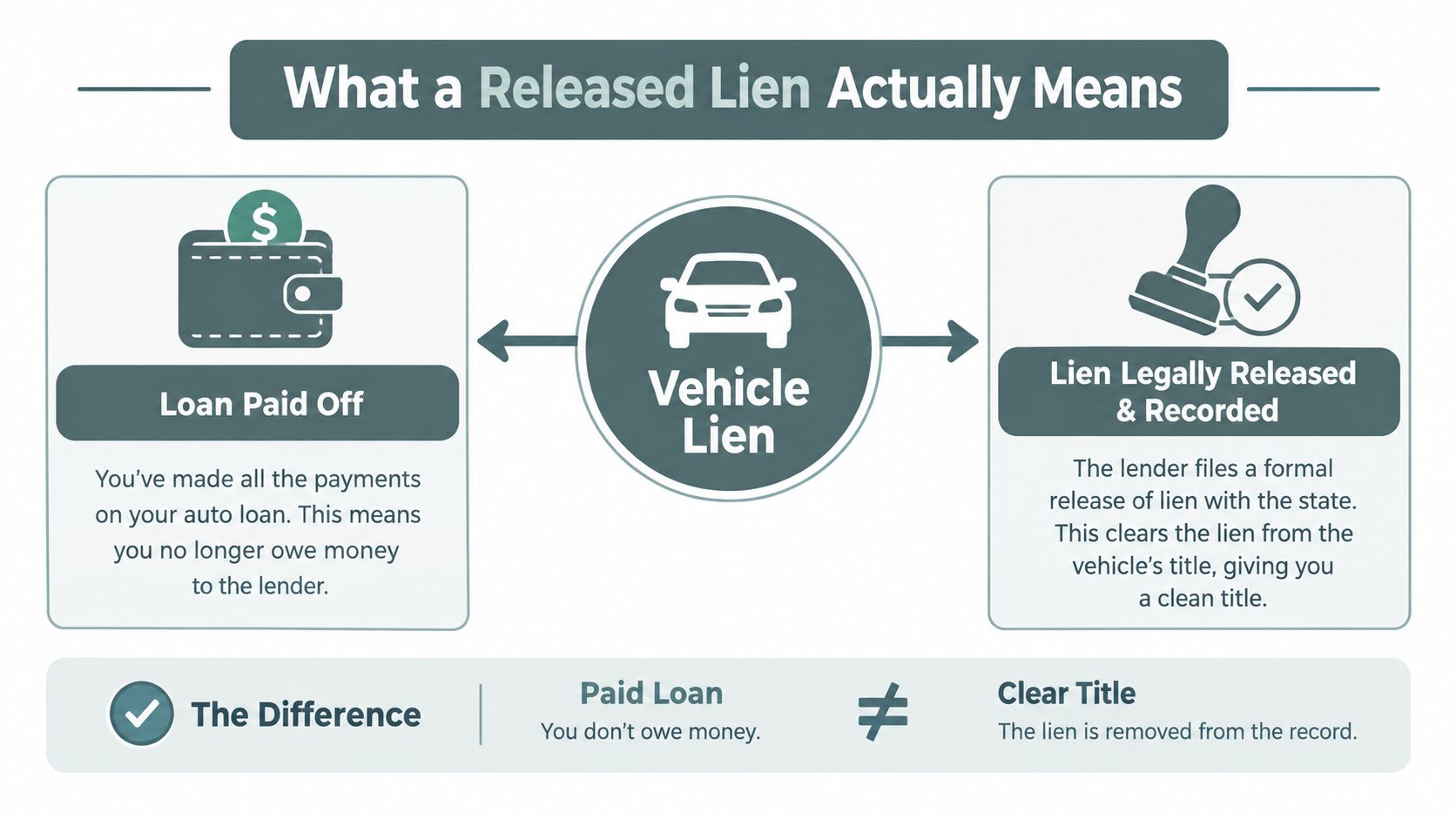
Payoff and release are separate events. Paying the debt resolves the borrower's obligation to the lender. Releasing the lien removes the lender's legal interest from the title or public filing record. Until the lender submits the required release and the filing office records it correctly, a title system can continue to show an encumbrance. The New York DMV title and lien status guidance describes the importance of checking the title and lien record, while Wisconsin UCC guidance recognizes that a search may show financing statements and later filing history, including records that may indicate a release or continuation.
What counts as proof
A convincing release trail normally includes one or more of these records:
- A DMV status change: The title record shows no active lienholder or identifies the lien as satisfied.
- A title notation: The physical title is marked with a lien-satisfaction notation and, where applicable, the satisfaction date.
- A lender release letter: The lender identifies the vehicle, confirms satisfaction, and states that its security interest has been released.
- A recorded termination or satisfaction: The relevant filing index shows a termination, release, or satisfaction tied to the original filing.
- A clean replacement title: The issuing agency provides a title that no longer carries the lienholder.
Read the lienholder field carefully. A title can be otherwise unbranded while still carrying a lien. A salvage, rebuilt, flood, or other brand is a separate title issue, not proof that a lien has been released. Likewise, a financing statement can remain visible after payoff if the termination wasn't filed or indexed correctly.
Practical rule: Treat “paid off” as a request for documentation, not as proof that the title is clear.
The most reliable conclusion comes from matching the vehicle identifier, owner or debtor information, filing number, and collateral description across the records. If those details don't align, pause the transaction until the mismatch is resolved.
Where to Check If a Vehicle Lien Was Released
Start with the record that controls the vehicle title. New York DMV provides an online title and lien status check for vehicle, boat, and manufactured-home titles and liens, but procedures differ by state. Use the DMV or title agency for the state that issued the title, and enter the VIN or title number exactly as shown on the documents.
Follow the record chain
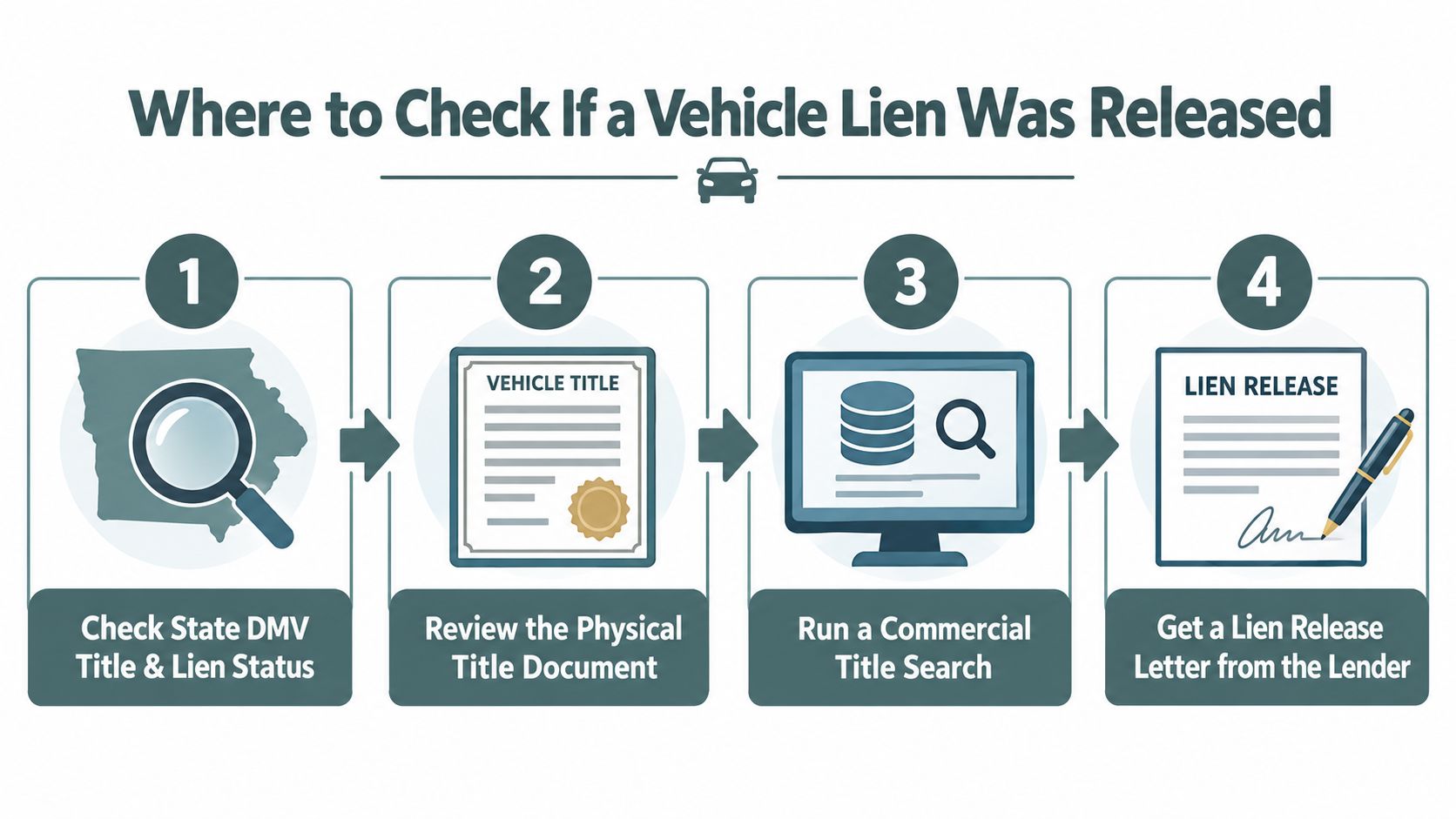
Run the state DMV title and lien check. Look for the current lienholder, a satisfied status, a release date, or an indication that no active lienholder is recorded. If the system shows a pending or unresolved filing, treat the vehicle as encumbered until you find the recorded release.
Inspect the physical title. Confirm that the VIN, owner name, lienholder field, brand information, and satisfaction notation match the vehicle and seller. A seller's payoff receipt is useful supporting evidence, but it doesn't replace the title record.
Search the filing index when the transaction calls for it. For commercial vehicles or vehicles financed through a secured transaction, search the Secretary of State or UCC index by debtor name and, when available, filing number. Review the financing statement and subsequent filings. A termination or release should connect to the original record and describe the same debtor and collateral.
Ask the lender for written release documentation. Request a lien satisfaction or release letter that identifies the VIN or title number, confirms the debt was satisfied, and states that the lender releases its interest. If the DMV still shows the lien, ask the lender whether it submitted the electronic release or mailed the signed title.
For a more detailed vehicle-specific workflow, use this guide to checking for a lien on a car. If you can't locate a lender or need help identifying the correct party connected to a filing, a resource covering 7 leading skip tracing tools may help with contact research, though it won't replace an official title or UCC search.
Avoid VIN lookup errors
NY DMV warns that exact identifier entry matters. Its lookup instructions explain that a VIN character resembling the letter I should be entered as 1, and a character resembling O should be entered as 0. Compare the VIN on the dashboard, title, registration, and lender paperwork before assuming a negative result means the lien is gone.
A clean DMV query is evidence about the records held by that state. It isn't proof that every historical or cross-state encumbrance has been discovered. For a commercial or secured-transaction lien, the DMV result and UCC result should tell the same story.
How to Use Official Records and VIN History Together
Official records and commercial vehicle-history reports answer different questions. The DMV tells you what the issuing state currently records on the title. A VIN history report can help reveal broader context, such as title brands, accident information, odometer readings, auction records, ownership transfers, and records from other jurisdictions.
Use the DMV result for the legal title decision. Use broader history to test whether the vehicle's story is consistent. For example, a clean state lien query doesn't erase a history report's indication that the vehicle previously carried a salvage brand or crossed state lines. Those findings may not prove an active lien, but they can tell you to ask for older titles, auction documents, or lender records.
| Feature | Official DMV Title Lien Check | VIN History Report |
|---|---|---|
| Current state title status | Primary source for the issuing state's recorded lien status | May summarize title data from available sources |
| Lender or lienholder field | Can show the lienholder recorded by the DMV | May include lien-related details when reported |
| Cross-state context | Limited to the agency's own records and jurisdiction | Can connect records reported across jurisdictions |
| Title brands | Shows brands recorded on the title | Can organize salvage, rebuilt, flood, and other brand history |
| Accident and damage history | Usually not the main purpose of the lien lookup | Can provide reported accident and damage events |
| Odometer history | May show title-related mileage entries | Can arrange chronological mileage records |
| Auction history | Generally outside the core lien query | May show auction records, listing history, or images when available |
| Final release decision | Use this record to confirm the title is clear | Use it to identify questions and supporting evidence |
Reconcile conflicting results
If the DMV shows an active lender but the seller's report says the loan was paid, stop and obtain the lender release and DMV update. If the DMV shows no lien but a history report identifies an older lender, determine whether that record is historical, tied to another title jurisdiction, or missing a properly indexed termination.
Vektracer is one commercial option for VIN-based history context. Its reports can compile available records involving liens, title brands, accidents, odometer history, auction activity, theft records, ownership, and service information into a structured timeline. That broader view is useful for used-car buyers, salvage shoppers, license-plate and VIN lookup users, and independent dealers, but the state DMV remains the controlling check for the current title record.
A history report can tell you where to investigate. The title agency and lienholder determine whether the recorded lien has actually been cleared.
Why a Lien Still Shows Open and How to Fix It
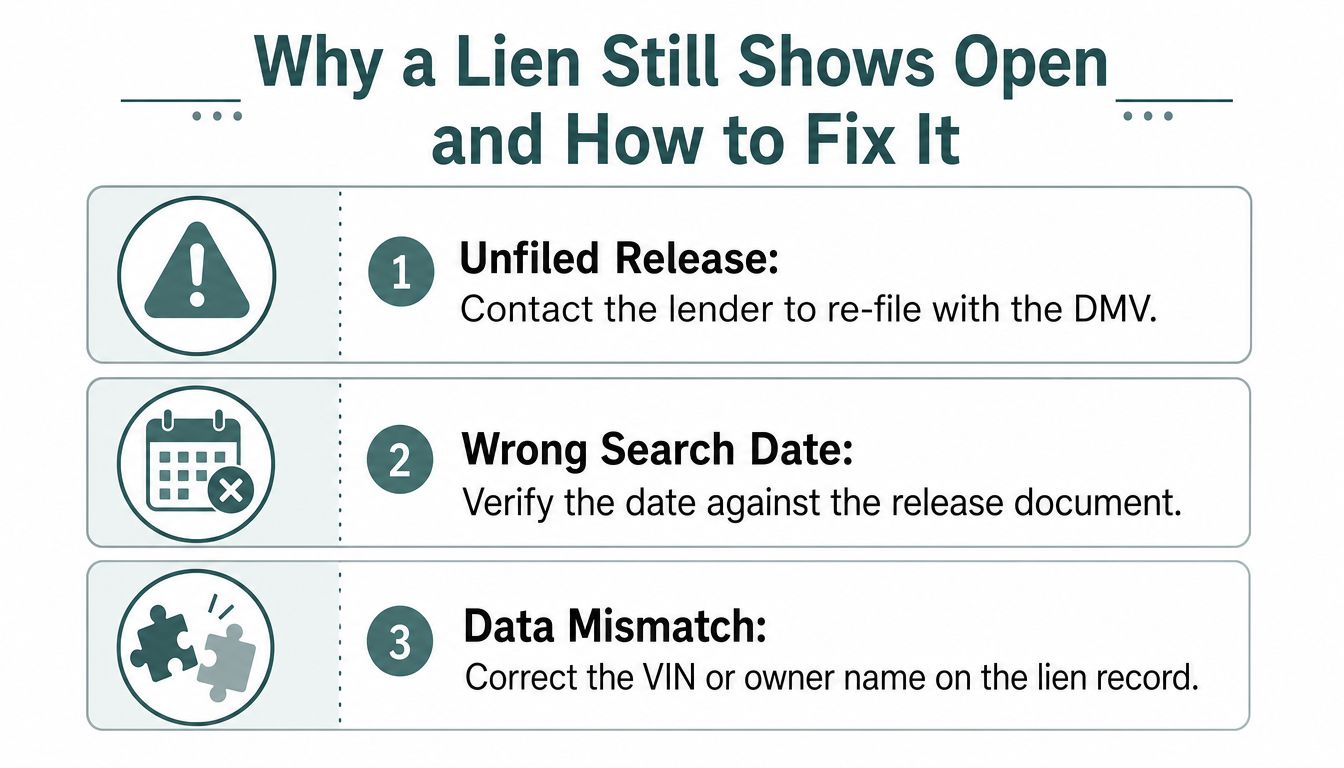
A lien can remain open after payoff because someone failed to file the release, filed it with incorrect information, searched the wrong index, or used a release process that doesn't update the DMV automatically. The fix depends on which part of the chain is incomplete.
The lender never filed the release
Contact the lienholder's title or lien-release department, not only a general customer-service representative. Send the lender the VIN, title number, borrower name, payoff confirmation, and the current DMV result. Ask for a signed satisfaction letter and confirmation that the release was sent to the correct DMV or filing office.
A lender release letter should identify the vehicle precisely and state that the secured debt has been satisfied and the lender's interest is released. If a lender refuses to respond, keep copies of every request, delivery confirmation, payoff record, and DMV printout.
The release exists but the search missed it
California FTB advises searching by the date the lien was resolved rather than relying only on the original recording date, because a release can be indexed separately. The CFPB guidance on checking whether a lien was released likewise directs consumers toward state property records and recommends contacting the county recorder or Secretary of State when the release isn't obvious.
Search the office that originally perfected the lien, then use the payoff or discharge date. Inspect the document image rather than relying on an index description. Match the debtor, collateral description, filing number, and instrument number to the original lien.
For property-record mechanics rather than vehicle-title procedures, guidance on removing a lien from an Orange County property can help explain why a recorded satisfaction matters. It doesn't substitute for your state's vehicle process.
The DMV uses a different release path
Electronic lien programs can change what the owner must do. Virginia DMV states that a participating lender releases the lien electronically, after which DMV mails a new title to the address on file and records no lien. The title is printed with “Lien Satisfied” and the satisfaction date. When the lender doesn't participate, it must mark the title as satisfied and mail it to the owner. If DMV records still need updating, the owner must visit a customer service center and apply for a substitute title, which Virginia identifies as carrying a $15 fee. Virginia DMV's satisfaction procedure provides the state-specific details.
California uses a related electronic process. Its DMV says that an electronic lien-satisfaction notification causes the title to be issued automatically to the registered owner or to a new lienholder if another lien is being added. If the lienholder doesn't respond, California provides a paper trail involving a certified letter requesting release, a 30-day wait, the returned letter or postal receipt, REG 256 Section G, and a bond for the vehicle's current retail value. Those requirements appear in California DMV's Electronic Lien and Title Program.
Don't assume another state's electronic process or forms apply to your vehicle. Ask the issuing DMV exactly which documents it accepts and whether it can update the record from a lender letter, a marked title, or a substitute-title application.
Avoiding Mistakes When Searching Lien Release Records
The most common false negative comes from searching the wrong record set. A vehicle lien may be visible in the DMV title system, while a related commercial or secured-transaction record appears in a UCC index or another filing office.
Use this short pre-search checklist:
- Confirm the controlling office: Identify the DMV or title agency that issued the current title, then identify the office that originally recorded the lien.
- Use the right date: Search the release or satisfaction date, usually connected to payoff or discharge, rather than only the original recording date.
- Copy identifiers exactly: Check the VIN, title number, debtor or owner name, filing number, and instrument number.
- Open the document image: Read the release language and compare the collateral description with the original lien.
- Separate payment from filing: Keep the payoff receipt, but don't treat it as a recorded release until the public index or DMV record reflects the change.
California FTB specifically cautions that release records may be indexed separately from the original lien. The CFPB also recommends checking public records and contacting the county recorder or Secretary of State when the release isn't clear. A paid debt without a recorded release can still delay a sale, title transfer, or new financing.
Final Checklist Before You Buy or Transfer the Title
Before money changes hands, require three confirmations:
- DMV confirmation: The issuing state's title or lien record shows no active lienholder, or clearly marks the lien satisfied.
- Filing confirmation: Any applicable UCC, Secretary of State, or recorder search shows a termination, release, or satisfaction connected to the original filing.
- Lender confirmation: The lienholder provides a release letter or properly satisfied title that matches the VIN and owner information.
Collect the signed title, lien release letter, payoff documentation, DMV result, and any relevant filing image. If one record still shows an open or pending lien, delay payment, use an escrow arrangement where appropriate, or require the seller to resolve the record first. Don't rely on a license-plate lookup alone, and don't treat a clean VIN result as a complete title search.
For broader buyer preparation, keep this used-car title check guide with your transaction documents.
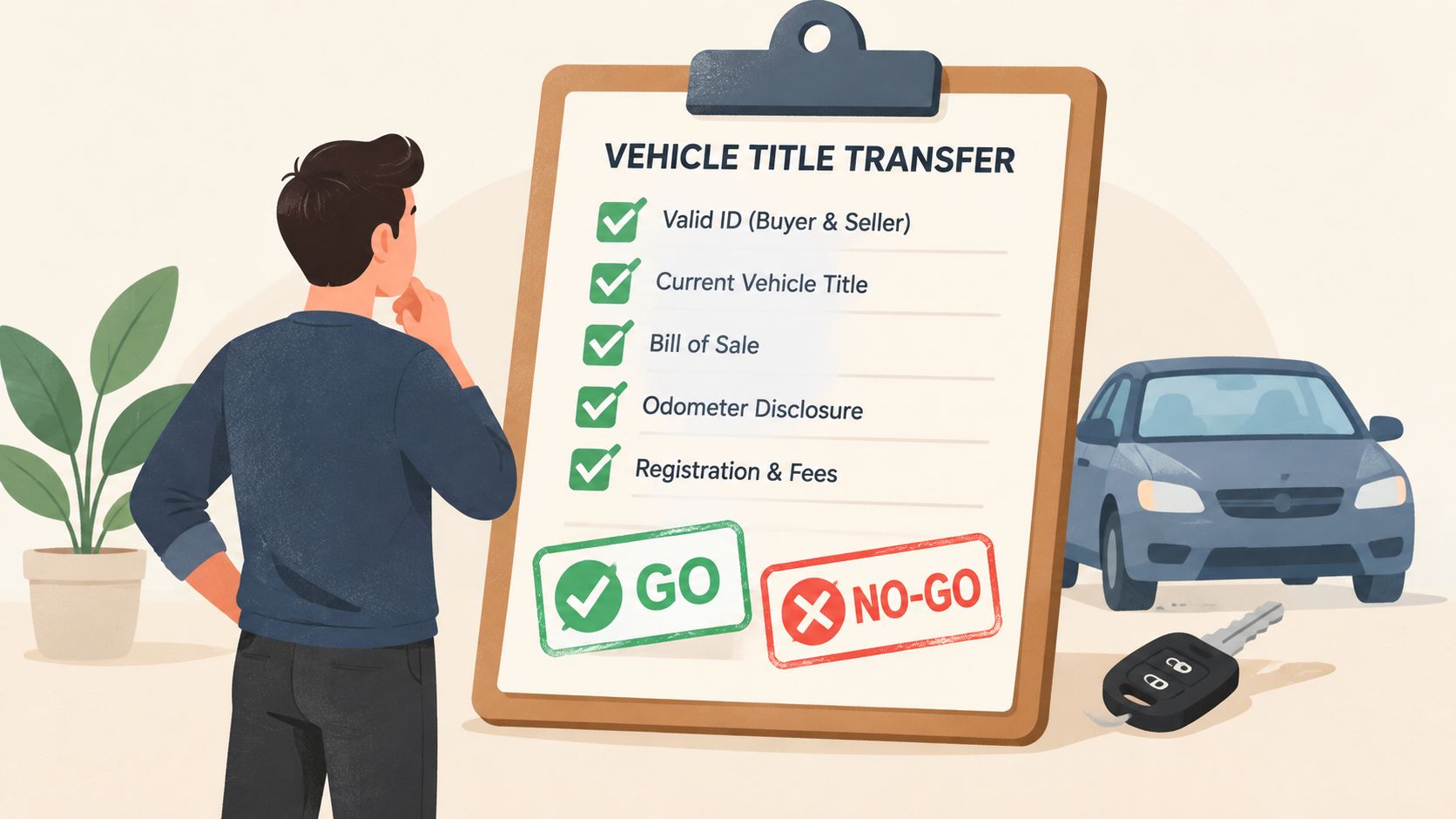
If the DMV, filing index, and lender paperwork don't agree, treat the title as unresolved until the discrepancy is corrected. Once those records align, you can move forward with much greater confidence.
Use Vektracer to review available VIN or license-plate history for lien context, title brands, accidents, odometer records, auction history, and ownership information. Then confirm the current lien status directly with the relevant state DMV before you buy or transfer the vehicle.
Ready to check a vehicle?
Enter any 17-character VIN for a free instant preview — no account needed.