Vehicle title check guide for used car buyers 2026
Check a vehicle before you buy
Enter a VIN for a free instant preview — accidents, title brands, mileage, liens & open recalls.
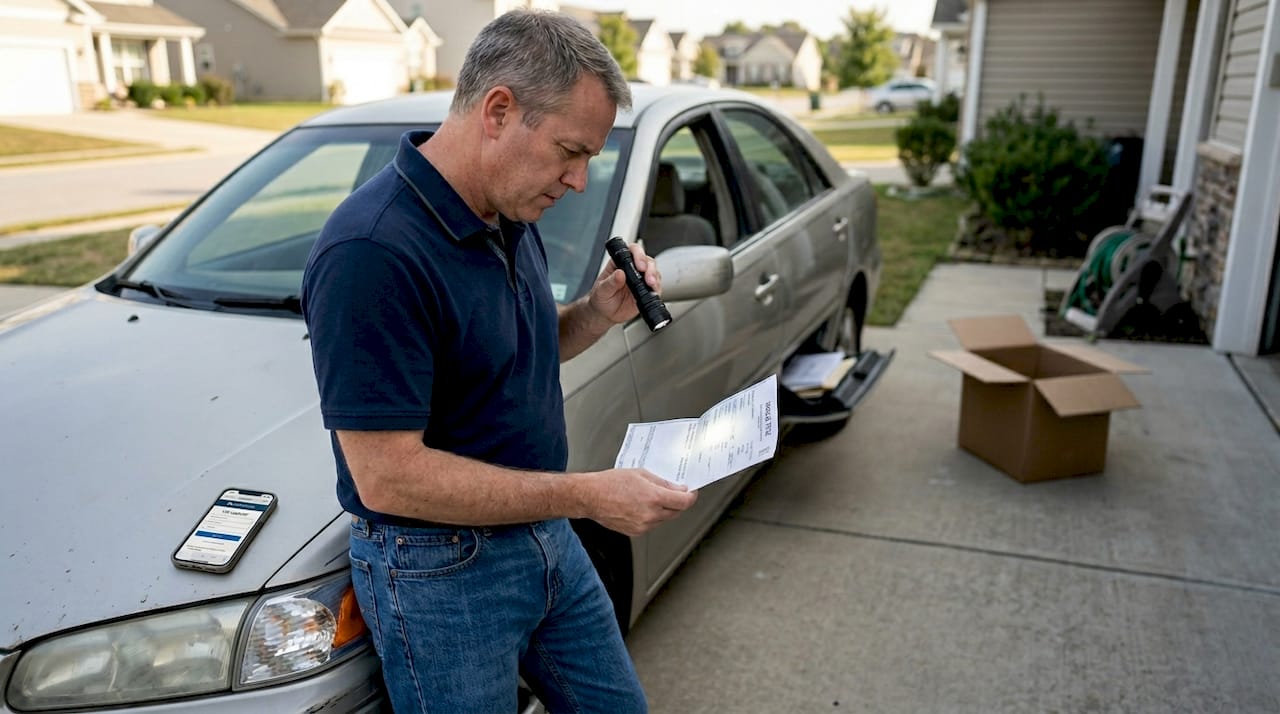
Buying a used car without checking the title is like signing a contract without reading it. One buyer in Ohio paid $14,000 for a pickup truck, only to discover weeks later that it carried a flood title from a previous state. The seller had moved the vehicle across state lines to obscure its history, a practice known as title washing. Stories like this are more common than most buyers realize, and the financial loss almost always falls on the person who skipped the title check. This guide walks you through every step of verifying a vehicle title in the US and Canada, so you can buy with confidence and avoid costly surprises.
Table of Contents
- Why vehicle title checks are critical for buyers
- What you need before starting a vehicle title check
- Step-by-step: How to check a vehicle title for authenticity and issues
- Comparing vehicle title check tools: US versus Canada
- Common mistakes and red flags when checking vehicle titles
- Best practices for safe, fraud-free vehicle title transfers
- Leverage digital tools for a safer title check
- Frequently asked questions
Key Takeaways
| Point | Details |
|---|---|
| Always check title brands | Hidden brands like salvage or rebuilt can drastically affect value and risk. |
| Cross-verify VINs and ownership | Make sure every VIN location and seller ID match the title exactly to avoid fraud. |
| Run official history reports | Use NMVTIS in the US and CARFAX Canada plus provincial registries for thorough verification. |
| Don’t trust seller-provided reports | Always generate your own title and lien checks for unbiased data. |
| Complete transactions at DMV/registry | Transfers done at official locations protect you from paperwork errors and post-sale disputes. |
Why vehicle title checks are critical for buyers
Skipping a title check is one of the common buying pitfalls that costs buyers thousands of dollars every year. The numbers are sobering: roughly 12% of US private used vehicle sales involve undisclosed title issues, and VIN fraud is increasingly tied to organized crime networks. That means one in eight private sale vehicles could be hiding something serious.
When you buy a car with a hidden title problem, the financial liability transfers to you. The seller disappears, and you are left holding a vehicle that may be uninsurable, unsellable, or even subject to repossession if a lien exists. Private sales offer almost no legal recourse after the fact.
Here are the most common title problems buyers encounter:
- Salvage or rebuilt titles from prior total-loss accidents
- Flood damage that was never disclosed or branded
- Outstanding liens that give lenders the right to repossess the car
- Odometer rollbacks that inflate the vehicle’s perceived value
- Stolen vehicles with cloned or altered VINs
“Title fraud is not a minor clerical issue. It is a financial trap that organized criminal networks use to move damaged or stolen vehicles into the legitimate market.”
Understanding title fraud detection methods is your first line of defense. With the risks in mind, let’s look at what you’ll need to reliably verify a vehicle’s title.
What you need before starting a vehicle title check
Before you run any report or inspect any document, gather the right materials. Being prepared saves time and prevents you from missing critical details during the check.
Essential items for a title check:
- The physical title document (or an electronic record printout for states/provinces using digital titles)
- The 17-digit VIN, found on the dashboard (driver’s side), door jamb sticker, and engine block
- Government-issued ID to verify the seller’s identity matches the title
- Access to NMVTIS (US) or CARFAX Canada plus your provincial registry tool
- A bill of sale template to document the transaction
- Contact information for an independent mechanic
The checklist for buyers from Alberta’s government is a solid reference for Canadian buyers preparing for a private sale inspection.
Pro Tip: Always pull the VIN from the dashboard yourself. Do not rely on the VIN the seller provides verbally or in writing. Sellers involved in fraud sometimes give you a different VIN to steer you away from the vehicle’s real history.
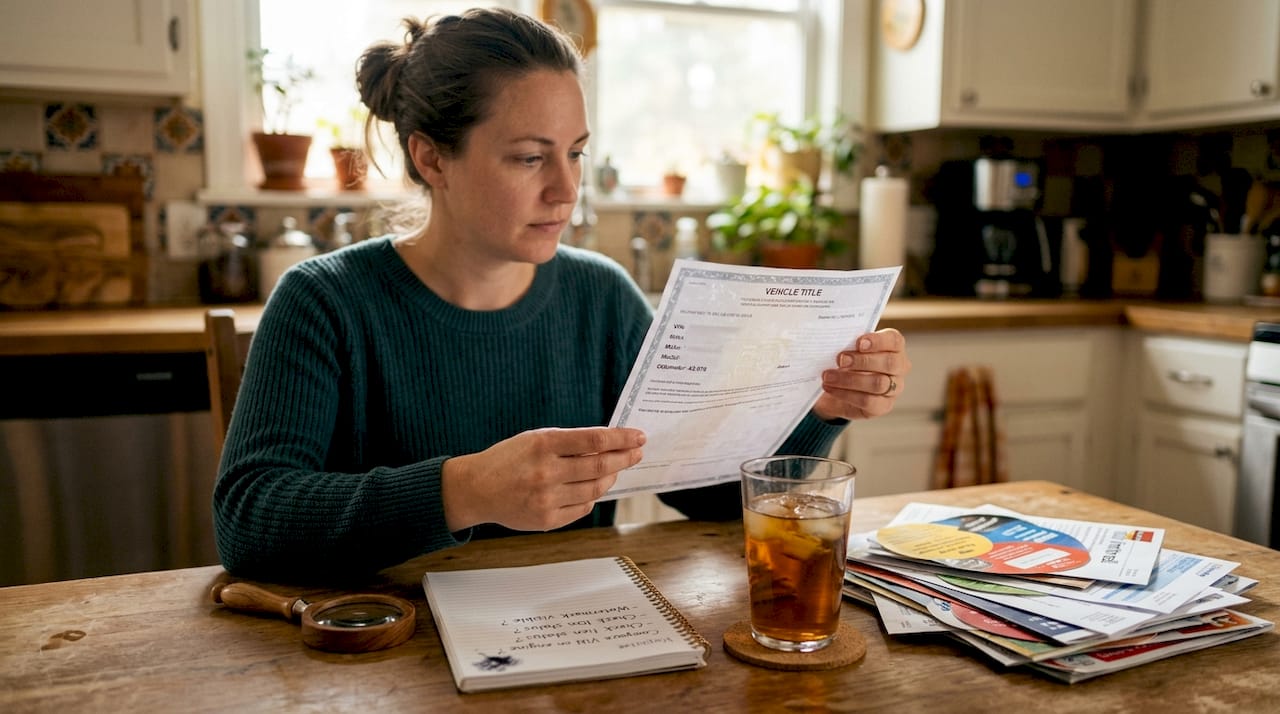
When you inspect the physical title, look for security features like watermarks, raised seals, and state or province-specific printing. Familiarize yourself with sample car titles so you know what a legitimate document looks like before you sit down with a seller.
| Tool | US buyers | Canadian buyers |
|---|---|---|
| NMVTIS report | Required | Not applicable |
| CARFAX Canada | Optional | Strongly recommended |
| State/provincial DMV registry | Recommended | Required for lien check |
| Independent mechanic | Strongly recommended | Strongly recommended |
| Bill of sale | Required | Required |
With all your tools in hand, you’re ready to start your step-by-step title check.
Step-by-step: How to check a vehicle title for authenticity and issues
This process works for both US and Canadian buyers. Follow each step in order and do not skip ahead.
- Inspect the physical title document. Look for watermarks, holograms, and official state or province seals. A legitimate title will have security printing that is difficult to replicate. Compare it against sample car titles if you are unsure.
- Match the VIN across all locations. Check the dashboard, driver’s door jamb, and engine block. All three must match the VIN printed on the title. Any discrepancy is a serious red flag.
- Verify the seller’s identity. The name on the title must match the seller’s government-issued ID. If the seller says they are selling on behalf of someone else, ask for a notarized letter of authorization.
- Check for title brands. Look for words like salvage, rebuilt, flood, junk, or non-repairable on the title. These brands indicate significant past damage. Learn more about interpreting title brands before you negotiate.
- Confirm there are no liens. A lien means a lender has a financial claim on the vehicle. If the seller has not paid off their loan, the lender can repossess the car even after you buy it.
- Review the odometer reading. Compare the mileage on the title to the odometer and to any service records. Rolled-back odometers are a common form of fraud.
- Run an official database check. For US buyers, the NMVTIS database provides official title, brand, and odometer history. For Canadian buyers, use CARFAX Canada combined with your provincial title check tools.
- Cross-check the VIN online. A thorough VIN lookup can surface accident records, theft reports, and recall information that the title alone will not show.
- Get an independent mechanic’s inspection. A pre-purchase inspection catches mechanical issues that no database can detect.
“No single document tells the whole story. Combining a physical title inspection with an official database report and a mechanic’s assessment gives you the most complete picture.”
Pro Tip: For Canadian buyers, the CARFAX Canada report basics guide explains exactly what each section of the report means, which helps you interpret results faster.
Now that you know the steps, let’s compare the main tools and reports available for buyers in the US and Canada.
Comparing vehicle title check tools: US versus Canada
No single report covers everything. Smart buyers layer multiple sources to fill the gaps.
| Tool | Coverage | Cost | Best for |
|---|---|---|---|
| NMVTIS (US) | Title brands, odometer, theft | Low (varies by provider) | US buyers, official records |
| State DMV lookup | Real-time title status, liens | Free to low | US buyers, lien confirmation |
| CARFAX Canada | Brands, accidents, registration | Paid | Canadian buyers, full history |
| Ontario UVIP | Provincial title, lien check | Low | Ontario buyers |
| Alberta registry | Title, registration, lien | Low | Alberta buyers |
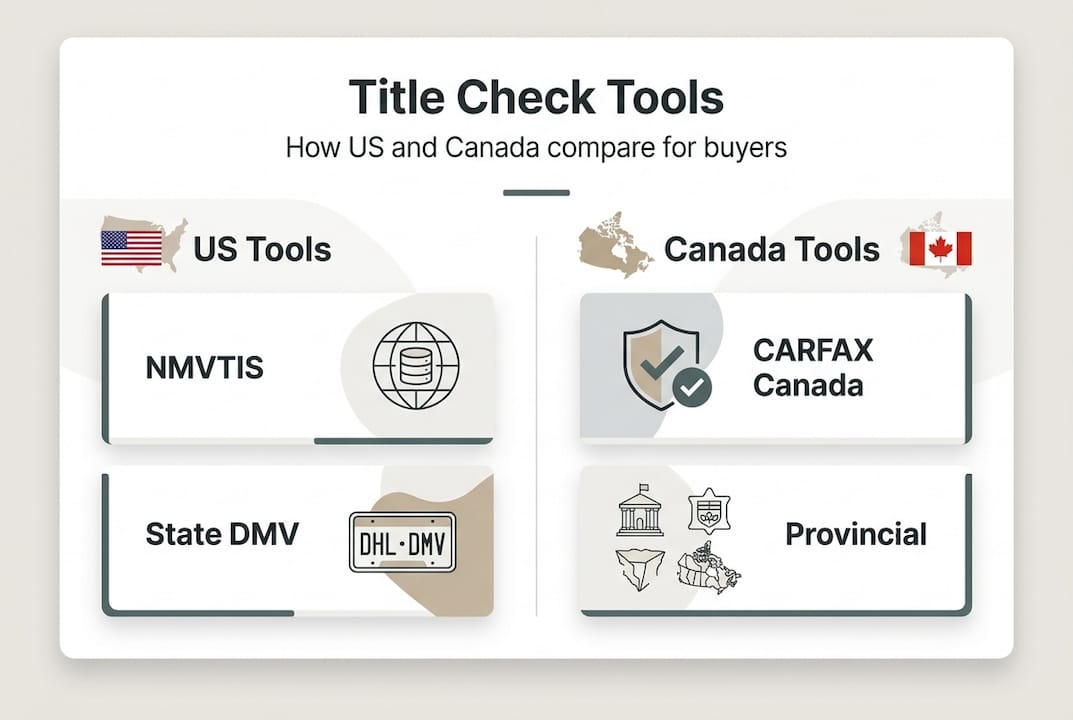
The NMVTIS system is the US gold standard for official title data, but it does not include full repair records. State DMV lookups fill that gap in real time for many states. In Canada, no single tool covers everything, which is why combining CARFAX Canada with your provincial registry guide is the recommended approach.
For additional fraud alerts specific to your state, the Utah DMV fraud resources offer practical guidance that applies broadly across the US.
Even with great tools, buyers can still fall into common traps. Next, learn the warning signs and mistakes to avoid.
Common mistakes and red flags when checking vehicle titles
Even careful buyers make errors. Knowing what to watch for keeps you from overlooking something critical.
- Accepting an out-of-state or out-of-province title without question. Vehicles moved across borders are a classic sign of title washing, where a branded title is replaced with a clean one in a new jurisdiction.
- Ignoring VIN mismatches. Even a single digit difference between the dashboard VIN and the title VIN is a dealbreaker. VIN cloning involves reassigning a legitimate VIN to a stolen or damaged vehicle.
- Accepting a recently issued title on an older vehicle. A brand-new title on a ten-year-old car often means the original was replaced to hide a brand or lien.
- Overlooking duplicate or lost title flags. Sellers sometimes request a duplicate title to clear a lien notation from the original document.
- Agreeing to cash-only or rushed sales. Pressure to close quickly and insistence on cash are fraud warning signs that should make you pause.
- Not asking the right questions. Knowing what questions to ask sellers about title history, past accidents, and ownership gaps can reveal inconsistencies before you commit.
“Out-of-region titles, VIN cloning, cash-only sales, and seller name mismatches are the most common red flags in private vehicle fraud cases.”
Pro Tip: If the seller’s name does not match the title, walk away unless they can provide clear legal documentation explaining the discrepancy. This situation is a major risk factor for title fraud.
With these risks flagged, let’s finish with essential best practices to ensure your transaction is safe and dispute-proof.
Best practices for safe, fraud-free vehicle title transfers
Following a consistent process protects you before, during, and after the sale.
- Meet at the DMV or provincial registry. Completing the paperwork on-site ensures the transfer is legal and the title is valid. Post-sale fraud is extremely difficult to contest once you leave.
- Draft a detailed bill of sale. Include the VIN, sale price, odometer reading, both parties’ names and addresses, and the date. Keep a signed copy.
- Run your own history report. Never rely on a report the seller provides. Pull it yourself so you control the source. Use trusted vehicle history checks from verified providers.
- Use escrow or verified payment. Avoid cash when possible. Escrow services hold funds until both parties confirm the transaction is complete.
- Keep copies of everything. Store digital and physical copies of the title, bill of sale, inspection report, and any history reports you ran.
- Follow AMVIC guidance. The AMVIC used vehicle guide is an excellent resource for Alberta buyers and covers many principles that apply across Canada.
| Step | Why it matters |
|---|---|
| Meet at DMV/registry | Confirms title validity on the spot |
| Bill of sale | Legal record of agreed terms |
| Independent inspection | Catches mechanical issues databases miss |
| Run your own report | Eliminates seller-manipulated data |
| Escrow payment | Protects funds during transfer |
Pro Tip: Cross-verify information from at least two independent sources before finalizing any purchase. A title that looks clean in one database may show a brand or lien in another.
Leverage digital tools for a safer title check
Running a thorough title check used to mean hours of phone calls and trips to government offices. Today, you can access the same core data in minutes. At Vektracer, we pull NMVTIS-connected records to give you accident history, title brands, odometer data, theft checks, safety recalls, and market value in one place. Our reports start at $19.99, which is significantly less than Carfax at $44.99 or AutoCheck at $24.99.
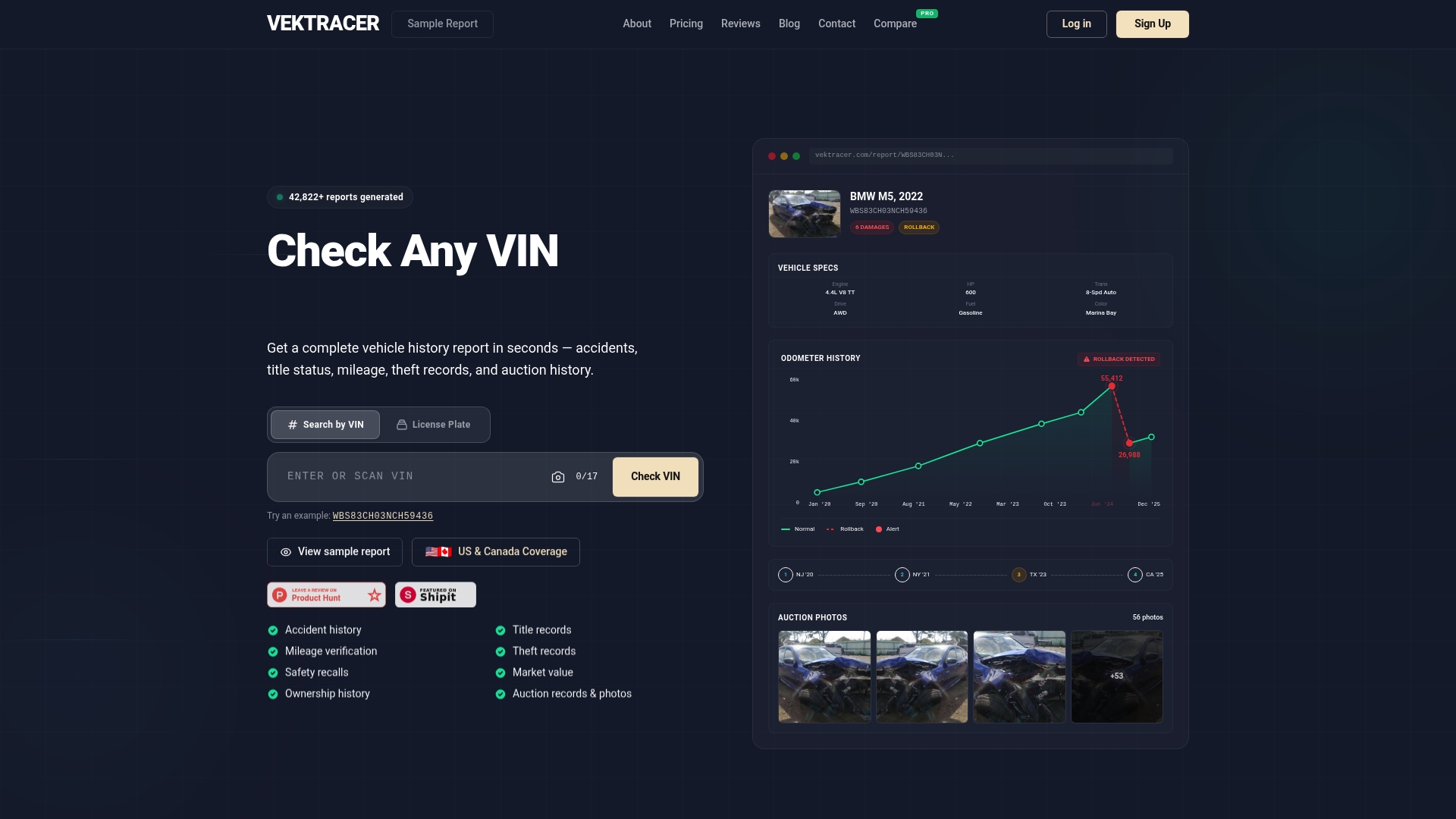
Before you finalize your next purchase, see how Vektracer works and review a sample history report to understand exactly what you get. Whether you are buying in the US or Canada, having a centralized, verified report in hand gives you negotiating power and peace of mind. Do not let a preventable title issue turn a good deal into a costly mistake.
Frequently asked questions
How do I check if a car title is clean in the US?
Inspect the physical title for any brands, confirm the VIN matches across all vehicle locations, and run an NMVTIS-connected report for official title, odometer, and theft history.
Are there free resources for checking Canadian vehicle titles?
Some provincial tools offer basic free lookups, but a CARFAX Canada report combined with your provincial registry check gives you the most reliable coverage for brands, registration, and liens.
What is VIN cloning and how can I spot it?
VIN cloning means a criminal reassigns a legitimate VIN to a stolen or damaged vehicle. Spot it by checking all VIN placements on the car for consistency and running a history report to confirm the vehicle’s identity.
Does a rebuilt or salvage brand affect car value?
Yes. Vehicles with salvage or rebuilt titles carry significantly lower resale value and often come with higher insurance premiums because they indicate serious past damage.
Why should I meet at the DMV or registry when buying?
Meeting at the DMV ensures the title is valid, the transfer is processed correctly, and both parties are protected. It is the single most effective step to prevent post-sale title disputes.
Recommended
Ready to check a vehicle?
Enter any 17-character VIN for a free instant preview — no account needed.