How the VIN protects used car buyers: 17 digits explained
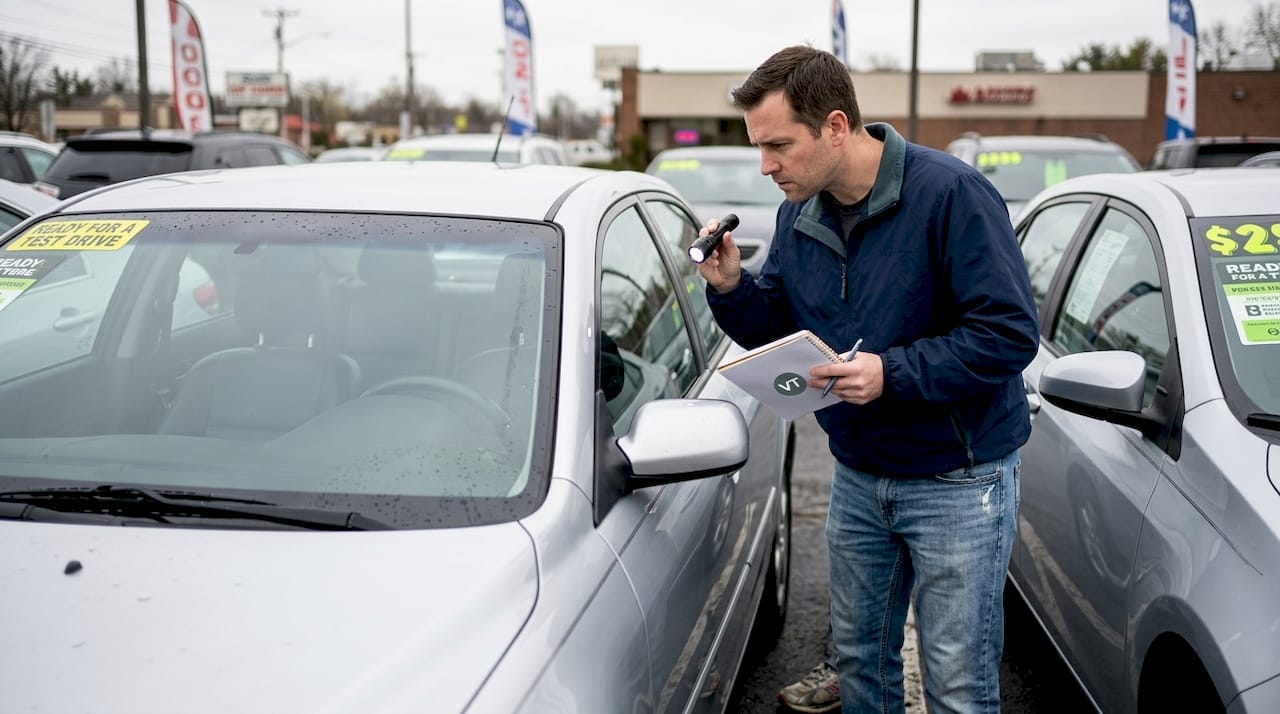
Check a vehicle before you buy
Enter a VIN for a free instant preview — accidents, title brands, mileage, liens & open recalls.
TL;DR:
- The VIN provides crucial information about a used car’s history and authenticity.
- Vehicle history reports help uncover hidden issues like salvage titles, flood damage, or odometer fraud.
- Combining VIN analysis with physical inspection ensures a smarter, more reliable used car purchase.
Buying a used car feels like a gamble when you can’t see what’s hiding beneath the surface. A fresh coat of paint and a clean interior can mask a flood-damaged frame, a rolled-back odometer, or a salvage title that should have been disclosed upfront. Most buyers rely on how the car looks or what the seller says, and that’s exactly where costly mistakes happen. The good news is that every vehicle has a unique identifier built into it, and VIN decoding reveals crucial information about a car’s origin, features, and recall status. This guide shows you how to use that 17-digit code to shop smarter and protect yourself.
Table of Contents
- What is the VIN and why it matters
- How the VIN unlocks a car’s hidden history
- Free government VIN checks vs. paid reports: What each reveals
- Limitations of VIN reports and why inspection still matters
- Why the best used car buyers treat the VIN as a starting point, not a shortcut
- Get peace of mind with your next used car, start with Vektracer
- Frequently asked questions
Key Takeaways
| Point | Details |
|---|---|
| VIN unlocks hidden history | A car’s VIN reveals manufacturing details and enables instant access to recalls, accidents, and title brands. |
| Free checks vs. paid reports | Government tools catch major red flags, but only paid reports show full accident and service records. |
| Reports have limits | VIN history is powerful, but some accidents and repairs may be missing—inspection remains essential. |
| Best buyers use both | Combine VIN-powered research with in-person inspection for the most informed, confident purchase. |
What is the VIN and why it matters
The Vehicle Identification Number, or VIN, is a 17-character code assigned to every motor vehicle manufactured for sale in the United States. Think of it as a fingerprint. No two vehicles share the same VIN, which makes it the most reliable way to trace a car’s entire history from the factory floor to your driveway.
Where to find the VIN
You can locate the VIN in several places on any used car:
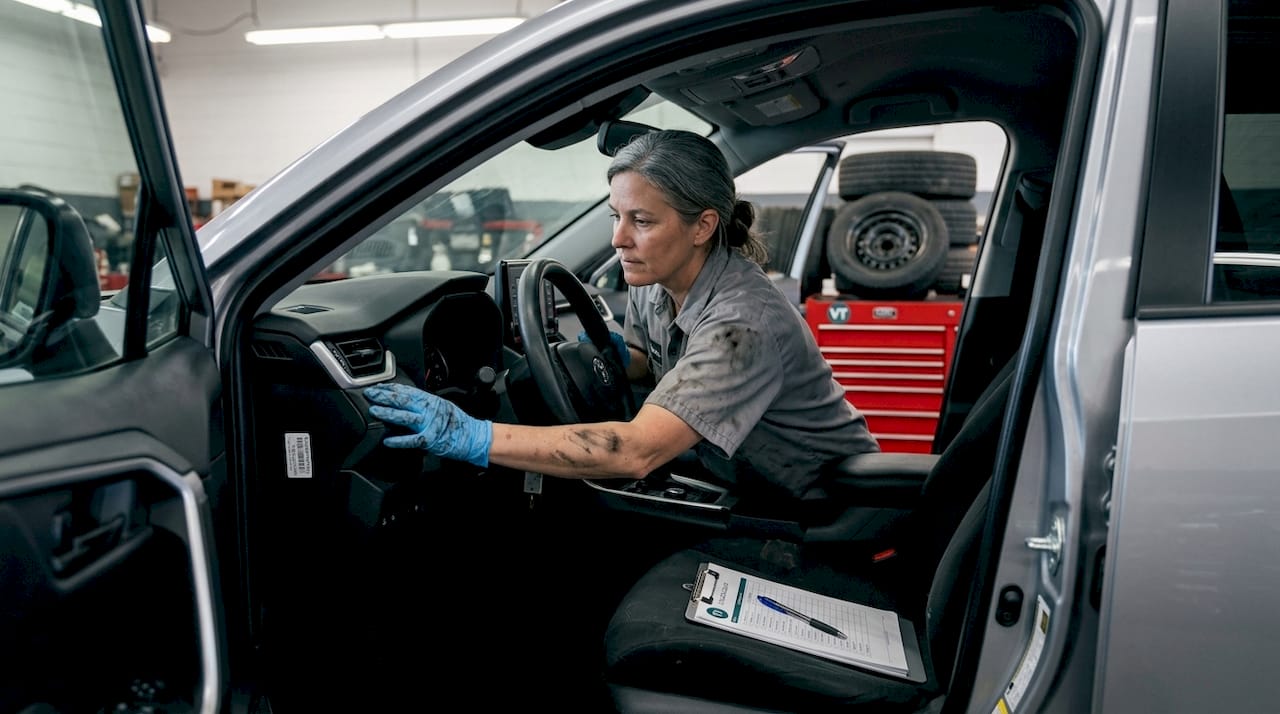
- On the dashboard, visible through the windshield on the driver’s side
- Inside the driver’s door jamb on a sticker or plate
- On the vehicle’s title, registration, and insurance documents
- On the engine block or other major components
Always cross-check the VIN in at least two locations. If the numbers don’t match, that’s a serious red flag that could indicate tampering or a rebuilt vehicle.
What each section of the VIN encodes
The 17 characters are not random. Each position tells you something specific. According to VIN details from Consumer Reports, the code reveals the manufacturer, country of origin, model year, assembly plant, engine type, and safety features built into the vehicle.
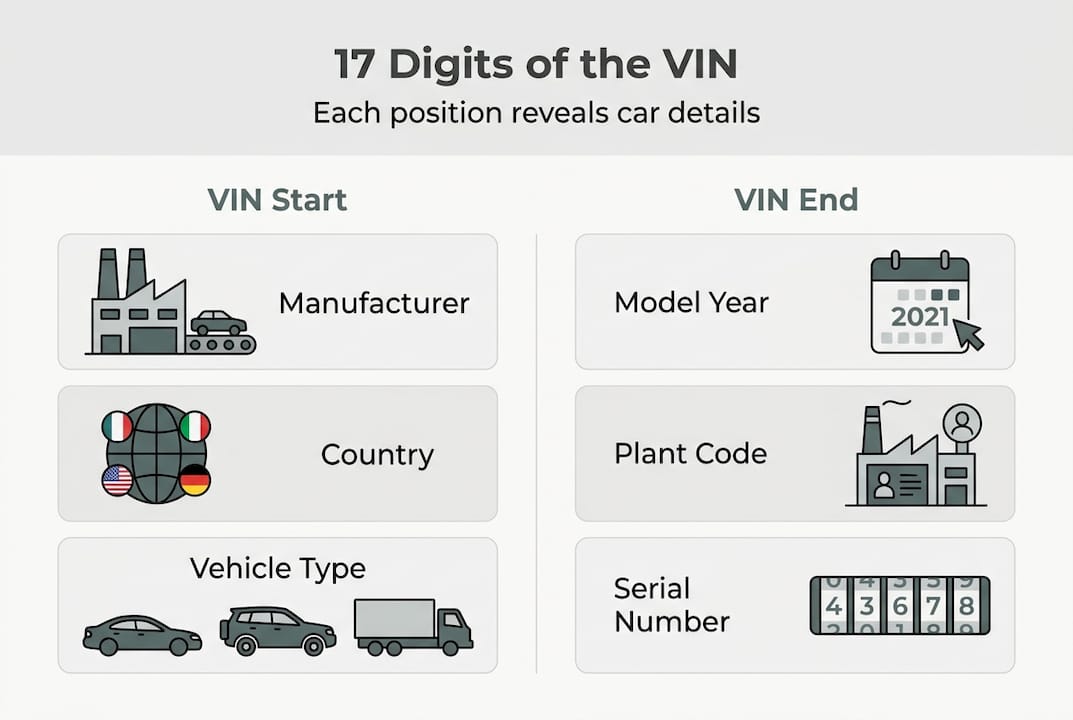
| VIN position | What it reveals |
|---|---|
| Characters 1-3 | World Manufacturer Identifier (WMI): who made it and where |
| Characters 4-8 | Vehicle Descriptor Section: model, body style, engine type |
| Character 9 | Check digit used to verify VIN authenticity |
| Character 10 | Model year |
| Character 11 | Assembly plant |
| Characters 12-17 | Production sequence number |
Understanding this structure helps you spot inconsistencies. For example, if the model year encoded in position 10 doesn’t match what the seller claims, you know something is off before you even pull a history report.
You can get a solid VIN overview to understand how the number maps to a vehicle’s identity, and learning about decoding a VIN helps you interpret what each section actually means. The VIN is the starting point for every reputable vehicle history check, which we’ll cover next.
How the VIN unlocks a car’s hidden history
With the structure of the VIN clear, here’s how it powers the vital vehicle history search.
When you run a VIN through a history report service, the system pulls data from dozens of sources simultaneously. Vehicle history reports aggregate data from state DMVs, insurance companies, auto repair shops, and salvage auctions, covering accidents, title brands, odometer readings, and service records. That’s a lot of ground covered in seconds.
How to get and read a history report
- Locate the VIN on the vehicle or its documents.
- Choose a report provider (government tools, Carfax, AutoCheck, or Vektracer).
- Enter the VIN and purchase or access the report.
- Review the title history section first for brands like salvage, flood, or rebuilt.
- Check the odometer readings across multiple dates to spot rollbacks.
- Look at the number of previous owners and how long each kept the car.
- Scan for open safety recalls that haven’t been fixed.
Red flags to watch for in any report
- Salvage title: The car was declared a total loss by an insurer.
- Flood damage: Water damage causes long-term electrical and mechanical problems.
- Odometer rollback: Mileage was illegally reduced to inflate the car’s value.
- Multiple owners in a short time: Could signal recurring mechanical issues.
- Lemon law buyback: The manufacturer repurchased the car due to defects.
The NMVTIS vehicle history data system is particularly important here. NMVTIS provides official title, odometer, and salvage data via VIN, and it draws from all 50 states. Commercial providers like Carfax and AutoCheck layer additional data on top of this government foundation. For a side-by-side look at major history report providers, it helps to know exactly what each one covers before you pay.
Pro Tip: Always run a VIN report before scheduling a test drive. It saves you time and prevents you from falling in love with a car that has a hidden title problem.
Free government VIN checks vs. paid reports: What each reveals
Before you buy any report, compare what you’ll actually get from different VIN check sources.
Not every VIN check costs money. The government offers several free tools that cover specific, important categories. The VIN used for free checks includes recalls through NHTSA and theft records through NICB, and all states report title data to NMVTIS. These tools are legitimate and useful, especially as a first pass.
| Check type | Cost | What it covers | What it misses |
|---|---|---|---|
| NHTSA recall check | Free | Open safety recalls | Accidents, title, odometer |
| NICB theft check | Free | Stolen vehicle status | Service history, liens |
| NMVTIS report | Free to low cost | Title brands, odometer, salvage | Insurance claims, repairs |
| Paid commercial report | $19.99 to $44.99 | All of the above plus accidents, liens, service records, market value | Cash repairs, unreported events |
What free tools do well:
- Confirming the car hasn’t been reported stolen
- Checking for open manufacturer recalls
- Verifying basic title status and odometer at last title transfer
What paid reports add:
- Accident and insurance claim history
- Detailed service and maintenance records
- Lien holder information
- Market value data to support price negotiation
- Number of owners and usage type (personal, rental, fleet)
Here’s the honest truth: if you’re buying a car priced under $5,000 from a private seller and you plan to get a full mechanic inspection anyway, a free NMVTIS check might be enough to screen for major title issues. But for anything above that price point, the extra detail in a paid report is worth it. The NMVTIS title data covers all states, so major brands rarely slip through.
For buyers who want full coverage without overpaying, there are cheaper vehicle history alternatives that deliver the same core data as Carfax at a fraction of the price.
Limitations of VIN reports and why inspection still matters
While a VIN-powered report is powerful, it’s not the whole story. Here’s what most shoppers miss.
VIN reports are only as good as the data reported to them. When a car gets repaired with cash at an independent shop, that repair never enters any database. When a minor fender-bender doesn’t involve insurance, it goes unrecorded. Voluntary reporting misses cash and private repairs, with roughly 15 to 20% of accidents going unreported, and overall accuracy sits around 85 to 90% for major events. That gap matters.
A clean VIN report means no reported problems. It does not mean no problems at all. Treat it as strong evidence, not a guarantee.
Common gaps in VIN-based reports:
- Repairs paid out of pocket without insurance involvement
- Minor collisions below the reporting threshold
- Damage that occurred in states with slower data submission
- Recent events that haven’t yet been processed into the database
- Cosmetic issues like rust, worn interiors, and tire condition
This is why a physical inspection by a qualified mechanic is non-negotiable. A VIN report tells you what was recorded. A mechanic tells you what’s actually there right now. Use our mechanic’s inspection checklist to know exactly what to ask for during a pre-purchase inspection.
Pro Tip: When you’re at the lot, physically compare the VIN on the dashboard with the VIN on the door jamb and on the title. Any mismatch is a dealbreaker. Check our guide on pre-purchase checks for a full walkthrough of what to verify in person.
Also look for mismatched paint panels, uneven panel gaps, and signs of welding under the hood. These physical clues often reveal accidents that never made it into any report.
Why the best used car buyers treat the VIN as a starting point, not a shortcut
With all the facts laid out, here’s what sets the smartest used car shoppers apart.
We’ve seen buyers walk away from perfectly good cars because of a misunderstood VIN report, and we’ve seen others drive home a lemon because the report looked clean. Both outcomes come from treating the VIN as the final word rather than the first word.
The most effective buyers use the VIN report to shortlist vehicles. They filter out cars with salvage titles, odometer fraud, or too many owners, and they use that data as leverage in price negotiations. But they never skip the physical inspection. A car with a single reported accident and a clean title can still be a great buy if the repair was done properly. A car with a spotless report can still have serious mechanical wear that no database tracks.
The how VIN fits into buying strategy is simple: use it to eliminate the obvious risks fast, then dig deeper with your eyes and a mechanic’s hands. The buyers who do both consistently get better cars at better prices.
Get peace of mind with your next used car, start with Vektracer
If you’re ready to put this approach into action, here’s the easiest way to start.
Vektracer gives you instant access to a full vehicle history report for just $19.99, which is less than half the cost of a Carfax report at $44.99. You get the same core data: accident history, title records, odometer verification, theft checks, safety recalls, and market value, all sourced from NMVTIS-connected databases.
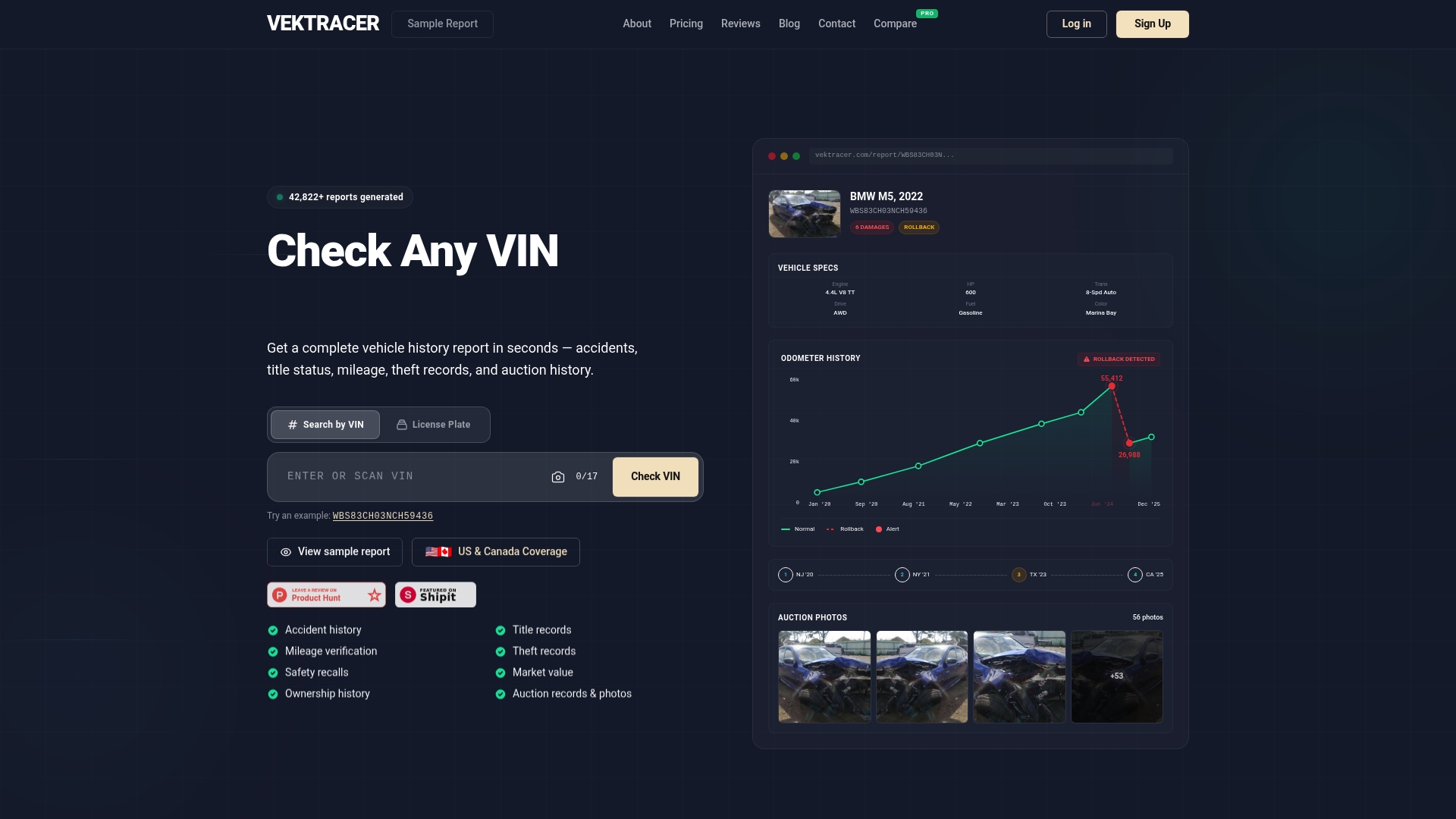
Learn how the Vektracer process works before you commit, or view a sample VIN report to see exactly what you’ll receive. When you’re ready, check our affordable pricing and run your first report with confidence. Don’t let a hidden history catch you off guard on one of the biggest purchases you’ll make this year.
Frequently asked questions
Where do I find the VIN on a used car?
The VIN location is typically on the dashboard near the windshield on the driver’s side, inside the driver’s door jamb, or on the vehicle’s registration and title documents. Always verify it matches across all locations.
What does a VIN report show that a mechanic cannot?
Vehicle history reports show title brands, insurance claims, and odometer records across the car’s entire life, which no mechanic can observe during a physical inspection. However, reports cannot detect unreported damage or recent unrecorded repairs.
Can I get a free VIN history report?
Yes. Government VIN checks through NHTSA, NICB, and NMVTIS provide free access to recalls, theft data, and basic title status, though paid reports include significantly more detail like accident history and service records.
How reliable are VIN-based reports?
VIN-based reports cover approximately 85 to 90% of major reported events, but minor accidents and private cash repairs are frequently missing from the data. Use them as a strong screening tool, not a guarantee.
Do all states report used car data to VIN systems?
Yes. By law, all US states submit title and salvage data to NMVTIS, which means most major title brands are captured in the national database regardless of where the car was previously registered.
Recommended
Ready to check a vehicle?
Enter any 17-character VIN for a free instant preview — no account needed.