VIN Lookup Report: Uncover a Used Car's True History
Check a vehicle before you buy
Enter a VIN for a free instant preview — accidents, title brands, mileage, liens & open recalls.
A VIN lookup report is an essential background check for any used car, using its 17-digit Vehicle Identification Number (VIN) to reveal its complete history. Running this report is the most critical step you can take to avoid purchasing a vehicle with hidden, expensive problems. It translates a car's entire past into a single, easy-to-understand document, giving you the power to make an informed decision.
What Is a VIN Lookup Report and Why Is It Essential?
Buying a used car often feels like a gamble. You’re relying on the seller's word and a quick visual inspection, but a car's true story—the one that dictates its safety, reliability, and value—is written in its past. A VIN lookup report is the tool that lets you read that story, pulling back the curtain on its history.
It’s your primary defense against a bad purchase, turning a risky guess into a confident, data-backed decision.
From Confusing Data to Clear Answers
Without a vehicle history report, you're buying blind. You have no reliable way to confirm if a car was in a major accident, has a branded title from flood damage, or if the odometer has been illegally rolled back. A quality report from a trusted source gathers data from thousands of sources—including DMVs, insurance companies, and repair shops—to answer these critical questions for you.
This step has become non-negotiable for savvy buyers. In fact, the global VIN check platform market was valued at around $2 billion in 2025 and is projected to surge at a CAGR of 15%, reaching an estimated $6.5 billion by 2033. This explosive growth demonstrates how indispensable these reports are. You can explore these market dynamics in the full research on the VIN check platform market.
Key Information Inside a VIN Lookup Report
Modern reports from services like Carfax or more affordable alternatives like VekTracer do more than just provide raw data. They interpret complex information and present it as simple, actionable insights. Instead of a confusing list of dates, you get a clear picture of what those facts mean for the car's safety, reliability, and long-term value.
A comprehensive VIN report illuminates all the crucial parts of a vehicle's life. Here's a look at the key sections you'll find.
| Data Section | What It Reveals |
|---|---|
| Accident History | Details on reported collisions, from minor cosmetic scrapes to severe structural damage. |
| Title Brands | Serious red flags like "salvage," "rebuilt," "flood," or "lemon" titles. |
| Odometer Records | A history of mileage readings to help you spot potential odometer rollback fraud. |
| Theft & Lien Records | Shows if the car was ever reported stolen or if there's an active loan against it. |
| Service History | A timeline of maintenance and repairs, giving you clues about how well it was maintained. |
| Recall Information | Lists open safety recalls issued by the manufacturer that still need to be fixed. |
Each piece of this puzzle helps you build a complete understanding of the vehicle you’re about to buy. By the time you're done reading the report, you'll know a car's true condition, not just the one presented in the sales ad.
Decoding the Most Important Sections of Your Report
A VIN lookup report can seem overwhelming at first, filled with dates, codes, and industry jargon. The best approach is to view the report not as a dry document, but as the car’s biography. Once you understand the key chapters, you’ll get a clear picture of the vehicle’s true story and can make a much smarter purchase.
Let’s walk through the sections that matter most and translate them into plain English.
Accident and Damage History
This is where most people start, and for good reason. It’s a log of any incidents reported to insurance companies, law enforcement, or collision centers. However, not all accidents are equal.
A report might mention "minor damage" from a parking lot fender-bender, which is often just cosmetic. What you really need to watch out for is "structural damage." This is a huge red flag because it means the vehicle's frame—its very skeleton—was compromised. That can lead to permanent safety and alignment issues. Always look at the reported severity and the point of impact.
Title Brands: A Critical Warning System
Seeing a "clean" title is what you’re hoping for. A "branded" title, on the other hand, is an official mark from a DMV that signals a major problem in the car’s history. Think of it as a permanent stain on the vehicle's record.
A branded title is one of the most serious red flags you can find on a VIN lookup report. It signals a major historical event that permanently impacts the vehicle's value, safety, and insurability.
Here are the most common title brands and what they mean:
- Salvage Title: An insurance company declared the car a total loss, typically from a bad wreck, flood, or theft, where the cost to fix it was more than the car was worth.
- Rebuilt Title: This was once a salvage car that has been repaired and passed a state inspection. While it's legal to drive, it can hide persistent problems and is often difficult to insure or resell.
- Lemon Title: The car had repeated, unfixable problems, forcing the manufacturer to buy it back under state lemon laws.
- Flood Damage: The vehicle was submerged in water, a recipe for severe and often-hidden electrical and mechanical failures that can appear months or years later.
Finding any of these brands on a VIN lookup report is a sign to proceed with extreme caution or, more likely, walk away.
Odometer Records and Rollback Fraud
A car’s mileage is a primary measure of its wear and tear. Your vehicle history report creates a timeline of odometer readings every time the car was serviced, inspected, or had its title transferred. This timeline is your best defense against odometer rollback fraud.
For instance, if a report shows a car had 80,000 miles in 2022 but is now for sale in 2024 with only 60,000 miles, you've caught a huge problem. This discrepancy points directly to illegal tampering, where someone rolled back the odometer to make the car seem newer and more valuable.
Theft History and Open Recalls
The report also scans national databases to see if the car has ever been reported stolen. If there's an active theft record, you can't legally buy or register it. Even a "recovered" stolen vehicle might have hidden damage from its time away.
Equally important is the recall section. Manufacturers issue safety recalls when a defect could put you at risk. A VIN lookup report will flag any open recalls—meaning the fix has not been done yet. These repairs are handled by a dealership at no cost to you and should be a top priority. To see how this information is laid out, take a look at a sample report from VekTracer.
How to Get a Reliable VIN Lookup Report
Getting a trustworthy VIN lookup report is a straightforward process, but your choice of provider matters. This isn't just about getting any report—it’s about getting one that tells the vehicle’s complete, unvarnished story. You're using hard data to protect your wallet and ensure you’re buying a safe, reliable vehicle.
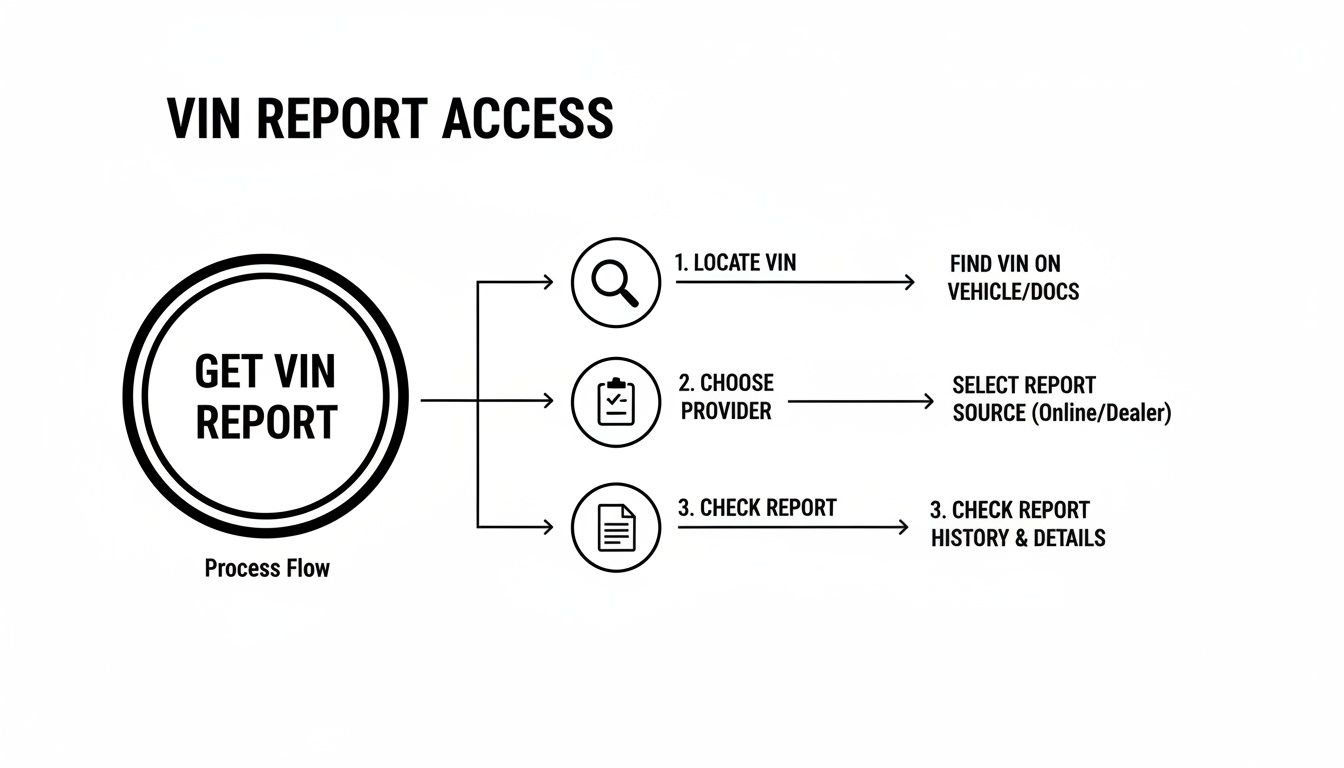
Step 1: Find the Vehicle Identification Number (VIN)
First, you need the car’s 17-digit VIN. This unique code is the key that unlocks a vehicle’s entire recorded history. Automakers place it in several easy-to-find spots.
You can almost always find the VIN in these locations:
- Driver's Side Dashboard: Look for a small plate on the driver's side of the dashboard, visible through the windshield.
- Driver's Side Door Jamb: Open the driver's door and check the sticker on the pillar where the door latches, often near the tire pressure info.
- Vehicle Paperwork: The VIN is also listed on the car’s title, registration card, and insurance documents.
Pro Tip: Always match the VIN on the car itself (dashboard or door jamb) with the one on the paperwork. This simple check confirms the documents belong to the car you're actually looking at and helps you sidestep potential fraud.
Step 2: Choose a Reputable Report Provider
Once you have the VIN, you have to decide where to run the check. This is a critical decision. Not all vehicle history report services are the same—they vary in data sources, accuracy, cost, and features.
Legacy providers like Carfax are well-known but often come with a premium price. In recent years, newer services have emerged that deliver equally detailed reports without the high cost. It's smart to look past the brand name and focus on the value you're getting.
For instance, modern platforms like VekTracer were built to provide comprehensive data affordably, often with unique tools to help you interpret that information. To see how a modern VIN check platform works, you can learn more about VekTracer's process.
Step 3: Compare Your Options
When you pick a provider, you're choosing a partner to help you make a smart purchase. It’s worth taking a moment to compare what you get for your money.
| Feature | Legacy Provider (e.g., Carfax) | Modern Alternative (e.g., VekTracer) |
|---|---|---|
| Pricing Model | Often higher priced single reports or expensive multi-report packages. | More affordable single reports and flexible plans for frequent users. |
| Core Data | Provides standard accident history, title records, and service history. | Includes all core data from accidents to odometer records and recalls. |
| Unique Features | Strong brand recognition and a large network of reporting sources. | May offer proprietary tools like a Risk Score for at-a-glance vehicle assessment. |
| User Experience | Traditional report layout that can be dense with information. | Modern, user-friendly interface designed for clarity and quick insights. |
Choosing a provider isn't just about getting facts; it's about getting clear, actionable insights that give you the confidence to either walk away or sign on the dotted line. A modern tool should make that decision easier.
Pro Tip: Be wary of any "free" VIN lookup report. These almost always give you just a teaser of the information to get you to buy a full report. For a major purchase like a car, investing a few dollars in a complete, credible history report is one of the smartest moves you can make.
Going Beyond the Basics: Market Value and a Risk Score
A basic VIN report tells you what happened to a car in the past. But the best reports do more—they help you understand what that information means for you as a buyer. This is where advanced tools like market value calculations and a summary Risk Score come into play. They cut through the noise and give you clear answers.
Getting to that point starts with the simple, three-step process of running a report.
Once you have the vehicle’s history in hand, you can start digging into these more powerful insights.
Calculating Fair Market Value with Real-World Context
Standard pricing guides give you a "book value," but that number exists in a vacuum. It doesn't know if the car you're looking at has a branded title or was in a major collision. A vehicle with a troubled past simply isn't worth the same as an identical one with a spotless record.
That's why a great VIN lookup report provides a market value that's tied to the vehicle's specific history. By analyzing everything from accidents and title brands to service records, the report generates a much more realistic valuation. This gives you a solid, data-backed number to take to the negotiating table.
The Risk Score: A Credit Score for Your Car
One of the most useful features found in modern reports is a proprietary Risk Score. The concept is simple: think of it like a credit score, but for a vehicle. It takes all the complicated data points—accidents, title issues, odometer readings—and boils them down into one single, easy-to-understand number.
A Risk Score translates a mountain of vehicle data into a clear, comparable grade. It gives you an instant read on a vehicle’s overall quality so you can quickly see if you're looking at a gem or a potential headache.
Providers like VekTracer developed their Risk Score to make this assessment incredibly fast. A high score points to a low-risk car with a clean history. A low score is an immediate warning sign that you need to dig much deeper.
How a Risk Score Makes Your Decision Easier
Let's say you're choosing between three similar used sedans in the same price range. Reading every line of three different reports can be a real chore. This is where the Risk Score shines.
- Car A: Risk Score of 88/100. The report shows a clean title, zero accidents, and a consistent history. This one looks like a strong contender.
- Car B: Risk Score of 65/100. A quick look reveals a minor reported accident from a few years back. It could be a decent buy, but the price should reflect that history.
- Car C: Risk Score of 32/100. This low score immediately flags a salvage title and a suspicious gap in its ownership records. This is a high-risk vehicle you should likely walk away from.
With a quick glance at the scores, you can instantly rank your options and focus your energy on the cars worth your time. This feature becomes even more powerful when comparing multiple vehicles, turning a potentially confusing decision into a confident choice.
Spotting Common Red Flags and Critical Warning Signs
A VIN lookup report is your best weapon for uncovering a car's hidden history, but it's only effective if you know what you’re looking for. A clean report is a great sign, but learning to spot the subtle warning signs is what really protects you from a bad deal.
Knowing how to read between the lines is the difference between buying a dependable car and inheriting someone else's expensive nightmare.
Branded Titles and Title Washing
A branded title is the most glaring red flag. As discussed, brands like Salvage, Rebuilt, Lemon, or Flood Damage are permanent stains on a vehicle's record. But what’s even more deceptive is a practice called title washing.
This is an illegal scheme where a scammer takes a car with a branded title to a state with more lenient regulations. Their goal is to get a new title issued that conveniently "washes" away the brand, making a damaged car look clean on paper.
Title washing is deliberate fraud. Always pay close attention to the title history section. A car that has been re-titled in multiple states over a short time is a classic sign that someone might be trying to wash its title.
Suspicious Odometer Readings
Odometer fraud is one of the oldest scams in the used car world, and a detailed VIN lookup report is your best defense. The report gives you a chronological log of the mileage recorded at every service, inspection, and sale. What you’re looking for is a logical, upward progression.
Any entry showing lower mileage than a previous one is a massive red flag. For example, if a car registered 95,000 miles in 2022 but is now for sale showing 75,000 miles, the odometer has almost certainly been rolled back.
Rapid or Frequent Ownership Changes
While people sometimes sell cars quickly for legitimate reasons, a pattern of rapid ownership changes can point to a serious hidden problem. If a car has had three different owners in just two years, you have to ask why.
- "Flipping": Someone may have bought the car at auction, done the bare minimum to make it look presentable, and is now trying to offload it for a quick profit.
- A "Problem Car": It's also possible that previous owners discovered a recurring, expensive, or unfixable issue and decided to pass the headache on to the next person.
A history of short ownership stints should make you pause and insist on a thorough mechanical inspection.
History as a Rental or Fleet Vehicle
A car that was once a rental, a taxi, or part of a corporate fleet isn’t automatically a bad buy, but you need to approach it with caution. These vehicles tend to rack up high mileage quickly and often endure more aggressive use than a privately owned car.
This can mean delayed oil changes, hard driving, and accelerated wear on the engine and suspension. A VIN lookup report will flag this history, giving you the full picture so you can adjust your expectations and your offer. For more tips on what to look for, our vehicle history check guide goes into even greater detail.
The Pitfall of the Seller-Provided Report
This might be the most important piece of advice: never blindly trust a vehicle history report handed to you by the seller. You have no way of knowing if that report is outdated, incomplete, or even digitally altered.
Always run your own VIN lookup report from a trusted provider like VekTracer. It’s a small investment that guarantees the information you're seeing is accurate, up-to-the-minute, and from an unbiased source. This simple step is your final and most critical line of defense.
Using Your Report to Negotiate and Compare Vehicles
Think of a VIN lookup report as more than just a background check; it's your single most powerful tool for negotiation. Once you have that report, you’re no longer dealing with just the seller’s asking price—you're starting a conversation based on the car's actual, documented history.
The details in the report give you bargaining power, which can add up to serious savings.
Turning Information into Negotiation Power
Every line item on that report is a potential talking point. Even issues that aren't deal-breakers should factor into the final price. You're not just haggling; you're presenting facts about the car's past that directly affect its current worth.
Here are a few examples:
- Minor Accident History: The report shows a repaired fender-bender. Even if it looks perfect, that car is worth less than an identical one with a clean record. You can make a fair argument for a price drop.
- Open Safety Recalls: An open recall is a safety issue requiring a trip to the dealer. You can negotiate the price down to compensate for your time and the hassle of getting it fixed.
- Past Rental or Fleet Use: A former rental car has likely lived a harder life than a privately owned vehicle. Pointing this out justifies a lower offer due to the higher probability of future wear and tear.
When you bring these things up, you’re showing the seller you’ve done your research and are making an offer based on this specific car's story, not a generic book value.
Comparing Multiple Vehicles Side by Side
In the past, comparing a few different used cars was a headache. You’d be shuffling papers, trying to recall which car had the title issue and which was in an accident. Thankfully, that’s changed.
The ability to compare multiple reports side-by-side is a game-changer. It takes the emotion out of the decision and allows you to objectively evaluate which car offers the best combination of history, condition, and value.
This is where a feature like a proprietary Risk Score really shines. Instead of getting bogged down in the details of five different reports, you get a simple, at-a-glance score that summarizes each car’s overall risk profile.
Tools like VekTracer’s dedicated Compare Tool make this incredibly simple. You can pull up reports for several vehicles and see them laid out next to each other, making it obvious which one is the strongest contender. The tool often gives a "Best Pick" recommendation, taking the guesswork out of a stressful decision. You can check a VIN and see how this data empowers you to choose not just a good car, but the right car.
Frequently Asked Questions About VIN Lookup Reports
Here are answers to some of the most common questions car buyers have about vehicle history reports.
Are all VIN lookup reports the same?
No, they are not. While most reports from providers like Carfax or VekTracer cover the basics on accidents and title history, the depth of data, cost, and features can vary significantly. Some offer more data sources, while others provide unique tools like a Risk Score or side-by-side comparison features to simplify your decision. It pays to compare your options.
Is it cheaper to buy a single VIN report or a package?
This depends on your needs. A single report is perfect if you're serious about one specific car. However, if you're early in your search and plan to check multiple vehicles, a multi-report package from a provider like Carfax or a flexible plan from an alternative like VekTracer can offer better value and save you money in the long run.
Can I trust a VIN report provided by the seller?
A report from the seller is a decent starting point, but you should always run your own. There's no substitute for getting the data yourself from a trusted source. An independent VIN lookup report confirms the information is current and hasn't been altered. This small investment protects you from buying a car based on misleading information.
What if a VIN lookup report is completely clean?
A clean report is fantastic news, meaning the vehicle likely has no major, officially documented problems. However, it’s not a green light to skip other crucial steps. A report only shows what has been recorded; it won't reveal a shoddy off-the-books repair or underlying mechanical issues. Always pair a clean VIN lookup report with a pre-purchase inspection (PPI) from a trusted mechanic.
Ready to uncover a vehicle's true story? Get the data-driven insights you need with VekTracer. Check a VIN now and make your next car purchase a confident one.
Ready to check a vehicle?
Enter any 17-character VIN for a free instant preview — no account needed.