Carfax Report Price Explained and How to Save in 2026
Check a vehicle before you buy
Enter a VIN for a free instant preview — accidents, title brands, mileage, liens & open recalls.
A Carfax report in the U.S. is commonly priced at $44.99 for one vehicle in 2026, while bundles can drop the effective cost to about $16.67 to $21.99 per report. If you're shopping more than one used car, that headline single-report price usually isn't the number that matters.
That's where many buyers get stuck. You search “carfax report price,” see one expensive figure, and assume every VIN check costs that much. But the smarter question is simpler: what will it cost you to make one good buying decision on the car or cars you're comparing?
If you're looking at one private-party sedan on Facebook Marketplace, the answer may be different than if you're cross-shopping three dealer listings, bidding on an auction vehicle, or checking title brands before buying a salvage rebuild. Some shoppers can use a bundle. Some can get a report through a listing. Others may not need a full commercial history report at all if they only need title and brand information.
A clean way to think about it is cost per VIN checked, not just package price. A single report can make sense when you've already narrowed your search to one vehicle and verified the VIN. But if you're still deciding between several cars, buying one report at full retail can be the most expensive way to shop.
Table of Contents
Checking a specific vehicle?
Run its VIN for a free preview of accidents, title brands, mileage and open recalls.
- Introduction What You Will Pay for a Carfax Report Today
- How Carfax Report Pricing Works for Single Reports and Bundles
- What Influences the Final Price You Pay
- How to Purchase a Carfax Report Step by Step
- Carfax Price Compared to Affordable Alternatives
- Is the Price Worth It for Your Buying Situation
- Next Steps to Check History Without Overpaying
Introduction What You Will Pay for a Carfax Report Today
You've probably seen this happen. A used SUV looks right, the seller says it has “no issues,” and you're one step away from paying for a report just to be safe. At that moment, you want one direct answer: what does a Carfax report cost right now?
In the U.S., consumer pricing is widely reported in 2026 as $44.99 for a single report, while a 6-report pack at $99.99 brings the cost down to about $16.67 per report, according to this 2026 Carfax pricing breakdown. That spread is why the sticker price can mislead buyers who are still comparing several vehicles.
The practical issue isn't just paying for a report. It's avoiding the wrong purchase strategy. If you buy one report too early, then rule that car out and buy another single report on the next listing, your true shopping cost climbs fast. If you wait until you've narrowed your options, or use a bundled option, the effective cost per decision can look very different.
Practical rule: Don't treat Carfax pricing as one number. Treat it as a buying path.
Why buyers often overpay
Private-party buyers often overpay because they pull a report before confirming the VIN on the dashboard and title match. Dealer shoppers overpay when the listing already includes a report but they buy another one anyway. Auction and salvage buyers can overpay when they use a premium commercial report for every rough-screening step instead of reserving the more expensive check for the finalists.
A few buyer types run into this most often:
- Private-party buyers who are checking one seller's story against the vehicle's title, odometer, and accident history
- Owners and sellers who want to check title brands or possible lien-related issues before listing a vehicle
- Auction and salvage shoppers who screen many VINs before choosing one serious target
- Independent dealers and brokers who need repeated checks and care more about per-VIN cost than headline retail price
What makes the price worth comparing
A vehicle history report isn't the same thing as an official government title check. Commercial reports may include broader context, while official systems focus on core title and brand records. That difference matters because your cheapest effective option depends on what you're trying to verify.
If your goal is to check whether a car has a title brand or other title-related issue, a lower-cost route may be enough. If you're trying to evaluate ownership history, auction activity, reported damage, odometer readings, and cross-jurisdiction clues before spending thousands on a used vehicle, then the higher-priced option can make more sense.
How Carfax Report Pricing Works for Single Reports and Bundles
Carfax pricing works a lot like bulk buying. The first unit costs the most. The more VINs you check in one purchase, the lower the cost per report usually becomes.
According to Edmunds' breakdown of vehicle history report pricing, direct retail pricing is listed at $44.99 for one report, $59.99 for two, and $109.99 for five, which lowers the unit cost to about $29.99 for the two-pack and $21.99 for the five-pack. That means your choice of package can change your effective cost per VIN by more than half.
The math that actually matters
Most shoppers look at package price first. That's understandable, but it hides the useful comparison.
| Package | Total Price | Effective Cost Per Report |
|---|---|---|
| Single report | $44.99 | $44.99 |
| Two reports | $59.99 | about $29.99 |
| Five reports | $109.99 | $21.99 |
A bundle changes the economics because you aren't buying “more history.” You're buying more chances to screen out bad options before committing.
Here's the plain-language version:
- One report fits a buyer who has already narrowed the choice to a single car and doesn't expect to compare alternatives.
- Two reports make sense when you have a finalist and a backup.
- Five reports fit the shopper who knows the first car may not pass review, inspection, or title checks.
Cost per report versus cost per decision
This is the part buyers miss. You're not really buying a PDF. You're buying a decision filter.
If you buy one report for one car, reject it, and then buy another single report for the next car, you paid retail twice. If you'd started with a bundle, the second and third checks would have cost much less on a per-VIN basis.
A single expensive report can overstate the true market price of vehicle history screening, especially when you're still comparing cars.
When bundles make practical sense
Bundles are most useful when your shopping behavior is still wide. They usually make less sense when you already have:
- A verified VIN from the car itself, not just a text message or listing copy
- A strong candidate that already passed your basic screening
- A plan for an inspection if the history report looks acceptable
If you're a private-party buyer looking at one carefully vetted car, a single report may still be rational. If you're comparing several pickup trucks, checking rebuilt-title candidates, or screening dealer inventory, the per-VIN math should drive the choice.
What Influences the Final Price You Pay
A buyer who pays for one report too early can end up treating the highest per-car price as if it were the normal market price. That is the main pricing trap.
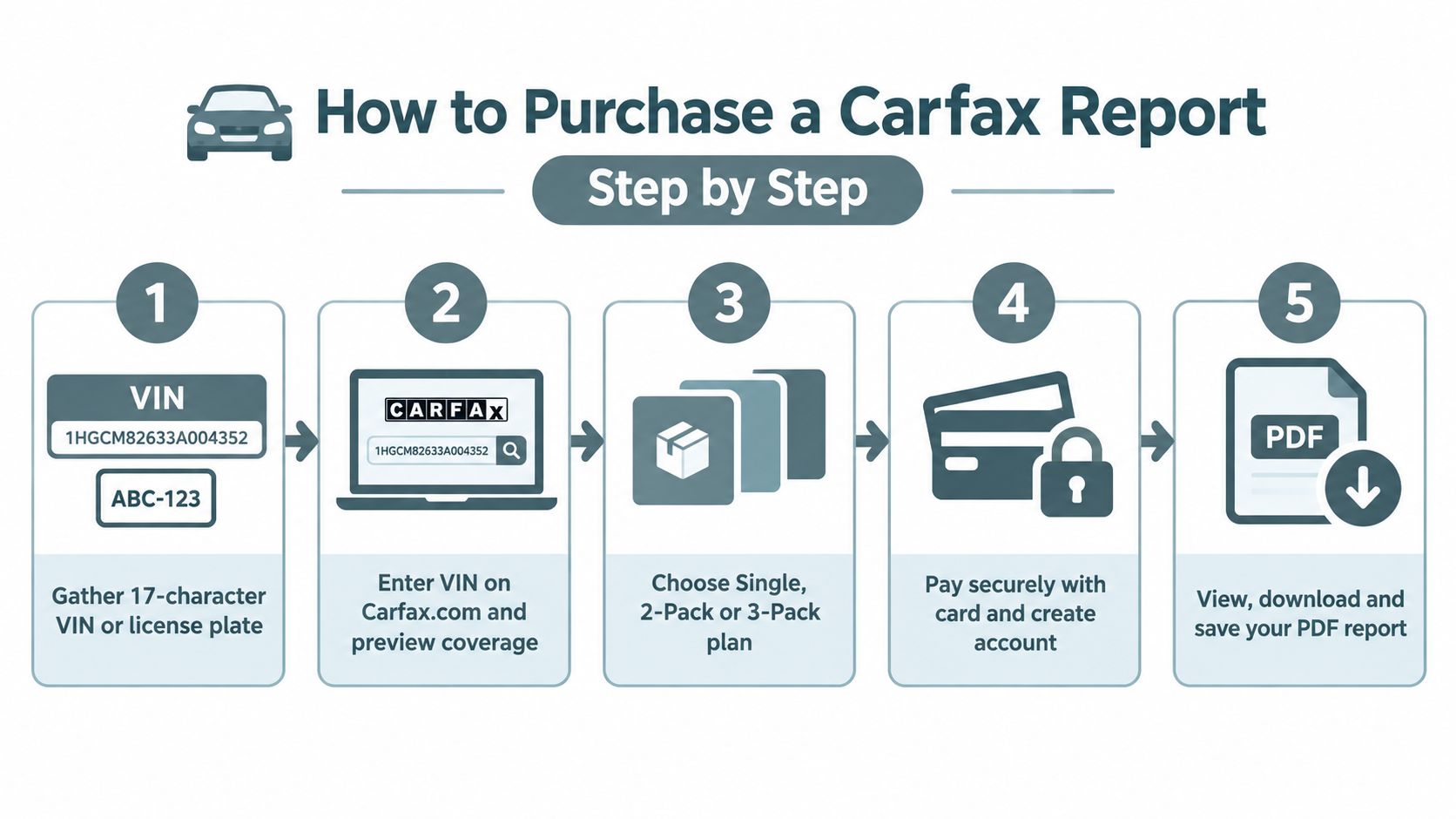
The final amount you pay depends less on the brand name and more on the decision you are trying to make with each VIN. If you are still sorting through several cars, your real cost is the screening cost per VIN. If you are down to one vehicle with a confirmed VIN and a scheduled inspection, the single-report price may be reasonable.
Your shortlist size changes the real price
Two shoppers can both say they paid for "a Carfax," yet one overpaid and the other bought efficiently.
Here is the difference. A single report often looks expensive because it carries the full retail price by itself. A bundle spreads that screening cost across multiple VINs. For a shopper comparing three SUVs, one report is not the true benchmark. The useful benchmark is what each checked VIN costs once you know you may reject the first one.
That is why the final price is really a buying-path issue, not just a checkout-page issue.
The listing source can reduce your out-of-pocket cost to zero
Some dealer listings and marketplace ads already include a vehicle history report. In that case, the relevant question is not "What does Carfax cost?" It is "Do I already have enough history detail for this VIN without buying another copy?"
Buyers miss this often. They open the paid order page before checking the listing itself, then pay retail for information that was already attached to the vehicle ad.
Market and region can change the pricing model
The same brand name does not always mean the same pricing structure. On the European side, CARFAX says a report can cost up to €39.99, with pack pricing lowering the cost per report, according to the CARFAX Europe vehicle history report page.
That matters for cross-border shopping. A U.S. buyer looking at an imported car or a shopper comparing reports across regions should not assume one flat global price or identical coverage rules.
The type of check you need also changes what counts as a fair price
A commercial history report and an official title-data check answer different questions. The Bureau of Justice Assistance NMVTIS consumer entry point routes buyers to approved providers for title, brand, and total-loss records. A commercial report may include that type of data plus service entries, ownership history, and other event records.
That difference affects value. If all you need is title-brand confirmation on a low-cost candidate, paying full retail for a broader report may be more than the decision requires. If you are deciding between several late-model cars, the broader report may save money by helping you reject the wrong VIN sooner.
Why buyers end up overpaying
Use these questions before you purchase:
- How many VINs are still in play? That determines whether single-report pricing is realistic or misleading.
- Does the listing already include a report? If yes, read that first.
- Do you need official title and brand data, or wider vehicle history? Those are different jobs.
- Is this a salvage, rebuilt, or cross-border vehicle? Those cases often need more than one source.
- Will you probably reject the first car? If yes, judge price per screened VIN, not price per checkout.
A simple rule helps. The more uncertain your shortlist is, the less useful the single-report sticker price becomes as a measure of what vehicle-history checking really costs.
How to Purchase a Carfax Report Step by Step
You are down to two used cars. One looks cleaner on the lot, the other is priced a little lower. This is the point where a history report becomes a decision cost tied to each VIN, not just a checkout price on a website.
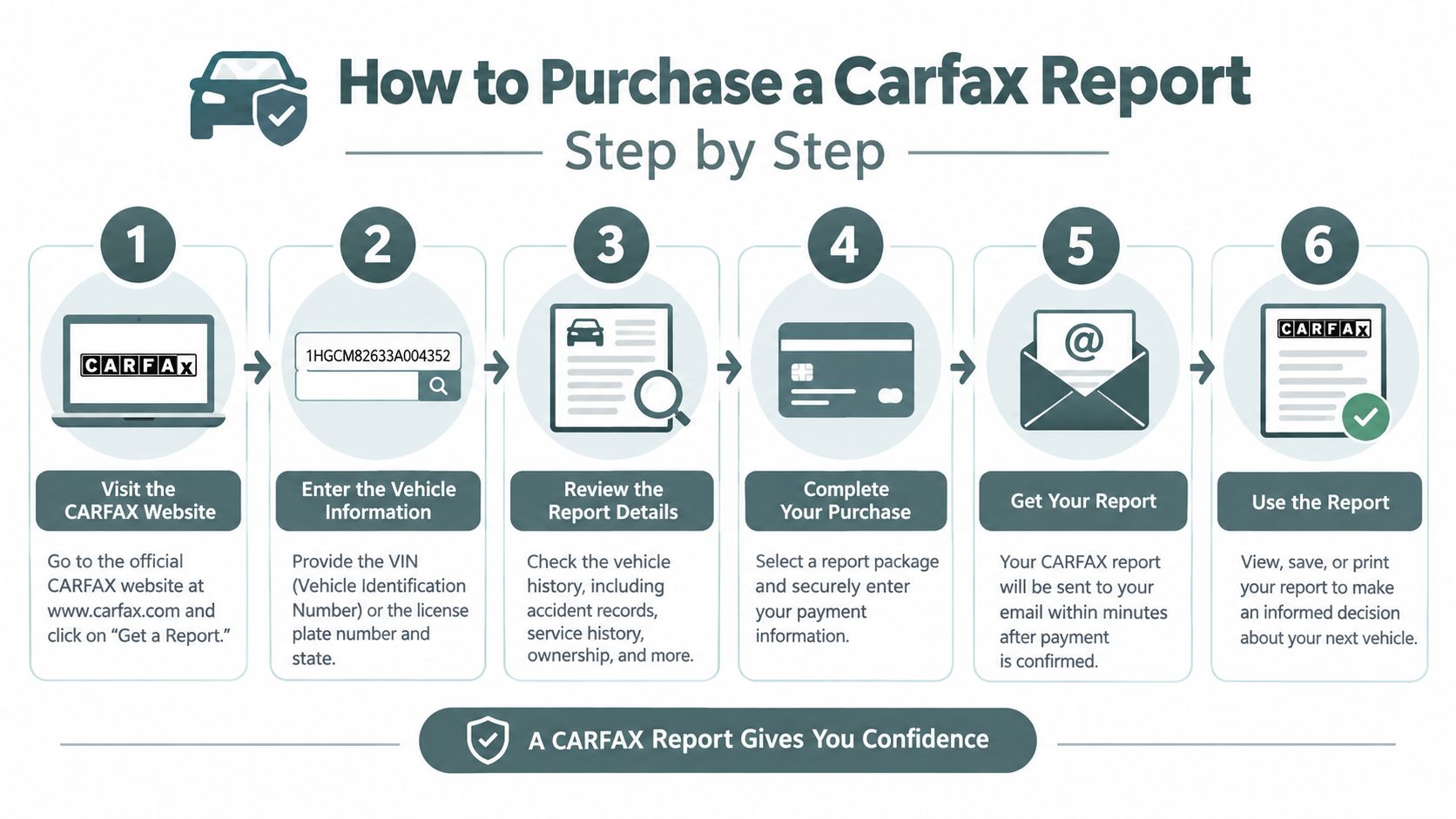
Start with the VIN on the car
Get the VIN from the vehicle itself if you can. Check the dashboard plate, then compare it with the title and registration.
A VIN works like a vehicle's serial number. One wrong character can send your payment toward a report for the wrong car. If a seller texts you a typed VIN, verify it visually before you buy anything.
Check for a report you can read first
Many dealer listings and some marketplace listings already include a vehicle history report or a summary pulled from one. Read that before paying for another lookup.
This step matters because the cost is not only what one report costs. It is what you spend per VIN you seriously evaluate. If a free listing report helps you rule a car out, you may not need to buy a report on that vehicle at all.
Choose the package based on how many VINs are still alive
Buyers often overspend. A single report can look reasonable until you realize you may reject the first car and pay again for the next one.
Use a simple filter:
- Buy one report if one vehicle has already survived your price, condition, and paperwork checks
- Buy a bundle if you still have several realistic candidates
- Wait if sellers are still sending photos, documents, or corrected VINs
The goal is not to buy the cheapest checkout option. The goal is to keep your cost per screened VIN under control.
Purchase from the report page and save what you get
After you enter the VIN and choose the package, complete the purchase and save a copy of the report. Keep notes with it. Write down the items that can change the deal, such as title brands, odometer gaps, accident entries, ownership changes, or records that stop abruptly.
If you buy more than one report, compare them side by side. That makes patterns easier to spot and reduces the chance that a lower asking price distracts you from a weaker history.
A sample vehicle history report guide can also help you understand what differences to compare if two vehicles look similar on the surface.
Carfax Price Compared to Affordable Alternatives
You find a car that looks right, then hit the history-report checkout page and see a price that feels high for one VIN. That reaction is common. The better question is not "What does Carfax cost?" It is "What will this check cost me for each VIN I seriously consider?"
That shift changes the comparison.
A single Carfax report can feel expensive if you use it early, while you are still sorting through weak candidates. The same report can feel reasonable if one car has already passed your price, condition, seller, and document checks. By contrast, lower-cost options make more sense when your question is narrower, such as title status, salvage branding, or whether a listing deserves more attention at all.
Vehicle History Report Cost and Coverage Comparison
| Provider | Per-Report Cost | Coverage Highlights | Best For |
|---|---|---|---|
| Carfax | Higher single-report retail pricing, with lower per-report cost in bundles | Broad vehicle-history context often used by retail used-car buyers | Buyers narrowing down several retail used vehicles and wanting more detail before a final pick |
| NMVTIS provider | Lower-cost, title-focused pricing that is often far below a full commercial report | Title and brand screening from official title-system sources | Buyers who mainly need title status, salvage branding, or basic official checks |
| Vektracer | $19.99 single report | VIN-based history reports that compile records across the U.S. and Canada, including accidents, title brands, odometer history, auction records, ownership context, and a free preview before purchase | Shoppers who want a lower-cost commercial alternative or cross-border context |
How to compare the real price, not just the checkout price
Vehicle-history shopping works like buying tests, not products. The report price matters, but the number of VINs you need to screen matters just as much.
Use this simple frame:
- One strong candidate left: paying more for one broad report may be reasonable
- Several realistic candidates left: bundle pricing or lower-cost report options often lowers your cost per VIN
- Very early screening: free dealer listing reports, plate lookups, or title-focused checks may help you reject weak cars before you pay for a fuller report
That is why a single high retail price can overstate the true market price. Many buyers do not end up paying that exact per-car amount across their whole search. They use free listing access on some vehicles, buy fuller reports only on finalists, or mix in cheaper title-first checks.
Where lower-cost alternatives fit
Affordable does not always mean "less useful." It means the report matches the decision in front of you.
- Need title or brand confirmation first? An NMVTIS-based report may answer the question without the cost of a broader report.
- Need a VIN-based commercial report at a lower price? Comparing providers side by side helps clarify what you gain and what you give up. This Carfax versus VinAudit comparison is useful for that pricing trade-off.
- Only have a plate from a listing or curbside photo? The RedAppy plate history tool explains when a plate search is a practical first filter and when you still need a VIN report.
One caution matters here. Title-system reports and commercial history reports answer different questions. A title-focused check can help you spot branding or status problems. A broader commercial report may add accident entries, odometer patterns, ownership changes, auction activity, and other context that affects how comfortable you feel with the car.
The smartest low-cost choice is the one that answers your next decision without making you pay full-report prices on every VIN you see.
Is the Price Worth It for Your Buying Situation
You find one used car that looks right, and the report price feels high for a single VIN. Then you remember you may check three more cars by the weekend. The better question is not whether one report feels expensive. The better question is what you are paying per real buying decision.
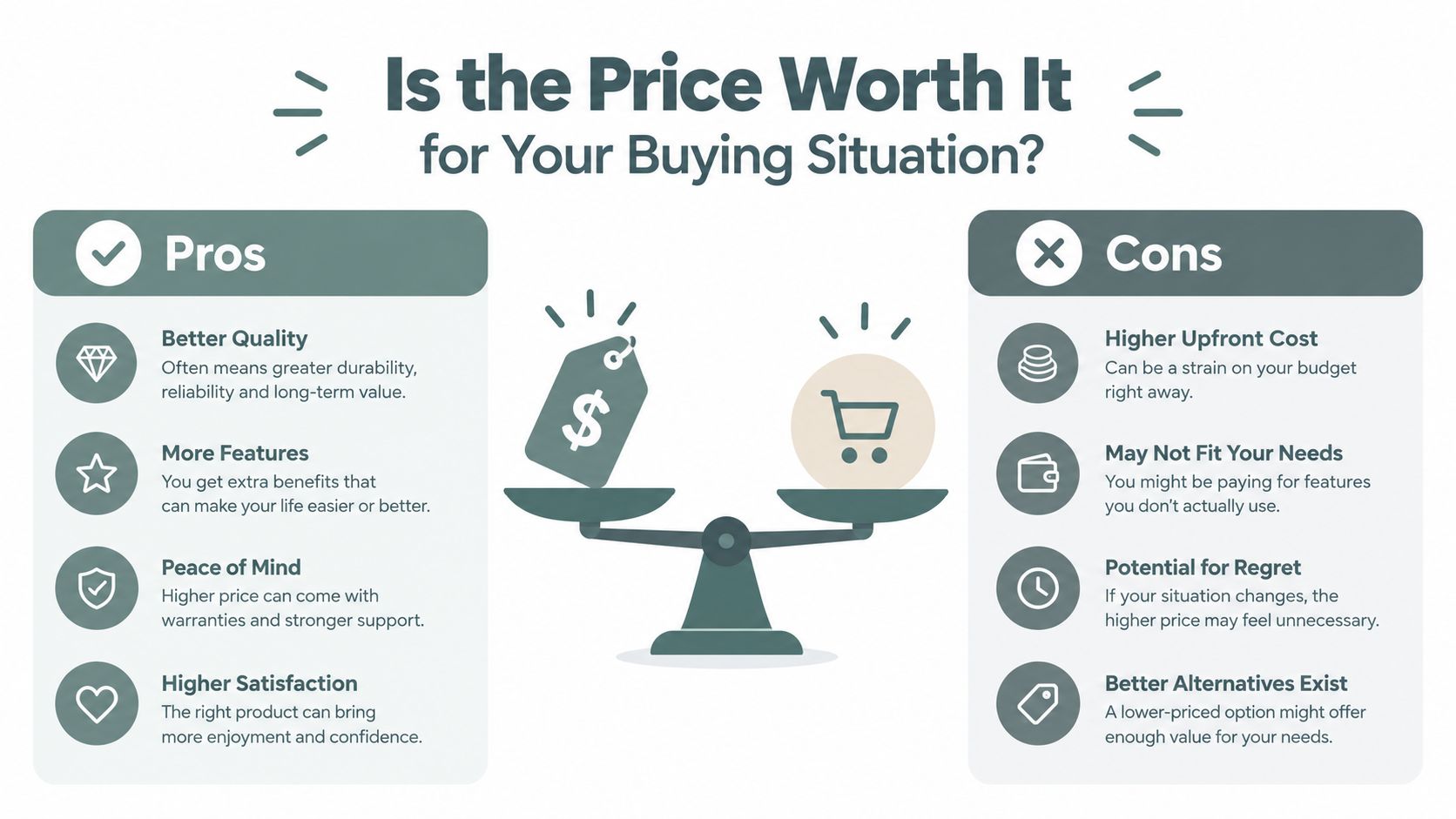
That shift matters because the sticker price on a single report can overstate the true market price of checking history. Some shoppers get a free report through a listing. Some only buy full reports for the last one or two finalists. Others start with a lower-cost title-focused check, then pay more only if the car stays in the running. A report works a bit like paying for an inspection tool. Its value depends on how many cars you screen and how serious each candidate is.
When paying more makes sense
A higher-priced report can be reasonable when one mistake would cost far more than the report itself.
That is often true for:
- Private-party deals where return options are limited and you need stronger background detail before handing over money
- Salvage or rebuilt vehicles where title history, prior damage signals, and ownership changes carry more weight
- Cars with mileage doubts where an inconsistency could change the entire deal
- Finalist vehicles that have already passed your pricing, condition, and seller checks
In those situations, the report is less about curiosity and more about reducing the chance of an expensive surprise.
When a lower-cost path fits better
A premium report is not always the first smart purchase.
If you are still filtering a wide field, a single full-price report on every VIN can distort what car-history research really costs. Free dealer listing reports, bundle pricing, and NMVTIS-based reports can lower your average cost per vehicle. That is why buyers who check several cars often do better with a staged approach instead of treating every candidate like the final choice.
A title-first report may be enough when your immediate question is narrow, such as title brand status or whether the VIN shows an obvious red flag. If the car clears that screen and becomes a serious contender, then paying for broader history can make more sense.
No vehicle history report shows every event for every car. Records only appear when a source reports them.
A simple way to decide
Use this three-part check before you pay:
- What decision are you making right now? Early screening needs less detail than a final yes-or-no purchase call.
- How many VINs are still alive? The more cars you are comparing, the more bundle math and free access matter.
- What mistake would be most costly here? A hidden brand, mileage issue, or prior severe damage usually justifies more detail.
If you want more examples of when a premium report earns its cost and when a cheaper route is enough, this guide to whether Carfax is worth it and what cheaper alternatives exist walks through those trade-offs in plain language.
Next Steps to Check History Without Overpaying
The easiest way to waste money is to buy the first report you see before you've defined your actual need. A better approach is to move in order.
First, confirm whether the listing already includes a report. Second, verify the VIN on the vehicle and paperwork. Third, decide whether you're screening one car or several. That sequence prevents duplicate purchases and makes the package choice much clearer.
A short checklist before you pay
- Confirm the VIN on the dashboard and documents match
- Check the listing for an included history report
- Count your real contenders before buying a single report or bundle
- Choose the report type based on your question, title-only screening or broader vehicle history
- Save every report you buy so you can compare details rather than memory
The cheapest effective path for most shoppers
For a one-time buyer with one strong candidate, paying for a single report can be reasonable if the car has already passed your early checks. For a buyer comparing several vehicles, a bundle or an alternative report path usually makes more financial sense. For title-focused questions, an official NMVTIS provider may be the more efficient tool.
If you want a practical walkthrough for screening any used car before buying, this step-by-step vehicle history check guide lays out the process in order.
The key point is simple. Don't buy based on the most visible price. Buy based on the cheapest method that gives you enough confidence to move forward, negotiate, or walk away.
If you want to compare a vehicle's history without defaulting to the highest retail report price, Vektracer lets you check a VIN or license plate with a free preview before purchase. It's a practical option when you want broader vehicle history context, including accidents, title brands, odometer history, auction records, and ownership details, while keeping the per-vehicle cost more manageable.
Ready to check a vehicle?
Enter any 17-character VIN for a free instant preview — no account needed.