How to Check a Car VIN for Accidents: A 2026 Step-by-Step Guide
Check a vehicle before you buy
Enter a VIN for a free instant preview — accidents, title brands, mileage, liens & open recalls.
To check a car VIN for accidents, you need to run a comprehensive vehicle history report using a paid service like VekTracer or CarFax. This report will detail any reported accidents, damage severity, and title issues like salvage or rebuilt brands. You can get started by finding the 17-digit VIN on the car's dashboard or driver-side door jamb and entering it into a VIN check service's website.
This guide will walk you through the exact steps to find a car's accident history, from locating the VIN to decoding the report and making a smart decision. Following this process is the single best way to avoid buying a used car with hidden damage that could cost you thousands in repairs.
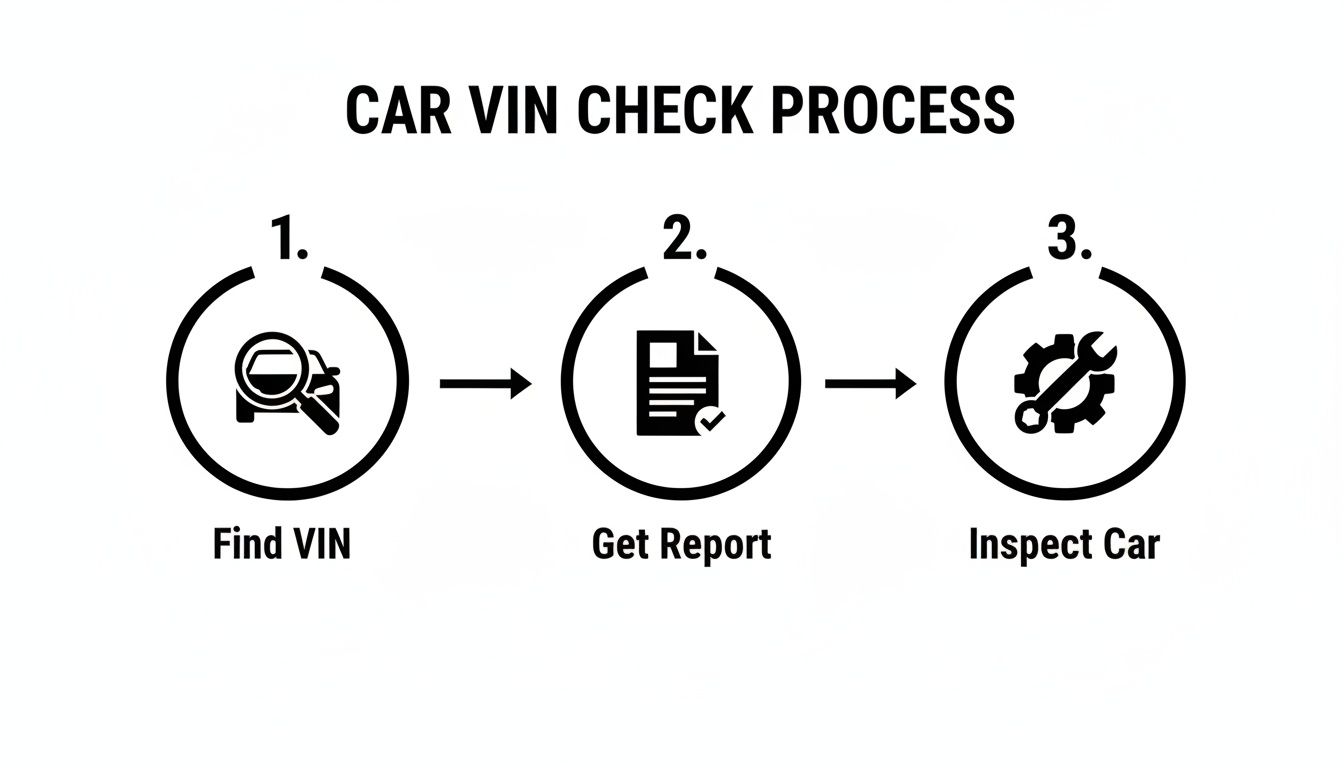
Step 1: Find and Verify the Car's VIN
Before you can uncover a car's past, you need its unique fingerprint: the 17-character Vehicle Identification Number (VIN). A critical first step is to physically find the VIN on the car yourself. Never rely on a VIN sent via text or listed in an online ad, as this is a common tactic to hide a vehicle's negative history.
Where to Find the VIN on a Car: A Quick Checklist
Look for the VIN in these three primary locations. I recommend taking a photo of each to ensure they match.
- Driver-Side Dashboard: Look through the windshield from the outside; you'll see a small metal plate with the VIN.
- Driver's Door Jamb: Open the driver's door and check the sticker on the B-pillar (where the door latches).
- Under the Hood: The VIN is often stamped on the engine block or the vehicle's frame.
Once you have the VIN from the car, cross-reference it with the vehicle's title and registration documents. The numbers must be an exact match. Any discrepancy is a major red flag that could indicate theft or a fraudulent title.

Step 2: Run a Comprehensive Vehicle History Report
With a verified VIN in hand, it's time to dig into the data. While free tools like the National Insurance Crime Bureau (NICB) are useful for an initial screen for theft or salvage titles, they lack the detailed accident information needed for a real evaluation.
You need to invest in a comprehensive vehicle history report. Services like VekTracer and CarFax compile data from thousands of sources to give you a complete picture.
Comparison: Free vs. Paid VIN Checks for Accidents
| Feature | Free VIN Check (e.g., NICB) | Paid Vehicle History Report (e.g., VekTracer) |
|---|---|---|
| Accident History | No, only major events | Yes, including dates, damage severity, and point of impact |
| Title Brands | Yes (Salvage, Flood) | Yes, with detailed history and explanations |
| Service/Repair History | No | Yes, from reporting shops |
| Airbag Deployment | No | Yes |
| Odometer Readings | No | Yes, with checks for rollback |
| Ownership History | No | Yes, including number of owners and location history |
As you can see, a paid report is non-negotiable for anyone serious about buying a used car. A full VIN lookup report is the only way to get the granular detail needed to make an informed choice.
Step 3: Decode the Accident Report and Inspect the Car
Getting the report is only half the battle. Now you need to interpret the findings and use them to guide your physical inspection.
What to Look for on the Report
Scan for these critical details beyond a simple "accident reported" flag:
- Date and Mileage: An accident 50,000 miles ago is less of a concern than one from six months ago.
- Damage Severity: Look for terms like "minor," "moderate," or "severe." Pay close attention to descriptions of impact.
- Airbag Deployment: If airbags deployed, it was a major accident. This often leads to a total loss declaration.
- Structural Damage: Any mention of "frame damage" is a deal-breaker for most buyers, as it can compromise safety and lead to chronic issues.
- Branded Title: Red flags like "Salvage," "Rebuilt," or "Flood" mean the car was once declared a total loss by an insurer.
Real-World Scenario: A "Minor" Accident Isn't Always Minor
Imagine two cars, both with a "minor front-end collision" on their report.
- Car A: The report notes damage to the bumper. A mechanic confirms it was a cosmetic fix and the underlying structure is perfect. This is a low-risk issue you can use for price negotiation.
- Car B: The report also says "minor damage." However, a mechanic finds bent radiator supports and signs of a repainted fender, suggesting the impact was harder than reported. This is a car you should walk away from.
This shows why the final step is a Pre-Purchase Inspection (PPI). Take your report to a trusted mechanic and have them specifically examine any areas flagged for damage.
3 Critical Mistakes to Avoid
When checking a car's accident history, buyers often make these costly errors.
- Trusting a "Clean" Report Alone: Not all accidents are reported. An owner might pay a body shop out-of-pocket for repairs to avoid an insurance claim. A clean report is a good sign, but it's not a substitute for a physical inspection by a mechanic.
- Ignoring a Branded Title: A "Rebuilt" title means the car was once a "Salvage" vehicle (a total loss). Even though it was repaired and passed a state inspection, its long-term reliability and safety are a huge gamble. The value is permanently diminished, and insuring it can be difficult.
- Not Verifying the VIN in Person: Running a report on a VIN provided by the seller is a rookie mistake. A dishonest seller might give you the VIN of a clean car to hide the history of the one they're actually selling. Always match the VIN on the car to the paperwork.
Checking a car for accidents is a crucial part of the buying process. Taking the time to do it right can save you from a future filled with headaches and unexpected repair bills. Ready to see the real story behind your next car? Get your instant VIN check now and buy with confidence.
Frequently Asked Questions (FAQ)
Can a car have been in an accident if the report is clean?
Yes, absolutely. If an owner paid for repairs out-of-pocket without filing an insurance or police report, the incident will not appear on a standard vehicle history report. This is why a professional pre-purchase inspection is essential even with a clean report.
How much does it cost to check a VIN for accidents in 2026?
A basic check on a free service like the National Insurance Crime Bureau (NICB) is free but limited. A comprehensive vehicle history report from a provider like VekTracer or CarFax typically costs between $25 and $50 for a single report. Multi-report packages are available at a discount if you're shopping for multiple cars.
What is the difference between a salvage and a rebuilt title?
A Salvage title is issued when an insurance company declares a vehicle a total loss. The vehicle is not legal to drive on public roads. A Rebuilt title is given to a salvage vehicle after it has been repaired and passed a state-mandated inspection. While it is now street-legal, it has a history of major damage, and you should be extremely cautious. When you compare a clean CarFax report, the risk associated with a rebuilt title becomes obvious.
Can I check a car from Canada or the USA?
Yes, major VIN check providers source data from both the USA and Canada. Whether you are performing a VIN check in the USA or a VIN check in Canada, services like VekTracer can pull records from provincial and state motor vehicle agencies, insurance companies, and repair shops across North America.
Ready to check a vehicle?
Enter any 17-character VIN for a free instant preview — no account needed.