How to Read a VIN Report and Buy Smarter

Check a vehicle before you buy
Enter a VIN for a free instant preview — accidents, title brands, mileage, liens & open recalls.
TL;DR:
- A comprehensive VIN report offers detailed vehicle history, accident records, and ownership data.
- Important sections include title status, odometer trends, and open recalls for safety and value.
- Buyers should verify VIN matches the car, cross-check multiple reports, and conduct in-person inspections.
A clean VIN report feels reassuring. It can make a used car seem like a safe bet, and many buyers stop investigating right there. That’s a mistake that costs people real money. A vehicle history report is a powerful tool, but only if you know what you’re reading, what it can miss, and how to act on what you find. This guide walks you through everything: what a comprehensive VIN report actually contains, how to interpret each section, where blind spots hide, and the exact steps to verify a car’s history before you hand over your cash.
Table of Contents
- What is a comprehensive VIN report?
- Breaking down the core sections of a VIN report
- The limits of VIN reports: blind spots and expert tips
- How to read, cross-check, and act with confidence
- Our take: What most buyers miss about VIN reports
- Get your comprehensive VIN report today
- Frequently asked questions
Key Takeaways
| Point | Details |
|---|---|
| Dig deeper than ‘clean’ | Even a ‘clean’ VIN report can miss unreported accidents or title issues—always read the details. |
| Title and odometer are critical | Title history and mileage trends reveal bigger risks than minor accidents. |
| Cross-check and inspect | Use multiple VIN reports and a mechanic inspection to cover all your bases when buying used. |
| Use free and paid tools | Start with free NMVTIS/NHTSA checks, then invest in comprehensive paid reports for a full picture. |
What is a comprehensive VIN report?
The VIN, or Vehicle Identification Number, works like a fingerprint for your car. Every vehicle manufactured for sale in the U.S. carries a unique 17-character code stamped on the frame, dashboard, and engine block. That code is the key to unlocking the vehicle’s entire recorded life. But not all VIN checks are created equal.
A basic VIN check might only tell you the car’s year, make, model, and whether it has an open recall. A comprehensive report goes much further. As the Carfax vehicle history report guide explains, a comprehensive VIN report aggregates data from thousands of sources including DMVs, insurance companies, police, auctions, and service centers. That difference is enormous in practice.
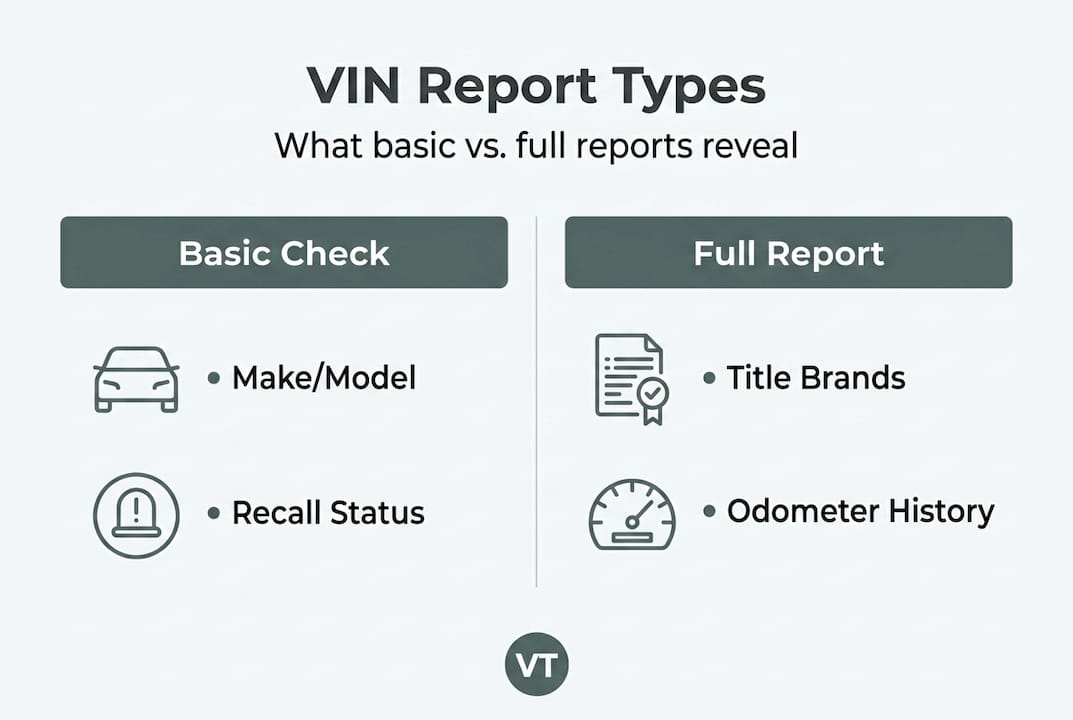
Think about what that means. If a car was damaged in a flood in Louisiana, reported to an insurance company, and then resold at a dealer auction in Texas, a comprehensive report will often capture all three events. A basic title lookup would show you nothing unusual at all.
Here’s a quick comparison to put the value in perspective:
| Feature | Basic VIN check | Comprehensive VIN report |
|---|---|---|
| Vehicle specs | Yes | Yes |
| Title status | Sometimes | Yes (full history) |
| Accident records | No | Yes |
| Odometer readings | No | Yes (pattern tracking) |
| Ownership count | No | Yes |
| Recalls | Sometimes | Yes |
| Auction/sale history | No | Yes |
| Service records | No | Yes (partial) |
You can learn more about what goes into a proper VIN lookup report and how the underlying data is structured before you run your first check.
Key sources that feed into a comprehensive report include:
- State DMVs for title, registration, and odometer disclosures
- Insurance companies for accident claims and total-loss designations
- Law enforcement agencies for theft and recovery records
- Auction houses for sale events and condition grades
- Dealer and repair shops for service history and mileage entries
Understanding what a vehicle VIN lookup actually pulls from helps you evaluate the report you receive with realistic expectations. And if you want to understand how the 17-character code itself is structured, the breakdown of VIN numbers explained is worth reading before you shop.
A comprehensive report isn’t a guarantee. It’s the most complete picture available from recorded sources. What wasn’t reported won’t appear, which is exactly why knowing the limits matters just as much as knowing the content.
Breaking down the core sections of a VIN report
Understanding where the data comes from is a start. Here’s how it’s organized for buyers like you, section by section.
A well-structured VIN report follows a logical flow from basic identification through the car’s full documented history. Core sections include vehicle specs and VIN verification, title history, ownership count and usage, odometer readings, accident and damage reports, service and maintenance records, safety recalls, liens and loans, and auction and sale history. Let’s look at what each one actually tells you.
-
Vehicle specs and VIN verification. This section confirms the car is what the seller says it is. You’re checking that the VIN on the report matches the VIN on the dashboard, door frame, and title document. Discrepancies here are a serious red flag.
-
Title history. This is where the most legally significant information lives. Title “brands” like salvage, rebuilt, flood, lemon law buyback, or junk tell you the car suffered a major event at some point. A salvage title means an insurer declared the car a total loss. A rebuilt title means it was repaired and reinspected. Flood titles indicate water damage, which can cause electrical failures years later.
-
Ownership count and usage type. How many people owned the car and in what context? A vehicle used as a rental, fleet car, or taxi accumulates miles differently and receives more wear than a personal vehicle. Multiple short-term owners can also signal recurring problems.
-
Odometer readings. This section tracks reported mileage at every recorded point. You want to see steady, logical progression. A sudden drop in mileage between readings is a classic sign of odometer rollback, a form of fraud that inflates a car’s perceived value.
-
Accident and damage records. Reported collisions, airbag deployments, and severity codes appear here. Look for the difference between minor cosmetic damage and structural or frame damage. The types of accident records matter a great deal for safety and resale value.
-
Service and maintenance records. Not every shop reports to national databases, but many dealerships and chains do. Consistent service entries suggest a well-maintained vehicle. Long gaps with no service records could mean the owner avoided reporting or the car sat unused.
-
Open recalls and safety notices. Unresolved recalls mean the manufacturer identified a safety defect that hasn’t been fixed. This is something many buyers overlook entirely.
-
Liens and loans. If there’s an active loan on the vehicle, the lender holds a legal claim to it. Buying a car with an undisclosed lien can mean losing the vehicle even after you’ve paid for it.
-
Auction and sale history. Repeated auction appearances in a short time can indicate a dealer is cycling problem cars quickly. This context adds important texture to the rest of the report.
Pro Tip: When reviewing best VIN report examples, pay special attention to the title history and odometer sections first. These two areas carry the highest financial and safety risk for buyers. The previous owner history section can also reveal patterns that individual sections don’t make obvious on their own.
The limits of VIN reports: blind spots and expert tips
Now that you know what’s on the report, it’s just as important to know what might NOT be.
Even the best VIN reports have gaps. Consumer Reports notes that edge cases include unreported accidents and cash repairs, delays in data reporting, VIN cloning and tampering, state variations in title brands, incomplete service records, and rising odometer fraud in some states. Understanding these gaps is the difference between a buyer who feels protected and one who actually is.
Here are the most common blind spots to watch for:
- Unreported accidents. If a car was repaired out of pocket with no insurance claim filed, there’s no paper trail. A collision that happened in a parking lot and was fixed at an independent shop may never appear on any report.
- Timing lags. Data doesn’t flow instantly. A recent title change or accident claim might not show up for weeks or months after the event. Always check the report date and ask how current the data is.
- VIN cloning. This is a fraud technique where a criminal takes the VIN from a legitimate vehicle and applies it to a stolen car of the same make and model. The cloned VIN will show a “clean” history because it belongs to a different car entirely.
- State-level reporting gaps. Not every state reports all types of title brands to national databases. A car with a flood title in one state might show a clean title if resold in another with different reporting rules.
- Odometer fraud. This remains a real problem, especially with older vehicles and private-party sales. The odometer check by VIN process can reveal suspicious mileage patterns, but only if the readings were reported in the first place.
A clean VIN report is not a clean bill of health. It means no reported problems were found. Those are very different things. The best protection is treating the report as the beginning of your due diligence, not the end.
Pro Tip: Pair your VIN report with a physical pre-purchase inspection from an independent mechanic. A good mechanic can spot signs of hidden structural repairs, flood damage, or odometer tampering that no database will catch. Checking accident history by VIN is essential, but physical evidence tells a different part of the story. Also review how accident records affect used car value so you understand the financial impact of what you find.
How to read, cross-check, and act with confidence
You’ve seen the strengths and weaknesses. Here’s how to put all that knowledge into practice to truly protect yourself.
Reading a VIN report confidently comes down to following a consistent process. Skipping steps is where buyers get hurt.
-
Verify the VIN physically first. Before you run any report, locate the VIN on the car itself. Check the dashboard near the windshield, the driver’s door jamb, and the title document. All three must match. If they don’t, walk away immediately.
-
Start with a free check. Use the NHTSA’s free VIN decoder to confirm basic specs and check for open safety recalls. This costs nothing and takes two minutes. It’s also worth checking the NMVTIS (National Motor Vehicle Title Information System), which focuses specifically on title fraud prevention. After major events like Hurricane Katrina, NMVTIS helped prevent flood-damaged vehicles from being resold with clean titles across state lines.
-
Pull a comprehensive paid report. Free tools won’t give you odometer history, accident details, or ownership patterns. A paid report from a trusted provider that uses NMVTIS-connected sources fills those gaps with verifiable data.
-
Review title history immediately. Look for any brands: salvage, rebuilt, flood, lemon, junk. If you see one, understand exactly what it means before continuing. Some branded titles are acceptable if the price reflects the risk. Others, like flood titles, are usually hard stops.
-
Check odometer trend consistency. Look at every mileage entry in chronological order. Mileage should increase steadily. Any drop or implausibly large gap between entries signals a problem worth investigating.
-
Cross-check multiple reports when in doubt. As the guidance from read and interpret Carfax confirms, you should always cross-check multiple reports for gaps and pair findings with a pre-purchase inspection, because a clean report does not equal a problem-free vehicle.
-
Look up unresolved recalls. An open recall means the manufacturer identified a defect. It may be a minor fix or a serious safety issue. Either way, it needs to be resolved before you drive the car.
Green flags to look for: Consistent ownership duration, steady mileage increases, regular service at dealerships, clean title from day one, and zero open recalls.
Red flags to prioritize: Any title brand, structural or frame damage, sudden mileage drops, multiple owners in a short time, and repeated auction appearances. Reports reduce fraud risk significantly when used correctly, but only if you know what to look for.
Our take: What most buyers miss about VIN reports
After working with vehicle history data and watching countless used car purchases play out, we’ve noticed a consistent pattern. Most buyers go straight to the accident section. They scan for crashes, see nothing major, and feel confident. That instinct is understandable, but it’s often the wrong priority.
The sections that quietly cost buyers the most money are the “boring” ones: title history, odometer trends, and open recall counts. A minor fender-bender on a 2018 sedan barely affects its value or safety. But a flood title on that same car can mean corrosion in the wiring harness that causes electrical failures two years later. Rolled-back odometers add false value that you’re paying for directly. And an open recall on a critical safety component means you’re driving a car the manufacturer already flagged as potentially dangerous.
Prioritize title brands and structural damage over minor fender-benders, look for steady mileage progression rather than just high service volume, and always follow up a clean report with a physical inspection. Our proven approach is simple: title first, odometer second, accident details third.
We also recommend reviewing VIN report red flag examples before you shop so you know exactly what a problem actually looks like in report format, not just in theory.
Get your comprehensive VIN report today
You now have a framework for reading, evaluating, and acting on vehicle history data. The next step is applying it to your actual purchase.
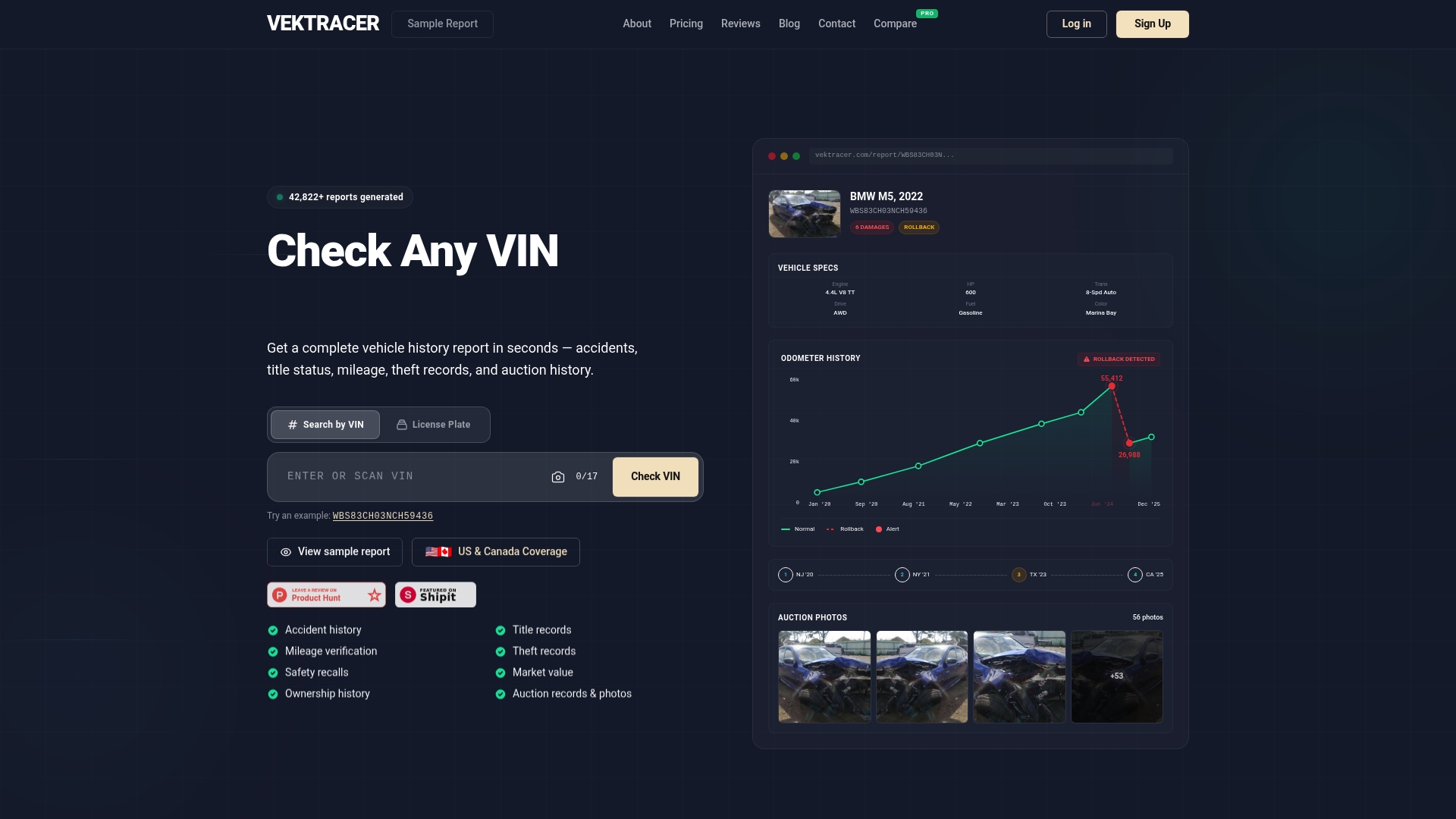
At Vektracer, we built our reports specifically for buyers who want the full picture without paying inflated prices. Our reports start at $19.99 and pull from NMVTIS-connected sources to deliver accident history, title records, odometer verification, theft checks, open recalls, and market value data. That’s the same core data as the big names, at a fraction of the price. You can review our pricing options, see a sample VIN report before you commit, and learn exactly how our reports work to cover the gaps. Smart buyers use the right tools. This is yours.
Frequently asked questions
What does a comprehensive VIN report cover that a free check doesn’t?
A comprehensive report includes title issues, accident details, service history, odometer rollbacks, and ownership usage—data aggregated from thousands of sources including DMVs, insurers, police, auctions, and service centers that free checks don’t access.
Can a VIN report miss major problems?
Yes. Reports can miss unreported accidents, cash repairs, cloned VINs, and delayed data updates, so edge cases like these are exactly why you should always cross-check and inspect the car in person before buying.
What’s the most important section of a VIN report for buyers?
Title history and odometer trends reveal the most critical financial and safety risks, and experts consistently recommend prioritizing title brands over minor collision records when evaluating any used vehicle.
How can I check recalls for free before I buy?
Use the NHTSA’s free VIN lookup tool to identify any open safety recalls. This is a quick step that expert guides recommend as part of every pre-purchase routine before investing in a full paid report.
Do all VIN reports have the same information?
No. Different providers access different databases, which means coverage varies. You should always cross-check multiple reports when something looks unusual, since one source alone may not catch every gap in the vehicle’s recorded history.
Recommended
Ready to check a vehicle?
Enter any 17-character VIN for a free instant preview — no account needed.