How accident records affect used car value and safety
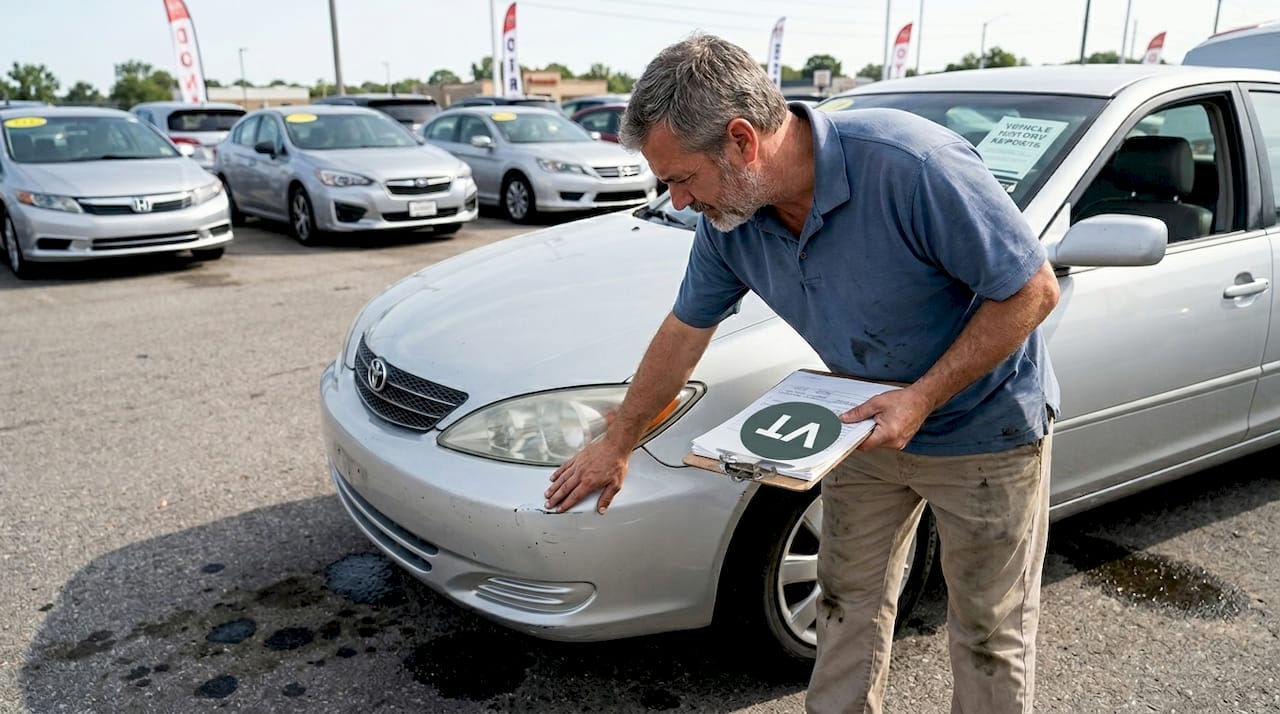
Check a vehicle before you buy
Enter a VIN for a free instant preview — accidents, title brands, mileage, liens & open recalls.
TL;DR:
Accident records can reduce a used car’s value by 10 to 30% regardless of repairs.
Vehicle history reports often miss 15 to 20% of minor or private accidents.
Combining reports with a pre-purchase inspection helps buyers make smarter decisions.
Buying a used car feels like a gamble when you don’t have the full picture. Most buyers assume a vehicle history report showing no major flags means they’re safe. But accident records can permanently reduce a car’s market value by 10 to 30%, even after professional repairs. Worse, a surprising number of accidents never make it into any report at all. Understanding how accident records work, what they actually reveal, and where they fall short is one of the most important skills you can develop before signing anything.
Table of Contents
How to use accident records to make smarter buying decisions
Why relying purely on accident records misses the bigger picture
Key Takeaways
Point | Details |
|---|---|
Accident records lower value | Even minor accidents permanently reduce used car value due to buyer stigma and perceived risk. |
History reports are incomplete | Vehicle history reports often miss 15-20% of accidents, so buyers should always verify beyond the report. |
Safety demands more than records | Pair accident records with pre-purchase inspections for peace-of-mind and true safety assurance. |
High-end vehicles hit harder | EVs and luxury cars see steeper value drops from accidents due to repair costs and battery concerns. |
Smart buyers use multi-step checks | Combine accident records, inspections, and VIN/title analysis for the best used car decision. |
What are accident records and how are they created?
An accident record is a documented event tied to a specific vehicle, captured through official or commercial reporting channels and stored against that car’s unique 17-character Vehicle Identification Number (VIN). Think of the VIN as a fingerprint for the vehicle. Every time a car is involved in a reported incident, that event gets linked to its VIN and can appear on a vehicle history report.
But where does that data actually come from? Car accident history sources include a wide network of contributors:
Department of Motor Vehicles (DMV): State agencies report title changes, salvage designations, and total-loss events.
Police and law enforcement: Crash reports filed at the scene feed into state and national databases.
Insurance companies: When a claim is filed, insurers report the incident, including damage estimates and payout details.
Auto auctions: Vehicles sold at auction often carry condition disclosures that get logged.
Repair shops: Some certified shops report significant repair work, though this is inconsistent.
The accident history by VIN methodology works by matching each reported event to a specific VIN, then aggregating those events into a single timeline. It sounds thorough. The problem is that vehicle history reports miss 15 to 20% of minor or unreported accidents, especially those repaired with cash or handled privately without involving insurance.
Here’s a quick breakdown of what typically gets reported versus what often slips through:
Event type | Likely to appear in report? |
|---|---|
Insurance claim filed | Yes |
Police report filed | Usually |
Total loss / salvage title | Yes |
Cash repair, no insurance | Rarely |
Private seller fix, no claim | Almost never |
Minor fender bender, no report | No |
For buyers relying solely on a vehicle history report, this gap is significant. A car can look spotless on paper while carrying real damage underneath. That’s why getting a vehicle report is a starting point, not a finish line. You also need to understand VIN identity basics to fully appreciate what that data represents and where its limits begin.
How accident records influence used car value
Understanding how accident records are built helps explain their real weight in used car pricing. The short version: accident history costs money. The longer version is more nuanced.
Accident records permanently reduce market value by 10 to 30% even after proper repairs, driven largely by buyer stigma and perceived risk. The damage doesn’t have to be structural. Even a cosmetic incident that was perfectly repaired still shows up on the report and still signals risk to future buyers.
Here’s how the impact typically breaks down by severity:
Accident severity | Estimated value reduction |
|---|---|
Minor (cosmetic, no airbag deploy) | 5 to 10% |
Moderate (body damage, frame check needed) | 10 to 20% |
Major (airbag deployment, structural damage) | 20 to 30%+ |
Multiple accidents on record | Compounding effect, 30%+ total |
The compounding effect is something many buyers overlook. A car with two moderate accidents on record doesn’t just lose 10 to 20%. Each additional incident stacks on top of the last, eroding buyer confidence and resale value further.
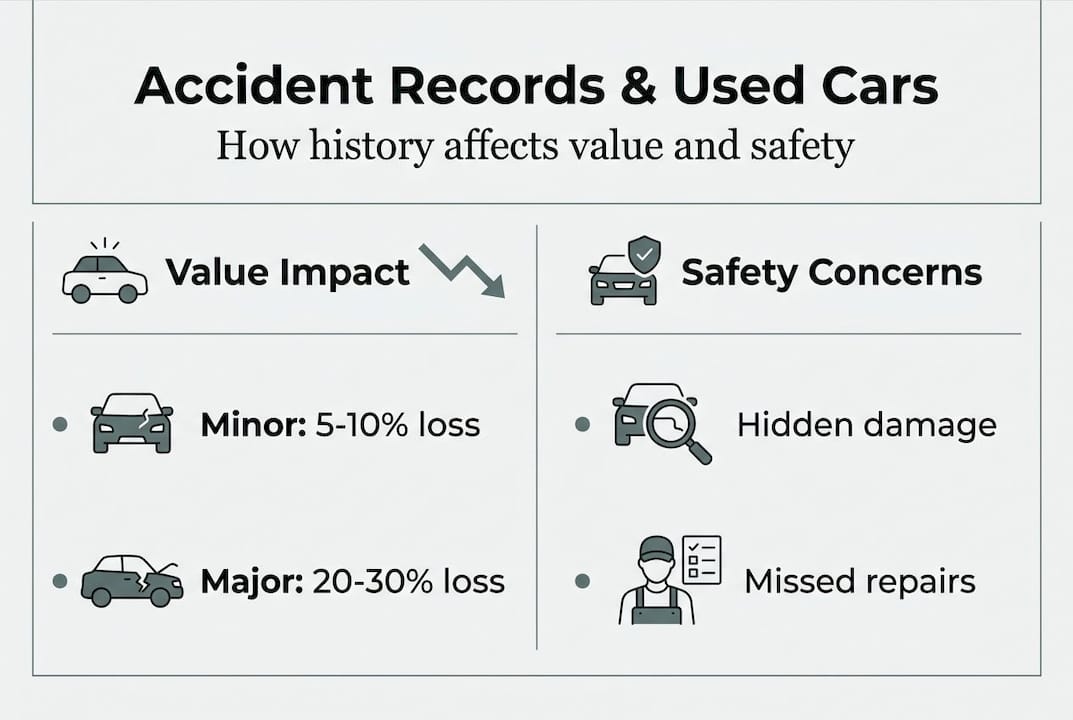
Certain vehicle types take harder hits. EVs and luxury models often see steeper drops because repair costs are higher and battery-related fears add uncertainty. A luxury sedan with a rear-end collision on its record might lose 25% of its value even with clean repair documentation, simply because buyers assume hidden complexity.
For vehicle history check steps, it helps to understand how the market perceives “accident history” versus “clean title” vehicles. Dealers and private sellers both price accordingly, which means knowing what’s on the report gives you real negotiating leverage. A model comparison guide can also help you evaluate whether a specific make and model holds value better after incidents.
Pro Tip: If a seller is pricing a car with accident history at the same level as a comparable clean-title vehicle, that’s a red flag. Use the report data to anchor your counteroffer to documented value loss.
Pull the vehicle history report before viewing the car in person.
Note the number of incidents, their severity, and the dates.
Cross-reference with current market pricing for similar vehicles.
Use the accident record as a negotiation tool, not just a warning sign.
Safety implications of accident records
Beyond price, accident histories matter for passenger safety and peace of mind. A car that was in a significant collision may have compromised structural integrity even after repairs. Modern vehicles are engineered with crumple zones, reinforced pillars, and airbag systems that are designed to absorb energy in a crash. Once those systems are triggered or bent, restoring them to factory spec is difficult and sometimes impossible.
Accident records can point to these risks, but they can’t confirm repair quality. That’s a critical distinction. Here’s what reports can and cannot tell you:
Can tell you: Whether an incident was reported, the general severity, and whether a salvage or rebuilt title was issued.
Cannot tell you: Whether repairs were done correctly, whether OEM parts were used, or whether hidden frame damage exists.
The limitations of Carfax and similar services are real. A clean report does not equal a safe car. Reports are not infallible; cash repairs and private fixes leave no trace, and title washing across state lines can completely reset a vehicle’s documented history.
Title washing happens when a salvage or rebuilt vehicle is registered in a state with looser titling laws, effectively erasing the damage designation from the record. The car can then be resold with a clean-looking title in another state.
The essential vehicle history checklist for any used car purchase should always include a pre-purchase inspection (PPI) by an independent mechanic. This is non-negotiable, especially for vehicles with any accident history on record.
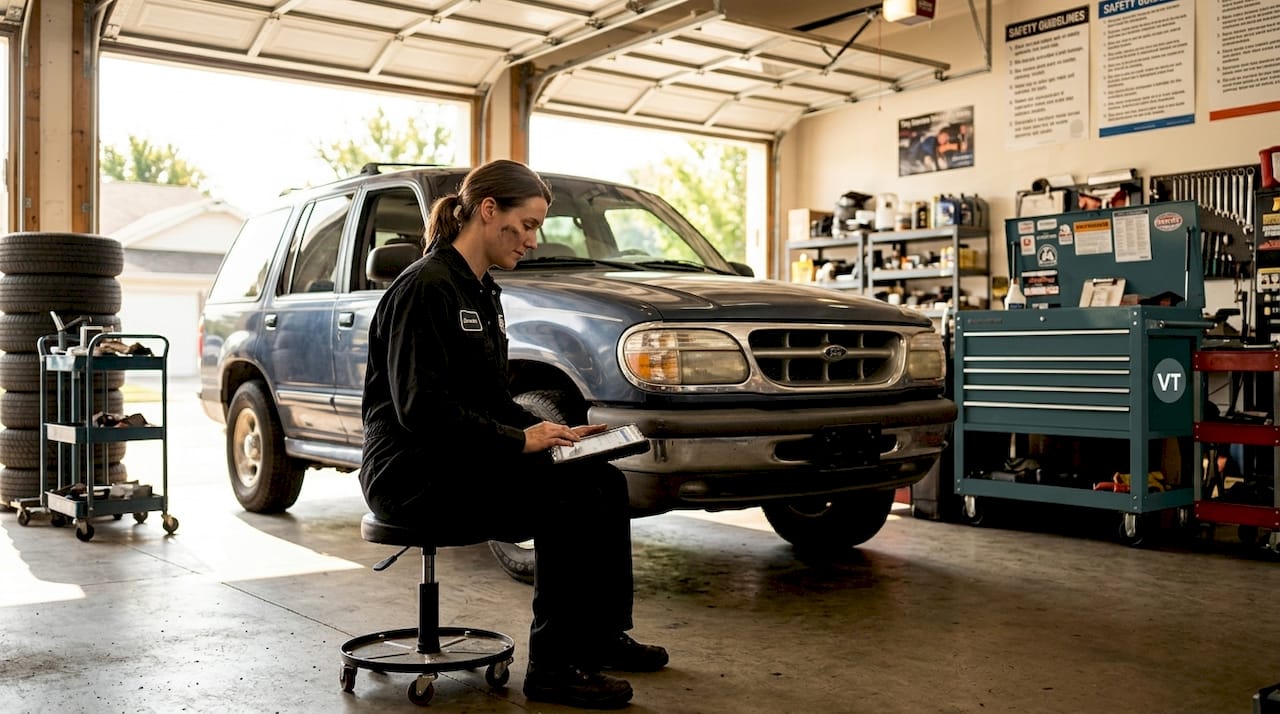
Pro Tip: Ask your mechanic to specifically check for uneven panel gaps, mismatched paint, and signs of welding or frame straightening. These are physical clues that a report might miss entirely.
For a full breakdown of what to look for before you buy, the pre-purchase inspection advice at Vektracer walks you through the process step by step.
How to use accident records to make smarter buying decisions
With a clear grasp of what accident records mean, let’s see how to build them into your buying strategy. Reading a report isn’t just about spotting red flags. It’s about understanding context and using that context to protect your investment.
Here’s a step-by-step approach:
Check the number of incidents. One minor accident repaired years ago is very different from three incidents in two years.
Look at severity and repair documentation. Was there airbag deployment? Was a salvage title ever issued, even if later rebuilt?
Verify the dates. A recent accident matters more than one from eight years ago, especially if the car has changed hands since.
Cross-check with a VIN lookup. Confirm the title history aligns with what the seller is telling you.
Get a PPI. Use the report findings to direct your mechanic’s attention to specific areas of concern.
For edge cases, the math gets more important. Minor cosmetic accidents still cause a 5 to 15% value drop if they were insured and reported. Multiple accidents compound to 30% or more. EVs and luxury vehicles are hit hardest due to repair costs and battery-related concerns.
Scenario | Buyer action |
|---|---|
Single minor accident, good repair docs | Negotiate 5 to 10% off asking price |
Moderate accident, no repair records | Request inspection before offer |
Multiple accidents on record | Reassess whether the deal is worth it |
Salvage or rebuilt title | Proceed with extreme caution or walk away |
For car title guidance, understanding the difference between a clean title, a rebuilt title, and a salvage title is essential before you finalize any purchase. Each carries different insurance implications and resale consequences.
Why relying purely on accident records misses the bigger picture
Here’s something most car-buying guides won’t tell you directly: accident records are a tool, not a verdict. We’ve seen buyers walk away from perfectly good vehicles because of a minor fender bender from six years ago, and we’ve seen others overpay for cars with spotless reports that hid serious structural damage.
Reports can miss up to 20% of events, and even a clean VIN can carry hidden history. The real skill isn’t reading the report. It’s knowing what the report can’t show you. Title-washing loopholes mean a car can cross state lines and shed its salvage designation entirely. A vehicle that was totaled in one state can legally appear clean in another.
True buyer wisdom means combining the history report with a physical inspection and a conversation about ownership context. Who owned the car? Was it a fleet vehicle, a rental, or a single-owner personal car? How was it maintained? These questions fill in the gaps that data alone cannot. The pre-purchase inspection wisdom isn’t just about mechanics. It’s about building a complete picture from multiple angles before you commit.
Unlock better vehicle history insights with Vektracer
If you’re serious about buying a used car with confidence, a thorough vehicle history report is your first move. Vektracer gives you access to accident records, title history, mileage verification, theft checks, safety recalls, and market value data, all sourced from NMVTIS-connected databases.
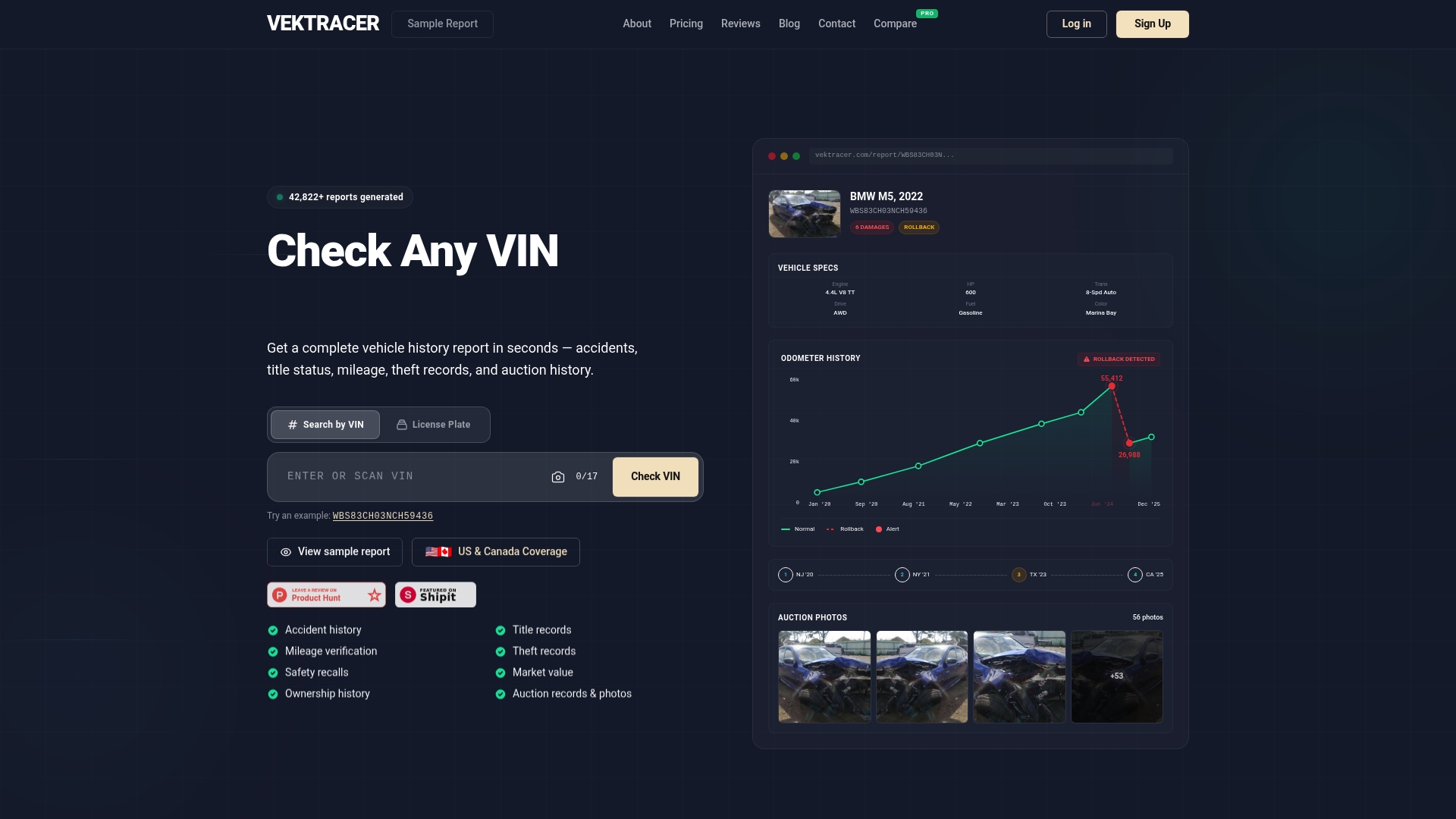
Our reports start at $19.99, which is significantly less than Carfax at $44.99 or AutoCheck at $24.99, with no compromise on core data quality. You can see exactly how Vektracer works before you commit, and review a sample report to understand what you’ll get. Don’t let hidden accident history cost you thousands. Run the VIN before you sign anything.
Frequently asked questions
How much does a single accident record reduce a used car’s value?
A single accident record can reduce a used car’s value by 10 to 30%, depending on the severity of the incident and the quality of repairs completed afterward.
Are accident records always accurate and complete?
No. History reports miss 15 to 20% of minor or privately repaired accidents, meaning a clean record is not a guarantee that no incidents occurred.
Can EVs and luxury vehicles be hit harder by accident history?
Yes. EVs and luxury vehicles often experience steeper value drops after accidents because repair costs are higher and buyers worry about battery damage or complex system failures.
Is a pre-purchase inspection necessary if the accident record looks clean?
Absolutely. Even a clean accident history report can miss cash repairs or title-washed damage, so pairing it with a PPI significantly reduces your risk as a buyer.
What is title washing and why is it risky for buyers?
Title washing is when a salvage or rebuilt vehicle is registered in a different state to erase its damage history. This makes history reports unreliable and can leave buyers unknowingly purchasing a previously totaled vehicle.
Recommended
Ready to check a vehicle?
Enter any 17-character VIN for a free instant preview — no account needed.