Understanding previous owner history for used car buyers

Check a vehicle before you buy
Enter a VIN for a free instant preview — accidents, title brands, mileage, liens & open recalls.
TL;DR:
- Previous owner history reveals how many times a vehicle has changed hands and the owner types.
- Combining government NMVTIS data with commercial reports provides the most comprehensive vehicle history.
- Ownership patterns like frequent transfers or fleet use signal higher risks and impact car value.
A clean title sounds reassuring when you’re shopping for a used car. But here’s the problem: it only tells you there are no major legal issues attached to the vehicle. It says nothing about how many people owned it, how they drove it, or why they sold it. Previous owner history fills that gap. It reveals the full story behind a vehicle’s past, from fleet use to rapid ownership changes, and it can mean the difference between a smart buy and a costly mistake. This article breaks down what previous owner history is, where the data comes from, and how to use it before you sign anything.
Table of Contents
- What is previous owner history?
- Where does previous owner history come from?
- How does previous owner history impact used car value and risk?
- How to check previous owner history before you buy
- What most used car buyers get wrong about owner history
- Get complete vehicle history the smart way
- Frequently asked questions
Key Takeaways
| Point | Details |
|---|---|
| Previous owner history matters | It helps you avoid costly surprises when buying a used car. |
| Government and commercial sources differ | NMVTIS gives solid title info, but commercial reports reveal more about past owners. |
| Use multiple reports for best results | Combining NMVTIS and a detailed report offers the clearest view of a car’s past. |
| Ownership patterns reveal risk | Look for red flags like frequent transfers or fleet history to judge a car’s reliability. |
What is previous owner history?
Previous owner history is a record of every individual or organization that has held the title to a vehicle. Think of it as a timeline of custody. It tracks who owned the car, for how long, and sometimes what type of owner they were.
Here’s what a detailed ownership record can include:
- Number of owners: How many times the title changed hands
- Ownership duration: How long each owner kept the vehicle
- Owner type: Personal use, commercial fleet, rental company, government, or lease
- State-by-state transfers: Where the vehicle was registered at each stage
- Dates of transfer: When each ownership change occurred
This matters because the type and frequency of ownership tells you a lot about how the car was likely used. A vehicle owned by one person for eight years is a very different risk profile than one that passed through four owners in three years.
Many vehicle history report basics include a summary of ownership history, but the level of detail varies widely. Some reports show only the number of owners. Others break down owner types and transfer locations.
It’s also important to understand what a vehicle history check does and does not cover. Title status, which is what most people focus on, only reflects whether the car has a clean, salvage, rebuilt, or branded title. Owner history is a separate layer of data entirely.
Pro Tip: A clean title and a short ownership history are two different things. Never assume one implies the other. Always look at both when evaluating a used vehicle.
Government sources like NMVTIS title records provide solid title and brand data, but they offer less granular detail on ownership count or usage type. That’s why pairing government data with a commercial report gives you the most complete picture.
Where does previous owner history come from?
Understanding what previous owner history tracks raises another question: where does this information come from, and how reliable is it?
Most owner history data originates from a few key sources:
- State DMV records: Every time a vehicle is titled or registered in a new name, that transaction is recorded at the state level.
- NMVTIS (National Motor Vehicle Title Information System): A federally mandated database that aggregates title and brand data from participating states. It’s one of the most authoritative sources for title status.
- Insurance companies: Report total loss and salvage events to NMVTIS.
- Auto auctions and junk yards: Required by law to report vehicles they process.
- Commercial data providers: Companies like Carfax and AutoCheck layer on additional data from third-party sources, including dealer records and service history.
Here’s where it gets nuanced. NMVTIS report details show that while NMVTIS is government-backed and widely trusted, it focuses more on title brands and less on ownership count or usage type. As noted by Pennsylvania’s DMV guidance, NMVTIS is best used as a supplement, not a standalone solution.
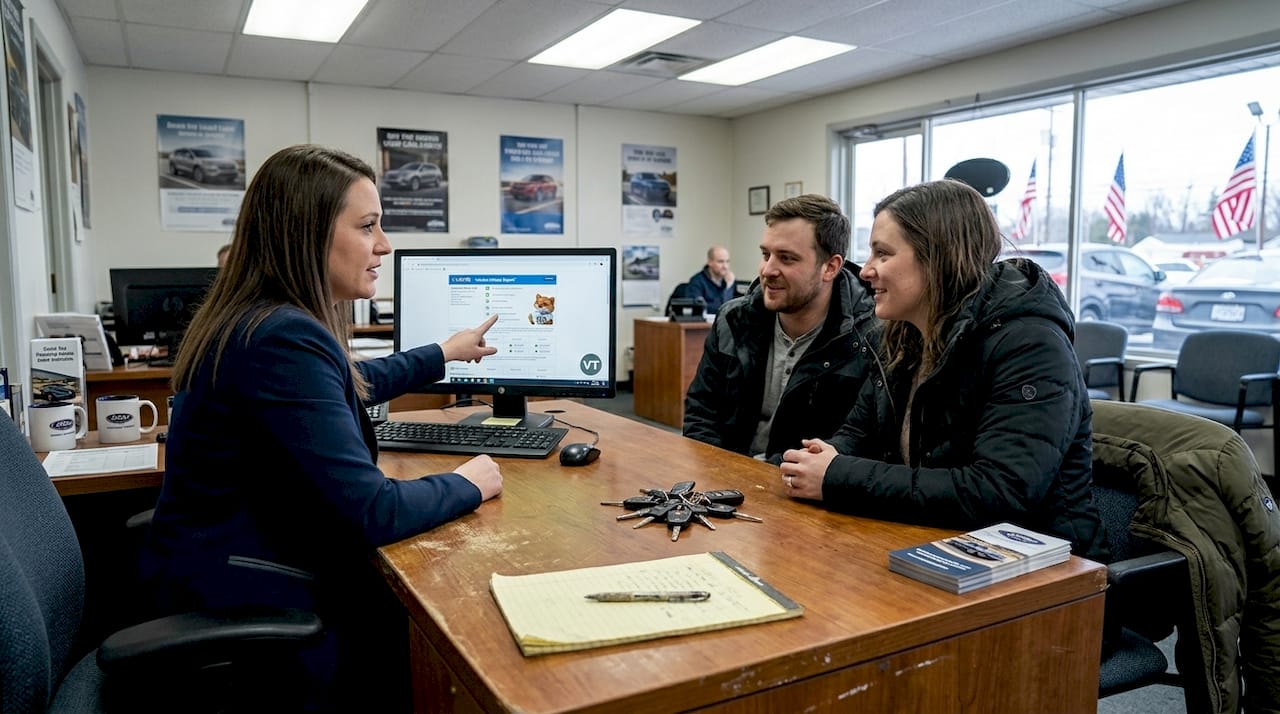
Commercial reports fill in the gaps NMVTIS leaves behind. Here’s a quick comparison:
| Data point | NMVTIS | Commercial report |
|---|---|---|
| Title/brand status | Yes | Yes |
| Accident history | Limited | Yes |
| Owner count | Sometimes | Usually |
| Owner type (fleet, rental) | Rarely | Often |
| Mileage records | Sometimes | Yes |
| Service history | No | Sometimes |
The takeaway is that no single source is complete on its own. Combining government data with a commercial report gives you the broadest and most reliable view of a vehicle’s ownership history.
How does previous owner history impact used car value and risk?
Once you know where owner history data comes from, it’s essential to understand how this info affects the car’s value and risk.
Ownership patterns are one of the strongest signals of a vehicle’s condition and reliability. Here are the most important red flags to watch for:
- Multiple short-term owners: If a car has had three or four owners in just a few years, that’s a warning sign. Buyers often flip problem vehicles quickly.
- Fleet or rental history: These vehicles typically see higher mileage and harder use than privately owned cars. Maintenance may have been adequate, but wear and tear tends to be greater.
- Unexplained ownership gaps: If there are periods where the car’s history goes quiet, it could mean the vehicle sat unregistered, was used out of state, or had undisclosed repairs.
- Rapid resale after purchase: A car sold within weeks or months of being bought deserves extra scrutiny.
“A vehicle’s ownership timeline is one of the first things a knowledgeable buyer examines. Short ownership cycles and commercial use are among the top predictors of hidden mechanical issues.”
Ownership history also directly affects price. Vehicles with rental or fleet backgrounds often sell at a discount for good reason. Knowing this gives you negotiating power. If the report shows three previous owners and one was a rental company, that’s a data point you can bring to the table when discussing price.
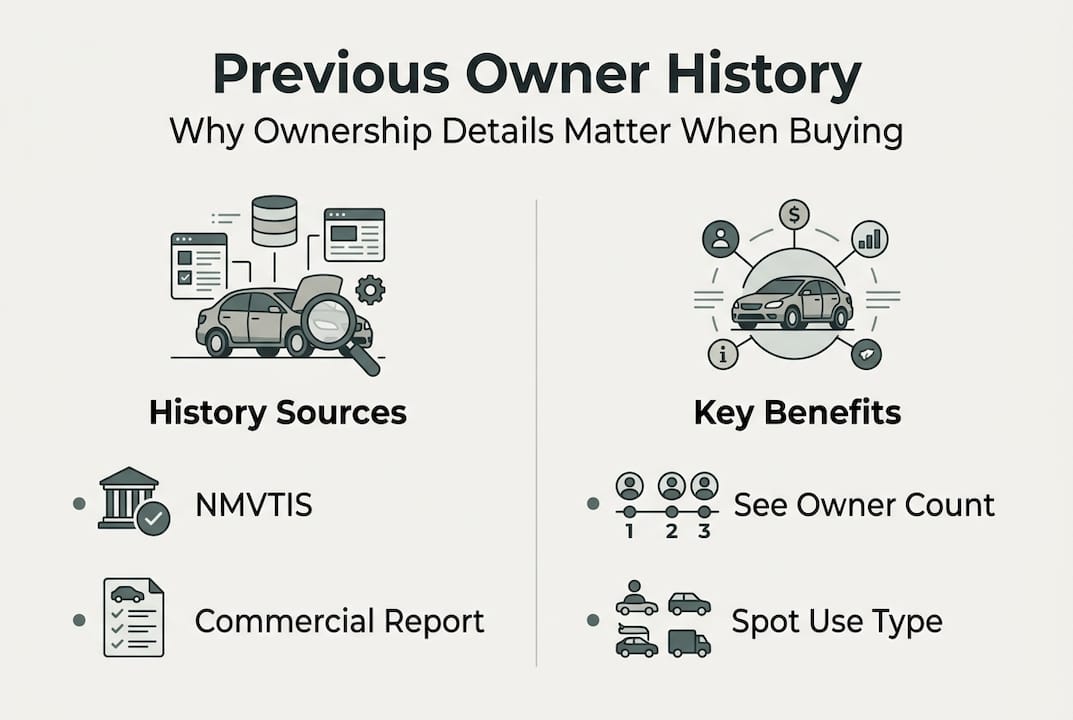
For context, car depreciation data shows that most value loss happens in the first few years of ownership. A car that changed hands frequently during that window may have compounding issues that aren’t obvious at first glance.
Pro Tip: When you see a concerning ownership pattern, ask the seller directly why the car changed hands so often. Vague or inconsistent answers are a red flag on their own. Check used car buying tips for the right questions to ask.
How to check previous owner history before you buy
Knowing the impact of owner history means your next step is to actually review this information. Here’s how to do it effectively.
- Get the VIN from the seller. The Vehicle Identification Number is the unique 17-character code that acts as the car’s fingerprint. It’s located on the dashboard near the windshield and on the driver’s side door jamb.
- Order a government-backed NMVTIS report. This gives you a baseline on title status and any major brands. It’s an important first layer, but remember the NMVTIS limitations when it comes to owner-specific details.
- Run a commercial vehicle history report. This adds owner count, usage type, accident records, and mileage verification on top of the NMVTIS data.
- Review ownership transitions carefully. Look for gaps, rapid changes, or commercial use that wasn’t disclosed by the seller.
- Cross-check with DMV records when possible. Some states allow you to verify registration history directly, which can confirm what the report shows.
Here’s a quick reference for what each step uncovers:
| Step | What it reveals |
|---|---|
| VIN lookup | Vehicle identity, basic specs |
| NMVTIS report | Title brands, insurance events |
| Commercial report | Owner count, usage type, accidents |
| DMV verification | Registration history, state transfers |
For a full walkthrough, the car history search guide covers each step in detail. You should also run a vehicle recall checklist alongside your owner history review to catch any open safety issues.
Pro Tip: Free tools like the NMVTIS consumer portal and paid commercial reports each have strengths. Use both together rather than relying on just one. The overlap in data helps you spot inconsistencies.
What most used car buyers get wrong about owner history
Here’s an uncomfortable truth: most buyers treat a single clean report as a final answer. It isn’t. It’s a starting point.
Conventional wisdom says if the report looks good, you’re good. But many real problems only surface when you cross-reference ownership history with maintenance records and accident data together. A car with a clean title, no accidents on file, and four owners in five years still deserves serious scrutiny. The absence of reported accidents doesn’t mean the car was never damaged. It means damage was never formally reported.
Another common mistake is ignoring unusual transfer patterns. Buyers see “3 previous owners” and move on. They don’t ask why the second owner kept the car for only six weeks. That kind of gap in car purchase due diligence is where costly surprises hide.
Ownership history should prompt more questions, not close them. Use it as a conversation tool. The questions for car sellers you ask after reviewing the report are just as important as the report itself. A seller who can’t explain a short ownership window or a cross-country title transfer is a seller worth walking away from.
Get complete vehicle history the smart way
If you’re ready to take the guesswork out of your used car search, here’s the next step.
At Vektracer, we make it simple to pull a full vehicle history report using just the car’s VIN. Our reports combine NMVTIS-connected data with additional commercial sources, so you get title records, accident history, owner count, mileage verification, theft checks, and safety recalls all in one place.
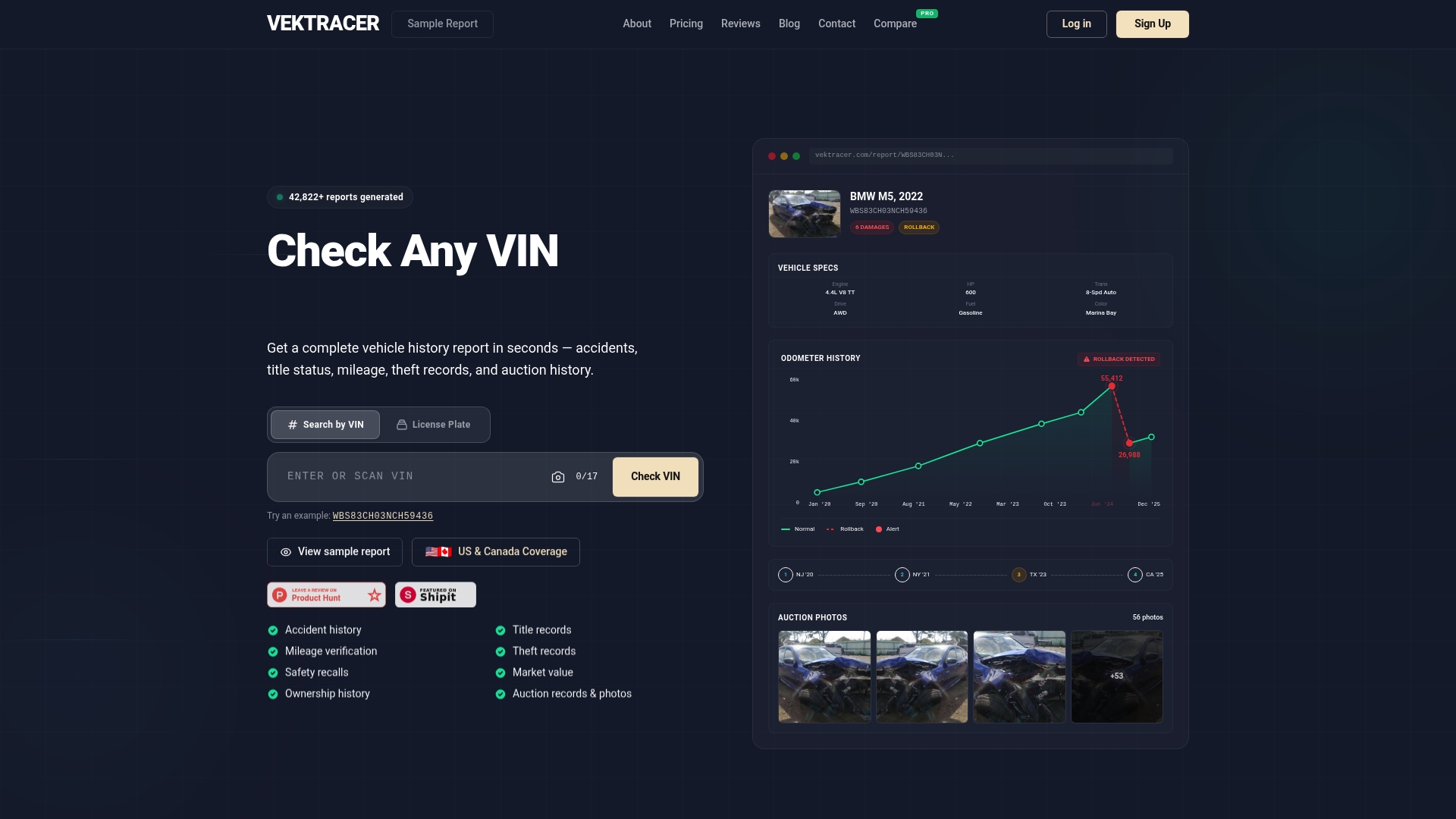
Starting at just $19.99, our reports cost significantly less than Carfax ($44.99) or AutoCheck ($24.99), without cutting corners on the data that matters. See how VekTracer works and run your first VekTracer vehicle history check before your next test drive. Don’t let a missing detail turn into an expensive lesson.
Frequently asked questions
What is included in previous owner history?
Previous owner history usually shows the number of owners, ownership duration, and sometimes the type of use such as personal, fleet, or rental. NMVTIS records cover title and brand data but may not include full ownership detail.
How do I find out how many owners a used car had?
You can check the previous owner count by ordering a detailed vehicle history report using the car’s VIN. Commercial reports typically provide more ownership detail than government sources like NMVTIS alone.
Does a clean title mean only one previous owner?
No. A clean title means there are no major title issues such as salvage or flood damage, but it says nothing about how many people have owned the car. Always check owner count separately.
Is NMVTIS enough for checking previous owner history?
NMVTIS is a trusted starting point for title and brand verification, but as Pennsylvania’s DMV notes, it lacks some owner-specific details found in commercial reports. Use both for the most complete picture.
Recommended
Ready to check a vehicle?
Enter any 17-character VIN for a free instant preview — no account needed.