Why vehicle history matters: buy smarter, avoid risks

Check a vehicle before you buy
Enter a VIN for a free instant preview — accidents, title brands, mileage, liens & open recalls.
TL;DR:
- Vehicle history reports reveal critical issues like salvage titles, accidents, and odometer fraud.
- Odometer rollback suspicion has increased, costing buyers an average of $3,300 per vehicle.
- Reports should be paired with a professional inspection for accurate assessment and negotiation leverage.
Buying a used car can feel exciting, but that shiny exterior can hide serious problems. 2.45 million US vehicles have suspected odometer rollbacks—a 14% jump in just one year—costing buyers an average of $3,300 in lost value per vehicle. That number should stop anyone in their tracks. A vehicle history report (VHR) is one of the fastest ways to see what a seller won’t tell you. This guide breaks down what VHRs reveal, what they miss, and how to use them like a smart buyer.
Table of Contents
- What does a vehicle history report reveal?
- Hidden risks: The dangers you can’t spot
- Comparing report sources: CARFAX vs. AutoCheck vs. NMVTIS
- What vehicle history reports can’t tell you
- The real-world value and pitfalls of vehicle history
- See your car’s past with confidence—next steps
- Frequently asked questions
Key Takeaways
| Point | Details |
|---|---|
| Hidden risks exposed | Vehicle history reports uncover title issues, odometer fraud, and accident damage that inspections may miss. |
| No report is perfect | No single report captures all problems, so cross-reference sources and follow up with an inspection. |
| Odometer fraud rising | Millions of cars show tampered mileage, costing buyers thousands in lost value and reliability. |
| Combine reports for safety | Compare CARFAX, AutoCheck, and NMVTIS to spot discrepancies and make the safest possible purchase. |
What does a vehicle history report reveal?
A VHR is a document that pulls together a vehicle’s recorded past using its VIN (Vehicle Identification Number), which acts like a fingerprint for every car on the road. Once you run that number, you get a clear picture of what that vehicle has been through before landing on the lot.
Here are the core sections you’ll find in most reports:
- Title status: Tells you if the car carries a clean, salvage, rebuilt, or flood title. A salvage title means the vehicle was declared a total loss by an insurer. That alone can drop resale value by 20% to 40%.
- Accident history: Documents reported collisions, including severity. Even minor accidents can mean hidden frame damage.
- Odometer readings: Tracks mileage at each recorded event. Inconsistencies between readings are a major red flag for odometer fraud.
- Ownership records: Shows how many people have owned the vehicle and for how long. Frequent ownership changes may hint at recurring problems.
- Service and maintenance records: Reveals whether the car was maintained regularly, which matters for long-term reliability.
Learning reading vehicle history reports correctly helps you spot the issues that impact both safety and resale value. VHRs reveal critical risks such as salvage titles, odometer fraud, accident damage, and multiple owners, enabling smarter pricing and negotiation.
| Report section | What it signals | Potential impact |
|---|---|---|
| Salvage/flood title | Total loss or water damage | 20–40% value drop |
| Accident history | Collision severity | Reduced safety, lower resale |
| Odometer inconsistency | Possible rollback fraud | Average $3,300 value loss |
| Multiple owners | Frequent turnover | Possible hidden issues |
| No service records | Neglected maintenance | Higher repair risk |
For a deeper walkthrough of how reports work, the vehicle history reports guide covers every section in plain language.
Pro Tip: A car with more than three owners in five years deserves extra scrutiny. High turnover often means the vehicle had problems that pushed previous owners away.
You can also run a VIN lookup report directly before you ever step onto a dealership lot, which gives you the upper hand in any negotiation.
Hidden risks: The dangers you can’t spot
A well-detailed car can hide a lot. Sellers know that a fresh coat of wax and clean seats can distract buyers from serious underlying problems. That’s where VHRs become your best defense.
Here are the hidden dangers that only a report can surface:
- Rolled-back odometers: Digital odometers are no longer tamper-proof. Specialized tools can now manipulate mileage readings with minimal effort.
- Flood damage: Vehicles submerged in water suffer long-term electrical and structural issues that may not show up for months.
- Undisclosed airbag deployment: If airbags fired in a past crash but weren’t replaced properly, you’re driving a safety hazard.
- Rebuilt salvage vehicles: A car can look and drive fine after reconstruction while still carrying a compromised frame.
- Unreported private-sale accidents: Crashes that weren’t reported to insurance may never appear in police records.
The rise of digital tampering tools has made odometer fraud easier and harder to detect. Odometer rollbacks jumped 14% in a single year, reaching 2.45 million vehicles nationwide.
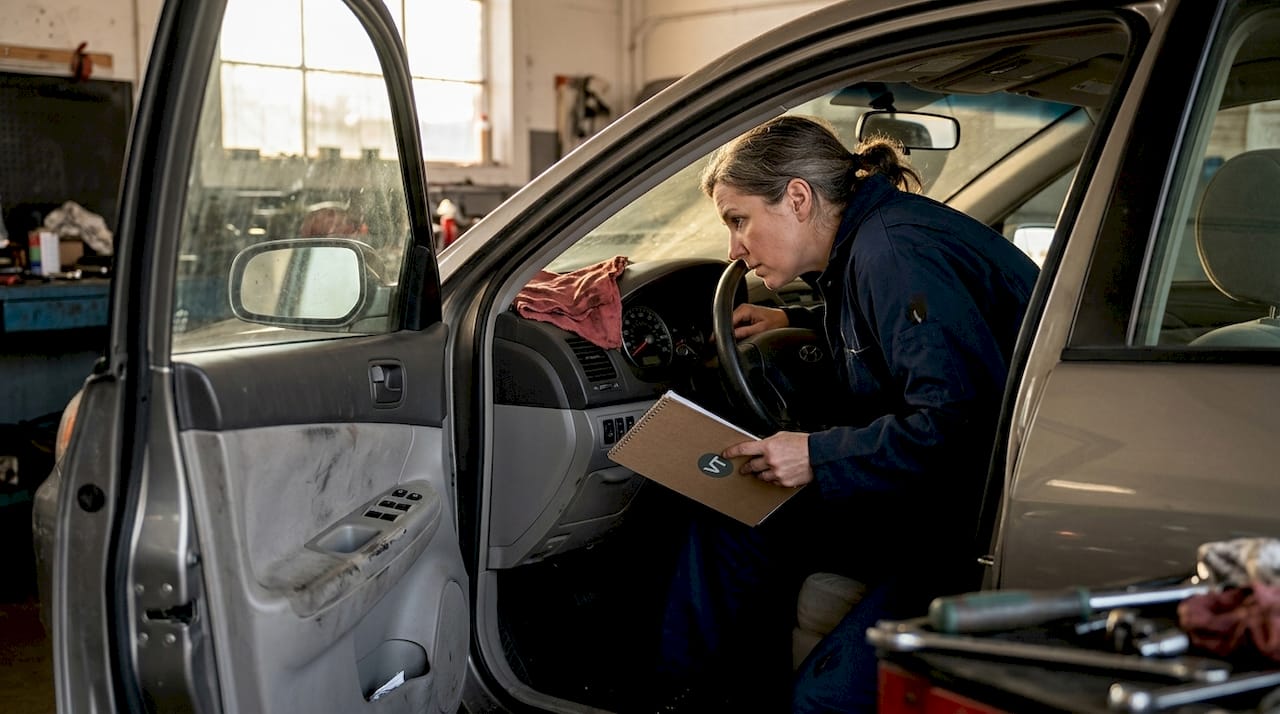
“Mileage inconsistencies between VHR records are one of the most reliable indicators of odometer tampering—but physical checks like worn pedals and seat fabric can add another layer of verification.”
That combination of digital and physical checks matters. A report might show a mileage gap between two service visits, which is your cue to look closer. Worn-down brake pedals on a car listed as low-mileage? That’s a contradiction you can see with your own eyes.
Financially, the consequences are real. Buyers who purchase a vehicle with a rolled-back odometer typically overpay by thousands and then face repair bills sooner than expected because the car’s actual wear is much higher than advertised. There are also legal implications if you later try to resell the car without disclosing known fraud.
A free odometer check using the VIN can help you spot mileage inconsistencies before you get too attached to a vehicle.
Comparing report sources: CARFAX vs. AutoCheck vs. NMVTIS
Not all VHR sources pull from the same data. Knowing what each one does well helps you pick the right tool, or better yet, the right combination.
CARFAX is the most widely recognized service. It pulls from a large network of dealerships, service centers, and insurance companies, making it strong for service history and accident records. It costs $44.99 per report.
AutoCheck, owned by Experian, focuses more on auction data and assigns a score to help you compare vehicles quickly. It costs $24.99 per report and is often preferred by dealers and auction buyers.
NMVTIS (National Motor Vehicle Title Information System) is the federal government’s database. It’s free to check title status and is especially useful for spotting salvage, flood, or junked titles across state lines.
| Source | Cost | Strengths | Best use case |
|---|---|---|---|
| CARFAX | $44.99 | Service records, accidents | Retail used car buyers |
| AutoCheck | $24.99 | Auction data, vehicle score | Auction and dealer buyers |
| NMVTIS | Free | Title status, cross-state data | Title verification |
| Vektracer | $19.99 | Full VHR, NMVTIS-connected | Budget-conscious buyers |
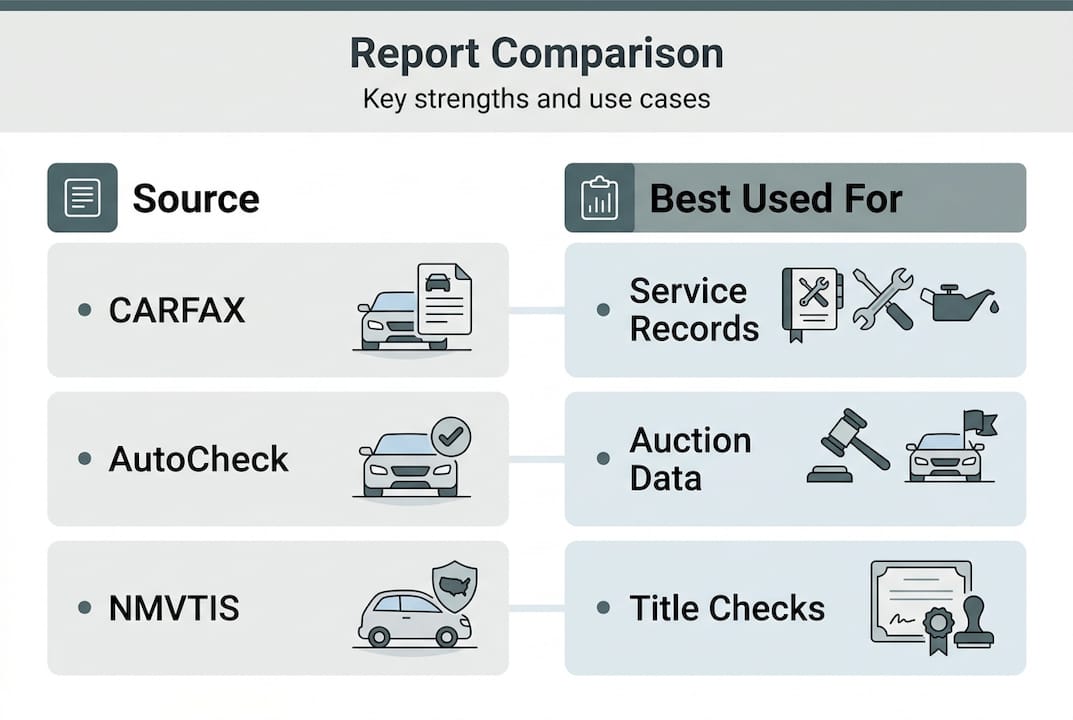
No single source covers everything. Cross-checking CARFAX and AutoCheck catches discrepancies that either one might miss on its own. NMVTIS is the federal backbone for title verification and is free to use.
Key reasons to use multiple sources:
- Each platform has different reporting partners, so gaps in one may be filled by another
- Auction histories may only appear in AutoCheck
- Service records are more complete in CARFAX
- Title fraud that crossed state lines is best caught through NMVTIS
Pro Tip: Always start with NMVTIS to verify the title at no cost. If the title is clean, then invest in a paid report for deeper history. The NMVTIS reports overview explains exactly how to access federal title records.
What vehicle history reports can’t tell you
VHRs are powerful, but they’re not perfect. Treating them as the final word is a mistake that catches many buyers off guard.
Here’s what most reports will miss:
- Unreported accidents: If a collision wasn’t reported to insurance or law enforcement, it likely won’t appear in any database.
- Private repairs: Cash-paid body work done at an independent shop rarely gets recorded anywhere.
- Frame damage from minor impacts: Low-speed collisions can bend a frame without triggering an insurance claim.
- Current mechanical condition: A VHR tells you what happened in the past, not whether the engine is about to fail today.
- Recent changes: Database updates lag. A vehicle totaled two months ago may not yet appear as salvage in a report.
VHRs miss unreported minor accidents, private repairs, and current mechanical issues. They’re also limited by delays in how quickly data is reported to national databases. That gap can be weeks or even months.
This is why a pre-purchase inspection (PPI), done by an independent mechanic, is non-negotiable for any serious used car purchase. A PPI costs between $100 and $200 and can catch problems that no database will ever record. Think of a VHR as your starting point, not your finish line.
Understanding how accident records’ impact a car’s long-term value helps you see why even undisclosed minor damage matters when it comes time to sell or trade in.
Use the VHR to screen candidates and walk away from obvious red flags. Then use the PPI to confirm what the report suggests before you sign anything.
The real-world value and pitfalls of vehicle history
Here’s a truth most buyers don’t hear: a clean VHR can actually work against you if you stop there. We’ve seen buyers walk away from a perfectly good negotiation because a report flagged a minor fender bender that was repaired flawlessly. And we’ve seen others hand over cash for a car with a spotless report that turned out to have serious unreported frame damage.
The real power of a VHR isn’t in trusting it blindly. It’s in using it as leverage. A reported accident gives you grounds to negotiate a lower price. Multiple owners in a short time frame tell you to ask harder questions. A mileage gap tells you to look at the pedals and seats.
Always ask sellers to back up a clean report with documentation. Receipts, service records, and even photos from previous repairs add context that no database captures. And when the numbers don’t add up, trust your instincts over the printout.
For buyers watching their budget, exploring affordable car history reports can help you get solid data without overspending before you’ve even bought the car.
See your car’s past with confidence—next steps
You now know what VHRs reveal, what they miss, and how to use them smartly. The next step is running one before you make any commitments.
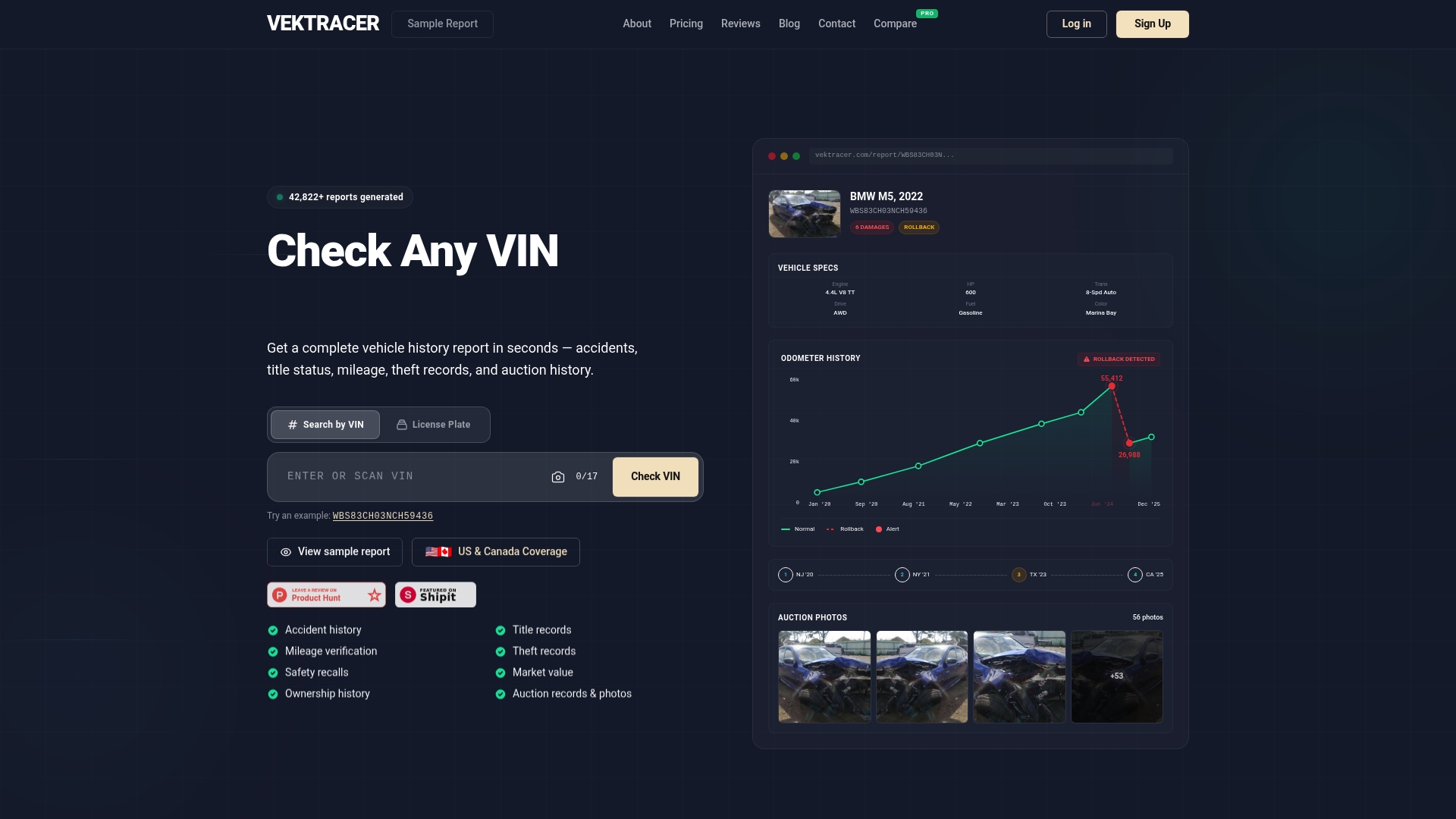
At Vektracer, we make that easy and affordable. Our VIN-based reports start at just $19.99, pulling from NMVTIS-connected sources to give you accident history, title records, mileage verification, theft checks, safety recalls, and market value data. That’s the same core data as Carfax at less than half the price. Visit how VekTracer works to see exactly what you get, and check our VekTracer pricing to find the option that fits your needs. Don’t buy blind—know the full story first.
Frequently asked questions
What is the most important thing on a vehicle history report?
The title status is critical—it reveals if the car was salvaged, flooded, or rebuilt, which directly affects both safety and resale value.
Can I trust a vehicle history report completely?
No. A VHR may miss unreported accidents or private repairs, so always pair it with a professional pre-purchase inspection before finalizing any deal.
How common is odometer fraud in used cars?
Over 2.45 million vehicles in the US have suspected odometer rollbacks, making it one of the most common and costly forms of used car fraud today.
Which vehicle history report should I get?
Use both CARFAX and AutoCheck for the most complete picture, and verify title records through the free NMVTIS database to catch cross-state title issues at no cost.
Recommended
Ready to check a vehicle?
Enter any 17-character VIN for a free instant preview — no account needed.