Why verifying service history protects buyers and dealers

Check a vehicle before you buy
Enter a VIN for a free instant preview — accidents, title brands, mileage, liens & open recalls.
TL;DR:
- Vehicle service history provides a complete record of maintenance and repairs, ensuring reliability.
- Ignoring service records increases the risk of costly repairs, fraud, and lower resale value.
- Verifying service history enhances negotiation power, buyer confidence, and long-term vehicle safety.
Buying a used car based on looks alone is one of the most expensive mistakes you can make. A clean exterior and fresh detailing can hide years of neglect, undisclosed accidents, or a rolled-back odometer. Yet most buyers and dealers still skip verifying service history, assuming the seller is being straight with them. Service records are the paper trail that tells the real story of a vehicle’s life. This guide breaks down what service history actually covers, what happens when you ignore it, and exactly how to verify it before you sign anything.
Table of Contents
- What is vehicle service history and why does it matter?
- Risks of ignoring service history: Costly surprises and hidden dangers
- How verifying service history empowers smarter purchases
- How to verify a car’s service history: Practical steps for 2026
- The real-world impact: Service history is your negotiation power
- Move forward with confidence: Get reliable service history reports
- Frequently asked questions
Key Takeaways
| Point | Details |
|---|---|
| Service history builds trust | Verified records provide peace of mind and help prevent costly surprises for both buyers and dealers. |
| Missing records signal risk | A lack of documentation can indicate neglect, fraud, or pending problems with the vehicle. |
| Verification is practical | Anyone can use trusted tools and clear steps to confirm a car’s upkeep before purchase. |
| Smart negotiation tool | A solid service history helps you justify price or walk away from questionable vehicles. |
What is vehicle service history and why does it matter?
Vehicle service history is the documented record of everything that has happened to a car over its lifetime. This includes routine oil changes, brake replacements, tire rotations, transmission services, safety inspections, and any recall work completed by a dealership or certified shop. Think of it as the car’s medical chart. Every visit, every repair, every issue noted by a technician gets logged. When those records are complete and consistent, you have a reliable picture of how the vehicle was treated.
For used car buyers and independent dealers, this documentation is not just helpful. It is essential. A comprehensive service history can increase a used car’s resale value and assure buyers of proper maintenance. That means a car with full records is not only safer to buy, it is worth more money.
Here is what a thorough service history typically includes:
- Oil and fluid changes with dates and mileage
- Brake and tire service records
- Major repairs such as engine or transmission work
- Safety recall completions documented by the dealership
- Inspection reports from state or certified mechanics
- Accident-related repairs or body work
When you review these vehicle checks before buying, you gain a clear sense of whether the car was maintained on schedule or allowed to deteriorate.
| Record Type | What It Reveals |
|---|---|
| Oil change logs | Engine care consistency |
| Brake service records | Safety and wear patterns |
| Recall completions | Manufacturer issue resolution |
| Accident repair notes | Structural or cosmetic damage |
| Mileage entries | Odometer accuracy |
“A well-documented service history is one of the strongest signals of a vehicle’s true condition and long-term reliability.” Understanding vehicle history report importance is the first step toward smarter buying decisions.
Missing records are not neutral. They are a warning sign. A car with gaps in its service history may have skipped critical maintenance, been repaired by unlicensed mechanics, or changed hands too many times to track properly. Do not treat missing paperwork as normal. Treat it as a reason to ask harder questions.
Risks of ignoring service history: Costly surprises and hidden dangers
Knowing how important service history is, it is critical to understand what happens when you ignore it. The consequences range from annoying to financially devastating, and they hit buyers and dealers alike.
Lack of maintenance records is among the top reasons used cars are returned or disputed. That statistic alone should give you pause. When records are absent, you are essentially buying blind.

With service history vs. without: A direct comparison
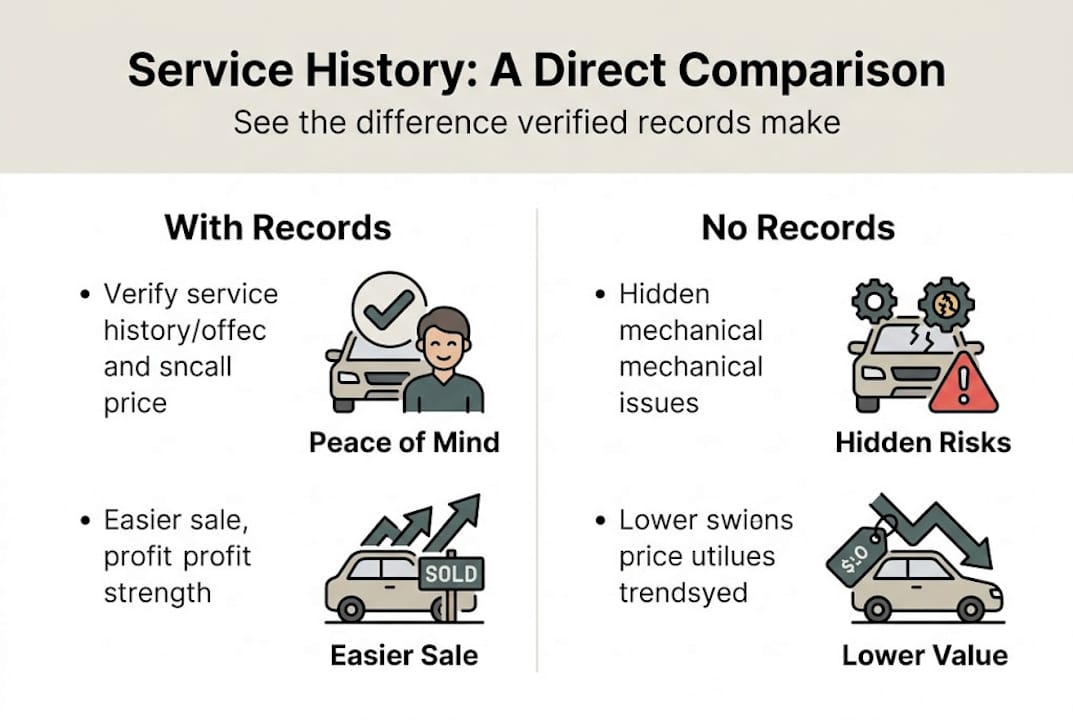
| Factor | With Service History | Without Service History |
|---|---|---|
| Repair risk | Lower, known issues addressed | High, unknown problems possible |
| Resale value | Higher, documented care | Lower, buyer skepticism |
| Negotiation power | Strong, facts support price | Weak, uncertainty drives discounts |
| Peace of mind | High | Low |
| Warranty validity | Easier to confirm | Often voided or unverifiable |
Here is how buyers and dealers typically get burned when they skip this step:
- Unexpected repair bills surface within weeks of purchase because critical maintenance was skipped.
- Warranties get voided when a manufacturer requires documented service intervals that cannot be proven.
- Failed inspections reveal safety issues that were never addressed, costing hundreds or thousands to fix.
- Odometer fraud goes undetected, leaving you overpaying for a car with far more wear than the mileage suggests. Learn more about odometer fraud risks before you commit to a purchase.
- Resale becomes difficult when the next buyer asks for records you never collected.
Always review key questions for used cars with the seller before agreeing to any price.
Pro Tip: Watch for service records that show only one or two entries over many years, or records that suddenly restart after a long gap. These patterns often indicate the car changed owners, was involved in an incident, or had work done off the books. Cross-reference mileage in records with the odometer and look for spotting odometer fraud signs like inconsistent wear on pedals and steering wheels.
How verifying service history empowers smarter purchases
To see the upside, let us focus on the concrete advantages of taking service history seriously. Verified records do more than confirm the car was maintained. They shift the entire dynamic of the transaction in your favor.
Here is what verified service history gives you:
- Accurate market value so you know if the asking price is fair or inflated
- Reduced financial risk by identifying deferred maintenance before you own the problem
- Stronger negotiation leverage because documented issues justify a lower offer
- Higher resale potential when you eventually sell the vehicle yourself
- Confidence in safety knowing recalls were completed and brakes were serviced
One of the most powerful benefits is fraud detection. Verified records can help reveal rolled-back odometers and lower incidents of fraud. Odometer fraud affects hundreds of thousands of vehicles sold in the U.S. every year, and it costs buyers an average of $4,000 or more in overpayment and unexpected repairs.
When you check mileage verification steps alongside service records, you can spot discrepancies that a visual inspection would never catch. A car showing 60,000 miles but with service records showing oil changes at 90,000 miles is a major red flag that demands explanation.
Pro Tip: Always cross-check service records with a VIN-based history report. Service records from a seller can be forged or selectively presented. A VIN report pulls data from independent databases, giving you an unbiased second opinion. Use checking vehicle odometer tools to confirm mileage accuracy against reported service intervals.
For dealers, verified records also reduce the risk of post-sale disputes. Buyers who feel informed are far less likely to return a vehicle or pursue complaints. That protects your reputation and your bottom line.
How to verify a car’s service history: Practical steps for 2026
Now that the importance is clear, here is how you can actually verify the service history before sealing the deal. The process is straightforward when you know where to look.
- Request all physical records from the seller. Ask for receipts, inspection reports, and dealer service printouts. Legitimate sellers keep these.
- Run a VIN-based history report through a trusted platform. The VIN (Vehicle Identification Number) is the unique 17-character code that acts as the car’s fingerprint. Every major event tied to that VIN gets recorded in national databases.
- Contact previous service shops listed in the records. Call them directly to confirm the work was done and the mileage matches.
- Check dealer records if the car was ever serviced at a franchise dealership. Many dealers can pull up service history by VIN.
- Review vehicle history databases that aggregate data from NMVTIS-connected sources, insurance companies, and state DMVs.
- Compare records against the odometer reading at the time of your inspection.
Reputable vehicle history platforms and dealer records are primary sources for accurate service documentation. Not all platforms are equal, so check out best history report sites to find services that pull from the most reliable data sources.
Watch out for these common pitfalls:
- Out-of-date records that stop years before the current mileage
- Forged or altered documents with inconsistent fonts, dates, or shop names
- Missing services for high-wear items like timing belts or transmission fluid
- Gaps between entries that suggest the car was driven heavily without maintenance
If you are unsure how to read a report or what to look for, check out how to get a report for a step-by-step walkthrough. Also review car history report info to understand what each section of a report tells you.
The real-world impact: Service history is your negotiation power
Most buyers treat service history as an afterthought. Smart buyers treat it as their strongest card at the negotiating table. Here is the angle most people miss: service history is not just about risk avoidance. It is about leverage.
When records are complete, you have factual grounds to justify a fair price or walk away confidently if the numbers do not add up. When records are missing or inconsistent, that is not just a red flag. It is a discount opportunity. You can use the absence of documentation to negotiate several hundred or even several thousand dollars off the asking price.
Vehicles with detailed, verifiable service histories typically sell for more and spark higher buyer confidence. That premium is real. Dealers who invest in acquiring fully documented vehicles consistently see faster sales and fewer post-sale headaches.
For independent dealers especially, building a reputation around verified service histories sets you apart in a crowded market. Buyers remember the dealer who showed them the records. They come back, and they refer friends. That is a long-term business advantage that most dealers overlook.
If you want a deeper look at how to use this information strategically, the smart car buying guide covers negotiation tactics grounded in vehicle data.
Move forward with confidence: Get reliable service history reports
If you are ready to safeguard your next used car transaction, here is how to quickly get the right records with zero stress.
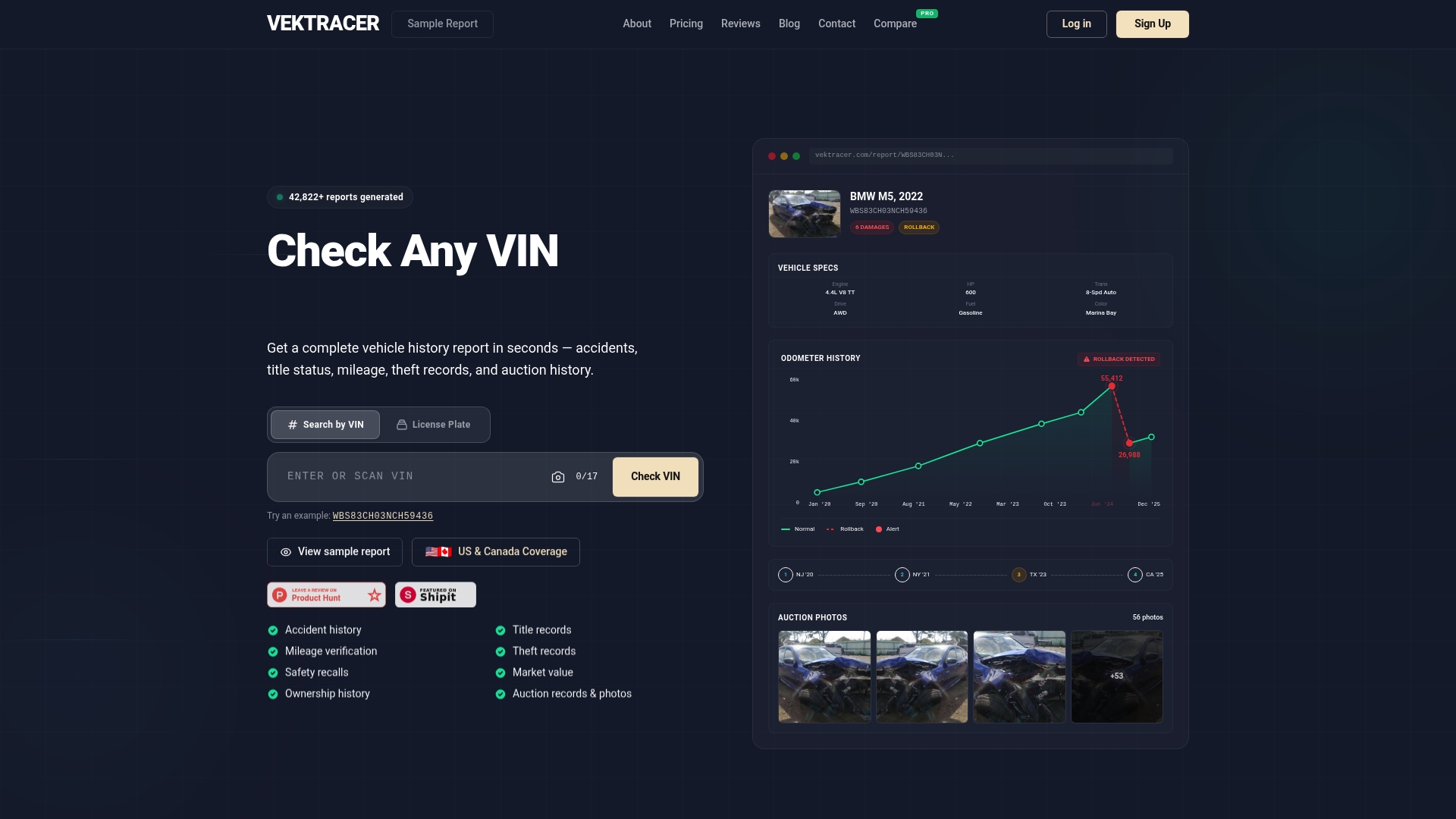
At Vektracer, we make it simple for both buyers and independent dealers to access accurate, easy-to-read vehicle history reports. Our VIN-based reports pull from NMVTIS-connected sources and cover accident history, title records, mileage verification, theft checks, safety recalls, and market value data. All of that starts at just $19.99, compared to $44.99 for Carfax and $24.99 for AutoCheck. See how VekTracer works, review VekTracer pricing, or check out a sample service report to understand exactly what you get before you commit.
Frequently asked questions
How do I get a used car’s service history if the seller doesn’t provide it?
You can request a VIN-based vehicle history report from reputable documentation sources, or contact previous repair shops and dealerships listed in any partial records the seller shares.
Is missing service history a deal breaker?
Missing maintenance records increase buying risk and lower resale value, so budget for potential repairs or use the gap as grounds to negotiate a meaningfully lower price.
Can service history reveal odometer fraud?
Yes. Inconsistencies between mileage entries in service records and the current odometer reading can expose rolled-back odometers and undisclosed wear that a visual inspection would miss.
What details should I look for in a service record?
Focus on consistent maintenance intervals, major repair documentation, recall completions, and accurate mileage entries at each visit, as outlined in vehicle maintenance history best practices.
Recommended
Ready to check a vehicle?
Enter any 17-character VIN for a free instant preview — no account needed.