How vehicle history impacts insurance costs: what buyers must know

Check a vehicle before you buy
Enter a VIN for a free instant preview — accidents, title brands, mileage, liens & open recalls.
TL;DR:
- Vehicle history significantly impacts car insurance premiums, with branded titles increasing costs.
- Checking vehicle records via NMVTIS, Carfax, or AutoCheck helps prevent unexpected insurance surprises.
- Branded titles like salvage or flood-damaged reduce coverage options and raise premiums by 20-50%.
Most used car buyers focus on mileage and age when sizing up a deal. But your car’s past can raise insurance costs by as much as 40% or more, sometimes before you even drive it off the lot. That one blind spot has cost countless buyers hundreds of dollars per year in unexpected premiums, or worse, left them holding a vehicle they can barely insure at all. This guide breaks down exactly how insurers use vehicle history, which records trigger the biggest rate increases, and what you can do right now to avoid getting blindsided at the insurance counter.
Table of Contents
Checking a specific vehicle?
Run its VIN for a free preview of accidents, title brands, mileage and open recalls.
- Why insurers care about vehicle history
- Title brands and claims: The biggest red flags
- How insurers use vehicle history to calculate your rate
- How to check vehicle history and manage insurance risks
- The truth insurance agents rarely share
- Affordable access to reliable vehicle history reports
- Frequently asked questions
Key Takeaways
| Point | Details |
|---|---|
| Title brands increase rates | Salvage, rebuilt, or flood-damaged titles can boost insurance premiums by 20-50% or more. |
| Insurers check VIN history | Insurance companies review VIN-based reports and title records to assess risk before offering coverage. |
| Most coverage limits for branded cars | Branded title vehicles rarely qualify for full coverage, often limited to expensive liability-only policies. |
| NMVTIS for cheapest checks | The NMVTIS database offers the best-value tool to confirm title status and avoid surprise insurance costs. |
| Screen history before you buy | Checking reports and inspecting vehicles before purchase helps prevent insurance surprises and financial loss. |
Why insurers care about vehicle history
Insurance companies are in the business of predicting risk. Every policy they write is a calculated bet, and your car’s history is one of the clearest signals they have. A vehicle that has been in a serious accident, declared a total loss, or reported stolen carries a statistically higher chance of generating future claims. That means higher risk for the insurer, and higher premiums for you.
Insurers do not just take your word for it. They run your Vehicle Identification Number (VIN), which acts like a fingerprint for your car, through multiple databases to build a detailed risk profile. The sources they use include:
- Title records: These reveal whether a car has ever been branded as salvage, rebuilt, flood-damaged, or stolen.
- CLUE (Comprehensive Loss Underwriting Exchange): A shared database of insurance claims going back up to seven years.
- Carfax and AutoCheck reports: Used to cross-reference accident history, ownership records, and service events.
- NMVTIS (National Motor Vehicle Title Information System): A federal database tracking title brands across state lines.
As research on vehicle history risk assessment confirms, insurers use actuarial models called Generalized Linear Models (GLMs) to pull data from MVR records, CLUE claims, and title databases, flagging high-risk profiles that lead to rate surcharges or outright policy denials. Unreported minor accidents may slip through the cracks, but any official title brand will always show up.
Key insight: A car with a clean title but a history of three minor claims can still cost more to insure than a car with zero claims and a slightly older model year.
Understanding how to check vehicle history before you buy gives you a major advantage. You get to see what the insurer sees, before you commit to a purchase that could come with a costly monthly premium surprise.
A thorough vehicle history check also helps dealers price inventory more accurately and set realistic expectations for buyers, which builds trust and speeds up the sales process.
Title brands and claims: The biggest red flags
Not all vehicle history issues are equal. Some raise your rates modestly. Others can make a car nearly impossible to insure at full coverage. Title brands sit at the top of the risk scale.
Here is a quick comparison of how different title types affect insurance:
| Title type | Premium impact | Coverage availability |
|---|---|---|
| Clean title | No impact | Full coverage available |
| Rebuilt/salvage | 20-40% higher | Limited; collision/comprehensive often denied |
| Flood-damaged | Over 50% surcharge or denial | Frequently liability only |
| Stolen/recovered | Moderate increase | Varies by insurer |
Salvage titles are issued when an insurer declares a vehicle a total loss, typically when repair costs hit 70 to 100% of the car’s actual cash value (ACV), depending on the state. Once rebuilt and re-inspected, the title becomes “rebuilt,” but the stigma stays. Many major insurers will only offer liability coverage on these vehicles, meaning if you are in an accident, your own car’s damage is not covered.

Flood-branded vehicles are treated even more harshly. Water damage causes long-term electrical and structural problems that are hard to detect and expensive to fix. That uncertainty pushes many insurers to either reject the vehicle entirely or apply surcharges exceeding 50%.
What to do if you discover a branded title while shopping:
- Pull the full VIN report immediately to confirm the brand type and damage history.
- Contact at least three insurers before buying to get actual quotes, not estimates.
- Ask specifically about collision and comprehensive availability, not just liability.
- Have a certified mechanic inspect the vehicle for structural or flood-related damage.
- Factor the higher insurance cost into your total cost of ownership before negotiating price.
Pro Tip: Use a car history search guide to cross-reference title brands across multiple databases. A single report may miss a brand that crossed state lines.
When you get a vehicle history report early in the buying process, you avoid the frustrating scenario of falling in love with a car, only to discover it is uninsurable at a reasonable rate after you have already negotiated the price.
How insurers use vehicle history to calculate your rate
Understanding what triggers a higher rate is crucial. Here is how insurers actually crunch the numbers behind the scenes.
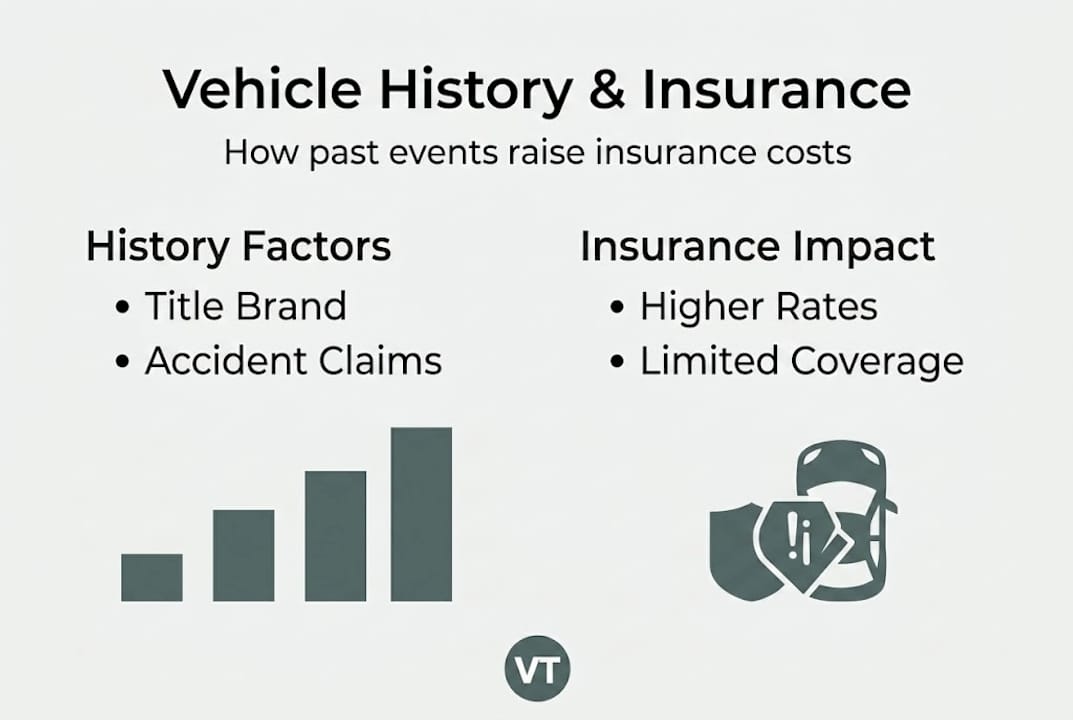
Insurers feed VIN data, title records, and CLUE claims into actuarial models that assign risk scores. Each negative data point adds weight to that score. The more red flags, the higher the surcharge. Here is a breakdown of the main databases they use:
| Database | What it contains | How insurers use it |
|---|---|---|
| CLUE | Claims history up to 7 years | Identifies repeat claim patterns |
| NMVTIS | Title brands across all states | Flags salvage, flood, stolen records |
| MVR (Motor Vehicle Record) | Driver history | Assesses driver risk alongside vehicle risk |
| Carfax/AutoCheck | Accidents, ownership, service | Cross-references damage and repair history |
Key report details that trigger insurance red flags include:
- Salvage or rebuilt title brand (any state)
- Flood or water damage notation
- Odometer rollback or discrepancy
- Multiple prior owners in a short timeframe
- Repeated structural damage repairs
- Total loss declaration, even if later rebuilt
One important nuance: salvage title vehicles cannot be insured at all until they are rebuilt and pass a state inspection. Even after that, many insurers refuse to offer comprehensive or collision coverage, leaving owners with liability-only policies at elevated rates.
Time lags in reporting also create gray areas. A minor accident that was never filed as a claim might not appear in CLUE. But the moment a title is branded or a claim is officially filed, that data becomes permanent and follows the vehicle through every future sale.
Reviewing a vehicle inspection checklist alongside the history report gives you a complete picture, combining what the data says with what a physical inspection reveals.
How to check vehicle history and manage insurance risks
Now that you know the why and how, here are practical steps to protect yourself before signing anything.
The three main report sources each serve a different purpose:
- NMVTIS reports cost around $10 and are the gold standard for title verification. They pull data directly from state DMVs and are federally mandated.
- Carfax costs around $44.99 per report and is the most thorough for accident and claims history, including service records.
- AutoCheck costs around $24.99 and is strong for auction history and ownership timelines.
For the most complete picture, run affordable VIN-based reports that cover title brands, claims, and salvage history before you commit to any purchase.
Step-by-step process for checking vehicle history:
- Locate the VIN on the dashboard (driver’s side, visible through the windshield) or the driver’s door jamb sticker.
- Run an NMVTIS report first to check for title brands and state-level records.
- Pull a Carfax or AutoCheck report to review accident history and prior claims.
- Compare odometer readings across report entries to spot potential rollback fraud.
- Check for open safety recalls using the NHTSA website with the same VIN.
- Share the report with your insurance agent before finalizing the purchase to get a real premium quote.
Pro Tip: If a seller refuses to provide the VIN or discourages you from running a report, treat that as a serious warning sign. Legitimate sellers have nothing to hide.
Using a solid vehicle history reports guide helps you interpret what you find, not just collect data. Knowing what a “structural damage” notation actually means versus a minor fender repair can save you from overpaying or underestimating insurance costs.
Also review what to check before buying to make sure history reports are just one part of a broader pre-purchase checklist.
The truth insurance agents rarely share
Here is the part most guides skip over. Even when you do everything right, the system has gaps that can still catch you off guard.
Not every incident makes it into every database. A car repaired out-of-pocket after a collision may have zero record in CLUE. A flood-damaged vehicle that crossed state lines before being retitled could carry a clean-looking record in one state while hiding a branded title from another. Insurers cross-check multiple databases, but no single report captures everything.
Here is the uncomfortable reality: a branded title does not automatically mean unaffordable insurance. Some buyers find that liability-only rates on low-value rebuilt cars are actually comparable to full coverage on a clean-title vehicle of similar age. The trade-off is coverage flexibility. You are giving up the ability to get your own car repaired if you cause an accident.
If you buy a rebuilt title vehicle to save money upfront, go in with clear eyes. You are accepting limited insurance options as part of the deal. That is a reasonable choice for some buyers, but it should be a conscious one, not a surprise.
The smartest move is to treat every vehicle as if the insurer already knows its full history, because they likely do. Check accident history check insights before you negotiate price, not after. Assume the insurer sees everything, and plan accordingly.
Affordable access to reliable vehicle history reports
Knowing what is in a vehicle’s past is the single most powerful step you can take before buying or insuring a used car. The challenge for most buyers and independent dealers is cost. Running multiple reports from Carfax and AutoCheck adds up fast.
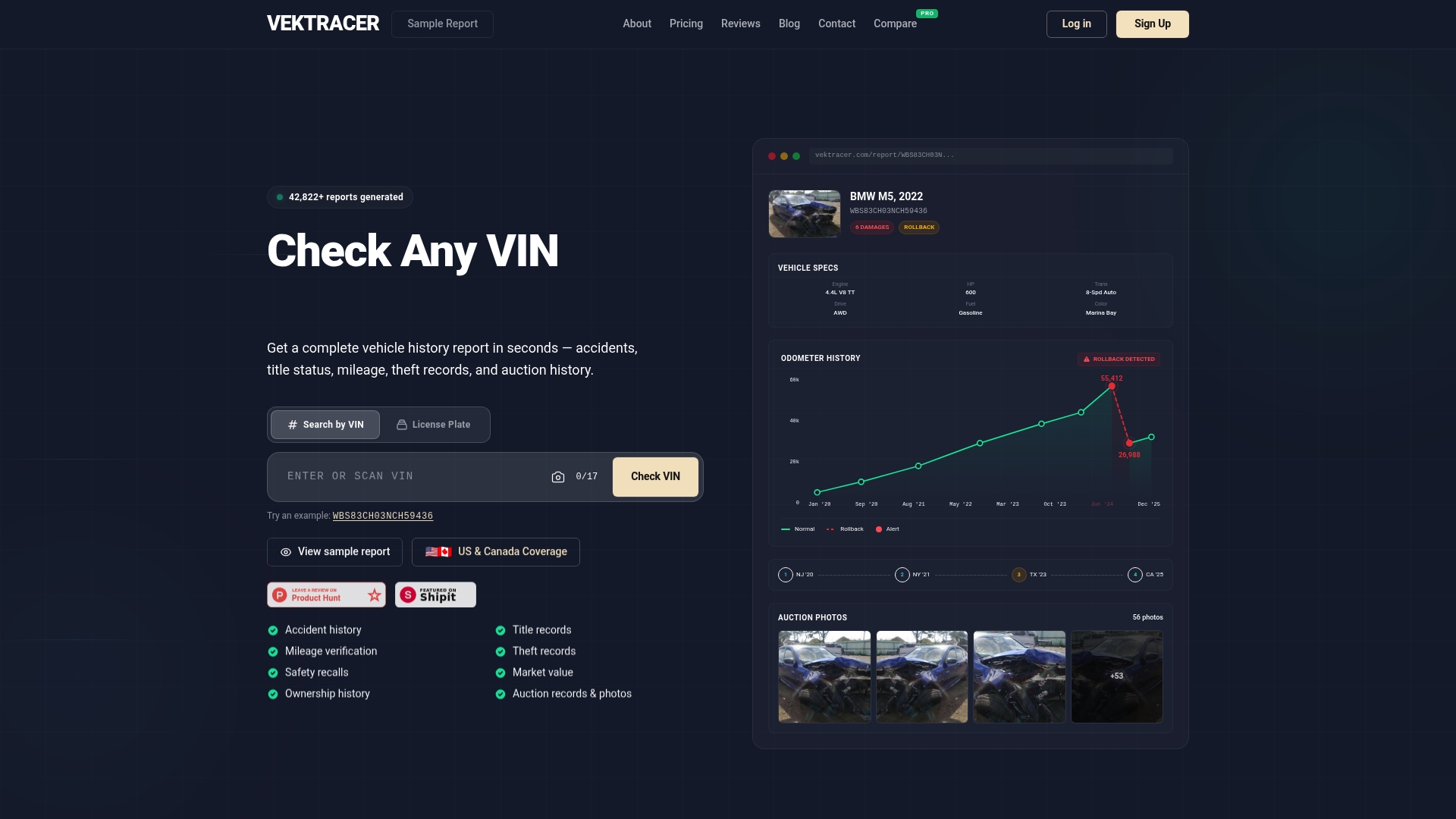
That is where Vektracer comes in. Our VIN-based reports start at just $19.99 and include accident history, title records, mileage verification, theft checks, safety recalls, and market value data, all sourced from NMVTIS-connected databases. That is the same core data as Carfax ($44.99) at less than half the price. Whether you are a first-time buyer or a dealer managing a full lot, see how VekTracer works to make smarter, faster decisions. Check out VekTracer pricing and run your first report today before a hidden history turns into a costly surprise.
Frequently asked questions
How much more will insurance cost for a salvage or rebuilt title?
Expect premiums to be 20-40% higher for salvage or rebuilt titles, and over 50% for flood damage, with some insurers declining coverage entirely.
Can I get full coverage for a car with a branded title?
In most cases, no. Many insurers refuse comprehensive and collision coverage for branded title vehicles, offering only liability at higher rates.
Which vehicle history report should I use before buying a used car?
NMVTIS is the most affordable and reliable for title brands; use Carfax or AutoCheck to check claims and accidents. Running VIN-based reports from multiple sources gives you the fullest picture.
Do unreported accidents affect car insurance rates?
Unreported accidents typically do not impact rates directly. However, branded titles and official claims always show up in insurer databases and will affect your premium.
Recommended
Ready to check a vehicle?
Enter any 17-character VIN for a free instant preview — no account needed.