How to Remove a Vehicle Lien in Alberta: A 2026 Guide
Check a vehicle before you buy
Enter a VIN for a free instant preview — accidents, title brands, mileage, liens & open recalls.
Pay the debt, obtain a written discharge letter from the lienholder, then take that letter to an Alberta Registry Agent to have the lien formally discharged from the Personal Property Registry and verify that it has disappeared from the record. A garage keeper's lien may be registered after an unpaid repair invoice remains unpaid for 21 days, and it generally lasts 6 months from filing unless renewed by court order, so payment alone isn't the finish line.
You may be a seller whose private deal has stalled, a buyer who found an unexpected lien during a VIN check, or an owner who paid off a loan but still can't show a clear record. In Alberta, a vehicle lien is a registry problem as well as a debt problem. The practical standard is simple: a paid account is not the same as a formally discharged lien.
Table of Contents
- Removing a Lien in Alberta The Two Critical Steps
- First Confirm the Lien Details with an Official Search
- The Step-by-Step Process for Discharging the Lien
- What to Do if the Lienholder Is Uncooperative
- Understanding Lien Types and Associated Costs
- Final Check Your Work and Confirm a Clear Title
Removing a Lien in Alberta The Two Critical Steps
A vehicle sale can stall after the buyer discovers a lien that the seller believed was already cleared. In Alberta, resolving that problem requires two separate actions.
First, identify the correct lienholder, request the current payout amount, pay the debt, and obtain written confirmation of the release. Paying off the loan initiates the discharge process, but the lien remains on the PPR until the formal discharge is registered. The second action is to have the discharge processed through Alberta's Personal Property Registry, or PPR, then run a fresh search to confirm the registration has disappeared. Alberta explains how to obtain personal property registration information through its guidance on finding personal property registration information.
That distinction controls the timing of a sale. A buyer who relies on a verbal assurance, bank receipt, or old account statement may still face a registered claim against the vehicle. Require written release evidence, then verify the updated PPR record before treating the title as clear.
Practical rule: Keep the transaction unresolved until a post-discharge PPR search shows no lien affecting the vehicle.
Sellers should complete this work before advertising the vehicle as lien-free. Buyers should make the sale conditional on receiving discharge evidence and confirming the registry update before releasing funds or completing registration. For ordinary registry administration, the discharge is handled through Alberta's registry system, not solely through the lender's customer-service department.
Accuracy matters at every stage. Contacting the wrong lender, paying the wrong party, or assuming the lender's internal update automatically changes the PPR can leave a sale, registration, or financing blocked.
First Confirm the Lien Details with an Official Search
Start with the vehicle identification number, or VIN. Alberta's Vehicle Information Report, commonly called a VIR, can show the number of liens registered against the vehicle in Alberta. It doesn't provide the complete registration details, however. For that, you need a separate PPR search through a registry agent, as Alberta explains in its guidance on finding personal property registration information.
The PPR search is the document that helps you identify the registration affecting the vehicle, including the registered lienholder and the registration information needed to request a discharge. Don't assume a licence-plate lookup is enough. Plates can change, while the VIN is the vehicle-specific identifier used for the relevant search.
Compare the available checks
| Information Source | What It Provides | When to Use It | Typical Cost (2026) |
|---|---|---|---|
| Alberta Vehicle Information Report | The number of liens registered in Alberta and vehicle information available through the report | As an initial government check before a purchase or sale | Confirm the current fee with Alberta or a registry agent |
| Alberta PPR search | Detailed lien registration information connected to the vehicle's VIN | When a VIR flags a lien or you need to identify the lienholder | Confirm the current fee with a registry agent |
| Vektracer vehicle-history report | Available lien and title context alongside accident, brand, odometer, theft, ownership, service, and auction records | As a broader history review, not a replacement for formal PPR confirmation | Confirm the current price before purchase |
For a private-party purchase, Alberta recommends obtaining a personal property lien search from a registry agent using the vehicle's VIN and warns that a buyer may become responsible for an existing lien. The province also recommends a Carproof vehicle history report, while a commercial report can add context that an official lien search doesn't cover, such as accident records, title brands, odometer history, and auction history.
You can also review this Alberta Personal Property Registry vehicle lien search guide for the search workflow. Use a commercial report as a supplement. It won't replace the PPR search, a discharge confirmation, or the final registry check.
Don't confuse a flag with a solution
A VIR that shows a lien tells you there is a problem to investigate. It doesn't tell you that the debt is current, paid, disputed, or ready for discharge. A PPR search gives you the information needed to approach the right registration holder, but the lienholder still has to provide the release documentation and the registry record still has to be updated.
The Step-by-Step Process for Discharging the Lien
A lien can remain attached to a vehicle after the payoff process has started. Clear it in sequence: confirm the registration, obtain a current payout statement, pay the correct lienholder, secure written discharge evidence, arrange the registry update, and verify the result in the PPR. The final search is the point that confirms the record has been cleared.
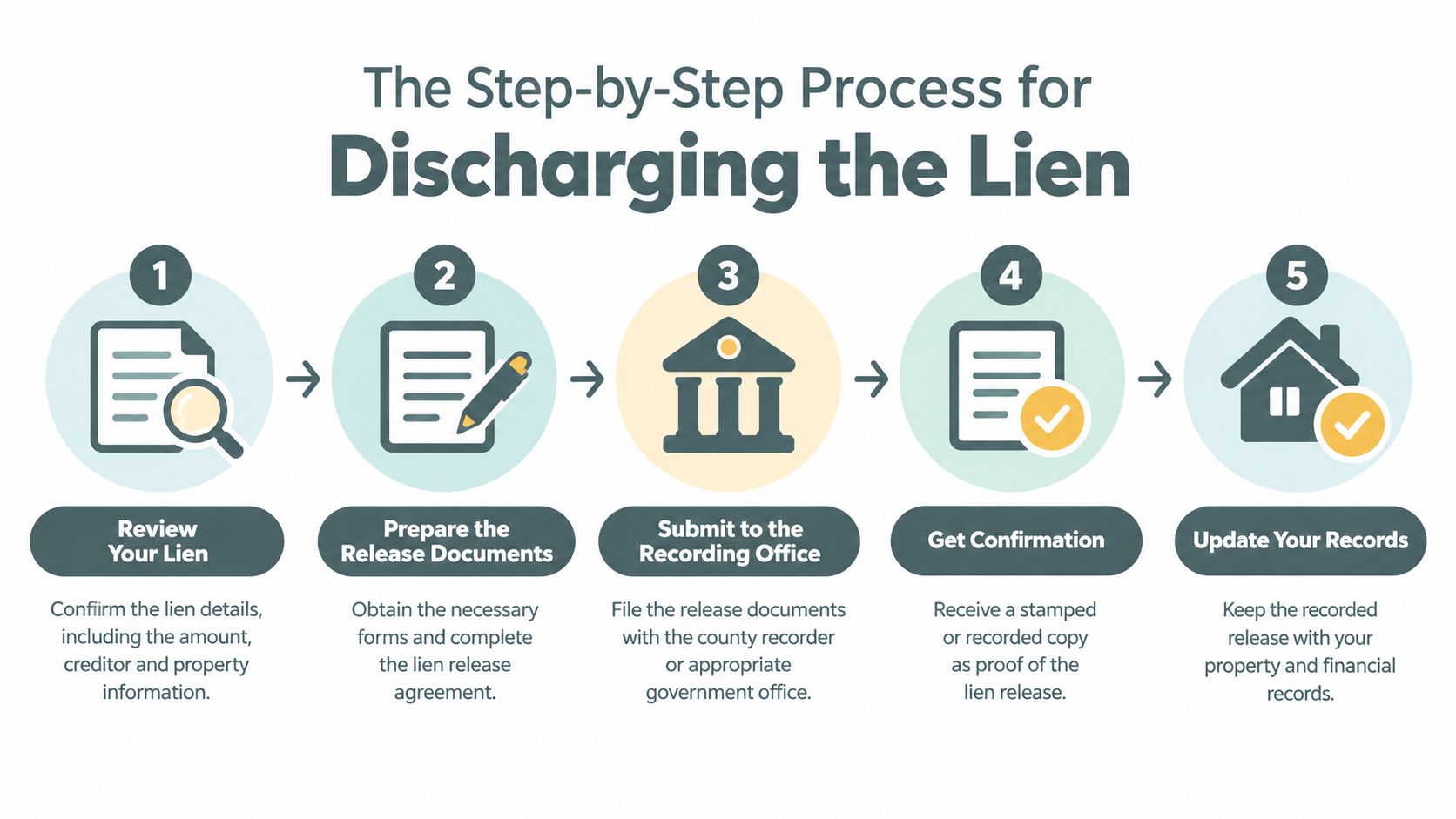
1. Match the registration to the vehicle
Compare the PPR results with the vehicle's VIN and confirm that the registration belongs to the vehicle in front of you. Record the lienholder's legal name, registration number, contact details, and any reference information shown in the search. A mismatch between the registration holder and the lender, repair facility, or creditor you expected requires resolution before any payment is sent.
2. Request a written payout statement
Ask the lienholder for a current payout quote and written payment instructions. The statement should identify the account or registration, specify the amount needed to satisfy the debt, explain where funds must be sent, and describe how discharge documentation will be issued after the payment clears.
For a private sale, keep the payout information within a controlled closing arrangement. Verify the lienholder against the PPR results, and use independently obtained contact information where possible. A buyer should not send money to an unfamiliar party solely because an email or text provides payment instructions.
3. Pay the correct party and retain the evidence
Follow the written instructions exactly. Save the payout statement, payment confirmation, bank record, correspondence, and receipt in one transaction file. If the vehicle is being sold, document who paid the debt and how that payment changes the purchase terms.
Keep the payment receipt alongside your discharge documentation. Either item alone is insufficient to clear the registry record.
4. Obtain a discharge letter or release
Request signed written confirmation from the lienholder stating that the debt has been paid and that the lienholder authorizes or has completed discharge of the registration. The document should identify the vehicle by VIN and connect the release to the relevant PPR registration.
Use this vehicle lien release letter guide to check whether the paperwork links the payoff to the correct vehicle and registration. Retain the original or an authenticated copy. A screenshot of a message may not provide adequate evidence for the registry update or a later sale.
5. Take the documentation to a Registry Agent
Alberta Registry Agents handle lien-related filings, including security agreements, discharges, amendments, and renewals. Bring the lienholder's discharge documentation, your identification, and the vehicle and registration details. Ask the agent in advance which documents and identification will be accepted, since office procedures can differ.
The agent processes the discharge through the registry system. Obtain a receipt or other written confirmation, then ask when a follow-up search should be completed. Registry services operate according to office workflows and business hours. Alberta identifies registry-agent office hours as 8:15 am to 4:30 pm, Monday to Friday, so a late-day payoff may not produce an immediately clear record. Confirm current availability directly with the agent.
6. Re-check the PPR record
Run another VIN-based PPR search after the discharge has been processed. Compare the new result with the original registration and retain both records with the release paperwork. Release the vehicle, complete the private sale, or describe the title as clear only after the lien no longer appears and the written evidence is stored in the transaction file.
What to Do if the Lienholder Is Uncooperative
A paid debt with no discharge creates a documentation and title problem. Start by gathering the complete file, including the original PPR search, payout statement, payment proof, correspondence, repair invoices or loan documents, and any release promise made by the lienholder.
Send a formal written demand to the lienholder. State the vehicle's VIN, the PPR registration details, the date and amount of payment, and the action required: provide the discharge documentation and arrange formal removal of the lien from the registry. Send the demand using a method that creates a delivery record, and keep a copy of everything you send.
Escalate in a controlled way
If the lienholder still refuses or doesn't respond, Alberta legal guidance identifies the next formal route. The owner may need to apply to the Court of King's Bench for an order confirming that the lien should be discharged. The court process is not a substitute for ordinary registry paperwork when the lienholder is cooperative. It's the escalation path when payment has occurred but the registration won't be cleared voluntarily.
Don't try to solve an uncooperative lienholder problem with an informal note from the seller. A seller's statement that “the bank knows it's paid” doesn't give a buyer the same protection as a registry update and written discharge evidence.
Consider legal advice when the claim appears improper
A disputed registration, a lienholder with no apparent connection to the vehicle, or a claim that continues after documented payment deserves legal review. Do not pay an unfamiliar claimant just because the registration is inconvenient. First establish whether the claimant has a legitimate security interest, repair claim, or other basis for registration.
The critical distinction is between a normal discharge delay and a registration that may be wrongful. In the first situation, written follow-up and registry-agent processing may resolve the issue. In the second, preserve the evidence and obtain advice before making a settlement or admitting that the debt is valid.
Understanding Lien Types and Associated Costs
Alberta manages vehicle liens through the Personal Property Registry. The source of the lien determines who must provide the payout and release, but the administrative objective remains the same: satisfy the valid claim and ensure the registry records a formal discharge.
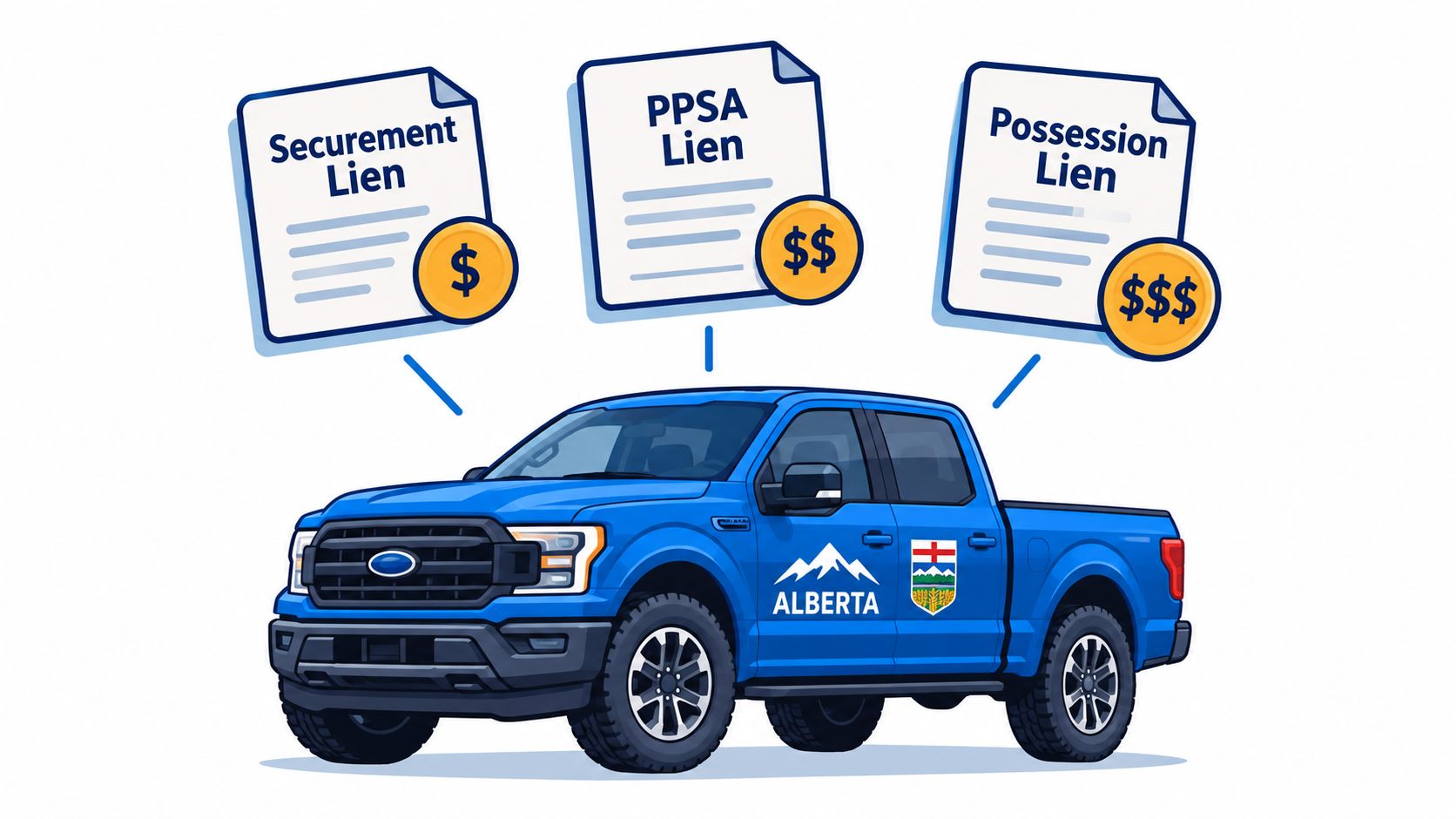
A financing lien usually comes from a lender that financed the vehicle. The lender's security interest can remain registered until the borrowing is paid and the lender provides the release. A Garage Keepers' Lien can arise from unpaid repairs, parts, or storage under Alberta's Garage Keepers' Lien Act. A commonly cited Alberta legal summary says the repair invoice should be paid within 21 days, after which the lien can be registered, and that it lasts 6 months from filing unless renewed by court order for a further 6 months. The provincial overview of personal property liens and registering an interest describes the PPR framework.
Budget for the parts you can control
There isn't one universal all-in price for removing every vehicle lien. Your costs can include the official vehicle report, the detailed PPR search, registry-agent service fees, lender administration charges, payment costs, and legal fees if the lienholder won't cooperate. Confirm current fees with the relevant registry agent and lienholder before starting.
| Cost area | What it covers | What to confirm |
|---|---|---|
| Vehicle Information Report | Initial vehicle information and the number of Alberta-registered liens | Current report fee and delivery method |
| PPR search | Detailed registration information connected to the VIN | Current search fee and required identification |
| Lienholder payoff | The amount needed to satisfy the debt | Valid-through date, payment method, and release procedure |
| Registry-agent discharge | Processing the formal discharge or related filing | Agent fee, accepted documents, receipt, and follow-up timing |
| Court or legal work | Escalation where a paid lien isn't discharged or the claim is disputed | Advice, filing requirements, and expected legal costs |
A registry search fee is not a discharge fee, and neither proves that a lien has been removed. Keep those functions separate in your checklist. The same applies to a commercial history report. It can help reveal accident damage, salvage or rebuilt brands, odometer inconsistencies, theft records, ownership context, or auction history, but it isn't the legal instrument that discharges a PPR registration.
Final Check Your Work and Confirm a Clear Title
The final check is a fresh PPR search using the VIN. Confirm that the original registration no longer appears, retain the written discharge confirmation and registry receipt, and give the buyer copies appropriate to the transaction. Alberta's process isn't instantaneous. Registry-agent workflows and office hours can create a gap between payoff, discharge processing, and the record showing clear, which matters when a private sale or registration deadline is approaching. Alberta's vehicle inspection guidance before buying is also relevant when other registration or inspection issues may affect the transaction.
A clean lien result doesn't certify the entire vehicle history. Before you commit to a purchase, review the steps for checking whether a vehicle lien was released, then separately investigate accident records, title brands, odometer history, theft status, recalls, ownership transfers, and auction records. A VIN history report can add that broader context, but no commercial report should be treated as a guarantee that every event or lien will appear.
The required sequence is pay, obtain written release evidence, process the formal PPR discharge, and verify the updated record.
Vektracer compiles available VIN-based records from Canadian and United States sources, including lien and title context, accidents, odometer history, auction records, ownership information, and salvage or rebuilt brands. Visit Vektracer to enter the vehicle's VIN or licence plate and review the available history before you release funds or advertise the vehicle as clear.
Ready to check a vehicle?
Enter any 17-character VIN for a free instant preview — no account needed.