Car Lien Release Letter: How to Get and Use One
Check a vehicle before you buy
Enter a VIN for a free instant preview — accidents, title brands, mileage, liens & open recalls.
A car lien release letter is a signed document from the lienholder on official letterhead that confirms the loan is paid off and authorizes the DMV to issue a clear title. In some states, though, paper letters aren't accepted at all, so the document can be necessary without being enough.
If you're staring at a title that still shows a lender, or you just paid off a vehicle and the paperwork hasn't caught up, this is the document that usually breaks the logjam. The catch is simple, state rules decide whether a paper letter works, whether an electronic release is required, or whether you still need a substitute title process before you can sell, register, or refinance the vehicle.
Table of Contents
- What a Car Lien Release Letter Actually Does
- Electronic vs Paper Lien Release by State
- What Must Appear on the Letter
- How to Request the Letter from Your Lender
- Submitting the Letter to the DMV or Buyer
- Where a Lien Release Letter Falls Short
- Verifying the Lien Is Cleared
What a Car Lien Release Letter Actually Does
A car lien release letter is the lender's formal statement that the debt tied to the vehicle has been satisfied and the lien is over. It's the document that tells a DMV the lender no longer has a legal claim on the title, which is why it matters so much in a sale, refinance, inheritance transfer, or post-payoff cleanup.
Where it actually gets used
The letter becomes the practical path when the payoff is done, the title is paper-based, or the lender isn't part of a direct electronic title system. It also shows up when the title is lost, damaged, or stuck with a lender that won't endorse the back of the certificate directly. In those situations, the lien release letter is the bridge between “loan paid” and “title cleared.”
That's also why a payoff statement isn't enough. A payoff statement can show what you owed, but it doesn't terminate the lien. The DMV wants proof that the lender released its claim, not just a record of the balance.
Practical rule: if the title still names a lienholder, assume the deal is not done until the title record changes.
An electronic workflow helps, but it doesn't solve everything. For lenders that handle documents digitally, e-signature tools can support internal processing, and Closer Innovation Labs Corp. eSign is one example of how automotive paperwork can move faster when lenders and dealers use structured digital signing.
For the lien itself, the concept is straightforward. If you want a clean title, start by understanding what a lien means and why the lender has to release it. A plain-English overview is available in this lien guide for car buyers.
Electronic vs Paper Lien Release by State
Do not assume a lien release letter works the same way everywhere. State DMV rules split into three camps. Some want the lender to release the lien electronically. Some still accept a paper letter. Some accept paper only for older paper titles or for lenders outside the electronic title system.
California and Nevada show the difference clearly. California DMV form guidance says its lien-satisfaction release does not fit paperless titles or vehicles that are two model years or newer (California DMV form guidance). Nevada's DMV says a lien release letter works for printed titles, while electronic liens must be released electronically (Nevada DMV lien release rules.) That is the part buyers miss when they treat one lender letter like a universal fix.
How the systems differ
ELT-heavy states move the release through the lender and DMV because the title record is already digital. Paper-first states still need a signed letter or stamped endorsement because the clerk has to match the release to a physical certificate. The right move depends on the title type, lender status, and vehicle age, not on what the seller believes should work.
State groupings below reflect common DMV ELT program setups, not a one-size-fits-all national rule. Check the actual title record before you rely on paper.
PDF tools for real estate is a good comparison point for how other document-heavy workflows are standardized, but vehicle titles are stricter because a sloppy packet gets sent back fast.
| State Group | Release Method | Examples | Buyer/Seller Action |
|---|---|---|---|
| ELT-heavy | Electronic lender notice | Florida, Georgia, New York, Texas, Pennsylvania, Virginia | Confirm the lender sent the electronic release before you transfer money |
| Paper-first | Paper lien release letter | West Virginia, Mississippi, Montana, Wyoming, most of New England | Get the lender's signed letter and confirm the DMV accepts paper |
| Hybrid or gray-zone | Electronic for participating lenders, paper as fallback | California, Nevada | Check title type and vehicle age before you rely on a letter |
If the title is electronic, do not wait for paper to show up. Ask whether the lender has already sent the release to the DMV.
For a faster pre-purchase check, use a lien search by VIN before you agree to pay. It is the fastest way to see whether an active lien is still on record.
What Must Appear on the Letter
A compliant lien release letter has to look like a real legal release, not a polite note from a bank. DMV clerks compare the letter to the title record, and if the fields don't line up, they send it back.
The core fields that matter
The letter should identify the lienholder's full legal name, use official letterhead, name the borrower, and describe the vehicle by year, make, VIN, and current odometer reading. It should also include the loan number, the payoff date, and language showing the loan is satisfied, not just “paid in full” in casual terms.
The signature matters just as much as the wording. Depending on the state, the letter may need an authorized officer, a recognized lienholder representative, or a notary seal. If the state wants the operative release phrase, vague language won't do. Texas, Virginia, and Indiana can reject a document that doesn't clearly say the lien is released.
What usually gets a rejection
A lot of people get stuck on avoidable mistakes, and they all look minor until the DMV refuses the packet.
- Wrong VIN: one transposed digit can stop the transfer.
- Missing release language: “loan paid” isn't always enough.
- No official letterhead: the release can look unofficial to a clerk.
- Unsigned letter: a blank signature line is a dead end.
- No contact details: DMV staff may need a phone number or mailing address to verify the lender.
A lender stamp, contact phone, and mailing address are smart additions because they make DMV verification easier. They don't rescue a bad release, but they help a clerk confirm the letter is legitimate.
Best practice: match the letter to the title exactly. If the VIN, name, or loan reference is off, fix it before you mail or hand anything to the DMV.
How to Request the Letter from Your Lender
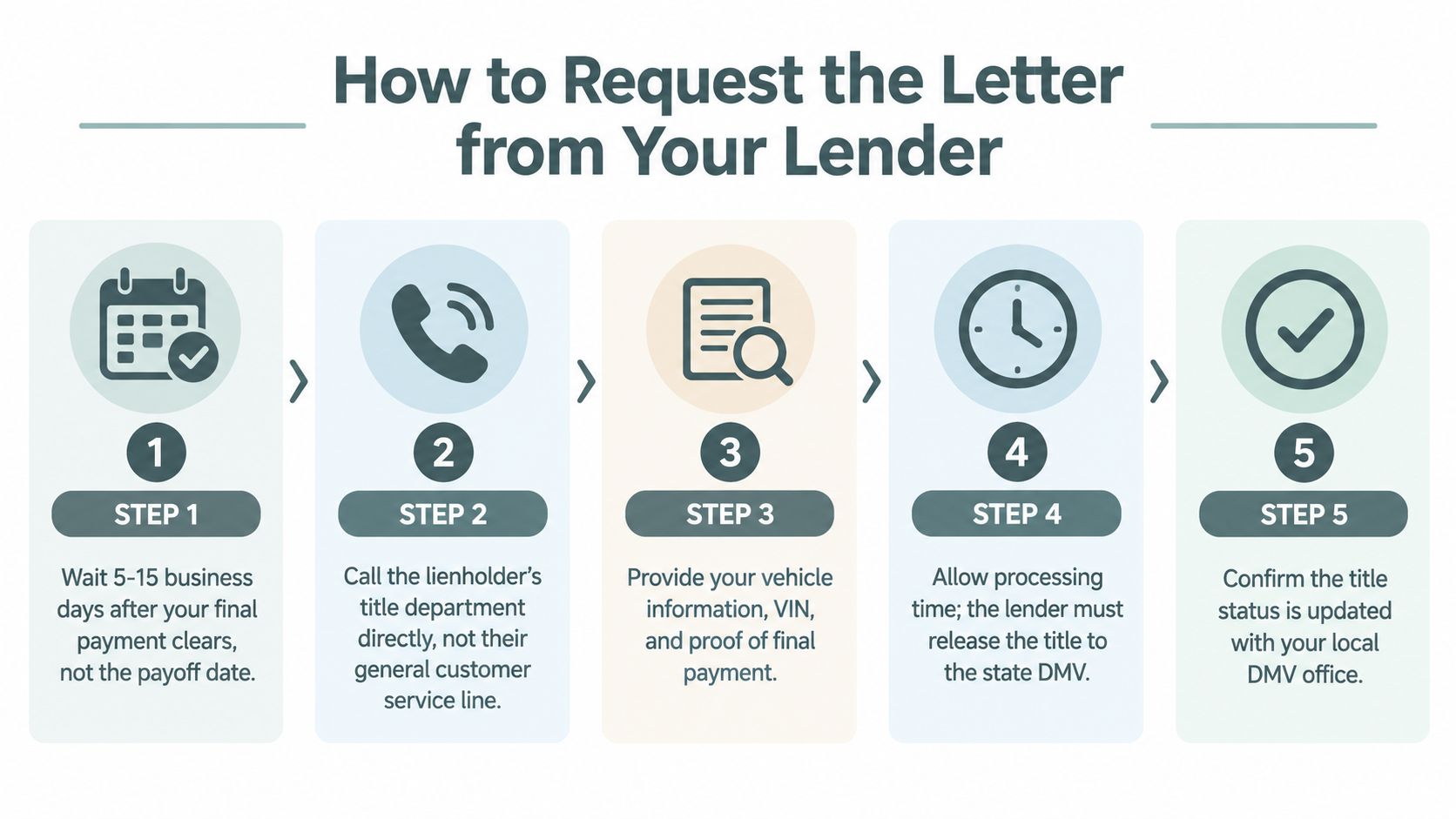
Ask for the release only after the final payment clears. Don't call the payoff date your finish line, because the lender still needs time to process the account and send the release. In many cases that means waiting 5 to 15 business days after final payment clears, not after you make the last payment.
Start with the lender's title department, not general customer service. The title desk handles lien releases, electronic title notices, and release corrections, and that's the only team that can tell you whether you'll get paper or electronic confirmation.
What to say when you call
Give them the loan number, VIN, payoff date, and the mailing address where the letter or title should go. Ask directly for the lien release letter or payoff lien release, and ask whether the lender uses an ELT provider. If they do, paper may never be issued.
Put the request in writing too. A written request gives you a record if the lender loses the file, sends it to the wrong address, or delays the release past the normal window.
If the lender merged or was acquired, contact the successor institution listed on the most recent statement. If the lender no longer exists, the fix usually runs through the DMV or a court process, not another round of customer service calls.
If the lender is silent, keep a clean log of every call, name, and date. That record matters when you need to prove the delay came from the lender, not from you.
Submitting the Letter to the DMV or Buyer
Where the release goes depends on the state and the title type. In some states, the buyer can use the signed paper letter with the title and transfer paperwork at the DMV. In others, the lender must clear the lien electronically first, and a paper letter is only backup. If the car still has a paper title, the letter may still be the document that finishes the transfer.
State-by-state submission snapshot
| State | Accepts Paper Letter | Submission Method | Typical Fee | Processing Time |
|---|---|---|---|---|
| Virginia | Yes, in paper-release cases | DMV office submission with title and transfer paperwork | $15 for a substitute title after lien removal (Virginia DMV) | New title is mailed after release |
| New York | Yes | Mail or DMV filing with original title and proof of satisfaction | $20 for lien release filing (New York DMV) | Processing follows DMV receipt |
| Indiana | Yes | Mail-in submission with signed title release or lien release letter | State fee applies | DMV processing after receipt |
| California | Sometimes, depending on title type | DMV record updates automatically for ELT lenders | No paper step when ELT applies | Automatic once satisfied |
| Nevada | Yes for printed titles | Original lien release and the documents Nevada DMV asks for | Fee varies, check Nevada DMV | After DMV review |
| Texas | Yes for paper titles | Release of lien letter and related lender notices | State fee applies | Depends on title format |
Virginia is straightforward for paper releases, but the fee belongs to the substitute title process, not the letter itself. New York also accepts paper filing in the right case, and the fee belongs on the New York DMV schedule, not a Virginia page. Nevada is where buyers get tripped up. Printed titles can still be cleared, but the DMV may ask for more than a letter before it will touch the file.
For a private sale, do the handoff in this order, title, bill of sale, verified lien release. Do not let the buyer pay and hope the paperwork sorts itself out later. A VIN-based title check is the fastest way to confirm the lien is gone before money changes hands.
Where a Lien Release Letter Falls Short
A signed letter doesn't always clear the title. That's the part people hate hearing, but it's the truth. In ELT states, the DMV may only honor the lender's electronic release, and paper may be treated as backup evidence instead of the actual title-clearing event.
The common failure points
California's paperless-title rules and Nevada's electronic-release requirement are the biggest traps for buyers who expect a paper letter to finish the job. If the lender is enrolled in ELT, the state may already be waiting for the electronic notice, and a paper letter won't move the file forward by itself. That's why a substitute title request or a power of attorney can still show up later in the process.
The other trap is age-based. Several paperless systems use a two-model-year cutoff, which means newer vehicles are handled electronically and older ones may still need paper support. If you ignore that threshold, you can waste time chasing a document the DMV won't accept.
A letter on lender letterhead is useful, but it doesn't override the DMV's title rules.
Older paper titles create a different problem. They often need a stamped release on the certificate itself, and a separate letter won't replace that requirement unless the state says it will. Missing notary acknowledgment, a bad VIN, or an unsigned release can all force the clerk to kick the application back.
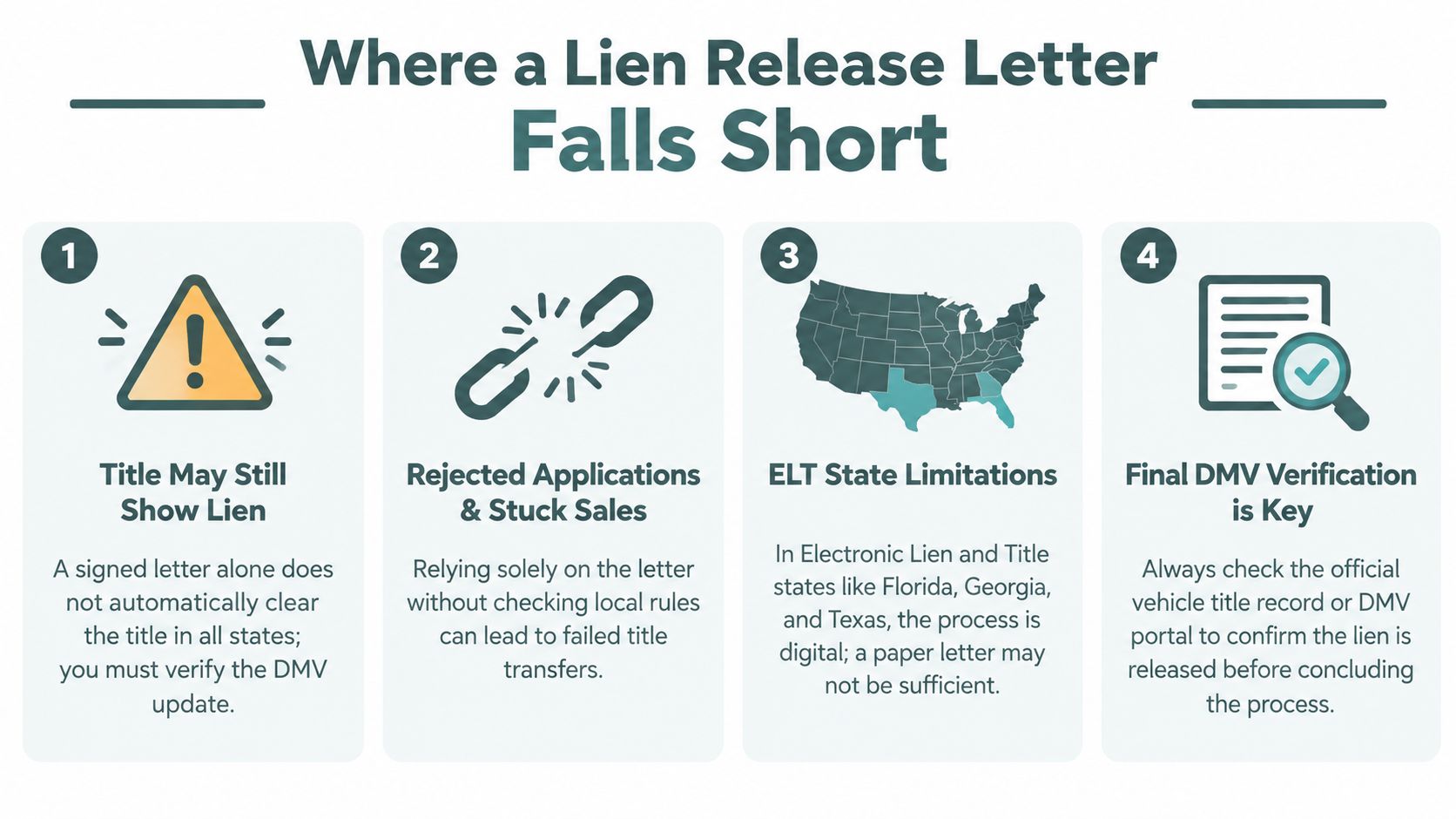
Check the DMV rule before you close a deal. That's the difference between a clean transfer and a title that sits in limbo while the buyer waits for registration.
Verifying the Lien Is Cleared
Verify the lien before you hand over money, keys, or title paperwork. A payoff receipt is not the same thing as a cleared title, and a lender's generic statement doesn't prove the DMV updated its record.
What to check first
Start with the lienholder's release document and make sure the VIN, year, make, lienholder name, loan reference, release date, and signature all match the vehicle. If the state uses an electronic title system, ask for confirmation that the DMV received the electronic release. Then use the vehicle's VIN to run a DMV title or lien search if your state offers one.
A clean result should show no active lien, although processing delays can still exist. For used vehicles, compare that result with the physical VIN plate and the current title. If anything doesn't match, stop the deal and fix the record first.
| Check | What to Confirm | Next Action |
|---|---|---|
| Lender release | VIN, name, release date, signature | Compare against title and correction request if needed |
| DMV record | No active lien shown | Wait for update or submit release to DMV |
| VIN history report | Title brands, ownership changes, accidents, lien records | Review for red flags before purchase |
| Physical title | Matches vehicle and seller | Don't pay until names and VIN line up |
| Electronic release confirmation | DMV received lender notice | Escalate through lender title department if missing |
For buyers, a VIN history report helps show title brands, accidents, ownership changes, and lingering lien records in one place. For sellers, it helps avoid the common mistake of advertising a car as free and clear before the DMV has cleaned the record. Use this lien verification tool before you finalize a private sale or release funds.
Final rule: no confirmed lien clearance, no finished transaction.
If you want to check a vehicle's lien, title status, or broader history before you buy or sell, use Vektracer to review the VIN or license plate, then compare the result against the lender's release and your DMV's rules. It's the fastest way to spot a title problem before it kills the deal, and it gives you the context you need to decide whether the paper or electronic path is available.
Ready to check a vehicle?
Enter any 17-character VIN for a free instant preview — no account needed.