How to detect accident damage before buying a used car
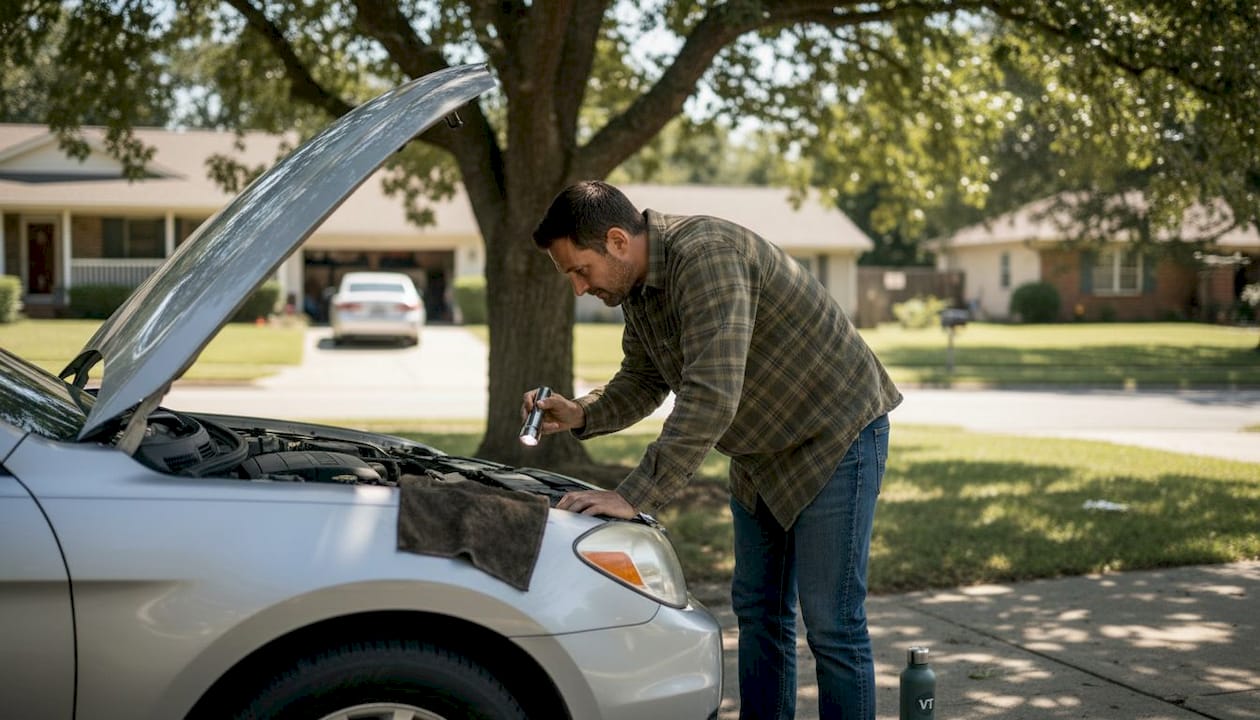
Check a vehicle before you buy
Enter a VIN for a free instant preview — accidents, title brands, mileage, liens & open recalls.
TL;DR:
- Hidden accident damage in used cars often goes unnoticed without proper inspection tools and reports.
- Pairing vehicle history reports with professional inspections greatly reduces the risk of missing structural issues.
- Investing in a professional pre-purchase inspection saves money by detecting costly damages early.
You find a used car that looks perfect. The price is right, the seller seems honest, and the paint looks clean. Then, three months later, you’re at the mechanic staring at a repair estimate for structural damage that was hiding in plain sight. This scenario plays out thousands of times every year across the United States, and it costs buyers serious money. Hidden accident damage is one of the biggest risks in the used car market, and the only way to protect yourself is to know exactly what to look for before you sign anything.
Table of Contents
- What you need before you start: Tools, reports, and basics
- Step-by-step: How to check for accident damage yourself
- Professional inspections: When and why you need an expert
- Red flags, hidden signs, and mistakes to avoid
- What most buyers get wrong about detecting accident damage
- How VekTracer helps you buy smarter and safer
- Frequently asked questions
Key Takeaways
| Point | Details |
|---|---|
| Start with the right tools | A flashlight, mirror, magnet, and vehicle history report are essential for any inspection. |
| Always check body and frame | Panel gaps, fresh welds, and mismatched paint hint at prior damage often missed by casual checks. |
| Test drives reveal hidden issues | Steering pull and vibration during driving can indicate misalignment or accident repair. |
| Professional inspections are crucial | Mechanics use advanced tools to spot frame, airbag, or suspension problems invisible to the eye. |
| Missed damage costs money | Failure to catch previous accidents often leads to costly repairs and lower resale value later. |
What you need before you start: Tools, reports, and basics
Before you look at any car, it’s crucial to know what tools and reports you’ll need to make an informed inspection. Going in unprepared is how buyers miss damage that a little groundwork would have caught immediately.
Start with a vehicle history report. The VIN (Vehicle Identification Number) is like a fingerprint for every car. You can get a vehicle history report using the VIN to reveal reported accidents, frame damage, airbag deployment, salvage titles, and repair history. Services like Carfax, AutoCheck, and NMVTIS-connected providers all pull from databases of reported incidents. The key word here is reported. Not every accident shows up, which is why a report alone is not enough.
Here’s a quick comparison of the most popular vehicle history report options:
| Service | Price | Data sources | Best for |
|---|---|---|---|
| Carfax | $44.99 | Insurance, repair shops, auctions | Widely recognized, dealer use |
| AutoCheck | $24.99 | Auction, DMV, salvage | Score-based summary |
| VekTracer | $19.99 | NMVTIS-connected sources | Budget buyers, full data |
Beyond the report, you’ll want to gather a few physical tools before you visit any car in person.
Essential DIY inspection tools:
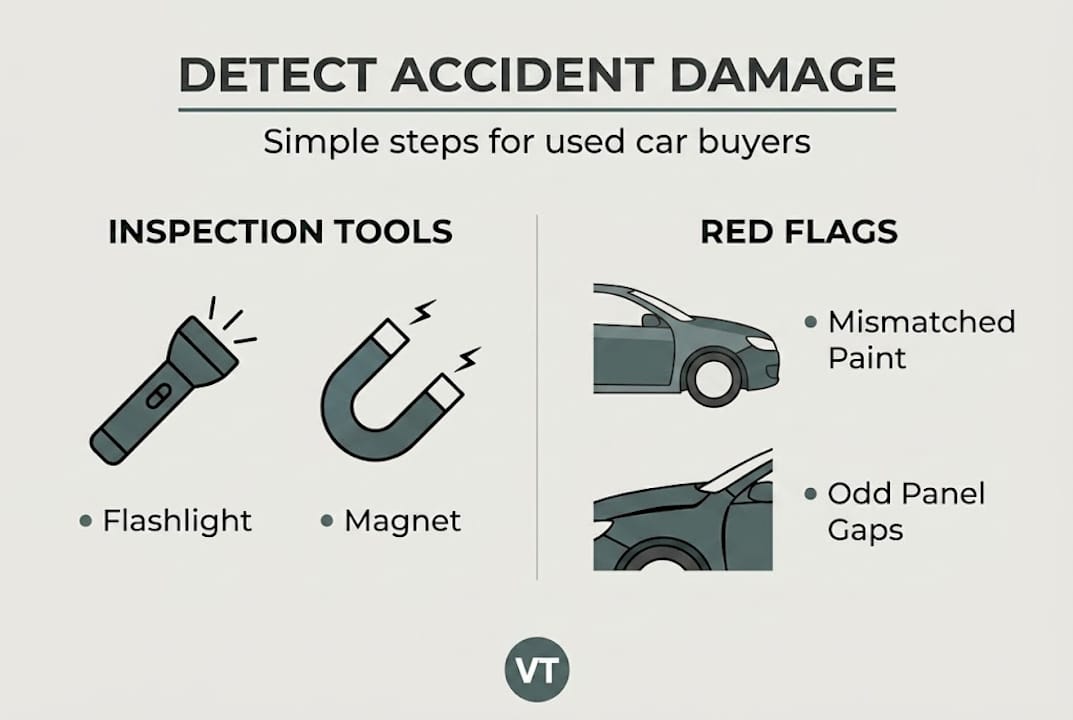
- Flashlight (bright LED): For looking into wheel wells, underneath the car, and inside door jambs
- Small mirror: Lets you see angles that are hard to reach, especially around the undercarriage
- Magnet wrapped in cloth: Pulls toward metal but not body filler; a weak pull signals filler underneath
- Tape measure: Measures panel gaps for consistency across both sides of the car
- Paint thickness gauge: Detects repainted panels where thicker paint indicates previous bodywork
Professional mechanics also use a hydraulic lift and frame gauges to measure structural alignment. You won’t have those tools, but knowing they exist helps you understand when to call in a pro.
Pro Tip: Before your visit, do a quick vehicle history check online. It takes about two minutes and can immediately rule out cars with salvage titles, flood damage, or chronic accident records. It saves you a wasted trip.
A pre-purchase checklist matters more than most buyers realize. Write down every item you want to check and work through it methodically. Emotion can cloud judgment when you’re standing in front of a car you like. A checklist keeps you objective and thorough.
Step-by-step: How to check for accident damage yourself
With your tools and reports in hand, you can begin a systematic inspection of the car. This process works best when you slow down and treat it like a job, not a formality.

1. Check panel gaps and alignment Stand at each corner of the car and look down the length of the body panels. Gaps between doors, fenders, and bumpers should be consistent on both sides. Uneven gaps, especially if one side is tight and the other is wide, often point to replaced or re-welded body panels after a collision.
2. Look for mismatched paint and overspray Use your flashlight and crouch down to look at the car from a low angle in good lighting. Overspray (paint speckling on rubber trim, plastic, or glass edges) is a sign that panels were repainted outside of a factory setting. Color mismatches between adjacent panels, even subtle ones, are a red flag worth noting.
3. Use the magnet test on body panels Wrap your magnet in a soft cloth to protect the paint, then slowly move it across the hood, doors, and fenders. Factory steel pulls the magnet firmly. Body filler (used to smooth out dents before repainting) weakens the magnetic pull noticeably. This trick catches filled-in damage that looks perfect on the surface.
4. Inspect the frame and undercarriage This is one of the most important and overlooked steps. Frame rails and undercarriage should be free of bends, ripples, fresh welds, and heavy undercoating applied to hide damage. Check the wheel wells for crumpling or jagged edges. Fresh undercoating on a specific section, when the rest looks original, often means someone is covering something up.
5. Check welds and seams Factory welds are uniform and consistent. They look almost mechanical in their regularity. Non-factory welds look rough, uneven, or sloppy by comparison. Look along the door pillars, rocker panels, and trunk area for any welding that does not match the rest of the car’s original construction.
6. Open every door and the trunk Open and close each door. They should swing smoothly and latch firmly. A door that needs to be lifted slightly to close, or one that doesn’t align with the body, often points to frame distortion from a side impact. Check the trunk for mismatched paint, visible repair work, or a spare tire well that looks disturbed.
7. Take it for a test drive Pay close attention once you’re moving. A car pulling to one side, a steering wheel that sits off-center, vibration at highway speeds, or noises over bumps can all indicate post-accident misalignment. Listen for clunking or creaking, which can signal bent suspension components.
Here’s a quick reference for what you’re watching during the test drive:
| Symptom | Possible cause |
|---|---|
| Pulling to one side | Frame misalignment or suspension damage |
| Off-center steering wheel | Alignment issue post-collision |
| Vibration at speed | Bent wheel, axle, or suspension |
| Clunking over bumps | Damaged control arms or struts |
| Uneven tire wear | Chronic misalignment |
You should also ask the seller specific questions about the car’s history directly. Honest sellers will share service records and prior repairs willingly. Hesitation or vague answers are telling.
Pro Tip: If you want to detect accident history before the visit, run the VIN and look specifically for airbag deployment records. Airbag deployment almost always means a significant impact, and repairs after deployment are expensive and complex.
Professional inspections: When and why you need an expert
Even with a careful DIY inspection, there are limitations, and here’s when it’s wise to bring in a professional. Some damage simply cannot be seen or felt without specialized equipment.
A licensed mechanic performing a pre-purchase inspection uses tools that go well beyond what you can bring to a parking lot. A paint thickness gauge reads the exact depth of paint on every panel, exposing repaints that are invisible to the naked eye. Frame measurement equipment checks whether the structural geometry of the car still matches factory specifications. These are not things you can eyeball.
Situations where a professional inspection is especially important:
- You’re buying a late-model car worth $15,000 or more
- The vehicle history report shows a prior accident
- You noticed any of the DIY red flags during your own walk-around
- The car has a rebuilt or salvage title
- The seller cannot provide service records or prior ownership history
- You’re buying from a private seller with no return policy
The typical cost for a professional pre-purchase inspection runs around $100 to $150. That number feels significant until you compare it to a $3,000 suspension repair or a $7,000 frame straightening job. It is one of the best investments you can make in the car-buying process.
“A pre-purchase inspection by a qualified mechanic can catch structural damage, misalignment, overspray, non-factory welds, and suspension issues that are impossible to detect without a lift and professional tools. Skipping this step to save $100 is one of the most expensive mistakes used car buyers make.”
Vehicle history reports are valuable, but they only capture incidents that were reported to insurers, police, or repair shops. A minor collision repaired privately never enters any database. That’s why pairing a report with a professional inspection gives you the most complete picture available. You can use a report to check a car’s VIN for accidents and then confirm the findings with an in-person expert.
Red flags, hidden signs, and mistakes to avoid
Some problems are easy to overlook, and being aware of red flags and common mistakes is crucial for effective screening. Many buyers focus only on obvious damage and miss the subtle signs that signal bigger problems underneath.
Watch for these hidden signs of damage or poor repair:
- Musty or moldy smell inside the cabin: This is one of the strongest indicators of flood damage. Water intrusion causes mold growth inside door panels, under carpets, and in the HVAC system. Electrical systems may also fail unexpectedly.
- Water lines on interior surfaces: Look under seats and inside the trunk for faint stain lines that show where water sat.
- Orange peel texture on painted panels: Factory paint is smooth and consistent. A panel that looks slightly textured, like the surface of an orange, has likely been repainted in a body shop, sometimes indicating poor quality repair.
- Non-OEM parts: Aftermarket bumpers, fenders, or headlights that don’t quite match the rest of the car often mean the original parts were damaged and replaced with cheaper alternatives.
- Inconsistent panel alignment near the front or rear: Front-end and rear-end collisions are the most common, and the panels in those areas should align perfectly with the rest of the body.
Vehicles that have been in accidents, including flood events and unreported fender-benders, can carry repair signs that only show up under close inspection. Newer cars lose significantly more value post-accident, sometimes between 5% and 25%, depending on the severity and how recently the vehicle was manufactured.
Common buyer mistakes that lead to missed damage:
- Skipping the vehicle history report entirely to save $20 and then paying thousands more later
- Not taking a test drive, or taking one that is too short to notice handling problems
- Ignoring inconsistent paperwork, such as a title that doesn’t match the seller’s name
- Trusting a “fresh” inspection sticker or dealer certification without independent verification
- Focusing only on cosmetic condition rather than structural and mechanical integrity
Pro Tip: If you find signs of prior accident damage during your inspection, use that information as a negotiation tool rather than a reason to walk away automatically. A disclosed, professionally repaired accident on an older car may still be a fair deal at the right price. The key is knowing the full picture before you decide.
What most buyers get wrong about detecting accident damage
With all the steps and red flags covered, it’s important to address what most guides miss about the limits of a DIY approach. There is a widespread belief among used car buyers that if you look carefully and take a long test drive, you’ll catch any serious problems. That belief is genuinely dangerous.
Even experienced car buyers rarely catch frame or unibody errors without measurement tools. A unibody vehicle (which describes the vast majority of modern cars) integrates the frame into the body structure itself. When that structure is bent even slightly, the car’s handling, tire wear, and safety all suffer. But the bend can be invisible to the eye. You need a frame gauge and a trained technician to measure it accurately.
Here’s the hard truth: vehicle history reports have blind spots, and professional inspections have blind spots too. Reports miss unreported incidents. Mechanics can miss internal electronics problems or pre-existing wear that isn’t caused by an accident. But when you combine both tools together, your coverage increases dramatically. You’re layering two independent verification systems over each other, and the overlap catches far more than either one alone.
The buyers who get hurt financially are almost always the ones who cut one corner. They ran the report but skipped the inspection. Or they took the test drive but didn’t bother with the VIN check. The used car market rewards buyers who do the full process, every single time.
Saving $100 to $150 by skipping a professional inspection is a false economy. We’ve seen buyers discover, after purchase, that a car needed $4,000 in frame repairs that a 45-minute inspection would have caught. That’s not a cautionary tale. It’s a common outcome for people who trust appearances over data. The smarter move is to use a car accident history workflow that layers your own checks with expert verification and documented history.
How VekTracer helps you buy smarter and safer
For buyers who want confidence and speed, here’s how to put these steps to work using digital tools designed for exactly this purpose.
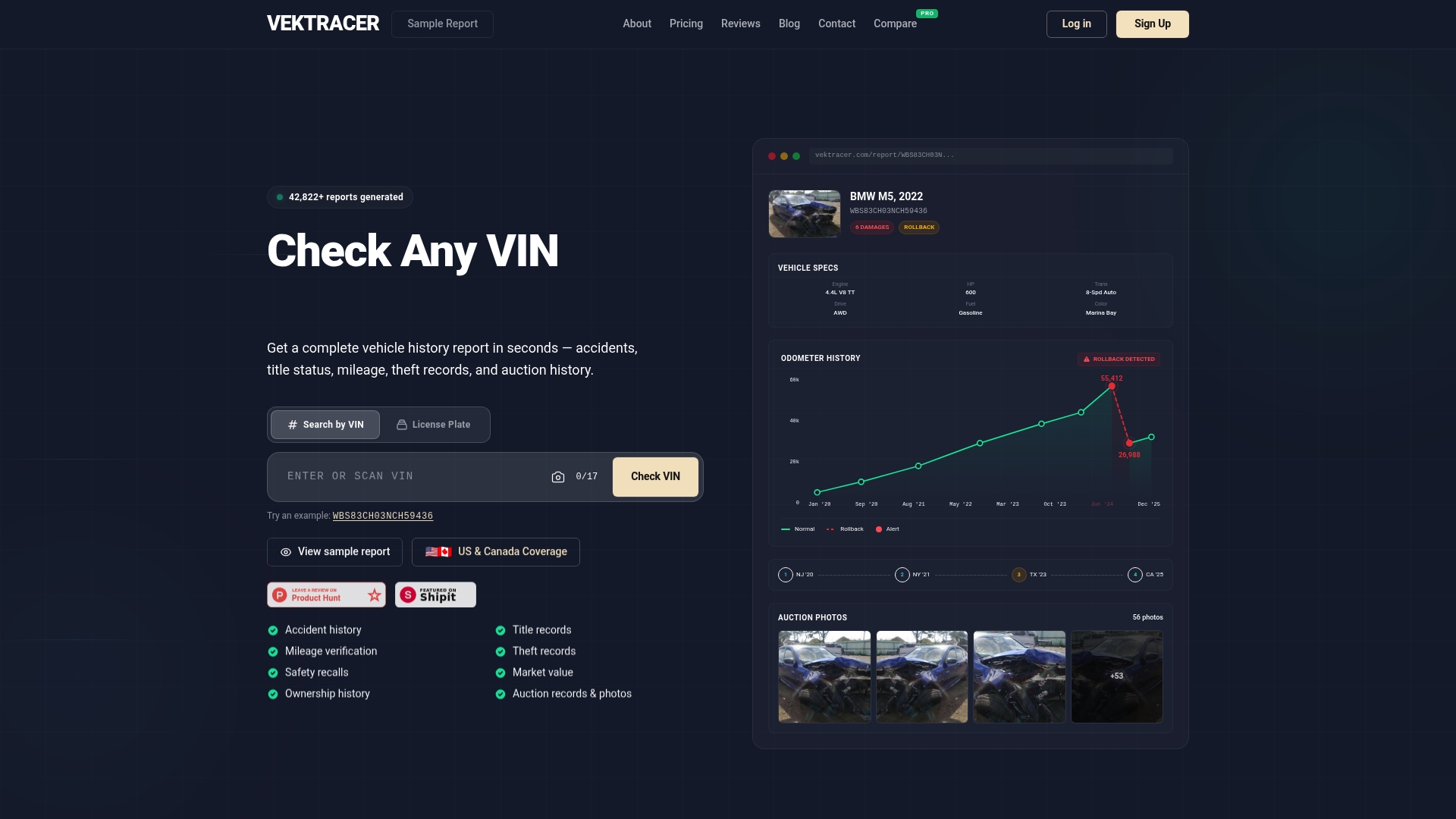
VekTracer gives you instant access to comprehensive vehicle history reports starting at just $19.99. That’s significantly less than Carfax at $44.99 or AutoCheck at $24.99, with the same core data pulled from NMVTIS-connected sources. You’ll see accident history, title records, mileage verification, theft checks, safety recalls, and current market value data, all in one clean report.
Before your next test drive, take two minutes to review a sample vehicle history report so you know exactly what you’re looking at. Then, when you’re ready, run a full check through VekTracer to arm yourself with the facts. You’ve already done the research on how to inspect a car. Now make sure the data backs up what your eyes are telling you.
Frequently asked questions
How reliable are vehicle history reports for accident detection?
Vehicle history reports are essential but may miss unreported accidents, so they should always be paired with a professional inspection using frame gauges for maximum safety.
What are the most common signs of hidden frame damage?
Look for uneven panel gaps, fresh welds, ripples in frame rails, and mismatched paint, and have a mechanic use a frame gauge to confirm, since bends and ripples in frame rails are often impossible to spot without professional tools.
Can accident damage be completely repaired without affecting resale value?
Even well-repaired cars typically lose between 5% and 25% of resale value after an accident, especially newer models after a collision, because the accident remains on the vehicle’s history and affects buyer confidence.
Is a test drive enough to spot hidden accident damage?
A test drive helps identify alignment and handling issues like pulling, vibration, or off-center steering, but professional tools are required to detect subtle internal or structural damage that doesn’t show up while driving.
Recommended
Ready to check a vehicle?
Enter any 17-character VIN for a free instant preview — no account needed.