How to detect accident history in used cars (2026)
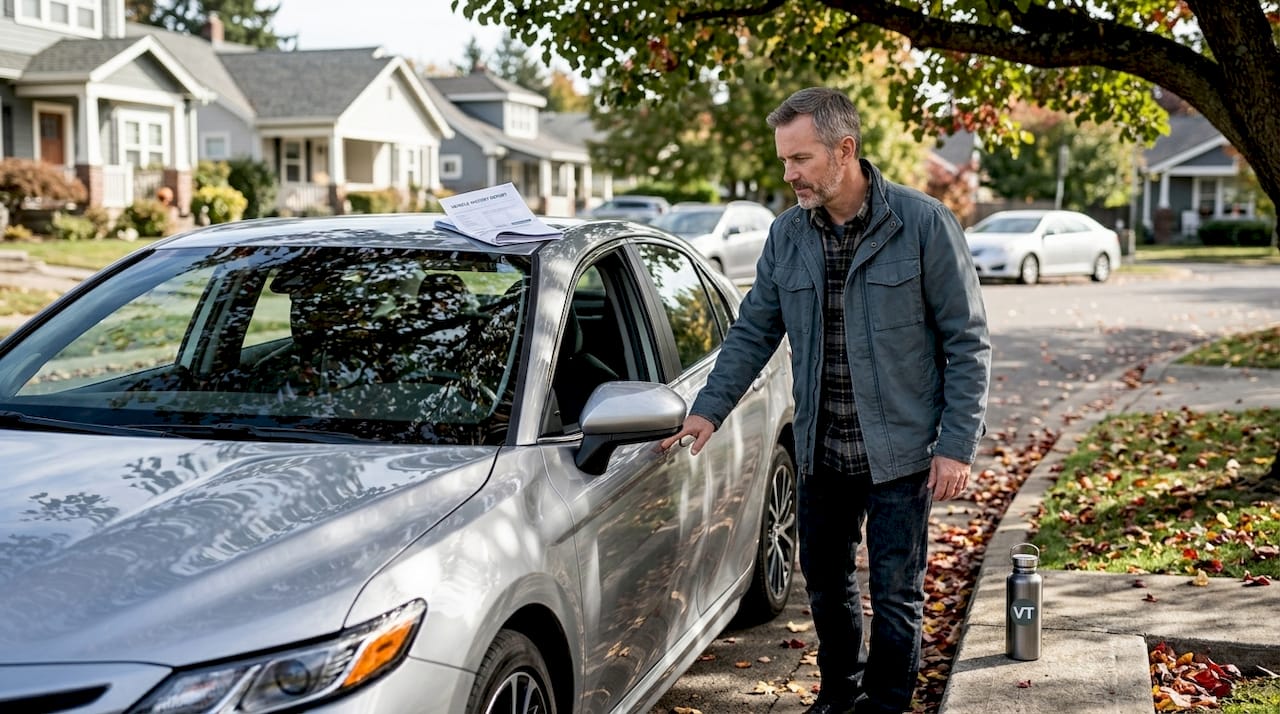
Check a vehicle before you buy
Enter a VIN for a free instant preview — accidents, title brands, mileage, liens & open recalls.
TL;DR:
- Accident history affects vehicle safety, resale value, and insurance costs significantly.
- Combining VIN reports from reputable services with physical inspections reduces risk of unseen damage.
- A professional pre-purchase inspection is essential to uncover hidden damages reports might miss.
Buying a used car feels exciting until you realize the vehicle you’re considering might be hiding a serious past. Accident damage that wasn’t properly repaired, a flood-damaged interior, or a rolled-back odometer can turn a great deal into a financial nightmare fast. Up to 40% of used cars have unreported issues that a pre-purchase inspection could catch before you sign anything. This guide walks you through every practical method available, from affordable VIN-based reports to hands-on physical checks, so you can spot accident history before it costs you thousands.
Table of Contents
Checking a specific vehicle?
Run its VIN for a free preview of accidents, title brands, mileage and open recalls.
- Understanding vehicle accident history and why it matters
- Affordable tools and services for accident detection
- Step-by-step: Reviewing accident history reports
- Physical inspection and independent verification
- Why a ‘clean’ report isn’t enough: Hard truths from experienced buyers
- Make accident detection easier with Vektracer
- Frequently asked questions
Key Takeaways
| Point | Details |
|---|---|
| VIN-based reports are essential | Use reliable providers to access accident, title, and service history before buying any used car. |
| Reports miss hidden damage | Up to 20% of accidents and repairs are never reported; always inspect physically and verify with a mechanic. |
| Affordable options exist | NMVTIS providers offer legitimate reports at low prices, but verify their credibility before purchase. |
| Physical inspection reveals clues | Check for panel gaps, overspray, frame welds, and signs of flood or odometer fraud in addition to digital reports. |
| A pre-purchase inspection saves money | A mechanic’s evaluation may cost $100–$200 but can prevent costly surprises from hidden issues. |
Understanding vehicle accident history and why it matters
Accident history refers to any documented event where a vehicle sustained damage, whether from a collision, flood, fire, or hail. When you run a car accident history check, you’re pulling together records from insurance companies, repair shops, state DMVs, and law enforcement to build a picture of what that vehicle has been through.
Not all accidents are equal. Some are minor fender-benders that leave no lasting damage. Others involve structural frame damage, airbag deployment, or total-loss declarations. The key data points to look for include:
- Title brands: Labels like “salvage,” “rebuilt,” “flood,” or “lemon law buyback” signal that a vehicle suffered major damage or legal issues at some point.
- Damage severity: Reports often categorize damage as minor, moderate, or severe, which tells you how bad the incident actually was.
- Number of owners: Frequent ownership changes after an accident can suggest the car was passed along because of ongoing problems.
- Mileage consistency: Gaps or jumps in recorded mileage can point to odometer fraud.
- Open recalls: Unresolved safety recalls mean the vehicle may still carry a manufacturer-known defect.
Why does this matter so much? Because accident history directly affects three things you care about: safety, resale value, and insurance costs. A car with a salvage title can be 40-50% cheaper to insure in some cases, but many insurers won’t cover it at full value. Resale becomes difficult when future buyers pull the same report you’re looking at now.
“A pre-purchase inspection can save buyers thousands by catching issues that reports alone don’t reveal.”
Here’s the uncomfortable reality: even thorough reports miss incidents. When you check a car VIN for accidents, you’re only seeing what was officially reported. Minor parking lot collisions, private-party repairs, and cash-paid bodywork often never make it into any database. That’s why combining reports with physical inspection is not optional. It’s essential.
Now that you understand why accident history matters, let’s look at how to gather the information you need.
Affordable tools and services for accident detection
You have more options than you might think, and they don’t all cost $45. Here’s a breakdown of the main tools available to used car buyers right now.
Paid report services pull data from insurance claims, auctions, and state records. CARFAX and AutoCheck cost $40-50 and $25-30 respectively, while NMVTIS-approved providers can offer comparable reports for $10-20. NMVTIS stands for the National Motor Vehicle Title Information System, a federally mandated database that tracks title brands, theft records, and total-loss designations.
Free tools have real value too. NICB VINCheck and NHTSA recalls are both free and worth running on any vehicle you’re considering. NICB (National Insurance Crime Bureau) checks for theft and salvage records. NHTSA (National Highway Traffic Safety Administration) shows open safety recalls by VIN.
Here’s a side-by-side comparison to help you decide:
| Service | Cost | Accident history | Title brands | Recalls | Mileage records |
|---|---|---|---|---|---|
| CARFAX | $44.99 | Yes | Yes | Yes | Yes |
| AutoCheck | $24.99 | Yes | Yes | Yes | Yes |
| Vektracer | $19.99 | Yes | Yes | Yes | Yes |
| NMVTIS providers | $10-20 | Partial | Yes | No | Partial |
| NICB VINCheck | Free | No | Theft/salvage | No | No |
| NHTSA | Free | No | No | Yes | No |
When choosing a paid service, verify that the provider is an NMVTIS-approved source. Some low-cost sites sell outdated or incomplete data. Look for providers that clearly disclose their data sources.
For a deeper vehicle history check, consider running both a paid report and the free NICB and NHTSA checks. This layered approach costs you very little but covers more ground. If you’re also concerned about ownership paperwork, a title check guide for buyers can walk you through what to look for in title records specifically.
Pro Tip: Many dealers offer a free CARFAX report, but always run your own independent check. Dealer-provided reports may be outdated or selectively shared.
When you compare Carfax and alternatives, the differences come down to data source partnerships and update frequency, not necessarily overall accuracy.
Once you’ve selected your tools and reporting services, it’s time to apply them and interpret what you find.
Step-by-step: Reviewing accident history reports
Pulling a report is the easy part. Reading it correctly is where most buyers make mistakes. Here’s how to work through a vehicle history report systematically.
- Enter the VIN carefully. The VIN (Vehicle Identification Number) is a 17-character code, often found on the dashboard near the windshield or on the driver’s door jamb. One wrong character returns the wrong report.
- Check the title history first. Look for any branded titles: salvage, rebuilt, flood, junk, or lemon law. These are serious flags that affect value and insurability.
- Review accident entries. Each entry should show the date, location, damage description, and whether airbags deployed. Airbag deployment almost always means significant structural force was involved.
- Look at ownership and mileage together. A car with three owners in two years and inconsistent mileage readings is a warning sign worth investigating further.
- Note the most recent service records. Gaps in service history after an accident can mean the damage was never properly repaired.
Here’s a quick reference for evaluating what you find:
| Finding | Risk level | Action |
|—|—|—|
| Minor accident, no airbags | Low | Verify with physical inspection |
| Moderate damage, repaired | Medium | Get independent mechanic check |
| Airbag deployment | High | Walk away or negotiate hard |
| Salvage or rebuilt title | Very high | Avoid unless expert-verified |
| Flood damage noted | Very high | Avoid in most cases |
Remember that reports only capture reported events, so a clean report does not guarantee a clean car. Even the best services are 85-90% accurate for major accidents, with delays possible when insurers take time to submit claims.
Pro Tip: If you find an accident history by VIN entry that shows damage but no repair record, ask the seller directly for repair receipts. No receipts is a red flag.
A VIN lookup report is your starting point, not your finish line. Understanding Carfax reliability helps set realistic expectations about what any report can and cannot tell you.
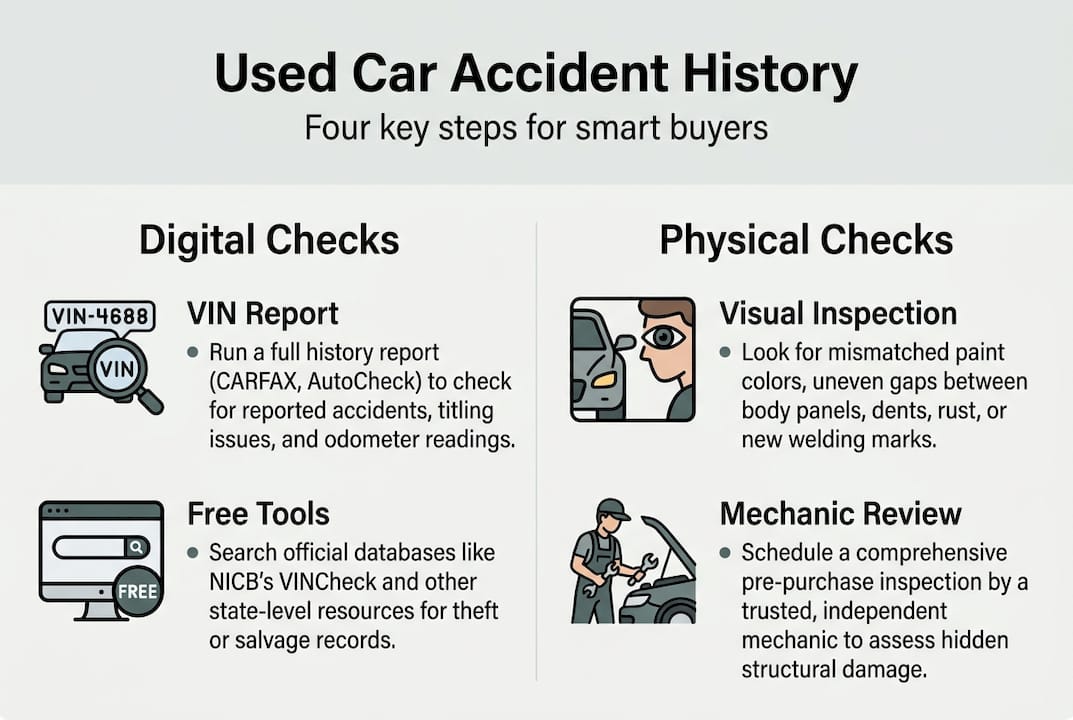
Having reviewed the digital reports, let’s turn to inspection techniques you can use firsthand.
Physical inspection and independent verification
No report replaces what your eyes and a trained mechanic can find. Physical inspection is where hidden damage gets exposed.
Here are the key things to check yourself before involving a mechanic:
- Panel gaps and alignment. Walk around the car and look at the gaps between body panels. Uneven gaps suggest the frame or panels were replaced or repaired improperly.
- Paint consistency. Look along the car’s surface in direct sunlight. Color mismatches or texture differences between panels often indicate repainting after a collision.
- Underbody inspection. Get low and look under the car. Fresh welds, bent frame rails, or mismatched metal colors are serious structural red flags.
- Tire wear patterns. Uneven tire wear across an axle can indicate alignment problems from frame damage that was never corrected.
- Interior smell and condition. A musty or mildew smell, silt under the carpets, or rust on seat brackets can all point to flood damage.
These physical inspection checks cover paint thickness, panel gaps, frame welds, and tire wear, and they cost you nothing but time.
“A pre-purchase inspection covering structure, OBD scans, compression tests, and alignment can prevent costly surprises that no report would have caught.”
Beyond your own eyes, always hire an independent mechanic for a pre-purchase inspection (PPI). A PPI covers structure, OBD scans, and alignment and typically costs $100-$200. That’s a small price compared to a $3,000 repair bill you didn’t see coming.

Also watch for odometer fraud detection signals: worn pedals and steering wheel on a supposedly low-mileage car, or service stickers showing higher mileage than the current reading.
Title washing is another issue. This is when a salvage vehicle gets re-titled in a different state to erase the branded title. It’s illegal, but it happens. A thorough VIN check across multiple state databases is the best defense.
With both digital and physical checks in hand, you’re ready to make an informed decision. Let’s touch on an expert’s view.
Why a ‘clean’ report isn’t enough: Hard truths from experienced buyers
Here’s something most articles won’t tell you directly: a clean vehicle history report can give you a false sense of security. Experienced buyers know that 1 in 6 accidents goes unreported, meaning a spotless report is not the same as a spotless car.
We’ve seen buyers skip the mechanic inspection because the report looked great, only to discover frame damage that cost more to fix than the car was worth. The report told them nothing because the accident was never filed with an insurer.
The smartest approach treats the report as a starting filter, not a final answer. Use it to eliminate obvious problems quickly. Then use physical inspection and a PPI to verify what the report can’t see. The $150 you spend on a mechanic is the best insurance you can buy before signing.
A thorough car accident history check is step one. But experienced buyers always follow it with eyes-on verification. That combination is what separates confident buyers from expensive mistakes.
Make accident detection easier with Vektracer
You now have the knowledge to approach any used car purchase with confidence. The next step is putting that knowledge to work with the right tools.
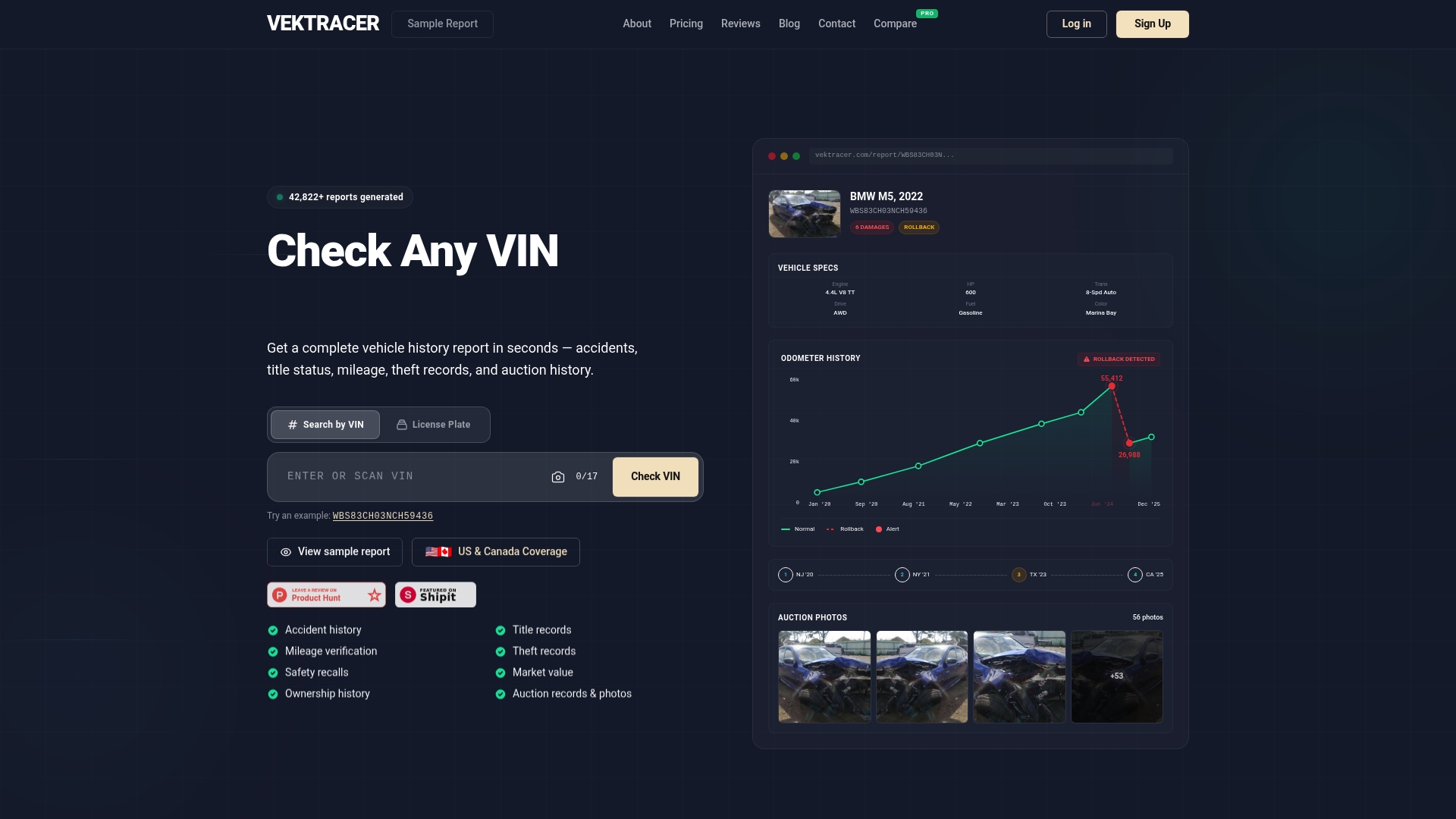
Vektracer’s VIN-based reports start at $19.99 and include accident history, title records, mileage verification, theft checks, safety recalls, and market value data. That’s the same core data as CARFAX at less than half the price. You can review how it works before you commit, check out a sample vehicle report to see exactly what you’ll receive, and compare options on the pricing page. Don’t let hidden accident history turn your next purchase into a costly lesson.
Frequently asked questions
What is the most reliable way to check accident history?
The most reliable method combines a VIN-based report from a reputable provider like CARFAX, AutoCheck, or an NMVTIS-approved service with a pre-purchase inspection by an independent mechanic. Neither method alone is sufficient.
Are free accident history tools accurate?
Free tools like NICB VINCheck and NHTSA recall check are useful for spotting theft records and open recalls, but their coverage is limited and they typically miss minor incidents and repair history.
Can reports miss previous accidents?
Yes. Up to 20% of minor accidents may never appear in any database, which is why physical inspection and a mechanic’s review are essential steps alongside any report.
How much does a mechanic’s inspection cost?
A typical pre-purchase inspection runs $100-$200 and can catch structural damage, fluid leaks, and alignment issues that no report would reveal.
What signs suggest accident or flood damage?
Look for inconsistent panel gaps, paint overspray, fresh underbody welds, musty smells, silt under carpets, and uneven tire wear. These physical clues often reveal damage that never made it into any report.
Recommended
- Vektracer
- How to Check a Car VIN for Accidents: A 2026 Step-by-Step Guide | Vektracer - Vektracer
- Is a Vehicle Accident History Check Worth It in 2026? | Vektracer - Vektracer
- How accident records affect used car value and safety | Vektracer - Vektracer
- How to inspect used golf carts: a step-by-step guide – Saferwholesale || Import Junkies || Great Sports
- Choosing a car warranty by year for smarter protection
Ready to check a vehicle?
Enter any 17-character VIN for a free instant preview — no account needed.