Master the car accident history workflow: buy used with confidence

Check a vehicle before you buy
Enter a VIN for a free instant preview — accidents, title brands, mileage, liens & open recalls.
TL;DR:
- Use the VIN, reliable report platforms, and physical inspection to verify a used car’s accident history.
- Reports often miss minor incidents; a mechanic’s pre-purchase inspection provides additional assurance.
- Combining multiple data sources with in-person checks ensures confident and safe used vehicle purchases.
Imagine closing a deal on a used SUV, only to find out two weeks later that it had been in a major front-end collision. The frame was repaired, the airbags replaced, and none of it showed up in the listing. Situations like this cost buyers thousands of dollars in surprise repairs and seriously compromise safety. A clear, repeatable car accident history workflow removes that guesswork. This guide walks you through exactly what to gather, which sources to use, how to run a report, and what to verify in person so that you buy confidently and avoid the kind of regret that lingers long after the paperwork is signed.
Table of Contents
Checking a specific vehicle?
Run its VIN for a free preview of accidents, title brands, mileage and open recalls.
- What you need before you start
- Step-by-step: Running a car accident history workflow
- Making sense of vehicle history reports
- Verification: Go beyond the database for peace of mind
- Why you shouldn’t over-trust any car accident history workflow
- Streamline your accident history workflow with VekTracer
- Frequently asked questions
Key Takeaways
| Point | Details |
|---|---|
| No report is perfect | Even trusted sources like Carfax and NMVTIS can miss 15-20% of minor accidents. |
| Workflow saves money | Following a structured car accident history check prevents costly surprises. |
| Inspection is essential | Combining reports with a thorough physical inspection gives the best peace of mind. |
| Keep records | Always save screenshots and paperwork from your checks for future reference or negotiation. |
What you need before you start
Before you run any report, you need three things: the Vehicle Identification Number (VIN), access to a reliable report platform, and a basic understanding of what a vehicle history report (VHR) actually covers. Think of the VIN as a fingerprint for the car. It is a 17-character code unique to every vehicle ever manufactured, and it is the key that unlocks every database entry tied to that car’s past.
Here is what to gather before you start:
- The VIN from the actual vehicle (dashboard driver’s side, door jamb, or title documents)
- Access to a report platform such as VekTracer, Carfax, AutoCheck, or the federal NMVTIS database
- Basic vehicle specs (year, make, model, trim) to cross-check the VIN output
- A note-taking system to document findings, flag discrepancies, and compare across sources
Pro Tip: Always pull the VIN directly from the physical car or official documents. Seller listings sometimes contain typos or, in worse cases, intentionally misrepresented numbers. A mismatch between the listed VIN and the one stamped on the vehicle is a serious red flag.
Not all report sources pull from the same pool of data. VHR sources include DMV title records, police reports, insurance claims, repair shops, and auction data, aggregated by private companies or through government systems. Not all incidents get reported to every source, so knowing what each platform covers matters.
For a deeper look at how these reports are structured, the vehicle history reports guide at VekTracer breaks down each data category clearly.
| Source | Accident Data | Title Records | Mileage | Theft | Price |
|---|---|---|---|---|---|
| Carfax | Yes (100k+ sources) | Yes | Yes | Yes | $44.99 |
| AutoCheck | Yes | Yes | Yes | Yes | $24.99 |
| NMVTIS | Limited | Yes (federal) | No | Yes | Free/low cost |
| VekTracer | Yes | Yes | Yes | Yes | From $19.99 |
VekTracer pulls from NMVTIS-connected sources and proprietary databases, making it one of the most affordable options with comparable core data coverage.
Step-by-step: Running a car accident history workflow
Once you have the essentials, it is time to work through the process itself. Skipping steps here is where most buyers go wrong. Each phase builds on the last, and rushing past any one of them leaves gaps that can cost you later.
- Gather the VIN from the physical vehicle. Confirm it matches the title, registration, and any seller documents.
- Choose a reputable source. Compare platforms based on coverage and price. Use the Carfax vs cheaper alternatives comparison if you need help deciding.
- Run the report. Enter the VIN, pay any applicable fee, and generate the full report.
- Document your findings. Screenshot or download the report immediately. Some platforms offer one-time access only.
- Assess the severity. Minor fender-benders may be acceptable. Structural damage, airbag deployment, or flood-related events are escalation triggers.
- Escalate if needed. Book a pre-purchase inspection (PPI) from a licensed mechanic, renegotiate the price, or walk away.
Pro Tip: Always screenshot your report the moment it loads. Some services grant access for a limited time, and you want a saved copy for reference during negotiations or if you revisit the car later.
Treat any report as a record of known, reported events, not a complete history. Unreported damage such as paint mismatches and frame irregularities often only surface during a hands-on PPI. If a dealer offers their own free report, run a fresh one yourself anyway. Data can lag, and a dealer-provided report may not reflect the most recent incidents.
| Step | Estimated Time | Possible Pitfall |
|---|---|---|
| Gather VIN | 2 minutes | Seller-provided VIN may have errors |
| Choose platform | 5 minutes | Choosing only one source misses gaps |
| Run report | 3-5 minutes | One-time access; screenshot immediately |
| Review findings | 15-20 minutes | Misreading codes or abbreviations |
| Escalate/inspect | 1-2 hours | Skipping PPI on flagged vehicles |
For a more detailed walkthrough of locating and entering the VIN correctly, the VIN lookup steps guide covers every variation by vehicle type.
Making sense of vehicle history reports
After running the report, the next step is making sense of what you find. This part trips up a lot of buyers because the terminology can feel technical and the implications are not always obvious.
Here is a quick breakdown of the terms that matter most:
- Structural damage: The vehicle’s frame or unibody was compromised. This affects long-term safety and resale value significantly.
- Salvage title: The car was declared a total loss by an insurer. It may have been rebuilt, but financing and resale are both harder.
- Airbag deployed: A significant collision occurred. Even if the airbags were replaced, the force of impact may have affected surrounding components.
- Odometer rollback flag: The mileage reported at different points in the vehicle’s history does not add up. This is a common fraud signal.
- Title washing: The vehicle was moved across state lines to obscure a branded title (like salvage). This is harder to detect and requires checking multiple state records.
Expert note: Reports capture major events with roughly 85-90% accuracy for well-documented incidents, but real-world buyers regularly report gaps, especially for deer strikes, minor collisions, or incidents that were never filed through insurance. No single source tells the full story.
A clean report is reassuring, but it is not a guarantee. Clean reports miss somewhere between 15% and 20% of minor incidents, and recent events can lag in the system by weeks. Title washing across states is another risk that does not always surface in a single report pull.

For a closer look at how to identify hidden damage beyond what the database shows, the detecting accident history guide walks through physical indicators worth knowing. You can also compare data quality across providers at the best report sites roundup.
Verification: Go beyond the database for peace of mind
Even the best report has gaps. Here is how to close them for total peace of mind.
A database tells you what was reported. A mechanic tells you what actually happened to the car. These are two different things, and combining both is the only way to build real confidence before handing over money.
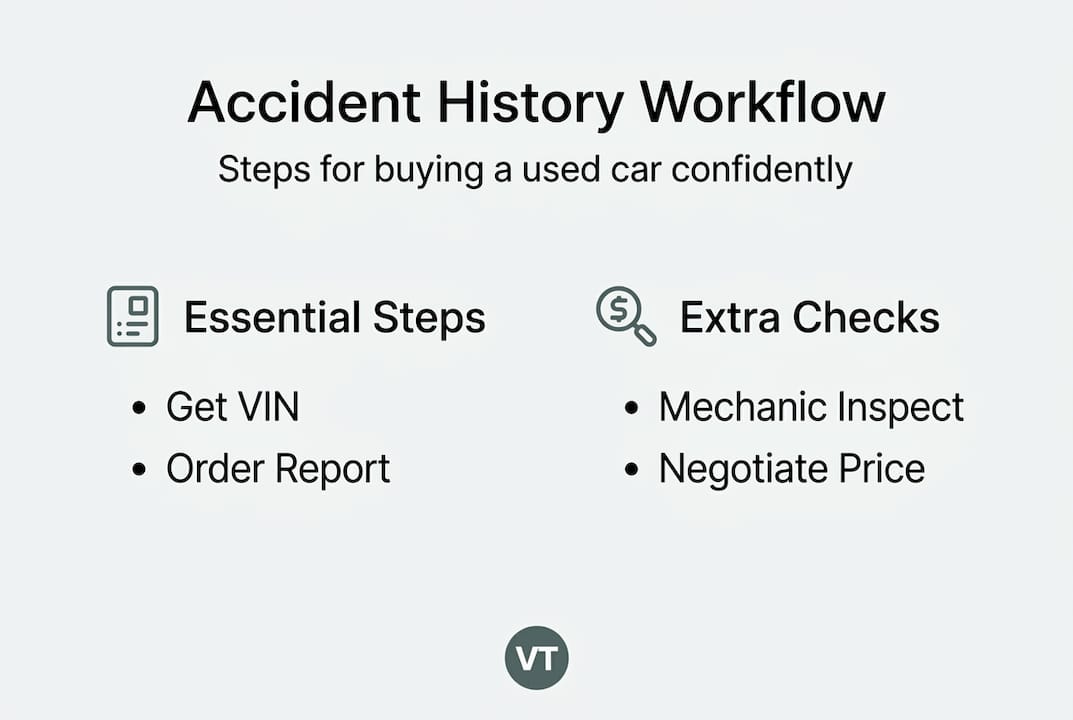
A pre-purchase inspection (PPI) from a trusted mechanic detects unreported damage including paint mismatches, unusual welds, and frame irregularities that no database would ever capture. Most PPIs run between $100 and $200 and take one to two hours. That is a small price relative to the cost of buying a car with hidden structural problems.
Here is what to check during a physical inspection:
- Paint consistency: Uneven sheen, slight color variation, or overspray on trim often indicates a repaint after body damage
- Panel gaps: Uneven spacing between doors, hoods, and fenders can signal frame misalignment
- Undercarriage condition: Look for rust in unusual patterns, new welds, or mismatched metal in areas that should be factory-original
- Windshield and glass: Stress cracks from frame flex or misaligned seals suggest past structural issues
- Tire wear patterns: Uneven wear indicates alignment problems, which can follow an unreported collision
Pro Tip: If the inspection turns up damage the report missed, use it as negotiating leverage. Either ask for a price reduction that accounts for estimated repair costs, or walk away entirely. Never let a seller’s enthusiasm override what the inspection reveals.
For more on how to order and read a report before heading to the lot, the ordering vehicle history reports guide covers the full process from start to finish.
Why you shouldn’t over-trust any car accident history workflow
Here is a perspective most guides skip: the workflow itself can give buyers a false sense of security. Going through every step feels productive. You gathered the VIN, ran the report, reviewed the findings. It feels like due diligence is done. But experienced buyers know the report is the beginning of the conversation, not the end of it.
Title washing is real and difficult to catch. Non-reportable damage happens constantly. And sellers are skilled at framing a vehicle’s history in the most favorable light, sometimes emphasizing the small fender-bender that is on the report to distract from damage that is not.
No database captures everything. The strongest protection you have is combining a quality report from a cost-effective source, a hands-on PPI, and your own judgment. If something about the car, the seller, or the story feels off, trust that feeling. Data supports your instinct. It does not replace it.
If budget is a concern, cheaper alternatives to Carfax can get you solid core data for a fraction of the cost, leaving more room in your budget for the physical inspection that actually closes the gap.
Streamline your accident history workflow with VekTracer
Running a thorough accident history workflow should not require multiple subscriptions, confusing platforms, or paying $44.99 for a single report. VekTracer makes it simpler and more affordable for both individual buyers and independent dealers.
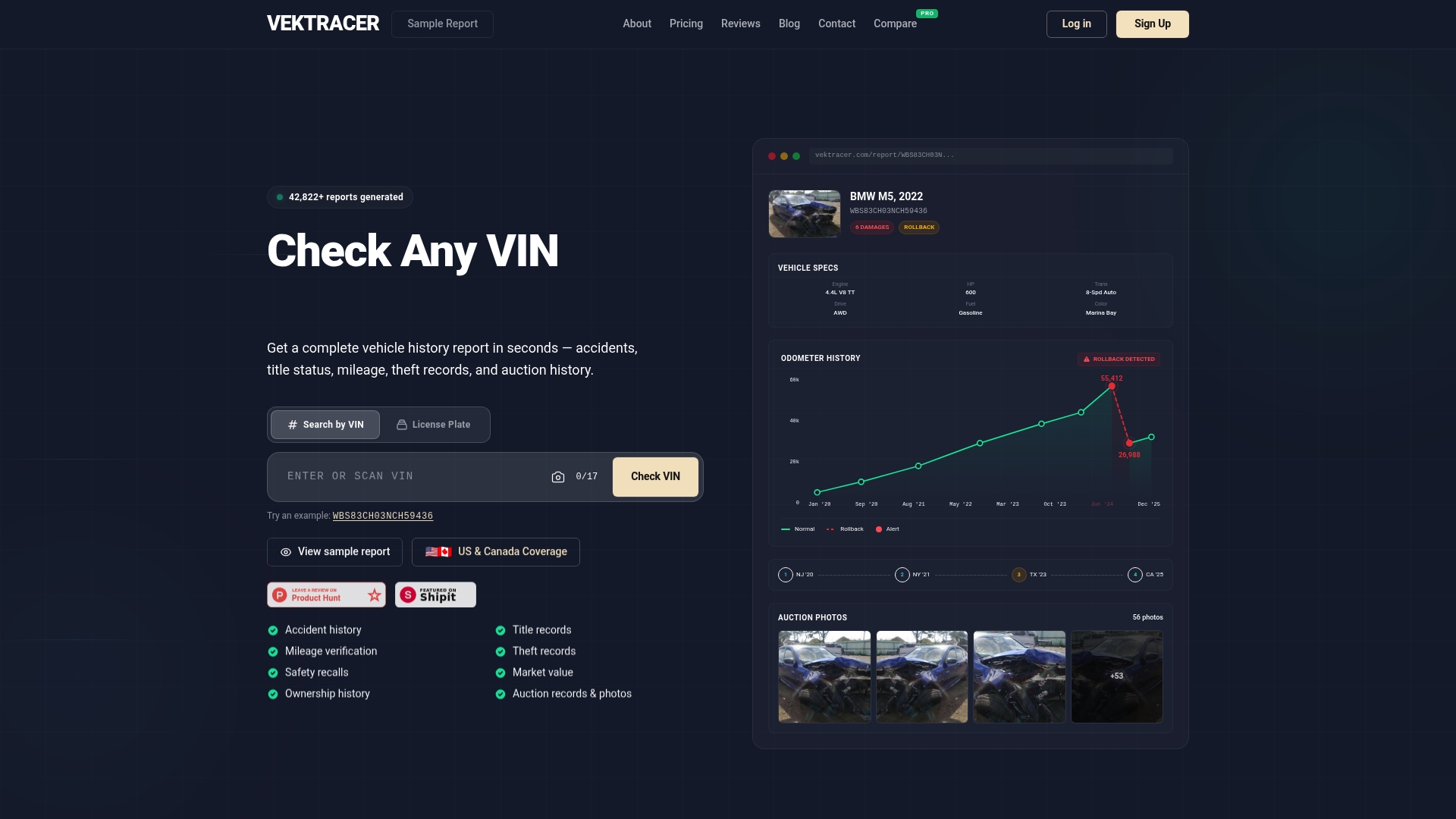
With VekTracer, you get NMVTIS-connected data covering accident history, title records, mileage verification, theft checks, safety recalls, and market value, starting at just $19.99 per report. Dealers working through multiple transactions can explore flexible pricing options designed for higher volume without sacrificing data quality. Before you commit, you can also review a sample accident report to see exactly what the data looks like and how it is organized. Knowing what you are buying before you run your first report is always a smart move.
Frequently asked questions
What is a car accident history workflow?
A car accident history workflow is a step-by-step process for checking a vehicle’s past accidents and damage before buying, typically combining a VIN report with a physical inspection.
Can a clean vehicle history report guarantee a car has never been in an accident?
No. Clean reports miss between 15% and 20% of minor incidents, and recent events may not appear in the database right away.
Which sources provide the most reliable accident history?
Carfax and NMVTIS are both widely trusted sources, but using more than one platform alongside a physical inspection gives you the strongest overall picture.
How can I spot unreported accidents on a used car?
A pre-purchase inspection from a licensed mechanic is your best tool. Look specifically for mismatched paint, unusual welds, panel gaps, and undercarriage irregularities that a database would never flag.
Recommended
Ready to check a vehicle?
Enter any 17-character VIN for a free instant preview — no account needed.