What Is a Vehicle History Report: Your 2026 Guide to Buying Smarter
Check a vehicle before you buy
Enter a VIN for a free instant preview — accidents, title brands, mileage, liens & open recalls.
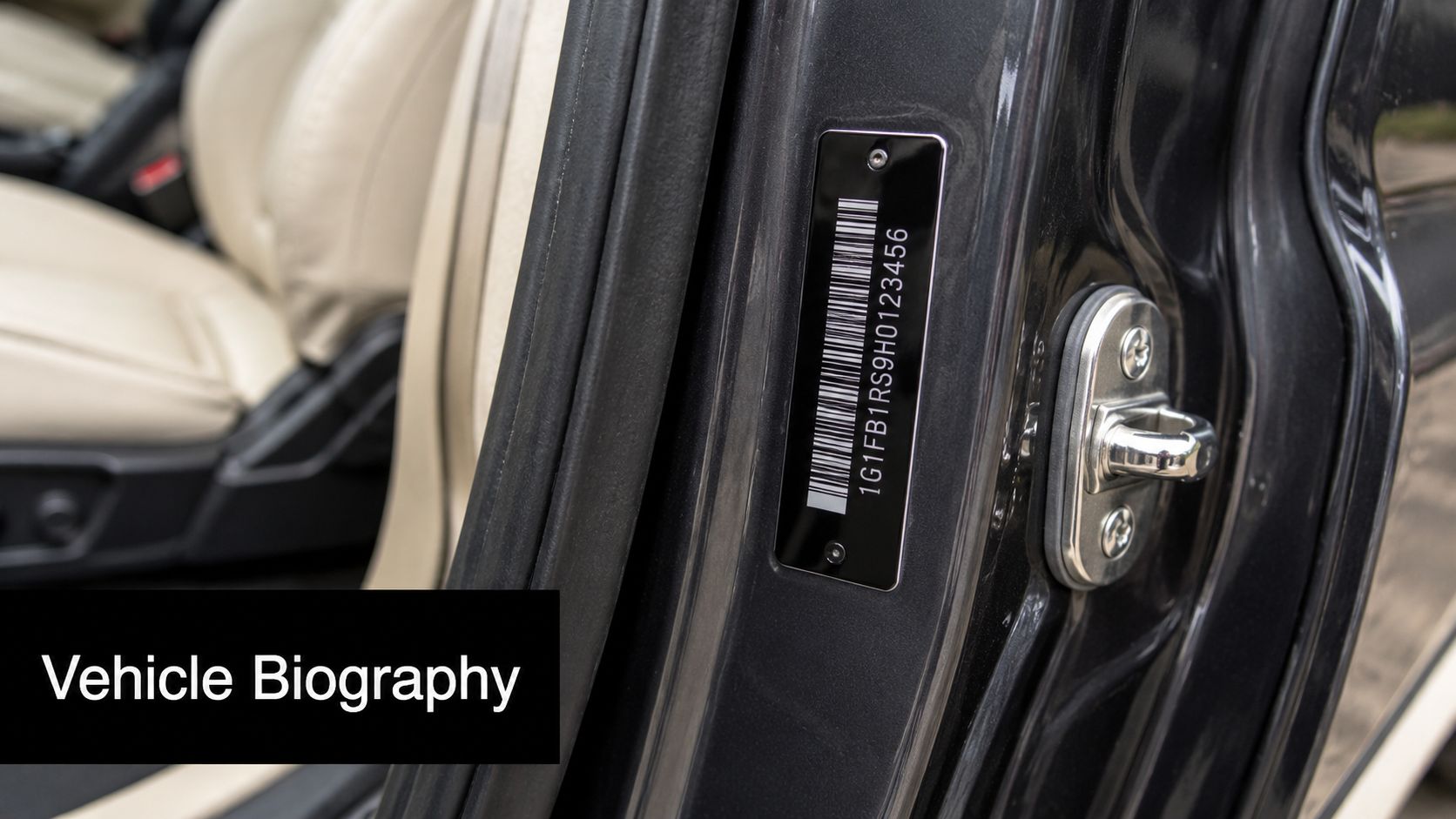
A vehicle history report is an essential background check for any used car, compiled using the vehicle's unique 17-digit Vehicle Identification Number (VIN). Think of it as a car's biography; it reveals critical information about its past, such as accident history, title status, mileage records, and previous ownership. Running a report is the single best way to uncover hidden issues a seller might not disclose, helping you avoid costly mistakes and make a confident purchase.
In short, a vehicle history report gives you the facts you need to decide if a used car is a great deal or a disaster waiting to happen.
Why You Can't Trust a Used Car Without a Report
Checking a specific vehicle?
Run its VIN for a free preview of accidents, title brands, mileage and open recalls.
A vehicle history report gathers records from a vast network of sources, including DMVs, insurance providers, police departments, and repair shops, to build a comprehensive timeline of the vehicle's life. It confirms whether the story the seller is telling you matches the facts. Without one, you're flying blind, relying solely on the seller’s word and a visual inspection—which can easily hide major problems like a salvage title from a past wreck or odometer fraud.
Checklist: What a Vehicle History Report Uncovers
A good report compiles all the critical events tied to a car's VIN. It's an organized record showing ownership changes, accident history, mileage readings over time, and any flags for theft or major damage. Here’s what you should check for:
- Accident History: Reveals reported accidents, from minor fender benders to major collisions, helping you spot potential structural damage.
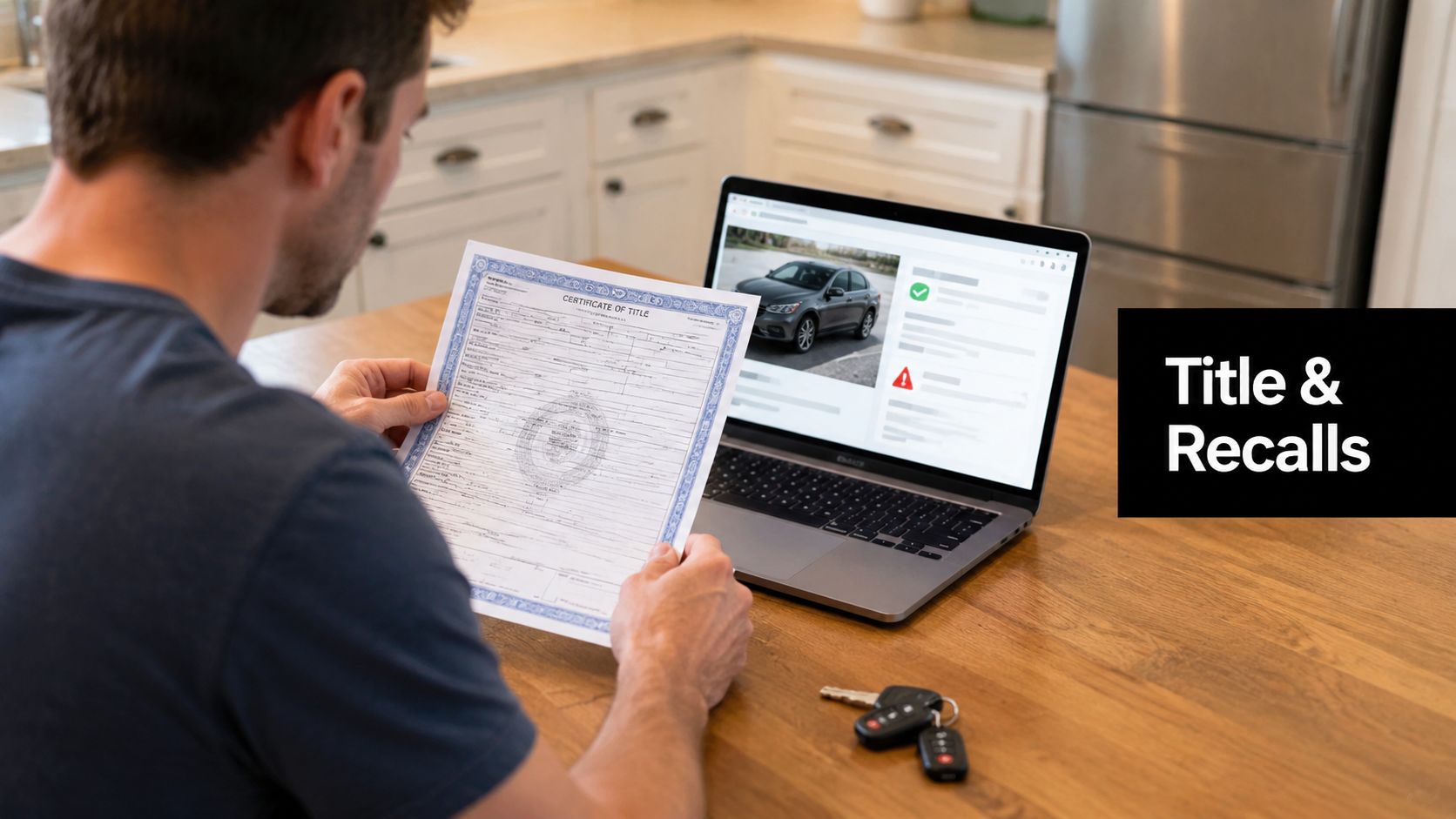
- Title Status & Brands: Shows if the car has a "clean" title or a red-flag brand like Salvage, Rebuilt, or Flood Damage.
- Odometer Readings: Provides a timeline of recorded mileage to expose potential odometer rollback fraud.
- Ownership History: Details the number of previous owners, where the car was registered, and its use (e.g., personal, rental, fleet).
- Open Recalls: Lists any unrepaired safety recalls issued by the manufacturer.
- Lien & Theft Records: Checks for outstanding loans (liens) or if the car has ever been reported stolen.
Understanding these details is the key to making a smart purchase decision.
Decoding a Report: From Minor Dings to Deal-Breakers

Seeing "accident reported" can be alarming, but not all damage is equal. The skill is learning to interpret the severity. A minor parking lot scuff is completely different from a major collision that compromised the car's frame.
Real-World Scenario: Two Cars, Two Different Stories
Imagine two identical Honda Civics, both listed for $18,000. Both have "accident reported" on their vehicle history reports.
- Car A's Report: Shows "minor damage reported" to the rear bumper five years ago. The car has had consistent service records since, and the odometer readings are logical. This is likely a cosmetic issue that was properly fixed and is not a major concern. It could even be used to negotiate a slightly better price.
- Car B's Report: Shows "structural damage reported" and "airbag deployment" from an incident last year. The title was branded as "Salvage" and then later changed to "Rebuilt." This is a massive red flag. The car was once declared a total loss, and its safety and reliability are now questionable, regardless of the repairs.
This scenario highlights why context is everything. The report for Car B gives you the clear evidence needed to walk away and avoid a potential nightmare. For a hands-on approach, you can also learn how to inspect a car for accident damage yourself.
Common Mistakes to Avoid When Using a Vehicle History Report
Even with a report in hand, buyers can make critical errors. Avoiding these common mistakes will ensure you get the full value out of the information you've paid for.
Mistake #1: Skipping the Pre-Purchase Inspection (PPI)
The biggest mistake is thinking a clean report means the car is perfect. A report tells you the car's past, not its present mechanical condition. It won't tell you if the brake pads are worn, if the transmission fluid is burnt, or if there's a slow oil leak. Only a qualified mechanic can spot these issues during a PPI. The report and the inspection are a team; one is not a substitute for the other.
Mistake #2: Ignoring Minor-Looking Title Issues
A branded title—like Salvage, Rebuilt, or Flood Damage—is a permanent stain on a car's record. Dishonest sellers sometimes use a tactic called "title washing" by moving a car to a state with lax laws to get a clean-looking title. A comprehensive vehicle history report that pulls data from all states and provinces is your best defense against this. If you see any title brand in the car's past, it's a serious warning. It’s smart to run a VIN check in the USA and a VIN check in Canada to be safe.
A vehicle history report is your best defense against title fraud. Globally, reporting is increasingly tied to government data systems to prevent these issues. This government-backed framework matters because title fraud and salvage laundering often move across state or provincial borders, making a single local record insufficient. You can discover more insights about this system on KBB.com.
Mistake #3: Not Investigating Odometer Discrepancies
Odometer rollback is a deceptive and illegal practice. A report helps you spot this by showing mileage readings over time. If you see a reading from 2025 that is lower than one from 2023, you’ve likely found fraud. Don't dismiss it as a typo; investigate further. Our guide on how to check for odometer rollback offers more advice.
How to Choose the Right Vehicle History Report
Not all reports are created equal. When selecting a provider, you need to balance cost, data comprehensiveness, and readability.
Provider Comparison: CARFAX vs. AutoCheck vs. Vektracer
Choosing a provider often comes down to your specific needs. Here’s a quick comparison of the top players to help you decide.
| Provider | Single Report Price (Approx. 2026) | Best For... | Key Feature |
|---|---|---|---|
| CARFAX | $44.99 | Buyers who value extensive service/repair records. | The largest and most well-known database of service history. |
| AutoCheck | $29.99 | Buyers shopping at auctions or comparing multiple cars. | Its proprietary "AutoCheck Score" makes for quick comparisons. |
| Vektracer | Varies | Buyers who want integrated data and risk analysis. | Combines VIN decoding with report data for an "at-a-glance" risk score. |
As noted by experts at Edmunds.com, multi-report packages often provide better value, since most people check more than one car. For a more detailed breakdown, you can read our guide on the best vehicle history report sites.
This infographic lays out a simple process for using this data effectively.
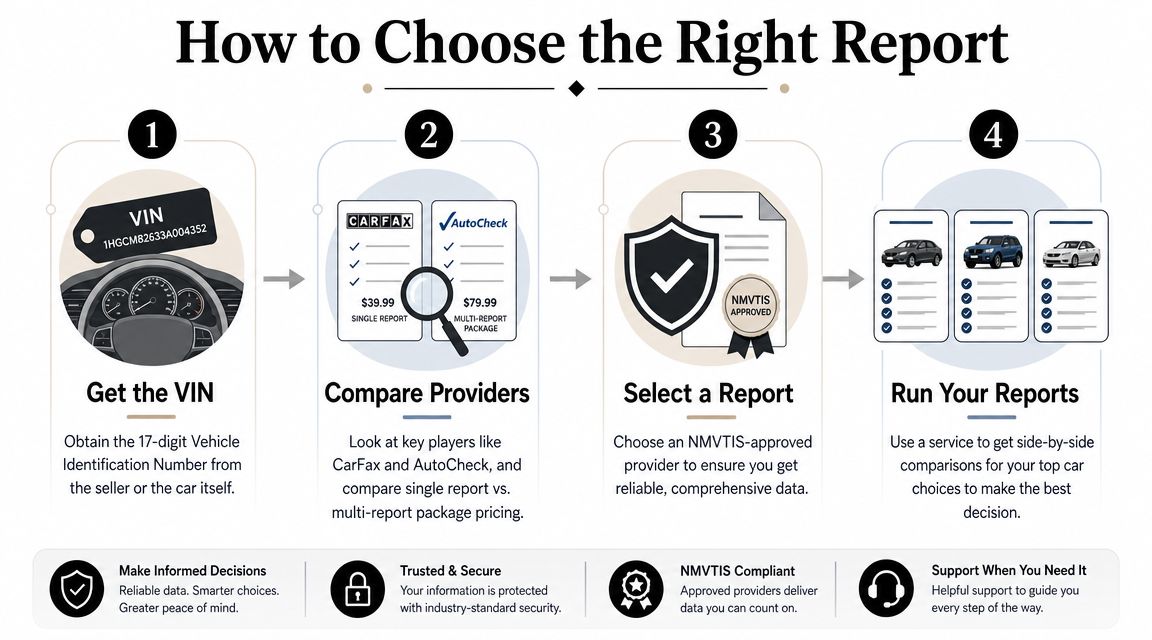
Ultimately, the goal is to get reliable information. Details in the report can also impact your future costs, like insurance premiums. Resources like this guide to Florida insurance savings show how a vehicle's profile affects what you pay.
Expert Tip: If a private seller refuses to provide the VIN for you to run your own report, walk away. Transparency is non-negotiable when making a major purchase.
FAQ: Your Top Questions Answered
What if a vehicle history report is completely clean?
A clean report is a great sign! It means the car has no recorded accidents, title brands, or other major red flags. This is your green light to proceed to the next crucial step: a professional pre-purchase inspection (PPI) by a trusted mechanic. The clean report justifies the cost of the inspection.
How accurate are vehicle history reports?
Reputable reports are highly accurate, as they pull data from official sources like DMVs, insurance companies, and law enforcement. However, they are not infallible. A report can only show what has been officially documented. If someone had a minor accident and paid a local shop in cash for repairs, it might not appear on any report. This is another reason why a PPI is essential.
Can I get a free vehicle history report?
While some dealers provide reports for free, and some services offer very limited free data (like checking for open recalls), a comprehensive report with accident, title, and ownership history almost always costs money. Paying for a quality report from a provider like CARFAX, AutoCheck, or Vektracer is a small investment that can save you thousands in the long run.
What's the first step to getting a report?
The first step is getting the car's 17-digit Vehicle Identification Number (VIN). You can find it on the driver's side dashboard (visible through the windshield) or on the sticker inside the driver's door jamb. Once you have the VIN, you can run a VIN check in the USA or a VIN check in Canada through your chosen provider.
Ready to uncover the full story behind your next car? With the right information, you can buy with total confidence. Run your first VIN check today and make your decision a smart one.
Ready to check a vehicle?
Enter any 17-character VIN for a free instant preview — no account needed.