What Does Maintenance Required Mean? 2026 Owner's Guide
Check a vehicle before you buy
Enter a VIN for a free instant preview — accidents, title brands, mileage, liens & open recalls.
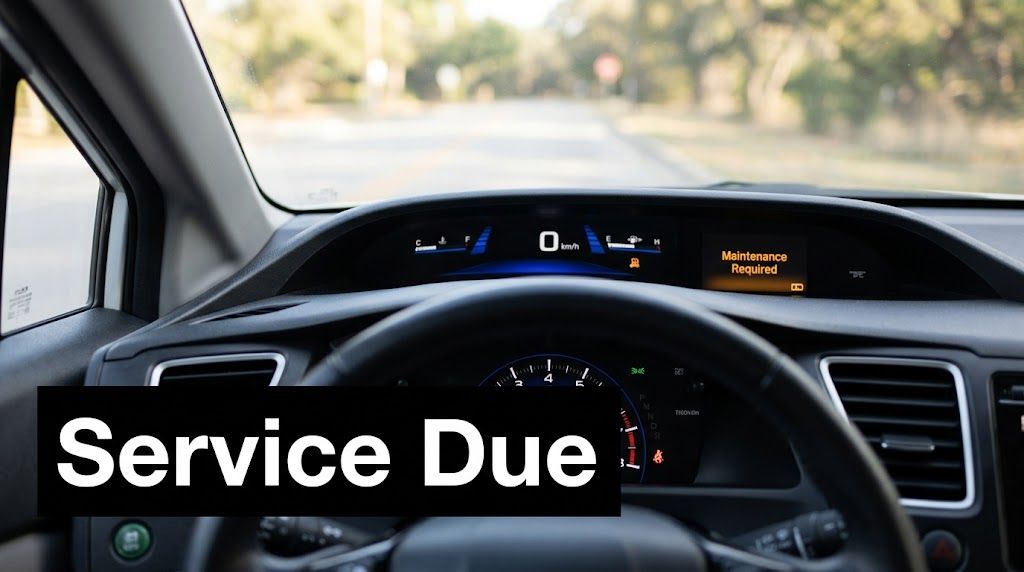
The Maintenance Required light usually means your car has reached a pre-programmed service interval, often about every 5,000 miles, and it is not the same as a check engine light warning about a current mechanical failure. In plain terms, your car is reminding you that routine service is due, not telling you that something has already broken.
You're probably here because that light came on and your first thought was, “Is it safe to drive, or is this going to get expensive fast?” That reaction is normal. Dashboard messages are easy to misread, especially when manufacturers use short labels like MAINT REQD that sound more urgent than they often are.
The important thing is to read this light correctly. On most vehicles, it works more like a calendar reminder than a panic alarm. It's there to push you toward oil changes, tire rotations, and basic checks before wear starts stacking up.
If you own the car, the next move is simple: find out which service is due and get it scheduled soon. If you're shopping for a used car, the same light means something different. Then it becomes a clue. It might point to routine care, or it might point to sloppy ownership and missing records.
Your Guide to the 'Maintenance Required' Dashboard Light
When this light pops on during your commute, most drivers assume the car is reporting a fault. In most cases, that's not what's happening. In most modern vehicles, the Maintenance Required light is a scheduled-service reminder programmed to appear at intervals of about 5,000 miles (8,000 km), though some manufacturers use broader ranges, and it's reset after routine service to prompt tasks like oil changes and tire rotations before wear gets worse, as explained by University Auto Repair's overview of why a car says maintenance required.
It's similar to the reminder sticker some shops put on the windshield, except built into the dashboard. The car keeps count. When it reaches the programmed point, the light comes on.
What the light is really telling you
It's saying one thing: your next routine service window has arrived.
That message is reassuring, but it isn't permission to ignore it forever. Routine maintenance matters because engines, tires, and fluids don't fail all at once. They wear gradually, and this light is supposed to catch you before that wear turns into a bigger problem.
Simple analogy: This light is like your dentist reminding you it's time for a cleaning. It doesn't mean you have a broken tooth. It means now is the time to prevent one.
Where owners get confused
Drivers usually mix up three different ideas:
- A reminder: The car has reached a service interval.
- A warning: The car has detected an active fault.
- A risk signal on a used car: The dashboard message may be harmless, or it may point to neglected maintenance history.
That last point matters more than one might assume. On your own car, this light usually means “book service soon.” On a used car lot, it can mean “ask better questions.”
If you like practical maintenance reading beyond passenger cars, Motor Sportsland service resources are useful for understanding how scheduled upkeep works across different vehicles.
Maintenance Required vs Check Engine Light What's the Difference
Drivers mix these up all the time, and the difference changes what you should do next.
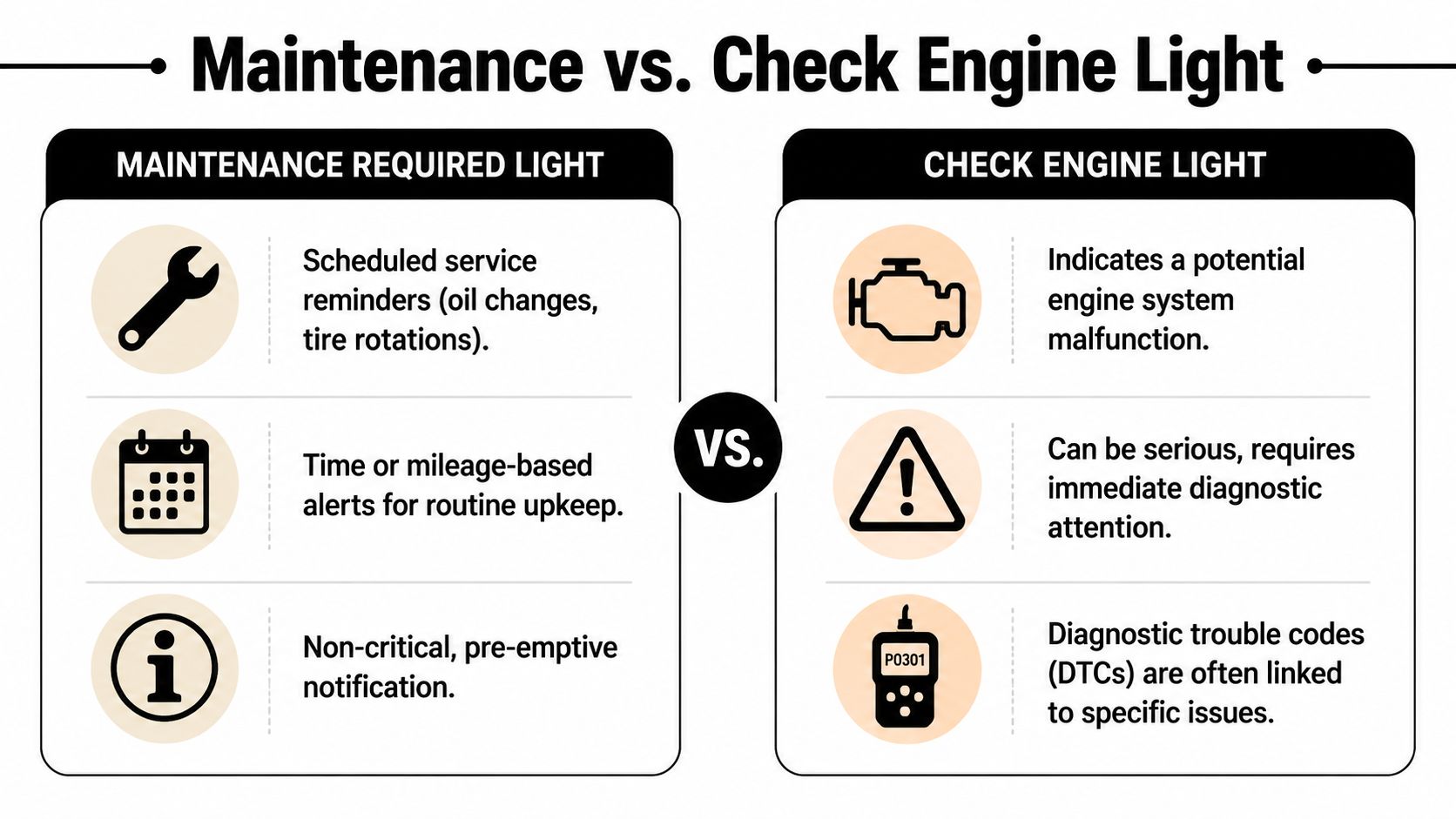
The Maintenance Required light usually means the car has reached a scheduled service interval. The Check Engine light means the vehicle's computer has detected a fault and wants testing. One is tied to upkeep. The other points to diagnosis.
That sounds simple, but it matters for more than peace of mind.
On your own car, this difference helps you decide whether to schedule routine service or check for a real problem. On a used car, it helps you judge risk. A maintenance reminder by itself may show the car is following a normal service cycle. A check engine light raises a different question: what fault is active, how long has it been there, and was it ignored?
What each light is really saying
A maintenance reminder says, “The car has reached a point where regular service should be done.”
A check engine light says, “The car has noticed something outside normal operation.”
That second message covers a wide range. It could be minor, such as a loose gas cap, or more serious, such as a sensor, emissions, fuel, or engine performance problem. That is why treating both lights as if they mean the same thing leads people in the wrong direction.
Side-by-side comparison
| Attribute | Maintenance Required Light | Check Engine Light |
|---|---|---|
| What triggers it | A programmed mileage or time-based service counter | A fault detected by onboard diagnostics |
| What it means | Routine maintenance is due | A system issue needs diagnosis |
| Typical urgency | Service soon | Diagnose promptly |
| Common examples | Oil change, tire rotation, fluid check | Emissions issue, sensor fault, engine-related problem |
| Can the car still drive normally | Often yes | Sometimes, but not always |
| OBD-II fault code involved | Usually no | Usually yes |
| Inspection impact | By itself, generally not a fail reason | May affect emissions-related inspection outcomes |
Why the difference matters when buying a used car
Here is where buyers get caught. A seller may shrug and say, “It just needs an oil change,” and sometimes that is true. But the dashboard light only tells part of the story.
If the Maintenance Required light is on, check the service records. Do the oil changes and routine visits show up on time, or are there long gaps? A reminder light with a clean service history usually points to ordinary ownership. The same light with missing records can suggest the car was driven until reminders piled up, then traded in.
If the Check Engine light is on, ask for the fault codes and repair paperwork. If the seller cannot provide either, assume you are buying uncertainty along with the car.
The practical rule
Treat a maintenance light as a scheduling signal. Treat a check engine light as a diagnostic signal.
That one distinction saves money and helps you ask better questions before you buy. If you're dealing with an actual engine warning and want a plain-English breakdown of likely causes, this guide on how to fix check engine light issues is a helpful next read.
Common Triggers for the Maintenance Required Light
The most common trigger is routine oil service, but that isn't the whole story. Different vehicles use different logic, and that's where people get tripped up.
CarParts notes that while a 5,000-mile interval is common, maintenance reminders vary significantly. Some vehicles use algorithmic oil-life monitoring that considers driving conditions, while others use fixed mileage triggers of 7,500 or 10,000 miles. Message variations such as “Change Oil Soon” are also becoming more common, as described in CarParts' explanation of what the maintenance required light means.
The usual maintenance items behind the light
Here's what the reminder often points to:
- Oil and filter service: This is the classic trigger. The vehicle tracks distance or oil-life depletion and flags when service is due.
- Tire rotation: Many service intervals pair tire rotation with oil service because both are routine and easy to schedule together.
- Fluid inspection: Shops commonly check coolant, brake fluid, and other serviceable fluids during these visits.
- Basic under-hood review: Belts, filters, and visible leaks often get a quick inspection at the same appointment.
Why one car may behave differently from another
A Toyota, Honda, Ford, Lexus, or European model may all tell you “service due,” but they don't always calculate it the same way.
Some systems are simple counters. They just count miles since the last reset. Other systems behave more like a scorecard. They look at driving conditions and oil-life estimates rather than one fixed odometer number.
That's why two cars driven the same distance may not show the reminder at the same time.
A simple example
If one driver makes short trips in stop-and-go traffic and another drives mostly steady highway miles, their service-monitoring systems may treat those patterns differently. The dashboard message still means routine service is due, but the reason it appeared when it did may be based on more than mileage alone.
The safest habit is simple. Don't guess based on what your last car did. Check the owner's manual for the exact maintenance logic on the vehicle in front of you.
Your Action Plan When The Light Appears
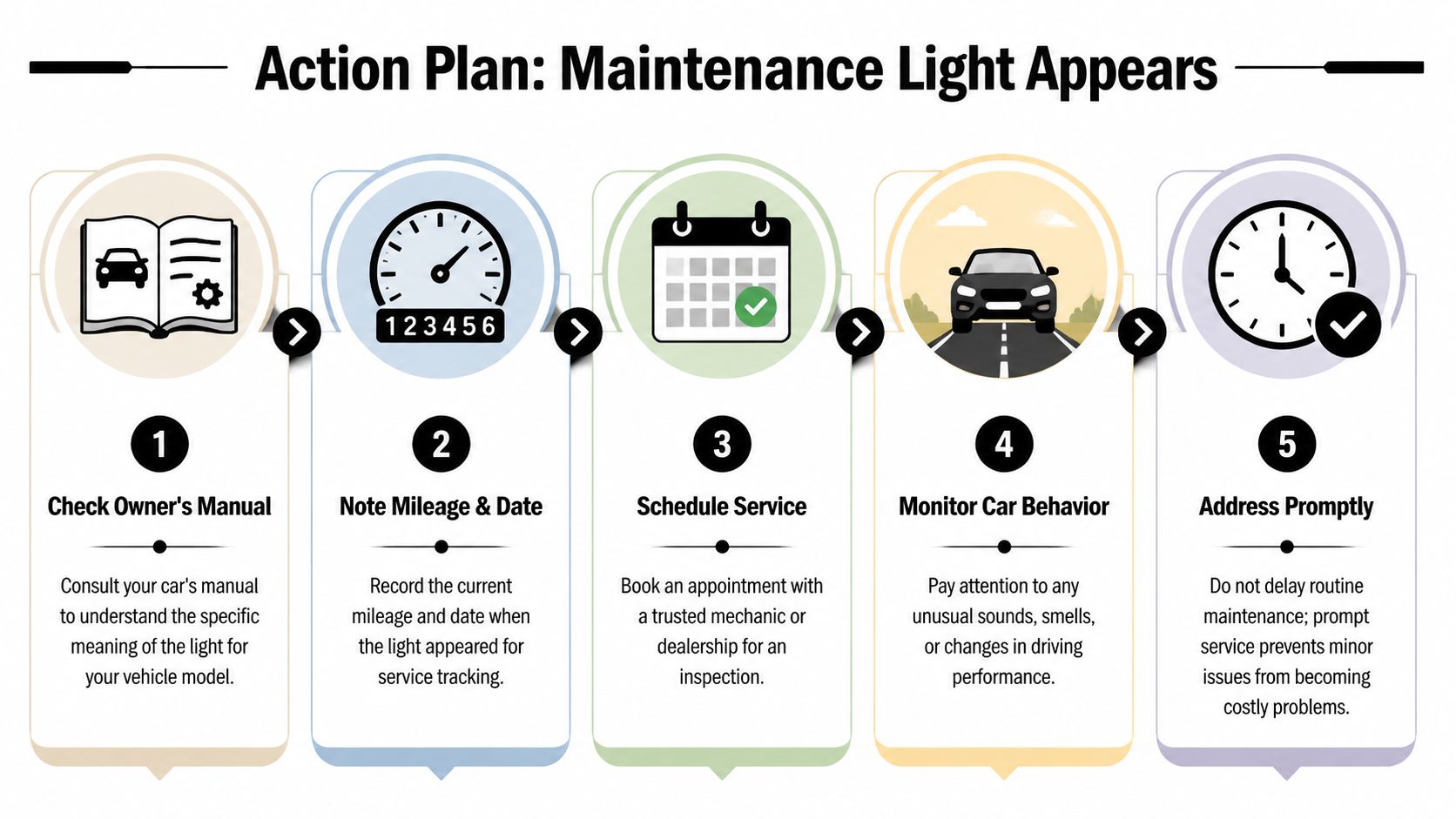
When the light comes on, don't overreact and don't ignore it. Treat it like a job that just got added to your to-do list.
Follow this checklist
Check your owner's manual
Look up what the light means on your exact make and model. Some cars tie it to a basic oil service. Others tie it to a broader interval or oil-life system.Write down the mileage and date
This gives you a clean maintenance trail. It also helps if you need to compare the alert with previous service records.Schedule service soon
A maintenance reminder is preventative. CarVertical explains that the main technical implication of ignoring it is increased wear from delayed routine service, especially oil and filter changes, and in severe cases that neglect can contribute to engine failure. Their guidance is to treat the light as an early intervention threshold and verify the service interval in the maintenance schedule, as noted in CarVertical's maintenance required light guide.Pay attention to how the car feels
The light itself isn't a fault code. But if the car is also making odd noises, smelling hot, running rough, or showing other warnings, that changes the situation.Confirm the light gets reset after the work
The service isn't fully documented in the car's system until the counter is reset.
What not to do in the parking lot
Don't clear the light first and ask questions later. Resetting without doing the maintenance only hides the reminder. It doesn't refresh the oil, rotate the tires, or inspect fluids.
Practical rule: Reset after service, not instead of service.
Can you reset it yourself
Often, yes. Many vehicles let owners reset the maintenance reminder through the steering-wheel controls, trip button, or infotainment menu. But the correct sequence varies by model.
If you do your own maintenance, the right order is straightforward:
- Complete the service first
- Record what was done
- Use the proper reset procedure from the manual
- Watch for the light to stay off on the next drive cycle
If you use a repair shop or dealership, ask them to note the service on the invoice and confirm that the reminder was reset before you leave.
Common Mistakes to Avoid with the Maintenance Light
Most trouble doesn't come from the light itself. It comes from how people respond to it.
Resetting it without doing the work
This is the most common bad habit. Owners clear the reminder because they're busy, selling the car, or trying to avoid seeing the message. The dashboard looks better, but the maintenance history gets worse.
On a used car, that can create real confusion. A buyer may assume the car was serviced on time when it wasn't.
If you want a deeper look at why paperwork matters so much, this article on verifying service history for buyers and dealers lays out the risk clearly.
Ignoring it for too long
A maintenance-required reminder is preventative, but that doesn't make it optional. Delayed oil and filter service increases engine wear, and in severe cases that neglect can contribute to premature engine failure.
The expensive part usually isn't the scheduled service. It's what happens after a long pattern of skipped scheduled service.
Treating the light as a complete maintenance plan
Some owners assume, “If no reminder is on, I'm fine.” That's not how good maintenance works.
A dashboard reminder only tracks what the manufacturer programmed it to track. It may not cover every wear item, every inspection, or every age-based service your car needs.
Forgetting the used-car angle
If you're buying, the light shouldn't scare you by itself. But it should make you investigate.
A single reminder on a clean, documented car can be harmless. The same reminder on a car with missing invoices, inconsistent mileage records, or obvious signs of neglect is a different story.
A maintenance light is neutral. The records behind it tell you whether it's routine or risky.
Interpreting the Maintenance Light on a Used Car
You are standing next to two used cars with the same price, similar mileage, and the same maintenance-required light glowing on the dash. One is a normal errand. The other may be a warning about years of shortcuts. The light alone cannot tell you which one you are looking at.

Coulter on Camelback makes that basic point clearly in their maintenance required light overview. On a used car, the message can mean routine scheduled service on a cared-for vehicle, or it can sit on top of a much bigger pattern of neglect.
That is why this light matters to buyers. It is not just a service reminder. It is a clue about risk and value.
Start with proof, not promises
A seller may say, “It just needs an oil change.” Sometimes that is true. Good buyers still verify it.
Ask for records that show a pattern, not just one recent receipt:
- Service invoices: Oil changes, tire rotations, brake work, fluid services, and mileage written on the paperwork
- A maintenance log: Dealer records, independent shop printouts, or organized owner notes
- The factory schedule: Compare what was done against what the car was supposed to receive by age and mileage
- An inspection by your mechanic: A pre-purchase car inspection checklist helps you catch overdue service the dash light cannot explain
Records work like a report card. One missed assignment is different from a semester of blanks.
How to separate routine care from chronic neglect
A well-kept used car usually has a steady rhythm. The mileage rises in a believable way. Services appear at sensible intervals. The condition of the fluids, tires, and engine bay matches the story the seller is telling.
A neglected car usually breaks that rhythm. You may see long gaps between services, weak paperwork, dirty or low fluids, uneven wear, or a cabin that looks far older than the odometer suggests.
Here is the practical test. If the maintenance light turns on in Car A and the file shows regular oil changes, transmission service, and consistent mileage records, you are probably looking at ordinary upkeep. If the same light appears in Car B and the seller has no invoices, the mileage history has holes, and basic wear items look ignored, the light carries a very different meaning. It points to ownership habits, and ownership habits affect future repair bills.
That broader view matters with items many owners forget, including transmission service. If the records mention that job, buyers can compare the interval and parts used against guidance on how to select transmission filters.
Use a vehicle report as a second layer of evidence
Paper records are best, but they are not always complete. A vehicle history report helps you check whether the car's story holds together.
VekTracer offers VIN-based vehicle history reports that can show mileage verification, title and lien status, theft records, recall alerts, and a Risk Score. That is useful when you are comparing two similar cars and trying to decide whether the maintenance light is attached to normal ownership or a larger pattern of problems. If one car has a clean service trail and a lower-risk history while another has missing records and more warning signs in the report, the dashboard light should not carry the same weight on both vehicles. If you want to compare providers, see this Carfax comparison page. If you are ready to run a VIN check USA or VIN check Canada, use the market that matches the vehicle you're evaluating.
What the light means for price and confidence
On a used car, the maintenance-required light should change your questions, not trigger panic.
A documented car with one overdue service may still be a solid buy if you price that service into the deal. A car with the same light plus missing records, inconsistent history, and visible neglect deserves more caution, a lower offer, or a walk-away decision.
That is the proper interpretation. The light is a small signal. The service history and vehicle report tell you whether it belongs to routine care or chronic neglect.
Frequently Asked Questions About the Maintenance Light
A maintenance light can feel small, but on a used car it works like a missed dentist appointment on a medical chart. One overdue visit is usually manageable. A pattern of skipped care is the primary concern.
Can I still drive with the maintenance required light on
Usually, yes for a short time. This light often means the car is due for routine service, not that the engine is in immediate danger.
Still, treat it like a reminder tag on a machine that needs attention. If the car is also running rough, making new noises, or showing another warning light, stop guessing and get it checked.
Will this light make my car fail a state inspection
In many places, no by itself. This reminder light is usually separate from the fault codes inspectors check.
Inspection rules vary by state, so verify your local requirements before test day. The more useful question is whether the light points to a car that has been cared for on schedule.
Does resetting the light fix the problem
No. Resetting the light only clears the reminder.
It is like turning off an alarm clock without getting out of bed. The service still needs to be done, and a seller who resets it without records gives you one more reason to ask harder questions.
Does the light always mean an oil change
Often, but not always. Some cars use it for basic oil service. Others tie it to a broader maintenance schedule based on mileage or driving conditions.
Your owner's manual gives the exact meaning for that vehicle.
What if I'm buying a used car with this light on
Treat it as a clue about ownership habits. Ask what service is overdue, ask for receipts, and compare the answers with the car's condition.
A clean explanation with records is very different from a vague story and no paperwork. If you want a checklist for that review, this used car history check guide shows what to verify before you buy.
Should I also think about other service items
Yes. A maintenance light may be the first clue, not the whole story.
Look beyond oil changes and ask about tires, brakes, fluids, belts, and transmission service. If you are reviewing that part of the record, this guide on how to select transmission filters can help you ask better questions about what was done and what may be due next.
If you are judging a used car, do not stop at the dashboard light. Match the seller's story against service records, mileage history, title status, and the car's overall condition. A light with paperwork usually means routine upkeep. A light with gaps, excuses, and visible neglect often points to a bigger risk.
Ready to check a vehicle?
Enter any 17-character VIN for a free instant preview — no account needed.