Volvo VIN Number Search: Expert Decoding Guide
Check a vehicle before you buy
Enter a VIN for a free instant preview — accidents, title brands, mileage, liens & open recalls.
You found a used Volvo online, the photos are clean, the mileage looks sensible, and the seller says it’s been “well maintained.” That’s the point where a volvo vin number search stops being a nice extra and becomes part of the buying process.
A proper VIN search tells you whether the car in front of you matches its paperwork, whether the history hangs together, and whether the deal deserves a mechanic’s time. If you’re buying your first used Volvo, this is the exact process I’d use before I got emotionally attached to the car.
Your Complete Guide to the Volvo VIN Number Search
Every used Volvo has two stories. One is the seller’s version. The other is the one tied to the VIN.
Since 1981, Volvo has used the standardized 17-character VIN format, replacing older proprietary codes. That format lets buyers and dealers decode manufacturing details in a consistent way, and it’s the same system used across modern vehicle lookup platforms. In the U.S. market alone, 125,787 new Volvos sold in 2024 were indexed under that system, which shows how broadly this identification standard now operates in practice, according to GoodCar’s overview of the Volvo VIN decoder system.
What matters for a buyer is simple. The VIN is the car’s identity key. It links the vehicle to factory build details, title records, mileage entries, and recall information that won’t show up during a quick walkaround.
What a Volvo VIN search should answer
Before I care about trim, color, or optional features, I want answers to a short list:
- Identity check: Does the VIN on the car match the title, registration, and seller’s listing?
- Build check: Is the year, model, engine, and body style what the seller claims?
- History check: Are there signs of accidents, title issues, mileage inconsistency, or unresolved recalls?
- Decision check: Is this a car worth paying to inspect further?
If the VIN search raises major questions, I stop there. No point booking a pre-purchase inspection on the wrong car.
Practical rule: The VIN search comes before negotiation, before a deposit, and before you start rationalizing red flags because you like the car.
The mindset that saves buyers money
A first-time buyer often uses the VIN to “learn about the car.” A careful buyer uses it to screen out bad cars fast.
That’s the difference. You’re not decoding a Volvo for trivia. You’re checking whether the vehicle’s paper trail supports the seller’s story, and whether the risks are acceptable for the price.
How to Find the VIN on Any Volvo Model
The easiest Volvo VIN check starts with physically confirming the number yourself. Never rely only on the seller’s screenshot or a typed VIN in a listing.
The first place to look is the lower corner of the windshield on the driver’s side. On most Volvos, you’ll see the VIN on a plate or tag visible from outside the car. Stand outside, look through the glass, and read it slowly. Don’t guess characters.
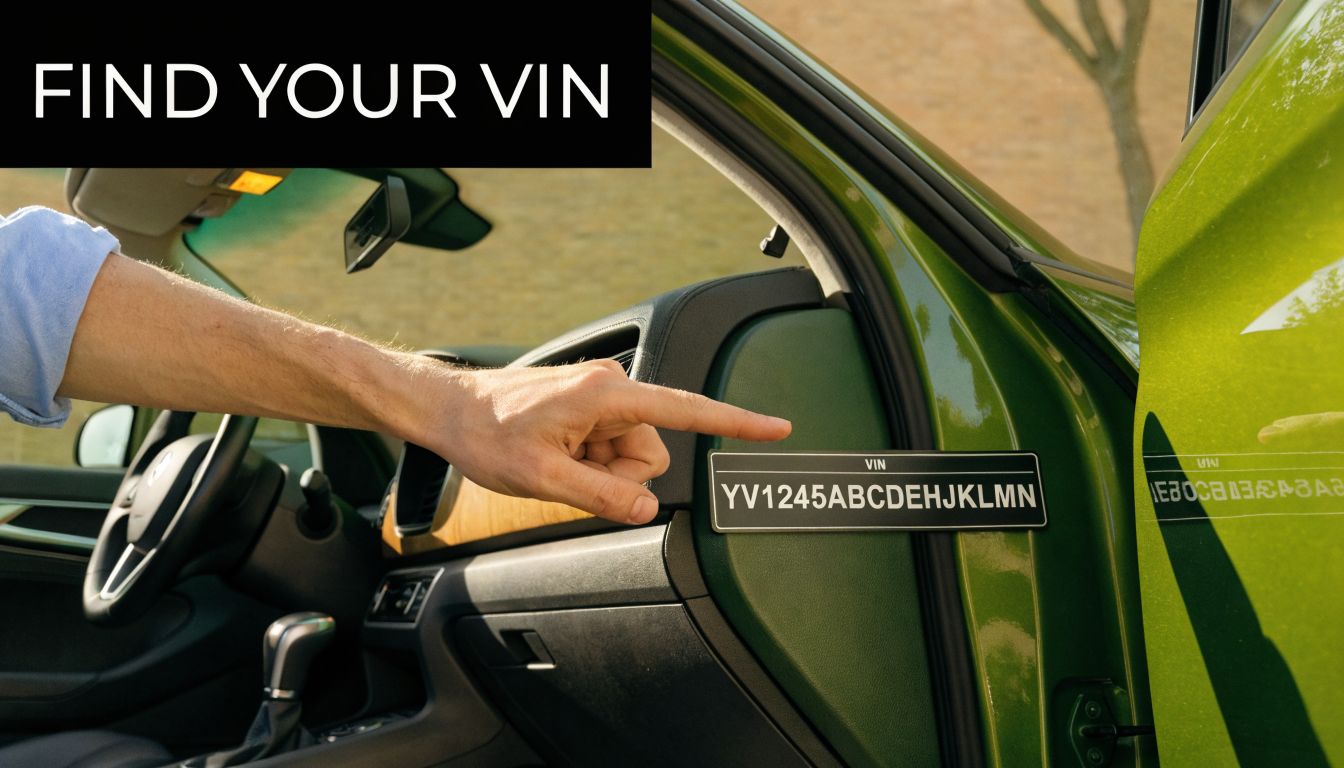
Start with the car, not the paperwork
After the dash plate, open the driver’s door and check the door jamb sticker. On many Volvos, this is the quickest clean read because the label is at eye level and usually includes manufacturing information alongside the VIN.
If I’m inspecting in person, I use this sequence:
- Windshield plate first so I know the car has a visible VIN where it should.
- Door jamb sticker second because it’s easy to compare and often easier to photograph.
- Paperwork last so I can see whether the documents match the vehicle, not the other way around.
For older models or unusual situations, you may also find VIN markings under the hood, such as on the firewall area. If something looks tampered with, scratched over, or reattached, slow down.
Check every document that matters
You also want the VIN from the vehicle’s supporting documents. Cross-check it against the car itself.
Look at:
- Title document: This is the ownership record that has to match the car exactly.
- Registration card: Useful for spotting clerical errors or mismatches.
- Insurance paperwork: Another place where an incorrect VIN can expose sloppy records or a bigger problem.
- Service invoices: Helpful for confirming the same car was serviced over time.
A one-character mismatch is not a “maybe it’s a typo” situation until it’s explained and documented.
If the VIN on the car and the VIN on the title don’t match, treat it as a fraud risk first and a paperwork mistake second.
If you want a quick refresher on how VIN characters are structured and why each position matters, this guide on VIN numbers explained and how to verify vehicle history is a useful companion before you run the full search.
Common mistakes when locating a Volvo VIN
First-time buyers make the same few errors over and over:
- Reading from photos only: Listing photos can hide glare, blur, or edited details.
- Checking only one VIN location: You need at least two physical matches on the vehicle when possible.
- Ignoring damaged labels: A missing or disturbed label deserves explanation.
- Rushing character entry: It only takes one wrong character to pull the wrong report.
When I’m on site, I take my own photos of each VIN location and the title. That gives me a clean record to compare later if the seller starts changing details.
Free Decoders vs a Full History Report
A free decoder has one job. It tells you what the Volvo was built as.
That’s useful. It can confirm the basic identity of the car, including the likely model year, engine configuration, and other factory-level details tied to the 17-character VIN. For the first pass, that’s enough to catch obvious listing errors.
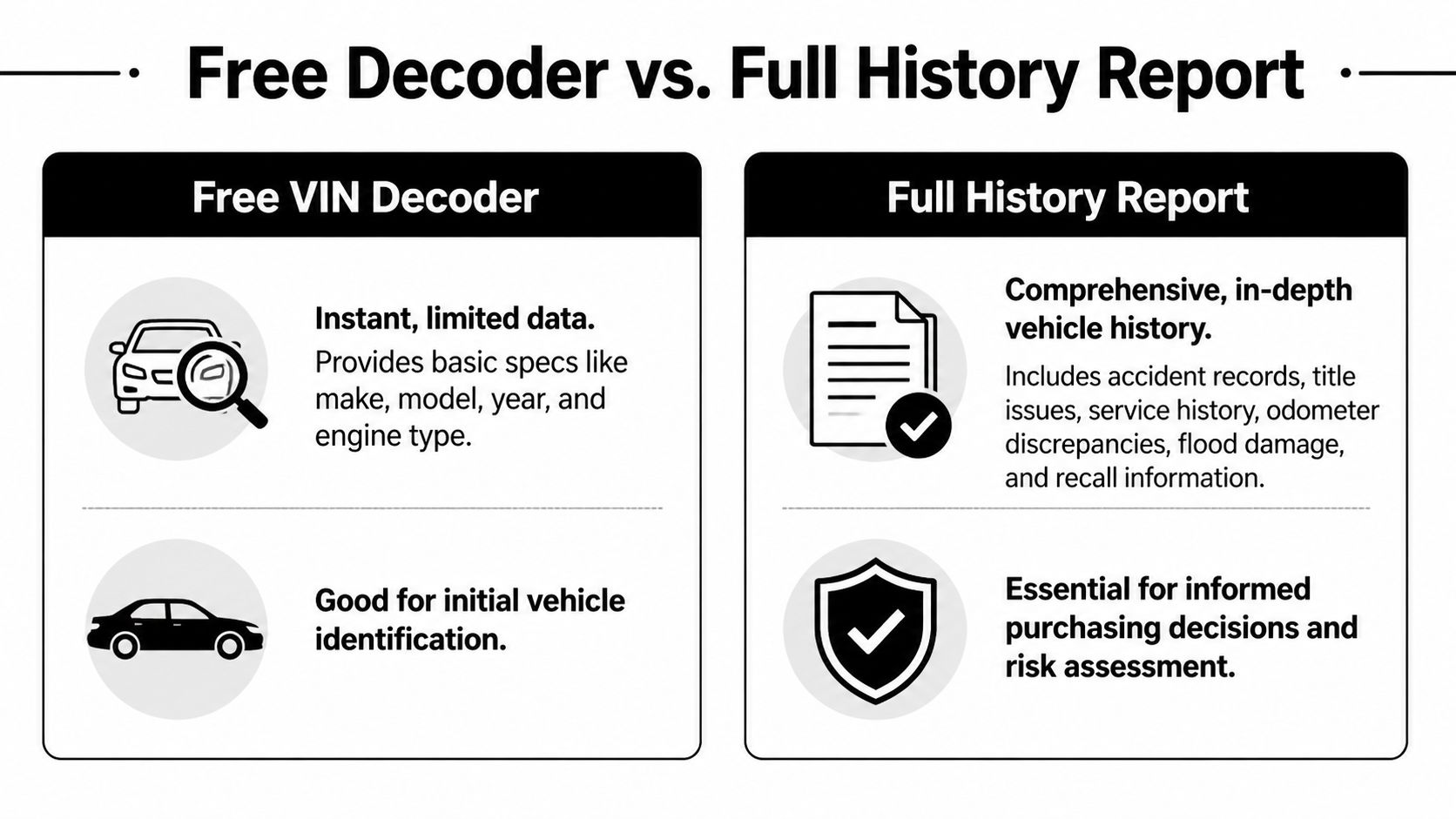
What a free decoder does well
Use a basic VIN decoder when you want to answer simple questions fast.
| Tool type | Good for | Not good for |
|---|---|---|
| Free VIN decoder | Confirming make, model, year, and build details | Evaluating risk, title history, theft exposure, accident patterns, or recall follow-up |
| Full history report | Reviewing records tied to ownership and vehicle events | Replacing a hands-on mechanical inspection |
That first layer matters because sellers do make mistakes. Sometimes it’s harmless. Sometimes a car is advertised as one trim or year and the VIN tells a different story.
What it misses is the expensive part
A decoder won’t tell you whether the Volvo has the kind of history that changes the buying decision.
Used Volvo buyers face real risk categories that basic decoding doesn’t cover. According to EpicVIN’s Volvo VIN decoder page, luxury Volvo SUVs like the XC90 are stolen at about 1.5 times the national average rate, and around 1,000 Volvos tied to a June 2025 brake recall remained unpatched as of 2025. Those are exactly the kinds of issues buyers need to verify before purchase, and a simple free decoder won’t surface them.
That’s the trade-off. Free tools are quick and useful for identification. They are not enough for decision-making.
When a full report becomes non-negotiable
If you’re serious about the car, move from decoding to history.
A full vehicle history report is where you look for:
- Accident records: Not just whether damage happened, but whether there’s a pattern.
- Title problems: Salvage, rebuilt, flood, or other branded status.
- Mileage consistency: Odometer entries should progress logically over time.
- Recall follow-up: Open recalls matter less than ignored recalls on a car that stayed in service.
- Ownership trail: Frequent changes can tell you a lot about how the car was treated.
For buyers comparing report providers, this breakdown of the best vehicle history report sites is useful because it frames the practical difference between raw data and decision-ready reporting.
A free decoder helps you identify the car. A full report helps you decide whether to buy it.
One option in this category is VekTracer, which provides VIN-based reports covering accident and damage history, mileage verification, title and lien status, theft records, recall alerts, and a Risk Score that summarizes overall risk in a single view. That kind of report is what I’d use once a Volvo passes the basic identity check.
Reading Your VekTracer Report Like an Expert
Most buyers make the same mistake after they pull a report. They skim it for a single disaster, don’t see one, and assume the car is clean.
That’s not how experienced buyers read history. The value is in the pattern.
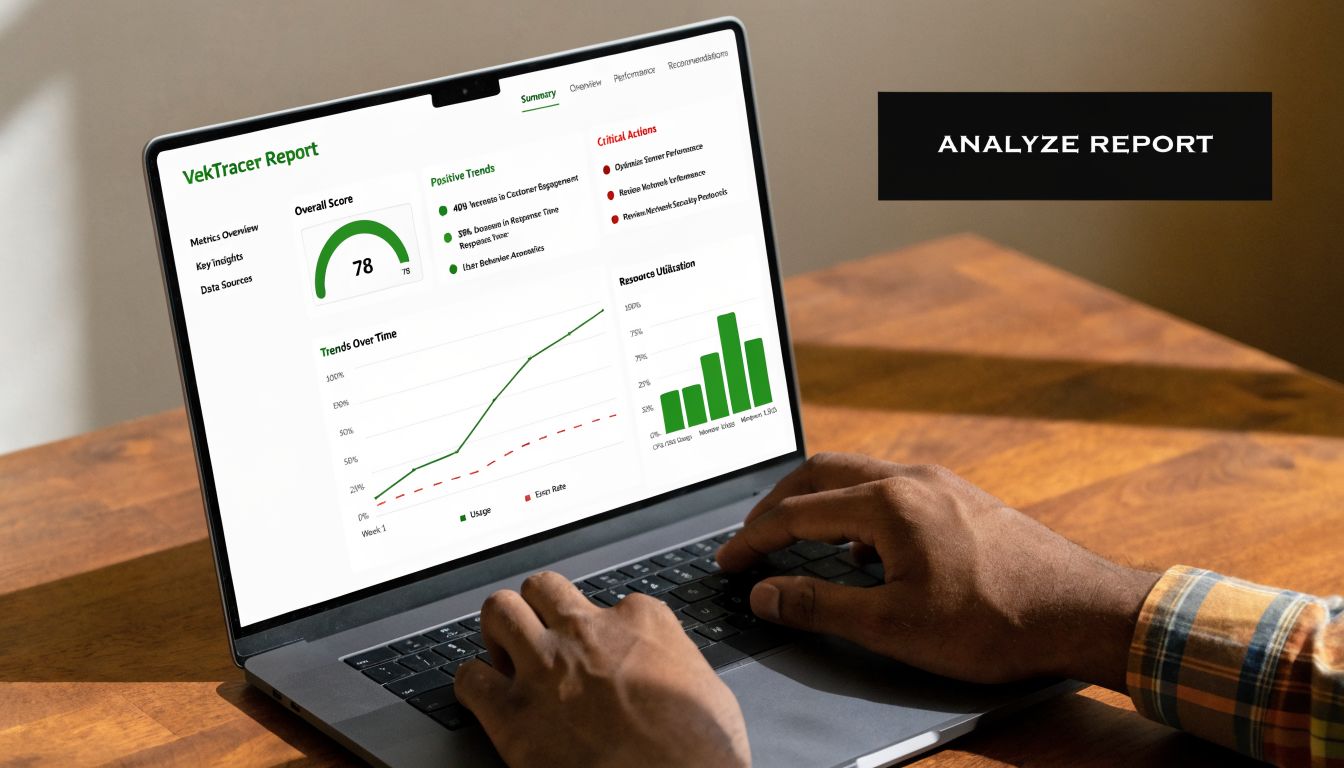
According to Volvo Cars Savannah’s guidance on verifying a used Volvo’s history, experienced analysts focus on accident severity, title brands such as salvage or rebuilt, odometer progression, number of owners, and unaddressed recalls. The same source notes that VekTracer’s Risk Score is built from this kind of multi-factor analysis rather than just presenting raw records.
Read accident history for pattern, not drama
A single accident entry doesn’t automatically kill the deal. The key question is what kind of event it was and what came after it.
Here’s how I read that section:
- One older minor incident with normal ownership afterward: Often worth investigating, not automatically rejecting.
- Multiple damage entries over time: Tells me the car may have been repeatedly repaired, neglected, or driven hard.
- Repeated bodywork records near a sale date: That can point to a repair-and-flip situation.
If the report suggests damage but the seller describes the car as “never touched,” I assume the history is more reliable than the pitch.
Title status tells you how hard to stop
Some report sections deserve interpretation. Title brands don’t. They deserve a firm reaction.
A salvage, rebuilt, or flood title changes the risk profile of the vehicle immediately. Even if the car now looks straight and drives fine, those brands can affect safety confidence, insurability, financing, and resale.
Shop-floor advice: If a title brand appears and the seller tries to talk you out of caring, walk away unless you already know how to value and inspect branded-title cars.
Odometer records should move like a timeline
Mileage history is one of the easiest places to catch a story that doesn’t add up.
You want to see a believable progression over time. If the odometer jumps backward, stalls for long stretches, or reappears later with odd gaps, that’s not something to shrug off. It may be rollback, record inconsistency, or a period where the car’s use wasn’t documented properly.
I also pay attention to whether service visits and mileage entries make sense together. A car can have low mileage and still be a bad buy if the timeline is messy.
Ownership and recalls complete the picture
Ownership count matters less than ownership behavior. A car that changes hands too often in a short span deserves extra scrutiny, especially if those transfers cluster around damage or title events.
Open recalls belong in the same risk conversation. A recall by itself doesn’t make the car bad. An unresolved recall on a car the owner is trying to unload quickly is different.
How to use the Risk Score correctly
The Risk Score is useful because it compresses a lot of records into one fast signal. It helps when you’re comparing cars and deciding where to spend your inspection time.
But don’t treat it like a magic answer. Use it as a summary, then verify the reasons behind it.
I read the score this way:
- Low apparent risk: Still inspect the car mechanically.
- Mixed score: Read the underlying records line by line.
- High risk signal: Assume there’s a reason, then find it before you spend another hour on the car.
The report isn’t there to replace judgment. It gives your judgment better inputs.
Spotting Red Flags and Hidden Risks in a Volvo's History
The obvious issues are easy. Most buyers know to worry about a salvage title or an accident entry.
The harder part is spotting combinations that hint at a bigger problem. That’s where a good volvo vin number search becomes more than a lookup and starts acting like a filter.
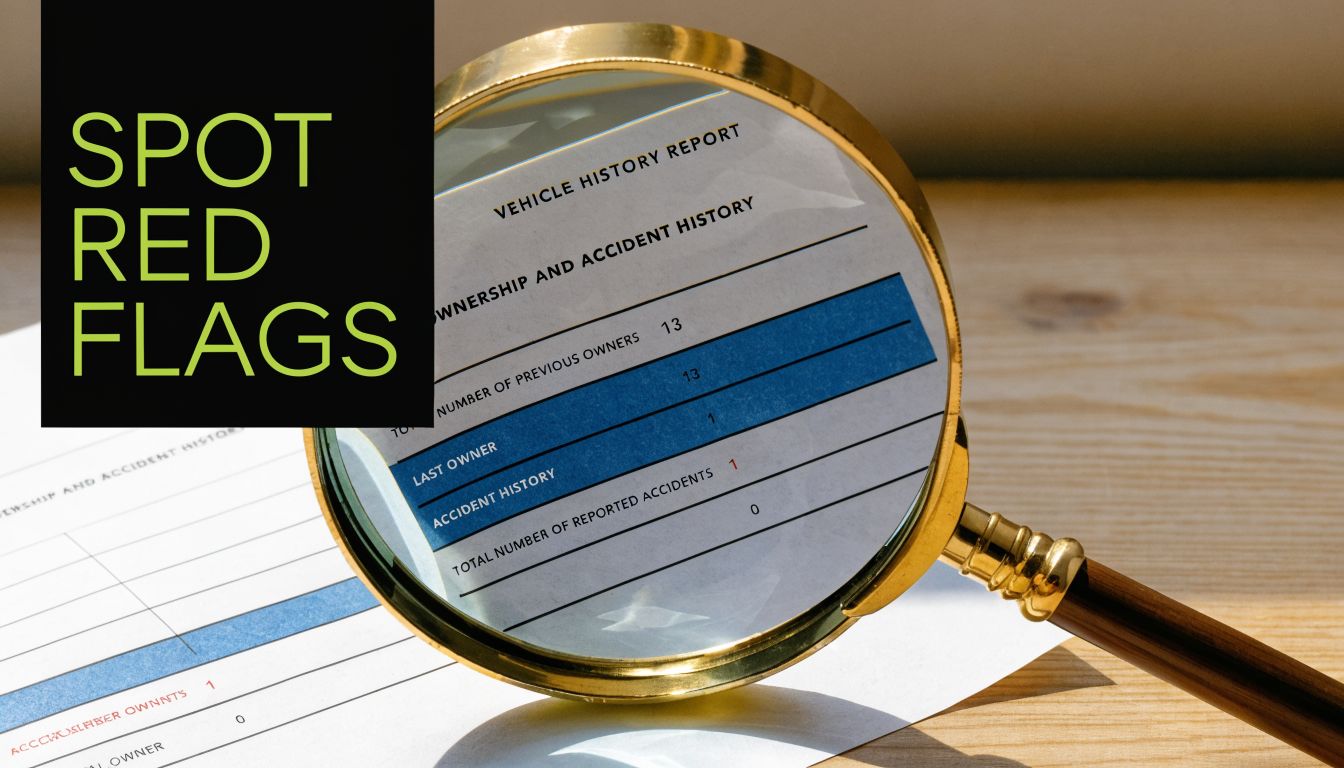
Red flags that need follow-up
I don’t just ask whether a report contains bad news. I ask whether the timeline behaves like a normal privately owned car.
Watch for combinations like these:
- Several owners in a short period: That can mean the car is being passed around because nobody wants to keep it.
- Frequent title transfers: Especially concerning when paired with damage history or thin service records.
- Body repair records without a clean explanation: Often worth matching against panel gaps, paint depth, and underbody inspection.
- Missing maintenance trail on a higher-mile vehicle: A Volvo can age well, but only if someone serviced it.
- Long gaps in the record: Sometimes harmless. Sometimes where the important part of the story went missing.
One of the most overlooked issues is geography. A car can live more than one life.
According to vindecoder.eu’s notes on Volvo VIN verification gaps, many VIN tools don’t properly address cross-border history, even though a vehicle’s title, accident records, and mileage trail can span markets such as the U.S. and Canada. That matters because a one-country search can leave you with a partial story.
What cross-border movement can mean
A Volvo moving between jurisdictions isn’t automatically a problem. Plenty of legitimate cars cross borders.
The issue is that title treatment, accident reporting, and mileage documentation can vary by region. If the car’s manufacturing origin, registration history, and current market don’t line up neatly, I want stronger documentation.
This is especially important if you’re trying to rule out mileage issues. A guide on how to check for odometer rollback is worth reading if the entries look irregular or incomplete.
Missing data can be a clue, not just an inconvenience. If a seller can’t explain the gaps, assume you’re the one taking the risk.
A simple investigator’s checklist
When I review a used Volvo’s history, I ask:
- Does the ownership pattern feel stable?
- Do mileage entries rise in a believable way?
- Do service records support the age and use of the car?
- Did the car move across jurisdictions, and if so, is the record still coherent?
- Does the seller’s story still hold up after the report?
If too many answers are fuzzy, I don’t try to rescue the deal. I move on.
Your Next Steps After the VIN Search
A VIN report doesn’t tell you to buy the car. It tells you what to do next.
I look at the outcome in three buckets. That keeps the decision clean and stops buyers from drifting into “maybe it’s fine” territory.
If the report is clean
A clean-looking history means the car has earned the next step, not that it has passed every test.
Book a pre-purchase inspection with a mechanic who knows European cars or at least sees them regularly. Ask for a proper underbody check, evidence of previous repair work, suspension condition, brakes, leaks, warning lights, and signs of neglected maintenance. On a Volvo, I want the mechanical inspection to confirm the history, not replace it.
If the report shows minor issues
Buyers can get sloppy here. Minor doesn’t mean irrelevant.
A cosmetic accident, a short service gap, or a recall that can be resolved may still leave the car worth buying. But now you have facts to discuss with the seller. Ask for invoices, body shop paperwork, and proof of repair. If the answers are thin, the price should reflect that uncertainty.
Use the report to negotiate calmly:
- Ask for documentation: Sellers who repaired the car properly usually have paperwork.
- Price the uncertainty in: If you can’t verify the issue fully, don’t pay clean-history money.
- Keep the inspection scheduled: Minor history still deserves a mechanic’s eyes.
If the report shows major red flags
This is the easiest decision and the one buyers struggle with most.
If the VIN search points to title branding, suspicious mileage behavior, identity mismatch, or a history that doesn’t reconcile, walk away. Don’t get pulled in by a nice interior, a polite seller, or the idea that you’ve already spent time on it.
The smartest used-car decision is often the one that saves you from buying the wrong car, not the one that helps you justify buying it.
The final buying sequence
If I were guiding a first-time buyer through the finish line, the order would be:
- Confirm the VIN on the car and paperwork
- Run the history report
- Question every inconsistency
- Get a pre-purchase inspection
- Negotiate only after the facts are clear
- Walk if the story still doesn’t hold together
That process works because it removes guesswork in the right order. You don’t need to know everything about used Volvos. You need a repeatable method that keeps you out of bad deals.
Frequently Asked Questions About Volvo VIN Checks
What if the VIN on the car doesn’t match the title?
Stop the deal until the mismatch is fully explained and documented. A VIN mismatch can point to paperwork error, clerical sloppiness, or fraud. As a buyer, you should treat it as a major warning sign.
Can a Volvo VIN search show the previous owner’s personal details?
No. A VIN search can reveal vehicle-related records such as title events, mileage entries, and accident history, but it won’t give you private personal information about prior owners.
Is a basic VIN decoder enough before buying a used Volvo?
It’s enough for the first identity check. It isn’t enough to evaluate purchase risk. A decoder can help confirm build details, but you need a full history report if you want to review accident records, title issues, theft-related concerns, mileage consistency, and recalls.
Should I worry if the Volvo was registered in more than one state or province?
Not automatically. The concern is whether the history still makes sense across those jurisdictions. If records go thin, dates don’t line up, or mileage becomes inconsistent after the move, investigate further.
Can a VIN search confirm whether a Volvo from Canada or the U.S. is safe to buy?
It can help, but only if the report handles cross-border history well enough to show title, mileage, and accident information across jurisdictions. Imported and mixed-market vehicles need extra scrutiny because one-market tools may miss part of the record.
Does a clean VIN report mean I can skip a pre-purchase inspection?
No. A clean report means the car is worth inspecting, not that it’s mechanically verified. History reports and mechanical inspections do different jobs, and you want both before you commit.
If you’re down to two or three used Volvos and want a cleaner decision, VekTracer can help you move from raw VIN data to an actual buying call with vehicle history reports, mileage verification, title checks, recall alerts, and side-by-side comparison tools.
Ready to check a vehicle?
Enter any 17-character VIN for a free instant preview — no account needed.