Rivian VIN Decoder: A Buyer's How-To Guide
Check a vehicle before you buy
Enter a VIN for a free instant preview — accidents, title brands, mileage, liens & open recalls.
Use a 17-character Rivian VIN to confirm what the vehicle is before you buy it. Find the VIN on the windshield or driver's door jamb, decode it to verify the specs and build details, then use that same VIN for a history check so you're not relying on the listing alone.
A lot of used Rivians look clean online. Sharp photos, low mileage claims, maybe a seller who sounds knowledgeable. Then you get there and realize the primary task isn't admiring the truck or SUV. It's verifying whether the vehicle in front of you is the same one being advertised, with the same configuration, the same paperwork, and no ugly surprises hiding behind a “clean” story.
That's where a rivian vin decoder earns its keep. On older brands, VIN checks are routine. On Rivian, they're even more useful because the brand's configurations have evolved quickly, and early VIN decoding history already showed how much detail the code could reveal. Reporting on Rivian's VIN deciphering document in the NHTSA database noted that early deliveries were labeled as 2022 model-year vehicles and that both quad-motor and dual-motor options appeared in the VIN logic, even while public marketing focused on quad-motor at the time, as covered by Electrek's reporting on Rivian's VIN decoder release.
Your Guide to Vetting a Used Rivian
Say you've found a used R1T or R1S that seems right. The color works, the price is close enough, and the seller says it's exactly the trim and drivetrain you want. Before you discuss charging habits, tire wear, or cosmetic flaws, check the VIN.
A Rivian VIN isn't just a serial tag. It's the backbone of the vehicle's identity. If the decode doesn't match the listing, that's your first warning. If the VIN on the truck doesn't match the title, registration, or insurance card, that's a bigger warning.
Used EV buyers often focus on battery questions first. That makes sense, but it can distract from more basic verification. You need to know whether the vehicle is the model year, motor setup, and factory build the seller claims.
The VIN should confirm the vehicle before the vehicle earns your trust.
On a newer brand like Rivian, that matters even more. Product configurations have shifted, trims have expanded, and some older decoder pages still simplify what newer VIN positions can show. A proper VIN workflow helps you separate launch-era vehicles from newer configurations and catch listing errors before you waste time on a pre-purchase inspection.
The smart order is simple:
- Find the VIN on the vehicle
- Match it across documents
- Decode the VIN
- Run a full history report
- Inspect the car with the decoded facts in hand
That sequence works for private-party deals, dealer inventory, and trade-in evaluation.
How to Locate and Read the Rivian VIN
The first task is physical, not digital. You need the exact VIN from the vehicle itself, not a screenshot from an ad.
Where to look first
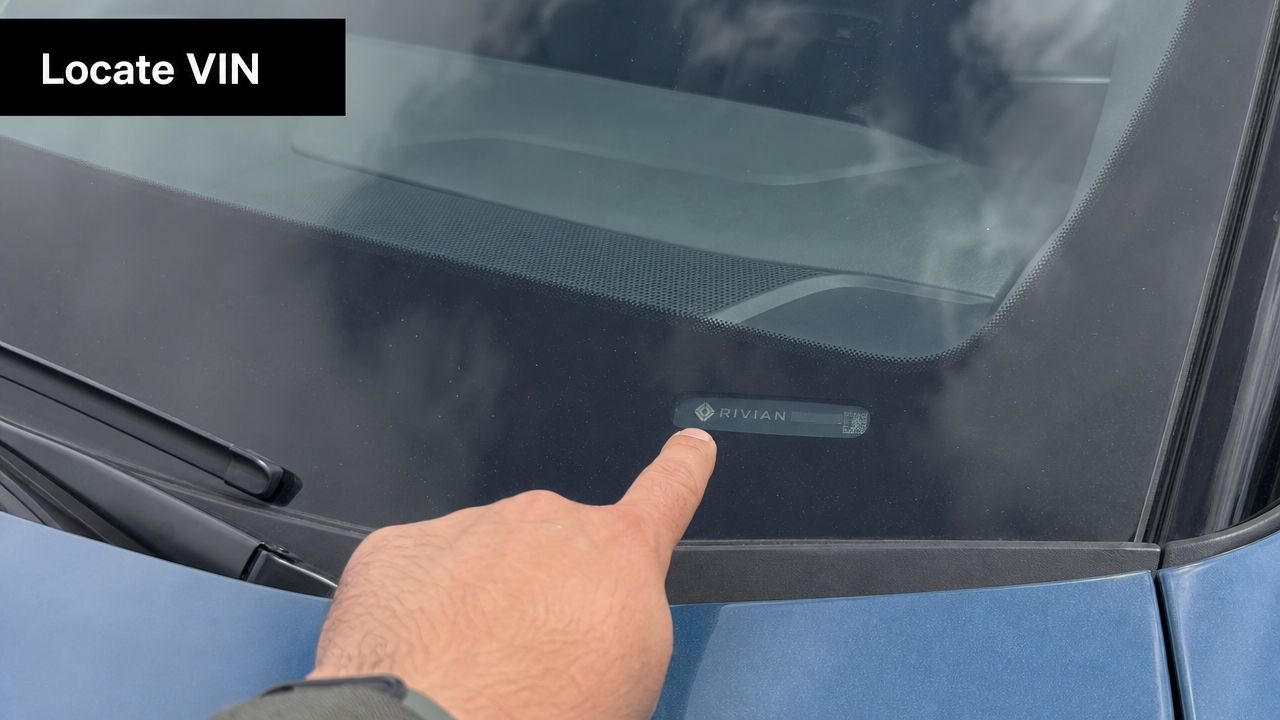
Start at the lower corner of the dashboard visible through the windshield. That's the quickest place to check when you're standing outside the vehicle. Then open the driver's door and check the door jamb label.
After that, compare the VIN on the vehicle to the VIN shown on the title, registration, and insurance paperwork. If you're shopping remotely, ask the seller for photos of both physical VIN locations, not just a typed VIN in a message.
What the 17 characters mean
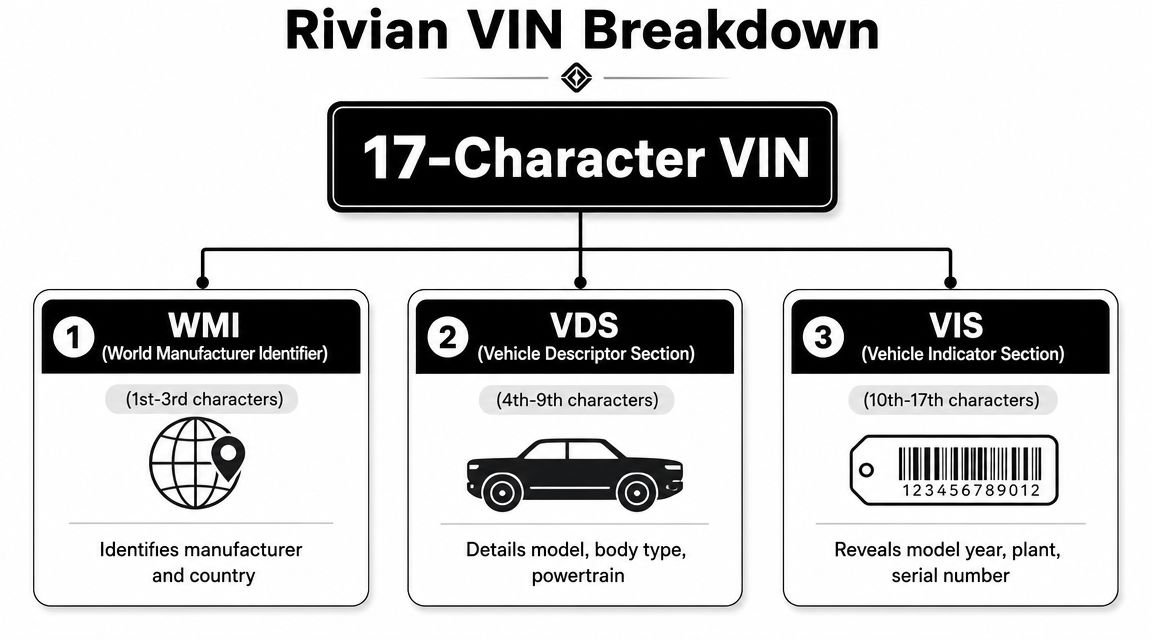
Rivian uses the global 17-character VIN format used to uniquely identify vehicles manufactured after 1980, according to ClearVin's Rivian VIN structure guide. In that format, the first 3 characters are the World Manufacturer Identifier, characters 4–8 are the Vehicle Descriptor Section, the 9th is the check digit, the 10th typically encodes model year, the 11th identifies the assembly plant, and characters 12–17 are the serial number. That same source notes the 11th character is often “N” for Normal, Illinois on many Rivians.
If you want a broader primer on how VIN logic works across brands, this guide on what VIN decoding means for smarter car buying is a useful companion.
The fraud check most buyers skip
A surprising number of people decode a VIN from the listing and stop there. That's not enough. You need to confirm the same VIN appears in every physical and document location you can access.
Use this quick checklist on-site:
- Windshield match: Confirm the VIN plate viewed through the windshield matches what the seller sent in the ad.
- Door jamb match: Confirm the driver's door label shows the same VIN.
- Paperwork match: Compare title, registration, and insurance documents against the vehicle itself.
- Character check: Look carefully for mistyped characters when the seller messages the VIN manually.
- Consistency check: If one digit is off anywhere, pause the deal until you know why.
Practical rule: Never run a history report on a VIN you haven't physically matched to the vehicle.
That step helps catch basic errors and more serious problems, including swapped tags or cloned identities. It also saves you from evaluating the wrong vehicle history report.
What a Decoded Rivian VIN Actually Tells You
Once the VIN is verified, the decoder turns that string into usable buying information. At this stage, the Rivian VIN becomes more than paperwork.
The details that matter in a real purchase
A good decode helps you confirm core identity points such as the vehicle's make, model, year, drivetrain, and build location. In practice, that means you can check whether the online listing matches the Rivian in front of you.
For buyers, that usually answers questions like these:
- Is it the R1T or R1S the seller claims?
- Does the model year align with the paperwork and listing?
- Does the drivetrain match the advertised motor setup?
- Does the build information fit what you'd expect from that vehicle?
Used listings often compress details; sellers may shorten trim names, copy specs from another listing, or misunderstand what they own.
Why newer Rivians need better decoding
Rivian configuration logic has become more nuanced. As of 2025, the 6th VIN character can distinguish Quad-Motor AWD, Dual-Motor AWD, and Tri-Motor AWD, while the 8th character can indicate trims such as Adventure, Entry, and Premium, according to GoodCar's Rivian decoder reference.
That's a practical issue in the used market. Many shoppers assume the listing tells the full story. Sometimes it does. Sometimes it doesn't. Older decoder pages may still rely on simplified mappings, which can leave buyers with an incomplete picture of what they're comparing.
Here's where a decode helps most:
| What you're checking | Why it matters |
|---|---|
| Motor configuration | Performance expectations and resale comparisons change with drivetrain |
| Trim identification | Features and market positioning can differ across trim levels |
| Model year | Early-production context can affect how you evaluate the vehicle |
| Plant code | Useful for confirming build details against the seller's claims |
What decoding does well, and what it doesn't
A VIN decode is excellent at confirming factory identity. It tells you what the vehicle was built as. It does not tell you what happened after delivery.
That distinction matters with premium EVs because buyers often assume correct specs equal a safe buy. They don't. A Rivian can decode perfectly and still carry accident history, title problems, theft records, or unresolved recalls.
A decoded VIN tells you what the Rivian started life as. It doesn't tell you how it was treated.
Use the decode to challenge the listing. If the seller says one thing and the VIN says another, trust the VIN first and ask harder questions.
Go Deeper with a Comprehensive Vehicle History Report
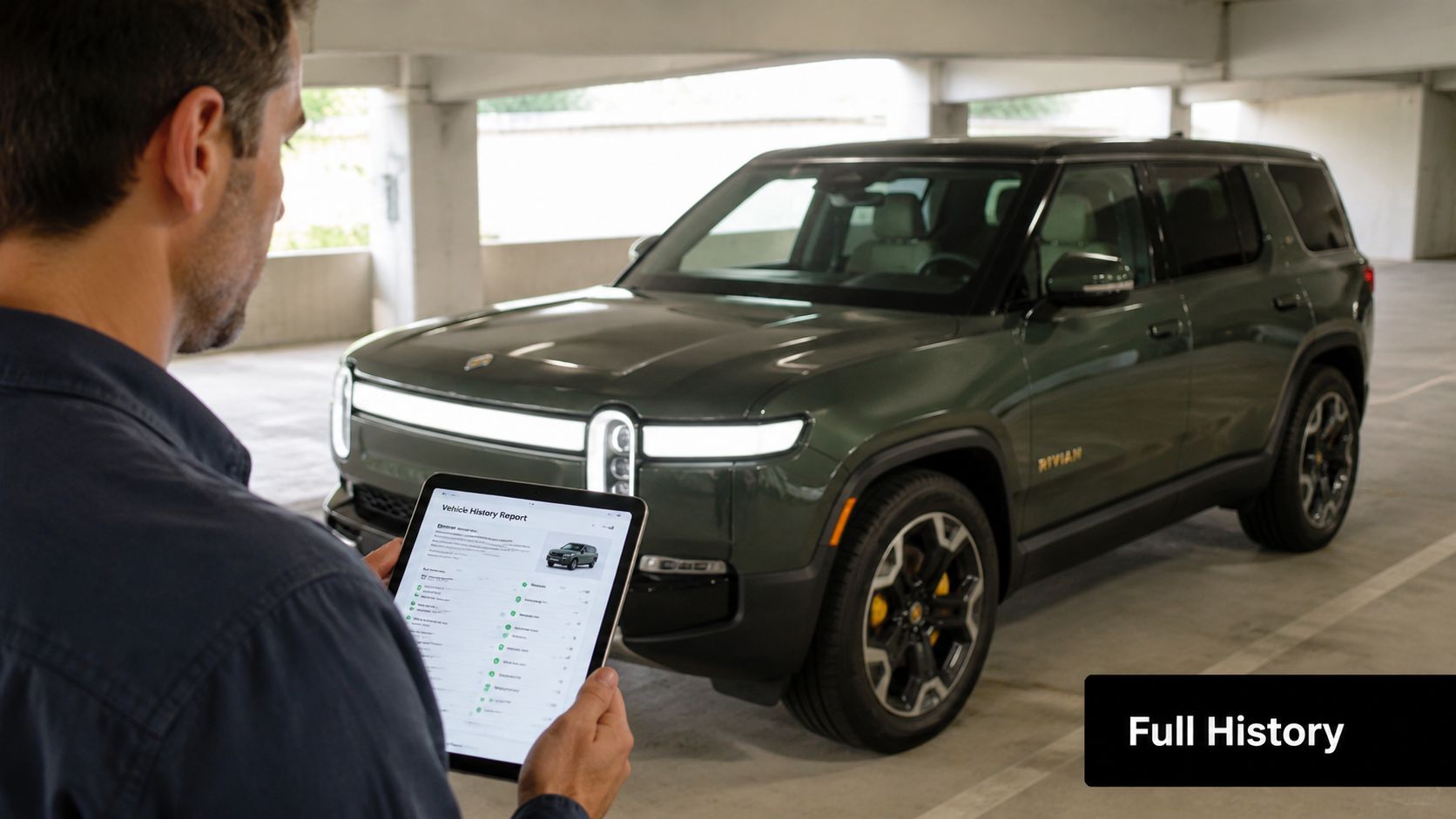
A basic decode verifies identity. A vehicle history report tells you whether that identity has baggage.
Why the decode alone isn't enough
This is the mistake I see most often. A buyer runs the VIN through a decoder, sees the right model and year, and feels reassured. But the decode only confirms the structure and embedded factory details.
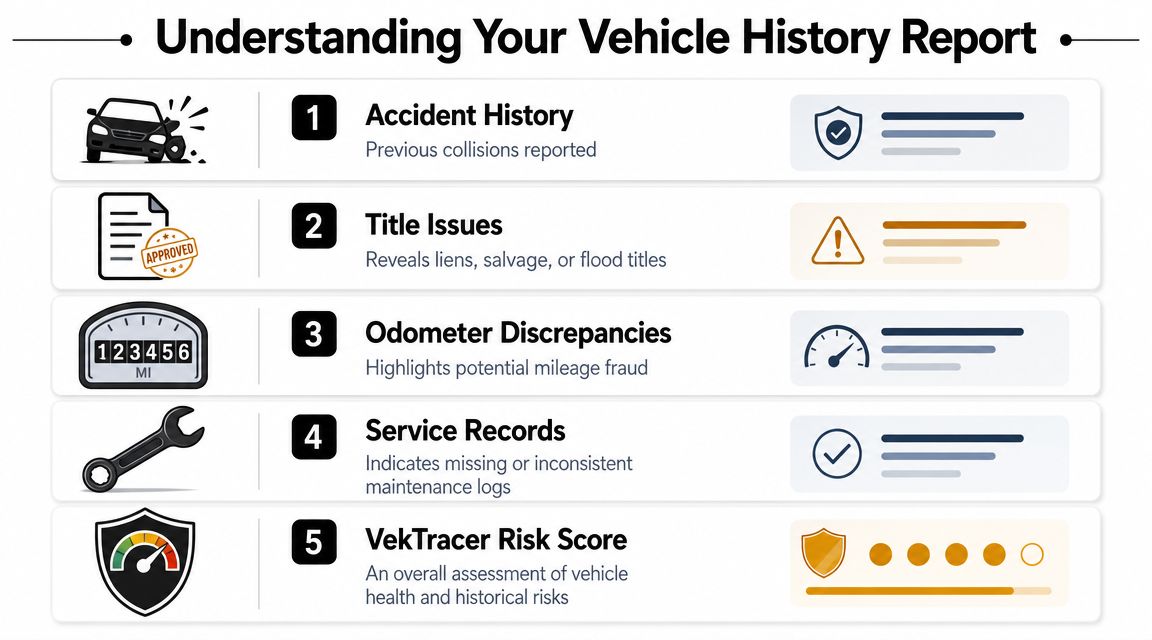
The higher-value part of VIN-based research is risk screening. According to iSeeCars' Rivian VIN guide, thorough VIN-linked checks can surface accident history, title brands such such as salvage, flood, and junk, theft checks, lien history, odometer anomalies, and open recalls. The same guidance warns that a “clean” decode does not mean a clean history.
That's the turning point in the buying process. If you stop at decoding, you've verified what the vehicle is. You still haven't verified what happened to it.
What to pull before money changes hands
For a used Rivian, I'd want the history review done before any deposit becomes non-refundable. Focus on the categories that change risk, insurability, and resale.
Look for these items first:
- Accident records: Not every accident is a deal breaker, but the report should match the seller's story.
- Title brands: Salvage, flood, or junk history changes the whole conversation.
- Theft checks: Identity problems can turn into ownership problems fast.
- Lien history: You don't want to discover someone else still has a legal claim on the vehicle.
- Open recalls: A Rivian can still have unrepaired safety issues even if it presents well in person.
- Odometer anomalies: Mileage inconsistencies deserve immediate scrutiny.
A simple workflow that works
Here's the order I recommend for private-party and dealer purchases:
- Decode the VIN to confirm the vehicle's basic identity.
- Match the VIN physically on the windshield and door jamb.
- Compare documents against the vehicle.
- Run the full report and read every flag, not just the summary.
- Use the report in the walkaround so you know what to inspect closely.
If you want to know what a report should look like before you buy one, review a sample vehicle history report layout.
For buyers shopping across regions, it also helps to choose the right report path based on market:
- U.S. shoppers: Start with a proper VIN check USA tool when the vehicle has U.S. registration history.
- Canadian shoppers: Use a VIN check Canada lookup when the Rivian has crossed into or lived in the Canadian market.
- Comparison shoppers: If you're weighing providers, this breakdown of Carfax comparison options is worth reviewing before you pay for reports.
What buyers get wrong in EV deals
Rivian buyers sometimes over-focus on charging speed, range assumptions, and option packages while under-checking history. That's backwards in a used transaction. Identity first. History second. Mechanical and EV-specific inspection third.
A clean vehicle history report doesn't replace a physical inspection. It tells you where to concentrate that inspection. If the report shows an accident, check panel fit, underbody condition, and repair quality more aggressively. If the report shows title or lien complexity, slow the paperwork process down until everything is clear.
How to Interpret Red Flags and the VekTracer Risk Score
Getting a report is easy. Reading it with discipline is the part that saves you money.
Which findings should stop you cold
Some report entries are negotiation points. Others are reasons to walk away unless the explanation and supporting paperwork are unusually strong.
Treat these as major warnings:
- Flood title or flood branding: Water damage can create electrical issues that don't show up in a quick test drive.
- Salvage or junk history: Insurance and resale can become much harder, even if repairs look decent.
- Theft record mismatch: Ownership questions aren't worth trying to untangle on your own.
- Odometer inconsistency: If mileage records don't line up, trust the discrepancy, not the seller's guess.
- Open recalls with no repair follow-up: Safety work still needs resolution.
A smaller accident on its own isn't the same as a branded title. That's why context matters. You're not looking for perfection. You're looking for manageable risk that matches the price and the seller's disclosure.
Read the report like a buyer, not a browser
History reports are often skimmed. Don't. Slow down and compare the findings against the actual vehicle and sales pitch.
Use this approach:
| Report item | What to ask |
|---|---|
| Accident entry | Where was the damage, and does repair quality support the seller's story? |
| Title issue | Is this a paperwork problem, or a permanent branding issue? |
| Lien record | Has it been released, and can the seller prove that? |
| Recall entry | Was the repair completed, and is there documentation? |
| Mileage inconsistency | Is there a clerical explanation, or does the timeline look wrong? |
If the report and the seller tell different stories, assume the report is closer to the truth until documents prove otherwise.
Using the Risk Score without outsourcing your judgment
VekTracer includes a Risk Score on a 1-100 scale that gives buyers an at-a-glance view of overall vehicle risk. That's useful because not every buyer has the time or experience to weigh title records, accident history, theft checks, and mileage signals equally.
The score shouldn't replace your judgment. It should speed up the first pass. If you're comparing several used Rivians, a single scoring framework helps you decide which one deserves a serious inspection first.
You can pair that with side-by-side evaluation tools too. When you're torn between multiple Rivians, a compare view is often more useful than reading separate reports in isolation. The better question isn't “Is this Rivian okay?” It's “Which of these Rivians carries the least risk for the money?”
For a stronger foundation on report reading, this guide on how to read a VIN report and buy smarter walks through the logic in buyer-friendly terms.
Final Checks for Savvy Buyers and Dealers
Once the VIN decode and history report line up, you're ready for the part many people mistakenly do first: the hands-on inspection and deal decision.
For buyers, the next move depends on what the report shows. If the decode matches the listing, the documents match the vehicle, and the history report doesn't raise serious issues, move to a pre-purchase inspection. If the report shows damage history, unresolved recalls, title branding, or documentation gaps, either negotiate from those facts or leave the deal alone.
A simple buyer decision tree works well:
- Clean identity, acceptable history: Proceed to inspection and final pricing.
- Manageable issues, fully disclosed: Price the risk in and verify repairs.
- Major red flags or inconsistent story: Walk away.
Dealers can use the same process in reverse. A clean report supports credibility because it answers the buyer's first trust question before they ask it. If inventory has history issues, better to disclose them clearly and price accordingly than let the customer discover them mid-deal.
The VIN should shape the transaction, not just decorate the paperwork. On a used Rivian, that single code helps you confirm identity, uncover risk, and avoid buying the wrong story.
Frequently Asked Questions about Rivian VIN Checks
Can a Rivian VIN tell me the exact motor setup?
Often, yes. Recent decoder guidance notes that as of 2025 the 6th VIN character can distinguish Quad-Motor AWD, Dual-Motor AWD, and Tri-Motor AWD, so it can be useful for sorting newer configurations. You still need a reliable decoder because simplified tools may not reflect newer Rivian combinations accurately.
Does a clean VIN decode mean the Rivian has never been damaged?
No. A clean decode only confirms identity and factory-encoded details. You still need a full vehicle history report to check accident records, title issues, theft checks, lien history, recalls, and mileage concerns.
Where should I compare the VIN on the vehicle?
Check the windshield VIN plate, the driver's door jamb label, and the official paperwork. If one location doesn't match the others, stop and resolve that before going further.
Is the assembly plant visible in the VIN?
Yes. The 11th character identifies the assembly plant, and independent decoder guidance notes that for many Rivians it is often “N” for Normal, Illinois.
Should I run a VIN check before a test drive?
Yes. It's better to confirm identity and pull history first, especially if you're traveling to see the vehicle or dealing with a seller you don't know.
A smart Rivian purchase starts with the VIN and gets much safer once you add a full history report. If you want a fast way to review accident history, title and lien records, theft checks, recalls, mileage signals, and a simple Risk Score before you commit, VekTracer is built for that job.
Ready to check a vehicle?
Enter any 17-character VIN for a free instant preview — no account needed.