How to Negotiate Car Price Online: Your 2026 Guide
Check a vehicle before you buy
Enter a VIN for a free instant preview — accidents, title brands, mileage, liens & open recalls.
Successfully negotiating a car price online comes down to a three-part process: set a target out-the-door price using market research and a vehicle history report, contact multiple dealers for competing quotes, and use the car's specific issues plus rival bids to push the price down before you ever visit the store. Buyers who handled the final price online spent 45 minutes less at the dealership and reported higher satisfaction, yet less than 10% of new-car buyers negotiated the final price online and only 5% completed all required paperwork online.
You've probably done the part most buyers already do. You found the car online, compared listings, maybe checked photos three times, and now you're stuck at the point where the process usually gets annoying. The dealer wants you to “come in and talk numbers.” That's where many buyers lose control.
The better move is to make the negotiation happen in writing. Email and chat strip out a lot of the pressure, but they only work if you bring facts. Generic messages like “What's your best price?” don't get strong results. A documented case does.
When you know how to negotiate car price online, you stop sounding like a casual shopper and start sounding like a buyer who's ready to close if the numbers make sense.
The Untapped Advantage of Online Negotiation
Checking a specific vehicle?
Run its VIN for a free preview of accidents, title brands, mileage and open recalls.
You can buy a car from your couch and still get trapped in an old-school dealership negotiation if you let the process drift offline too early. That's the primary advantage here. Online negotiation lets you slow the conversation down, compare offers side by side, and keep every promise in writing.
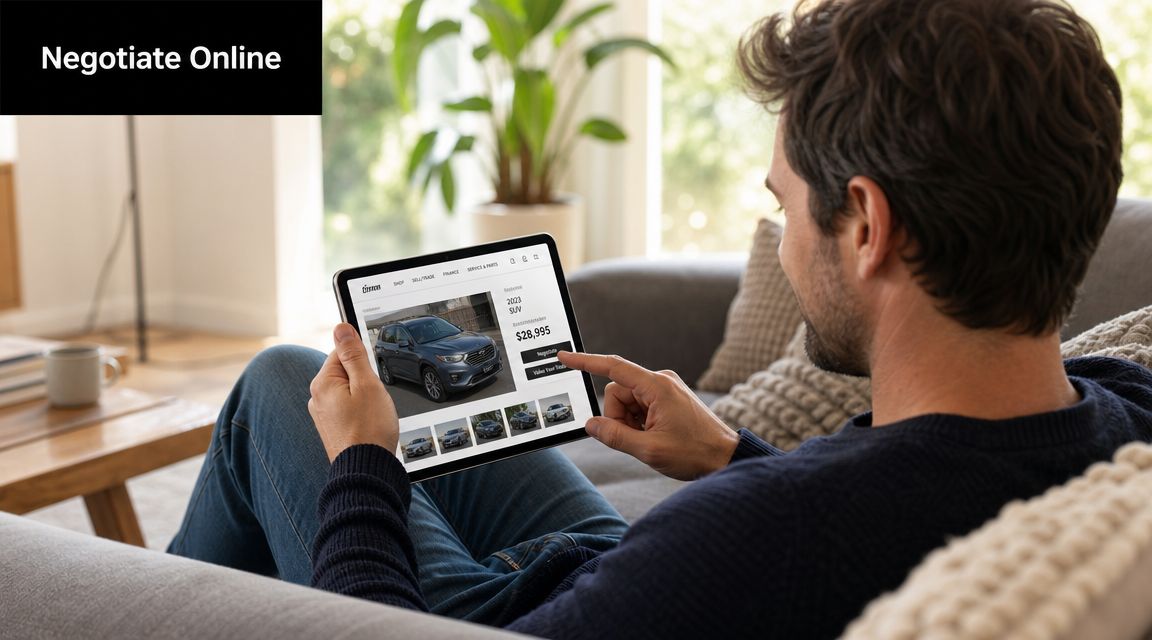
A Cox Automotive industry study found that buyers were already spending 61% of their shopping time online, up from 57% two years earlier. But the same study found that less than 10% negotiated the final price online, and only 5% completed all required paperwork online. That gap matters. It means most shoppers do the research online, then walk into the one part of the deal where the dealer has the most control.
Why this method works better in practice
Online negotiation works because it changes the battleground.
In person, sales staff can redirect the conversation toward monthly payment, trade-in value, urgency, and emotion. In writing, you can stay narrow. You can ask for one number, reject fluff, and compare responses line by line. That's harder for a dealer to manage.
The other reason it works is that email creates a natural paper trail. If a store agrees to a price, includes a fee, or confirms a condition, you have it. That alone cuts down on a lot of “misunderstandings” later.
Practical rule: If a dealership won't discuss numbers by email or text, that's useful information. It usually means they want flexibility more than transparency.
What most buyers get wrong
A lot of people assume online negotiation means throwing out a low number and hoping someone bites. That's not negotiation. That's guessing.
Strong online buyers do three things differently:
- They target a specific vehicle. VIN, stock number, exact trim, actual listing.
- They ask for an all-in number. Not a payment quote. Not “internet price.” The full out-the-door total.
- They come prepared with strong negotiating points. Competing listings, rival quotes, and issues tied to that exact car.
That last part is where this guide gets more useful than generic advice. A vehicle history report can turn a vague “I want a discount” into a specific case the dealer has to answer.
Building Your Negotiation Toolkit Before Contact
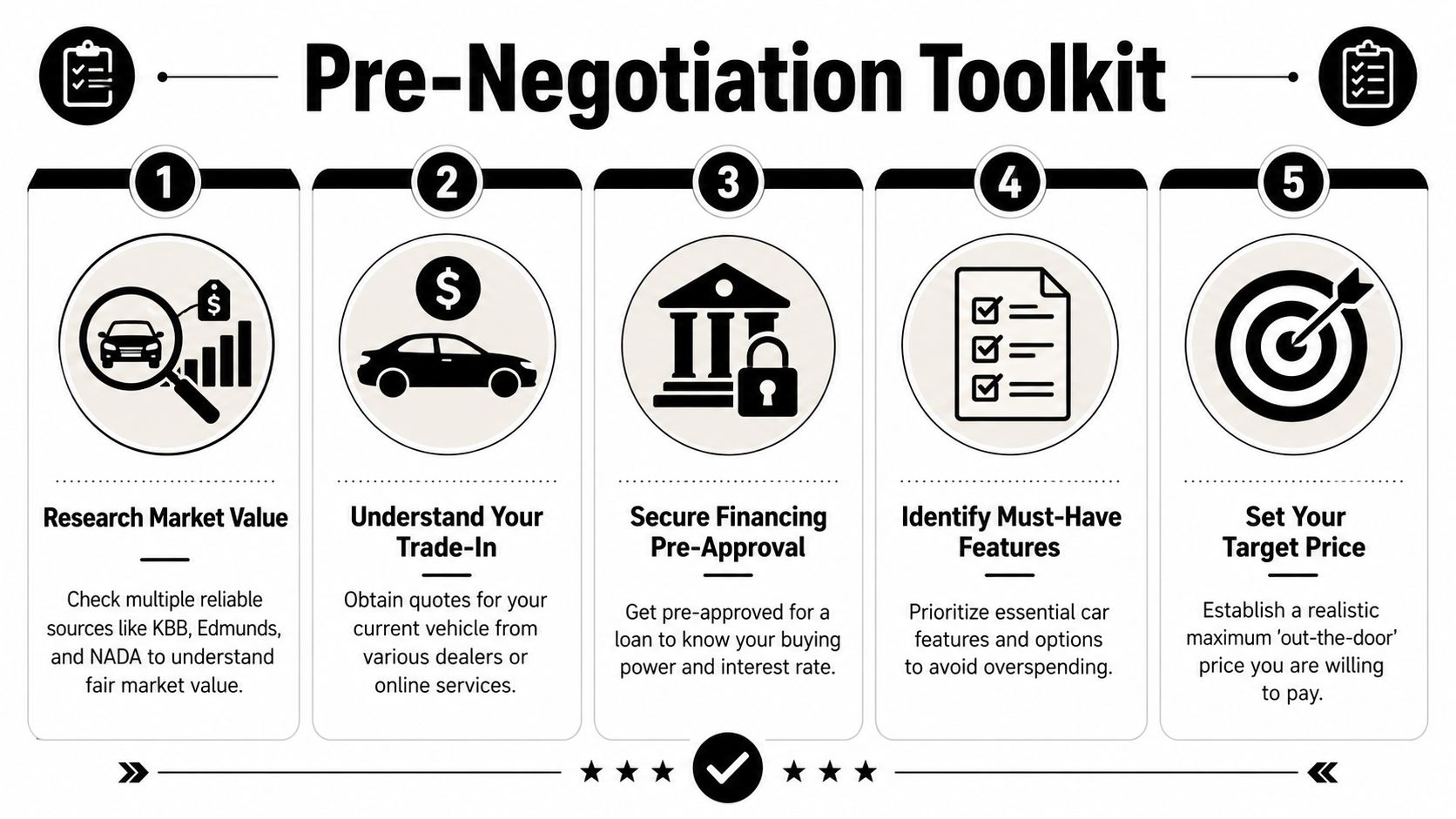
Most price negotiation is won before the first message goes out. If you contact a dealer without a target number and without a strong bargaining position regarding that exact vehicle, you're asking them to educate you while they sell to you. Bad position.
Start with the car, not the dealer
Pick one exact vehicle first. Don't begin with “I'm looking for a midsize SUV.” Begin with a VIN or stock number and verify that the listing matches the trim, mileage, options, and condition you want.
Then collect 2–3 comparable vehicles. JD Power's guidance on negotiating online emphasizes starting with a specific vehicle and gathering 2–3 comparable quotes before asking for an out-the-door price. That gives you a clean comparison set instead of a loose shopping list.
Use that comparison group to build your own realistic target. The number you care about is the maximum out-the-door price you're willing to pay, not the asking price on the listing.
Use the vehicle history report as negotiation ammo
Buyers either gain an edge or lose it.
A vehicle history report isn't just for deciding whether to walk away. It's also for deciding how much less the car is worth to you. That distinction matters. Many cars with minor issues are still buyable. They just aren't worth clean-car money.
Look for points of influence, such as:
- Accident history: Even minor damage affects desirability and resale in the eyes of many buyers.
- Open recalls: A recall doesn't always kill a deal, but it's a valid point when you're asking why the car should command a full-market price.
- Title issues: Any title brand or irregularity changes the conversation immediately.
- Mileage inconsistencies: Odometer concerns deserve a much tougher stance.
- Lien or ownership concerns: You want these clarified before price talks go too far.
If you need a refresher on reading a report line by line, this guide on how to check vehicle history is useful before you start negotiating.
Build a file before you make contact
I like buyers to have one simple note with four things:
| Item | What to record |
|---|---|
| Vehicle | VIN, stock number, trim, mileage |
| Market context | Comparable listings and their asking prices |
| History findings | Accidents, recalls, title concerns, mileage red flags |
| Target | Your maximum out-the-door number |
An FTC-sponsored auto-buyer study found that consumers who researched dealer costs, obtained competing quotes, or used online buying services were associated with lower prices. The report also notes that some shoppers “pit one” dealer against another. That's exactly what your prep allows you to do.
One tool option in this stage is VekTracer, which provides VIN reports covering accident history, title and lien status, theft records, open recalls, mileage checks, and a Risk Score that gives you an at-a-glance read on the vehicle's background. It's useful when you want a quick summary before digging into the report details.
A history report doesn't negotiate for you. It gives you reasons the dealer has to respond to.
Crafting the Perfect Initial Outreach Email
A lot of online negotiations go sideways in the first two emails. The buyer asks for a “best price.” The dealership replies with a payment estimate, a sale price that excludes fees, or an invitation to come in. Now the conversation is on their terms.
Your opening message should prevent that.
The email template that gets usable replies
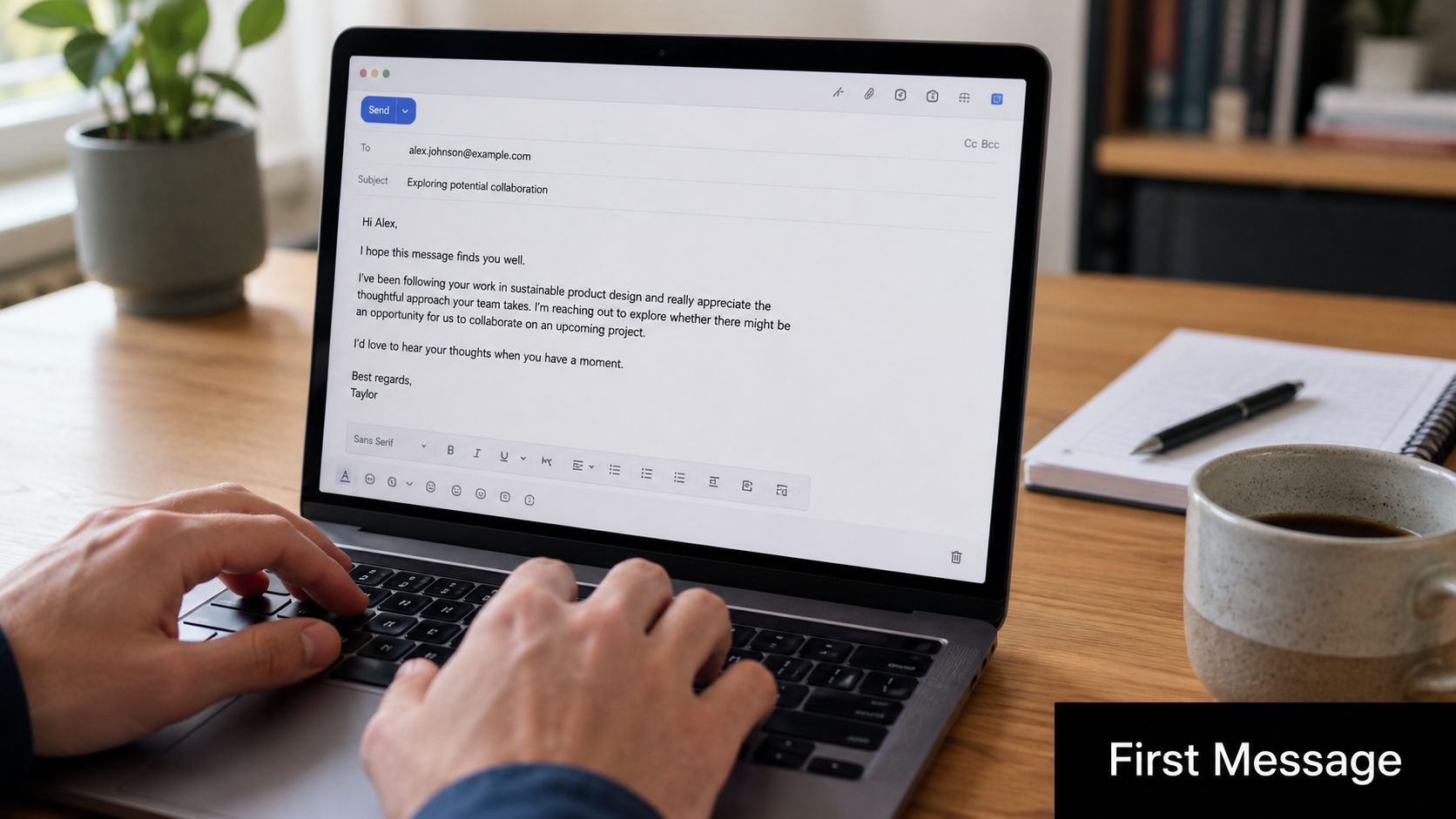
Send a short note tied to one exact vehicle and one exact ask:
Hi [Name], I'm interested in [year, make, model, trim], VIN [VIN], stock #[stock number].
I'm comparing a few similar vehicles and I'm prepared to buy based on the right written out-the-door quote. Please send your full out-the-door price, including vehicle price, dealer fees, taxes, title/registration, and any required add-ons or protection packages.
I'm only comparing complete OTD quotes on specific vehicles. If there are history-related items that affect value, such as an accident entry, open recall, or title note, please confirm those as well.
Thank you.
That email works because it boxes the dealer into a narrower response. You identify the exact car, show purchase intent, and make it harder for the store to hide profit inside fees or extras. The last sentence also signals that you have already checked the car, or plan to. Dealers read that differently.
If you want to verify the VIN before you send anything, run a VIN lookup report for the exact vehicle. It is easier to write a strong first email when you already know which report details may become pricing pressure later.
Why the first email should mention specifics, not your target price
The first message is for gathering clean numbers, not negotiating against yourself.
I usually do not lead with my target unless the car has an obvious problem already documented in the listing or report. Once you name your number too early, some dealerships stop discussing their real asking position and start working backward from yours. A better approach is to request the full OTD figure first, then use the vehicle history and competing quotes to push it down with evidence.
This matters even more on used cars with blemishes. A minor accident, unresolved recall, inconsistent mileage entry, or title complication gives you a factual reason to challenge the price later. You do not need to argue in the first email. You need the store to commit to a written starting point.
What to say when they dodge
Dealers dodge in familiar ways. Keep your replies short and repetitive. That usually works better than trying to sound clever.
If they ask you to come in first:
“I'm narrowing down a few specific vehicles and making the first pass based on written OTD quotes.”If they ask about monthly payment:
“I'm focused on the purchase price first. Please send the full out-the-door total.”If they send only sale price:
“Please include the complete out-the-door figure with all dealer fees, taxes, registration, and required add-ons.”If they ask what number will buy the car today:
“I'm comparing complete written quotes first, then I'll decide where to move forward.”If they ignore the VIN and switch you to another car:
“I'm only discussing the vehicle tied to VIN [VIN] or stock #[stock number]. If that unit is unavailable, please confirm.”
That last one saves time. Some stores will redirect you to a different unit with more margin or fewer known issues.
A practical detail most buyers miss
The strongest outreach email leaves room for your second email to do the actual work.
If your report shows something usable, keep it in reserve unless it is severe enough to question whether the deal is worth pursuing at all. Then, once the dealer sends the quote, you can respond with a tighter case: the car is priced against cleaner comparables, yet this unit carries a history item that affects value or creates extra hassle. That is a much stronger sequence than opening with a long list of complaints.
I have found that calm, specific buyers usually get better replies than buyers who try to “win” the first email. Ask for the written OTD number. Keep control of the vehicle identity. Save your pricing argument for the moment when you can tie it to the quote and the report in the same message.
If you are comparing an imported vehicle, tools like a kalkulator kosztów auta z USA can also help you sanity-check the broader cost picture before you commit.
Using Data to Drive Your Counteroffer
The first quote is rarely the actual number. What matters is how you answer it. The strongest counteroffers don't sound emotional and they don't sound random. They read like a buyer who has already done the work.
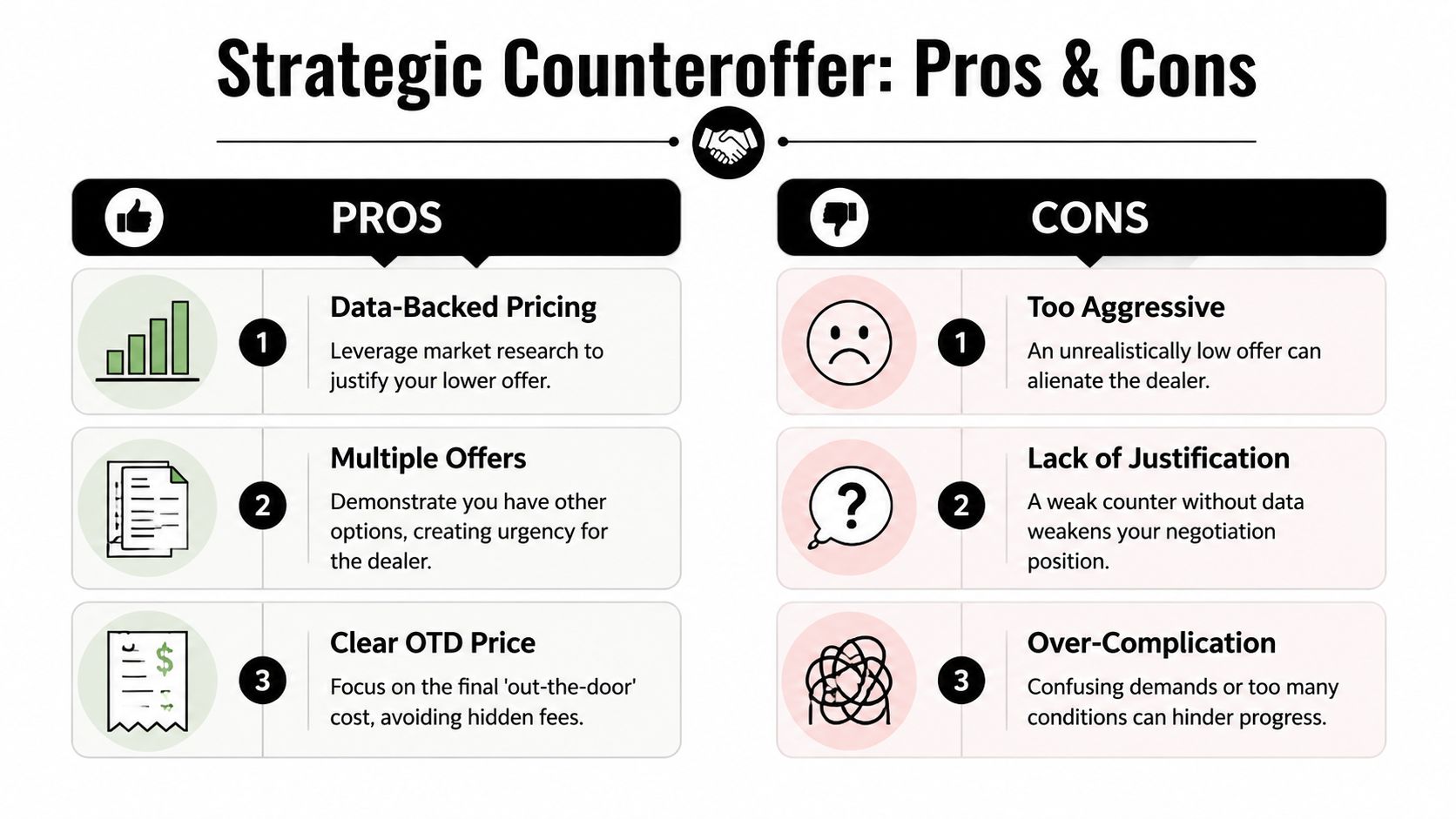
A realistic counteroffer scenario
Let's say you asked three dealers for OTD pricing on similar used SUVs. One store replies first with a quote that's higher than another listing you've saved. Your vehicle history report also shows a minor accident and an open recall.
That's enough to counter with substance.
Try this:
Thanks for sending the OTD quote. I'm comparing it against two similar vehicles and your number is above the range I'm seeing. I'm also factoring in the vehicle history, including a reported minor accident and an open recall. If you can revise the OTD price to [your target], I'm prepared to move forward quickly.
That message works because every part of it is grounded in something real. You're not demanding a discount because you feel like it. You're pricing the car according to available evidence.
Which history issues deserve a pricing push
Not every line item on a history report has equal weight. Here's a practical way to think about it.
| History finding | How to use it in negotiation |
|---|---|
| Minor accident | Ask why the car is priced like a clean-history example |
| Open recall | Push for resolution or a lower number that reflects the inconvenience |
| Title concern | Treat it as a major valuation issue, not a minor discount point |
| Odometer red flag | Demand clarification or step back from the deal |
| Theft or lien issue | Require written clarity before talking final numbers |
If you're comparing several VINs side by side, a detailed VIN lookup report helps you keep the relevant information organized instead of juggling screenshots and notes.
What works and what fails
A lot of buyers get too aggressive too early. If your counteroffer is detached from the listing, the condition, and competing options, the store can dismiss you without thinking twice.
What usually works better:
- Reference competing vehicles clearly: Mention that you're evaluating similar cars, not just “seeing better deals somewhere.”
- Point to specific report findings: A minor accident is concrete. “Some concerns” is weak.
- Give a clean next step: Tell them the number at which you're ready to proceed.
What usually fails:
- An extreme lowball with no explanation
- A long emotional argument about budget
- Negotiating against yourself by raising your own number too fast
For imported vehicles or cross-border shopping, cost context matters too. If you're evaluating whether a dealer's ask leaves room for transport and import-related expenses, this kalkulator kosztów auta z USA can help frame the total ownership math before you lock yourself into a deal.
The cleanest counteroffer is simple: your quote, my comps, this vehicle's history, here's the number that gets it done.
Finalizing the Deal and Arranging Logistics
Once a dealer accepts your number, don't relax yet. At this stage, buyers let a clean online negotiation get contaminated by sloppy paperwork, bundled financing, or sudden add-ons.
Get the final buyer's order before you travel or send money
Ask for the full purchase order or buyer's order in writing. Check that the VIN matches. Check that the agreed price matches. Check that every fee lines up with the quote you accepted.
If anything changed, stop and ask why before you do anything else.
Your checklist should include:
- Vehicle identity: VIN, trim, mileage, and options match the listing and your negotiation.
- Price integrity: The purchase price and OTD total match the written agreement.
- Fee visibility: Taxes, title, registration, and dealer fees are itemized.
- No surprise products: Warranties, protection packages, and accessories should not appear unless you chose them.
Keep financing and trade separate
This rule saves buyers from a lot of expensive confusion.
Edmunds' negotiating guidance notes that Consumer Reports advises buyers to negotiate the purchase price first, then trade-in, then financing, because low monthly payments can hide long loan terms or higher APRs. If the dealer keeps trying to move the conversation to payment, pull it back to total purchase price.
Say it plainly: “We already agreed on the vehicle price. We can discuss financing separately.”
Closing logistics without losing control
A lot of deals can be finalized remotely now, but remote doesn't mean automatic. Keep everything documented and make the store confirm each step.
Ask about:
- Deposit terms: Is it refundable, and under what conditions?
- Signing process: Can documents be reviewed before signing?
- Pickup or delivery: Who handles timing, handoff, and condition verification?
- Insurance timing: Make sure coverage starts when ownership transfers
If you're taking delivery soon, it's smart to compare new car insurance rates before pickup so the cost of ownership doesn't surprise you after the deal is signed.
One more practical read before closing is this guide on how to buy a used car from a dealer. It's useful for final checks on paperwork and dealership process.
Frequently Asked Questions About Online Negotiation
| Question | Answer |
|---|---|
| Should I negotiate by email, chat, or phone? | Email is usually the strongest starting point because it creates a record and makes it easier to compare replies. Chat can work if the store saves transcripts. Phone is useful late in the process when you're clarifying details, but price agreements should go back into writing. |
| What if the dealer says they can only discuss numbers in person? | That usually means they want more control over the conversation. You don't need to argue. Just reply that you're comparing specific vehicles based on written out-the-door quotes. If they still refuse, move on to a store that will engage transparently. |
| Can I use a vehicle history report to ask for a lower price even if the issue seems minor? | Yes, if you tie it to value instead of drama. A minor accident, unresolved recall, or title irregularity affects how many buyers will want that car and how easy it may be to resell later. That doesn't always make the car a bad buy. It does give you a reason to reject clean-history pricing. |
A few more quick answers help in real negotiations:
- If the dealer says another buyer is interested: Stay calm. Ask whether they can send the updated buyer's order at your agreed number. Urgency only matters if the paperwork is right.
- If they add a required package late: Treat that as a price change. Recalculate the OTD total and decide from there.
- If the car looks worse in person than described: Use that as a fresh negotiation point or walk. Written negotiation doesn't obligate you to accept mismatched condition.
Online negotiation works best when you treat every reply as part of a file. Save screenshots, emails, worksheets, and final paperwork.
The buyer who usually gets the better deal isn't the loudest one. It's the one who stays organized, compares real numbers, and knows exactly why a specific car should cost less than the dealer is asking.
If you want a stronger advantage before you send your first email, run the VIN through VekTracer. A clear vehicle history report can help you spot accident history, title issues, recalls, mileage concerns, and other details that give you a factual basis for your offer instead of a guess.
Ready to check a vehicle?
Enter any 17-character VIN for a free instant preview — no account needed.