Can You Sell a Car with a Lien: A Practical How-To
Check a vehicle before you buy
Enter a VIN for a free instant preview — accidents, title brands, mileage, liens & open recalls.
Yes, you can sell a car with a lien if the payoff is satisfied before or at transfer. The main work is getting an exact payoff quote, moving money through a controlled closing, and confirming the lien release before the title changes hands.
Can you sell a car with a lien? Absolutely, but only if you treat the payoff like the center of the deal, not an afterthought. A seller who skips the release paperwork or trusts a verbal promise from the buyer is asking for delay, double-payment risk, or a buyer who can't register the car cleanly.
Table of Contents
- Can You Sell a Car With a Lien
- What a Lien Actually Means on Your Title
- Four Ways to Handle the Payoff at Closing
- Step-by-Step Process From Payoff to Clean Title
- Common Pitfalls That Delay or Kill the Deal
- How a Vehicle History Report Protects the Buyer
- Quick Checklist and Next Steps
Can You Sell a Car With a Lien
Yes, and that's the part people overthink. The harder question is how to clear the lender's claim at closing without letting the money, title, and paperwork drift out of sync.
The three moves that have to happen in order
First, get a current payoff quote from the lender. That quote has to be current enough to cover per-diem interest, because the amount changes until the lender receives funds. Second, use a controlled payment channel, not a casual handoff in a parking lot. Third, wait for proof that the lien was released before you act like the title is clean.
That's why private sales go sideways so often. The buyer thinks they're buying a car, the seller thinks they're selling a car, and the lender still has a claim on the title. If you need a financing bridge before you close, a resource like vehicle title loan options can help you understand how some owners cover a payoff gap, but it doesn't change the basic rule, the lien has to be satisfied before title transfer is complete.
Practical rule: don't accept a vague promise that “the loan will get paid from the proceeds.” Get the payoff amount, set the payment path, and insist on release proof.
For buyers and sellers doing their own research, a VIN or plate lookup should sit beside the payoff paperwork, not replace it. A history report can help you check the car's identity, title status, and past records, but it won't clear a lender's claim by itself.
What a Lien Actually Means on Your Title
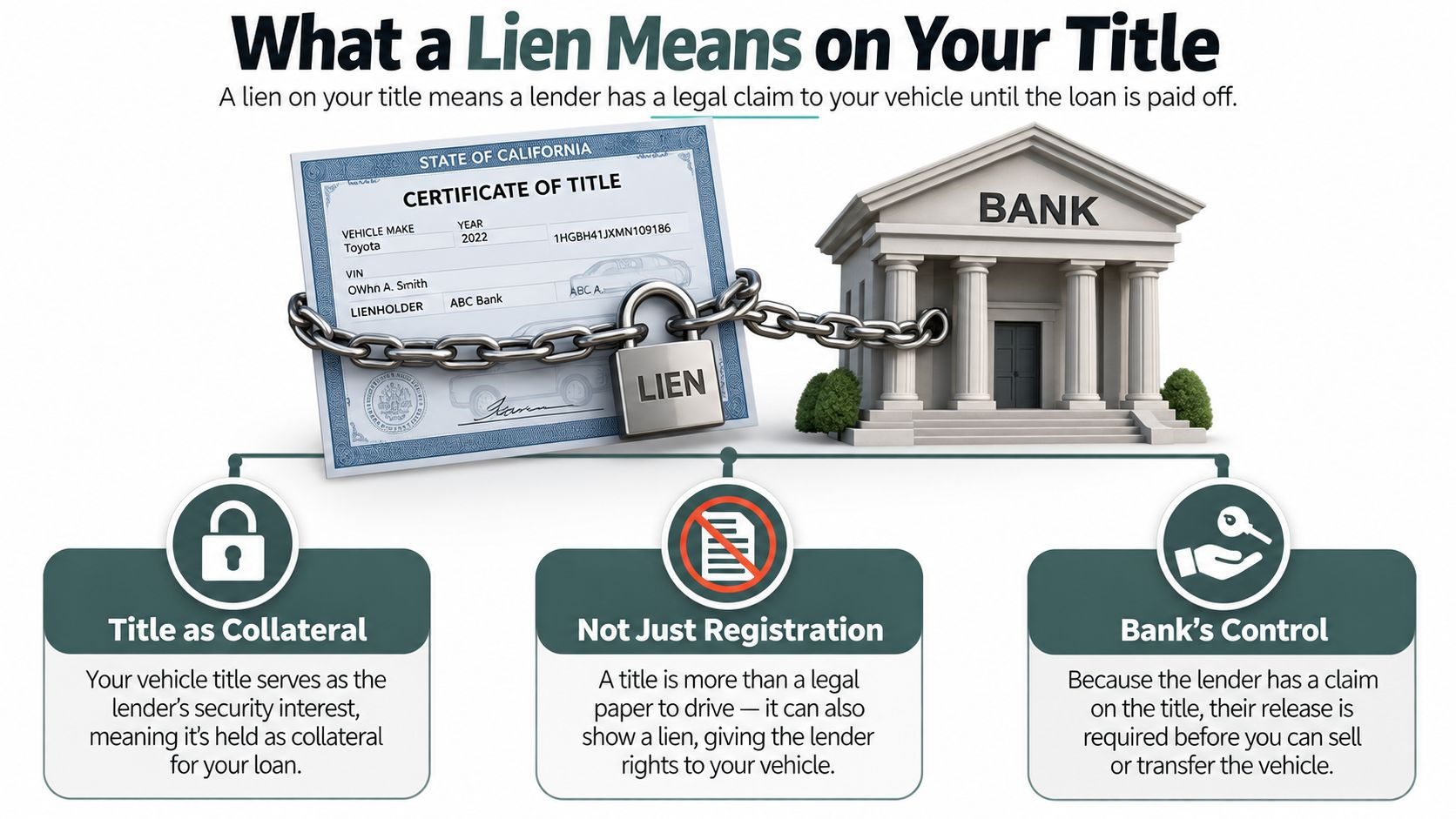
A lien is the lender's security interest in the car. In plain English, the bank has a stake in the title until the loan is paid off, and that's why the title isn't fully yours to hand over without a release.
Paper titles and electronic titles do not move the same way
With a paper title, you may be holding the physical certificate, but the lender is still named on it or attached through a release process. With an electronic title, the state holds the record in a database and the lender's interest sits there until the payoff clears. That's why some sellers need a signed release document, while others need the lender to transmit the release electronically.
A good payoff quote usually comes with a short expiration window because interest keeps running until the lender receives the money. That's not a trick, it's how loans work. If you wait too long, the amount can change and the closing has to be recalculated.
The title is not just a driving document. It's the instrument that proves who gets paid first when the car changes hands.
The clean sequence is simple, even if the paperwork isn't. Extinguish the lender's claim, get the release, then transfer ownership. Every step in this process exists to satisfy that one requirement.
For a plain-language breakdown of the lien itself, see what is a lien on a car title. If the title record is electronic, the lender's release path may be faster, but the buyer still needs a record that the lien is gone before they can register the vehicle confidently.
Four Ways to Handle the Payoff at Closing
Different deals fail for different reasons, so the payoff route has to match the situation. A seller with cash should not close the same way as someone who needs the buyer's money to clear the loan.
Which route fits which deal
Seller payoff is the cleanest route when the owner can retire the loan before meeting the buyer. The seller pays the lender, gets the release, then hands over a clean title. The usual mistake is moving too slowly and letting the payoff quote expire before the title transfer.
Escrow payoff works best in private-party sales where neither side wants to trust the other with the money first. The escrow company or attorney holds the funds, pays the lender, and releases the paperwork once the lien is satisfied. The deal usually breaks when one side tries to bypass escrow and “save a fee.”
Dealer trade-in is the easiest path for many owners because the dealer handles the payoff as part of the purchase. This is smooth when the loan is covered by the trade value, but it gets messy if the car is underwater and the seller can't cover the gap. The buyer should ask for written payoff handling, not a handshake promise.
Lienholder transfer is the least common but useful when the state or lender can direct the title to the buyer after payoff. It helps when timing is tight, but the seller still needs the lender's proof and the DMV record has to line up. The mistake here is assuming the lender can do something the state won't recognize.
| Route | Best For | Typical Timeline | Proof Buyer Should Get |
|---|---|---|---|
| Seller Payoff | Seller has cash or can refinance | Before closing | Lien release or clear title |
| Escrow Payoff | Private-party deal with trust concerns | At signing or shortly after funds clear | Escrow confirmation and release proof |
| Dealer Trade-In | Dealer purchase or trade | Same day or near same day | Dealer payoff paperwork and release record |
| Lienholder Transfer | State and lender support direct transfer | Depends on lender and DMV | Lender release and updated title record |
For a separate title-removal walkthrough, how to remove a lien from a car title is the right companion read. The point is simple, use the route that gives the buyer the cleanest proof, not the route that feels easiest in the moment.
Step-by-Step Process From Payoff to Clean Title
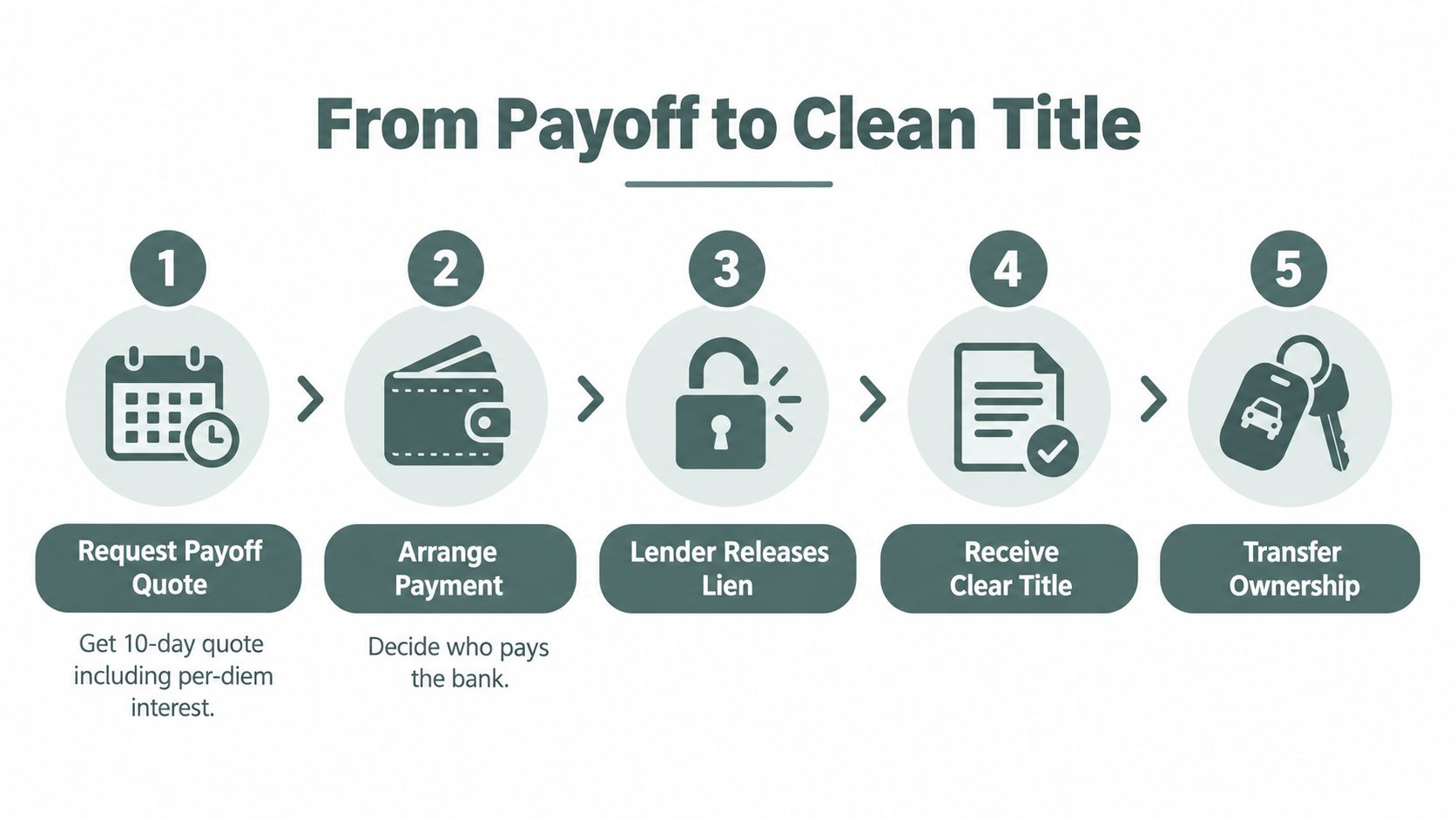
The safest closing starts with numbers, not signatures. If the payoff figure is wrong, everything else is paperwork theater.
Start with the lender, not the buyer
Request a payoff quote that's valid through a specific date. It should show the amount due, the date it expires, and the daily interest figure so you know exactly what changes if closing slips. Use the car's VIN and loan account number when you order it, because sloppy identification creates sloppy releases.
Move the money through a controlled channel
Decide who pays the lender. In a private sale, escrow is the cleanest answer because it keeps the buyer's funds from sitting in a seller's pocket while the lien is still open. If the buyer is handing over certified funds, verify them before anyone signs away the title.
Wait for the release before you call it done
Once the lender is paid, wait for either the paper lien release or the electronic release confirmation. In paper-title states, that can take a few business days. Electronic systems are usually faster, but the exact timing still depends on the lender and DMV workflow.
Sign the sale documents only when the path is clear
Use the Odometer Disclosure, bill of sale, and title assignment exactly as your state requires. If there's a co-buyer or co-borrower, both names on the title or release paperwork need to sign where the DMV expects signatures. Don't guess on this part, because one missing signature can send the buyer back to the counter.
The seller also has to file the DMV transfer notice. California, for example, requires the Notice of Transfer and Release of Liability within 5 days of the sale, and it points sellers to the lien-satisfaction paperwork as the official proof of release (California DMV title transfer guidance). If the title is mailed after release, keep tracking until the buyer or DMV receives it.
Keep the documents together
Hold on to the payoff letter, release confirmation, bill of sale, and transfer notice. If the buyer later questions the chain of events, those papers are the difference between a clean file and a mess.
Best practice: payoff first, release second, title last. If you reverse that order, you're gambling with your own liability.
Common Pitfalls That Delay or Kill the Deal
Most lien deals don't fail because the law forbids them. They fail because somebody assumes the paperwork will sort itself out later.
Where sellers and buyers usually get burned
| Pitfall | Symptom | Fix | Who Eats the Cost |
|---|---|---|---|
| Payoff quote expires | The amount due changes before funds land | Requote and resend funds immediately | Usually the seller, sometimes both parties if closing slips |
| Paper title and electronic lien mismatch | Buyer can't register right away | Verify whether the lender reports electronically or by mailed release | Seller, because the car can't transfer cleanly |
| Loan is underwater | Sale proceeds don't cover the payoff | Bring cash to close or renegotiate the deal | Seller |
| Release of Liability is skipped | Seller keeps getting tickets or notices | File the DMV transfer notice right away | Seller |
| Co-signer never signs | DMV rejects the transfer | Get every required owner or borrower signature before closing | Seller |
| Payoff check is made out wrong | Lender won't post payment | Confirm the lender's exact payee instructions before signing | Usually the seller |
| Release goes to the wrong address | Buyer waits for paperwork that never arrives | Confirm the mailing address and electronic delivery method in advance | Seller or lender, depending on the error |
If you want someone to handle the paperwork, Legal assistants can be useful when a sale has odd title issues, multiple signatures, or state-specific release forms. That kind of support doesn't remove the lien, but it can keep a simple sale from becoming a repeated DMV errand.
California's lien-sale rules show how controlled these transactions can be, with different notice timelines depending on vehicle value and a separate process for opposing the sale (California DMV lien sale procedure). Florida's consumer guidance draws a hard line too, a private sale can't transfer a vehicle with an existing lien until the lien is satisfied, while a dealer trade-in works under a different window (Florida consumer guidance on selling a vehicle). Those examples make the same point, don't improvise the closing.
How a Vehicle History Report Protects the Buyer
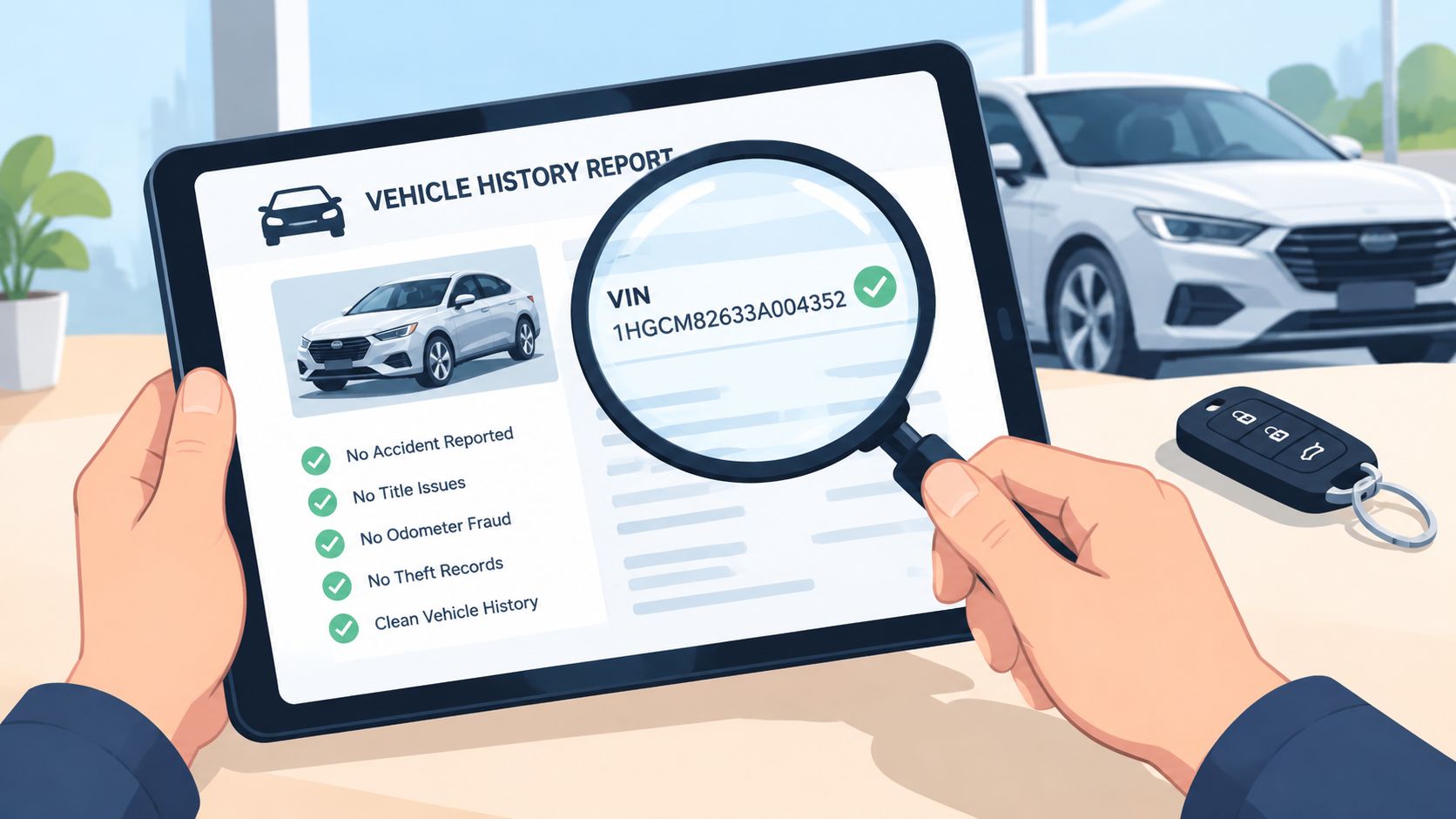
A VIN-based vehicle history report is the cheapest protection a buyer can buy in a lien deal. It won't pay off the loan, but it can stop you from wiring money on the wrong car or trusting a title story that doesn't match the record.
What the report should do before money moves
The first job is identity check. The VIN on the payoff letter, title, and physical car has to match, or you're dealing with the wrong vehicle or a paperwork problem that needs to be fixed before closing. The second job is history check. A report can surface accident, salvage, rebuilt, flood, or other title-brand signals that a clean payoff doesn't erase.
A good buyer moves the report request ahead of escrow, then checks it again at delivery if the deal is complex. That's smart because a seller can have a valid lien release and still be hiding a serious history problem. The history report is not a substitute for a DMV title search or a mechanical inspection. It's a cross-check.
Vektracer adds value when you need a broader view than a free official lookup, especially through title-brand timelines, lien-history snapshots, and ownership context pulled from multiple sources. That matters in private-party sales, salvage purchases, auction buys, and any deal where the title story may have crossed state lines. It's still not a guarantee, so the buyer should treat a clean report as necessary, not sufficient.
The point is simple, use the report to reduce fraud risk before you send money, then use the release paperwork to confirm the lender's claim is gone. If either piece is missing, the deal isn't ready.
For a deeper breakdown of what a report typically covers, see what a vehicle history report includes. Buyers who skip this step tend to discover the same lesson the expensive way, a lien can be cleared and the car can still be the wrong car to buy.
Quick Checklist and Next Steps
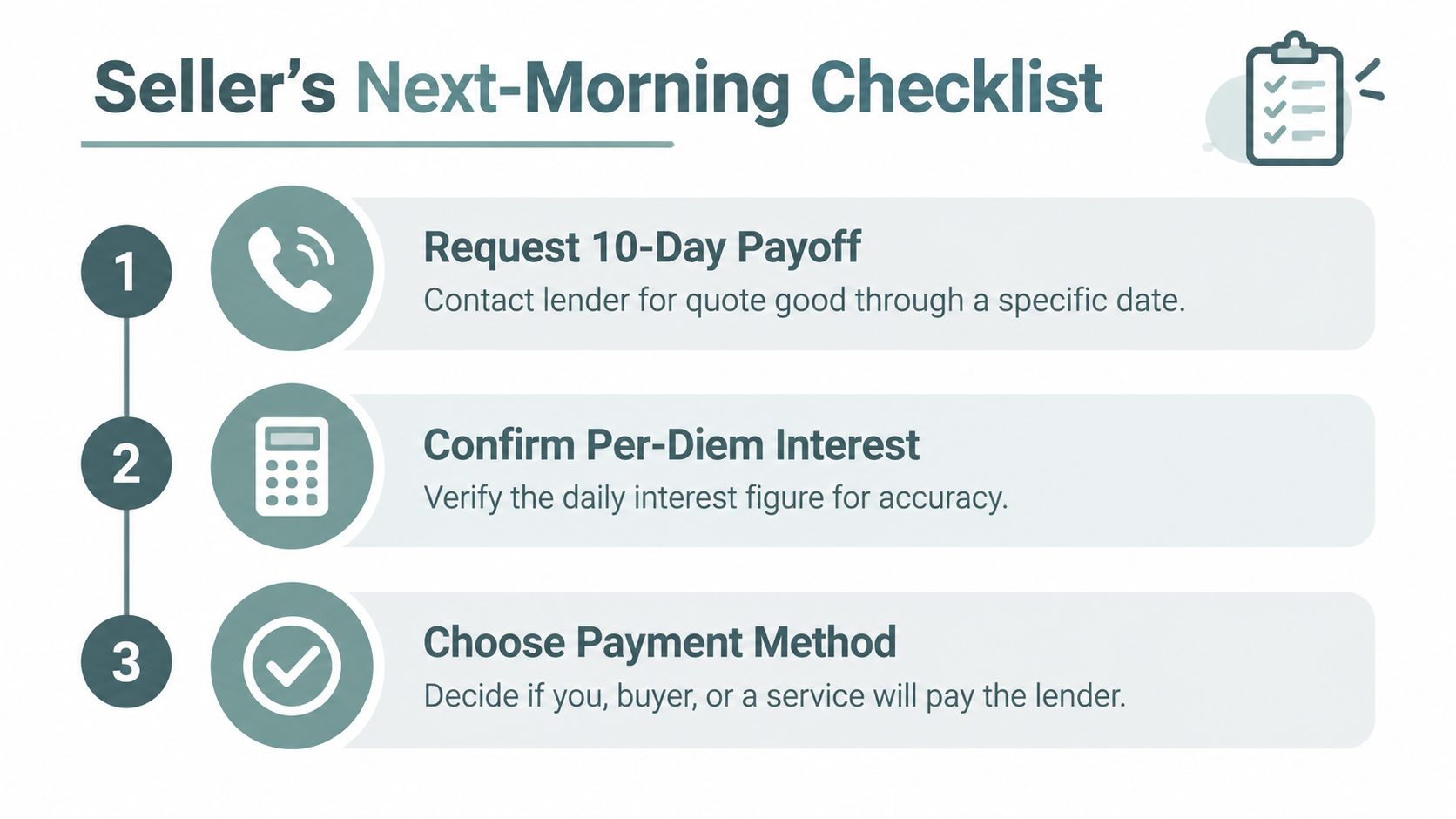
Run the payoff like a closing, not a conversation. That means you ask for the quote, lock the payment path, and hold the title until the lender's claim is formally gone.
Tomorrow morning's order of operations
- Request the payoff quote: Get the lender's current amount and the expiration date.
- Confirm the daily interest: Check the per-diem figure so the payoff doesn't drift while you wait.
- Choose the closing route: Escrow for most private sales, dealer payoff for trades, or direct seller payoff if you can clear it yourself.
- Use certified funds or supervised payment: Never rely on a personal check for the payoff amount.
- Wait for the lien release: Don't hand over the title until the release is recorded or the lender confirms electronic satisfaction.
- Sign the transfer paperwork: Bill of sale, title assignment, and odometer disclosure should match the car and the parties exactly.
- File the DMV notice: Submit the transfer notice right after the sale so liability stops with the handoff.
Two rules don't bend. Never hand over the title before the lien is recorded as released by the state. Never accept a personal check for the payoff amount.
If you're selling today, pull the payoff quote first, then call two escrow services or the dealership's finance desk if you're trading in. If you're buying, run a vehicle history report and verify the title before you send a dollar. Vektracer can help you check the VIN, title history, and other available records, so visit Vektracer and start with the vehicle's history before you close.
Ready to check a vehicle?
Enter any 17-character VIN for a free instant preview — no account needed.