How to Remove a Lien from a Car Title a Complete Guide
Check a vehicle before you buy
Enter a VIN for a free instant preview — accidents, title brands, mileage, liens & open recalls.
You make the final loan payment, then discover the title still lists a bank, finance company, or other lienholder. The account may show a zero balance while the DMV record continues to show an active lien. That gap can delay a private sale, trade-in, registration, or ownership transfer.
Loan payoff and title clearance are separate steps. Paying the lender does not automatically clear the state title record. You still need confirmation that the lienholder released its interest, then you must complete the DMV's required process.
The paperwork depends on how your state records titles. With an electronic lien, the lender may send the release directly through the state system, so you might not receive a paper title. An older paper-title process usually requires a signed lien release or updated title from the lender, followed by a DMV submission. Keep payment records, correspondence, and copies of every document until the record shows no lien.
If the lender is slow or unresponsive, contact its lien-release or title department, document each request, and ask the DMV what substitute evidence it accepts. A payment receipt alone generally does not clear the title. The dependable sequence is to verify the lienholder, obtain the proper release, follow the applicable paper or electronic procedure, and confirm the DMV record is clear.
Table of Contents
- First Confirm the Lien Status and Lienholder
- Pay the Loan and Secure the Lien Release Document
- Update Your Title Through the DMV
- How to Handle Common Lien Removal Problems
- Lien Removal Checklists for Buyers and Sellers
- Your Next Step to a Clear Title
First Confirm the Lien Status and Lienholder
Start with the vehicle identification number, or VIN. Check the VIN on the title against the VIN visible on the vehicle, usually on the dashboard near the windshield or inside the driver's door area. A mismatch can point to a clerical error, a title problem, or a more serious identity issue, and you shouldn't begin a lien-removal application until the identifying information is consistent.
Use the official record first
Contact your state DMV or equivalent motor-vehicle agency and ask how it verifies a lien. Some states provide an online title or lien lookup, while others require a title record request or an in-person or mailed application. Have the VIN, title information, owner identification, and any loan documents available.
The official record tells you what the state currently recognizes. It can identify the recorded lienholder and show whether the lien has been released electronically or remains attached to the title. This matters for buyers as well as owners. A seller may believe the loan was cleared, but the state record is the record that affects a transfer.
Add history context before a transaction
A commercial report can complement, but not replace, the DMV check. A vehicle-history report may provide ownership and registration context, title-brand information, accident or damage records, odometer history, theft information, and auction records where available. Those details can reveal that a vehicle moved between jurisdictions or carried a branded title, issues a basic lien lookup may not explain.
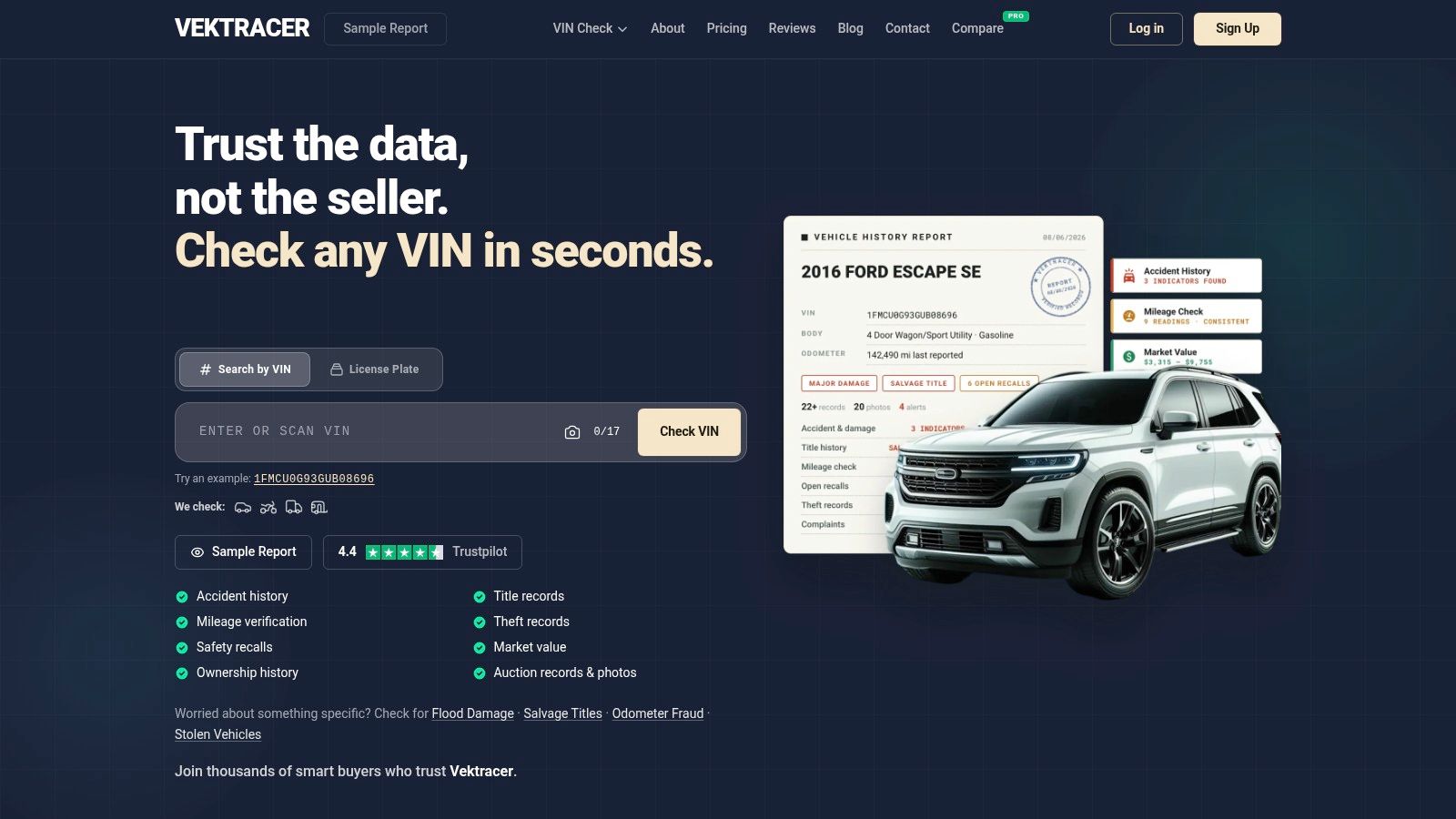
Vektracer is one commercial option that compiles VIN-based vehicle-history records into a structured report, including title and ownership context, accident and damage information, salvage and other title brands, mileage records, theft checks, recalls, and auction history where available. It isn't a government agency, and no commercial report can guarantee that every lien or event will appear.
For a practical explanation of the verification stage, use this guide on how to check for a lien on a car. It's especially useful before handing money to a private seller who says the loan was paid but can't show a clear title.
Practical rule: Treat the DMV record and the lender's formal release as separate pieces of evidence. You need both parts aligned before assuming the title is clear.
Pay the Loan and Secure the Lien Release Document
Paying the final loan installment closes the account, but it does not by itself clear the title record. Contact the lender's title or lien-release department and confirm the exact release process for your state and title format.
The lender may provide a formal lien release letter, sign the paper title, or send an electronic release directly to the DMV. An account statement marked “paid in full” can show that the debt ended, yet still lack the vehicle and lienholder details the DMV requires.
Check the release for vehicle-specific details
A paper release should identify both the vehicle and the secured debt. Indiana's requirements show the level of detail an agency may expect: lienholder letterhead, the owner's name, release date, year, make, VIN, an authorized signature, and the signer's job title. Electronic and paper records follow different procedures, so confirm that the document or electronic submission matches your DMV's requirements.
Compare the VIN and owner name on the release with the title before mailing or submitting anything. Ask whether the original title will go to you, a third party, or remain in an electronic system while the lender sends the release to the DMV. Keep a scanned copy, payment confirmation, and delivery records. Some agencies still require original documents.
The gap between payoff and title clearance often appears here. A lender can mark the loan satisfied in its own system while the DMV still shows the lien.
Address non-bank lienholders correctly
A vehicle lien may come from a mechanic, storage facility, towing company, or another creditor under state law. The release must come from the party listed as lienholder, not from a lender that no longer holds an interest in the vehicle.
Request written confirmation that the lien is satisfied or released, with the vehicle identified precisely. If you settled the debt instead of paying under the original agreement, make sure the lienholder agrees in writing to release its interest. A verbal promise or an informal email from customer service may not meet the DMV's document standards.
For a document-focused reference, review this explanation of a car lien release letter. Check more than whether the lender confirms payment. The release must be formatted correctly and delivered through the channel your DMV accepts, whether that means a signed paper document, an original title, or an electronic notification.
Update Your Title Through the DMV
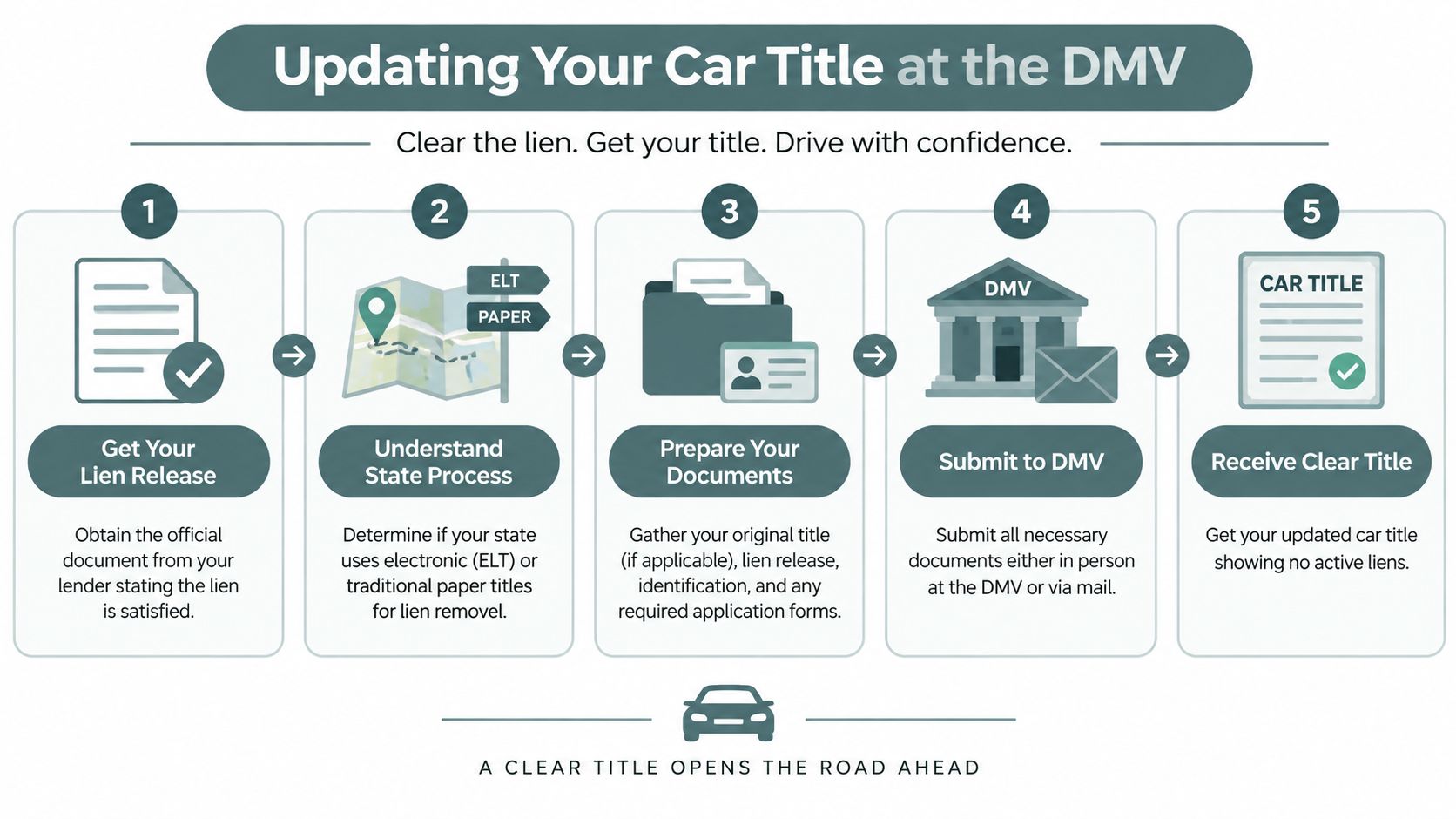
Paying the loan does not by itself clear the DMV record. The final step depends on whether the lien is held in an Electronic Lien and Title system, commonly called ELT, or recorded on a paper title. Check which process applies before sending documents, because electronic and paper workflows require different actions.
With ELT, the lender usually notifies the DMV after payoff. The state updates its record, and you may still need to request a paper title. Virginia says most lenders participate in electronic release, after which the DMV mails a new title. Wisconsin says the lender should electronically release the lien and the owner automatically receives a new title unless another loan remains. Ohio explains that a participating lender can release the lien electronically, after which the BMV record no longer shows the lien, although the owner applies for a paper title and pays applicable title fees.
Paper and electronic workflows are not interchangeable
A paper-title process generally requires the original title, a lien release, an application, identification, and any state-required fee. The agency may accept documents in person, by mail, or through both methods. Confirm the correct address and make a complete copy before mailing an original title.
New York uses a mail-based process. The owner sends the original current title certificate, original proof that the lien was satisfied, and a $20 fee to the DMV Title Services unit. Photocopies are rejected, and no local DMV visit is required. Follow the New York DMV lienholder instructions precisely.
Virginia uses a different route. When the lienholder signs the title as satisfied, the owner can bring it to a DMV customer service center for a substitute title for a $15 fee. The replacement title prints “Lien Satisfied” and the date. Virginia DMV title guidance
| Title situation | What usually happens | Owner's responsibility |
|---|---|---|
| Electronic lien | Lender notifies the DMV electronically | Confirm the record is clear and request a paper title if required |
| Paper title | Lender releases or signs the title and may mail it | Submit the original title, release, and required application |
| Unresponsive lienholder | DMV may require additional evidence or a court process | Preserve payoff proof and follow the state's escalation procedure |
Before selling or transferring the vehicle, verify that the lienholder no longer appears in the DMV record. Confirm that the replacement or corrected title is available when your state requires one.
How to Handle Common Lien Removal Problems
The most expensive mistake is continuing as though the lien has disappeared when the lender hasn't completed its part. Start with a written request to the lender's lien-release or title department. Include the VIN, account information, payoff confirmation, current address, and a clear request for either an electronic release or a compliant paper release.
Keep copies of every letter, email, form, and delivery confirmation. If the lender claims it already released the lien, ask for the release date, delivery method, destination, and any tracking or electronic confirmation. Then ask the DMV whether its record reflects that release.
When the lender is slow or unreachable
Massachusetts provides a dedicated complaint form for a lienholder's failure to release a title after full payment. Consumer guidance also recommends written demands and escalation to regulators when the lender doesn't respond. A 2023 class-action claim alleged that a bank routed borrowers to a third-party website that charged fees for lien-release proof. The allegation isn't a universal rule about lenders, but it shows why you should question unexplained charges and document the request. Massachusetts lienholder complaint form
If the lender merged, closed, or sold the loan, ask the current servicer, successor institution, or state regulator who now controls the lien record. The DMV may explain what substitute evidence it accepts, but requirements differ by jurisdiction.
Washington provides an example of a more formal remedy. If a lienholder fails to respond, the owner may need a court petition for a clear title. The court order must identify the vehicle by year, make, model, and VIN. Washington DMV title and lien guidance
When paperwork is lost or rejected
Request a duplicate release from the lender before submitting an alternative. If the DMV rejects the document, ask for the rejection reason in writing and correct the specific defect, such as an incorrect VIN, missing signature, unacceptable copy, or wrong form.
For complicated records, especially an old lien, inherited vehicle, or title with conflicting ownership, professional help can reduce procedural errors. A provider offering lien administration services may help organize notices and documentation, although you should still confirm the final requirements with the DMV.
A title bond may be relevant when ownership documentation cannot be obtained, but it isn't a substitute for a normal lender release when the lien is valid. Learn how vehicle title bonds work before assuming that route solves an active lien.
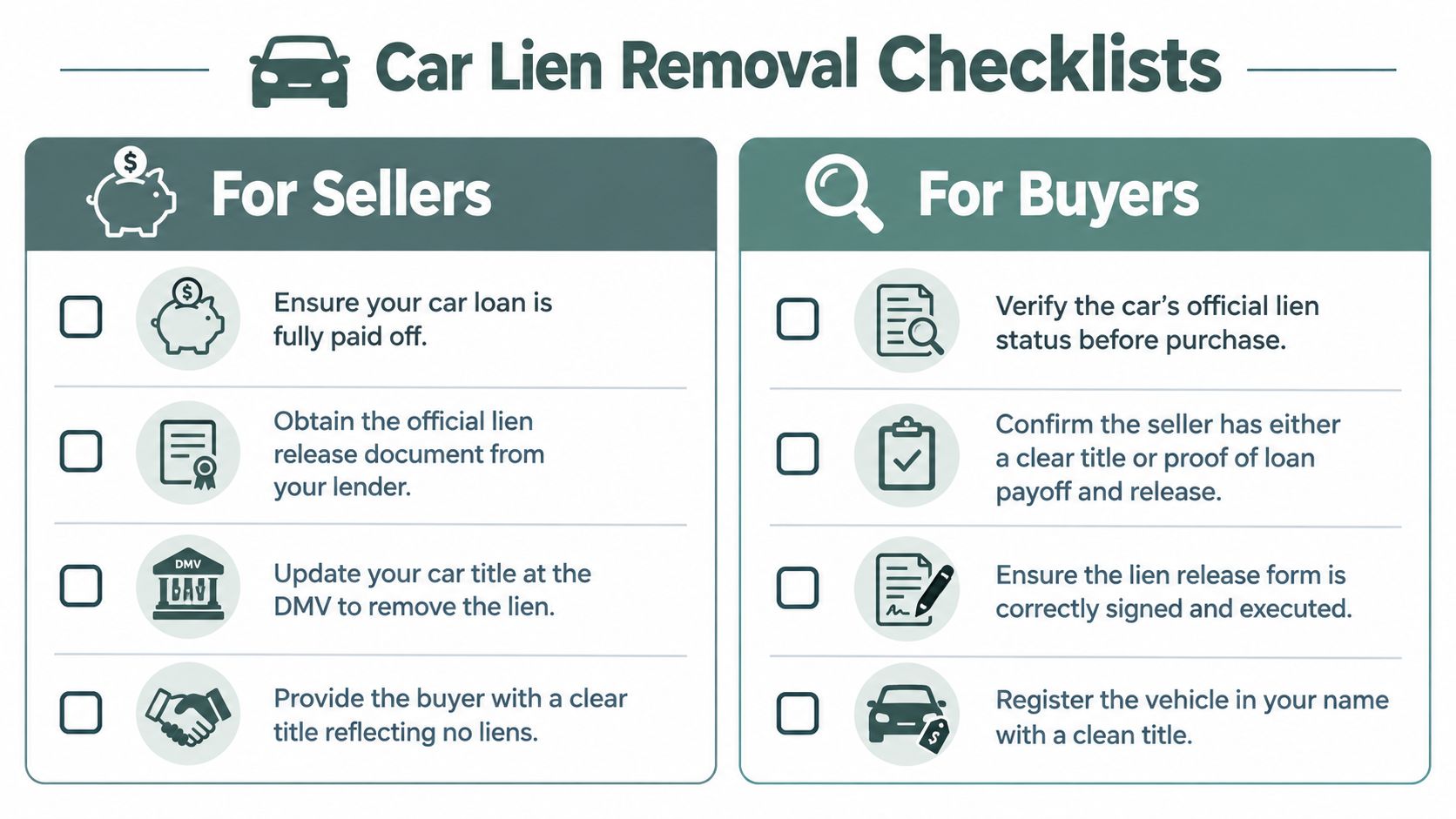
Lien Removal Checklists for Buyers and Sellers
A seller can finish paying a loan and still lack paperwork that transfers cleanly. A buyer should treat the payoff receipt and the clear title as separate documents. The seller must complete the lender's release process and the DMV record update before describing the vehicle as lien-free.
Seller checklist
- Confirm payoff: Ask the lender's title department to verify that the account is fully satisfied, rather than relying on a scheduled payment or account balance.
- Request the correct release: Confirm whether the lien will be released electronically or through an original paper document.
- Match the identifiers: Compare the owner name, year, make, and VIN on the release, title, and vehicle.
- Update the record: Follow the state DMV process and keep receipts, tracking details, and copies of every submission.
- Verify clearance: Check that the lien no longer appears in the state record before advertising the vehicle as clear-title inventory.
- Prepare the buyer's file: Give the buyer the clear title and any release paperwork required for the transfer.
The process depends on the title format. With an electronic lien, the lender submits the release through the state system, and the record can update without mailing a paper title. With an older paper title, the owner may need the original title, a signed lien release, and a separate DMV submission. Confirm which process applies to the VIN before promising a delivery date.
Buyer checklist
- Run the official check: Use the state title or lien-record process with the VIN before paying.
- Inspect the title: Look for the lienholder entry, release notation, signatures, alterations, and inconsistent vehicle identifiers.
- Demand supporting proof: If the title still names a lienholder, request the formal release and ask the DMV how it will be accepted.
- Control the transaction: Complete the transfer through the DMV when practical, or use payment terms that do not leave you responsible for an encumbered vehicle.
- Check broader history: Review title brands, ownership context, accident records, odometer history, and auction information when available.
A payment receipt does not clear the title. If the lienholder remains listed, pause the transaction until the seller supplies acceptable release paperwork and the DMV can process the change. A seller's text message, confidence, or commercial history report cannot replace the official title record.
Some liens are tax claims rather than vehicle-finance liens. If the issue involves federal taxes, the procedure differs from an auto-loan release. A resource on getting an IRS lien removed can help identify the appropriate authority.
Your Next Step to a Clear Title
The title isn't clear until the state record is clear. Paying the loan establishes that the debt has been satisfied, but the lender still must release its interest and the DMV must update the title record through the process your state accepts.
If you're an owner, begin with the lender's title department and ask for the release method tied to your VIN and title format. If you're selling soon, leave enough room for document delivery and DMV processing rather than promising a buyer that the title will be ready immediately. If you're buying, don't release funds based only on a payoff receipt. Verify the lien status independently and make the transfer conditional on acceptable title documents.
A vehicle-history report can add context before you commit. It may help you identify title brands, prior ownership and registration events, accidents, odometer inconsistencies, theft records, and auction history, but it won't replace the state's official lien record or the lender's release.
Use the information in this guide as a document-control checklist: payoff confirmation, formal release, DMV submission, and final record verification. If any one of those is missing, the transaction still carries avoidable risk.
Use Vektracer to enter the vehicle's VIN or license plate and review available title, ownership, accident, odometer, salvage, and auction history before you buy or sell. Then confirm the lien directly through the appropriate state DMV and complete the formal release process before treating the title as clear.
Ready to check a vehicle?
Enter any 17-character VIN for a free instant preview — no account needed.