1995 GMC 1500 Buyer's Guide: Specs, Value & Inspection
Check a vehicle before you buy
Enter a VIN for a free instant preview — accidents, title brands, mileage, liens & open recalls.
You're probably staring at a listing right now that looks tempting: square-body style, honest truck proportions, V8 badge, maybe some fresh paint, and a seller saying it “runs great for its age.” A 1995 GMC 1500 can still be a smart buy, but only if you judge the truck in front of you, not the reputation of the platform.
The short version is simple. The truck has real appeal, usable capability, and a loyal following. The risk is that most buyers still use old-school checklists for a truck that now needs a deeper, history-backed risk review.
The Enduring Appeal and Specs of the 1995 GMC 1500
A 1995 GMC 1500 makes sense for a specific buyer. It works for someone who wants a truck old enough to be simple, new enough to use regularly, and common enough that parts and advice still exist. That middle ground is why these GMT400 half-tons keep drawing attention long after newer trucks added more power, more weight, and a lot more electronic complexity.
I like these trucks because they are honest about what they are. The controls are straightforward. The chassis is familiar. The mechanical layout lets a careful owner diagnose problems without needing dealer-level tools for every small issue. That matters on a 30-year-old pickup, because ease of repair affects total ownership cost just as much as the purchase price.
The appeal is real, but it needs to be priced against age. A clean-looking truck can still hide enough deferred work to erase any bargain. On this platform, the smart move is to pair factory specs with a risk estimate. Fuel range, cab style, driveline, engine, and transmission all matter, but so do service gaps, title history, and how many owners treated the truck like basic transportation instead of something worth maintaining.
What made this truck attractive in the first place
The factory formula was strong. According to Kelley Blue Book's 1995 GMC 1500 listing, the truck was offered in multiple trims and configurations, including a Regular Cab setup with a 5.0L V8, rear-wheel drive, seating for three, a 4-speed automatic or 5-speed manual, a 25-gallon fuel tank, and a 117.5-inch wheelbase. KBB also lists original MSRP, towing capacity that varied by configuration, and a strong consumer reliability rating for the model.
Those specs help explain the staying power. A half-ton with usable towing capacity, simple truck proportions, and widely understood GM hardware still fits real-world needs. It can haul parts, run weekend duties, or serve as a second vehicle without asking the owner to accept the compromises that come with much older classics.
There is also a financial reason these trucks still hold attention. They are old enough that condition drives value more than trim brochure language. Two trucks with the same engine and cab can have ownership costs that are thousands apart once you account for rust repair, transmission work, cooling-system neglect, or evidence of repeated title transfers. That is the right lens for a 1995 model. Spec sheets tell you what the truck was. Records and inspection results tell you what it will cost.
Practical rule: Buy the configuration that matches your actual use, then discount the asking price for every missing record and every visible shortcut repair.
What you'll usually find on the market
Factory setups still matter because they help you spot what has been changed, swapped, or misrepresented over time.
Common examples include:
- Regular Cab work trucks with fewer options, less trim to restore, and fewer luxury features to fail.
- Better-equipped trims that feel more desirable, but often carry higher cosmetic expectations and more chances for neglected accessories, worn interiors, or partial restorations.
- Manual and automatic trucks where service history matters more than enthusiast preference.
- Rear-wheel-drive examples that can be easier to inspect underneath and sometimes show less front-end wear than heavily used 4WD trucks.
That last point gets overlooked. Buyers often pay extra for options they may not need, then absorb the repair bill later. A simple two-wheel-drive truck with a clear history can be the cheaper truck to own even if it is not the one that draws the biggest reaction in a parking lot.
Why enthusiasts still care
The 1995 model year sits in a practical sweet spot for classic truck ownership. It still feels mechanical and analog, but it is not so old that every trip becomes a project. Parts support remains decent. The trucks are easy to understand. A good one delivers the kind of direct, usable driving experience that newer half-tons have largely left behind.
That does not make every surviving example a good buy.
The right truck is the one with a believable story, consistent wear, and documented upkeep. That is where the appeal holds up under scrutiny. A 1995 GMC 1500 can still be a satisfying truck to own, but only after the numbers make sense.
Decoding 2026 Market Value and Price Trends
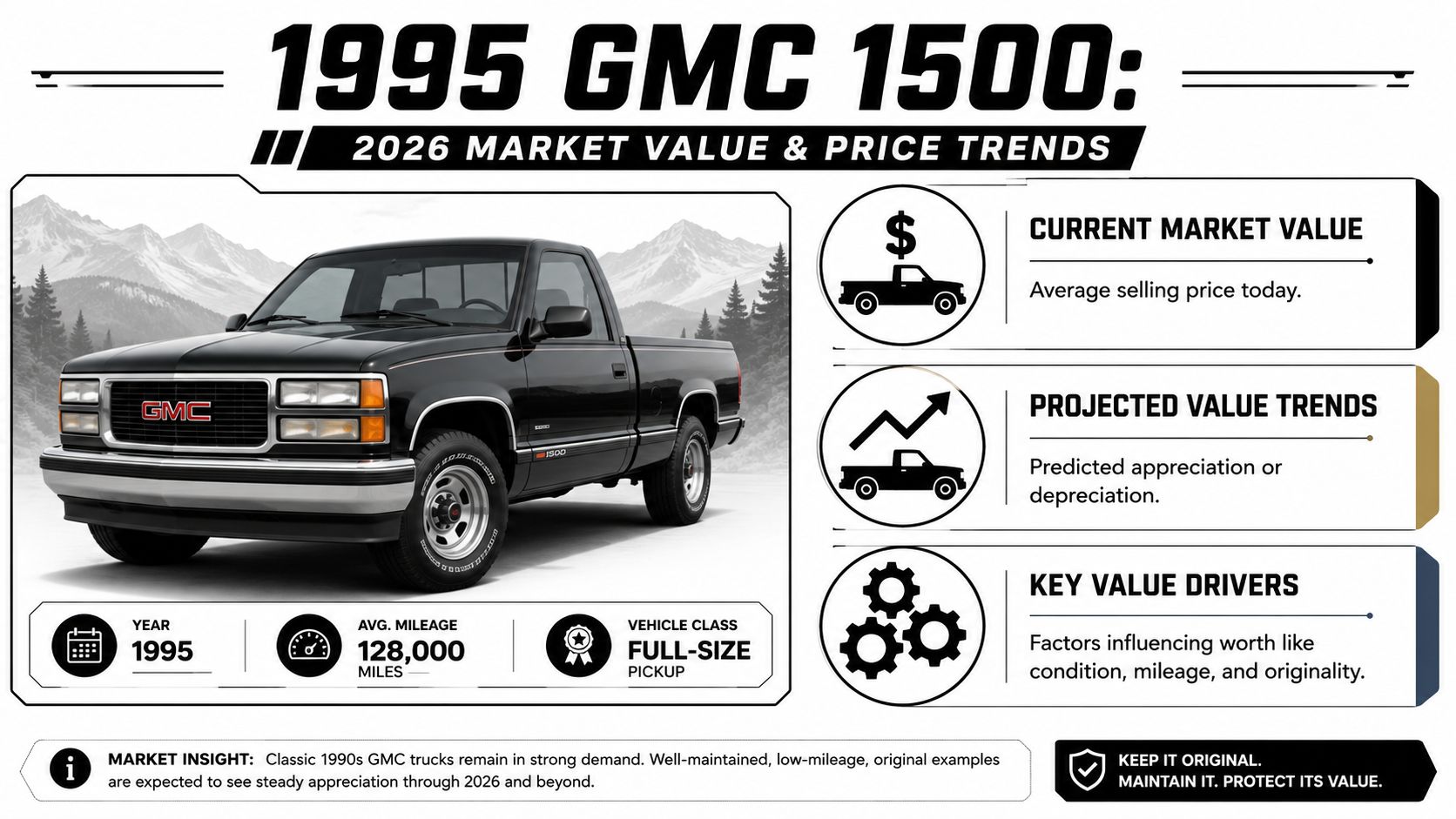
Most buyers asking about value aren't looking for a collector-auction answer. They want to know whether the asking price on the truck they found makes sense. For a 1995 GMC 1500 buyer's guide, that means thinking in tiers, not in one magic number.
Three value tiers that actually help
A practical way to judge these trucks in 2026 pricing conversations is to sort them by condition and ownership risk.
| Market tier | What it usually looks like | Buyer outlook |
|---|---|---|
| Project truck | Runs or almost runs, visible rust, deferred repairs, incomplete records | Cheap to buy, expensive to sort out |
| Solid driver | Starts easily, drives straight, presentable body, usable interior, believable maintenance story | Best value for most buyers |
| Restored or pristine | Excellent cosmetics, sorted mechanicals, strong documentation, cleaner underbody | Highest buy-in, easiest to own if the work was done right |
Broad price tools often stop being helpful. A pricing engine can cluster listings, but old trucks don't trade on trim alone. They trade on structure, originality, service history, rust severity, and how much hidden work remains.
Why “Carfax pricing 2026” thinking only goes so far
Searches around carfax pricing 2026 reflect a real buyer need. People want a market benchmark. That's fair. The problem is that benchmark pricing works better on newer used vehicles than on a truck this old, where two seemingly similar listings can be worlds apart underneath.
For a classic-era pickup, value moves up or down based on factors like:
- Rust repair quality rather than the presence of fresh paint
- Originality versus a patchwork of cheap aftermarket fixes
- Consistency of maintenance records
- Signs of long-term work use or neglect
- How complete the truck is, down to trim, interior pieces, and small hardware
A thirty-year-old truck isn't overpriced because the asking number is high. It's overpriced when the condition story doesn't match the money.
What usually works for buyers
The sweet spot is usually the truck that presents as a solid driver, not the cheapest listing and not the flashiest one. Project trucks can make sense if you already know the platform, can inspect metal properly, and have realistic patience. Restored trucks make sense if documentation is convincing and you want to spend more upfront to avoid years of catch-up repairs.
If you're comparing listings, don't ask which seller wants less. Ask which truck leaves you with fewer unknowns after the sale. That's the number that matters.
Common Mechanical Failures and Rust Hotspots
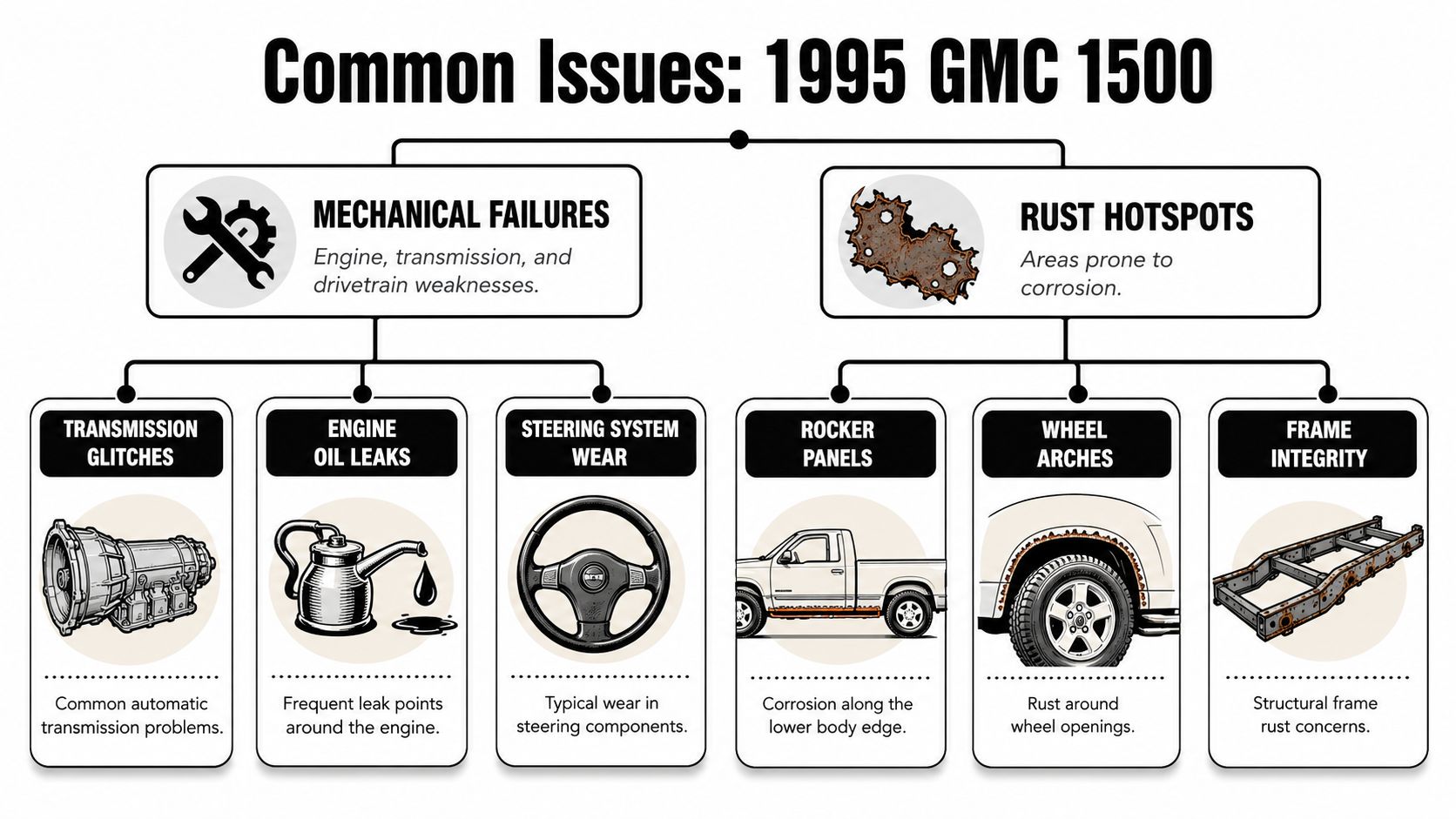
A lot of first-time buyers get burned. They learn the usual trouble spots, think they're prepared, then assume spotting one issue tells them the whole story. It doesn't. On a 1995 GMC 1500, the bigger danger is often accumulated risk. Several smaller problems can point to years of neglect, hidden corrosion, or crude repairs.
The mechanical issues buyers talk about for a reason
Known problem areas aren't myths. The critical gap for buyers is the space between known failure points, such as intake manifold gaskets and distributor faults at 130,000 miles, and the lack of any standardized, VIN-specific way to predict the risk of a specific truck today, as discussed in this 1995 GMC 1500 risk analysis video.
The same source also points out that buyers still don't get a traditional 1-100 predictive risk score for imminent failure based on a truck's unique history, especially in the U.S. and Canada where rust and age-related wear dominate.
Here's how that shows up in practical terms:
- Distributor-related trouble can look like a one-time annoyance, or it can signal a truck that has gone too long without proper tune-up work.
- Intake or gasket leaks may be repairable and contained, or they may hint at sludge, heat-cycle abuse, and poor maintenance habits.
- Throttle body issues can be minor drivability problems, but they also tell you whether the seller fixes causes or just symptoms.
Rust isn't a body problem first
On these trucks, rust starts as a cosmetic issue only if you catch it early. Most buyers don't. They notice the obvious spots and miss the structural story.
Check these areas carefully:
- Cab corners where bubbling often means more damage behind the visible metal
- Rocker panels that can hide filler, patch panels, or internal corrosion
- Rear wheel arches where moisture and debris sit for years
- Lower doors and bedside seams where repairs are often disguised with fresh paint
- Frame sections and mounting points where value can collapse fast if corrosion is advanced
Surface rust can be negotiated. Structural rust changes the entire purchase.
The mistake that keeps repeating
Forum knowledge helps, but it can also create false confidence. A buyer learns “these trucks often leak here” or “that part fails around this mileage,” then treats every truck as if the risk is identical. It isn't.
A clean-looking truck with hidden corrosion, title complications, and a patchwork service history is more dangerous than an honest truck with visible flaws and consistent ownership evidence. The first one fools people. The second one usually tells the truth.
What works and what doesn't
A few habits separate smart buyers from regretful ones:
What works
- Looking for patterns, not isolated defects
- Matching wear signs to the seller's story
- Inspecting underneath before admiring the paint
- Assuming every old truck has some needs, then judging whether they're manageable
What doesn't
- Treating “common issue” lists as a substitute for inspection
- Believing undercoating automatically means protection
- Assuming a smooth idle means a healthy truck
- Buying on nostalgia before checking for corrosion and hidden abuse
That's why generic checklists only get you halfway. They help you spot known weaknesses. They don't tell you how risky one specific truck has become over time.
The Ultimate Pre-Purchase Inspection Checklist
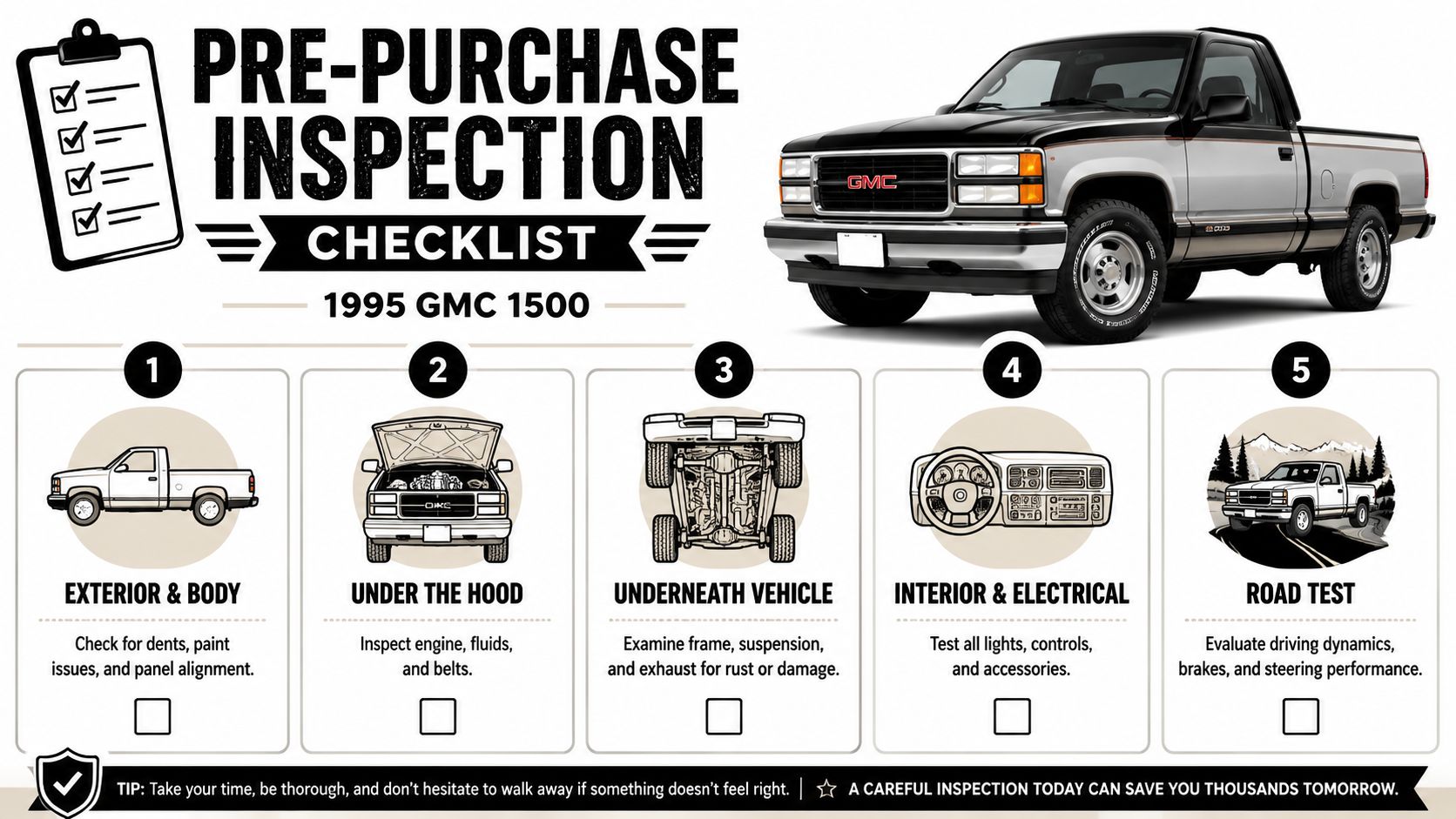
A proper inspection isn't glamorous, but it saves money. When I'm looking at a truck like this, I don't start with the engine note or the seller's story. I start by asking whether the truck's condition is consistent from front to back, top to bottom.
For a more general framework you can pair with this truck-specific guide, this vehicle inspection report overview is useful reading before you go see a seller.
Walk the body before you discuss price
Start outside and stay there longer than feels natural. Cosmetics can mislead you, but they also reveal a lot if you slow down.
- Panel fit: Uneven gaps, misaligned bumpers, or doors that shut differently side to side can point to old collision work.
- Paint consistency: Look for shade mismatch, tape lines, overspray on trim, and rough texture near lower body sections.
- Rust check: Bring a flashlight and inspect wheel arches, rocker areas, cab corners, bed supports, and the bottom edges of doors.
- Glass and trim: Missing moldings and cracked weatherstripping often show how carefully the truck was stored and maintained.
Check the cabin like an appraiser, not a fan
The interior tells you how the truck was lived in. Hard use leaves patterns.
Look for these clues:
Seat wear versus claimed use
A supposedly pampered truck with a heavily worn seat and sloppy steering wheel deserves more questions.Switches and accessories
Test windows, locks, lights, gauges, HVAC functions, wipers, and radio. Small failures can indicate broad electrical neglect.Water intrusion signs
Damp carpet, mildew smell, stained headliner edges, or rust under floor mats usually mean leaks have been around for a while.
If the inside feels neglected, the parts you can't see usually got the same treatment.
Under the hood and underneath the truck
Open the hood only after the walkaround. A warm engine can hide cold-start behavior, so if possible, inspect before the seller has it fully warmed up.
Use this sequence:
Fluids first
Check oil condition, coolant appearance, power steering fluid, and signs of contamination or neglect.Belts, hoses, and wiring
Cracks, brittle rubber, improvised clamps, and messy splices suggest deferred maintenance.Leak evidence
Don't just note that something is damp. Look for where the leak starts and whether grime buildup suggests it has been active for a long time.Frame and suspension
Crawl underneath. Tap suspect rust areas carefully. Inspect mounts, crossmembers, brake lines, exhaust hangers, and spring or shock attachment points.
The road test that tells the truth
The test drive shouldn't be a quick loop around the block. It needs enough variety to expose drivability problems.
Pay attention to:
- Cold start behavior
- Idle quality in gear
- Shift feel under light and moderate throttle
- Brake pull, pedal feel, and vibration
- Steering looseness
- Clunks over bumps
- How the truck tracks on a straight road
A seller can clean a truck in an afternoon. They can't fake consistent behavior from body, chassis, engine, and interior all at once. That's what you're really checking.
Beyond the Checklist with a Vehicle History Report
A hands-on inspection can tell you what the truck is today. It can't tell you everything it has been. That matters a lot on a vehicle that has changed hands, crossed borders, sat for years, or been revived after damage.

That's why a vehicle history report belongs in the process even for an older truck. If you need a refresher on what that report is supposed to include, this guide to a vehicle history report is a solid starting point.
What a VIN check can uncover that your eyes can't
On a 1995 GMC 1500, the hidden story often matters more than the visible one. A truck can look straight, start easily, and still carry baggage that affects value, insurability, registration, or resale.
A proper VIN-based history review can help surface issues such as:
- Branded title history, including salvage or flood labeling
- Accident records that explain odd panel fit or repaint work
- Odometer inconsistencies that make wear patterns more meaningful
- Open recalls
- Lien status that can complicate ownership transfer
- Theft-related records
- Cross-border history if the truck has moved between markets
That last point matters more than buyers think. If you're looking at a truck that has lived in both countries, vin check Canada and vin check USA questions aren't niche concerns. They're part of understanding where the truck has been registered, how title history traveled, and whether the paper trail stays coherent.
Why old-truck buyers need a risk model, not just a document dump
The market still falls short in one key area. Buyers can gather snippets from listings, receipts, forum posts, and seller claims, but that still doesn't create a clear measure of total ownership risk for one specific truck.
A report is most useful when it helps answer practical questions:
- Does this truck's history support the seller's story?
- Are the visible flaws consistent with the paper trail?
- Is the truck merely old, or has it been abused, rebuilt, or repeatedly offloaded?
- Will this purchase likely start with maintenance, or with damage control?
The best old-truck buys usually aren't the cleanest-looking ones. They're the ones with the fewest contradictions.
A real-world buying scenario
Say you're comparing two listings. Truck A has nicer paint and a cleaner interior. Truck B looks more used, but the ownership story checks out better. If Truck A shows title complications, mileage doubt, or accident history that doesn't match what you're seeing, the shinier truck can become the worse buy fast.
That's why the paperwork side and the physical side have to agree. If they don't, trust the conflict. It usually means there's more to uncover.
Is a Modern VIN Report Worth It for a Classic Truck
This is one of the most common objections in the old-truck world. Why pay for a report on a cheap pickup? Fair question. The answer comes down to whether you'd rather spend a small amount before the purchase or absorb a much bigger mistake after it.
The publisher information for this article states that individual reports start at $19.99 and that higher-volume access can run $99 per month, depending on plan level. That matters because it frames the decision properly. The report cost is fixed and known. The downside of buying the wrong truck isn't.
The cost-benefit argument is straightforward
Searches for carfax worth it usually come from skeptical buyers, and skepticism is healthy. But on a truck this old, a report isn't about chasing perfection. It's about avoiding avoidable surprises.
A modern report can help you avoid trucks with:
- Title problems that hurt resale or registration
- Mileage discrepancies that change how you interpret wear
- Damage history that explains poor repairs
- Ownership complications that turn a simple purchase into a paperwork mess
If you're cross-shopping services, this review of the best vehicle history report sites gives useful context on what to compare.
When it makes the most sense
A VIN report is especially worth it when:
- The seller's story sounds polished but thin
- The truck has fresh cosmetic work
- You're buying from another state or province
- You're choosing between several trucks and need cleaner separation
- You're not experienced enough to spot every red flag in person
There's also a practical comparison angle. Some modern platforms let buyers compare multiple vehicles side by side, which helps when three similar GMT400 trucks have very different baggage.
The honest trade-off
A report won't tell you whether every gasket, bushing, and electrical connection is healthy. It won't replace crawling under the truck. But it can stop you from buying a problem with a better sales pitch.
For most buyers, that's enough to justify the spend. If you're serious about buying a 1995 GMC 1500 in 2026, using both inspection and history data is the sensible move.
Maintenance and Restoration Essentials for Owners
Owning one of these trucks is usually rewarding for people who like mechanical honesty. It's frustrating for people who expect modern-car neglect tolerance. A 1995 GMC 1500 will treat you well if you stay ahead of small issues. It will punish you if you keep postponing them.
What good owners do early
The first phase of ownership should be about establishing a baseline. Even if the seller sounds credible, assume you need to verify everything yourself.
Focus on these jobs first:
- Change fluids and inspect for contamination so you know where your starting point is.
- Replace aged belts and hoses if their condition is uncertain.
- Address leaks while they're minor because seepage turns into downtime when left alone.
- Inspect brakes, steering, and suspension wear before chasing cosmetic upgrades.
- Clean and protect rust-prone areas instead of waiting for bubbling paint to announce the problem publicly.
Old trucks reward prevention. They don't reward optimism.
Driver restoration versus full restoration
A lot of buyers say they want to “restore” the truck when what they really mean is they want it clean, reliable, and presentable. That's a driver restoration, and for many owners it's the right move.
A full restoration is different. It asks for more time, more money, more storage, and more patience with parts chasing, bodywork, and reassembly details. If your truck is structurally solid, a mechanical refresh and honest cosmetic cleanup often makes better financial sense than trying to create a show truck from a rough example.
Here's the trade-off in plain terms:
| Ownership path | Best for | Main risk |
|---|---|---|
| Preserved driver | People who want to use the truck | Letting small issues pile up |
| Cosmetic refresh | Buyers who want better presentation without teardown | Spending money on looks before structure |
| Full restoration | Enthusiasts committed to the long haul | Underestimating labor, parts, and downtime |
Insurance and long-term planning
If the truck is moving from old pickup to recognized classic in your garage, insurance deserves a closer look too. Owners in the Pacific Northwest may find this guide to classic car insurance in Washington useful for understanding how usage, storage, and agreed-value style coverage fit older vehicles.
The broader point is simple. Buy the truck that matches the life you want to live with it. If you want a weekend cruiser, don't adopt a rust-heavy rescue because the price feels tempting. If you want a usable old truck, don't overpay for shine and then become afraid to drive it.
Frequently Asked Questions About the 1995 GMC 1500
Is the 1995 GMC 1500 a good truck to buy today
Yes, if the body and frame are sound and the truck has a believable history. The platform has lasting appeal, but age-related neglect changes everything.
What matters more, mileage or condition
Condition. On a truck this old, maintenance quality, rust level, and past repairs usually matter more than the odometer by itself.
Is rust always a deal breaker
Not always. Light cosmetic rust can be manageable. Structural corrosion, poorly hidden patchwork, and compromised mounting points are a different story.
Should I buy a cheap project or spend more upfront
Most buyers are better off spending more on a sorted driver. Cheap projects can become expensive quickly, especially if rust and prior damage overlap.
Do I still need a vehicle history report on an old truck
Yes. A physical inspection can't reveal every title, mileage, lien, theft, accident, or cross-border issue in the truck's past.
If you're narrowing down a few trucks and want more confidence before you buy, VekTracer can help you check a vehicle's history, compare options side by side, and spot risk that a walkaround alone can't uncover.
Ready to check a vehicle?
Enter any 17-character VIN for a free instant preview — no account needed.