2009 Mustang GT Buyer's Guide: Specs, Price & Problems
Check a vehicle before you buy
Enter a VIN for a free instant preview — accidents, title brands, mileage, liens & open recalls.
A clean 2009 Mustang GT listing can pull you in fast. The shape still works, the V8 still matters, and the right car feels like a bargain compared with newer muscle. The main question isn't whether an 09 Mustang GT is fun. It is. The question is whether the specific car in front of you is a solid buy or a disguised repair project.
That's where most shoppers get burned. A healthy example gives you classic S197 character, a strong naturally aspirated V8, and real everyday usability. A neglected one can look great in photos and still hide years of mileage abuse, deferred maintenance, or accident history. If you're also budgeting for ownership, it helps to sort insurance early with a practical guide to select car insurance protection before you commit.
Your Essential 2009 Mustang GT Buyer's Guide

If you're staring at a promising 09 Mustang GT right now, the short answer is simple. It can be a smart buy if you verify condition and history instead of buying on looks and exhaust note alone. The car has the credentials to justify the excitement. The 2009 Ford Mustang GT uses a 4.6-liter SOHC V8 with 300 horsepower and 320 lb-ft of torque, and it's rated to run 0-60 mph in 5.07 seconds with a top speed electronically limited to 155 mph, according to CarBuzz's 2009 Mustang GT specs.
That's enough performance to keep the car relevant long after its model year. It also means many examples were driven hard, modified badly, or passed through multiple owners who didn't treat maintenance with the same enthusiasm they had for acceleration.
What makes this guide different
Most buyer guides stop at specs and generic reliability talk. That's not enough for a used V8 coupe that's old enough to hide mistakes. You need to connect the car's known weak spots to the paper trail behind it, then confirm what you see in person.
Practical rule: Don't judge an 09 Mustang GT by paint, wheels, or idle sound. Judge it by how well the car's story matches its condition.
A good car usually shows consistency. Pedal wear makes sense for the mileage. The title history fits the seller's story. The service records don't leave obvious gaps. A bad one often falls apart when those details stop lining up.
Performance Specs and Available Trim Levels
A test drive should do more than confirm that the V8 sounds good. It should tell you whether the car still performs like a healthy 4.6-powered GT, or whether age, neglect, or poor modifications have already taken a bite out of it.
Performance testing puts a stock 2009 Mustang GT at 0-60 mph in 5.07 seconds and the quarter mile in 13.67 seconds at 102.3 mph, according to Motor Matchup's GT Premium Coupe data. Use those figures as a reference point, not a promise. An older car will vary with tires, weather, and driver input, but it still should feel strong, clean, and consistent under throttle.
2009 Ford Mustang GT Key Specifications
| Specification | Value |
|---|---|
| Engine | 4.6-liter SOHC V8 |
| Horsepower | 300 horsepower |
| Torque | 320 lb-ft |
| 0-60 mph | 5.07 seconds |
| Quarter mile | 13.67 seconds at 102.3 mph |
| Top speed | Electronically limited to 155 mph |
Those specs matter most during screening. If a seller claims the car is stock and sorted, but you hear pinging, feel lazy throttle response, notice a rough idle, or get sloppy automatic shifts, treat that as a risk signal. Then verify the story against service records, modification history, and the vehicle report before you spend time on an in-person visit.
GT Deluxe vs GT Premium
The good news is simple. Deluxe and Premium trims share the same core GT hardware, so your real decision is not speed. It is condition, equipment, and how much wear you are willing to live with in a 15-plus-year-old interior.
The GT Premium Coupe usually draws more interest because it feels better finished for street use and daily driving. Premium cars can justify a higher asking price, but only if the condition backs it up. Worn seat bolsters, peeling trim, failing shaker audio components, or a sagging headliner can erase that advantage fast.
Here is the practical breakdown:
- GT Deluxe: Usually the better value if you care most about drivetrain condition and want fewer interior features to repair.
- GT Premium: Better fit for buyers who want the nicer cabin and are willing to pay more for a cleaner, more complete car.
- Modified cars: Judge the workmanship and ownership history first. Parts alone do not add value, and they often point to harder use.
A clean Deluxe is often the smarter buy than a rough Premium.
This is also where risk assessment matters more than trim names. If a Premium car has multiple owners, mileage gaps, or accident entries, the badge does not save it. Before contacting the seller, compare the asking price against a realistic used car value estimate guide, then weigh the trim against the history report. A lower-trim car with consistent maintenance and no signs of abuse is usually the safer bet.
A stock or lightly modified car with boring photos and a boring history is usually worth more than a flashy one with a paper trail full of questions.
Pay for a car that still feels right, shifts right, and has a story that checks out. Trim level matters. Verified condition matters more.
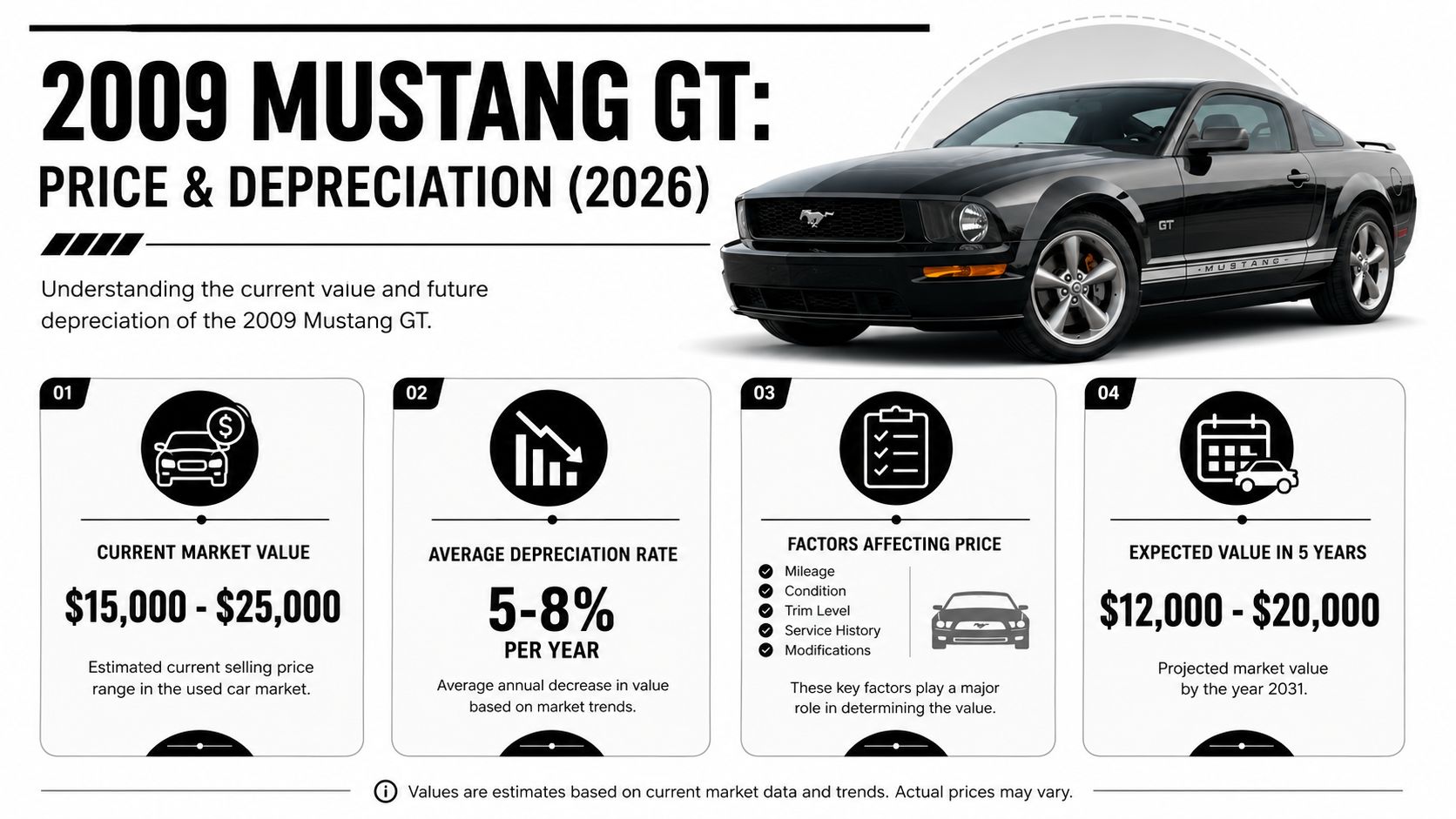
2009 Mustang GT Price and Depreciation in 2026
You find a 2009 Mustang GT online at a price that looks fair, the photos are clean, and the seller says it is “well cared for.” Before you schedule the drive, the main question is simpler. Does the price match the car's risk?
That matters more with an 09 GT than with a generic used coupe. Values have stayed firm enough that sellers can ask strong money for the right car, but one accident entry, a long registration gap, or signs of corrosion can turn a decent deal into an expensive correction. Price this car as a combination of market value, maintenance exposure, and history-report risk.
As noted earlier, published market guides put the 2009 Mustang GT Premium Coupe in the upper used-car range rather than bargain territory, and that lines up with what buyers keep seeing in private-party listings. Original MSRP also matters less now than ownership quality. A clean car with consistent records can sell quickly. A rough one often sits, even when the asking price looks tempting on first glance.
What the asking price should cover
A higher price only makes sense if the car earns it in ways you can verify.
Service records, consistent mileage reporting, factory-style wiring, matching tires, and a clean underbody support a stronger number. Missing records, a salvage or rebuilt title, repeated short-term ownership, or visible rust should pull the number down fast. If you need a baseline before negotiating, use this guide to estimate used car value, then adjust for risk instead of trim badges or seller enthusiasm.
Rust deserves its own price penalty. These cars are old enough that climate and storage history matter, and corrosion is expensive because it spreads from cosmetic annoyance to structural and suspension headaches. Buyers in wet or salted-road regions should spend a minute reading about preventing vehicle corrosion and then apply that thinking backward. If the car was not protected, assume more inspection time and more bargaining power.
Where buyers overpay
- Clean photos hiding a weak history: Nice paint does not erase accident records, mileage gaps, or lien issues.
- Mods presented as value adds: Bolt-ons rarely raise market value. They often raise the chance of hard use, tuning mistakes, or poor installation.
- Premium trim used as a pricing shield: A nicer interior helps, but it does not offset a questionable ownership trail.
- Ignoring regional rust risk: A southern car and a northern car at the same price are not equal if the underside tells a different story.
The best 2009 Mustang GT deals in 2026 usually look a little boring. Stock ride height. Sensible maintenance. Normal ownership timeline. A history report without strange gaps or repeated warning signs.
That is the car worth paying for.
Common Faults and Potential Maintenance Costs
The 4.6-liter V8 has a reputation for durability, and that reputation is deserved. But durability can fool buyers. It lets a worn-out car run well enough to sell, especially when the seller knows how to clean it up for photos and a short test drive.
What usually goes wrong
A few problem areas come up again and again with this generation. The first is the thermostat housing. Buyers should look for signs of coolant leakage around the housing area, dried residue, or a smell that suggests coolant has been escaping for a while.
Another known issue is spark plug service drama. On neglected cars, plug removal can turn into a headache. That matters less because of internet horror stories and more because it often reveals the car hasn't had careful, routine maintenance.
Then there's the alternator and charging system side of ownership. A weak charging system can show up as dim electrical behavior, hard starts, or random warning lights. On an older performance car, electrical weirdness tends to multiply once owners start adding stereo gear, lighting, or sloppy aftermarket wiring.
What buyers should connect to condition
Don't isolate these faults from the rest of the car. If you see one issue, ask what else the owner skipped.
Use this quick risk read when you inspect:
- Coolant traces near the front of the engine: Suggests the car may need immediate cooling-system attention.
- Rough idle or inconsistent running: Could point to deferred tune-up work, poor-quality parts, or a car that's been sitting.
- Battery light history or charging quirks: Tells you to inspect wiring quality and ask what electrical work has already been done.
- Wet carpet or musty smell: Water intrusion matters more than comfort. It can lead to hidden corrosion and electrical problems.
Rust is another overlooked factor. Not every 09 Mustang GT suffers equally, but climate and storage matter. If you're evaluating a car from a wet or winter-heavy region, it helps to understand the basics of preventing vehicle corrosion so you know what good underbody protection looks like and what neglect looks like.
A solid engine doesn't cancel out a bad ownership history. It just delays the moment you discover it.
What doesn't work as buying logic
What doesn't work is taking forum reassurance at face value. “These engines run forever” is not a buying standard. A tough drivetrain can survive abuse. That doesn't mean the rest of the car did.
It also doesn't work to assume low seller confidence means minor issues. Some owners know exactly what they're unloading. If the car needs multiple little fixes, the bigger concern is usually the pattern behind them.
The Step by Step Pre Purchase Inspection Checklist
A good in-person inspection should move from broad signals to specific confirmation. Don't start under the hood. Start with what the car tells you from ten feet away, then work closer.
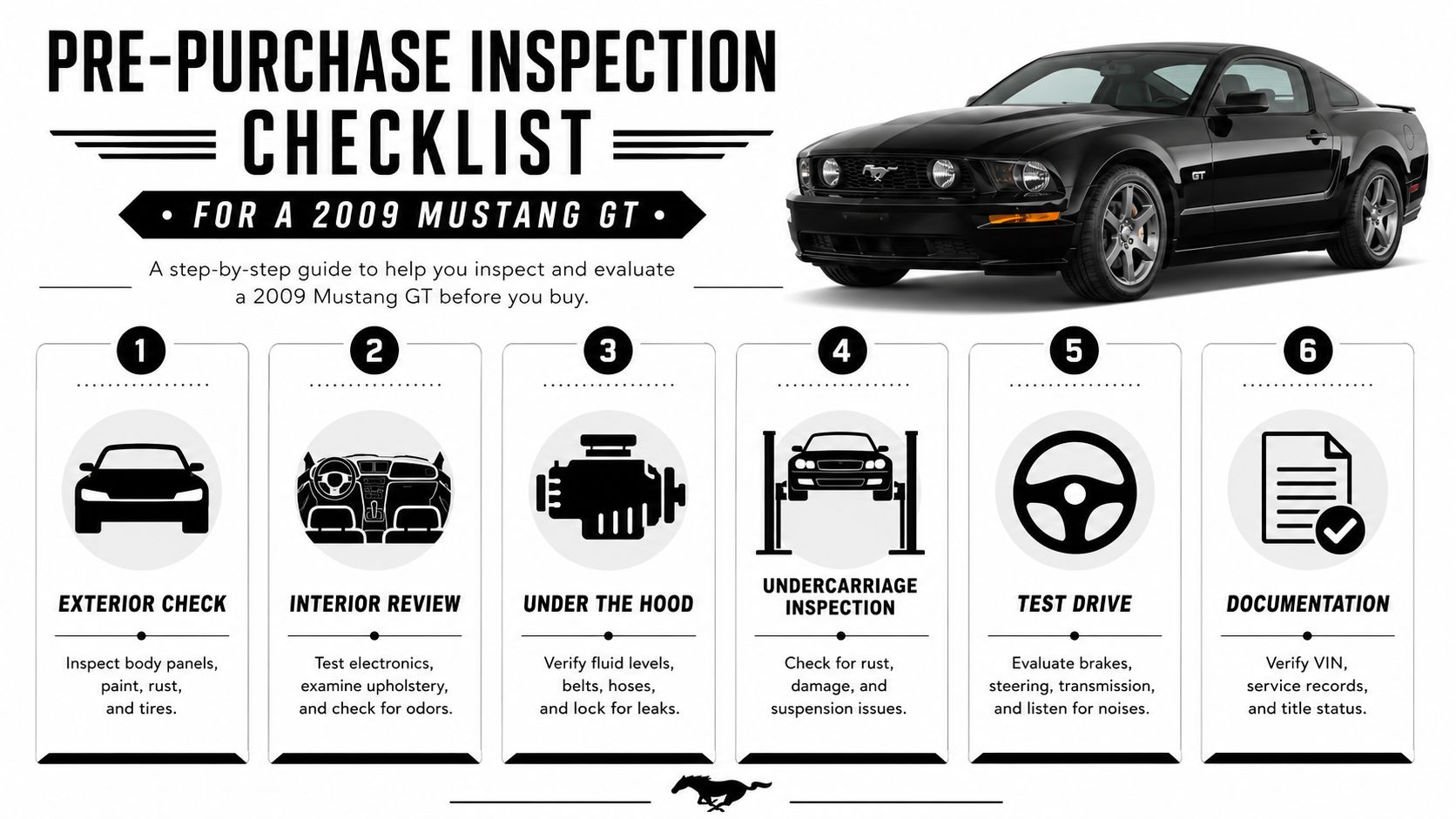
Walkaround and body check
Before the seller starts it, circle the car slowly.
- Check panel fit first. Uneven gaps, paint mismatch, or trim that doesn't sit right can point to prior body work.
- Look low along the sides. Reflections help reveal waves or repaired areas.
- Inspect tires as clues. Uneven wear can hint at alignment issues, suspension wear, or a car that's had a harder life than advertised.
If you want a broader framework before the visit, this pre-buy guide on how to inspect a used car before purchase is a useful companion.
Interior and under-hood checks
Inside the cabin, focus on consistency. Seat wear, pedal wear, steering wheel condition, and switchgear condition should all feel believable together. If the mileage story and cabin wear don't match, treat that as a major warning sign.
Under the hood, slow down and inspect details rather than hunting for one dramatic flaw.
- Cooling system area: Look around the thermostat housing for residue, seepage, or fresh cleanup.
- Fluid condition: Dirty fluid doesn't always kill a deal, but it shows how the owner approached maintenance.
- Wiring quality: Aftermarket lighting, stereos, and alarm work often leave sloppy wiring behind.
- Belts and hoses: Aging rubber tells you whether the owner stayed ahead of maintenance or just reacted to breakdowns.
Undercarriage and test drive
If you can get the car on a lift, do it. If not, crouch and look as far underneath as you can. You're checking for rust, leaks, impact damage, and improvised repairs.
On the drive, keep the radio off and the windows cracked. A proper test drive should include:
- Cold start behavior: Does it fire cleanly, or does it hesitate and stumble?
- Steering feel: The car should feel planted, not vague or nervous.
- Braking response: Pulling, vibration, or odd pedal feel all deserve follow-up.
- Transmission behavior: Whether manual or automatic, shifts should feel deliberate, not confused or abusive.
- Noise under load: Listen for clunks, rattles, drivetrain thumps, and wheel-bearing-type hum.
Bring a flashlight, a paper towel, and enough patience to walk away. Those three tools save more money than enthusiasm ever will.
How to Decode a Vehicle History Report
A physical inspection tells you what the car is today. A vehicle history report tells you what happened before you got there. On an 09 Mustang GT, that second part is not optional.
The key risk is mileage truth. The 2009 Mustang GT's durability can hide wear so well that a tired high-mileage car may still present as decent on a quick drive. Verified guidance specific to this model points out that odometer rollback is a critical risk, and that generic advice often misses it. It also notes that mileage verification with rollback detection is what helps buyers assess a car's true risk profile, as discussed in this Mustang buyer video focused on mileage risk and rollback detection.
What to look for in the report
Don't skim the report for accidents and call it done. Read it like an investigator.
- Mileage sequence: The entries should progress logically. Anything irregular deserves an explanation you can verify.
- Title branding: Salvage, rebuilt, or other title flags change the entire buying decision.
- Accident and damage entries: Even when the car looks straight now, prior damage can explain alignment quirks, paint mismatch, or odd wear.
- Lien status and theft records: Paperwork surprises can turn a “good deal” into a legal mess.
- Recall status: Open recalls matter because they affect safety and future ownership hassle.
If you're trying to match the report to the actual car, it helps to understand Ford VIN details first. This Ford Mustang VIN code decoder makes it easier to confirm you're looking at the right vehicle and trim information.
What works and what doesn't
What works is comparing the report against the car in front of you. If the report suggests mileage consistency and the cabin wear supports it, that's a good sign. If the report is clean but the car shows suspicious wear, keep digging.
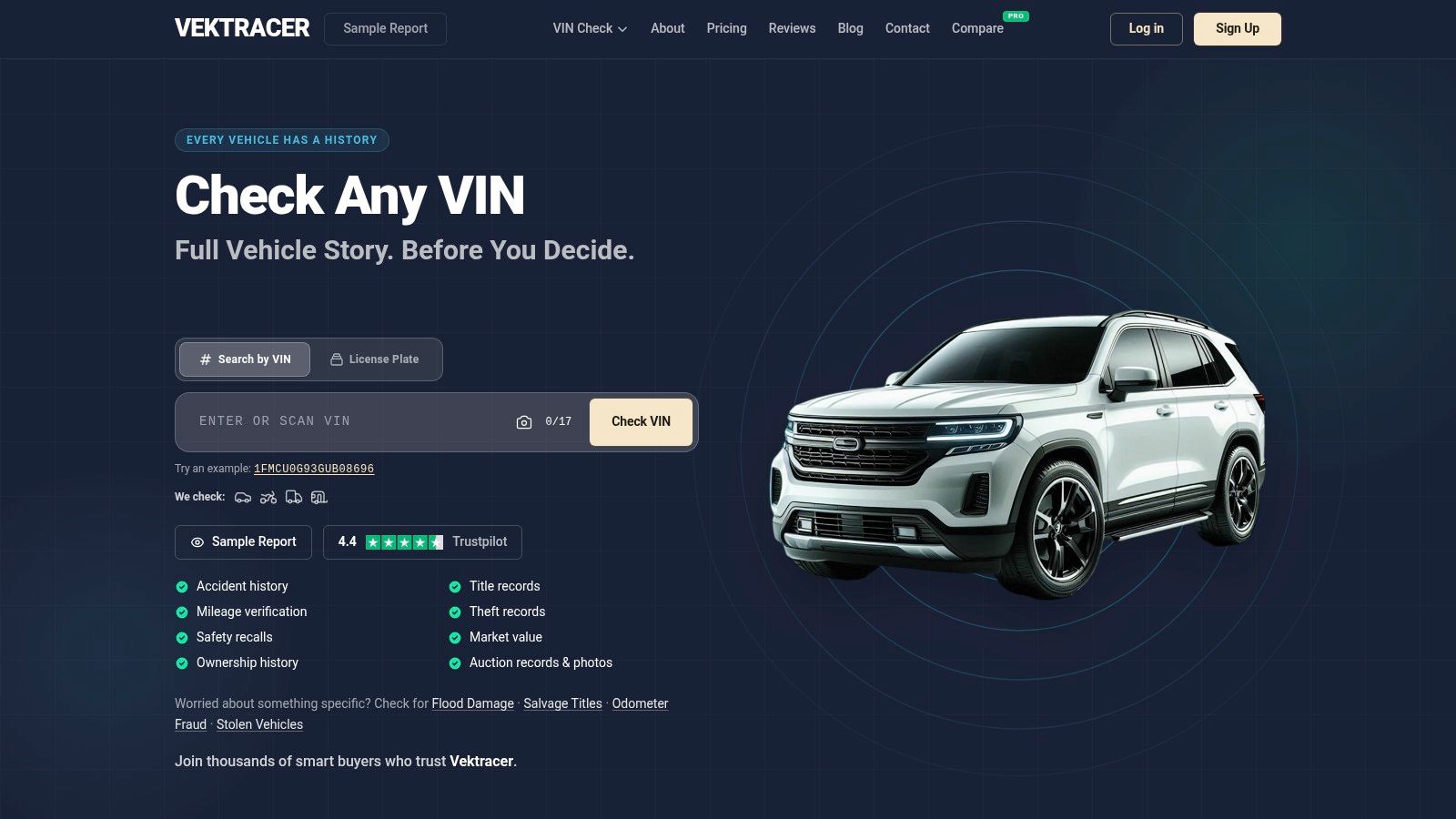
What doesn't work is treating a clean-looking listing as proof. It also doesn't work to rely on seller screenshots, vague verbal assurances, or “I bought it that way.” If you're serious, get the full picture with a VekTracer report before you buy.
Frequently Asked Questions About the 2009 Mustang GT
Is the 2009 Mustang GT a good daily driver
Yes, if you buy the right one. The car has enough comfort and cabin usability to handle regular driving, especially in GT Premium form. It works best as a daily when the previous owner kept it close to stock and stayed on top of maintenance. It works poorly when you buy someone else's unfinished project.
Is the 2009 Mustang GT a good first muscle car
Usually, yes. The power delivery is straightforward, the layout is traditional, and the aftermarket support is huge. The catch is buyer discipline. A first-time muscle car owner should choose an honest, well-kept example over the flashiest listing every time.
Buy your first V8 with your head, not your ears.
Manual or automatic for an 09 Mustang GT
If you want the more involved driving experience, buy the manual. It suits the car's personality better and makes the GT feel more alive. If your priority is easy commuting and less driver workload in traffic, the automatic makes sense. In either case, condition matters more than transmission preference.
Should you buy a 2009 or a 2010 Mustang GT
If you're comparing those two directly, the decision usually comes down to condition, history, and price rather than a dramatic ownership difference. I'd take the cleaner car with the better paper trail.
What cosmetic upgrades make sense after purchase
Keep them modest until the car proves itself mechanically. Lighting is a common first step, and some owners like upgrades such as 2005-2009 Ford Mustang Anzo lights, but appearance mods should come after you've handled maintenance, history verification, and baseline inspection.
For buyers comparing report providers before they pull a VIN, it's also worth reviewing whether Carfax is worth it for your situation, especially if you're balancing report cost against detail level for a VIN check USA or VIN check Canada search. If you're actively shopping, start with your main VIN check pages and keep reading related blog posts that focus on vehicle history report risks rather than generic used-car advice.
Before you hand over money on an 09 Mustang GT, run the VIN through VekTracer. It's a simple way to check accident history, mileage consistency, title and lien status, theft records, recalls, and a quick Risk Score so you can decide with more confidence.
Ready to check a vehicle?
Enter any 17-character VIN for a free instant preview — no account needed.