Used Car Value Estimate: Your 2026 Guide
Check a vehicle before you buy
Enter a VIN for a free instant preview — accidents, title brands, mileage, liens & open recalls.
You pull up a listing for a 2018 SUV. One pricing site says $18,400. A dealer offers $16,200 on trade. The seller is holding firm at $19,500 because "that's what they're going for." All three numbers can be reasonable starting points, and all three can be wrong for the exact vehicle.
A reliable used car value estimate starts with online pricing data, but that number only earns trust after it survives three checks. I verify the VIN history, inspect the car in person, and compare it against local listings and recent sales. Then I adjust for the things broad pricing tools miss, like tire age, paintwork, overdue maintenance, accident severity, trim desirability, and whether the local market is supporting the asking prices on screen.
That blended process matters because used car pricing has been unstable, and book values often lag the actual market. A pricing guide can give you a baseline. It cannot tell you whether the car in front of you is an average example, a hidden problem, or a cleaner-than-average unit worth paying up for.
The goal is not to find one magic number. The goal is to get to one defensible number by combining digital data with real-world inspection, then separating retail asking prices from actual market value.
That is how appraisers price cars that need to make sense on paper and hold up in a negotiation.
Why a Simple Book Value Is No Longer Enough
Set three tabs side by side for the same car and the numbers rarely match. A pricing guide may show one figure, local listings another, and a trade offer something lower still. That gap is normal. It happens because a book value is a broad average, while an actual vehicle is a specific unit with its own history, condition, equipment, and buyer pool.
Older pricing habits worked better when depreciation was steadier and market swings were smaller. In a choppy used-car market, guide values can lag. They also flatten differences that matter in dollars, not just in theory. A clean one-owner truck with service records and fresh tires can justify a premium over book. The same truck with prior bodywork, mismatched tires, and overdue maintenance can land well below it.
That is why I do not treat book value as the answer. I treat it as the first input.
Why the first number often misprices the car
The first number people see usually comes from a retail estimator or an asking-price average. Useful, but incomplete. Those tools are built from large data sets, and large data sets smooth over the exact details that change what a buyer or dealer will pay.
Common misses include:
- History risk: Prior accidents, branded title history, rental or fleet use, and mileage inconsistencies
- Condition risk: Paintwork, worn tires, cracked trim, warning lights, poor repairs, smoke odor, and neglected maintenance
- Configuration risk: Wrong trim selection, missing option packages, unpopular colors, or drivetrain differences that change demand locally
- Market mismatch: National pricing applied to a local market with weaker demand, heavy supply, or seasonal slowdowns
A book figure can be directionally useful and still be wrong by $1,500 to $3,000 once those factors show up. On higher-value vehicles, the gap can be larger.
Practical rule: Start with the guide number, then pressure-test it against the exact vehicle and the local market.
A defensible estimate comes from blending sources
Professional appraisals hold up because they combine desk research with what the car shows in person. The process is simple, but the order matters.
I start with baseline pricing from market guides and current listings. Then I verify the vehicle identity with a VIN lookup report and history check, confirm the exact trim and equipment, and inspect the car for the items pricing tools tend to miss. After that, I adjust for local supply, how optimistic the asking prices are, and what level of reconditioning a dealer would budget before putting the car on the lot.
That blended method produces one number you can defend. It explains why two cars with the same year, make, model, and mileage can trade thousands apart. It also keeps you from overpaying for a problem car just because the book said the price looked fair.
Building Your Data Foundation with a VIN Check
Before you price a car, identify it correctly. Not generally. Exactly.
A surprising number of bad estimates start with bad inputs. People price the wrong trim, miss an options package, trust the seller's mileage note, or assume the car is a standard retail example when the VIN history says otherwise. Your first job is building a clean data file on the vehicle.
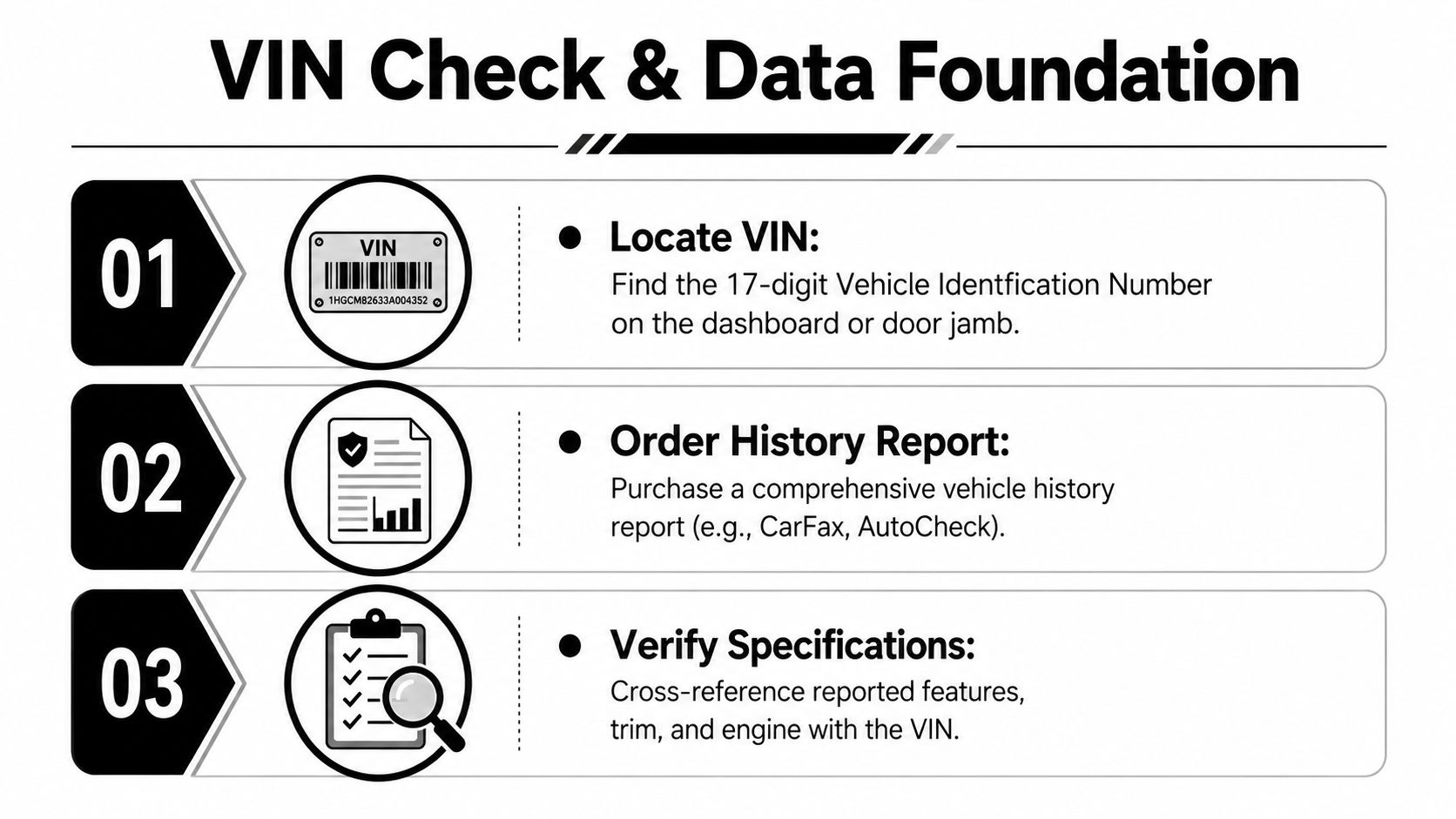
The minimum information you need before pricing
Use this checklist before you open any valuation tool:
- VIN: Find the vehicle identification number on the dashboard at the windshield base or on the driver-side door jamb.
- Exact trim: Not just “EX” or “Limited.” You need the exact trim and any factory package that changes equipment.
- Current mileage: Use the odometer reading, then compare it against history records.
- Factory options: Sunroof, driver-assistance package, upgraded audio, towing package, wheel package, and similar equipment can change comparables.
- Title status: Clean title isn't the same as a branded or salvage history.
- Usage history: Rental, fleet, or police use can affect demand and value.
- Service evidence: Receipts and maintenance records help support condition claims.
Why the VIN matters more than the seller's description
The VIN is the master key because it lets you verify what the car is, rather than what the ad says it is. That's especially important when you're running a vehicle history report, checking prior accidents, or confirming trim and engine details.
A proper lookup also protects you from softer problems. Sellers often aren't lying outright. They're repeating what they were told, or they're rounding details in ways that skew value. A “fully loaded” description can mean very little once the VIN decodes the actual configuration.
If you're researching vehicles across regions, it also helps to start with a structured report process such as this VIN lookup report guide. It gives you a cleaner starting point before you compare prices.
A valuation is only as good as the vehicle identity behind it. If the trim or history is wrong, every price after that is wrong too.
What to verify in the history report
Don't just glance at the headline result. Read the report with valuation in mind.
Focus on:
- Accident entries: These don't all affect value equally, but they change the range.
- Owner count: More owners can raise buyer caution, especially when turnover looks frequent.
- Title type: Branded titles shift the car into a different pricing conversation.
- Service records: Detailed maintenance helps support stronger value.
- Open recalls: These matter later when you make risk-based deductions.
- Use classification: Fleet, rental, or police history can narrow the buyer pool.
If you're shopping across borders, location matters too. A buyer searching for vin check usa results and a buyer looking for vin check canada records may run into different reporting depth, market assumptions, and resale expectations. Don't skip that distinction.
The Hands-On Reality Check
History reports are powerful, but they can't smell mildew, spot a sloppy repaint in bad light, or tell you the steering wheel vibration starts at highway speed. A used car value estimate gets sharper when you inspect what the screen can't see.
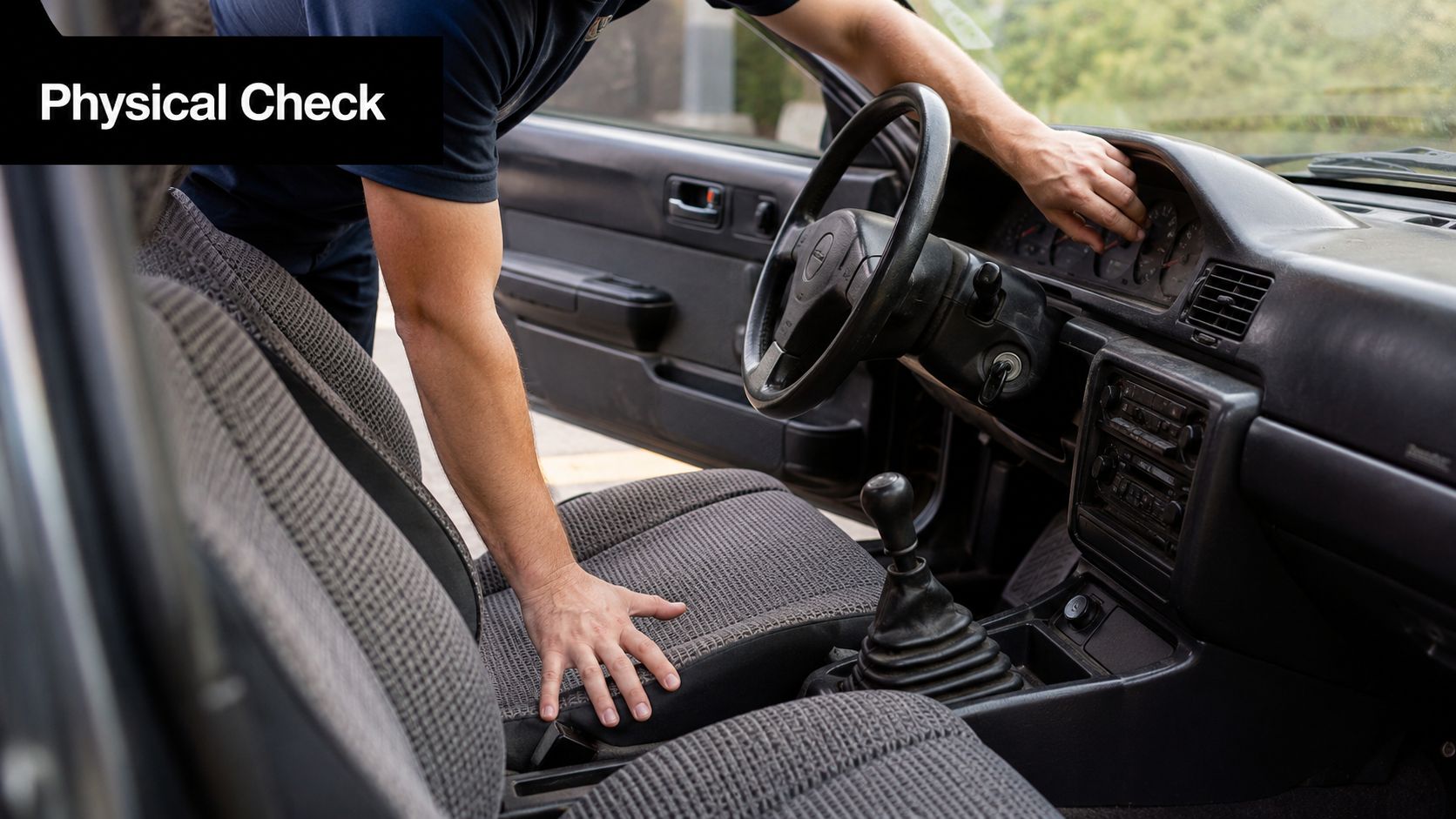
What I look at before I touch the pricing tools again
Start outside. Walk the car slowly. Stand at each corner and look down the body lines. Mismatched paint, overspray, uneven panel gaps, and trim that doesn't sit flush usually tell you more than a clean listing description ever will.
Then check the basics that buyers notice instantly:
- Tires: Brand mismatch across corners often signals cheap reconditioning. Uneven wear can point to alignment or suspension issues.
- Glass and lights: Cracks, heavy pitting, and moisture inside housings hurt presentation and can hint at previous damage.
- Body condition: Chips, bumper scuffs, curb rash, and dent repair all belong in your notes.
- Underside clues: Non-factory welds, fresh undercoating in isolated spots, and bent pinch welds deserve a closer look.
The interior tells you how the car was used
Open the door and ignore the infotainment screen for a minute. Look at seat bolsters, steering wheel wear, pedal wear, headliner condition, stains, smoke odor, and moisture smell. These details help you decide whether the odometer story matches the cabin story.
A car can have decent history on paper and still present badly in person. When that happens, buyers mentally discount it even if they can't explain why. That discount is real, and your estimate should reflect it.
For buyers who want a more structured checklist before paying a mechanic, this pre-purchase car inspection guide is a useful framework.
If the seller says “excellent condition,” make the car prove it panel by panel and seat by seat.
A practical condition report you can build yourself
Use your phone and take organized photos. Front three-quarter, rear three-quarter, each wheel, each seat, dash, cargo area, engine bay, and any flaw worth discussing. Then write a short condition summary under four headings:
| Area | What to note |
|---|---|
| Exterior | Paint mismatch, dents, chips, rust, bumper damage |
| Interior | Odor, stains, tears, worn controls, warning lights |
| Tires and wheels | Matching set, visible wear, curb rash |
| Mechanical feel | Pulling, vibration, harsh shifting, noises |
This isn't a substitute for a professional inspection. It's the evidence file you'll use when the pricing tools assume a cleaner car than the one you're looking at.
If your state or province has formal vehicle safety inspection requirements, check those standards too. They can help you separate cosmetic flaws from items that may block registration or require immediate repair.
Triangulating Value with Online Tools
Now you've got enough facts to build a price range. Not one number. A range.
At this stage, many buyers make a second mistake. They gather multiple estimates, see they don't match, and assume one tool must be wrong. Usually, the tools are answering different questions. One may reflect dealer retail expectations, another private-party assumptions, and another may price the car based on its actual history instead of a generic average.
Use three types of valuation source
I like to pull numbers from three buckets:
- Retail guide: A dealership-oriented benchmark such as Kelley Blue Book's Fair Purchase Price.
- Private sale benchmark: A guide that helps frame direct buyer-to-seller pricing.
- History-based valuation: A tool that prices the specific car, not just the model line.
That third category matters most when the vehicle history isn't spotless. Tools like CARFAX History-Based Value calculate worth using accident history, owner count, service records, and title type, so two similar cars can land at very different values based on their records (CARFAX History-Based Value details).
Why online estimates disagree
They disagree because the assumptions disagree.
One tool might assume dealer-ready condition. Another might default to a cleaner retail scenario than your car deserves. A history-based tool may lower value because of an accident record or commercial-use history that a broad pricing guide doesn't directly absorb.
That's why I don't average all the numbers blindly. I sort them first:
| Tool type | Best use | Common limitation |
|---|---|---|
| Retail guide | Dealer lot comparison | Can overstate value for flawed cars |
| Private-party guide | Direct sale pricing | May not fully reflect hidden history |
| History-based tool | Vehicle-specific baseline | Still needs physical condition adjustment |
A better way to read the spread
When numbers come in, identify the high anchor, low anchor, and most credible middle. The highest number is often what a clean, retail-ready version could ask. The lowest may reflect either real history penalties or a conservative trade context. The middle becomes useful only after you compare it with your condition report.
If you're comparing several vehicles side by side, a structured comparison tool helps you see which estimate is being pulled down by history and which one is being held back by condition. This vehicle comparison tool overview is a solid reference if you want to compare records and valuation logic more systematically.
Don't ask which online tool is “right.” Ask what assumption each tool is making, then keep the one that best matches the actual car.
This is also the point where people ask about carfax pricing 2026 and whether a report is worth buying. A single CARFAX report is priced at $44.99, while a four-report bundle is $99.99 total, which brings the per-report cost to about $25.00 when you're comparing multiple cars (CARFAX report cost breakdown). If you're narrowing several contenders, bundled history reports often make more sense than trying to force one valuation tool to answer every question.
Adjusting for Risk and Real-World Factors
This is the part that separates a useful estimate from a lazy one. Online tools give you a bracket. Your notes decide where inside that bracket the car belongs.
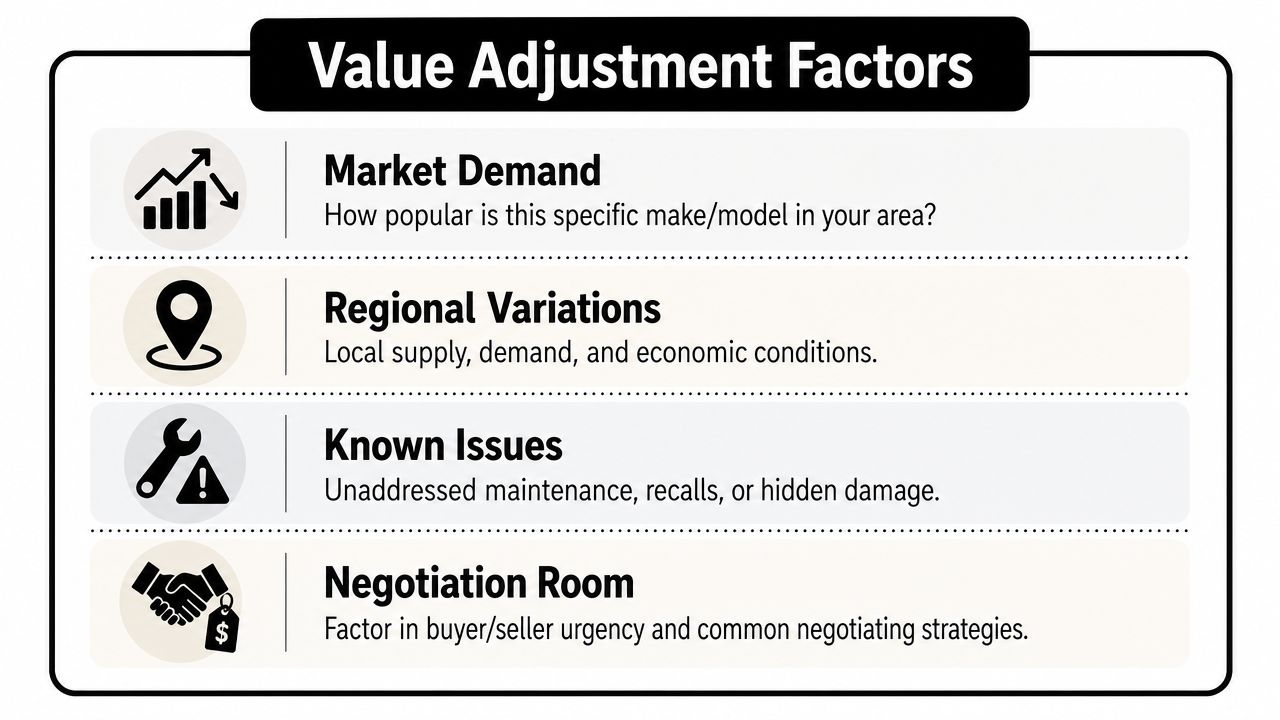
The biggest blind spot in most pricing guides is unresolved risk. Recalls, hidden damage, cosmetic neglect, rough prior use, and local buyer preferences don't always show up properly in generic estimates. If you ignore them, your number will look tidy and perform badly in a real negotiation.
The deduction that many buyers miss
Open recalls matter more than most guides admit. Data shows each unresolved recall can reduce value by $200 to $500, and generic tools often ignore that gap between book value and actual transaction price (vehicle valuation guide for used cars).
That deduction isn't just theoretical. Buyers hear “open recall” and immediately think inconvenience, downtime, and risk. Even if the fix is available, the issue changes negotiation power.
How to make your adjustments
I use a simple filter. Ask whether the issue affects one of these four categories:
- Saleability: Will fewer buyers want the car?
- Immediate cost: Does the next owner need to spend money soon?
- Trust: Does the car raise suspicion even if it drives fine?
- Presentation: Does it look worse than competing listings?
Then group your findings.
Negative adjustments
- Open recalls: Use the documented recall impact as a direct deduction where relevant.
- Visible damage: Scrapes, cracked trim, and tired interiors narrow the buyer pool.
- Poor tire story: Mismatched or worn tires tell buyers corners were cut.
- Weak history: Accident records, title complications, or rough-use signals reduce confidence.
Positive adjustments
- Complete service records: Buyers pay more confidently when maintenance is documented.
- Clean presentation: A car that looks cared for closes the gap to stronger guide values.
- Desirable ownership pattern: Stable ownership and consistent upkeep support the upper end of the range.
A clean-looking car with weak records is still risky. A well-documented car with honest cosmetic wear often sells better than people expect.
Real-world judgment matters
Some factors don't justify a precise line-item deduction, but they still move the deal. Local supply, seasonal demand, and buyer urgency can all shift where the final number lands.
Even appearance protection can influence presentation value if it helps the car show better over time. For example, buyers keeping a vehicle in stronger cosmetic shape often pay attention to things like protecting vehicle headlights with PPF, because hazy or damaged lights can make an otherwise solid car look neglected.
This is also where carfax worth it becomes a practical question, not a branding question. If the history report changes your valuation confidence or provides an edge regarding recalls, accidents, owners, or title type, it's worth more than the raw report fee.
Calculating Private Sale vs Dealer Prices
A car doesn't have one market value. It has at least two that matter in most real transactions. One for a private sale, and one for dealer retail or trade context.
If you skip this distinction, you'll either overpay because you're comparing a dealer price to a private-sale benchmark, or you'll underprice your own car because you're accepting a trade-style number for a vehicle that could sell cleanly to another consumer.
The cleanest way to split the final number
Start with your risk-adjusted figure from the prior step. Treat that as the actual market midpoint for this exact vehicle, not the broad model average.
Then ask what lane the deal is happening in:
- Private party: Buyer and seller transact directly. No dealership overhead, no reconditioning margin, no lot carrying cost.
- Dealer retail: The car is sold from a dealership, usually after detailing, inspection, paperwork handling, and profit margin are built into the price.
- Trade-in: Dealer takes the car below retail because the dealer is assuming resale risk.
Kelley Blue Book's terminology helps frame the gap. A vehicle with a Fair Purchase Price of $22,000 at dealer retail might have a Private Party Value of $24,000, which shows how different contexts produce different numbers and how a buyer can end up paying a 9% premium in a retail setting versus a private-market baseline (Kelley Blue Book and CARFAX value comparison).
How to use that in negotiation
Don't walk in saying, “I saw a lower number online.” That usually goes nowhere. Walk in with a pricing position tied to the car's facts.
For a private purchase, use:
- your history findings
- your condition report
- your online valuation range
- your risk adjustments
Then present the number calmly. If the seller wants a retail-style price for a private-party car, point to the missing dealer benefits. No warranty structure, no retail reconditioning standard, and no store-backed convenience.
For a dealer purchase, reverse the logic. If the dealer is asking top-of-range retail money, the car should support that ask with clean history, strong presentation, and no loose ends.
The best negotiation number is one you can explain in two minutes using the vehicle's history, condition, and market lane.
If you're selling, list near the top of your supportable private-party range only if the car is documented, clean, and easy to show. If it has flaws, price it where the next buyer doesn't have to discover your optimism for you.
Frequently Asked Valuation Questions
| Question | Answer |
|---|---|
| Should I trust a dealer appraisal or an online estimate more? | Trust neither by itself. A dealer appraisal reflects that dealer's resale strategy. An online estimate reflects a model and assumption set. Your best number comes from blending both with the car's actual history and condition. |
| Does a vehicle history report matter if the car looks clean? | Yes. Some of the biggest value hits come from records you won't spot during a walkaround, including title issues, prior accidents, unresolved recalls, or commercial use history. |
| Is mileage enough to estimate value? | No. Mileage matters, but it's only one input. A well-kept car with strong records can outperform a lower-mileage car with weak history and poor condition. |
| What if two valuation tools are far apart? | That usually means they're using different assumptions. Check whether one is retail-focused, one is private-party, and one is history-based. Then compare those assumptions against the actual car. |
| Should I pay for multiple history reports when comparing cars? | If you're deciding between several vehicles, yes. Comparing one clean-history car against one with accidents or title concerns can save far more than the report cost. |
| What's the biggest pricing mistake buyers make? | Treating the asking price as proof of value. Sellers anchor high all the time. The car's history, condition, and market context decide whether that ask is justified. |
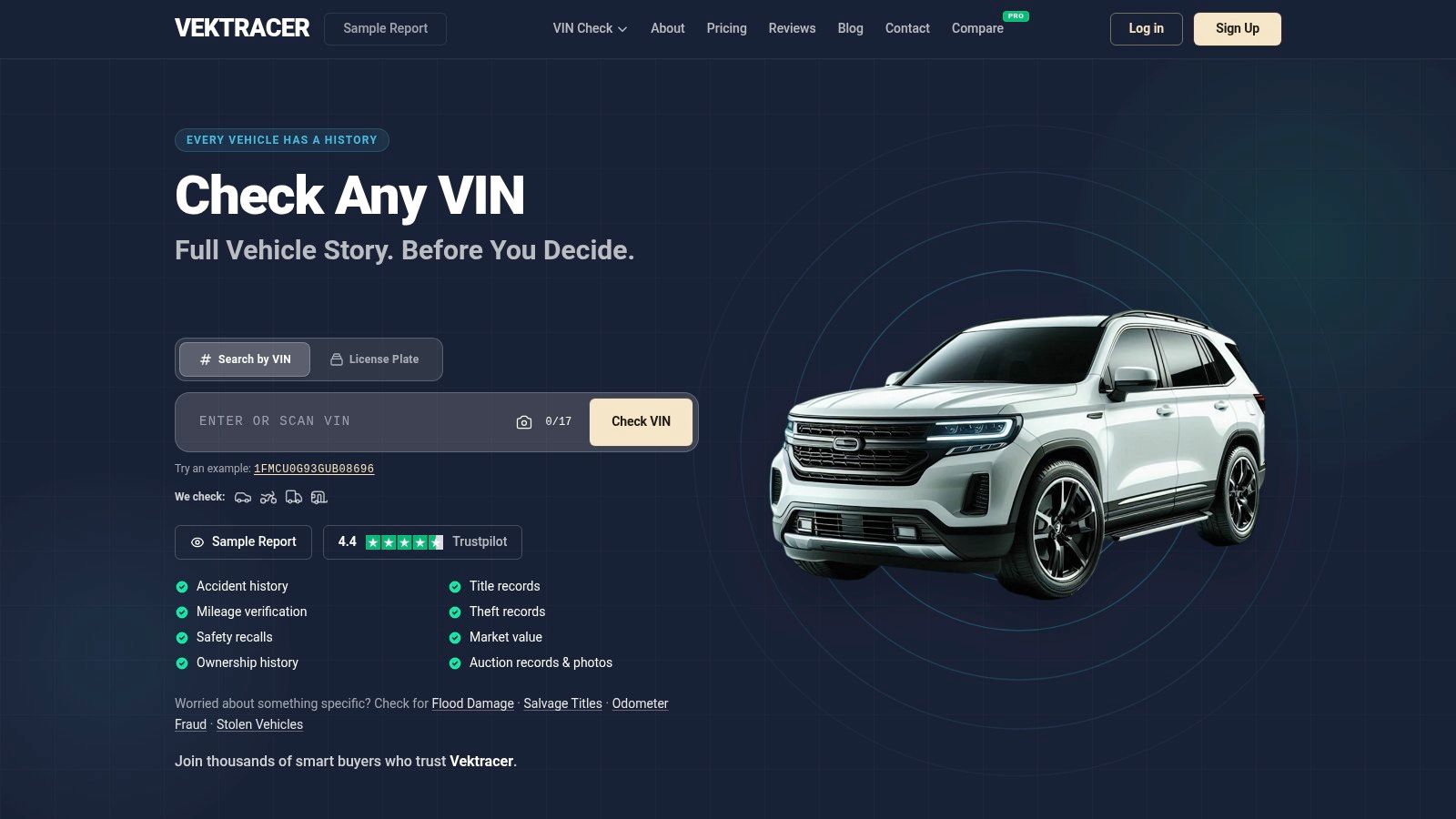
If you want a faster way to sanity-check a car before you commit, VekTracer is worth a look. It gives you VIN-based vehicle history, recall and title checks, mileage verification, Canadian market value support, and a side-by-side comparison workflow that helps narrow a used car value estimate to something you can use in a deal.
Ready to check a vehicle?
Enter any 17-character VIN for a free instant preview — no account needed.