09 Ford Focus Buyer’s Guide: Inspection Pricing and History
Check a vehicle before you buy
Enter a VIN for a free instant preview — accidents, title brands, mileage, liens & open recalls.
You're probably looking at a 2009 Ford Focus because the price looks right and the shape is familiar. The trap is that the lowest sticker can hide the highest ownership cost, especially if the car is an automatic, has rust, or has been passed around with thin service records. A clean manual can still make sense, but the car only works as a bargain if the condition is honest and the history checks out.
Buy it like an inspector, not like a hopeful shopper. Compare the body style, transmission, service evidence, and visible wear before you talk yourself into the deal, and use a history report plus a hands-on inspection to separate a budget buy from a repair liability. For broader buying context on the hidden-cost side of these cars, Protecting trade margins on Focus is a useful reference point.
Introduction
A 2009 Ford Focus can look like a bargain right up until the first round of catch-up maintenance lands. Cheap purchase prices have a way of hiding tires, brakes, motor mounts, rust repair, and transmission work, and those items can erase the savings fast if you buy the wrong car. The safer move is to judge the exact car in front of you, not the badge on the listing.
The first fork in the road is manual vs automatic. A well-kept manual usually gives the cleaner ownership path, while the automatic deserves close attention because transmission condition can turn a low-cost buy into a repair bill you did not budget for. On a car this old, age-related wear often matters more than the odometer reading alone, so the rest of the vehicle still has to earn your confidence.
Price and warranty history give you a useful baseline. The car launched with a $16,400 base MSRP and a 3-year / 36,000-mile basic warranty, which helps you judge how far today's asking price has drifted from original new-car territory and how much factory coverage is long gone now The Car Connection specifications.
What matters most on a cheap Focus
Practical rule: If the seller cannot explain service history, rust treatment, and transmission behavior clearly, keep shopping.
A lot of used-car trouble comes from gaps in care, not from the model name itself. The question is whether this Focus still has enough life left to justify the asking price and the repair risk that comes with a budget compact. For a close look at the ownership-risk side of these cars, Protecting trade margins on Focus explains why age, corrosion, and deferred maintenance matter more than the badge.
Trim and Specs Overview
A used 2009 Focus should be judged by the drivetrain and trim content in front of you, not by the badge on the hatch or trunk. The car centers on a 2.0-liter twin-cam Duratec inline-4, with output set up for everyday driving rather than quick starts. In sedan form it is rated at 140 hp, while the coupe is rated at 143 hp KBB overview. The difference is small, but it does show where Ford placed the priority, steady commuting over strong acceleration.
Engine and transmission choices
The main split is straightforward. Buyers could get a five-speed manual or a four-speed automatic The Car Connection overview. That choice matters more than trim padding on a car this age, because the manual usually gives the cleaner ownership path, while the automatic puts more pressure on condition and service history. The engine is happiest when it is allowed to rev, so it delivers its best work with patient driving instead of expecting strong low-end pull.
Fuel economy is close between the two transmissions, but the manual still has the edge. It is rated at 24 mpg city / 35 mpg highway, while the automatic is rated at 24 / 33 mpg highway KBB overview. That highway penalty is not huge, but on a used compact it matters because it reflects both operating cost and the ownership trade-off you are making.
| Trim | Engine | Transmission | Fuel Economy |
|---|---|---|---|
| Focus S | 2.0-liter twin-cam Duratec inline-4 | Five-speed manual or four-speed automatic | 24 mpg city / 35 mpg highway manual, 24 / 33 mpg highway automatic KBB overview |
| Focus SE | 2.0-liter twin-cam Duratec inline-4 | Five-speed manual or four-speed automatic | 24 mpg city / 35 mpg highway manual, 24 / 33 mpg highway automatic KBB overview |
| Focus SES | 2.0-liter twin-cam Duratec inline-4 | Five-speed manual or four-speed automatic | 24 mpg city / 35 mpg highway manual, 24 / 33 mpg highway automatic KBB overview |
The trim badge matters less than the maintenance record on a car this old.
The practical call is to choose the trim for the equipment you will use, then let condition and transmission type decide the rest. A clean mid-trim manual can make better sense than a nicer-looking automatic with weak service records, because the cheaper car is only cheaper if the hidden wear items stay hidden.
Common Mechanical and Reliability Issues
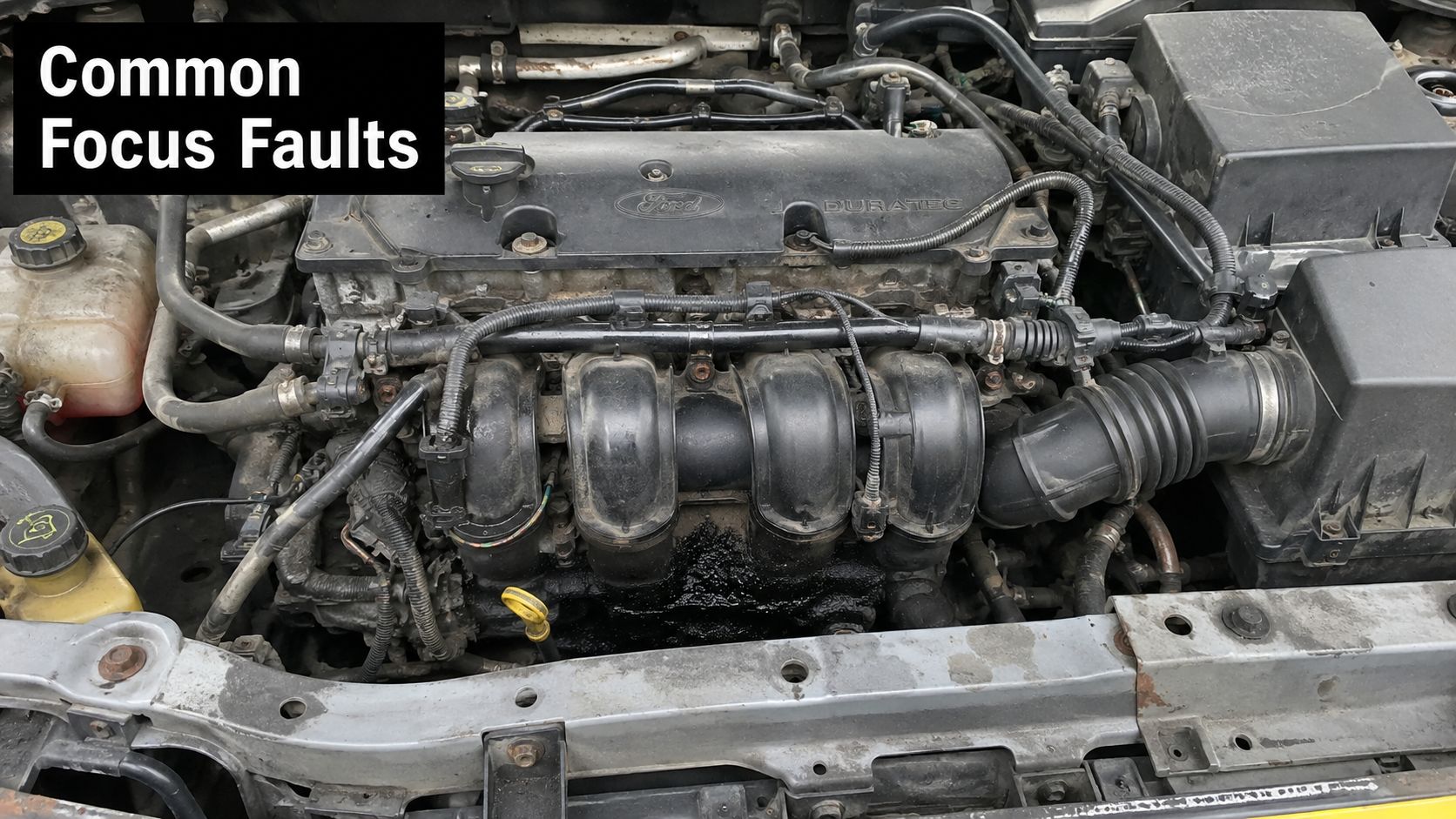
A 2009 Focus usually fails in the usual old-car ways. The main cost comes from stacked wear, not from one dramatic defect. Rust, tired suspension parts, worn engine mounts, and transmission condition are the checks that decide whether a cheap listing stays cheap or turns into a repair bill AutoProv. On a car this age, the condition story matters more than the badge on the trunk.
Highest-risk items first
The automatic transmission deserves the first look. Buyer guidance flags it as a weak point, and neglected examples can become expensive quickly OwnerKeep. A good automatic is still worth considering, but only if the service history is clean and the shifts feel consistent on a cold start and after a longer drive.
Manual cars have a different risk profile. They avoid the automatic's bigger failure mode, but they can still hide clutch wear, sloppy engagement, or synchro issues if the car has been driven hard or serviced late. For a buyer comparing manual versus automatic, the manual usually gives more control over ownership costs, while the automatic gives less room for forgiveness if maintenance has been skipped.
After the transmission, check the wear items that often blend into the background:
- Rust: Look at lower body edges, wheel arches, and underbody areas for corrosion. Once rust starts spreading, the repair can be worth more than the car.
- Suspension wear: Clunks, loose steering feel, and uneven tire wear usually point to worn parts, not a harmless noise.
- Engine mounts: Excess vibration at idle or on takeoff often points to worn mounts, and that is common on older Focus cars.
- Brake rotors: Warped rotors can shake the steering wheel under braking. The repair is simple only if the rest of the brake system is still in decent shape.
- Door latches and small hardware: Sticky or frozen latches are nuisance faults, but they also show how much general aging the car has absorbed.
- EGR/DPFE-type faults: If the engine light is on, or the car stumbles and hesitates, treat it as a sign to investigate instead of dismissing it as a minor annoyance.
If a seller lists several “small issues” and has no paperwork, assume the car has been postponed, not maintained.
A clean-looking engine bay does not settle much by itself. Oil residue, uneven wear, and broken plastic pieces matter more than a quick wash, because they tell you what the car has been through and what still needs attention.
How to judge the pattern
One fault is a repair. Several faults together are a warning. The key question is whether the same systems keep failing, because repeat problems usually point to deferred maintenance or deeper neglect rather than bad luck. On a low-value compact, that matters because the repair total can outrun the car's value faster than a buyer expects.
A proper inspection keeps those patterns visible before money changes hands. Use pre-purchase car inspection guidance to organize the check, then verify the transmission behavior, rust exposure, and wear items that tend to turn a bargain into a liability.
Recall and Safety History
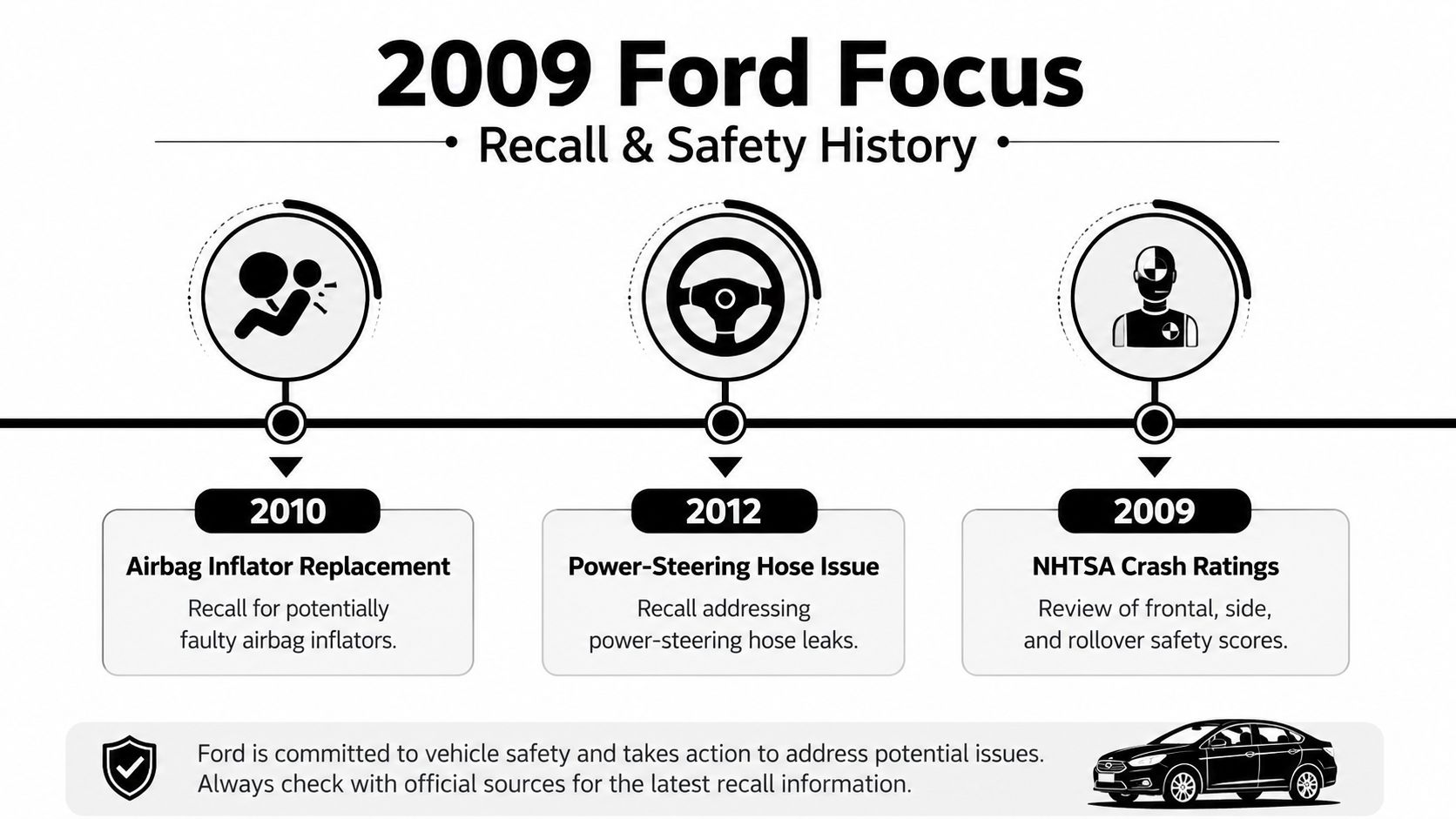
A buyer looking at a 2009 Ford Focus should treat safety history as part of the inspection, not a box to tick after the test drive. The body styles do not carry the same crash results, so the sedan and coupe should not be treated as equal on paper or in practice. The sedan earned four stars for front and side impacts, while the coupe scored five stars for front impact but only three stars for side crashes. That split matters because a car that looks appealing in an ad can still be the weaker side-impact choice when protection counts most.
What the crash results mean in practice
The sedan's four-star result on both front and side impacts is easier to interpret than the coupe's mixed performance. If safety peace of mind is a priority and you are choosing between body styles, the sedan gives the cleaner read. The coupe still brings a stronger front-impact result, but the side score is the one that should make a buyer slow down and think through the trade-off.
Recalls need the same attention because older cars often pass through several owners after campaigns are issued. A Focus can look tidy and still have unfinished recall work if the previous owners never kept the records straight. Check the VIN, then verify the repair history against the actual car instead of relying on the ad alone. As noted earlier, a clean appearance does not prove a clean history.
A decent-looking body style can still hide an incomplete safety history. Always confirm the actual car, not the model year in the ad.
What to verify on the car you're viewing
Ask for proof that recall repairs were completed, then match that paperwork to the VIN on the car in front of you. After that, compare the safety history with the current condition of the vehicle, because weak safety documentation and sloppy upkeep usually travel together. The useful habit is to treat the paperwork and the car as one inspection, not two separate checks.
If the seller cannot show clear evidence of completed safety work, keep your guard up. On a 2009 compact, unfinished service history matters more than a shiny paint job.
Pricing and Market Value Guide
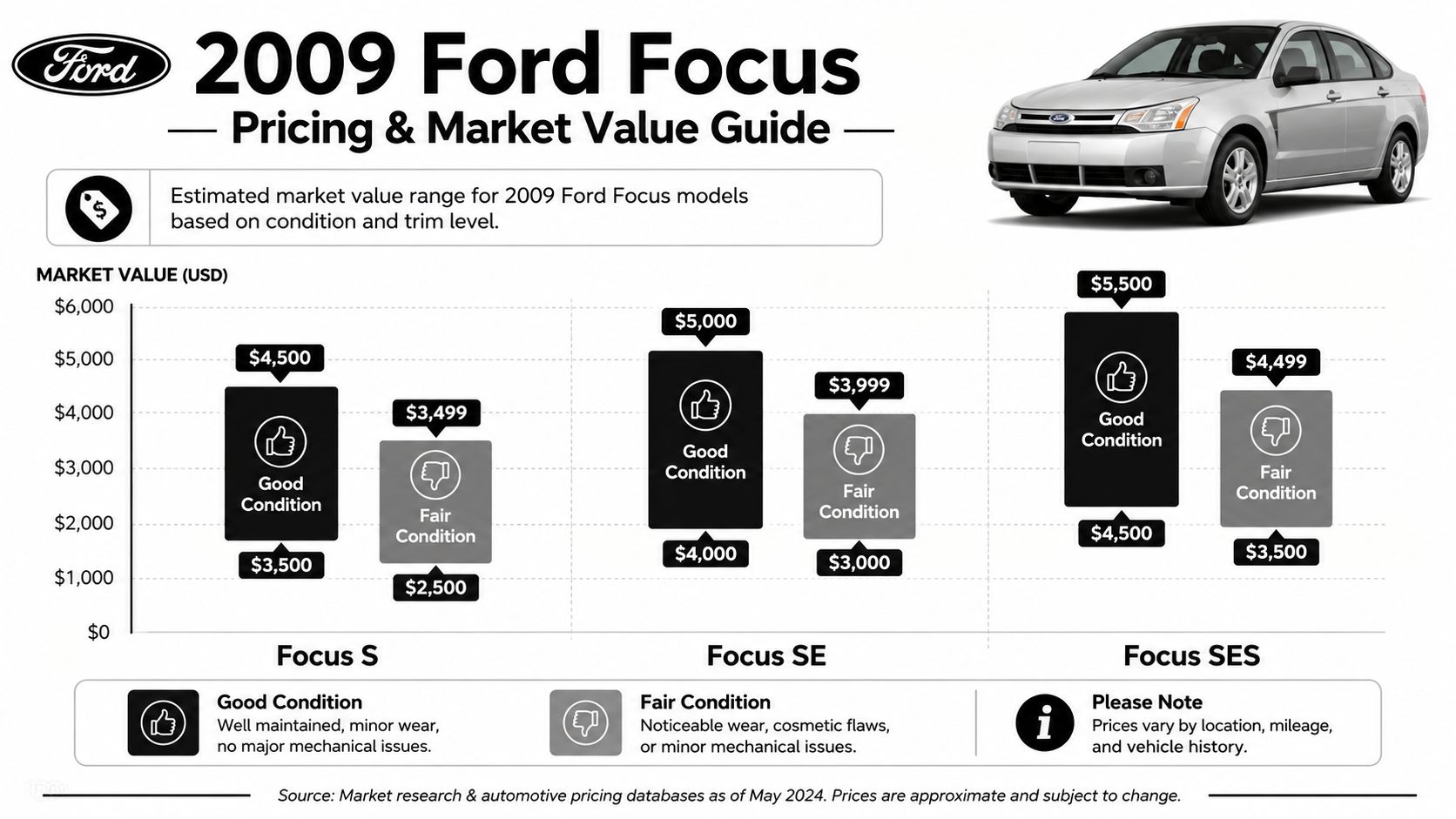
A used 2009 Focus can look like a cheap buy on the lot and still carry very different risk depending on the drivetrain. A manual with a clean clutch feel and regular service records usually has a clearer value story than an automatic that hesitates, shudders, or shows signs of overdue fluid care. The sticker price should follow that difference, because hidden wear items turn a low-cost car into a repair bill fast.
How to think about asking price
The original launch price is only a reference point. What matters now is the condition of the car in front of you, how it was maintained, and whether the drivetrain has already started asking for money. A tidy Focus with documentation can still make sense. A bargain-priced car with rust, transmission hesitation, or a long repair list often costs more than it looks worth.
Use the launch price as a sanity check, not a target for negotiation. The 2009 Focus launched at $16,400 and carried a 3-year / 36,000-mile basic warranty, but that tells you little about what is left after years of wear The Car Connection specifications. If the asking price seems low and the seller cannot show regular upkeep, that number may already be padded with deferred repair costs. A used car value estimate helps you compare the asking price against the car's actual condition, not just the average listing.
What changes value most
- Service history: Receipts and maintenance notes usually carry more weight than clean paint.
- Rust condition: Corrosion can cut value faster than normal cosmetic wear.
- Transmission type: A manual with proof of care is easier to justify than a questionable automatic.
- Body style: Simpler, cleaner examples usually draw stronger interest than neglected higher-spec cars.
- Repair backlog: Every item that needs attention right away should lower the price.
The cheapest Focus is not always the best buy. A low asking price can mean the seller has already priced in the problems, or expects the next owner to do that work. On a car this old, the difference between a fair deal and an expensive mistake often comes down to the transmission, the rust level, and how much hidden wear is waiting underneath the shine.
Pre-Purchase Inspection Checklist
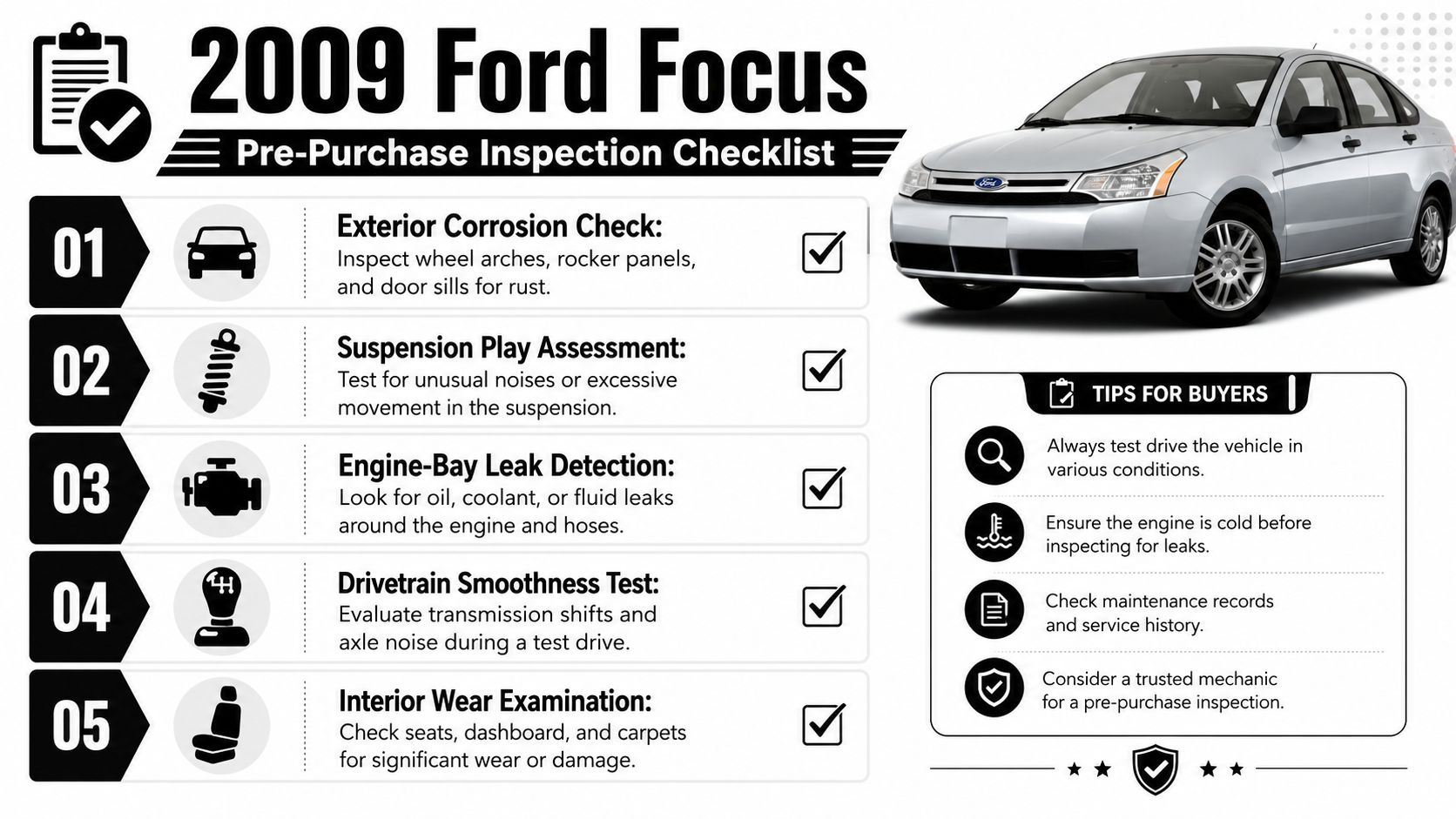
A 2009 Focus can be a sensible buy, or a rolling repair bill, depending on what you find before money changes hands. The inspection has to separate normal age-related wear from the hidden problems that push a cheap manual or automatic into expensive territory. Start with the body and underside, then move through the drivetrain, engine bay, cabin, and key setup.
Exterior and underbody checks
Begin with corrosion. Inspect wheel arches, rocker panels, and door sills for rust, bubbling paint, or crude patch repairs. On a car at this age, rust is not a surface issue only. It can mean weakened structure, and it can also give you a clear reason to walk away or press hard on price.
Check panel gaps, the lower edges of the doors, and the tailgate area for signs of past damage or poor repair work. Then get underneath the car and look for fresh underseal over old corrosion, mismatched fasteners, or areas that look cleaned up without any real repair behind the finish. A tidy underside is useful, but only if it matches the rest of the car's condition.
Suspension, steering, and drivetrain
Push down on each corner and listen for knocks, squeaks, or slow rebound. During the road test, watch for vague steering, pulling to one side, or vibration under braking. Those signs usually point to worn suspension parts or brake issues, and they are the kind of repairs that can turn a bargain into a frustrating first month of ownership.
Transmission condition matters even more on this car. A manual should select gears cleanly, without crunching, graunching, or excessive slip. An automatic should shift without flare, delay, or shudder. If you are comparing manual and automatic cars, the manual usually gives you more control over repair risk, while a questionable automatic can become a much larger liability if service history is thin.
Engine bay and interior
Look for oil residue, coolant staining, and damaged mounts. A tired mount often shows up as vibration at idle or a thump when selecting gear, and that kind of wear can hide under an otherwise decent-looking engine bay. If the bay has been cleaned heavily, ask why it needed that treatment and look for what the cleaning may have been meant to hide.
Inside the cabin, check seat wear, dashboard condition, and the operation of locks, latches, switches, and warning lights. Small failures matter here because they often show a car that has been neglected in ways the photos will not reveal. If you need a broader checklist to keep your inspection disciplined, used car inspection guidance is a useful reference point.
A missing spare or an incomplete key setup can also mean extra cost after purchase. If the car only comes with one key, factor in the cost of a replacement Ford Focus car key before you decide how strong the deal really is.
Using VIN Reports to Spot Red Flags
A VIN report is where good-looking listings start to separate from sound purchases. You want a report that shows title status, accident history, mileage consistency, and recall activity, because those are the records that tell you whether the car's story matches its physical condition. If the paperwork and the car disagree, trust the gap.
What to check first
Start with title branding and ownership changes. A clean title isn't enough if the vehicle has had repeated handoffs with thin service documentation, because that pattern often shows a car that's being moved before the next issue surfaces. Then check mileage history for rollback warnings or sudden jumps that don't make sense.
Accident data matters too, but only if you read it in context. A minor repair is not the same as structural damage, and a report that shows clustered service failures around the same system is often more useful than a generic “accident noted” line.
If the VIN report is vague and the seller is vague, assume the car deserves a pass.
How to use the report in negotiation
If the report shows old damage, incomplete service, or title issues, those are not just talking points, they're price adjustments or walk-away signals. That's especially true if the car is an automatic and the transmission history is thin. In practical terms, you're using the report to decide whether the risk belongs in your driveway or in someone else's.
For title transfer paperwork and post-sale admin, Fire House Smog's title transfer services can be helpful once you've settled on the car. If you want to cross-check accident signals against a separate inspection workflow, check car VIN for accidents is a useful companion step.
Conclusion
The smartest 2009 Ford Focus purchase is usually the one with the clearest history, the best transmission choice, and the least rust. The manual is the safer default, the automatic deserves extra skepticism, and condition-specific wear matters more than mileage bragging. If the car's paperwork is thin and the body shows age in the wrong places, the low price isn't a bargain, it's a warning.
Buy the car you can prove, not the one you hope for. Use the inspection checklist, compare the asking price against real condition, and let the VIN report settle the arguments that pictures can't.
A CTA for VekTracer.
Ready to check a vehicle?
Enter any 17-character VIN for a free instant preview — no account needed.