04 Ford Ranger MPG: Real-World Fuel Economy Guide
Check a vehicle before you buy
Enter a VIN for a free instant preview — accidents, title brands, mileage, liens & open recalls.
The 04 ford ranger mpg range is 15 to 23 MPG combined, depending on engine and drivetrain, and real-world owners average 17.46 MPG across 310 trucks and over 3.12 million miles. If you're shopping one right now, don't ask “what does a 2004 Ranger get?” Ask which Ranger you're looking at, because the answer swings hard by configuration.
That's the trap with this truck. You find a clean-looking 2004 Ranger online, the seller says “it gets decent gas mileage,” and you assume all Rangers live in the same fuel economy neighborhood. They don't. A basic 2.3L 2WD truck and an FX4 4WD are different animals at the pump, and a neglected V6 can drink fuel far worse than the badge suggests.
Your Guide to the 2004 Ford Ranger's Fuel Economy
The 2004 Ranger is still a smart used truck if you buy the right one. It's simple, durable, easy to live with, and parts availability is usually better than on a lot of newer compact trucks. But fuel economy is where buyers get sloppy.
The hard baseline comes from real owner data, not brochure talk. Fuel tracking from Fuelly shows the 2004 Ford Ranger averages 17.46 MPG combined, based on 310 vehicles and over 3.12 million miles of driving, which lands a bit below the official 18 MPG combined rating for the base rear-wheel-drive 3.0L V6 setup according to Fuelly's 2004 Ford Ranger data. That's the number I'd use when budgeting ownership on a typical used V6 truck.
What matters more than the model year
A 2004 Ranger doesn't have one MPG figure. It has a spread.
The truck's fuel use changes with:
- Engine choice. The 2.3L four-cylinder is the mileage play. The V6 trucks trade fuel economy for torque.
- Drivetrain. A 2WD Ranger usually makes more sense if you care about fuel bills.
- Use case. A highway commuter and a guy hauling tools every day won't see the same result from the same truck.
Bottom line: For most shoppers, around 17.5 MPG is the realistic center of gravity, but the best factory setups sit much closer to the efficient end of the range and the wrong used example can feel far worse.
If you're buying this truck for cheap utility, fuel economy won't be amazing no matter what. But you can still avoid the versions that punish you every week at the pump.
Official 2004 Ranger MPG by Engine and Drivetrain
A seller says his 2004 Ranger gets "mid-20s no problem." Don't buy that line until you know the exact engine and drivetrain. On this truck, the gap between a smart buy and a fuel hog is wide.
Edmunds lists the 2004 Ford Ranger EPA range from 15 MPG combined to 23 MPG combined, with the efficient 2.3L 2WD trucks at the top and the 4WD off-road versions at the bottom, according to Edmunds 2004 Ranger features and specs. That spread matters because "Ranger" alone tells you almost nothing about what you'll spend on fuel.
2004 Ford Ranger EPA MPG ratings by configuration
| Configuration | City MPG | Highway MPG | Combined MPG |
|---|---|---|---|
| 2.3L I4, 2WD | 21 | 27 | 23 |
| 3.0L V6, 2WD | 16 | 21 | 18 |
| 4.0L V6, 2WD | 15 | 19 | 17 |
| 3.0L V6, 4WD | 15 | 19 | 17 |
| 4.0L V6, 4WD | 14 | 18 | 16 |
| FX4 Off-Road, 4WD | 14 | 17 | 15 |
Use those numbers as a baseline, not a promise. The most useful move before you buy is to verify the exact factory setup from the VIN and compare it against the seller's claims. A quick mileage check on a used truck before buying helps you catch trucks that have been misrepresented, heavily used, or pieced together from different trims.
Best MPG choice
Buy the 2.3L four-cylinder with 2WD if fuel cost is your priority.
That is the mileage version of the 2004 Ranger. It works best for commuting, light hauling, and basic truck duty. If you want a Ranger because you need a bed and simple running costs, this is the one to hunt for.
Worst MPG choice
Skip the FX4 4WD unless you need the off-road hardware.
It sits at the thirsty end of the lineup for a reason. More drivetrain drag, more weight, and lower gearing all work against fuel economy. If your truck's job is pavement, store runs, and occasional home-improvement duty, an FX4 is the wrong answer.
What to ask the seller
Ask for the engine size, whether it's 2WD or 4WD, cab style, and axle gearing. Then match that against the truck in front of you. A lot of bad Ranger listings leave out those details because once you know the configuration, the fuel bill gets easier to predict.
Buy the truck that fits the work. A 2.3L 2WD Ranger is the value play. A 4.0L 4WD or FX4 can be worth it, but only if you need the extra capability often enough to justify feeding it.
Why Real-World MPG Rarely Matches the EPA Sticker
The EPA sticker gives you a controlled baseline. Your daily life doesn't happen in a controlled baseline.
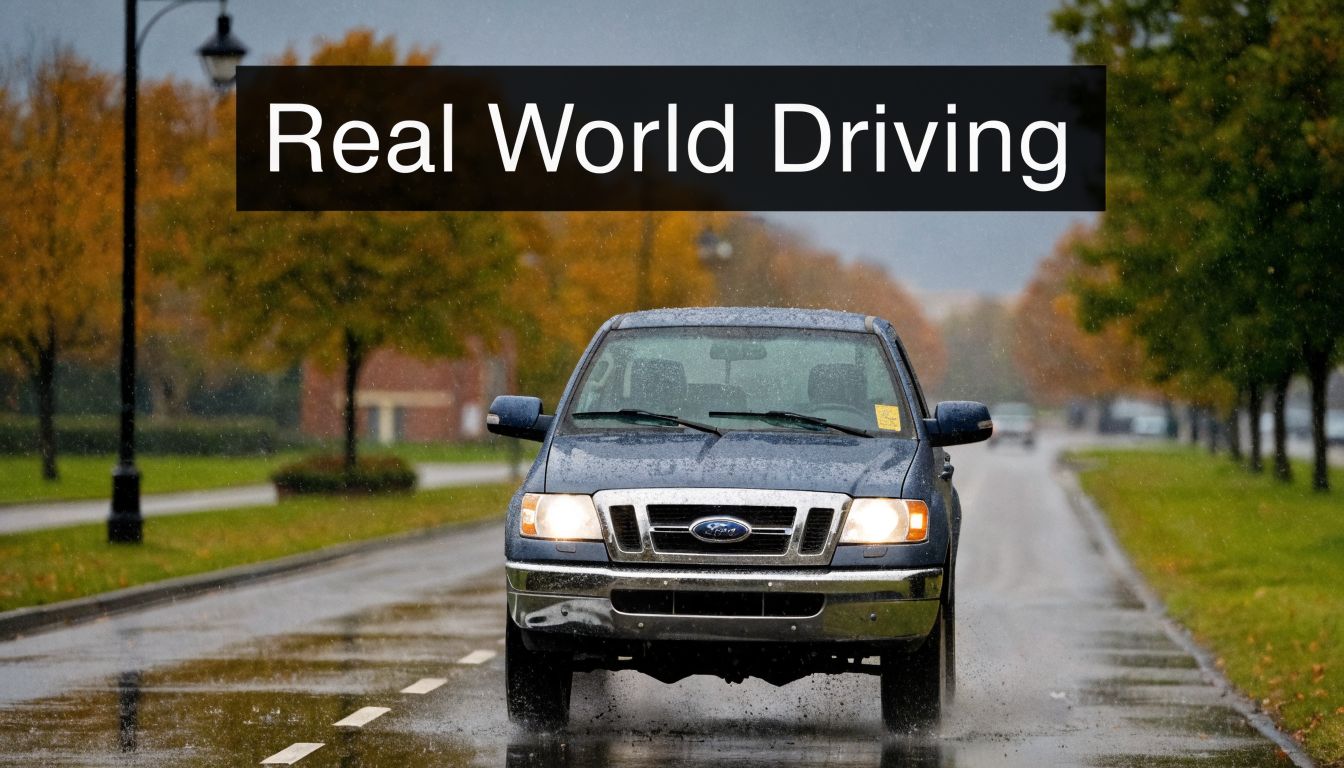
A 2004 Ranger earns its living in actual daily use. That means cold starts, short trips, stop-and-go traffic, wet roads, heavy loads, hills, and owners who may or may not have kept up with basic service. If you want a realistic ownership estimate, you need to think like a mechanic, not like a brochure writer.
Two owners, two very different outcomes
Take one owner who drives a 2WD Ranger mostly on open roads, keeps tire pressure right, and doesn't carry junk in the bed all week. That truck has a shot at behaving close to its factory intent.
Now take a contractor with a V6 truck, tools in the bed, city driving, lots of idle time, and maybe a trailer now and then. That same model year becomes a very different fuel bill.
What pushes an 04 Ranger down on mpg
Here's what usually drags fuel economy away from the sticker:
- Weight in the bed: These trucks were used as trucks. More load means more fuel.
- 4WD hardware: Extra drivetrain drag and weight work against efficiency.
- Stop-and-go use: Rangers don't love short trips and constant traffic.
- Neglected service: Old plugs, dirty sensors, and weak ignition parts hurt mileage.
- Questionable mileage claims: If the odometer history doesn't add up, neither will the seller's MPG story.
That last point matters more than most buyers realize. Before you trust any “it gets great gas mileage” claim, make sure the truck's history supports the mileage on the dash. A basic mileage check on a car is one of the fastest ways to catch a truck that's older and harder-used than the listing suggests.
A used truck doesn't suddenly become fuel efficient because the seller says “mostly highway miles.”
The practical way to estimate your own mpg
Don't ask what the best case is. Ask how you'll use the truck.
If you want an old Ranger for commuting, stick close to the four-cylinder 2WD logic. If you want one for real truck work, budget like a V6 owner and assume real-world use will beat up the factory number. That mindset keeps you from buying a truck that looks cheap upfront and costs more than expected after a month of driving.
Common Maintenance Issues That Ruin Fuel Economy
Low MPG on a used 2004 Ranger isn't always “just how these are.” Sometimes the truck is telling you it needs attention. Good buyers listen.
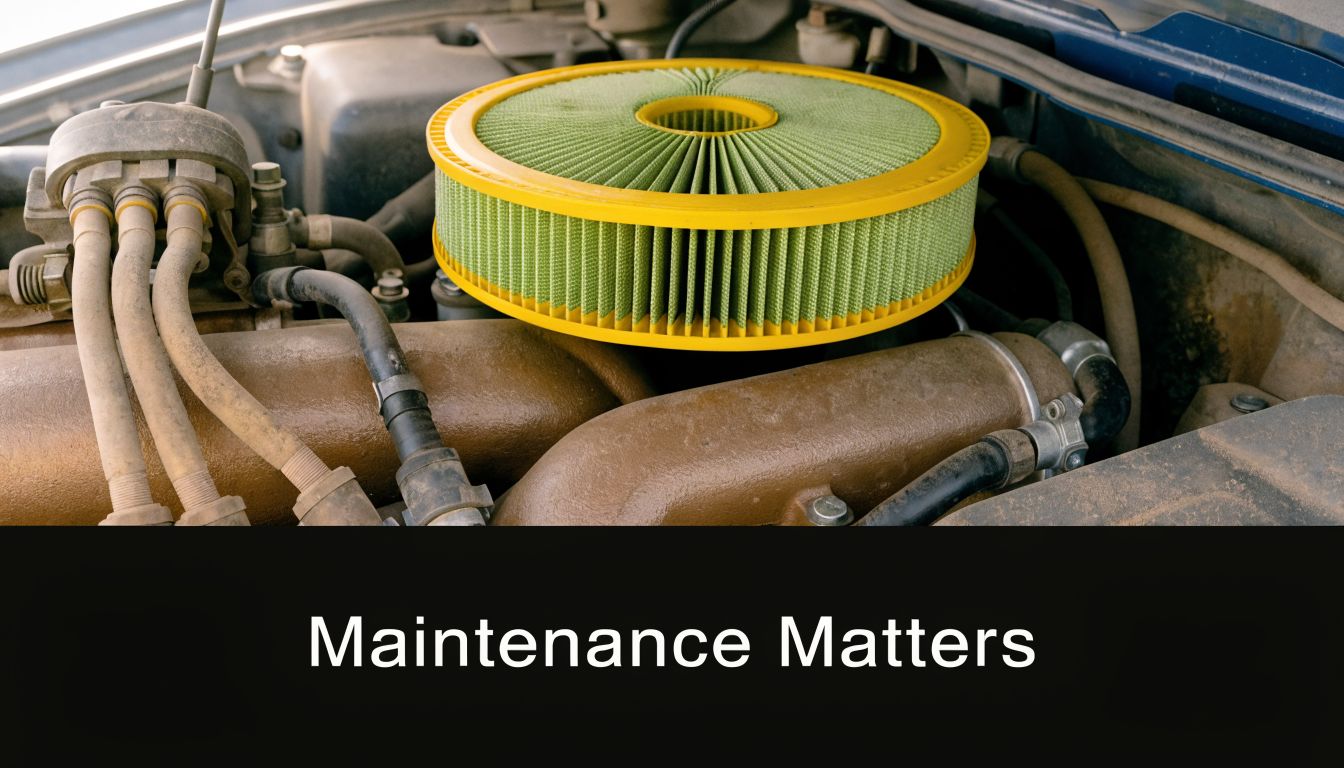
One of the most important warning signs on this generation is a sudden collapse in fuel economy. Owners commonly report fuel mileage dropping from 16-20 MPG down to 10 MPG, often tied to issues like a failing thermostat or MAF sensor, and those problems don't always trigger an obvious check engine light according to this 2004 Ranger fuel issue discussion at 2CarPros.
The usual suspects
Some failures hit drivability and fuel economy at the same time. Others just waste gas.
- MAF sensor problems: A dirty or failing mass airflow sensor can skew the air-fuel mix. The truck may still run, but it won't run right.
- Thermostat stuck open: If the engine stays too cool, it can run rich longer than it should. That's bad for fuel economy.
- Aging oxygen sensors: Older trucks get lazy sensors. The engine computer then makes fuel decisions off bad feedback.
- Injector fouling on V6 trucks: The older port-fuel-injection setup can lead to poor atomization and hesitation under load.
- Basic tune-up neglect: Dirty filters, worn plugs, and weak ignition parts pile on.
What you should notice on a test drive
You don't need a scan tool to catch every problem. You need to pay attention.
Watch for:
- Hesitation under load: Roll into the throttle on an incline or during a merge. A healthy truck should pull cleanly.
- Cold running behavior: If it takes too long to settle into normal operation, I start thinking thermostat or sensor issue.
- Rough idle or surging: That points me toward air-fuel or sensor trouble.
- Fuel smell or obvious richness: Never ignore it.
Practical rule: If a Ranger drives flat, smells rich, or stumbles under load, assume the MPG is worse than advertised until proven otherwise.
Why service history matters here
A seller can say “it just needs a sensor.” Maybe. But if the truck has a pattern of skipped maintenance, cooling-system work, or vague repair history, that fuel economy problem may be part of a bigger ownership headache.
That's why I always tell buyers to inspect paperwork as hard as they inspect the engine bay. If you want a good framework, this guide on why verifying service history protects buyers and dealers lays out exactly why service records change the risk level on an older vehicle.
If you live where winters are rough, poor maintenance shows up even faster. Coolant issues, weak batteries, old filters, and neglected basics all make an old truck feel worse. This essential winter car maintenance checklist is worth using as a practical seasonal review, especially if the Ranger you're eyeing has spent time in snow-country.
The mistake buyers keep making
They blame engine size first.
Yes, the 4.0L and FX4 setups are naturally thirstier. But a bad 3.0L or 4.0L can feel dramatically worse than it should. Don't write off ugly MPG as “old truck stuff” until you've ruled out neglected maintenance.
A Buyer's Checklist for Vetting a Used 2004 Ranger
You find a cheap 2004 Ranger online, the photos look clean, and the seller swears it gets "great gas mileage." Many buyers get burned at this stage. On an old Ranger, fuel economy depends less on the badge and more on the exact setup and the condition of the truck in front of you.
Start with the truck, not the seller's story
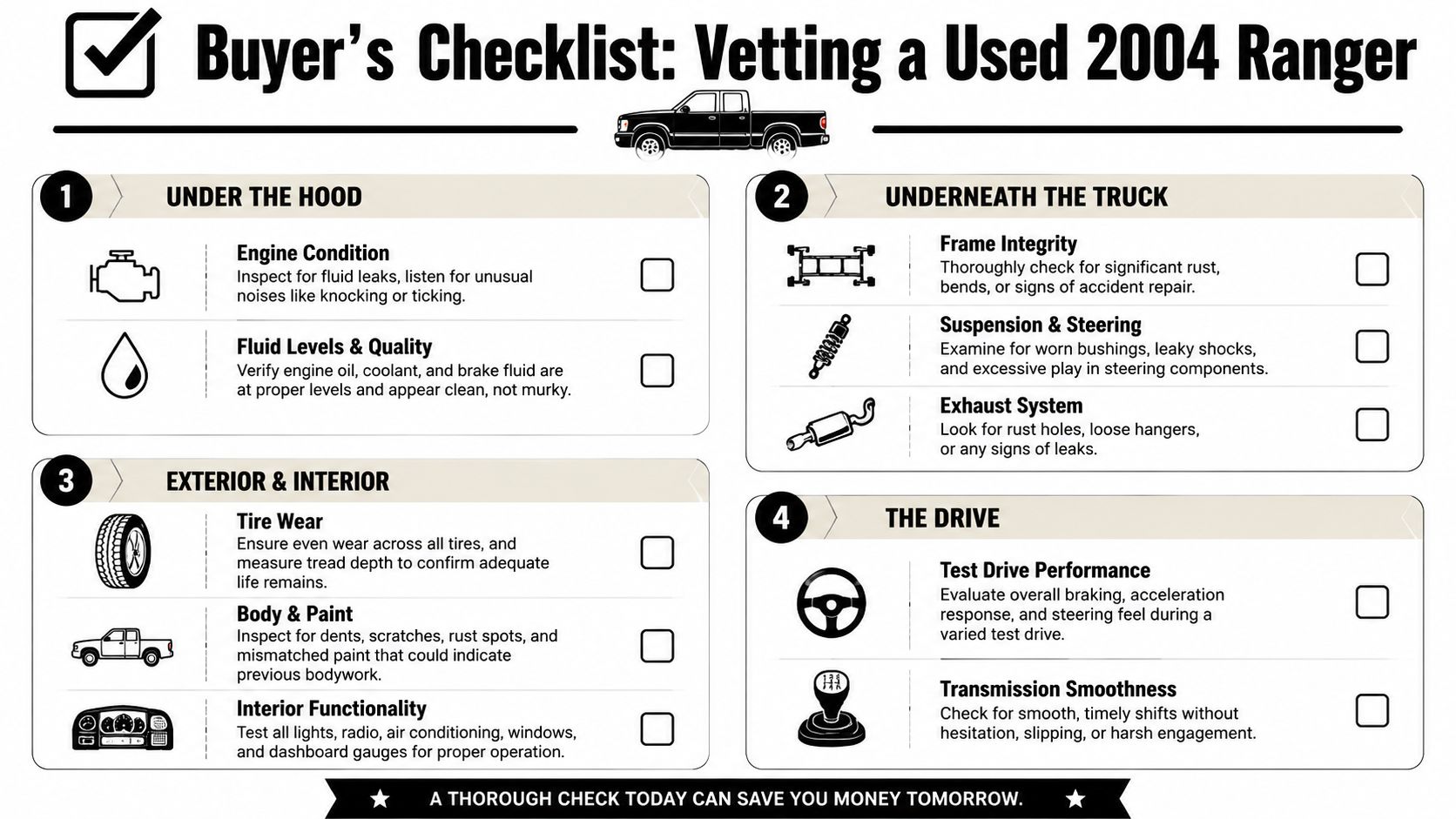
A quick walk-around can save you from buying the wrong Ranger.
Check these first:
Engine bay condition
Look for oil leaks, coolant residue, cracked vacuum lines, hacked wiring, and bargain-bin aftermarket parts. A clean engine bay is nice. Honest maintenance matters more.Cooling system clues
Check the coolant color, the overflow bottle, hose condition, and signs of past overheating. A Ranger with a shaky cooling system often turns into a truck that runs poorly and drinks more fuel.Tires and stance
Uneven tire wear points to alignment trouble, worn front-end parts, or prior damage. Oversized all-terrain tires also kill MPG fast, especially on a 4WD truck with taller gearing than it should have for daily driving.
Then get under it if you can. Rust, wet differential housings, damaged exhaust parts, and bent suspension pieces tell you far more than waxed paint ever will.
Drive it long enough to expose the bad ones
A five-minute spin around the block is useless. Drive it on city streets and at highway speed.
Pay attention to these areas:
- Throttle response: It should pull cleanly with no sag, stumble, or lazy tip-in. Hesitation under load usually means the truck is overdue for real diagnosis, and that truck will not deliver the MPG the seller is promising.
- Transmission behavior: Shifts should be consistent and sensible. Hunting, flaring, or delayed engagement adds repair risk and can drag down fuel economy.
- Braking and steering: A Ranger that wanders, pulls, shakes, or needs constant correction is already telling you it has neglected chassis work.
- Cruise behavior: At steady speed, the truck should settle down and feel calm. Surging, vibration, or frequent downshifts are warning signs.
One more thing. Check the rear axle ratio tag or door sticker if available, and confirm whether you're looking at a 2WD or 4WD truck before you judge MPG potential. Two Rangers that look nearly identical can have very different fuel bills.
Paperwork decides whether the deal is good or just cheap
Mechanical condition matters. History decides how much risk you're buying.
Your checklist should include:
- VIN history review: Look for accident history, title branding, theft records, recall status, and mileage consistency.
- Service records: Ask for receipts and dates. If the seller says "I changed everything," the paperwork should prove it.
- Odometer sanity check: Compare mileage with wear on the driver's seat, pedals, steering wheel, and shifter.
- Modification check: Lift kits, wheel and tire changes, tuners, intake noise-makers, and random exhaust work usually hurt MPG more than they help anything.
If you're cross-shopping older Rangers, this 1998 Ford Ranger XLT buying guide is a useful comparison because it shows how trim, age, and past use can change the ownership picture on trucks that look similar in a listing.
The right used Ranger is the one with the cleanest condition, the cleanest history, and the fewest excuses.
Mistakes to avoid when buying for mpg
- Assuming every 2004 Ranger gets similar mileage
- Believing the seller's MPG claim without a real test drive
- Ignoring oversized tires or lift parts
- Buying 4WD out of habit when 2WD fits your actual use
- Excusing hesitation, rough running, or odd shifting because it is "an old truck"
- Skipping the history check and hoping the cheap price makes up for it
Practical Tips to Maximize Your Ranger's MPG
Once you own the truck, the mission changes. Now you want to stop wasting fuel you don't need to burn.
The habits that actually help
A 2004 Ranger responds best to boring, disciplined habits.
- Keep tire pressure where it should be: Soft tires make an old truck feel heavy and lazy.
- Drive smooth: Hard launches and late braking punish these trucks.
- Empty the bed: Don't carry dead weight all month because you forgot it was back there.
- Stay ahead on tune-up items: Filters, plugs, and sensors matter more on an older truck than owners like to admit.
What not to do
Don't chase miracle fixes.
A used Ranger with poor fuel economy usually needs diagnosis, not snake oil. If the truck has a real mechanical issue, no bottle, gadget, or internet trick is going to save it. Get the basics right first, then judge the result.
A well-sorted Ranger won't become a hybrid. But a neglected one can absolutely be brought back from “why is this thing so thirsty?” to respectable daily-driver behavior.
Best ownership strategy
If you own a V6 or 4WD truck, accept what it is and focus on keeping it healthy. If you own a 2.3L 2WD truck, protect the advantage by avoiding cheap maintenance shortcuts.
That's how you win with an old Ranger. Not by expecting miracles, but by keeping the truck honest.
Frequently Asked Questions
Is 17 MPG normal for a 2004 Ford Ranger?
Yes. For a lot of used V6 Rangers, that's a believable real-world number. The broader owner data puts the average at 17.46 MPG combined in real use, so anything around that neighborhood is normal for many trucks if the configuration and condition line up.
Which 2004 Ranger gets the best gas mileage?
The 2.3L 2WD model is the mileage pick. It carries the best official rating in the lineup and makes the most sense if you want a light-duty truck that won't hammer you at the pump.
Is the 4.0L Ranger worth it if MPG matters?
Only if you need what it gives you. If towing, hauling, or stronger performance matters more than fuel economy, the tradeoff can be worth it. If you mostly commute, it's the wrong engine to buy.
Why does one seller claim great mpg and another says these trucks are terrible on gas?
Because both can be talking about different trucks, different engines, different drivetrains, and different conditions. That's the whole point with 04 ford ranger mpg. The range is wide, and condition matters almost as much as factory spec.
Can bad maintenance really wreck fuel economy that much?
Absolutely. Sensor problems, thermostat issues, and neglected tune-up parts can drag a Ranger well below what it should deliver. That's why a test drive and service-history review matter just as much as the engine badge.
Should I buy a Ranger based on EPA numbers alone?
No. Use the EPA figures to narrow your search, then judge the specific truck in front of you. On a vehicle this old, maintenance history, driving behavior, and overall condition decide whether the truck feels economical or wasteful.
If you're about to buy an older truck, don't rely on the seller's story. Run a report with VekTracer to check mileage consistency, title history, accident records, theft status, recalls, and overall vehicle risk before you commit.
Ready to check a vehicle?
Enter any 17-character VIN for a free instant preview — no account needed.