1998 Ford Ranger XLT Buyer's Guide (2026)
Check a vehicle before you buy
Enter a VIN for a free instant preview — accidents, title brands, mileage, liens & open recalls.
You find a clean-looking 1998 ford ranger xlt online, the price seems fair, the photos look honest, and the seller says it “runs great.” That can mean you found one of the better compact work trucks of its era, or a cheap old pickup that will start emptying your wallet the week after you bring it home.
The short answer is this. A 1998 Ford Ranger XLT can still be a smart buy in 2026, but only if you judge it by total cost of ownership, not nostalgia or asking price. On a truck this old, condition, engine choice, drivetrain, rust, and paperwork matter more than the badge on the fender. If you want a broader framework for spotting trouble before you commit, this guide on how to avoid buying a lemon is worth reading alongside any old-truck inspection.
Is a 1998 Ford Ranger XLT a Smart Buy Today?
A lot of buyers land on this truck the same way. They want something simple, small enough to park anywhere, useful enough to haul lumber, tools, or a dirt bike, and cheap enough that they don't feel sick every time it gets scratched. The 1998 Ranger fits that brief better than many newer trucks.
But age changes the equation. You're not buying a “used truck.” You're buying a 28-year-old machine with decades of wear, repairs, skipped maintenance, weather exposure, and owner decisions baked into it. One truck will be a dependable beater. Another will need immediate work in three different systems.
Practical rule: Buy the seller and the maintenance history first. Buy the truck second.
The reason people still chase a 1998 ford ranger xlt is simple. It's compact, straightforward, and old enough that most repairs are mechanical rather than software-driven. The mistake is assuming simple means cheap. Deferred maintenance on an old pickup adds up fast, and the low purchase price can hide the actual bill.
Here's when it makes sense:
- You want a basic truck: hauling, home projects, light towing, and weekend use.
- You can inspect carefully: especially rust, transmission behavior, and signs of neglect.
- You budget for catch-up work: fluids, hoses, suspension wear, electrical annoyances, and age-related leaks.
Here's when it doesn't:
- You need daily-driver certainty: and can't tolerate downtime.
- You want modern safety and comfort: this isn't that truck.
- You're buying only on price: the cheapest Ranger often becomes the most expensive one.
Decoding the 1998 Ranger XLT Specs Trims and Legacy
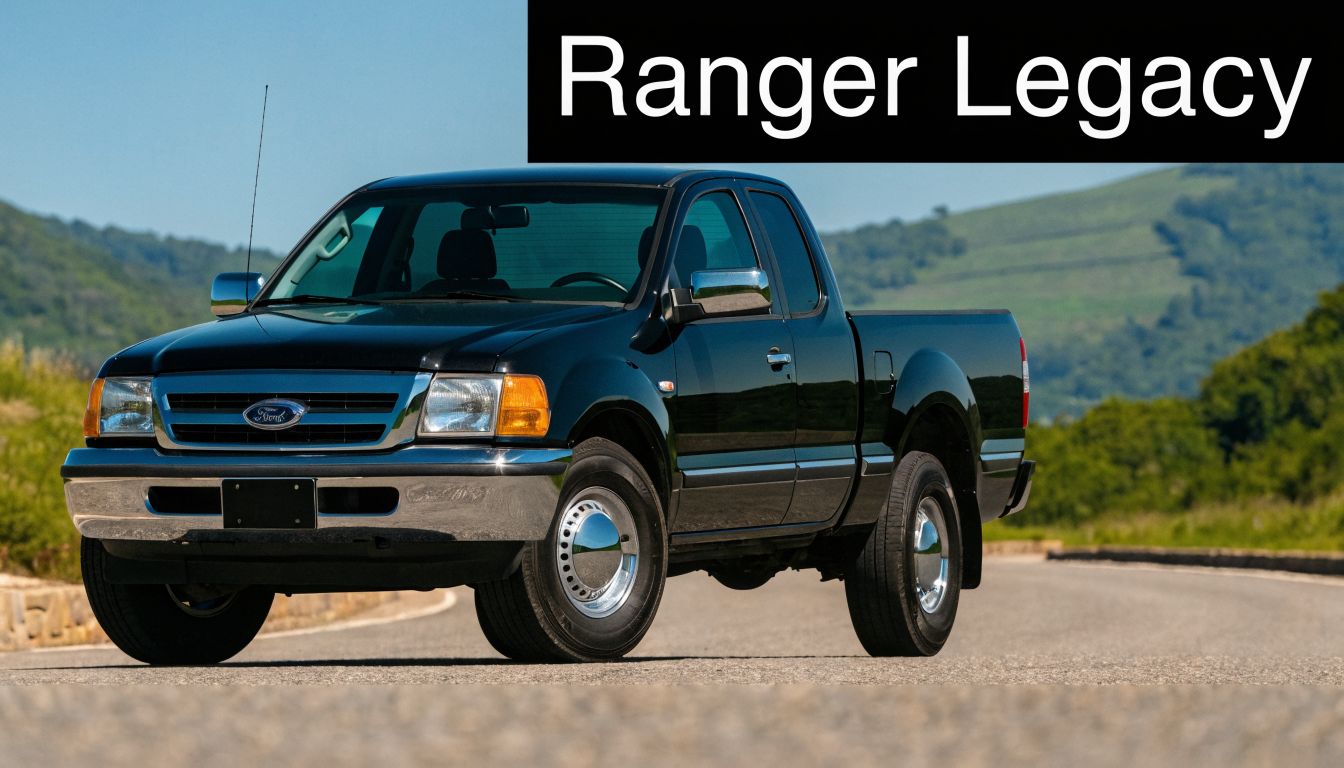
The 1998 model mattered because Ford gave the Ranger a real update instead of another light refresh. According to Kelley Blue Book's 1998 Ranger overview, the truck got a significant generational update with frame stiffening, suspension upgrades, and expanded SuperCab configurations. That matters today because the truck you're shopping isn't just “an old Ranger.” It came from a point where Ford was trying to make the Ranger feel more modern and more usable.
What the XLT trim actually gave you
The XLT sat in the sweet spot for buyers who wanted more than a stripped work truck. KBB notes that the XLT targeted buyers looking for features such as air conditioning, power windows and mirrors, cruise control, and anti-lock braking systems, along with engine choices that included a 3.0L V6 rated at 150 horsepower at 5,000 RPM and 185 lb-ft of torque at 3,750 RPM.
That sounds ordinary now, but in 1998 those features pushed the Ranger toward an everyday truck rather than a bare utility rig.
What still matters today:
- Air conditioning: only if it still works properly.
- Power windows and mirrors: nice to have, but old switches and motors can become annoyances.
- ABS: useful, but you want to confirm the warning lights behave normally.
- Cruise control: mostly a bonus on a truck of this age.
What matters less today is the trim badge itself. A clean XLT is more appealing than a base truck, but condition beats trim every time.
Engine and transmission choices that change the ownership experience
Ford offered multiple engine options across the 1998 Ranger line, from the 2.5L inline-4 up to the 4.0L V6, with the XLT commonly seen with V6 power. Transmission choices included a 5-speed manual and a 5-speed automatic (5R55E) according to KBB.
Here's the practical breakdown:
| Configuration | Best for | Watch for |
|---|---|---|
| 2.5L inline-4 | Lower fuel use, simple budget ownership | Feels slower under load |
| 3.0L V6 | Balanced everyday use | Not as efficient as the 4-cylinder |
| 4.0L V6 | Buyers who want more towing muscle | Higher running costs and more reason to inspect hard |
| 5-speed manual | Simpler feel, more driver control | Clutch condition matters |
| 5-speed automatic | Easier around town | Shift quality is critical on an old truck |
The XLT trim also came in configurations that shape value today. SuperCab trucks are more usable, and four-door practicality was part of what gave this generation an edge in its time.
A clean old truck with the wrong configuration for your needs is still the wrong truck.
Legacy matters, but not more than condition
The 1998 Ranger earns respect because it still feels like a real compact pickup. It's not oversized, it's not overcomplicated, and it still does truck things without asking for full-size truck space. KBB also notes that the 4WD XLT SuperCab returned 15 MPG city and 20 MPG highway, while combined fuel economy across configurations landed around 15 to 17 MPG.
That tells you something important. Even when these trucks were new, they were never miracle fuel savers in every trim. So when a seller pitches one as “cheap to run,” check the exact setup before you believe it.
Real-World Performance and Reliability After 28 Years
By 2026, the biggest difference between one 1998 ford ranger xlt and another usually isn't paint, trim, or bedliner. It's the powertrain. Engine and drivetrain choices affect fuel cost, wear rate, and how much abuse the truck likely saw.
The engine choice matters more than most buyers think
According to Cars.com's 1998 Ranger specs, the 2.5L inline-4 made 117 to 119 hp with 149 lb-ft of torque and returned 19 to 24 MPG highway, while the 3.0L V6 made 145 to 150 hp with 178 lb-ft of torque and returned 15 to 20 MPG. The same source notes that this works out to roughly 20 to 30% better fuel economy for the 2.5L over the long run.
That's not a spec-sheet footnote. That's ownership reality.
If you're buying an old Ranger for hardware-store runs, occasional commuting, and light hauling, the 2.5L often makes more sense than buyers expect. It won't feel strong with a load in the bed or a trailer behind it, but it keeps operating costs more manageable.
The 3.0L V6 sits in the middle. It's the engine many buyers end up with because it feels more truck-like than the four-cylinder without going straight to the bigger V6 setup. The issue is that you pay for that middle ground every time you fill the tank.
2WD and 4WD are not equal in old age
A lot of shoppers automatically chase 4WD. Sometimes that's the right move. Sometimes it's expensive ego.
For the 1998 Ranger SuperCab 4WD with the 3.0L V6, Edmunds' extended cab specs show a GVWR of 4,940 lbs, compared with 4,400 lbs for a comparable 2WD setup. That 540-lb difference affects more than fuel use. It changes how the truck wears.
Edmunds also notes that the 4WD V6 returned 15 to 17 MPG, compared with 16 to 22 MPG for similar 2WD models, and that payload dropped from 1,290 lbs to 1,260 lbs in 4WD applications.
In plain English:
- 4WD gives traction and utility if you need it.
- 2WD is often cheaper to live with if you don't.
- 4WD parts add complexity, and complexity on an old truck usually means more inspection work.
If you live on pavement and only occasionally hit gravel, a clean 2WD truck often beats a worn 4WD truck.
Why reliability depends on how the truck was configured
Two Rangers can look nearly identical and age very differently. The VIN helps sort that out because the engine code in the VIN's 8th position identifies the installed engine, which is useful when a seller is vague or incorrect about what's under the hood.
The heavier 4WD trucks also deserve extra scrutiny on braking feel, driveline noises, and transmission behavior because added weight and load tend to show up there first. Meanwhile, lower-powered 2WD models often lived easier lives, especially if they weren't used as tow rigs.
A Ranger's reputation helps it. Configuration tells the truth.
Common Problems and Hidden Maintenance Costs
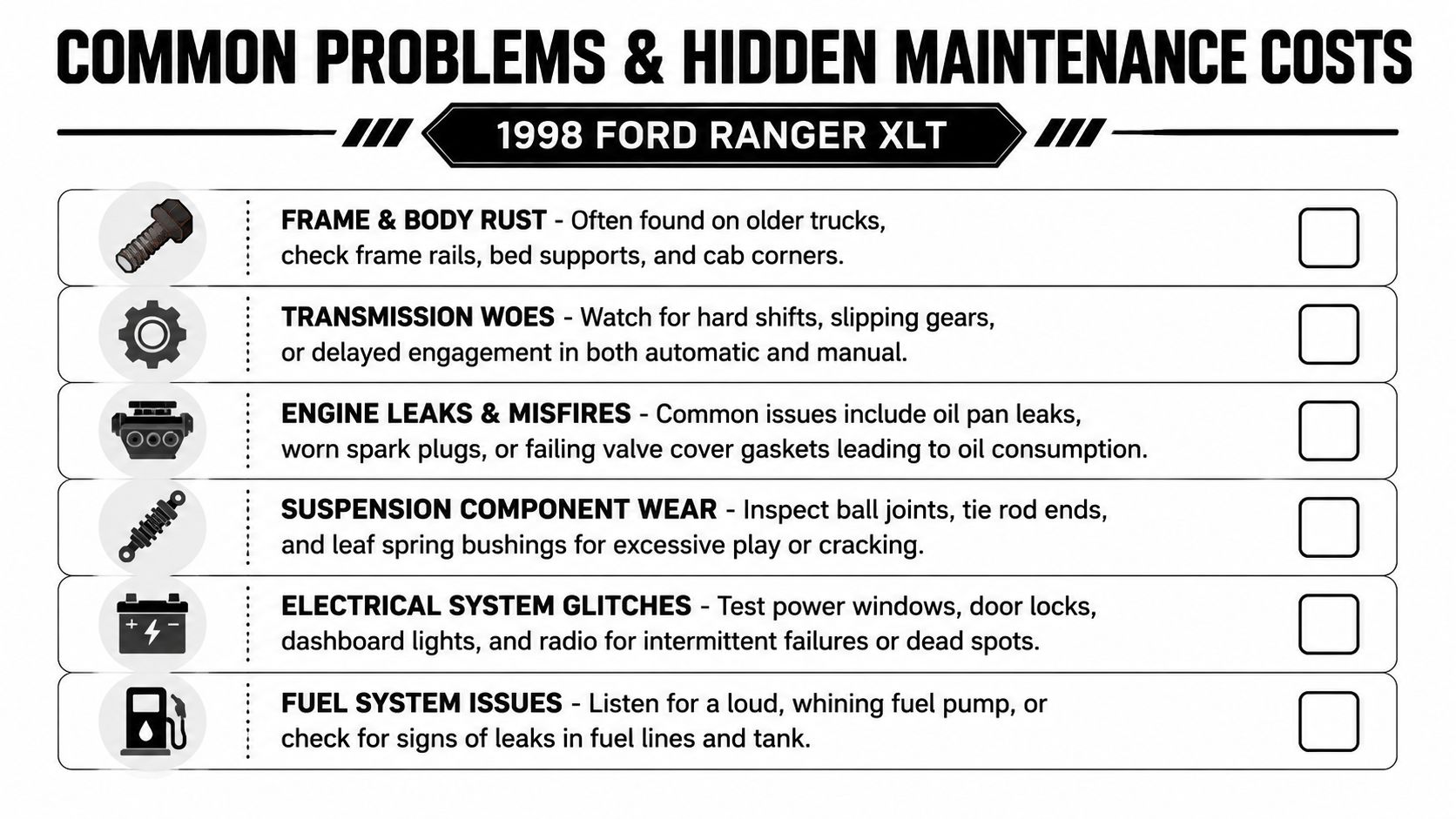
The 1998 Ranger has a good reputation, and that reputation isn't made up. But broad “reliable old truck” praise can hide expensive surprises. According to KBB consumer reviews for the 1998 Ranger, 93% of owners recommend the vehicle, yet anecdotal reports also mention serious repairs such as head replacement around 100,000 miles.
That's the gap buyers miss. A truck can be likable, durable, and still need real money.
Rust is the first deal-breaker
Mechanical problems can often be fixed. A rotten frame changes the whole conversation.
On old compact trucks, I care less about surface rust and more about structural rust. You need to get under the truck and inspect the frame rails, leaf spring mounting areas, cab mounts, bed supports, brake and fuel line routing points, and the lower body around cab corners. If the seller won't let you inspect underneath, walk away.
This matters even more in wet climates and winter-salt regions. If you live somewhere damp year-round, good prevention habits matter after purchase too. This guide on protecting cars from Seattle rain gives a useful overview of why moisture control and underbody care matter on aging vehicles.
Transmission and drivetrain neglect can turn a cheap buy into a bad one
The automatic Ranger can be perfectly usable, but old automatics punish buyers who don't test drive long enough. Short neighborhood loops hide problems. You want to feel cold shifts, warm shifts, reverse engagement, part-throttle upshifts, and downshifts under moderate load.
Manual trucks are often simpler bets, but they still need clutch, synchro, and driveline evaluation. With 4WD trucks, add transfer-case behavior and front-end engagement to the list.
Watch for:
- Delayed engagement: when shifting into drive or reverse
- Harsh shifts: especially when the truck is already warm
- Slipping under throttle: rising revs without matching acceleration
- 4WD engagement issues: if equipped, especially if the truck hasn't been used regularly
Engines can run fine and still cost you money
Old Rangers often keep running through small leaks, worn sensors, rough idle habits, and deferred tune-up work. That's part of why buyers get fooled. A truck that starts every time can still need immediate catch-up maintenance.
The red flags I take seriously include:
- Coolant smell or residue: possible cooling-system neglect
- Oil leaks: not unusual on old trucks, but heavy leaks matter
- Misfire under load: can mean simple ignition issues or deeper engine problems
- Exhaust smoke: especially once warmed up
- Top-end noise or odd valvetrain sound: listen with the hood open and closed
The head-replacement anecdote in KBB's owner feedback is a reminder to budget for the unknown on any high-mileage example. A seller saying “it's always been reliable” isn't the same as receipts.
Reliability on a 28-year-old truck often means it survived. It doesn't mean it needs nothing.
Small faults add up faster than buyers expect
Total cost of ownership becomes a reality at this stage. An old Ranger can nickel-and-dime you with worn suspension parts, tired window motors, flaky switches, old tires, weak batteries, leaking seals, and neglected fluid services. None of that sounds dramatic in an ad. All of it shows up once the truck is yours.
A practical way to view the vehicle:
| Problem area | Why it matters | Buy or walk away |
|---|---|---|
| Frame rust | Structural integrity, inspection failure risk | Usually walk away if severe |
| Transmission trouble | Expensive and hard to ignore | Usually walk unless price reflects it |
| Engine leaks and rough running | Can range from minor to serious | Case by case |
| Suspension wear | Affects safety and drivability | Often manageable if expected |
| Electrical issues | Annoying, sometimes time-consuming | Accept only if you're realistic |
The best old Ranger isn't the shiny one. It's the one with honest wear, dry paperwork, and fewer expensive mysteries.
What is a 1998 Ford Ranger XLT Worth in 2026?
By 2026, the value of a 1998 ford ranger xlt is less about book nostalgia and more about how usable it still is. According to Edmunds' 1998 Ranger XLT specs and values, trade-in values run about $1,376 to $1,397, while private-party resale sits around $2,965 to $2,973.
That gives you a baseline, not a verdict.
Why two similar trucks can be priced very differently
Edmunds also lists a maximum towing capacity of 6,000 lbs, a payload capacity of 1,240 to 1,290 lbs, and a GVWR up to 4,980 lbs depending on configuration. Those capability numbers matter because some buyers aren't shopping for nostalgia at all. They want a compact work truck that can still do a job.
A seller can justify asking more when the truck has:
- A desirable configuration, such as a more useful cab or drivetrain setup
- A cleaner body and frame, especially in areas where rust kills old trucks
- Maintenance records, not just verbal claims
- A work-ready setup, if the buyer values towing or payload use
A seller usually can't justify a strong price on cosmetics alone. Fresh paint on a tired truck doesn't increase real value much if the underneath tells a different story.
Where the market gets distorted
Old truck pricing often gets weird in local marketplaces. Clean, stock examples can get overpriced because sellers know compact trucks still have a following. On the other side, rough trucks get listed as “easy project” vehicles when they're really parts donors.
If you're shopping across multiple listing platforms, it helps to understand how dealer and private-sale channels shape pricing and presentation. This piece on Marketplace Pro's analysis of dealer marketplaces gives useful context on how vehicles get marketed differently depending on platform and seller type.
My rule for judging asking price
I break it into three buckets.
Fair buy: the truck is structurally solid, drives predictably, and the seller can support the story with records.
Risky buy: the price looks attractive, but the truck has enough unanswered questions that your first months of ownership will become detective work.
Bad buy: obvious rust, transmission concerns, poor paperwork, or a seller who talks around simple questions.
Don't negotiate from the book value alone. Negotiate from the work the truck still needs.
The Ultimate Pre-Purchase Inspection Checklist
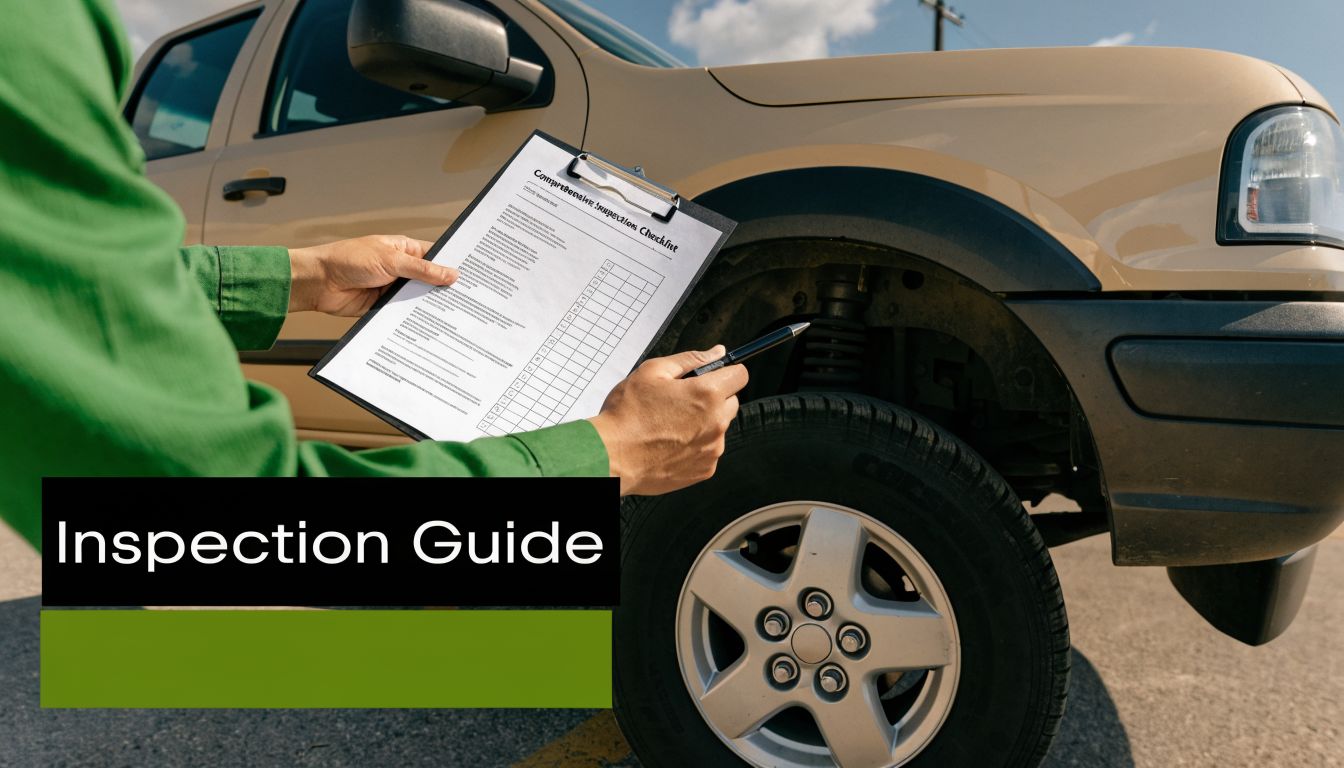
If you're serious about a 1998 ford ranger xlt, show up with a flashlight, paper towels, a magnet, and enough time to inspect it properly. Don't do a rushed look in a dark parking lot. Old trucks hide problems in shadows and short test drives.
A general Kwik Kar auto care safety guide is a helpful reminder of how professionals think through a vehicle systematically. For a buyer, the same mindset works. Start outside, move underneath, then drive it long enough to feel what the truck is doing.
Frame and underbody checks
Start with the truck's bones. Cosmetics are secondary.
- Inspect the frame rails: Look for scaling, soft spots, patchwork, or fresh undercoating that seems placed to hide something.
- Check leaf spring and mount areas: Rust here matters more than rust on a bumper.
- Look at brake and fuel lines: Corrosion, wet spots, and crude repairs are warning signs.
- Examine cab mounts and bed supports: Structural areas tell you whether the truck is worth further time.
Use the magnet carefully on suspicious body spots. Excess filler doesn't always mean disaster, but it does mean questions.
Engine bay checks
Open the hood before the seller starts the truck if possible. A cold start tells you more.
Look for basic honesty first. Are fluid levels sensible? Are there obvious leaks, cracked hoses, sloppy wiring repairs, or signs that one area was cleaned much more aggressively than everything around it?
Check these items in sequence:
- Oil condition: Dirty oil is one thing. Milky contamination is another.
- Coolant appearance: Look for proper coolant, not rusty soup.
- Belts and hoses: Age cracks and softness matter on a truck this old.
- Battery area: Corrosion and improvised hold-downs suggest cheap maintenance habits.
- Idle quality: Listen for surging, ticking, and roughness once it settles.
Drivetrain and suspension checks
This part separates a decent old truck from an exhausting one.
Turn the steering wheel at low speed and listen. Go over a rough patch and feel for front-end looseness. On 4WD trucks, engage the system as intended by the design and verify it works without drama.
Focus on:
- Clunks on takeoff or deceleration
- Wandering steering
- Brake pull or pulsation
- Wheel bearing or tire noise
- Harsh or delayed shifts
- 4WD engagement consistency, if equipped
If the seller says “it just needs an alignment,” assume it might need more than an alignment until proven otherwise.
A straight-driving old truck is usually a better sign than a shiny one.
Interior and electrical checks
XLT equipment either helps or annoys you in this area. Power features are nice only if they still work.
Test every switch you can reach. Windows, locks, mirrors, HVAC fan speeds, lights, radio, gauges, warning lamps, wipers, and cruise control should all be checked. Don't skip small stuff. Multiple dead accessories often point to a truck that hasn't been cared for consistently.
For a deeper framework before any used-vehicle purchase, this pre-purchase car inspection guide is a good companion checklist.
Test drive checklist
Drive it long enough to get it warm. City streets alone are not enough. You want stop-and-go, moderate acceleration, braking from speed, and at least a short higher-speed stretch if safe and legal.
Use this quick road test script:
| Test | What to feel for | Why it matters |
|---|---|---|
| Cold start | Fast start, stable idle, no heavy smoke | Reveals neglect quickly |
| Around-town driving | Clean shifts, smooth steering | Exposes basic drivability |
| Moderate throttle | No slipping, hesitation, or stumble | Shows powertrain health |
| Braking | Straight stop, no severe vibration | Safety and front-end condition |
| Parking-lot turns | No binding, popping, or heavy clunks | CV, steering, and front suspension clues |
If the seller refuses a proper test drive or independent inspection, that answers your question for you.
Using VekTracer to Verify What You Cannot See
You find a Ranger that looks right. The paint shines, the cab is clean, and the seller says it has always been a dependable truck. On a 1998 model, that story is only half the job. The other half is checking the paper trail, because hidden history can turn a cheap pickup into an expensive mistake.
A physical inspection shows what the truck is today. Records show what happened before you got there. That matters with an old Ranger, where a straight body and decent test drive can still hide salvage history, odometer problems, old collision damage, theft records, or title issues that hurt resale and insurance value later.
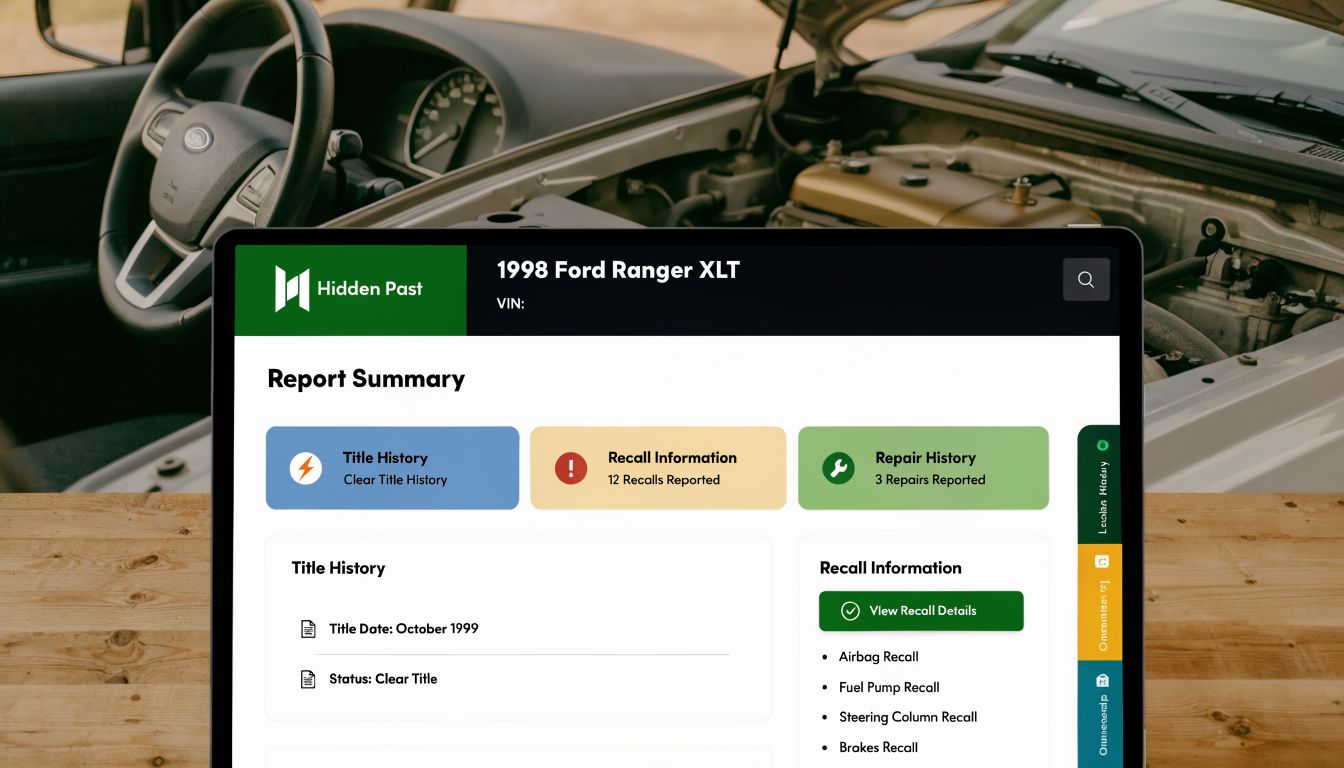
Why a vehicle history report matters on an old Ranger
With a truck this old, sellers are often passing along what they were told by the last owner. Sometimes the story is honest but incomplete. A history report helps you verify the parts that directly affect total cost of ownership, not just the asking price.
The items I care about most are:
- Title status
- Lien information
- Theft records
- Accident and damage history
- Mileage consistency
- Open recalls
Each one can change what the truck is really worth. A clean-looking Ranger with title trouble or inconsistent mileage is usually overpriced, even if it drives well today.
Where VIN checks fit into the buying process
Run the VIN after the truck clears your first in-person inspection. That order saves money and time. If the frame is soft, the transmission slips, or the truck has obvious neglect, stop there.
If it passes the basic mechanical test, a VIN check becomes the screen for hidden risk. That is especially useful if the truck has moved between states, crossed the border, or has gaps in its ownership story. Matching the seller's claims against the report is how you catch the expensive surprises before you own them.
What makes VekTracer useful here
VekTracer works well for old-truck shopping because the report is built for decision-making, not just data dumping. You can check accident and damage history, title and lien status, theft records, mileage verification, recall information, and Canadian market value details in one place.
I also like tools that help sort candidates side by side. On a 1998 Ranger, you are rarely choosing between perfect and bad. You are usually choosing between one truck with cosmetic wear, one with rust, and one with a questionable history. A report helps put those trade-offs in order.
If you want to see the format before paying for anything, review this sample vehicle history report.
Use the report as a filter, not a substitute for inspection. If the truck looks clean but the history shows title problems, prior severe damage, or mileage inconsistencies, you just avoided the kind of Ranger that stays cheap only until the repair bills and resale hit show up.
Frequently Asked Questions About the 1998 Ranger
Is it hard to find parts for a 1998 Ford Ranger XLT in 2026?
Not usually for common maintenance and wear items. The challenge is less about basic parts availability and more about part quality, trim-specific interior pieces, and finding clean used components for cosmetic repairs. Mechanical service items are generally easier to source than perfect original XLT trim details.
Is the 1998 ford ranger xlt good for first-time truck buyers?
It can be, if the buyer understands old-vehicle ownership. This truck is compact, straightforward, and easier to live with than many full-size pickups. But it's still an old machine, so a first-time buyer needs to budget for repairs, inspect carefully, and avoid shopping only by price.
Which version is usually the better value?
For many buyers, the better value is the configuration that matches how the truck will be used. If you need traction and occasional rough-weather utility, a sound 4WD truck may be worth the extra complexity. If you want a cheap, simple pickup for errands and light hauling, a cleaner 2WD truck is often the smarter choice.
Should I buy one with high mileage?
Mileage alone doesn't decide it. Service history, rust, drivability, and how the truck was used matter more. I'd rather inspect a higher-mileage truck with records and honest wear than a lower-mileage truck with a suspicious story and obvious neglect.
Are modifications a problem on these trucks?
Sometimes. Mild, sensible upgrades can be fine. Poorly done lifts, wiring hacks, cheap intake parts, and welded “fixes” usually create more questions than value. Stock or lightly modified trucks are easier to judge and easier to resell.
What should I compare it against if I can't find a good one?
If you strike out on Rangers, shoppers usually look at other compact pickups from the same era. The best alternative depends on what you care about most: simplicity, parts access, rust resistance in your area, cab configuration, or resale value. The key is to compare condition and maintenance history, not just badge reputation.
Is a vehicle history report still worth it on such an old truck?
Yes, especially if the truck looks unusually clean for its age or the seller's story feels thin. Old pickups change hands a lot, and paperwork gaps are common. A report is one of the few ways to check title issues, mileage consistency, and damage records before you hand over cash.
If you're down to two or three Rangers and need to separate the honest truck from the expensive mistake, VekTracer helps you verify what inspection alone can't show. Run a VIN check, review the vehicle history report, and use the Risk Score to make a cleaner buying decision before you commit.
Ready to check a vehicle?
Enter any 17-character VIN for a free instant preview — no account needed.