Why Is My Engine Knocking: Diagnosis & Solutions
Check a vehicle before you buy
Enter a VIN for a free instant preview — accidents, title brands, mileage, liens & open recalls.
Engine knocking is the metallic pinging or tapping sound your engine makes when combustion happens incorrectly or mechanical parts are worn. It's often caused by using the wrong fuel, carbon buildup, or serious internal damage like rod knock, and you should stop driving immediately if the noise is loud, constant, or accompanied by a flashing check engine light.
Most drivers notice it the same way. You pull away from a light, climb a hill, or start the car cold, and suddenly there's a sound that wasn't there before. It's easy to hope it's nothing. Sometimes it is a fuel or tune issue. Sometimes it's the warning shot before a major engine failure.
The smart move is not to guess. The smart move is to figure out which kind of knock you're hearing, how severe it is, and whether the car should be shut off now or booked in for diagnosis as soon as possible.
That Sound Is Your Engine Asking for Help
An engine knock is a symptom, not a diagnosis. The noise usually points to one of two problems. Either the air-fuel mixture is burning the wrong way inside the cylinder, or engine parts that should move with a thin cushion of oil between them are starting to hit each other.
That distinction matters because the repair path is completely different. A light metallic ping under load may be tied to fuel octane, ignition timing, or a lean-running condition. A deep knock that follows engine speed is a different conversation and a much more urgent one.
When you should take it seriously right away
Some owners wait because the sound comes and goes. That's a mistake. Intermittent noises can still signal a real problem, especially if they show up under acceleration, heat, or load.
Practical rule: If the noise is getting louder, happens at idle, or comes with a warning light, treat it like a stop-driving issue until proven otherwise.
Three things raise the urgency fast:
- Loud metallic knocking: A heavy, repeating knock usually isn't a minor tune issue.
- Warning lights: A flashing check engine light or oil-related warning means don't keep testing it on the road.
- Recent changes: Wrong fuel, delayed oil service, or recent repair work can all trigger knock complaints.
What usually works, and what doesn't
What works is narrowing the symptom down before throwing parts at it. Listen for when it happens. Note whether it changes with throttle, RPM, or temperature. Check the basics first.
What doesn't work is assuming all engine knock is “bad gas.” That guess sometimes lands right, but it also causes owners to miss low oil, timing problems, or internal wear until the repair gets much worse.
Combustion Pings vs Mechanical Knocks
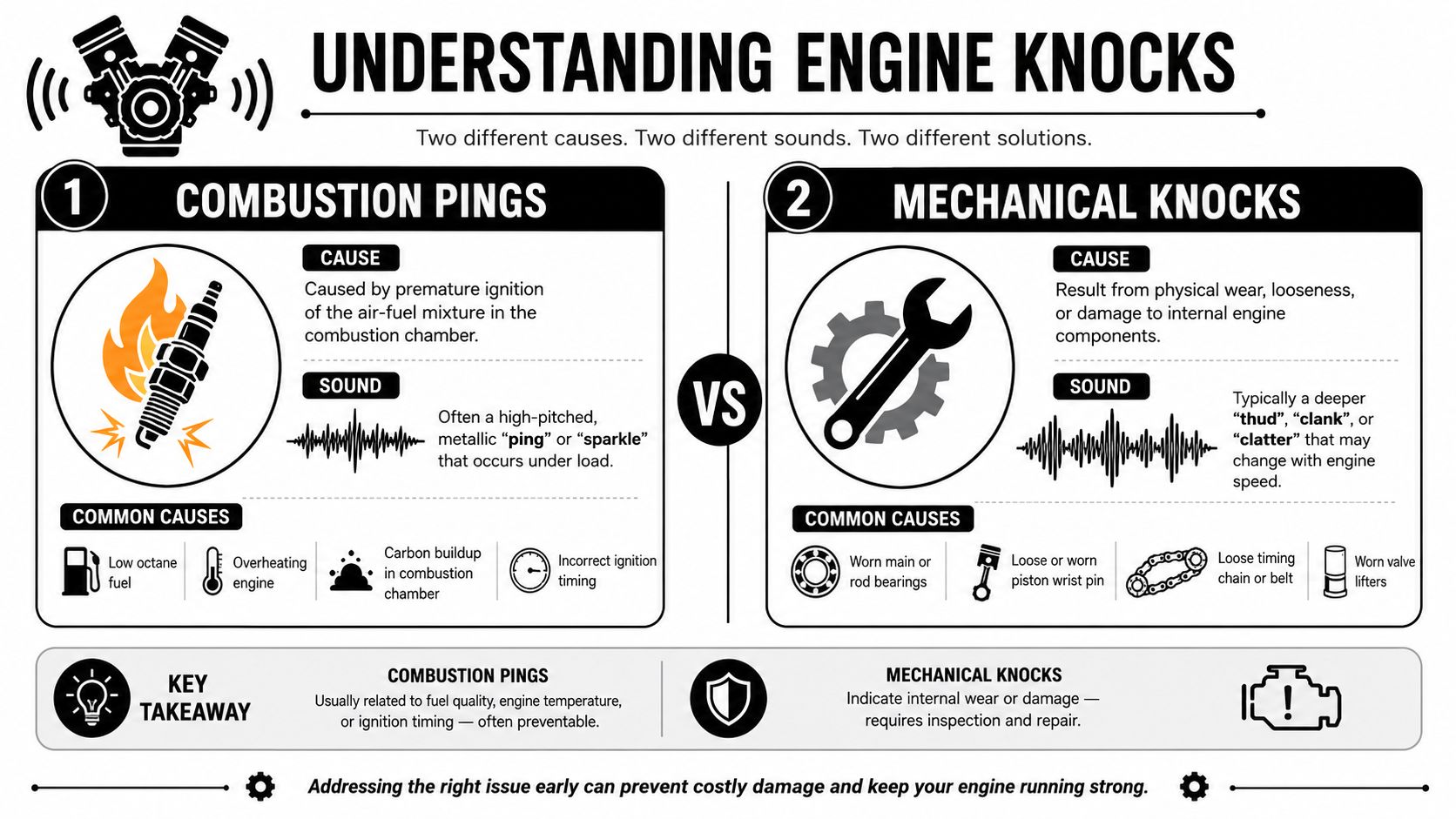
The most useful way to answer the question, why is my engine knocking, is to split the noise into two families. One is combustion ping. The other is mechanical knock.
A lot of bad advice starts by lumping them together. That leads to the wrong fix and wasted money.
What combustion ping sounds like
Combustion knock comes from abnormal combustion inside the cylinder. The air-fuel charge doesn't burn smoothly. Part of it ignites too early or too unevenly, creating a pressure wave and the classic metallic ping or “marbles in a can” sound, as described in this explanation of spark-ignition knock.
You'll usually hear it under load rather than at idle. Common examples are:
- Climbing a hill: The engine is working harder and cylinder pressure goes up.
- Accelerating: The knock shows up when you ask for power.
- Hot conditions: Heat reduces your safety margin against detonation.
This kind of sound is often lighter and sharper than a mechanical knock. It may disappear if you back off the throttle.
What mechanical knock sounds like
Mechanical knock is different. It comes from worn or damaged parts such as rod bearings or valve-train parts, and it often creates a rhythmic rattle, clunk, or thud rather than a high-pitched ping, as noted in this maintenance guide on engine knocking causes.
Think of it this way:
| Type | Typical character | Common pattern | Likely concern |
|---|---|---|---|
| Combustion ping | Light metallic ping | Worse under load | Fuel, timing, mixture |
| Mechanical knock | Deeper knock or clatter | Changes with RPM, may occur at idle | Wear, lubrication, internal damage |
The fast garage test
If a customer describes a noise that only shows up pulling hard in a high gear, I first suspect combustion-related ping. If they say it knocks at idle and gets faster with RPM, I worry about mechanical damage first.
A noise that changes with load tells one story. A noise that follows engine speed at all times tells another.
That quick distinction won't replace proper diagnosis, but it keeps you from chasing spark plugs when the problem is inside the bottom end.
Common Causes of Engine Pinging and Detonation
Combustion knock is the more fixable side of this problem, but only if you catch it early. The underlying pattern is simple. Anything that raises combustion temperature, pressure, or timing error can push the mixture into detonation or pre-ignition behavior.
Wrong octane for the engine
Fuel grade is the first thing I check because it's common and easy to verify. The U.S. Environmental Protection Agency notes that regular gasoline is typically 87 octane, while premium grades are commonly 91 to 94 octane, and your owner's manual specifies the minimum octane needed to avoid pre-ignition or detonation, as summarized in this octane and knock overview.
If the engine is designed for a higher octane and you fill it with less, it may start pinging under load. That doesn't mean premium fuel is a universal cure. It means the engine needs at least the grade it was designed around.
Ignition timing and lean mixture issues
Too much ignition advance and a lean mixture are major triggers. They raise in-cylinder temperature and pressure enough to reduce detonation margin. Vacuum leaks, sensor faults, or weak fuel delivery can all push the engine in that direction.
That's why a car may run around town but knock when you accelerate hard. Under load, the engine has the least room for error.
Carbon deposits, spark plugs, and heat
Older engines and poorly maintained engines often build up deposits in the combustion chamber. Those deposits can create hot spots that help ignite the mixture at the wrong time. Worn spark plugs can also contribute if they're no longer firing cleanly or if the wrong plug type was installed.
Overheating adds to the problem. Hotter parts and hotter charge temperatures make knock more likely.
Why modern engines don't always save you
Modern engines often use knock sensors and can retard ignition timing to manage knock and keep combustion near the limit, according to this overview of engine knocking and knock control. That protection helps, but it isn't magic.
If the underlying problem is too large, the engine will still complain. You may notice reduced power, rough response, or a persistent ping because the computer is trying to protect the engine while the root cause remains.
If the knock goes away only because the engine pulled timing, you haven't fixed the problem. You've only reduced the damage risk for the moment.
Serious Mechanical Knocks You Cannot Ignore
Mechanical knock is where I stop being reassuring and start being blunt. These sounds often mean clearance has opened up somewhere it shouldn't, oil film protection has been lost, or a component is wearing beyond its safe limit.
If the sound is deep, regular, and tied to engine speed, don't keep driving to “see if it clears up.”
Rod knock and bearing damage
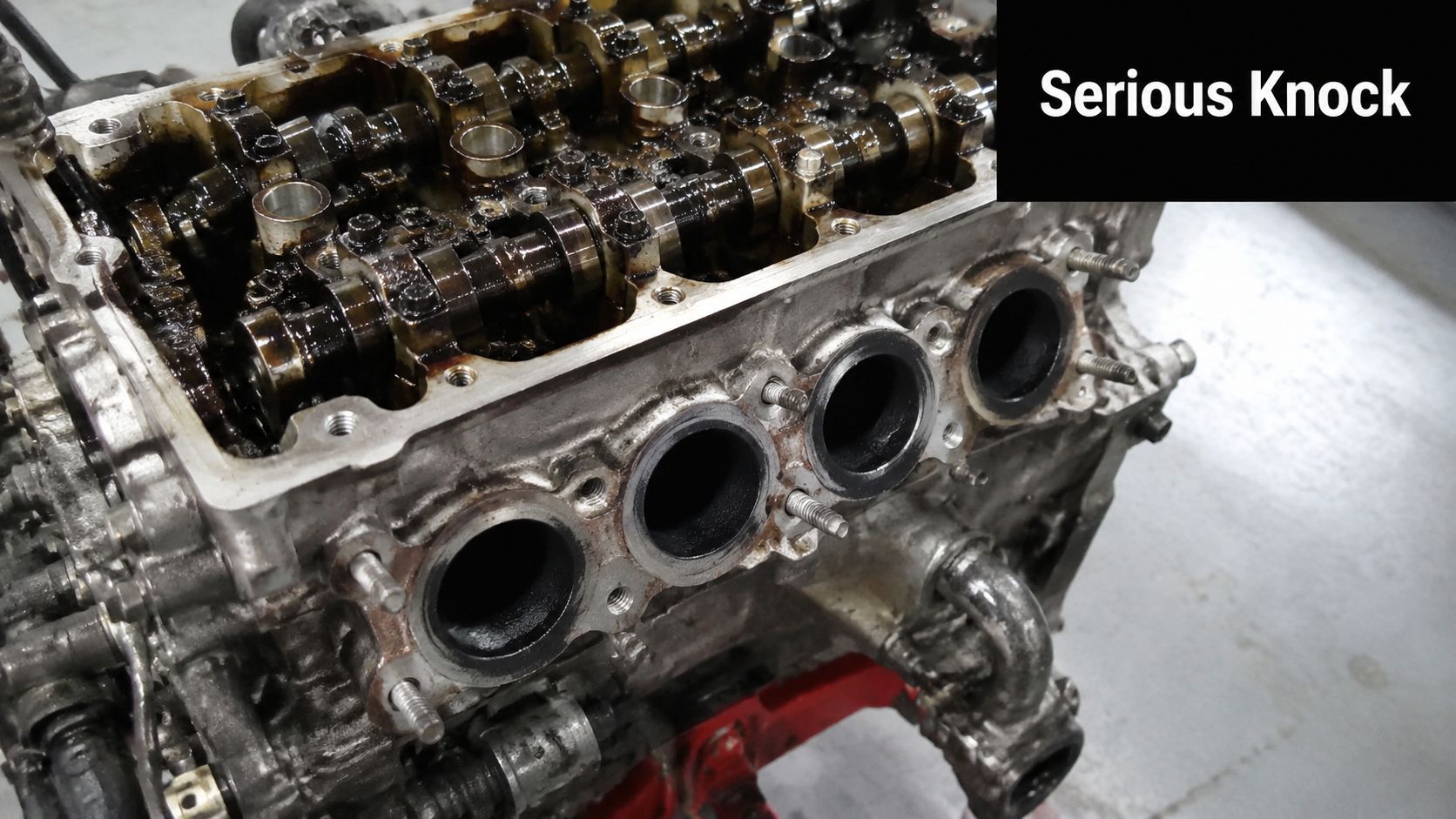
Rod knock is the one owners fear for good reason. It's usually a deep, heavy knock from the lower part of the engine. It often gets faster with RPM and may sound worse under load.
This usually points to bearing wear or oil starvation. Once a bearing has lost proper clearance and lubrication, the parts start hitting instead of gliding on an oil film. At that stage, every extra minute of running can make the crankshaft, rod, or block damage worse.
Valvetrain, timing, and top-end noise
Not every mechanical knock comes from the bottom end. Worn lifters, rocker issues, timing-chain problems, and other valve-train faults can produce tapping, rattling, or clattering from the top or front of the engine.
These sounds can be lighter than rod knock, but they still matter. A neglected timing problem can turn into much bigger damage if the chain jumps or related parts fail.
Oil problems make everything worse
Low oil level, wrong viscosity, or poor oil condition can accelerate wear fast. A lot of knock complaints should start with the simplest check in the bay: oil level and condition.
Use this quick comparison when you're deciding how worried to be:
- Deep lower-engine thud: High concern for rod or bearing issues.
- Top-end rapid tick: Could be valvetrain related, still needs diagnosis.
- Front-of-engine rattle: Think timing components or accessory-related issues.
- Noise after recent oil change or service: Check oil grade, fill level, and whether anything was missed.
A mechanical knock rarely fixes itself. It usually gets quieter only after the damage has changed, not after the problem has gone away.
Your Diagnostic Checklist What to Do Right Now
When a car starts knocking, don't start with additives. Start with information. The better notes you bring to a shop, the faster a technician can sort combustion knock from mechanical failure.
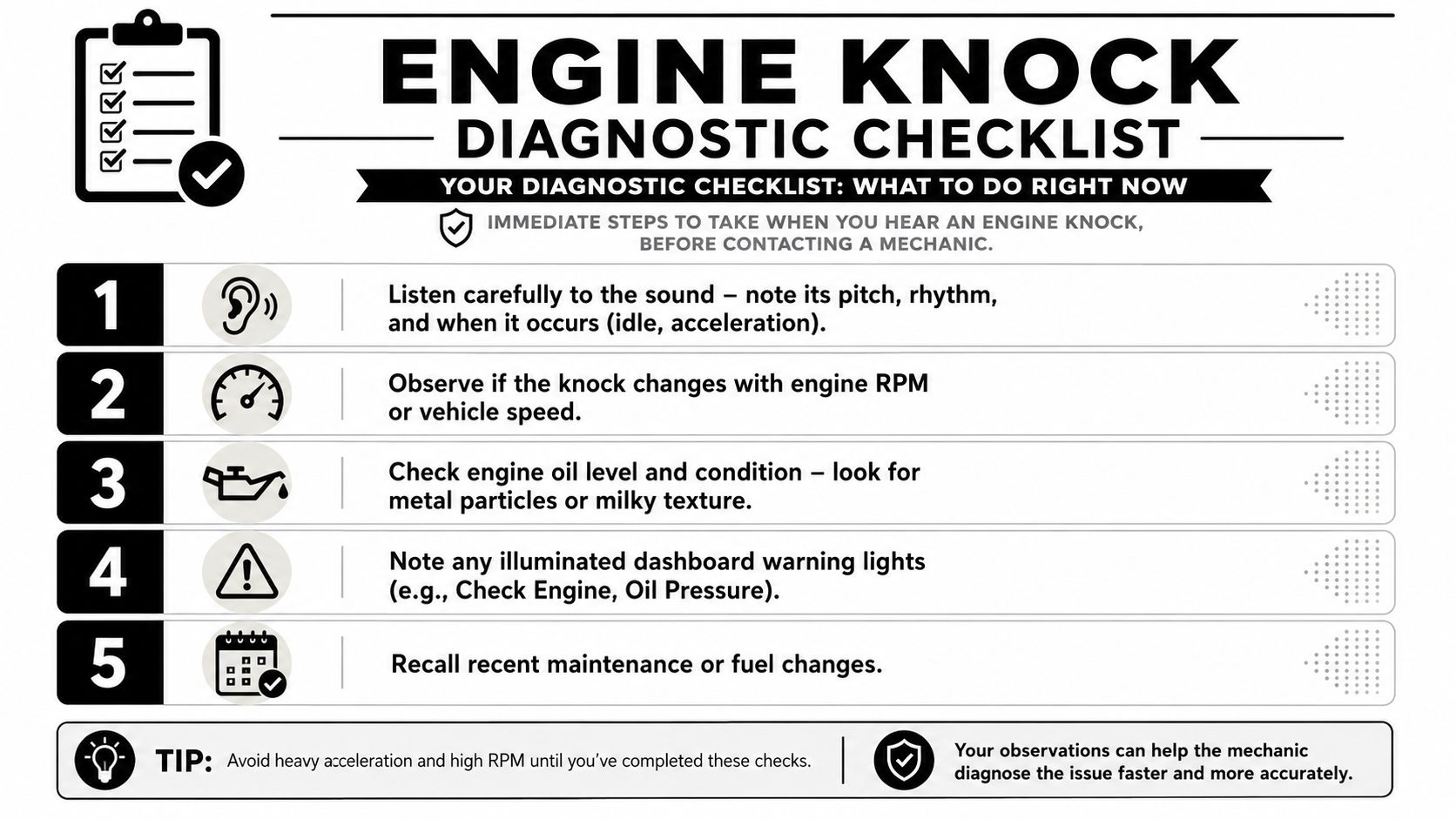
Practical diagnosis often depends on whether the noise changes with load, RPM, or idle, whether an OBD2 code appears, and checking oil level and condition first, as summarized in this technician-focused discussion of engine knock diagnosis.
The checklist to run before you call a shop
Listen for the pattern
Is it a light ping under acceleration, or a deep knock at idle too? That single detail changes the whole diagnosis.Check the oil
Look at the level and condition. If it's low, dirty, milky, or metallic, stop there and don't keep driving until it's assessed.Note warning lights
Check engine, oil pressure, temperature, or service lights all add context. If you're trying to decode a spanner symbol on a Vauxhall, Blade Auto Keys' spanner light explanation is a useful reference for what that warning can mean.Think about what changed recently
New fuel station, recent service, delayed oil change, battery disconnect, tune work, spark plug replacement. These details matter.Check whether the car feels different
Reduced power, rough idle, hesitation, or overheating alongside the noise make the case more urgent.
If you're also sorting out dashboard warnings, this guide on what a car service light usually means helps you separate routine reminders from signs that need immediate attention.
When to stop driving immediately
This is the essential part:
- Loud constant knocking: Shut it down.
- Flashing check engine light: Don't keep testing it.
- Low oil pressure warning or obvious oil loss: Stop the engine.
- Overheating with knock: Pull over and arrange a tow.
- Knock that suddenly appeared after severe loss of power: Treat it as a possible internal failure.
A short drive to the shop can turn a repairable problem into a replacement engine if the knock is mechanical.
Potential Repairs Costs and Prevention Tips
Repair cost depends entirely on which kind of knock you have. A combustion-related issue may be straightforward. A mechanical knock can turn into a major engine job fast.
Because costs vary widely by vehicle, engine design, shop rate, and parts availability, the best way to think about this is in categories rather than fixed numbers. Minor causes often involve fuel correction, spark plugs, carbon-related cleanup, fixing a vacuum leak, or sorting out a sensor or fuel-delivery fault. Serious causes involve internal wear, lubrication failure, and engine teardown or replacement.
What usually pays off
- Use the fuel your manual calls for: If the engine requires higher octane, don't try to outsmart it.
- Stay on top of oil service: Correct oil grade and proper fill level matter more than owners think.
- Address overheating early: Heat pushes engines toward both combustion trouble and wear.
- Fix small drivability issues sooner: Lean-running faults and sensor problems don't stay small forever.
What wastes money
The biggest waste is chasing miracle fixes. Additives can sometimes mask a symptom for a while, but they don't restore worn bearings or correct a real calibration fault.
The second waste is poor communication at the repair shop. If you want a better way to describe symptoms, approve work clearly, and avoid crossed wires, FixyFlow for auto repair communication is a practical read.
For routine prevention, this explanation of what maintenance required usually means is worth reviewing, because many expensive knock complaints start with basic maintenance being delayed.
How to Avoid Buying a Car with a Knocking Past
Used car buyers get caught here all the time. A seller can warm the engine before you arrive, use heavier oil, clear codes, or hope you won't drive the car under enough load to expose the problem.
That's why the test drive has to be deliberate. Start it cold if possible. Let it idle. Drive it gently, then under moderate load. Listen with the radio off and the windows cracked. Ask for maintenance records and pay attention to vague answers.

A vehicle history report won't diagnose a live knock by itself, but it can surface patterns that deserve caution. VekTracer provides VIN-based vehicle history reports with service-related information, title and theft records, recall alerts, mileage verification, and a Risk Score on a 1-100 scale. If you're screening a used car before spending money on a full inspection, it's one tool that can help you spot red flags before purchase. Pair that with a proper pre-purchase car inspection checklist, a CARFAX comparison, and the right VIN check pages for the market you're buying in.
If a seller says, “It only makes that sound sometimes,” assume the car needs proof, not trust.
Frequently Asked Questions About Engine Knock
Can I fix engine knock with a fuel additive?
Sometimes an additive changes the symptom. That's not the same as fixing the cause. If the knock comes from wrong octane or mild deposit-related issues, you may hear a temporary improvement. If it comes from lean operation, timing problems, oil issues, or mechanical wear, an additive won't solve it.
My car only knocks when I accelerate. Is that better news?
Usually, yes. A knock that shows up mainly under load often points more toward combustion issues than deep internal mechanical damage. That said, “better” doesn't mean “safe to ignore.” Load-related ping still needs diagnosis before it turns into damaged pistons or bearings.
My engine only makes noise when it's cold
Cold-start noise can come from several places, including valvetrain noise or piston-related clearance issues. If the sound disappears quickly and never returns warm, the urgency may be lower than a constant knock. But if it's getting louder, lasting longer, or showing up warm, get it checked.
The noise stopped after I used premium fuel. Am I in the clear?
Not necessarily. If the engine needed higher octane and got it, that may explain the improvement. But the underlying issue could still involve deposits, timing, or another condition that reduced detonation margin in the first place.
Why is my engine knocking in a modern turbo car only sometimes?
That's common in newer engines. General consumer advice often misses intermittent knock in turbocharged and direct-injection engines, where sensor faults, vacuum leaks, and fuel-delivery issues may only show up under specific load conditions and often need scan-tool diagnostics to pinpoint, as noted in this discussion of intermittent knock in modern engines.
Can I keep driving if the knock is light?
If it's light and clearly tied to a fuel mistake, some owners get lucky by correcting it quickly. But unless you know exactly why it started, continued driving is a gamble. If there's any doubt about oil pressure, overheating, or a mechanical sound, stop and tow it.
If you're checking a used car and want another layer of protection before you buy, VekTracer can help you review VIN-based history, title status, mileage records, recalls, and service-related signals before you commit to an inspection or a deal.
Ready to check a vehicle?
Enter any 17-character VIN for a free instant preview — no account needed.