VIN Decoder with Options: Compare Features and Data
Check a vehicle before you buy
Enter a VIN for a free instant preview — accidents, title brands, mileage, liens & open recalls.
You're looking at a used SUV advertised with a premium towing package, upgraded audio, and advanced driver assistance. The seller's photos show the right badge, but the listing doesn't prove which equipment left the factory. A VIN decoder with options can resolve the vehicle's 17-character VIN into factory-installed options and packages, while a basic decoder usually stops at identity and general specifications. For a serious purchase, that distinction matters because the build sheet tells you what the vehicle was built as, and the history record tells you what happened afterward.
Table of Contents
- The Real Value of a VIN Decoder With Options
- Standard VIN Decoding vs Option-Level Decoding
- Optional Outputs That Actually Impact Vehicle Value
- Where Free and Basic Decoders Fall Short
- Integrating Factory Options With Vehicle History Records
- How to Choose the Right VIN Decoder for Your Needs
- Next Steps for Verifying Your Vehicle's True Build and History
The Real Value of a VIN Decoder With Options
A standard lookup may confirm the manufacturer, model, model year, body style, engine, and transmission. That's useful for basic identification, but it doesn't answer the questions that often affect a negotiation: Was the towing equipment factory-installed? Does the vehicle have the premium safety suite? Is the advertised trim consistent with the original build? Are the replacement parts being ordered for the installed equipment?
A true option-level decoder works differently. It translates the VIN into a more detailed factory configuration, including installed options, packages, and, where available, the as-built MSRP. OEM option codes can identify individual equipment, marketing packages, engines, transmissions, emissions systems, and color codes, as described in DataOne's VIN decoder documentation.
Factory equipment versus later additions
That distinction is important when a seller describes a vehicle using terms such as “fully loaded” or “off-road package.” A dealer-installed roof rack, aftermarket suspension component, or replacement audio system may look valuable, but it isn't the same as a factory package. The VIN build data can confirm the original configuration, while a physical inspection determines whether that equipment remains on the vehicle.
The same logic applies to parts. A vehicle may share a body style and engine with several configurations, yet use different wiring, modules, sensors, or mounting hardware. Option data narrows the fitment question before you order an expensive component or accept a listing's description.
Practical rule: Treat the badge and the seller's description as claims. Treat the factory option record as evidence of the original build.
For private-party buyers, the benefit is straightforward. You can compare the advertised equipment with the vehicle's original configuration before negotiating. Auction buyers can compare a catalog description with the factory build, while independent dealers can use option data to avoid mislabeling inventory. Sellers benefit too, particularly when a desirable package is difficult to identify from photographs.
A build sheet still isn't a complete history report. It won't, by itself, establish accident damage, title branding, lien status, theft records, or whether a previous owner removed factory equipment. It answers a narrower question, but it answers one that generic specifications often leave unresolved.
Standard VIN Decoding vs Option-Level Decoding
Pattern-level decoding reads the VIN structure and maps it to generalized vehicle attributes. It commonly returns the manufacturer, model, model year, body style, engine, and transmission. Option-level decoding adds the factory build information needed to distinguish trims, packages, equipment, and codes that aren't visible in the basic VIN pattern.
The difference is less about the number of fields than about the source and specificity of the fields. Tightly controlled OEM build data can identify what was installed at production, while a generic database may infer a likely configuration from the model and year.
Pattern-Level vs Option-Level VIN Decoding
| Data Category | Pattern-Level Decoder | Option-Level Decoder |
|---|---|---|
| Vehicle identity | Make, model, and model year | Make, model, model year, plus detailed build context |
| Body and powertrain | Body style, engine, and transmission | Engine and transmission variants tied to the original configuration |
| Trim verification | Often broad or generalized | More precise trim and package confirmation |
| Factory options | Usually limited or absent | Installed options and factory packages |
| OEM codes | May not resolve individual codes | Can resolve option codes for equipment, packages, emissions, and colors |
| As-built pricing | Usually unavailable | May include as-built MSRP where the data supports it |
| Valuation use | Useful for baseline identification | Better suited to comparing equipment and configuration |
| Dealer-installed equipment | Doesn't reliably distinguish it | Establishes what was present at factory, but still requires physical inspection for current condition |
More fields don't automatically mean better data. A report can contain a long list of generic attributes and still fail to distinguish a factory towing package from an aftermarket hitch. The useful question is whether each field has a clear origin and whether the tool identifies uncertainty instead of presenting an inference as fact.
Option-level decoding also has boundaries. OEM data may not show later modifications, equipment removed during repairs, or accessories installed after delivery. A buyer should compare the decoded build with the physical vehicle, photographs, service invoices, and any available window-sticker information.
For a plain-language explanation of the underlying identifier and its role in vehicle research, see this VIN decoding guide for smarter car buying. The important takeaway is simple: a basic decoder tells you which vehicle you're looking at, while an option-level decoder helps establish which version of that vehicle was built.
Optional Outputs That Actually Impact Vehicle Value
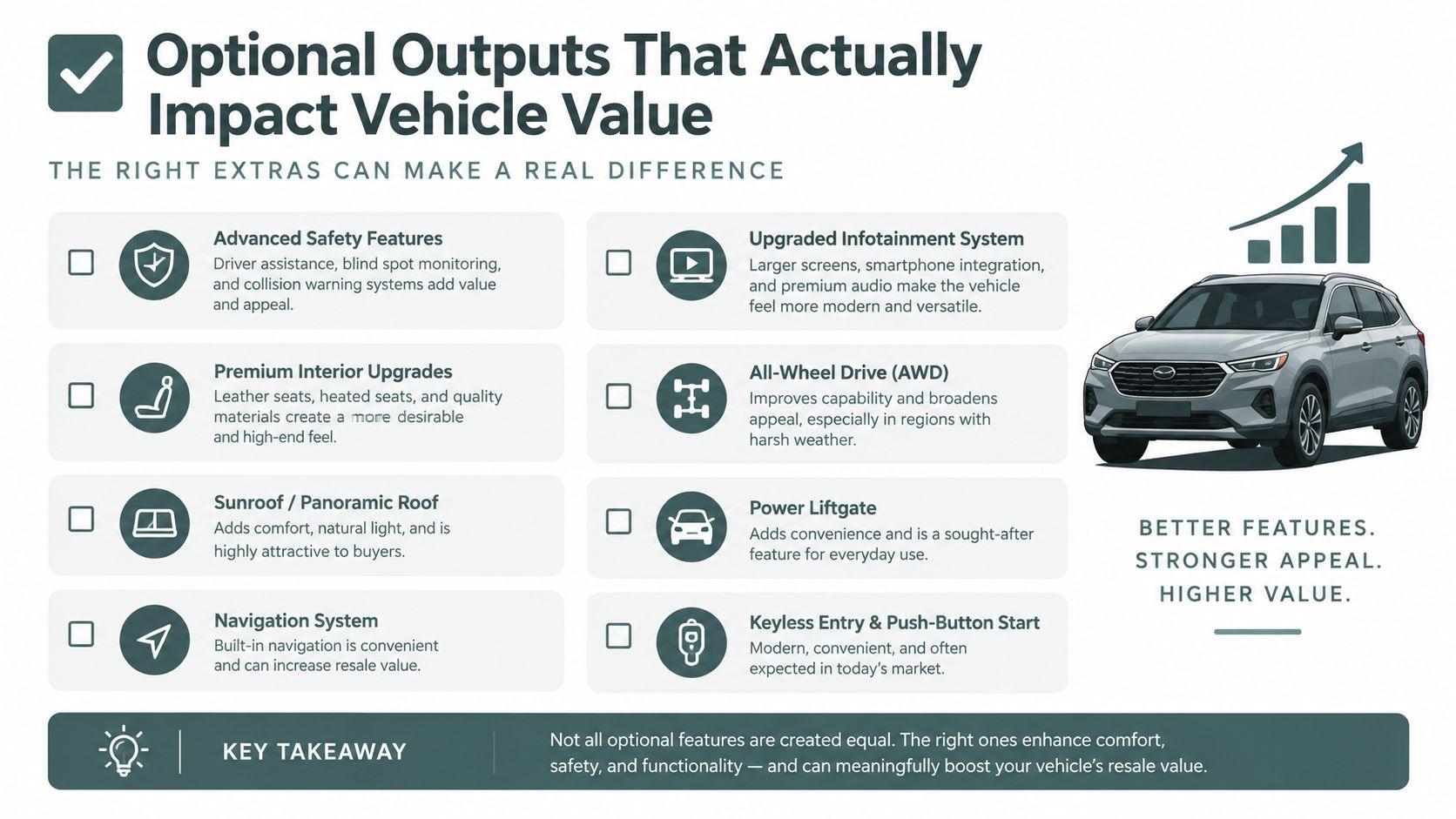
A factory option list becomes valuable when it changes a decision. Some equipment affects desirability and resale appeal, while other options mainly affect repair compatibility, safety-system calibration, or the credibility of the listing. The best output isn't the longest one. It's the output that answers a specific question about the vehicle in front of you.
Equipment that changes the buying decision
A factory towing package can matter to a buyer who needs the vehicle for a trailer. An off-road suspension package can matter to someone comparing two otherwise similar trucks. Premium audio, panoramic roof equipment, heated or ventilated seating, advanced lighting, and driver-assistance hardware can separate trims that look nearly identical in listing photos.
The decoder doesn't assign a universal value to every option. It gives you a reliable basis for comparing like with like. If two vehicles have similar mileage and condition but different original equipment, the buyer can investigate whether the difference justifies the asking price rather than accepting a seller's trim label.
Repair and salvage decisions
Option data matters even more when a vehicle has damage. Salvage and auction buyers need to know whether a damaged vehicle originally carried equipment that will be expensive or difficult to replace. A missing radar sensor, adaptive headlamp, specialized wheel, or camera module may not be obvious in a distant auction photograph, yet the factory build can indicate that the vehicle was originally equipped with it.
Advanced driver-assistance systems create another practical concern. A replacement windshield, bumper, grille, mirror, or headlamp may require components and calibration specific to the original equipment. Confirming the factory configuration before buying parts can prevent a mismatch between the vehicle's wiring, control modules, and replacement hardware.
Use the option list alongside:
- The physical inspection: Confirm that the equipment is still present and appears original.
- The listing description: Challenge claims that don't match the factory configuration.
- Parts research: Give the supplier the VIN and relevant option information before ordering.
- A valuation comparison: Compare the vehicle with others that have a similar build, mileage, title status, and condition.
Factory data won't prove that an option is working today. It also won't establish whether a previous owner retrofitted a different system. It does, however, give you a reference point that generic trim descriptions can't provide.
Where Free and Basic Decoders Fall Short
A free VIN lookup is a sensible first step, but it shouldn't be mistaken for universal coverage. Published technical comparisons report accuracy of about 99.5% or higher for U.S. vehicles, roughly 85% to 90% for European vehicles, and approximately 70% to 80% for Asian and other markets. Those figures come from Cardog's technical comparison of VIN decoders, and they illustrate why market and vehicle origin matter.
Market and age create blind spots
The official NHTSA decoder is designed for vehicles sold in the United States and is intended for vehicles from model year 1981 forward. A technical comparison also notes that NHTSA's tool doesn't provide prior ownership, accidents, or odometer-fraud checks. It can be an appropriate identity and safety resource, but it isn't a substitute for a broader history report.
Older vehicles and imported cars can produce incomplete fields, generic trim descriptions, or no option information at all. Cross-border records may sit in different government, insurance, auction, and registration systems. A decoder that only reads a pattern may still return an answer, but the answer can create false confidence if the tool doesn't show what it knows and what it doesn't.
The practical response is to check the output against the vehicle itself:
- Compare the decoded model and engine with the registration and door-jamb label.
- Look for missing option fields instead of assuming an empty result means the equipment wasn't installed.
- Use manufacturer or specialist build data when trim or parts fitment is central to the purchase.
- Add a history search for title brands, accidents, mileage, theft, liens, and auction records.
A free VIN decoder can help with the initial identity check. For a high-risk purchase, especially an older import, auction vehicle, or cross-border car, the tool should be judged by its coverage transparency rather than by how polished the result page looks.
Integrating Factory Options With Vehicle History Records
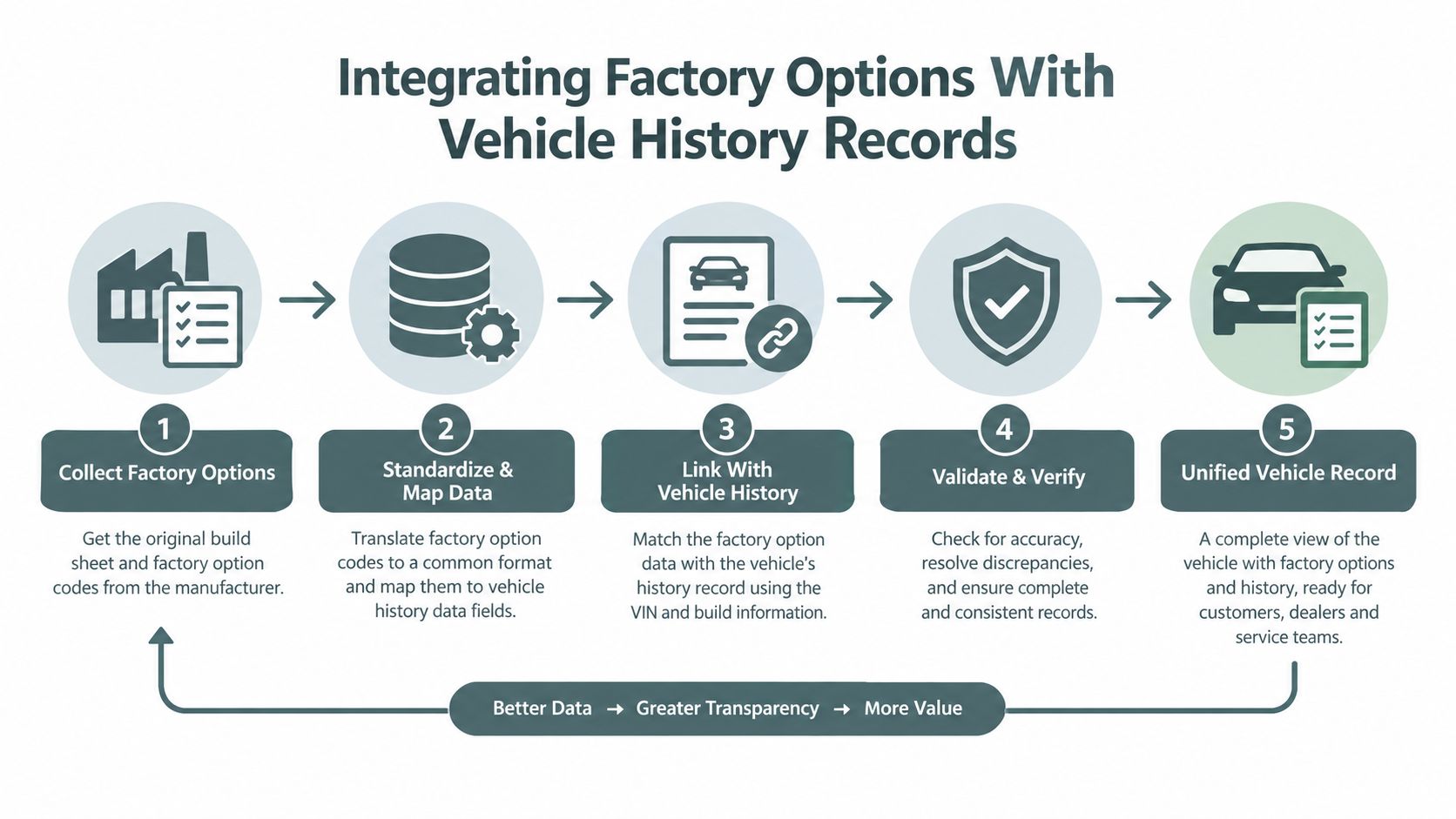
The factory build is the vehicle's starting point. The history record describes the years that followed. Neither source can replace the other. A premium trim with a clean-looking exterior may have a serious title problem, while a vehicle with a branded history may still be worth considering if the buyer understands its configuration, repairs, and current condition.
Build data answers one question
Option-level decoding can establish that the vehicle originally included a specific package, color, engine, or equipment group. That helps detect a misleading listing and supports parts research. It doesn't show whether the vehicle later suffered collision damage, passed through an auction, changed ownership, or received a title brand.
History records provide that second layer. Odometer sequencing is particularly important because NHTSA estimates that more than 450,000 vehicles are sold each year with false odometer readings, and a federal preliminary study found an estimated lifetime odometer-fraud incidence rate of 3.47%, with confidence bounds from 2.68% to 4.26%. These figures are published in NHTSA's odometer-fraud guidance.
A unified review is more revealing
Read the two data sets together:
- Confirm the identity and original build. Check the VIN, model year, engine, trim indicators, and factory options.
- Review title and brand records. Look for salvage, rebuilt, flood, or other branding.
- Sequence mileage entries. Investigate reversals, unexplained gaps, or readings that don't fit the vehicle's timeline.
- Compare auction and damage records. Match prior photographs and descriptions with the equipment shown in the build data.
- Inspect the current vehicle. Verify that the physical car, paperwork, and recorded history tell a consistent story.
Recall information requires its own official check. NHTSA's recall lookup accepts a license plate or 17-character VIN and allows searches for up to 100 VINs at once, while manufacturer-supplied recall information may appear before it is posted on NHTSA's site, according to the official NHTSA recall lookup. An open recall is not the same thing as an accident record or complete repair history.
For a consolidated review of available accident, title, mileage, theft, lien, ownership, and auction information, a vehicle history report can be used alongside official government checks. No commercial report guarantees that every event exists, so unresolved gaps still call for documents, inspection, and questions to the seller.
How to Choose the Right VIN Decoder for Your Needs
Choose the tool according to the decision you're making, not according to the number of fields on the screen. A private buyer checking a seller's basic description needs a different workflow from a dealer processing repeated inventory or a salvage buyer estimating repair complexity.
Match the tool to the risk
| User | Start with | Add when necessary | Main question |
|---|---|---|---|
| Private-party buyer | VIN identity and factory options | History, title, mileage, recall, and lien checks | Does the vehicle match the seller's claims and have acceptable risk? |
| Private seller | Factory build and equipment verification | A history report and documentation | Can the listing describe the vehicle accurately? |
| Independent dealer | Option-level decoding and repeatable history workflow | Auction photos, market context, and saved records | Is the inventory correctly described and priced? |
| Salvage or auction buyer | Factory equipment and damage history | Parts research, title review, and physical inspection | What was built into the vehicle, and what may be missing or damaged? |
| Import or older-vehicle buyer | Coverage check and specialist data | Cross-border records and manufacturer documentation | Is the result complete enough to support the purchase? |
Official checks remain essential for specific questions. NHTSA says a VIN can be found on the lower-left windshield area, inside the driver-side doorjamb, or on registration and insurance documents. If a recall is open, the repair is free at a local dealership, according to NHTSA's vehicle safety recall guidance.
Title and lien verification also belongs with the relevant government authority. For example, New York's official title-and-lien service returns the title issue date, number of liens, and lienholder name and address when the user supplies the VIN, model year, and make, as explained by the New York DMV title and lien status service. Procedures vary by state and province, so don't treat a commercial report as a replacement for the agency responsible for the title.
A practical selection checklist is short:
- Require option-level data when trim, packages, parts, or valuation are central.
- Require history integration when accidents, salvage, mileage, theft, liens, or auctions affect the decision.
- Check coverage before payment for older, imported, or cross-border vehicles.
- Use official resources for recalls and jurisdiction-specific title or lien confirmation.
- Inspect the vehicle because records describe reported events, not every condition present today.
Next Steps for Verifying Your Vehicle's True Build and History
Start with the VIN, not the listing headline. Check the lower-left windshield area, the driver-side doorjamb, or your registration and insurance documents, then compare the number with the vehicle and paperwork before entering it into a decoder.
Read the result in two passes. First, confirm the identity and factory configuration. Look for the engine, transmission, trim indicators, packages, colors, and installed options that could affect value or parts fitment. Then review the available history for title brands, accidents, odometer readings, theft, liens, recalls, ownership changes, and auction activity.
A preview is useful when it shows what categories are available before you commit to a full report. Missing data isn't proof that an event never occurred, and a clean option list doesn't prove that the current vehicle remains in original condition. Ask the seller for title documents, service records, and permission for an independent inspection when the risk justifies it.
The sensible buying sequence is:
- Decode the factory build.
- Compare it with the advertisement and physical vehicle.
- Run the relevant history and official checks.
- Investigate contradictions before negotiating.
- Inspect and test-drive the vehicle before finalizing the transaction.
This approach separates what the vehicle was built with from what happened during its life. That distinction helps buyers avoid paying for missing equipment, overlooking a branded title, or trusting a mileage figure that doesn't fit the recorded timeline.
Vektracer combines VIN and license-plate lookup with available records for accidents, title brands, odometer readings, theft, liens, recalls, ownership, and auction activity. Enter the vehicle details on Vektracer to review the available preview and decide whether a full history check is appropriate before you buy or sell.
Ready to check a vehicle?
Enter any 17-character VIN for a free instant preview — no account needed.