8 Tips for Buying a Used Car from a Private Seller
Check a vehicle before you buy
Enter a VIN for a free instant preview — accidents, title brands, mileage, liens & open recalls.
You find a clean-looking sedan online at a price that undercuts dealer listings by enough to get your attention. The seller replies fast, says it has been reliable, and wants to meet tonight because “someone else is interested.” That is how buyers get pushed into skipping the checks that would have saved them thousands.
Private-party deals can work in your favor. The price is often lower, and some private sellers know the car better than a lot attendant ever will. The trade-off is simple. You carry more of the risk. There is usually no warranty, no dealership process catching paperwork mistakes, and no one standing between you and a bad title, hidden damage, or an odometer problem.
Treat the purchase like a risk screen, not a casual meetup.
Good buyers use documents first, opinions second. That means pulling the VIN early, reviewing a VIN history report and record check, lining up an inspection with a mechanic you trust, verifying that the title and seller match, and checking the asking price against the market before talking numbers. If the paperwork and inspection support the deal, proceed. If they do not, walk.
That approach keeps you from making the two mistakes I see most often. Getting emotionally attached too early, and negotiating off the seller's story instead of verified information. A private-sale car is not “good” because the owner seems honest or the test drive feels fine for ten minutes. It is a reasonable buy only after the history, condition, ownership documents, and price all hold up under review.
The sections below follow that order for a reason. Each step cuts risk before you commit more time, money, or attention.
1. Get a Pre-Purchase Vehicle History Report
The first thing I ask for is the VIN. Not photos. Not a long text explanation. The VIN.
A seller can sound honest and still leave out the part where the car had major damage, title problems, mileage inconsistencies, or an open recall. A VIN-based history check gives you something the seller's memory can't. A paper trail.
Georgia Consumer Ed and Edmunds-style buyer guidance recommend getting the VIN and running a vehicle history report before serious negotiation so you can check for prior accidents, title problems, mileage inconsistencies, theft records, and open safety recalls through a VIN-based vehicle history search.
What the report should change
If the report shows a clean, consistent history, that doesn't mean the car is automatically good. It means the car cleared the first screen.
If it shows a branded title, odometer issue, theft record, or a recall the seller never mentioned, you've learned something useful before wasting your Saturday. That matters. I've seen buyers get emotionally invested after a pleasant test drive, then talk themselves into “it's probably fine” even when the paperwork says otherwise.
A parent shopping for a teen's first car has the right mindset here. You're not shopping for the cheapest listing. You're screening for the lowest-risk one.
Practical rule: Run the history report before the test drive, not after. If the car has major red flags, you don't need to meet at all.
What to look for before you continue
- Accident history: Check whether the seller's description matches the report.
- Title branding: Salvage or rebuilt history changes value, insurability, and resale.
- Mileage consistency: Odometer jumps or gaps deserve extra scrutiny.
- Recall status: Open recalls may affect safety and should be addressed.
- Lien and ownership clues: These become critical before payment.
If you want a breakdown of what shows up in a report and how to read it, use a guide on how a VIN lookup report works.
A good report doesn't buy the car for you. It tells you whether the car deserves the next step.
2. Have a Pre-Purchase Inspection by a Trusted Mechanic
A vehicle history report tells you what happened before. A mechanic tells you what's wrong now.
That difference matters more than most buyers realize. A car can have a decent history and still need expensive work. Fluid leaks, worn suspension parts, weak brakes, electrical gremlins, and early transmission problems don't always show up on a history report. They show up when someone qualified puts the car on a lift and checks it properly.
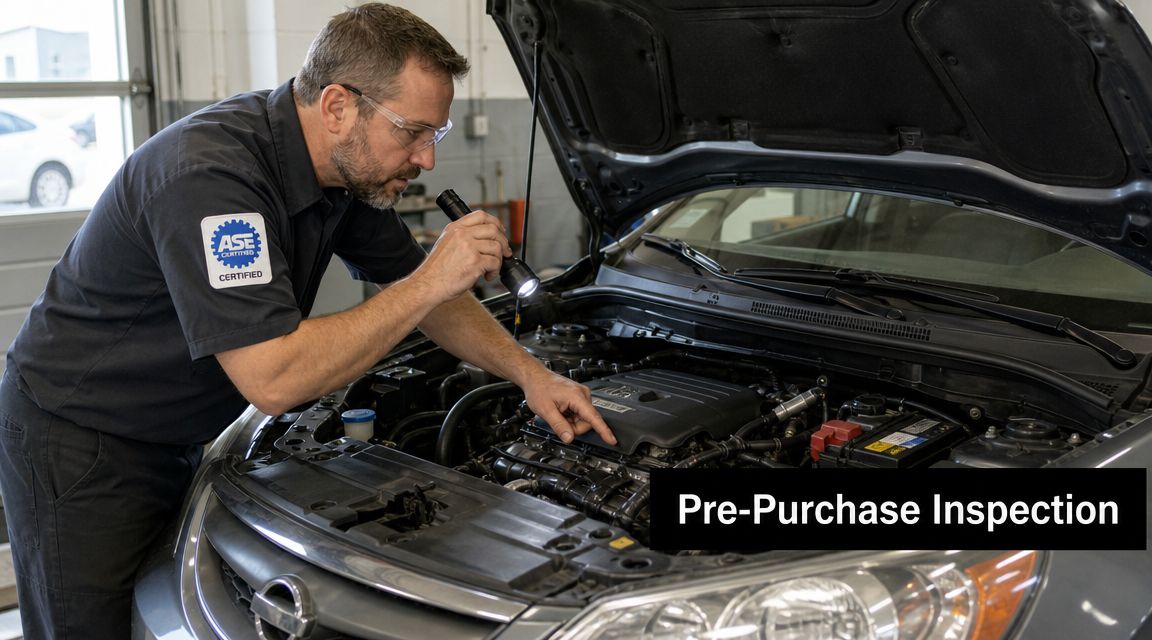
A common bad outcome goes like this: the car drives fine for fifteen minutes, the seller says it “just had service,” and the buyer skips inspection to avoid inconvenience. Then a shop finds leaks, worn tires, or brake work that should've been obvious to a professional before purchase. That's not bad luck. That's a skipped step.
What a useful inspection includes
Ask your own mechanic, not the seller's friend, to inspect the vehicle. You want an independent set of eyes and a written summary.
Have them focus on the expensive and safety-critical systems first:
- Engine condition: Leaks, noise, smoke, and signs of poor maintenance
- Transmission behavior: Harsh shifts, slipping, delayed engagement
- Brakes and tires: Remaining life, uneven wear, safety concerns
- Steering and suspension: Play, vibration, clunks, alignment clues
- Electrical systems: Warning lights, charging issues, accessory function
Don't ask, “Would you buy it?” Ask, “What needs attention now, what can wait, and what would stop you from recommending it?”
Use the inspection as leverage or a stop sign
A written inspection changes the conversation. Now you're not arguing opinions with the seller. You're pointing to findings.
If the report says the car needs brake work, suspension parts, or has visible seepage around major components, you can either adjust your offer or leave. Both are good outcomes. What doesn't work is hearing bad news and then pretending a lower price magically fixes a bad car.
If you need a walkthrough before booking one, this guide to a pre-purchase car inspection is worth reading.
The best private-sale buyers don't use inspections to “nitpick.” They use them to separate a fair deal from a future repair project.
3. Verify the Vehicle's Title and Ownership Documents
Mechanical problems are expensive. Title problems are worse.
A used car with title issues can trap your money long after the handshake is over. If the seller doesn't legally own the car, if there's still a lien, or if the title is branded in a way you didn't understand, you can end up with a vehicle you can't properly register, insure, or resell without a fight.
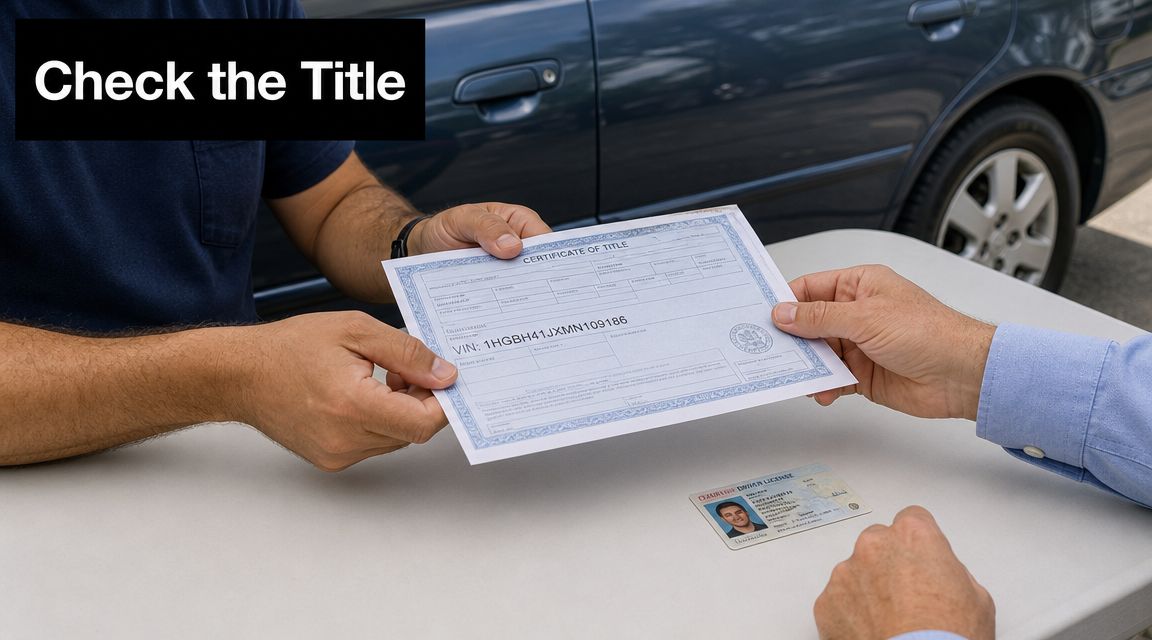
NerdWallet's consumer guidance is blunt on this point. Don't pay until you have the keys and a lien-free, transferred title, and treat a title marked salvage or rebuilt as a major red flag in a private-seller title transfer check.
Match the paper to the person and the car
When you meet the seller, ask to see the physical title if your state uses one. If the title is electronic, verify what your DMV requires for transfer before you show up with payment.
Then compare everything:
- Seller name: It should match the ID and the title holder
- VIN on the title: It should match the VIN on the vehicle
- Lien status: If there's a lender involved, get payoff details before agreeing
- Title branding: Salvage or rebuilt status changes the risk immediately
- Signatures and transfer fields: Make sure nothing is missing or altered
A lot of messy private sales start with “the title is at home,” “my relative is the owner,” or “the loan is paid off, I just haven't updated the paperwork yet.” None of those should make you comfortable.
A clean conversation doesn't matter if the paperwork is dirty.
If you want a practical explanation of what to verify, read this guide on how to check vehicle title status. It also helps to prepare the right automobile sales document paperwork so the transfer is recorded correctly.
If the seller can't prove ownership cleanly, stop there. Private-sale savings disappear fast when the legal transfer goes sideways.
4. Research the Vehicle's Market Value and Pricing
A seller can put any number in the listing. Your job is to decide what the car is worth before you ever talk price.
This is a risk-control step, not a shopping step. Buyers get in trouble when they treat the asking price like the starting truth, then adjust from there based on how clean the car looks or how reasonable the seller sounds. Start with outside market data, then pull the number up or down based on the history report and inspection findings you already gathered.
Build your price from comparables, then adjust for risk
Use several comparable listings, not one or two. Match the year, mileage, trim, drivetrain, condition, and title status as closely as you can. If you compare a base model with 140,000 miles to a higher trim with 90,000 miles, the number you get is noise.
Then make real adjustments. Accident history, overdue maintenance, mismatched tires, warning lights, bodywork, weak service records, and inspection notes all change value. In private sales, those details matter more than a polished listing and a friendly seller.
I handle this with a simple checklist. First, get a market range from comparable vehicles. Second, subtract known repair costs. Third, subtract a margin for uncertainty if records are thin or the seller's story keeps changing. That last part gets ignored all the time, and it is where expensive mistakes start.
VekTracer helps at this stage because the report and Compare Tool let you line up multiple cars and judge them on the things that affect risk, not just asking price. If three listings are close in price, the smarter buy is often the one with cleaner history and fewer unknowns, even if it is not the cheapest on day one.
Set three numbers before you meet the seller
Write these down and keep them fixed:
- Target price: The number you would pay if the car matches the listing and inspection results
- Fair max price: The highest price supported by market comps, condition, and documented history
- Walk-away price: The number where the deal stops making sense for the risk involved
That last number matters most.
A cheap private-sale car gets expensive fast when you inherit deferred repairs, hidden damage, or paperwork problems that hurt resale later. A slightly higher price can still be the better deal if the car has a clean history report, solid maintenance records, and a mechanic who does not find anything ugly underneath.
Ask one question the whole time: What is this exact car worth, with this mileage, this history, and these inspection results? That keeps you negotiating from evidence instead of emotion.
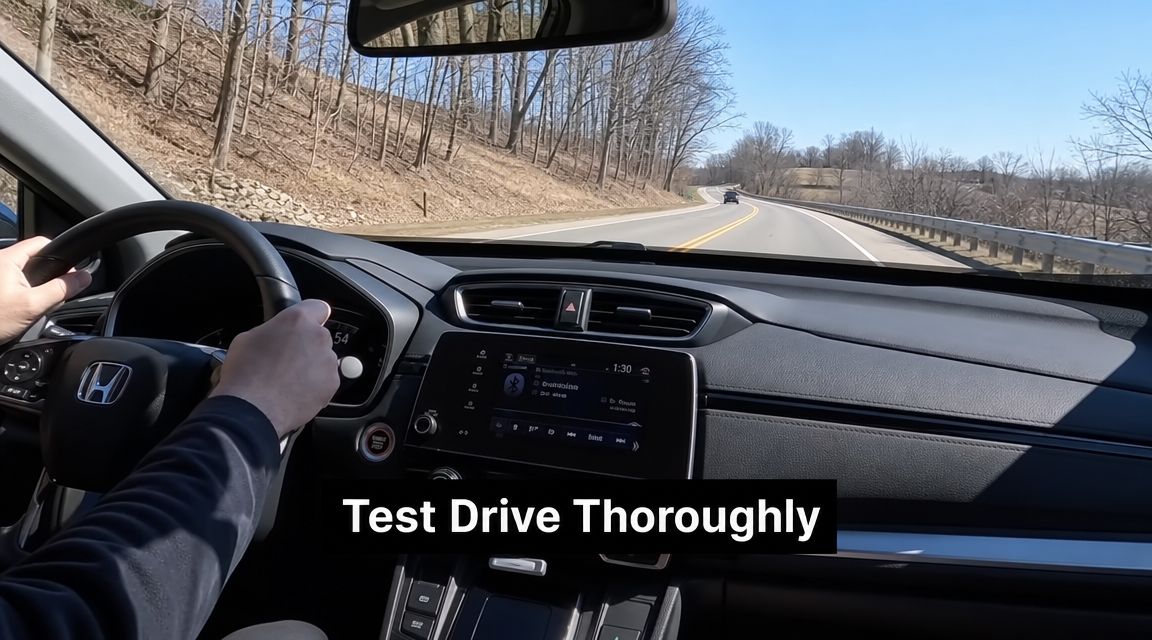
5. Test Drive Strategically and Thoroughly
You meet a private seller in a parking lot. The car is already warm, the music is on, and the seller suggests a quick loop around the block. That setup protects the seller, not you.
A useful test drive is a risk check. It is your chance to confirm whether the history report, maintenance records, and inspection notes match how the car behaves under load, at low speed, and at highway speed. If the seller will not allow enough time or a route with mixed conditions, treat that as a warning sign.
Set up the drive to expose problems
Ask for a cold start if possible. A car that starts clean when cold tells you more than one that was warmed up before you arrived. Then drive a route that includes parking-lot turns, stop-and-go traffic, rough pavement, firm braking, and a stretch above city speed.
Turn the audio and climate fan down for part of the drive. Small noises matter.
Check these items on purpose:
- Start-up and idle: hard starting, rough idle, smoke, warning lights that stay on
- Steering and alignment: drifting, vibration, a crooked steering wheel, clunks over bumps
- Brakes: pulsing, squealing, pulling, or a pedal that feels soft or sinks
- Transmission: delayed engagement, harsh shifts, slipping, hesitation in reverse
- Engine response: stumbling under acceleration, surging, abnormal noise
- Basic functions: windows, locks, lights, wipers, backup camera, air conditioning, heat
I pay close attention to what changes with speed. Plenty of cars feel fine at 25 mph and show their real condition at 55. Brake shake, wheel bearing noise, steering vibration, and transmission flare often do not show up on a short neighborhood drive.
Use the drive to test the seller's story
The drive is not separate from the paperwork. It is where you verify it.
If your VekTracer report shows prior front-end damage, watch for pull under braking, uneven panel gaps, wind noise, or a steering wheel that does not sit straight. If the mechanic noted worn tires or suspension parts, feel for noise and looseness on rough pavement. If the seller says the car only needs "something minor," ask what that means, then see whether the symptom shows up on the road.
One good drive habit is silence. If the seller talks through every stop, shift, and bump, ask for a minute to listen. You are buying a used machine with a repair history, not judging how friendly the owner is.
Don't ignore security and key issues
Before you finish, make sure every key and remote works properly. Replacement smart keys, remotes, and ignition work can get expensive fast, especially on newer cars. The Quick Keys car protection guide is also a good reminder to check basic theft-risk items such as spare keys, lock function, and whether anything about the ignition or entry system looks tampered with.
A clean drive does not prove the car is good. It proves the car has cleared one more filter. A bad drive is different. If the car drives worse than the records suggest, trust the evidence and walk.
6. Understand Common Private-Sale Scams and Red Flags
You show up to see a clean car in a grocery store parking lot. The seller is friendly, the price looks good, and the explanation sounds polished. Ten minutes later, you learn the title is not in their name, they want a deposit before an inspection, and they keep steering you away from basic questions.
That is how bad private sales usually start. They feel normal until you check the parts that carry the risk.
The job here is simple. Separate ordinary seller behavior from patterns that show the deal can turn expensive, hard to register, or impossible to unwind. Use the same checklist every time, and treat missing information as a problem, not a detail to clear up later.
Red flags that should slow you down or stop the deal
Some issues mean “ask more questions.” Others mean “leave.”
- No VIN before you meet: A seller who will not share the VIN is blocking your ability to check the history report and confirm the car exists as described.
- Name mismatch: The seller's ID, title, and registration should line up. If they are selling it for a relative, friend, or “customer,” expect trouble.
- Push for a deposit: Never send money to hold a car before you verify the title, the identity of the seller, and the condition of the vehicle.
- Refusal to allow an inspection: A private seller does not have to like your process. They do have to allow it if they want top dollar.
- Rushed timeline: “Someone else is on the way with cash” is a sales tactic until proven otherwise.
- Missing or sloppy paperwork: Lost title claims, unsigned title fields, lien confusion, or “we can handle that after payment” can leave you with a car you cannot legally register.
- Story problems: The ad says one owner, but the report shows transfers, auction activity, or prior damage the seller never mentioned.
- Price far below market: Cheap can mean motivated. It can also mean hidden damage, title problems, or a seller who wants quick money before you notice either one.
A good seller answers direct questions directly. A bad seller tries to make your questions sound rude.
Watch the behavior, not just the car
Scams in private sales usually rely on pressure and distraction. The seller keeps talking, changes the subject, acts insulted, or says your requests are overkill. That behavior matters because it is aimed at one result: getting you to skip verification.
I treat this as risk management. If the VekTracer report, the mechanic's notes, and the seller's explanation point in the same direction, risk drops. If one piece does not match the others, risk goes up fast. You do not need to prove fraud in the parking lot. You only need enough inconsistency to decide the deal is no longer worth your time.
One common trap is the “too good for the price” listing with poor documentation and a vague backstory. Another is the seller who wants to meet somewhere inconvenient, only accepts cash, or refuses to show ID until after payment. Those are not quirks. They are warnings.
For personal safety, meet in daylight, bring another adult, and choose a public place where you can take your time with documents. CarPro's private-party safety checklist is a sensible reference on meeting locations, payment caution, and avoiding on-the-spot decisions.
The same verification mindset that helps people protect yourself from online catfishing applies here. Confirm identity, verify the story independently, and do not mistake a polished seller for a trustworthy one. If you are concerned about security after you buy, this car theft protection guide covers practical checks for keys, locks, and signs of tampering.
Good private sellers expect scrutiny. Scammers count on you feeling awkward long enough to ignore a bad sign. Don't.
7. Negotiate Effectively Based on Documented Information
Negotiation goes badly when buyers rely on vibes.
If you say, “I just feel like the price is a little high,” the seller can shrug and say the car is worth it. If you say, “My mechanic found front brake wear, the history report shows prior damage, and comparable listings support a lower number,” now you're talking about evidence. That changes the tone.
Use proof, not pressure
A fair negotiation in a private sale should come from three inputs: the vehicle history, the mechanical inspection, and your market research. Those three together tell you whether the asking price is reasonable.
A practical scenario looks like this: you inspect the car, your mechanic notes needed work, and the seller wants top-of-market money anyway. That's when you present the written findings calmly and make a number-based offer. If the seller agrees, great. If not, you move on.
Use this structure:
- State the issue clearly: “The inspection found items that need attention.”
- Show the evidence: Written findings, history flags, and comparable vehicles
- Make a specific offer: One number, not a vague request for a discount
- Stay calm if they refuse: Your power is the ability to leave
Don't negotiate against yourself
A lot of buyers talk too much once they make an offer. They soften it, apologize for it, or start bidding against themselves because silence feels awkward.
Don't do that. Make the offer and wait.
The strongest line in a private-sale negotiation is often the shortest one: “Based on the inspection and history, this is my number.”
There's another reason to keep negotiations grounded in documents. It lowers the odds of later disputes. When both sides know exactly why the price changed, there's less room for misunderstanding. And if the seller becomes defensive the moment written evidence enters the conversation, that tells you something useful too.
You don't win by squeezing every last dollar out of the deal. You win by paying a price that still makes sense after repairs, title transfer, registration, and the first few months of ownership.
8. Use a Comprehensive Risk Assessment Tool Before Final Commitment
Before you hand over payment, step back and review the whole picture once, all at once.
Buyers often get sloppy at this point. They've done the hard work, the seller is waiting, the car mostly checks out, and they just want to finish. That's exactly when mistakes happen. You need a final pass that asks one question: given everything I know, is this still a smart buy?
Pull all the evidence into one decision
Your final decision shouldn't rest on a single factor. Not the asking price. Not the seller's personality. Not even one clean test drive.
Look at the car across four categories:
- History risk: Accidents, title branding, odometer consistency, theft records, recalls
- Mechanical risk: Inspection findings, upcoming maintenance, safety issues
- Transaction risk: Title clarity, lien release, seller identity, bill of sale
- Value risk: Asking price compared with similar vehicles and known condition
That's why a risk-based tool can help at the end. VekTracer is relevant here because its vehicle history reports include a Risk Score and its Compare Tool lets you line up multiple vehicles side by side. Used properly, that gives you a quick final check before you commit, especially when you're deciding between one car that feels convenient and another that looks cleaner on paper.
A simple final-screen checklist
Ask yourself these questions before payment:
- Would I still buy this car if I couldn't negotiate another dollar off?
- Does the title situation make complete sense right now?
- Did the inspection reveal anything I'm minimizing?
- Did the seller cooperate with verification, or fight it?
- If a friend brought me this deal, would I tell them to buy it?
If the answer gets shaky on two or three of those, that's your answer.
A lot of good private purchases aren't flashy. They're just clean. The report makes sense. The inspection is manageable. The seller is straightforward. The title is ready. The price is fair. That's the kind of boring you want.
8-Point Comparison: Private-Party Used Car Tips
A private-sale car can look fine right up until you put real checks around it. That is why each step below is ranked by effort, cost, and what kind of risk it helps you control.
Use this table like a buying sequence, not a pile of random tips. Start with the cheap filters, spend money where the downside justifies it, and make your offer from documented facts.
| Action | Implementation Complexity 🔄 | Resource Requirements ⚡ | Expected Outcome / Quality ⭐ | Ideal Use Cases 💡 | Key Advantages 📊 |
|---|---|---|---|---|---|
| Get a Pre-Purchase Vehicle History Report | Low 🔄, VIN lookup, quick to run | Low ⚡, report fee, internet access | High ⭐, Flags reported accidents, title issues, odometer problems, and other history concerns | Before you invest time in a meeting, test drive, or serious negotiation | Gives you documented issues early and helps screen out bad cars fast |
| Have a Pre-Purchase Inspection by a Trusted Mechanic | Medium 🔄, needs scheduling and seller cooperation | Medium ⚡, inspection fee, travel time, shop appointment | Very High ⭐, Finds current mechanical, safety, and maintenance problems | When the car passes the first screen and you need to know what you may be buying | Gives independent confirmation, repair estimates, and real bargaining power |
| Verify the Vehicle's Title and Ownership Documents | Low–Medium 🔄, paperwork review and possible DMV checks | Low–Medium ⚡, time, document review, possible state fees | High ⭐, Confirms legal ownership, lien status, and title condition | Before money changes hands, every time | Cuts the risk of title problems, unpaid liens, and registration headaches |
| Research the Vehicle's Market Value and Pricing | Low 🔄, compare pricing sources and local listings | Low ⚡, time to check guides and comparable cars | Medium–High ⭐, Sets a fair price range based on trim, mileage, and condition | Before making an offer or deciding your walk-away number | Keeps you from overpaying and gives you a price position you can defend |
| Test Drive Strategically and Thoroughly | Medium 🔄, requires planning and enough time | Low–Medium ⚡, daylight, mixed roads, at least one solid drive | High ⭐, Surfaces drivability issues, warning signs, and comfort problems | After the car clears basic history and document checks | Confirms how the car behaves in real use, not just at the curb |
| Understand Common Private-Sale Scams and Red Flags | Medium 🔄, requires pattern awareness and verification habits | Low ⚡, research time and careful document checks | High ⭐, Helps catch fraud, pressure tactics, and sketchy ownership situations | Any time the price, story, or seller behavior feels off | Helps you spot bad deals early and avoid legal and financial trouble |
| Negotiate Effectively Based on Documented Information | Medium 🔄, requires prep and a clear list of findings | Low ⚡, your report, inspection notes, price research, and time | Medium–High ⭐, Can reduce the price or expose a seller who will not deal honestly | After you have hard evidence from the report, inspection, and market research | Keeps the discussion tied to facts instead of opinions and emotion |
| Use a Final Risk Review Tool Before Final Commitment | Low 🔄, gather your findings into one last review | Low–Medium ⚡, tool access and a few minutes to compare notes | High ⭐, Complete, side-by-side view of vehicle risk across history, condition, paperwork, and price | At the final decision stage, especially when choosing between two cars | Helps you make a clean go or no-go decision instead of buying on momentum |
The pattern matters. History report first. Mechanic next. Paperwork check before payment. Price research before the offer. Final review before you commit.
That order keeps your risk low and your negotiating position strong. If a seller pushes you to skip steps, treat that as part of the evaluation.
Drive Away With Confidence
Buying a used car from a private seller doesn't have to feel like gambling. It only feels that way when you treat the process casually.
The buyers who get burned usually skip the same steps. They trust the seller's summary instead of pulling a vehicle history report. They rely on a short drive instead of getting a real inspection. They assume the title will be fine because the seller seems decent. Then they find out, too late, that “probably okay” is a terrible standard for a car purchase.
The safer approach is less emotional and more disciplined. Start with the VIN. Screen the vehicle's history before you invest time. Get your own mechanic involved before you talk seriously about money. Check the title and ownership documents yourself. Research the market so you know whether the asking price reflects the actual condition. Then test-drive the car like you're trying to disprove the deal, not confirm it.
That's the part many people get backwards. They shop for reasons to say yes. Smart private-sale buyers shop for reasons to say no. If the car survives that process, then you've probably found something worth buying.
It also helps to understand the trade-off in private sales. You may save money up front, and that's a valid reason to go this route. But you're also taking on work that a dealer would normally absorb. You're handling verification, due diligence, title review, payment safety, and mechanical screening yourself. If you don't do those jobs, nobody else will.
A good private purchase usually feels steady, not exciting. The seller answers direct questions. The VIN is easy to get. The history doesn't contain ugly surprises. The mechanic finds either no major issues or issues you can price in accordingly. The title is ready to transfer. The payment happens in a documented, secure way. Nothing needs to be rushed. Nothing needs to be explained away.
That's what confidence looks like in this process. Not boldness. Not optimism. Evidence.
If you're comparing several listings, a tool like VekTracer can be useful because it gives you a vehicle history report, title and lien checks, recall alerts, and a risk-based way to compare candidates before you commit. Used the right way, it helps you narrow the field and avoid wasting time on cars that don't deserve a second look.
The right car from a private seller isn't just the one with the lowest price. It's the one that still makes sense after the history check, inspection, title review, test drive, and final risk review. Buy that car, and you'll feel a lot better the morning after the deal.
If you want one place to check a car's history, compare multiple listings, and review title, lien, recall, and mileage signals before you buy, take a look at VekTracer. It's a practical way to screen private-sale vehicles before you hand over money.
Ready to check a vehicle?
Enter any 17-character VIN for a free instant preview — no account needed.