Rebuilt Title Cars: What They Are and How to Buy One
Check a vehicle before you buy
Enter a VIN for a free instant preview — accidents, title brands, mileage, liens & open recalls.
The popular advice on rebuilt title cars is too lazy. A rebuilt title is not a deal killer by itself, it's a discount with a permanent scar, and the only smart question is whether the scar is priced correctly and backed by real repair evidence. If you can measure the risk, a rebuilt car can be a rational buy. If you can't, it's a money trap.
The buyers who win with rebuilt title cars do four things well, they understand what the brand means, they price it with discipline, they inspect the weak points, and they use a vehicle history report to pressure-test the seller's story. The buyers who lose usually skip one of those steps and trust a clean-looking exterior. That's how people save five figures, and that's how they also buy someone else's problem.
Why Rebuilt Title Cars Deserve a Second Look
A rebuilt title gets treated like a warning label, but in the actual market it's more accurate to call it a permanent discount tag. The title means the car was once declared a total loss, then repaired and cleared by the state so it can return to the road. In Texas, rebuilt vehicles must pass safety and anti-theft inspections and other state standards before they can be driven again, and a U.S. Department of Transportation/BTS study of Kentucky showed how common branded vehicles can be, with 110,000 rebuilt and salvage titles issued in 2018 and a 31% increase from 2014 to 2018. Carfax's rebuilt title overview lays out that chain clearly.
That doesn't make the car good. It makes the car negotiable. The brand exists to preserve chain-of-custody and safety traceability after a total-loss event, not to certify that every repaired car is flawless. AAMVA's guidance treats rebuilt as a permanent brand and expects a passed structural integrity inspection and mechanical safety inspection before that label is issued. It also calls for VIN verification on replacement parts and retention of inspection and ownership records, which tells you exactly what the system cares about, documented identity and basic roadworthiness, not showroom perfection. AAMVA's rebuilt vehicle guidance
Practical rule: Buy rebuilt title cars only when the discount is obvious and the repair paper trail is strong. If either one is weak, walk.
A useful analogy is buying used tools after a contractor liquidates a jobsite. A buyer who wants a reality check on condition, not just a price tag, would value the Value Tools Co contractor guide for the same reason. The label matters less than the history, and the history matters less than whether the item still does the job safely.
How a Car Ends Up With a Rebuilt Title
A rebuilt title is the end of a paper trail, not the start of a bargain. The car usually moves through salvage, repair, inspection, rebuilt, and each step means something different. It starts when an insurer decides the repair bill is too close to, or above, the car's value, so the vehicle gets declared a total loss. In Kentucky, the threshold cited in the BTS study was 75% of fair market value, and New York uses the same 75% trigger for vehicles eight model years old or newer under 15 NYCRR 20.20. Cornell's New York regulation text spells that rule out clearly.
What the rebuilt label certifies
The rebuilt label certifies that someone fixed the car enough for the state to let it back onto the road. It does not certify that the car returned to original condition, and it does not promise that every hidden issue got caught. AAMVA's guidance expects structural and mechanical inspections, plus VIN verification on major replacement parts, because the rebuilt brand is about legal traceability after a major loss, not pretending the loss never happened.
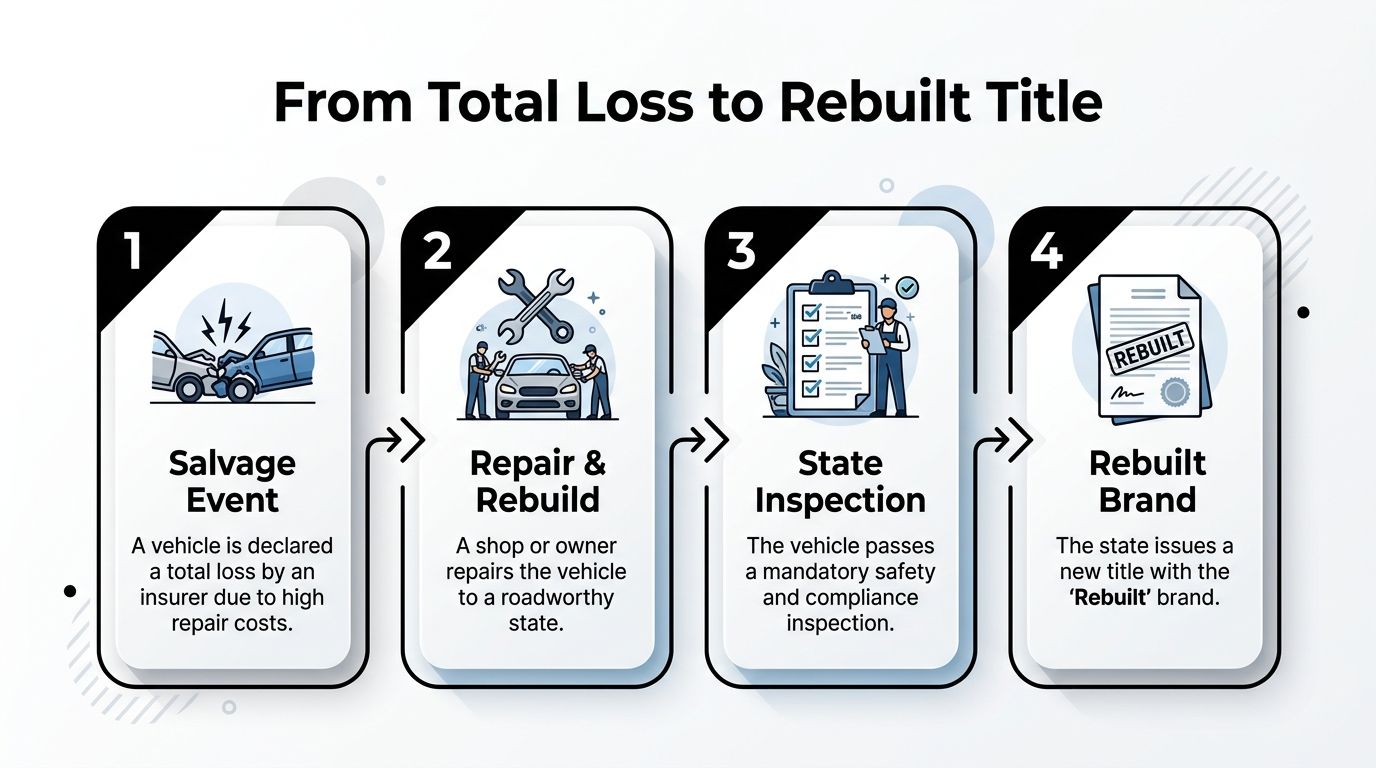
The risky part sits between salvage and rebuilt. That is where shops can do clean work, or where they can patch the visible damage and leave the expensive problems for the next owner. Frame work, suspension parts, and electrical systems are the failures I worry about first, because those are the areas that turn a cheap purchase into a long repair bill.
The title brand follows the car forever, but the quality of the rebuild decides how expensive that brand becomes.
Use a simple rule. If a seller cannot explain the damage, the repair path, the inspection results, and the parts provenance in plain language, the title is doing more work than the seller is. For a plain explanation of the branding difference, see salvage vs. rebuilt title basics. That is a bad sign.
The Real Price Tag of a Rebuilt Title
The cheap sticker price is the bait. The cost shows up in what happens after purchase, because rebuilt-title vehicles typically trade at a 20% to 40% discount versus comparable clean-title cars, and some guidance stretches that to 50% depending on the damage and documentation quality. Liberty Chrysler Dodge Jeep's rebuilt-title pricing breakdown is blunt about the market haircut, and it matches what buyers see in the field.
A simple worked example
If a clean-title SUV is worth $30,000, a rebuilt version could plausibly land around $18,000 to $24,000 using the 20% to 40% range. That's a big discount, but it's not free money. The lower value stays with the vehicle for life, and it continues to affect resale, insurance, and financing.
| Clean-Title Price | 20% Discount | 40% Discount | 50% Discount |
|---|---|---|---|
| $20,000 | $16,000 | $12,000 | $10,000 |
| $30,000 | $24,000 | $18,000 | $15,000 |
| $40,000 | $32,000 | $24,000 | $20,000 |
The spread gets wider when the original damage involved structural areas, the repairs are undocumented, or the local market has plenty of clean-title alternatives. The spread narrows when the car is popular, the repair file is thick, and the buyer pool is thin. That's why the same rebuilt car can be a decent deal in one market and a terrible one in another.
My price rule
I'd only chase a rebuilt car when the asking price already reflects the title brand, the repair history is strong, and the car still sits comfortably below the clean-title market. If the seller is hovering too close to clean-title pricing, there's no reason to accept rebuilt risk for a fake bargain.
If the discount doesn't feel meaningful, you're not buying a deal, you're buying anxiety.
Insurance and Financing Realities
Rebuilt-title cars aren't automatically uninsurable or unfinanceable. They do, however, live in a friction zone. Some insurers will write coverage, some won't, and some will limit what they offer based on the car's history, the state, and how well the repairs were documented. Lenders behave the same way. They worry about lower resale value and the headache of valuing the car after a second loss, so approvals can be slower or narrower than they are for clean-title vehicles.
What usually creates trouble
The issue isn't that the car can't be driven. It's that underwriters and loan officers don't like uncertainty. A clean file with repair receipts, inspection records, and a normal VIN history is much easier to place than a rebuilt car with gaps in the paperwork. If you want a starting point for broader policy language, specialized insurance for unique vehicles can be a useful reference point when you're asking carriers the right questions.
Mainstream guidance also notes that rebuilt-title vehicles can be harder to insure and harder to finance because of resale concerns and potential hidden damage. That doesn't mean the answer is always no. It means you should expect more questions, and maybe a higher down payment or a narrower policy option, especially if you're trying to finance most of the purchase price.
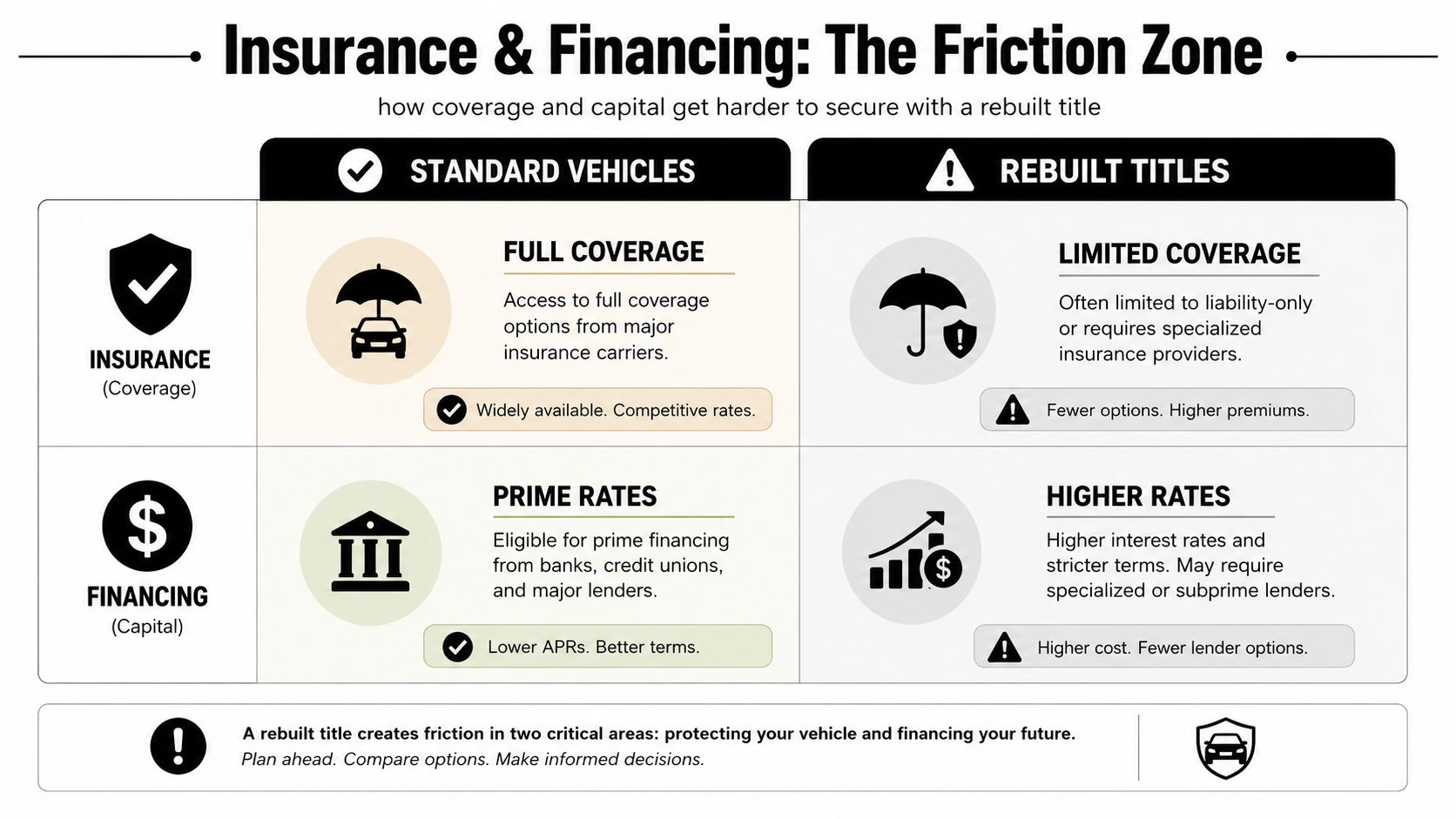
The right move is to call the insurer and lender before money changes hands. If they hesitate now, they'll hesitate later. And if they say yes, get the terms in writing so the title brand doesn't become a surprise after the sale.
The Inspection Checklist That Actually Catches Problems
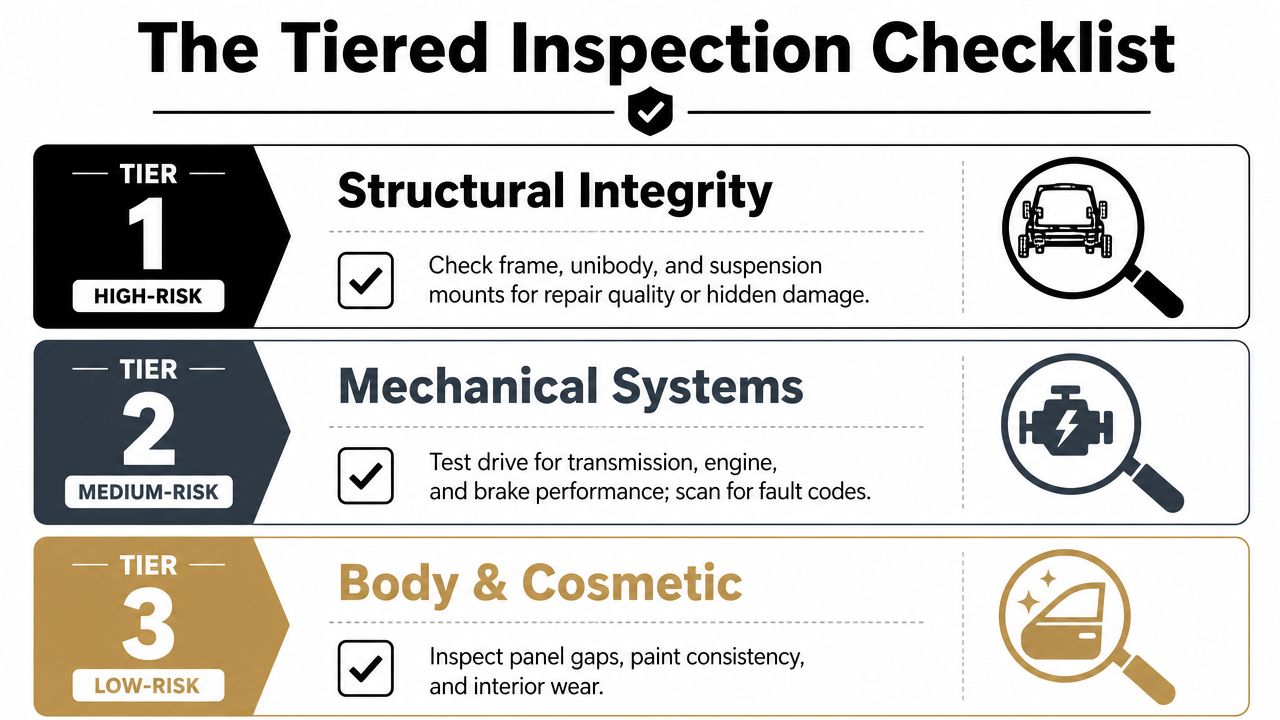
The inspection you need is not a casual walkaround. It's a ranked check of failure points, starting with the parts that can turn a repaired car into a dangerous one. Cars.com flags frame, suspension, steering, and drivetrain damage as especially concerning in rebuilt vehicles, and it also calls out uneven tire wear, mismatched paint, and missing documentation as signs of incomplete or poor-quality repairs. Cars.com's rebuilt title checklist is worth reading because it focuses on the right areas.
Start with structural integrity
Look for evidence that the car tracks straight, sits level, and doesn't chew through tires unevenly. Uneven tire wear often tells you more than a shiny paint job does. Inspect the frame, unibody, suspension mounts, steering components, and welds. If the car feels weird on the road, stop treating it like a bargain and start treating it like a liability.
Then test the mechanical and electrical systems
A rebuilt car can drive fine and still hide expensive faults. Check engine behavior, transmission shifts, brake feel, airbag warning lights, and sensor calibration. If the airbags deployed in the original loss, the repair records should show exactly what was replaced and how the system was restored. Missing or vague answers here are a sign to back away.
Finish with documentation
Paper beats guesses. Ask for repair invoices, photos from before and after the rebuild, and parts provenance. Missing documentation doesn't prove bad work, but it makes bad work much harder to rule out.
If you want a deeper pre-purchase workflow, VekTracer's inspection guide is a practical reference. A separate personal-life example is find the right family life insurance, because the same rule applies, paperwork matters when the stakes are real.
Red flag order matters: structural issues first, mechanical and electrical second, cosmetics last. Buyers lose money when they obsess over paint and ignore the frame.
Using Vehicle History Reports to Pressure-Test the Deal
A rebuilt title is only the starting point. The test is whether the vehicle history report supports the seller's story or exposes gaps you should not ignore. Use a report to check title brand history, accident and damage history, mileage verification with odometer rollback detection, title and lien status, theft records, and open recall alerts. That is how you separate a real repair from a polished excuse. For a plain-language breakdown of what these reports cover, VekTracer's vehicle history report guide is the right place to start.
What to look for in the report
A rebuilt title with inconsistent mileage history is trouble. A lien status that conflicts with the seller's story is trouble. A theft record, repeated damage entries, or a title brand that does not match the repair explanation is trouble. Each issue on its own might be explainable. Stack them together, and the seller is asking you to trust the car more than the records justify.
The hidden risk shows up in the order of the clues. Frame damage matters first, suspension and steering issues come next, and electrical problems can sit behind both because they are harder to spot and easier to hide. A clean-looking report does not erase those risks, but a messy report tells you where to focus before you spend money on an inspection.
How to use the score without getting lazy
A Risk Score helps because it turns scattered history into one number, but it does not replace judgment. Use it to sort the cars worth considering, then compare the repair records, the inspection findings, and the asking price. If you are comparing several rebuilt cars, the Compare Tool can put them side by side so you can spot the weak ones fast.
Use the report as a filter, not a sales pitch. If the title history is muddy and the seller cannot close the gaps, walk. If the report is clean and the inspection backs up the story, you have a real shot at a deal worth taking.
Who Should Buy One and Who Should Walk Away
The right buyer is experienced, patient, and price-aware. They know how to verify repairs, they're comfortable with narrower financing options, and they care more about value than resale bragging rights. For that buyer, a rebuilt title can make sense if the asking price is low enough that the risk is already paid for.
The maybe buyer needs a dependable daily driver and can handle some uncertainty, but only if they're near a shop they trust and they can afford a surprise repair. The wrong buyer is easy to spot. If you need the car for a long commute, plan to finance most of the purchase, or can't pay for a proper inspection, don't touch it.
My price cap is simple. If the rebuilt car isn't deep enough below a clean-title equivalent to cover the discount, the inspection, and a future repair buffer, walk. Rebuilt title cars can be smart buys, but only when the savings are real and the risk is visible.
Common Questions About Rebuilt Title Cars
Do rebuilt titles transfer across states? Yes, but the brand should follow the vehicle. Different states may rename the status, but the history doesn't disappear. Can a rebuilt car fail safety inspections later? Yes, if its current condition no longer meets the state's safety rules. Do dealers have to disclose the brand in private sales? They should, and buyers should assume the title will reveal it anyway. Will insurance pay full value after a second accident? Usually not, because the rebuilt brand and lower market value are still part of the car's worth.
If you're comparing rebuilt title cars and don't want to rely on gut feel, use VekTracer to check title history, damage records, mileage, and lien status before you commit. A rebuilt car can be a sharp buy when the file is clean and the price is right, but only a history report and a hard inspection will tell you that for sure.
Ready to check a vehicle?
Enter any 17-character VIN for a free instant preview — no account needed.