Ram VIN Decoder Guide: Verify Your Truck's Details 2026
Check a vehicle before you buy
Enter a VIN for a free instant preview — accidents, title brands, mileage, liens & open recalls.
A RAM VIN decoder lets you verify a truck's manufacturing origin, specific model, engine type, model year, and unique serial number from its 17-character VIN. It's the first check you should run before trusting a listing, because that code confirms what the truck was built as and opens the door to its full history.
You're probably looking at a Ram right now that seems to check every box. Good photos, clean interior, seller says it's the engine you want, and the price looks fair enough to keep you interested. Before you start comparing vehicle history report options, wondering about Carfax worth it questions, or checking whether you need a VIN check USA or vin check Canada service, read the VIN first.
That's the truck's identity card. If the ad says one thing and the VIN says another, trust the VIN.
Why Your Ram's VIN Is More Than Just a Serial Number
You find a Ram that looks right on paper. The photos are clean, the seller says it has the HEMI, and the price is low enough to make you want to move fast. Before you spend money on reports or set up a test drive, read the VIN. It often tells you whether the story holds together.
I treat the VIN like the truck's first interview. It gives you the factory version of the truth. If the listing says Big Horn, crew cab, newer model year, or a specific engine, the VIN is your first chance to confirm it before you waste an afternoon chasing the wrong truck.
For Ram buyers, that matters because small differences change value fast. The wrong engine code can mean different towing capability, fuel costs, and maintenance expectations. The wrong cab or bed configuration can change how useful the truck is for work or family use. A model year mistake can change price, features, and recall exposure.
What the VIN proves before you spend money
Ram VINs follow the industry's 17-character format on modern trucks. Those characters are not random. They identify how the truck was built, which is why a guide to reading a VIN step by step is worth checking if you want to verify a seller's claims with confidence.
Use the VIN to check the facts that affect a buying decision right away:
- Engine claims: Verify the engine before you trust the ad. A seller may list the truck by what they were told, not by what is in it.
- Model year: Confirm the year from the VIN, especially when the price seems strong for the badge and mileage.
- Configuration: Compare the decoded details with the truck, including cab style and other core identifiers.
- Identity matching: Make sure the VIN on the dash, door sticker, and title all match. If one does not, stop and get an explanation before you go further.
Practical rule: Decode the VIN before you get emotionally attached to the truck.
What the VIN does not tell you by itself
The VIN tells you what the truck started life as. It does not tell you what happened after it left the factory.
That distinction matters. I have seen trucks with a correct VIN and a rough past. Flood damage, salvage branding, theft recovery, mileage issues, hard commercial use, and major collision repairs will not show up from the VIN alone. A full vehicle history report is needed to uncover those problems.
The smart sequence is simple:
- Decode the VIN first. Confirm the truck matches the seller's description.
- Inspect the truck second. Check that the physical features still line up with the decoded specs.
- Run the history report third. Look for title brands, accident records, odometer issues, and open recalls.
Skip the first step, and you can end up paying to research the wrong truck.
Breaking Down the 17 Characters of a Ram VIN
You are standing next to a clean-looking Ram on a dealer lot. The badge says one thing, the window sticker says another, and the seller is certain it has the engine and cab setup you want. The VIN is the first hard piece of evidence. Read it in the right order, and you can tell whether the truck's story holds up before you spend money on a history report or inspection.
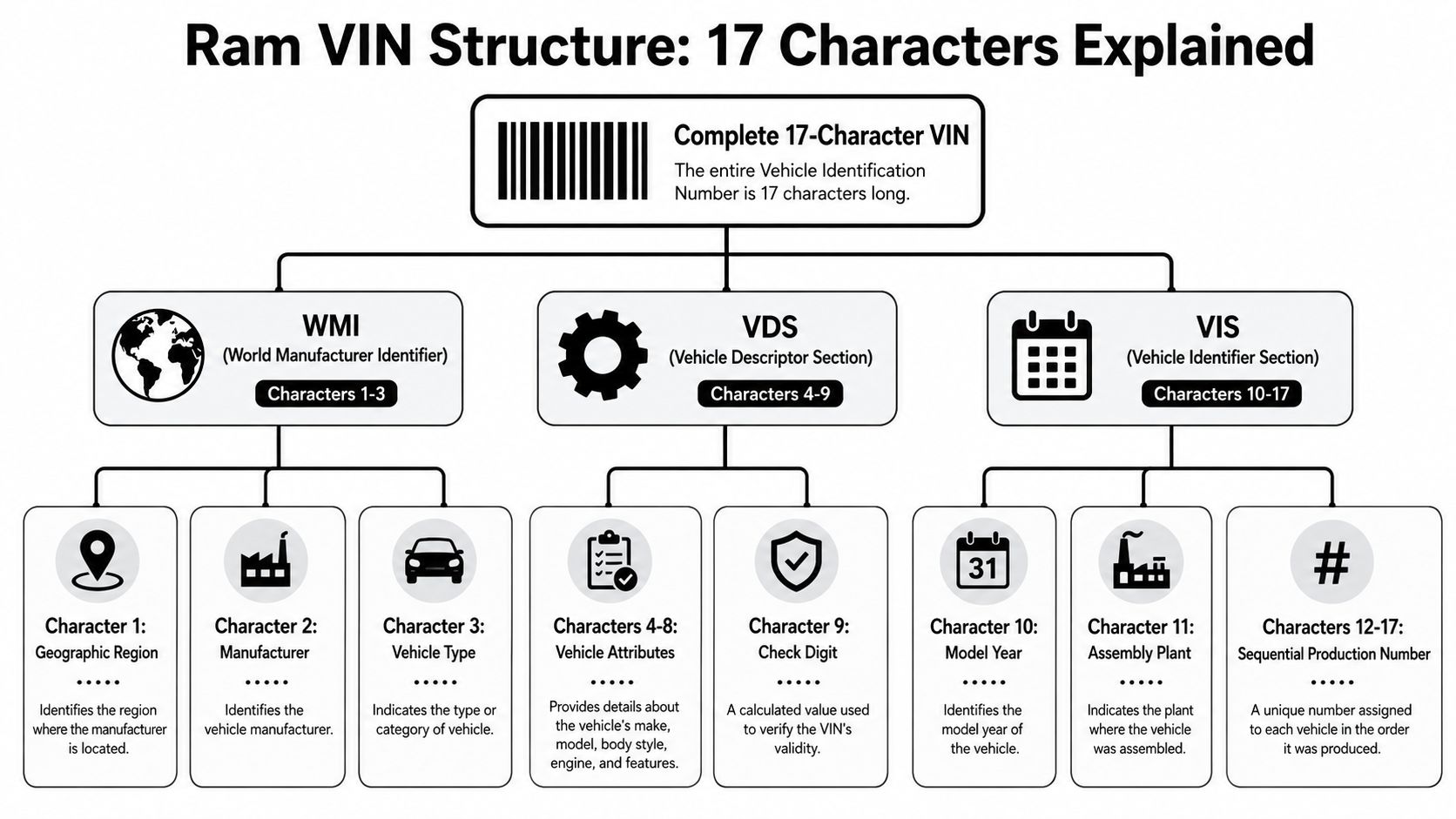
A Ram VIN follows the standard 17-character layout, split into three working sections: WMI, VDS, and VIS. Each section answers a different buyer question. Who built it. What it was built as. Which exact truck you are looking at.
If you want a second reference while reading this, VekTracer's guide on how to read a VIN lays out the standard format clearly.
WMI tells you who built it and the truck's basic origin
The World Manufacturer Identifier, or positions 1 through 3, identifies the manufacturer and general vehicle type. On a Ram, these opening characters are your first filter for authenticity. They tell you whether the VIN starts like a real Ram truck VIN should, and they give you an early clue about where the truck came from.
That matters in the field. If the ad, title, or seller description sounds sloppy and the first three characters do not fit the truck in front of you, stop and verify everything else before going further. A bad assumption at the front of the VIN can waste an afternoon.
VDS tells you what the truck started life as
The Vehicle Descriptor Section, or positions 4 through 9, carries the details buyers usually care about most: body style, restraint system, engine-related coding, and other build identifiers tied to that truck's original configuration.
This section makes the VIN useful in a real buying decision. It helps a decoder separate a plain work truck from one with the cab, drivetrain, or equipment package that supports the asking price.
Use the VDS to pressure-test the listing against the truck itself:
- Powertrain clues: Useful for checking whether the engine and transmission story makes sense
- Body setup: Helps confirm cab style and other core configuration details
- Value checks: Exposes listings that price a basic truck like a better-equipped one
I pay close attention here because sellers, dealers, and auction listings often get loose with the description. A truck can wear aftermarket wheels, a lift, and fresh seat covers and still be a lower-spec build underneath.
The VIN records the factory build. Cosmetics and later modifications do not change that.
VIS tells you the year, plant, and the exact truck
The Vehicle Identifier Section, or positions 10 through 17, handles identification at the individual truck level. The 10th character gives the model year code. The 11th character identifies the assembly plant. The last six digits are the truck's serial sequence.
This section matters once you start checking paperwork. The year code helps confirm you are pricing the right model year. The plant code can help when you are sorting out build details or factory documentation. The last six characters are what tie that specific Ram to title records, service entries, recall lookups, and ownership documents.
Two white Ram 1500s can look identical in photos. Those final digits are what separate the truck worth pursuing from the one with a different record entirely.
A Real-World Example Decoding a Ram 1500 VIN
Let's make this practical with a sample VIN: 1C6RR7GT0PN123456.
This is a sample for learning, not a claim about one specific retail truck. The point is to show how you should read the pattern when you're standing in front of a Ram 1500 or reviewing a listing.
If you want to test the process on an actual truck you're shopping, a dedicated Ram 1500 VIN check page is the right next step after you've read the code itself.
Reading the sample like a buyer
Start at the front. The opening character 1 points to U.S. assembly under the Ram WMI rules discussed earlier. That gives you an immediate origin check.
Move into the middle section. The RR7GT portion is where a decoder identifies the truck's series and core attributes such as body and engine coding. This is the part you compare against the ad. If the listing says Crew Cab with a certain engine, this block should support that story.
Then check the end:
- 10th character “P” points to the model year code used for 2023
- 11th character identifies the plant
- Last six digits “123456” are the truck's unique serial sequence
What this catches in real shopping
Here's where buyers usually save themselves trouble.
Say the seller lists the truck as one year, one engine, and one configuration. The VIN says otherwise. That doesn't automatically mean fraud, but it does mean the listing isn't reliable enough to trust without more proof.
If the VIN and the ad disagree, assume the ad is wrong until documents prove otherwise.
That's especially important when pricing gets tight and you're comparing trucks that seem similar on the surface. A mismatched engine or body configuration changes value fast.
Common Ram Engine and Body Codes You Must Know
This is the cheat sheet most buyers need. You don't have to memorize every digit in a Ram VIN, but you do need to know where the expensive differences usually show up.
On many Rams, position 8 is where engine coding gets buyer attention, and position 6 often helps distinguish body or cab configuration. That's why these two spots matter so much when you're trying to confirm what you're paying for.
The codes worth checking first
| VIN Position 8 (Engine) | Engine Name | VIN Position 6 (Body/Cab) | Cab Style |
|---|---|---|---|
| Varies by truck | Gas engine code | Varies by truck | Regular Cab |
| Varies by truck | Hemi V8 code | Varies by truck | Quad Cab |
| Varies by truck | Diesel engine code | Varies by truck | Crew Cab |
This table is a buying framework, not a substitute for a live decoder. Ram uses VIN coding to identify factory-installed specs, but exact code meanings vary by model, year, and configuration. That's why a real decoder or build-data lookup matters.
How to use these codes without getting tripped up
A few practical checks make this easier:
- Engine first: If you're paying Hemi or diesel money, confirm the VIN supports it.
- Cab second: Crew Cab, Quad Cab, and other body layouts change daily usability and resale appeal.
- Don't trust badges alone: Trucks get rebadged, repainted, and modified. The VIN is harder to fake than an exterior emblem.
Buyers often get burned when they shop by appearance. Same wheels, same color, same trim-looking interior. Underneath, the truck may be a different configuration than the one priced next to it.
A Ram VIN decoder is most valuable when two trucks look the same but aren't worth the same.
From VIN to Full Vehicle History Check
Decoding the VIN tells you what the truck is. A vehicle history report tells you what happened to it.
That distinction matters because plenty of bad trucks start with perfectly normal VINs. The code can confirm factory identity, but it won't show the hard life a truck may have had afterward.
What a decoder won't reveal on its own
A VIN decoder by itself won't give you the whole risk picture. You still need to check for the issues that change whether a truck is worth buying at all:
- Accident and damage records
- Title brands such as salvage or flood
- Mileage consistency and possible odometer rollback
- Recall status
- Lien or theft concerns where available
That's why buyers who stop at decoding are only doing half the job.
If you're comparing report providers, VekTracer is one option. It offers VIN decoding and a full report workflow, including accident history, mileage verification, title and lien status, theft records, open recall alerts, and a Risk Score. You can also review a broader guide to reading a VIN lookup report before choosing a service.
How buyers should decide what to run
If you're asking whether one report service is enough, the better question is whether the report answers the risks that matter for your purchase. That's the practical frame behind searches like Carfax worth it, carfax pricing 2026, vin check Canada, and VIN check USA.
Here's the trade-off:
| Check type | What it helps with | What it misses |
|---|---|---|
| VIN decoder only | Factory specs and identity | Post-sale history |
| Full history report | Ownership and risk clues tied to the VIN | Physical condition today |
| In-person inspection | Current wear, repairs, leaks, body condition | Hidden record history |
The smartest approach uses all three. Decode first, run the report second, inspect third.
For shoppers comparing providers, it also helps to review a side-by-side breakdown like this Carfax comparison page and then move into the specific VIN check pages or related vehicle history blog posts.
If the truck still looks clean after that, then it's worth investing your time in the test drive and inspection.
Frequently Asked Questions About Ram VINs
A lot of first-time truck buyers treat the VIN like paperwork. It is closer to the truck's fingerprint. In a few seconds, it can confirm whether the truck in front of you matches the story in the ad, or give you a reason to slow down and ask better questions.
Can the VIN tell me the exact trim level
Sometimes. It usually gets you close enough to confirm the truck's basic identity, but not always far enough to prove every trim badge or option package.
That matters with Rams because sellers often advertise a truck by appearance. A chrome package, larger wheels, or aftermarket interior pieces can make a lower trim look more expensive than it is. The VIN can confirm factory build details, but fine trim distinctions often require manufacturer build data or a full history report to verify what the truck originally left the factory with.
What's the difference between a Dodge Ram VIN and a newer Ram VIN
The name on the truck changed over time, but the buying job stays the same. Read the VIN based on the truck's model year and production period, not the tailgate badge.
Older trucks may be listed as Dodge Ram, while newer ones carry Ram branding. For a buyer, the practical question is whether the VIN format and codes line up with that truck's age, body style, and equipment. If the badge says one thing and the VIN points somewhere else, treat that as a clue worth checking before money changes hands.
Where can I find the VIN on a Ram truck
Start with the spots that are hardest to fake, then compare them to the paperwork.
- Dashboard plate: View it through the driver-side windshield.
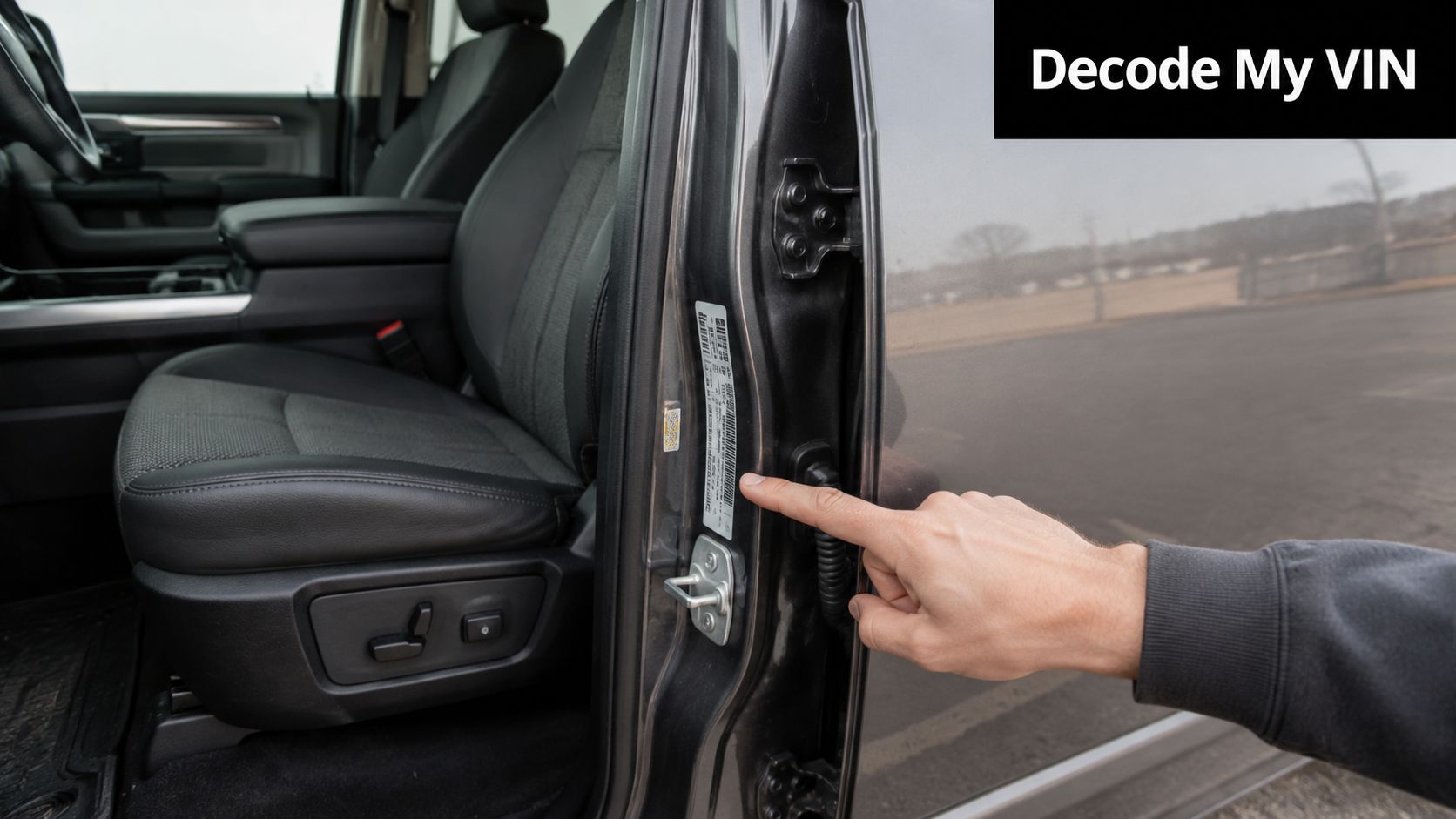
- Door jamb label: Check the driver-side door area for the factory sticker.
- Paperwork: Match the VIN on the title, registration, and insurance card to the truck itself.
If one location does not match the others, stop there and find out why. A swapped dash, missing label, or paperwork mismatch can mean anything from sloppy repairs to title problems.
One quick check also helps with basic identification. The first three characters matter, and the first digit can tell you whether the truck was built in the U.S. The 10th digit is useful for model year, but do not rely on that digit alone when you are sorting out recalls, warranty timing, or late-year production overlap.
Before you buy, run the VIN through VekTracer to confirm the truck's specs and review its history in one place. It is a practical next step when the badge, seller description, and VIN all need to agree.
Ready to check a vehicle?
Enter any 17-character VIN for a free instant preview — no account needed.