Older Cars with Great Gas Mileage: 2026 Guide
Check a vehicle before you buy
Enter a VIN for a free instant preview — accidents, title brands, mileage, liens & open recalls.
You're probably staring at two listings right now. One is an older compact that promises great gas mileage and a cheap purchase price, and the other is a newer car that costs more but feels safer because it's newer. The hard truth is that older cars with great gas mileage can save you real money at the pump, but only if you avoid the ones that are hiding rust, deferred maintenance, emissions trouble, or a messy ownership history.
The right way to buy one is simple. Pick the right type of car, inspect it like age matters, and verify its history before money changes hands. That's how you get a fuel sipper instead of a money pit.
Finding Fuel Sippers Without Buying a Money Pit
A lot of buyers make the same mistake. They shop by advertised MPG first, then ask questions later. That works fine if you're buying a nearly new car with records, warranty coverage, and predictable condition. It's a bad way to buy a twenty-year-old commuter.
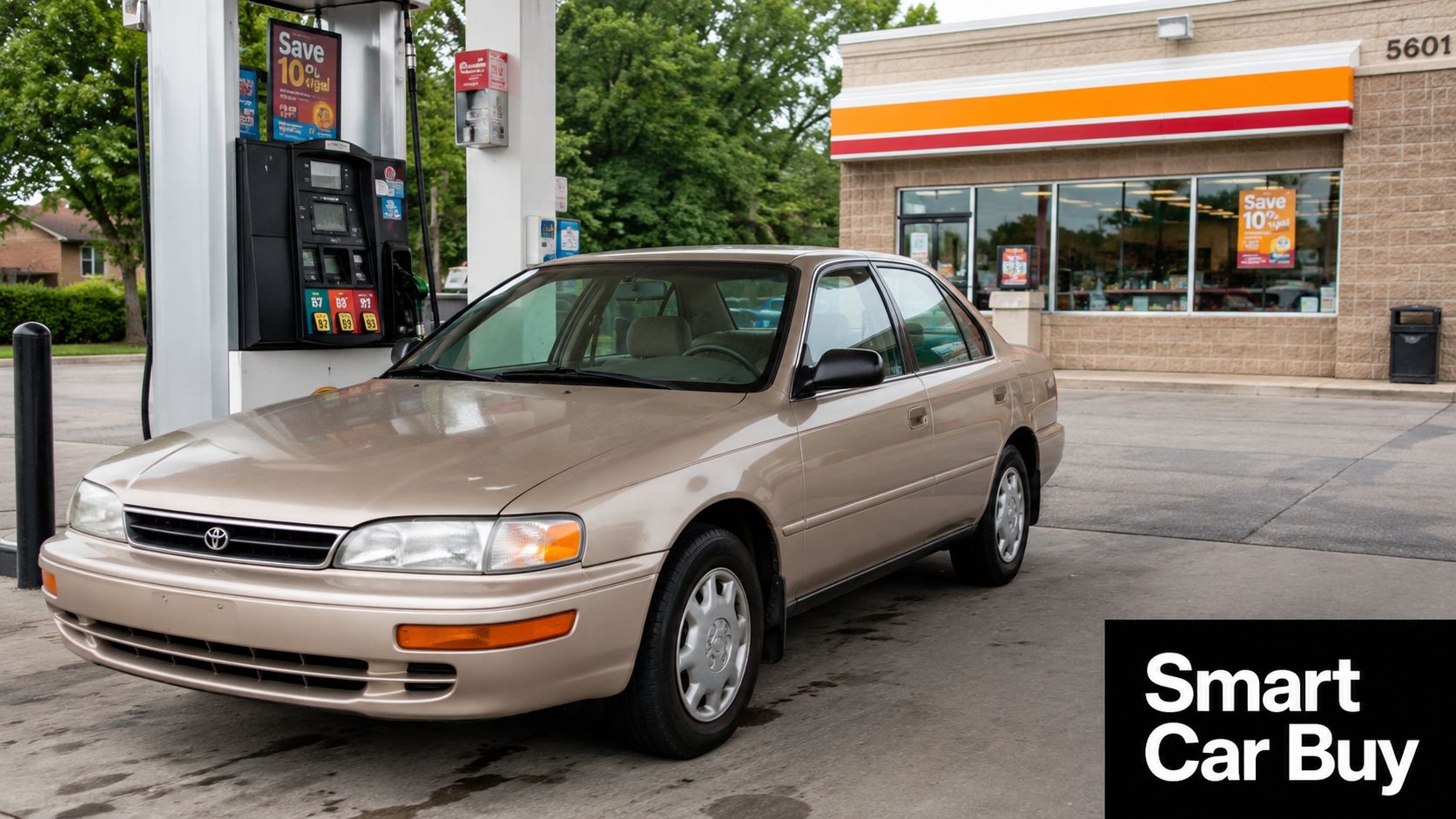
With older cars, fuel economy is only one part of the equation. The true benefit is finding a car that still returns strong mileage without needing immediate work on the exhaust, cooling system, suspension, or electrical side. If the car burns through a sensor, leaks coolant, or can't pass emissions, your pump savings disappear fast.
The three things that actually matter
First, buy the right class of vehicle. Lightweight front-wheel-drive compacts with small four-cylinder engines are usually where the best long-term odds live. They were efficient when new, parts are often easier to find, and they tend to be simpler than bigger or more performance-focused cars.
Second, inspect for age-related failure points, not just obvious cosmetic flaws. A shiny hood doesn't tell you anything about brittle vacuum hoses, leaking struts, rust around suspension mounts, or a transmission that shifts badly once it's warm.
Third, verify the paper trail. Multiple owners, title problems, odometer issues, accident history, and old insurance claims matter more on an older car than people want to admit. A seller can clean the interior in an afternoon. They can't clean a bad history.
Practical rule: Buy condition and history first, MPG second.
There's also the ownership side after the sale. Registration, emissions compliance, insurance, and repair planning all matter. If you're trying to reduce costs for older vehicle insurance, it helps to think about total running cost, not just the fuel bill.
For buyers who are still comparing efficient used options more broadly, VekTracer's guide to the best used cars to buy under $20,000 is a useful next read.
Identifying Top Fuel-Efficient Models from the Past
The best older high-MPG cars usually fall into a few patterns. They're light, they don't carry excess power, and they don't ask the drivetrain to move more car than necessary. That's why some 1990s and early-2000s compacts still hold up surprisingly well as commuters.
One of the clearest examples is the Corolla formula. Models like the 1998 to 2002 Toyota Corolla were EPA-rated at 32 city and 41 highway MPG, while the 1990 Geo Metro XFi achieved 43 city and 52 highway MPG according to this fuel economy discussion of shockingly efficient older cars. Those numbers still look strong next to many non-hybrid cars.
The ultra-light economy champs
If your only goal is squeezing every mile out of a gallon, the old lightweight hatchback and subcompact crowd deserves attention.
The 1990 Geo Metro XFi is the headliner here. It was officially rated at 43 city, 52 highway, and 47 combined MPG in EPA testing, as noted in this overview of the most fuel-efficient gasoline cars sold in the U.S.. Cars like this worked because they were small, light, and built around efficiency first.
The downside is obvious in practice. Cars at this end of the spectrum are old, basic, and often lived hard lives. Finding one that hasn't been neglected is harder than finding one that merely exists.
The reliable Japanese compact sedans
Many smart buyers turn to these vehicles. The 1998 to 2002 Toyota Corolla and Geo Prizm with the 1ZZ-FE four-cylinder paired good drivability with strong fuel economy. In the same verified data set, they were rated at 32 city and 41 highway MPG.
These cars weren't magic. They just got the fundamentals right.
- Lightweight layout keeps the engine from working too hard.
- Small four-cylinder engines deliver efficiency without exotic parts.
- Front-wheel drive packaging helps with weight and space efficiency.
- Simple compact-sedan design usually ages better than niche body styles.
A clean Corolla or Prizm from this era still makes sense because the reputation for durability wasn't built on hype. It was built on simple, durable commuter-car engineering.
The overlooked domestic and sporty options
Not every efficient older car wore a Japanese badge. The 1994 to 1999 Dodge Neon with the 2.0-liter four-cylinder posted 28 city and 39 highway MPG in EPA ratings. That made it notably efficient for its time. The catch is that you need to judge the specific car, not the brochure.
There were also a few surprises. The 1991 to 1997 Mazda MX-6 and Ford Probe with the 2.5-liter V6 managed 26 city and 34 highway MPG, showing that a lightweight coupe with decent aerodynamics could still be economical even with a bigger engine. That doesn't automatically make one a better commuter buy today, but it does show that old fuel sippers weren't all stripped-out econoboxes.
Quick comparison table
| Model | Noteworthy Years | Original EPA MPG (City/Hwy) | Key Consideration |
|---|---|---|---|
| Geo Metro XFi | 1990 | 43 / 52 | Exceptional efficiency, but many survivors are heavily worn |
| Toyota Corolla | 1998 to 2002 | 32 / 41 | Strong reputation for dependable commuting |
| Geo/Prizm 1ZZ-FE | 1998 to 2002 | 32 / 41 | Corolla mechanicals, condition varies widely by owner history |
| Dodge Neon 2.0L | 1994 to 1999 | 28 / 39 | Efficient domestic option, inspect carefully for wear and neglect |
| Mazda MX-6 V6 | 1991 to 1997 | 26 / 34 | Surprisingly efficient, but age and parts condition matter |
| Ford Probe V6 | 1991 to 1997 | 26 / 34 | Similar strengths to MX-6, buy only on condition |
Buy the design, not the legend. A famous high-MPG model in bad condition is still a bad buy.
The Pre-Purchase Inspection Checklist for Older Cars
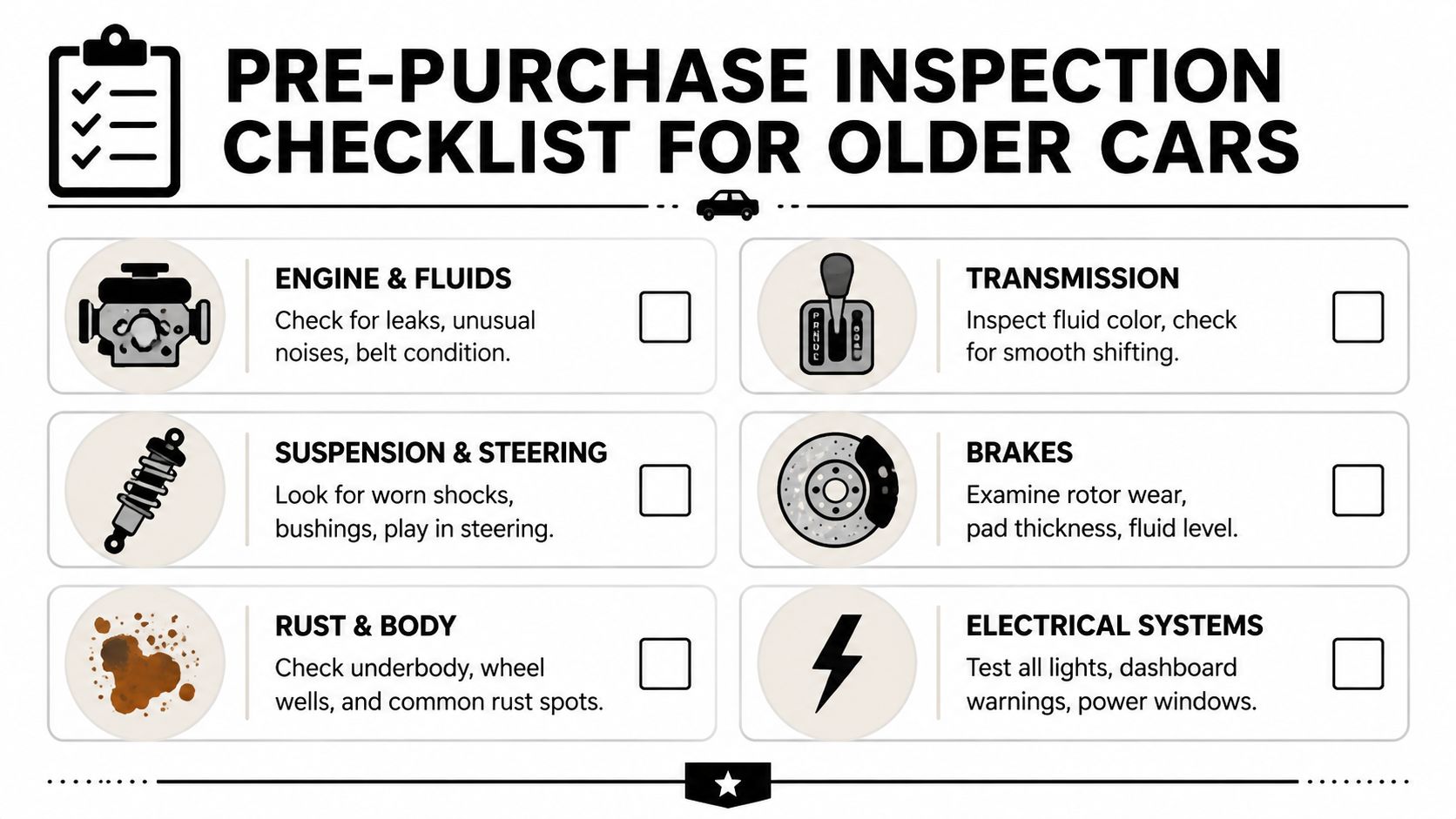
Typically, buyers look at paint, tires, and interior wear. That's not enough. On an older car, the expensive trouble is usually underneath, under the hood, or hidden in how the car behaves when cold and fully warm.
Start with the body and structure
Walk around the car slowly. Check panel gaps, mismatched paint, overspray, cracked lamps, and weathered trim that doesn't line up with the rest of the car's condition. Cosmetic issues alone don't scare me off. Structural rust does.
Get low and inspect:
- Frame rails and jack points for crushing, rust scale, or patchwork
- Wheel arches and rocker panels for bubbling paint and rot
- Suspension mounting points for corrosion near bolts and brackets
- Trunk and spare tire well for water intrusion or collision repair signs
Surface rust is one thing. Rust where the suspension or subframe mounts is another. If that area is compromised, walk away.
Under the hood tells the real story
A seller can wash an engine bay, but they usually can't hide long-term neglect very well. Look for oil seepage around valve covers, timing covers, oil pan edges, and coolant stains around the radiator, hoses, and water pump area.
Open caps, pull dipsticks, and look closely.
- Engine oil should look like oil, not glitter or sludge
- Coolant shouldn't look rusty or oily
- Belts and hoses shouldn't be cracked, swollen, or brittle
- Battery terminals shouldn't be furry with corrosion
- Air intake plumbing shouldn't be split or loosely patched
Then listen. A good older commuter should settle into a stable idle. Ticking, rattling on startup, hunting idle, or a warm knock all deserve attention.
Shop-floor advice: A cheap old car that needs “just a few little things” usually needs more than the seller admits.
Drive it twice in one trip
The first few minutes tell you one set of things. The fully warmed-up drive tells you another. On the road, pay attention to transmission behavior, steering response, brake feel, and what the car does at idle after a long drive.
Here's what to check:
Cold start behavior
Hard starting, smoke, or rough idle can point to fuel, ignition, or sensor issues.Shift quality
Manual gearboxes shouldn't grind or resist engagement. Automatics shouldn't flare, slam, or hesitate.Brake response
Pulsation, pulling, or a soft pedal means brake work is coming.Steering and suspension
Clunks over bumps, wandering, or vibration often mean worn front-end parts.Cooling performance
Let it idle after the drive. Watch for overheating, fan issues, or coolant smell.
One more thing. The way the current owner drives matters because driving style and maintenance directly affect fuel economy. Aggressive driving can reduce mileage by 10 to 40 percent in city conditions, correct tire pressure can improve fuel economy by 2 to 5 percent, and a clogged air filter or overdue oil change can reduce it by 3 to 8 percent according to this guide on improving gas mileage in an older car. If the seller claims amazing real-world MPG but the car is poorly maintained, I don't buy the story.
Don't ignore emissions and state compliance
If you're in California, emissions readiness matters before you hand over cash. A car that runs “pretty good” but can't clear smog can become a headache fast. For buyers in that market, this resource on Smog certification for older California cars helps explain what to verify before purchase.
If you want a more complete checklist before seeing a seller, VekTracer's guide to a pre-purchase car inspection is worth keeping open on your phone.
Decoding the Past with a Vehicle History Report
A clean test drive doesn't clear a car. Neither does a shiny detail job, fresh tires, or a stack of receipts with gaps in all the wrong places. Older cars can hide old flood damage, salvage branding, mileage discrepancies, and repeated accident repairs that you won't catch with your eyes alone.
That's why a vehicle history report is part of the buying process, not an optional extra.
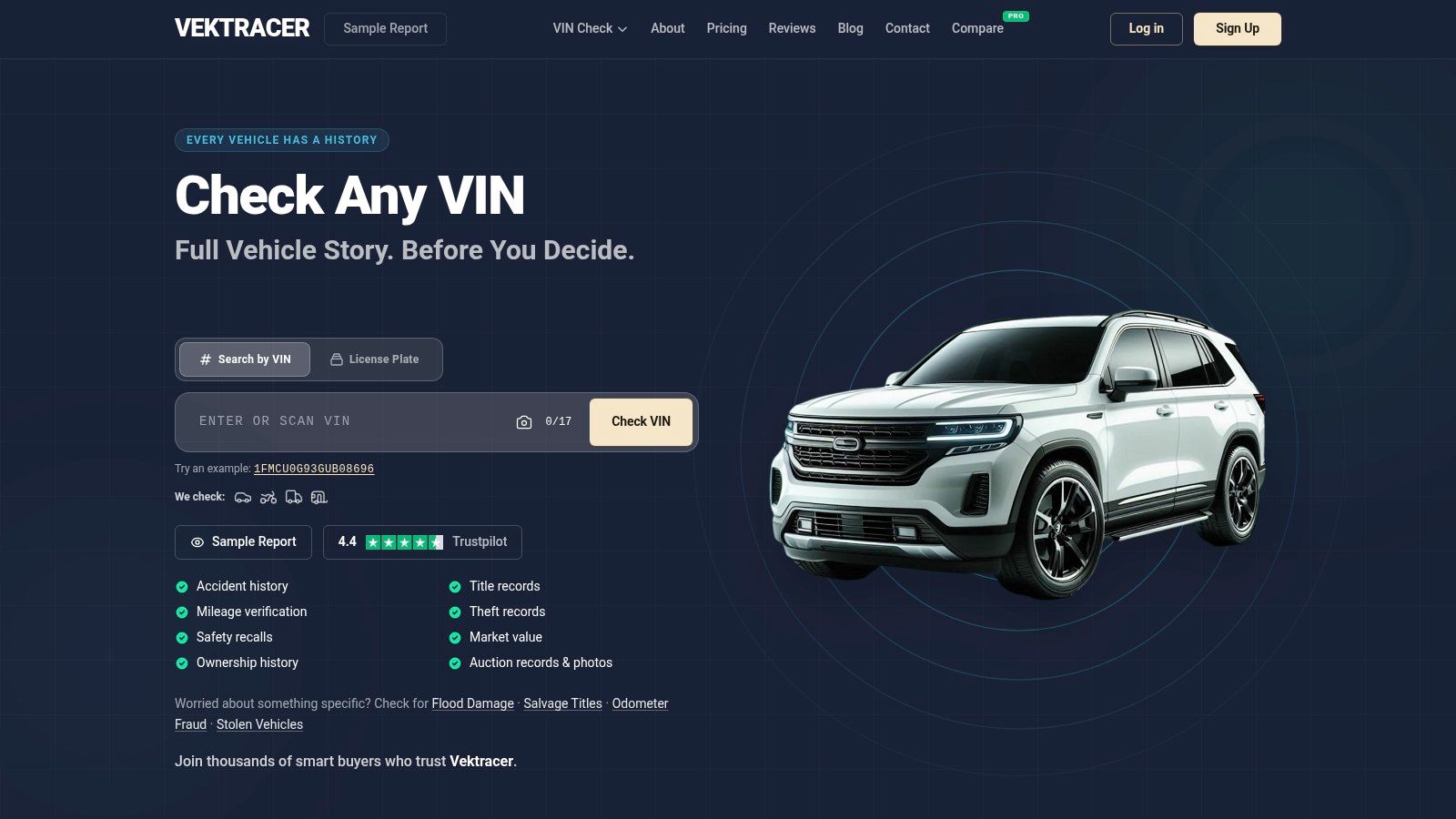
What a paper trail can reveal that an inspection can't
Take a common scenario. An older Corolla shows up for sale. It starts clean, drives straight, and the seller says it's been “super reliable.” Then the report shows a salvage title from years ago, inconsistent odometer entries, and a long registration gap. That's a different car than the one you thought you were buying.
The biggest red flags are usually:
- Salvage or rebuilt title history
- Odometer inconsistencies
- Major accident records
- Theft history
- Open recall records
- Lien status problems
These are the kinds of issues that change whether the car is worth owning at all.
MPG means nothing if the car has emissions baggage
There's another reason history matters on older high-MPG cars. Nearly 20 percent of inspection failures on pre-2000 vehicles relate to emissions and exhaust systems, according to the referenced data in this discussion of older-vehicle inspection risk and history concerns in the pre-2000 vehicle emissions and exhaust context. Those problems can be expensive, and they directly affect fuel economy.
A history report won't diagnose a catalytic converter or tell you if an oxygen sensor is lazy today. But it can flag title events, prior damage, recurring inspection trouble, and ownership patterns that tell you the car may have been a problem child for years.
The best old commuter cars usually have boring histories. That's a compliment.
If you're still sorting out what these reports include and why they matter, VekTracer's explainer on what a vehicle history report is covers the basics clearly.
Common Mechanical Failures and What to Expect
Older fuel-efficient cars don't usually fail in dramatic fashion first. They wear down piece by piece. A seep turns into a leak. A weak sensor turns into poor mileage. A cooling-system issue becomes an overheating problem on a hot day in traffic.
That's normal old-car ownership. The mistake is pretending it won't happen.
The failures that show up most often
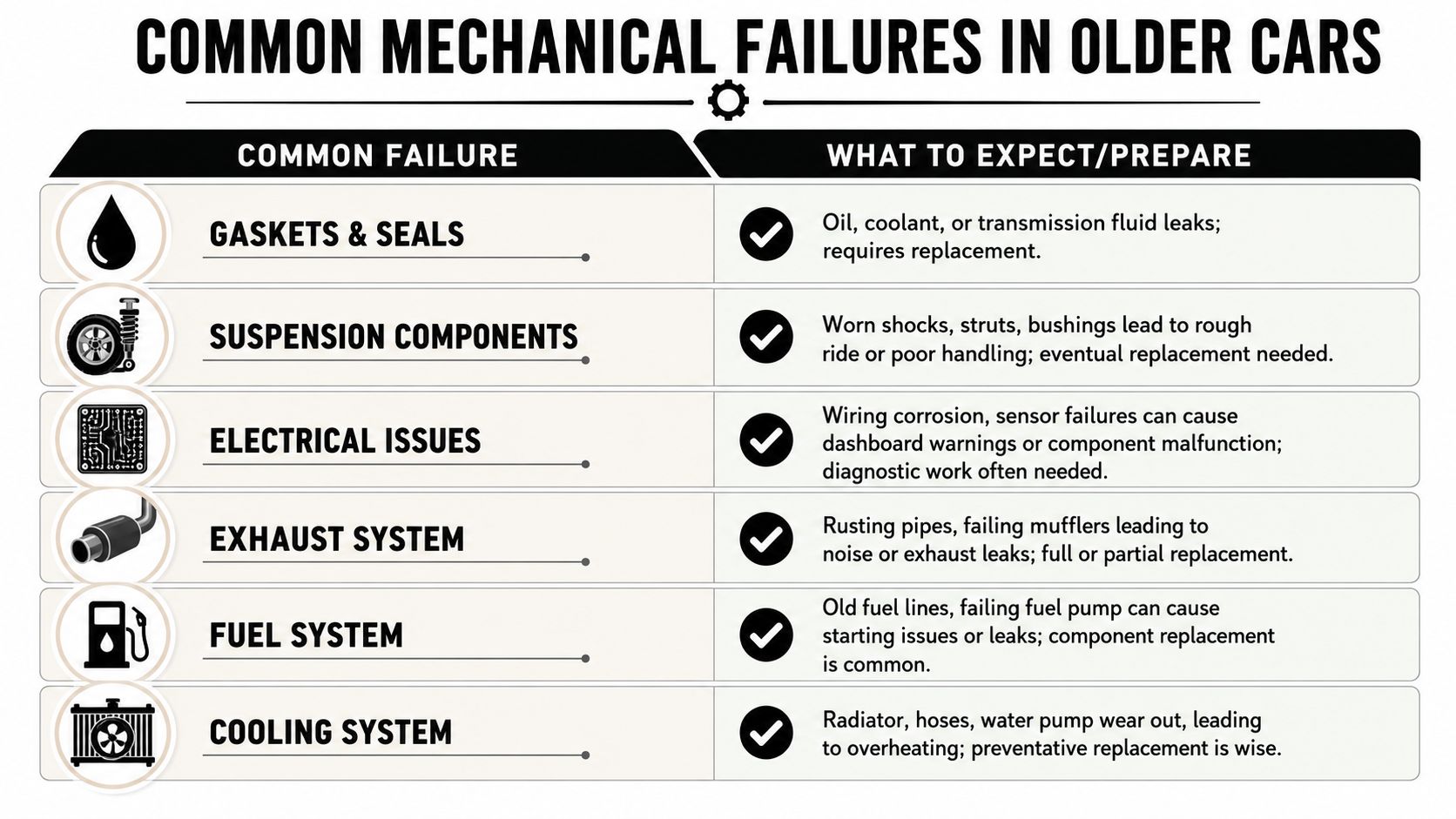
The usual list is predictable:
- Gaskets and seals start weeping oil, coolant, or transmission fluid.
- Cooling-system parts age out. Hoses harden, radiators corrode, water pumps fail.
- Suspension components wear slowly until the car rides poorly and chews through tires.
- Exhaust parts rust, leak, or fail emissions.
- Fuel-system components get weak or dirty, especially on cars that sat unused.
- Electrical parts and sensors trigger warning lights, bad running, and annoying intermittent faults.
None of these are surprising on an older car. What matters is whether you budget for them and whether the car is worth fixing when they show up.
The one failure that quietly kills MPG
Sensor health matters more than many buyers realize. A single faulty oxygen sensor can increase fuel consumption by 10 to 15 percent according to this discussion of used cars with strong MPG and common maintenance-related fuel loss. That's exactly the kind of issue that makes an “efficient” older car stop being cheap to run.
If a seller says, “It just has a check-engine light for something minor,” assume nothing. On an old commuter, that light may be the difference between a sensible buy and a car that burns extra fuel every week.
What works and what doesn't
What works is buying a car that already has a pattern of recent upkeep. Fresh cooling-system service, decent tires, stable idle, clean shifting, no active warning lights, and believable records. Those owners usually stay ahead of problems.
What doesn't work is buying the cheapest example of a known high-MPG model and planning to “sort it out later.” Old cars punish delayed maintenance. If you need low operating cost, you want a car that's already sorted.
A high-MPG badge from the factory doesn't protect you from old-car physics.
Frequently Asked Questions About High-MPG Older Cars
Are older cars with great gas mileage still worth buying in 2026
Yes, if you buy carefully. The sweet spot is usually a simple, lightweight compact with a solid service history, clean structure, and no obvious emissions or title trouble. The wrong old economy car will cost more in repairs and hassle than the fuel savings are worth.
How do I verify a seller's claim about real-world MPG
Don't rely on the claim alone. Look at the car's maintenance condition, tire condition, idle quality, warning lights, and service records. A neglected car won't deliver the mileage the seller remembers from years ago.
Is a manual transmission better for fuel economy on an older car
It often can be a smart choice on older compacts because the drivetrain is simpler and easier to evaluate during a test drive. But the clutch, shifter feel, and engagement quality matter. A worn manual can erase the advantage if it needs immediate work.
Can I still get insurance and financing on a twenty-year-old car
Insurance is usually available, though coverage options vary with age, value, and condition. Financing can be tougher because lenders often place limits on older vehicles. Many buyers avoid the problem by paying cash and keeping a repair reserve.
Are parts still available for older economy cars
Usually, yes, for mainstream models. Availability is generally better for mass-market compacts than for rare trims or specialty versions. The challenge isn't always finding a part. Sometimes it's finding a good-quality part worth installing.
What's the biggest buying mistake with old fuel-efficient cars
Shopping only by advertised MPG. A car with great original fuel economy but poor maintenance, rust, emissions trouble, or a bad title is not a bargain.
Should I get both an inspection and a VIN check
Yes. They do different jobs. The inspection looks at current physical condition. The VIN check helps uncover the car's documented past. You want both.
If you're narrowing down a few older commuters and want to avoid title issues, accident surprises, odometer problems, or hidden risk, VekTracer is a practical next step. Run a vehicle history report before you buy, compare candidates side by side, and use the Risk Score to spot the car that looks cheap up front but could cost you later.
Ready to check a vehicle?
Enter any 17-character VIN for a free instant preview — no account needed.