How to Buy Good Used Car: A 2026 Guide
Check a vehicle before you buy
Enter a VIN for a free instant preview — accidents, title brands, mileage, liens & open recalls.
You're probably doing what most used-car shoppers do. You've got too many tabs open, every listing claims the car is “clean,” and you're trying to figure out whether the cheap one is a smart buy or a future repair bill.
Here's the direct answer to how to buy good used car options without getting burned: treat the purchase like a risk screen, not a beauty contest. Start with a real budget, shortlist proven models, run a vehicle history report, inspect the car in person, pay for an independent mechanic, then negotiate with evidence instead of emotion.
Your Roadmap to a Reliable Used Car
A lot of people lose the deal before they ever see the car. They shop by monthly payment, get distracted by trim packages, and skip the paperwork until they're already emotionally attached. That's how buyers end up explaining away warning signs that were obvious from the start.
The used market is too big for guesswork. Used car sales in the United States represent 76% of total vehicle sales, and the average price of a used vehicle was $29,310 in 2023, down by more than $1,400 from the 2022 average, which means informed buyers have room to find better value if they shop carefully, according to ConsumerAffairs used car statistics.
Practical rule: A good used car isn't the one that looks nicest in photos. It's the one that still makes sense after you check the history, the condition, and the ownership story.
When I look at a used car, I want five things to line up:
- The budget works after insurance, registration, and immediate maintenance.
- The model has a solid reputation for lasting without drama.
- The VIN history makes sense and doesn't hide title or mileage trouble.
- The physical condition matches the story the seller is telling.
- The price reflects reality, not the seller's hopes.
What works and what doesn't
A simple comparison makes the process easier:
| Approach | What happens |
|---|---|
| Shop by monthly payment | You miss the real cost and often overpay |
| Pick the model first, then screen listings | You stay focused and compare apples to apples |
| Trust the seller's description | You inherit their problems |
| Verify with a VIN check and mechanic | You buy with leverage and clarity |
That's the framework. Keep it simple, stay skeptical, and don't confuse urgency with opportunity.
Define Your True Budget and Needs
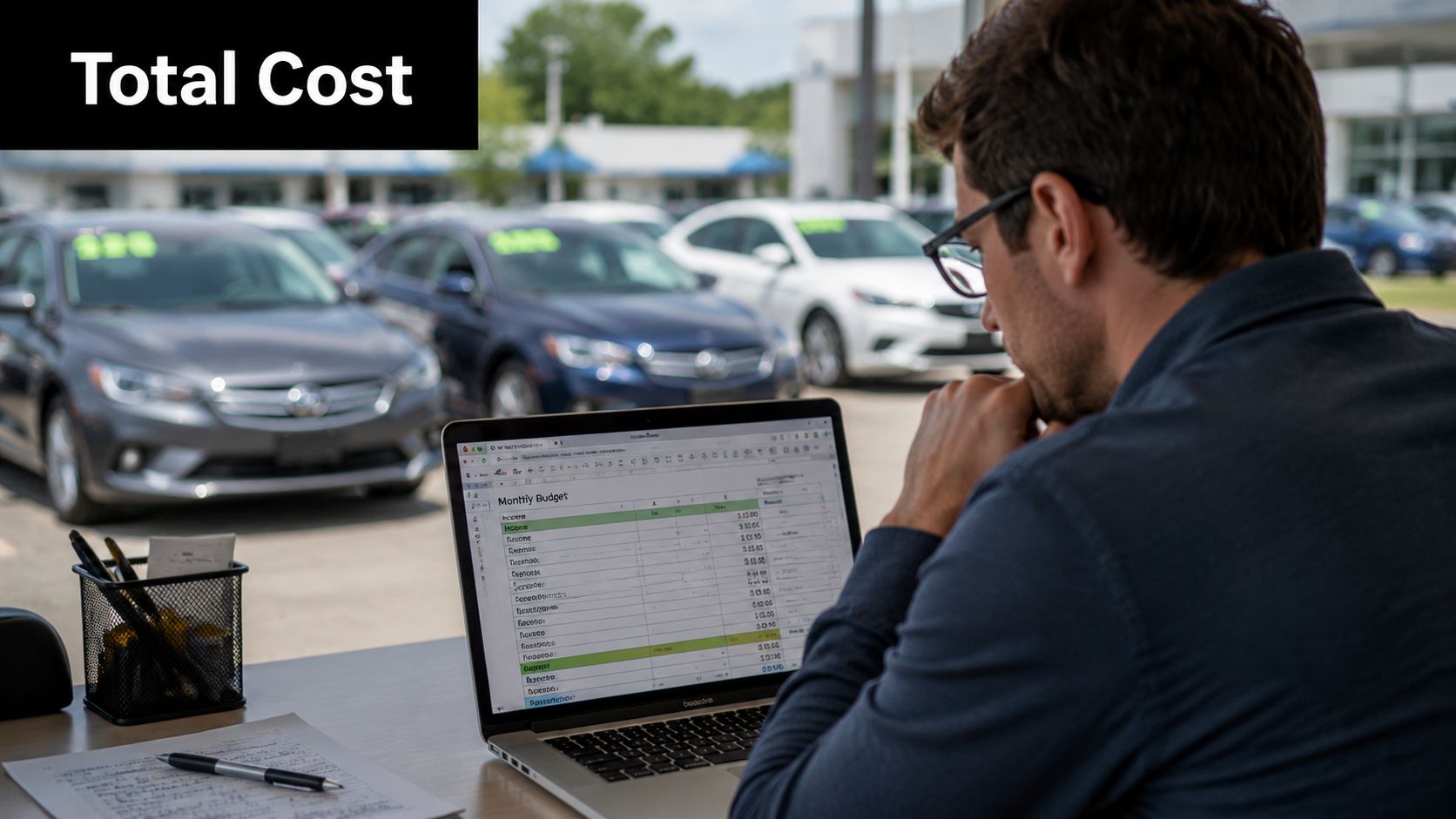
The sticker price is only the opening number. If you want to buy a good used car, you need an all-in number before you contact sellers.
Start with the full ownership cost
A buyer says, “My budget is for the car.” That's incomplete. What matters is what you can buy, register, insure, and fix without stress in the first stretch of ownership.
Build your budget around these buckets:
- Purchase amount for the vehicle itself
- Taxes and registration that show up at closing
- Insurance cost based on the exact model you're considering
- Immediate maintenance reserve for tires, fluids, brakes, or a battery
- Financing cost if you're borrowing
If you haven't priced insurance yet, do that before you fall in love with a model. A sporty trim, theft-prone vehicle, or young driver on the policy can change the whole deal. If you're comparing quotes in California, a practical resource on securing budget-friendly auto policies in Victorville can help you sanity-check the insurance side of the decision.
Use age strategically
There's a reason experienced buyers often target nearly new vehicles instead of brand-new ones. Buying a used car less than three years old is a strategy to avoid the steepest depreciation while still retaining warranty coverage, and new car loans currently average over 7% for 60 months, which can make a nearly new used car the smarter financing choice, as noted by Jill on Money's car buying tips for 2026 projections.
That doesn't mean every buyer should only shop recent models. It means you should know the trade-off:
- Less than three years old usually means higher price, better tech, possible warranty coverage
- Older but well-kept can be a bargain, but you need more room for repairs
- Very cheap older cars often become expensive through deferred maintenance
The cheapest listing is often the most expensive ownership experience.
Match the car to your actual life
A lot of bad used-car decisions come from shopping for an imagined lifestyle. If you commute, park in tight spaces, and drive alone most days, don't buy a large SUV because it “might be useful.” If you need space for kids, gear, or highway travel, don't force yourself into a tiny car just because the price looks good.
Ask yourself:
- Daily use. Commute, errands, family hauling, weekend trips
- Road type. City traffic, highway miles, rough roads, snow
- Ownership horizon. Keep it briefly or drive it for years
- Tolerance for repair risk. Some buyers can handle projects. Most shouldn't.
A strong budget gives you discipline. It also gives you something more valuable. Permission to walk away when the numbers stop making sense.
Research Models and Create a Shortlist
Don't start with listings. Start with models.
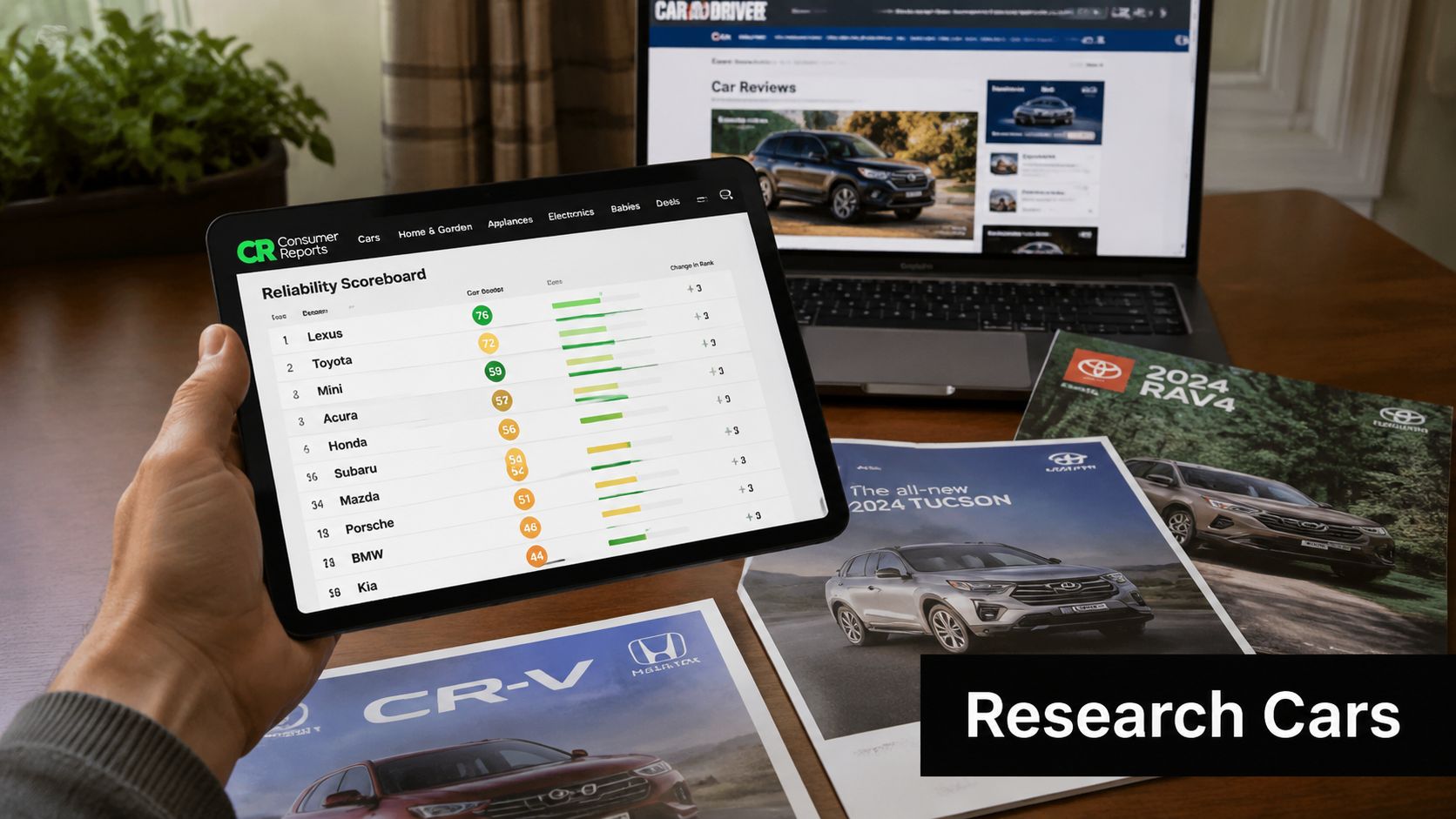
Most shoppers waste time doing the reverse. They browse whatever looks attractive nearby, then try to decide if that model is any good after they're already interested. That's backward. Pick a handful of vehicles with a track record you trust, then shop those deliberately.
Build a shortlist before you browse
I like a shortlist of three to five models. That's enough to create options without turning the search into a mess.
Use a mix of owner reputation, common-sense maintenance considerations, and reliability-focused research. Then narrow your search based on your budget and vehicle type.
A practical starting point is this roundup of top used cars worth shortlisting if you want a focused list before diving into listings.
Filter age and mileage together
One of the easiest mistakes is treating mileage as a stand-alone number. It only means something when paired with age, use, and maintenance.
New cars lose between 20% and 30% of their value in the first year, and a useful rule for used cars is about 12,000 miles per year. Vehicles well above that can suggest heavier wear, while lower mileage often supports stronger value retention, according to Permian Ford's used car buying guidance.
Here's how to use that in real life:
| Vehicle age | What to compare |
|---|---|
| Recent model | Is the mileage close to expected yearly use? |
| Mid-age used car | Does the mileage fit normal driving or look unusually high? |
| Low-mileage outlier | Was it maintained regularly, or did it sit for long periods? |
What gets cut from my list fast
A good shortlist isn't just what you include. It's what you eliminate early.
- Bad fit for purpose. Great reviews don't matter if the car doesn't suit your daily use.
- Mileage that doesn't make sense. Very high mileage for age demands stronger proof of care.
- Suspiciously cheap listings. If the price looks far below similar cars, assume there's a reason.
- Models with expensive known headaches. Fancy features can become expensive failures on older vehicles.
A clean-looking listing can still be a bad buy. The right model with boring photos is often the better car.
Keep your search tight
Once you have the shortlist, compare listings within the same model range. That's when pricing starts to make sense. You'll notice when one car is overpriced, one is suspiciously low, and one is priced fairly because the condition and history line up.
Disciplined buyers save time. They don't chase every possibility. Instead, they screen hard, then inspect only the cars that earn it.
Verify History and Uncover Red Flags with a VIN Check
At this point, smart buyers separate clean cars from clean stories.
A seller can wash the exterior, vacuum the interior, and give you a polished explanation for everything. The VIN is harder to charm. A proper VIN check USA or VIN check Canada process gives you the paper trail behind the pitch.
What a vehicle history report should tell you
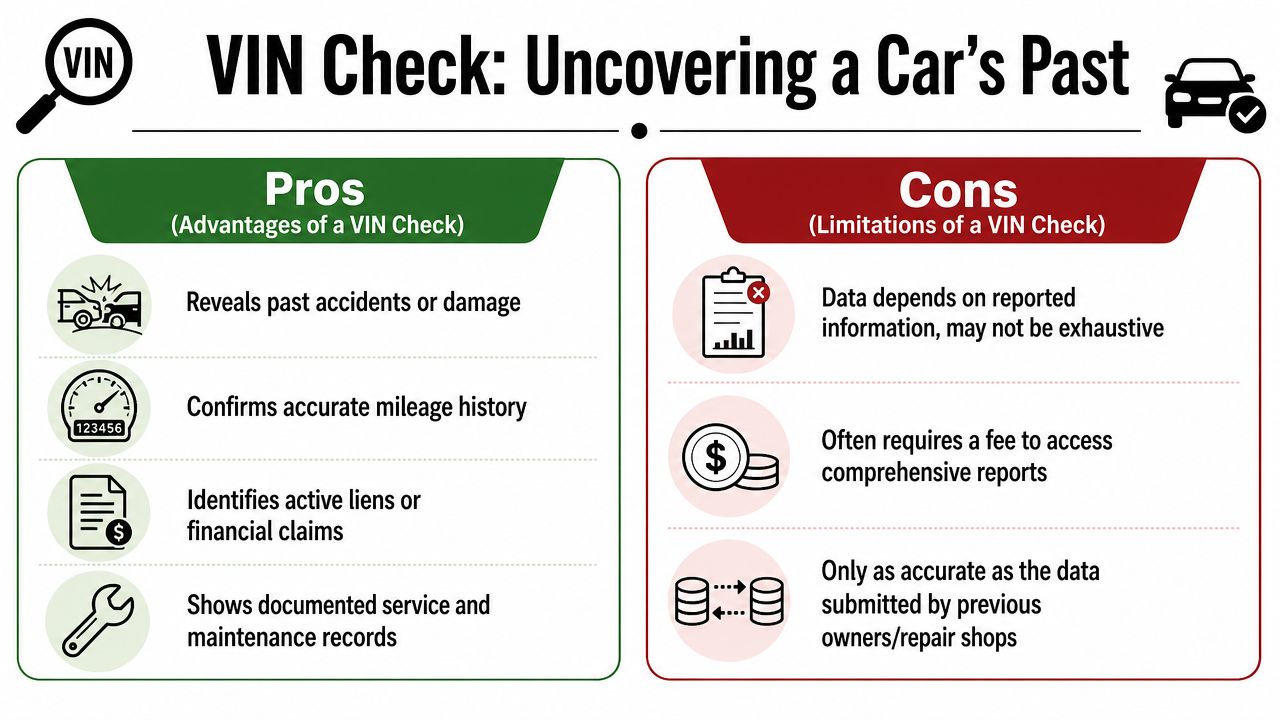
A useful vehicle history report helps you review:
- Title status so you can spot salvage or other branded title problems
- Odometer history for mileage consistency
- Accident and damage entries that deserve closer inspection
- Service records when available
- Lien or ownership signals that affect the transaction
If you want a fuller breakdown of what appears in these records, this guide on what a vehicle history report includes is a good companion before you compare providers.
If you're paying for reports one at a time, buyers typically pay around $30 for AutoCheck and $45 for Carfax when purchasing independently, based on Kelley Blue Book's guidance on used-car shopping and report costs. That matters because report cost changes how many vehicles many shoppers bother to screen.
Don't just count owners. Interpret them
This is the part most buyers miss. They'll say, “It had two owners,” and stop there. That isn't enough.
Cars owned for less than one year are significantly more likely to have been sold to “kick expensive problems to the next owner,” which makes short ownership cycles a meaningful risk signal that standard reports often list but don't explain, according to Car and Driver's advice on buying a used car.
That ownership pattern doesn't automatically kill the deal. But it should change your posture.
Ask harder questions if you see:
- Very short ownership periods
- Frequent resales without a clear reason
- Mileage jumps that don't match the ownership timeline
- A polished current listing attached to a messy record
If the car keeps changing hands quickly, assume somebody learned something they didn't want to pay to fix.
Verify the title, not just the paperwork in front of you
Curbstoning is real. Some unlicensed sellers act like private owners to avoid rules and move problem cars discreetly. One of the safest habits is verifying the title digitally through a VIN-based check because electronic title records can't be “washed” to erase salvage brands even if a physical title has been altered, as explained in this used-car fraud and curbstoning guide.
If you're in the UK and comparing title or registration document details across markets, this Maxess Locks LTD guide to 2026 registration is useful context on how registration paperwork is structured.
Use tools to quantify risk
Not every buyer wants to read every record line by line. That's where comparison tools help. One option is VekTracer, which provides VIN reports covering accident history, mileage verification, title and lien status, theft records, recalls, and a Risk Score on a 1 to 100 scale so buyers can compare risk across vehicles. If you're deciding between two or three cars, that kind of scoring is useful because it turns scattered records into a clearer buying decision.
The report doesn't replace judgment. It sharpens it.
Inspect the Car and Take a Thorough Test Drive
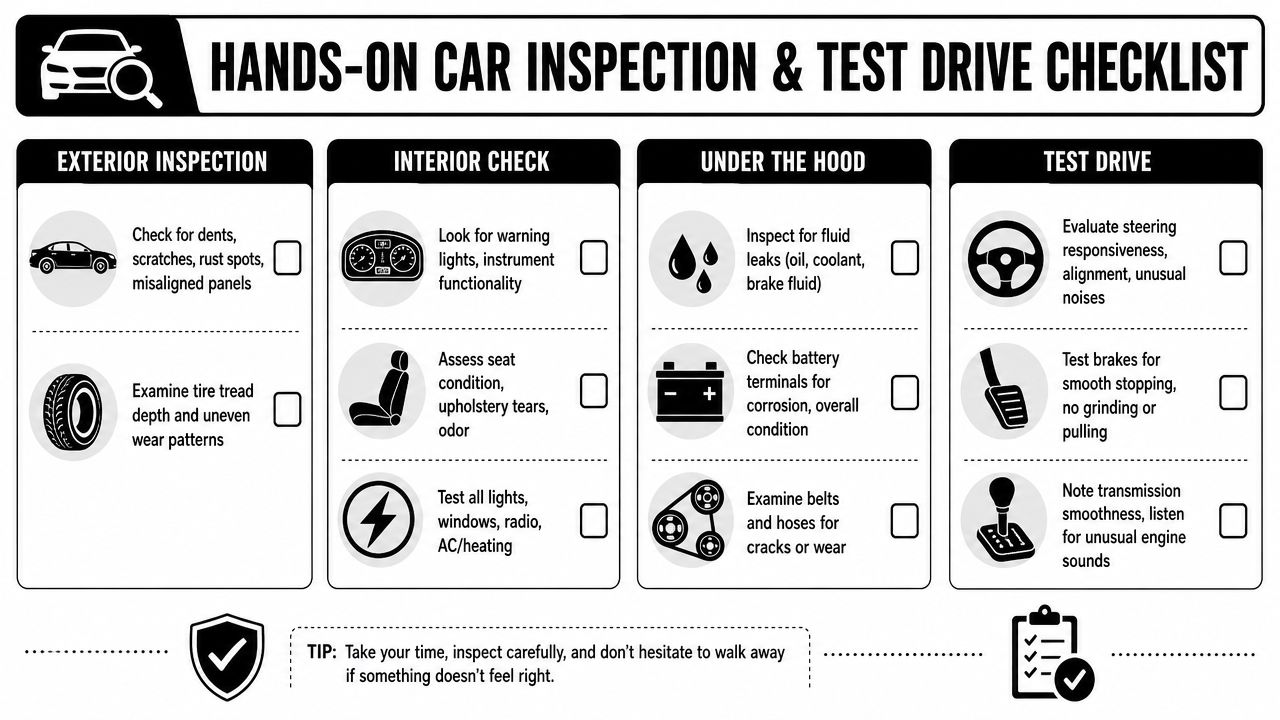
A clean history report doesn't prove a car is healthy today. It only tells you what got documented. The hands-on inspection is where you verify whether the car in front of you matches the story on paper.
What to check before the drive
Walk around the car slowly. Don't chat your way through this part. Look at panel alignment, paint consistency, tire condition, glass, lights, and signs of leaks under the parked car.
Inside, check whether the wear matches the mileage claim. A heavily worn steering wheel, sagging seat bolsters, or abused switchgear can tell a different story than the odometer.
Here's the fast screening list I use:
- Body and paint. Mismatched color or uneven gaps can suggest prior body work.
- Tires. Uneven wear can point to alignment, suspension, or neglect.
- Cabin smell. Musty odor can hint at water intrusion. Burning smells matter too.
- Dashboard lights. Make sure warning lights illuminate properly and then go out as expected.
- Fluids and battery area. Look for leaks, grime buildup, or corrosion.
Make the test drive expose problems
A five-minute loop around the block won't tell you much. You want cold start behavior, city driving, braking, steering, bumps, and highway speed if possible.
Pay attention to:
- Cold start. Listen for ticking, knocking, rough idle, or smoke.
- Transmission behavior. Shifts should feel consistent, not hesitant or harsh.
- Steering and tracking. The car shouldn't pull or feel vague.
- Brakes. Watch for vibration, noise, weak bite, or pulling.
- Suspension. Clunks over bumps usually mean something wants attention.
If you want a plain-English guide to diagnostic access, this explainer on accessing vehicle data via OBD helps you understand what mechanics can read from the car's onboard system.
Pay for the mechanic before you pay for the car
This is the best money you'll spend in the whole process. A pre-purchase inspection by an independent mechanic costs around $100 to $150 and is the single most effective step to avoid buying a lemon. The FTC recommends it even for certified vehicles, and a seller's refusal is a major red flag, according to Consumer Reports on how to inspect a used car.
The mechanic should do more than a quick glance. You want a cold start, a proper road test, and an underbody inspection. A written report matters because it gives you repair findings you can negotiate from.
For a deeper step-by-step approach, this pre-purchase car inspection guide is worth keeping open when you're scheduling the check.
If a seller won't allow an independent inspection, the conversation is over. Leave.
Negotiate Price and Finalize the Sale
Negotiation gets easier when you stop thinking of it as a contest. You're not trying to win a performance. You're trying to match price to condition.
The strongest buyers don't say, “What's your best price?” They show why the car is worth less than the asking number. If the history report shows prior damage, if the tires are worn, or if the mechanic found upcoming brake or suspension work, those become reasons for a revised offer.
Build your case from evidence
I like to keep three things in front of me:
- Comparable listings for the same model and trim
- The vehicle history findings
- The mechanic's written inspection report
That lets you speak calmly and specifically. Not, “This feels high.” Instead: “The inspection flagged work this car will need, and the history reduces what I'm willing to pay.”
Phrases that actually work
You don't need clever lines. You need clarity.
- “I'm still interested, but the inspection changed the value for me.”
- “I'm pricing this based on the car's actual condition, not the asking number.”
- “If you can move on price to reflect these issues, I can move forward.”
- “If not, I'll keep shopping.”
That last line matters. A buyer with no willingness to walk away usually overpays.
Good negotiation feels boring. That's usually a sign you're doing it right.
Closing the deal without creating new problems
Before money changes hands, verify that the title matches the seller and the vehicle. Read every document. Watch for “as-is” language and make sure you understand that once the deal is done, the repair risk may be yours.
Use a secure payment method and keep records of the transaction. If anything feels rushed, vague, or oddly complicated, slow the process down. Honest sellers usually don't mind. Problem sellers often get impatient when you start reading.
A fair used-car deal is one where the price, condition, history, and paperwork all tell the same story.
Frequently Asked Questions About Buying a Used Car
Is Carfax worth it when buying a used car
It can be, especially if you're checking a vehicle with incomplete seller information or you want another layer of confidence before arranging an inspection. The key question isn't just carfax worth it. It's whether the report helps you avoid a bad car. If the report surfaces title issues, mileage inconsistencies, or accident history, it has done its job.
What should I use for carfax pricing 2026 comparisons
If you're shopping based on carfax pricing 2026 search intent, compare the one-report cost against how many vehicles you plan to screen. Some buyers only need one report. Others need several. That's where comparing report providers, coverage, and whether they include risk scoring or side-by-side comparison tools becomes more useful than looking at price alone.
Should I buy from a private seller or dealer
Neither is automatically safer. A careful private seller with records can be better than a sloppy dealer. A transparent dealer can be better than a private seller who hides the car's past. Judge the car, the paperwork, and the willingness to allow a PPI.
Is certified pre-owned always the better choice
Not always. Certified cars can reduce risk, but certification doesn't replace your own review of the history and condition. The FTC recommendation for an independent inspection still matters.
Should I run a VIN check in the USA or Canada before seeing the car
Yes. A vin check usa or vin check canada search should happen early, not after you've invested time in a visit. It's one of the fastest ways to eliminate cars with title, mileage, or history concerns before you start traveling or negotiating.
What's the biggest mistake first-time used-car buyers make
They get attached too early. Once a buyer starts picturing the car in their driveway, they stop reading warning signs objectively. Stay detached until the history, inspection, and price all line up.
If you want a faster way to screen a car before you commit, VekTracer can help you review VIN history, compare vehicles, and get a clearer read on risk before you buy.
Ready to check a vehicle?
Enter any 17-character VIN for a free instant preview — no account needed.