How to Buy a Car with a Lien from a Private Seller
Check a vehicle before you buy
Enter a VIN for a free instant preview — accidents, title brands, mileage, liens & open recalls.
You're looking at a car that seems right on price, but the title has a lien and the seller still wants to close fast. The direct answer is simple, don't treat this like a normal private sale. In a lien deal, the purchase is the transferable title, and that only happens when the lender releases the lien, not when you hand over money or get a signed bill of sale. California's DMV says private-sale title transfer in a loan payoff case requires the seller or lienholder signature and the buyer submitting the title to DMV, while Florida says a private sale with an existing lien isn't legal until the lien is satisfied, which is why the buyer's main risk is ending up with a car that can't be registered (California DMV title transfer guidance).
Table of Contents
- What Buying a Car With a Lien Really Means
- How to Verify the Lien and Vehicle History Before You Pay
- How to Contact the Lienholder and Lock the Payoff Amount
- Safe Ways to Pay When the Seller Still Owes the Lender
- Completing Title Transfer and Paperwork Without Delays
- Common Pitfalls to Avoid and What to Do If the Title Stalls
What Buying a Car With a Lien Really Means
I've seen buyers get fixated on the seller's story, the paint, the tires, even the test drive, and miss the only thing that matters at closing, whether the title can move into their name. A vehicle lien is a legal claim by a lender, and in a private sale that claim has to be satisfied before clear ownership can pass to you (California DMV title transfer guidance). If the lender still controls the release, the seller can't just “promise” the title later and call it done.
Clear title is the real finish line
A normal private sale works because the seller hands you a title you can take to the DMV. A lien sale is different because the lender sits between you and that title. Florida's rules make that plain, a private sale with an existing lien isn't legal until the lien is satisfied, and once the lienholder reports the lien satisfied, the title can be transferred (California DMV title transfer guidance). That's the part many buyers underestimate.
Practical rule: if you can't describe exactly how the lender will release the title, you don't yet have a deal, you have a promise.
California's DMV also points to the mechanics, seller or lienholder signature plus the buyer submitting the title to DMV in a payoff case (California DMV title transfer guidance). That means the handoff is procedural, not emotional. You're not just buying the car, you're buying a path through the title system.
The safest way to think about the transaction is in three parts. First, verify the lien. Second, lock the payoff amount and release method. Third, pay in a structure that leaves the lender, not the seller, controlling the clean title outcome. That mindset saves you from the common trap of paying quickly and sorting paperwork later, which is exactly where private-party lien deals go wrong.
How to Verify the Lien and Vehicle History Before You Pay
Start with the VIN, not the seller's explanation. NHTSA says you can find the VIN in the lower-left corner of the windshield or on the driver-side doorjamb label, and you can use that same VIN or a license plate to check for open safety recalls (NHTSA recall lookup). That recall check is useful, but it doesn't tell you whether the title is clean, whether there's a lien, or whether the car has an ownership problem.
Cross-check the title against the vehicle
Look at the title, the registration, and the seller's ID together. If the names don't line up, pause. If the VIN on the title doesn't match the car, stop. If the seller says the lender will “handle it later,” you're still in the danger zone, because the lien has to be verified before money moves.
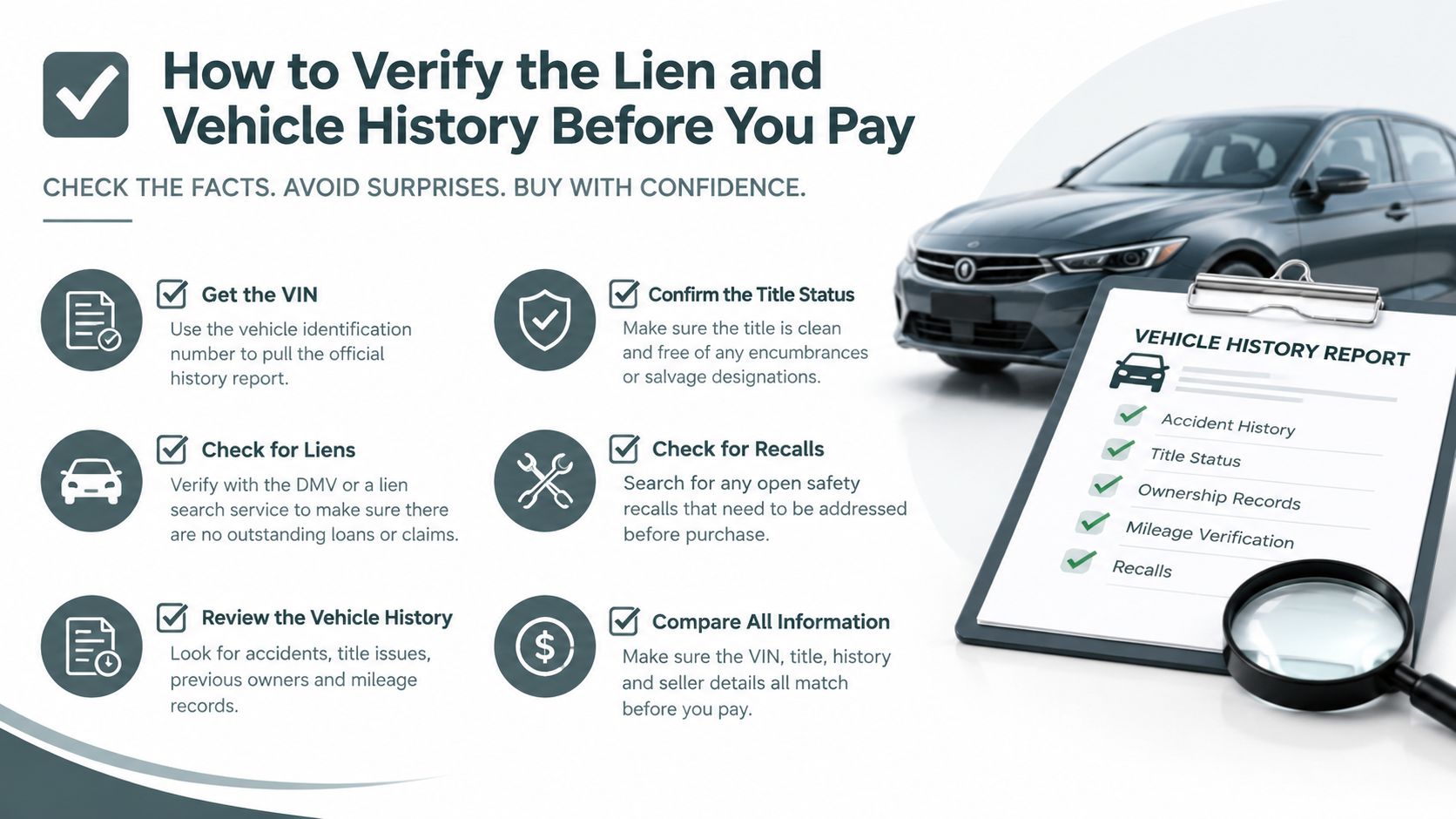
An official recall lookup is only one piece of the picture. NHTSA's search is limited to safety recalls and does not provide ownership history, accident records, odometer readings, lien checks, or title branding information, so you need additional sources if you want to evaluate the transaction properly (NHTSA recall lookup limits). That's where a broader vehicle-history report can help, because it can add title brands, accident signals, odometer history, auction records, and theft context when those records are available.
See how to check for a lien on a car
What to pause on before you send money
A good pre-payment review is short and unsentimental. Use the VIN, verify the lien through title or DMV records, and make sure the seller is the actual titleholder or authorized representative. If the car has a branded title, a salvage history, a mileage gap, or a mismatched ownership trail, those are separate reasons to slow down before you ever talk about payoff.
- VIN mismatch: The VIN on the car, title, and history report should point to the same vehicle.
- Titleholder mismatch: The person selling the car should be the person tied to the title.
- Recall check only: An open recall matters, but it doesn't clear title risk.
- History gaps: Missing ownership or brand context can hide bigger problems.
- Unclear lien status: If the lien can't be confirmed, don't negotiate payment yet.
If you use a commercial vehicle-history report, use it for broader context, not as a substitute for title verification. Official DMV and lienholder records decide the title issue. Everything else supports your judgment.
How to Contact the Lienholder and Lock the Payoff Amount
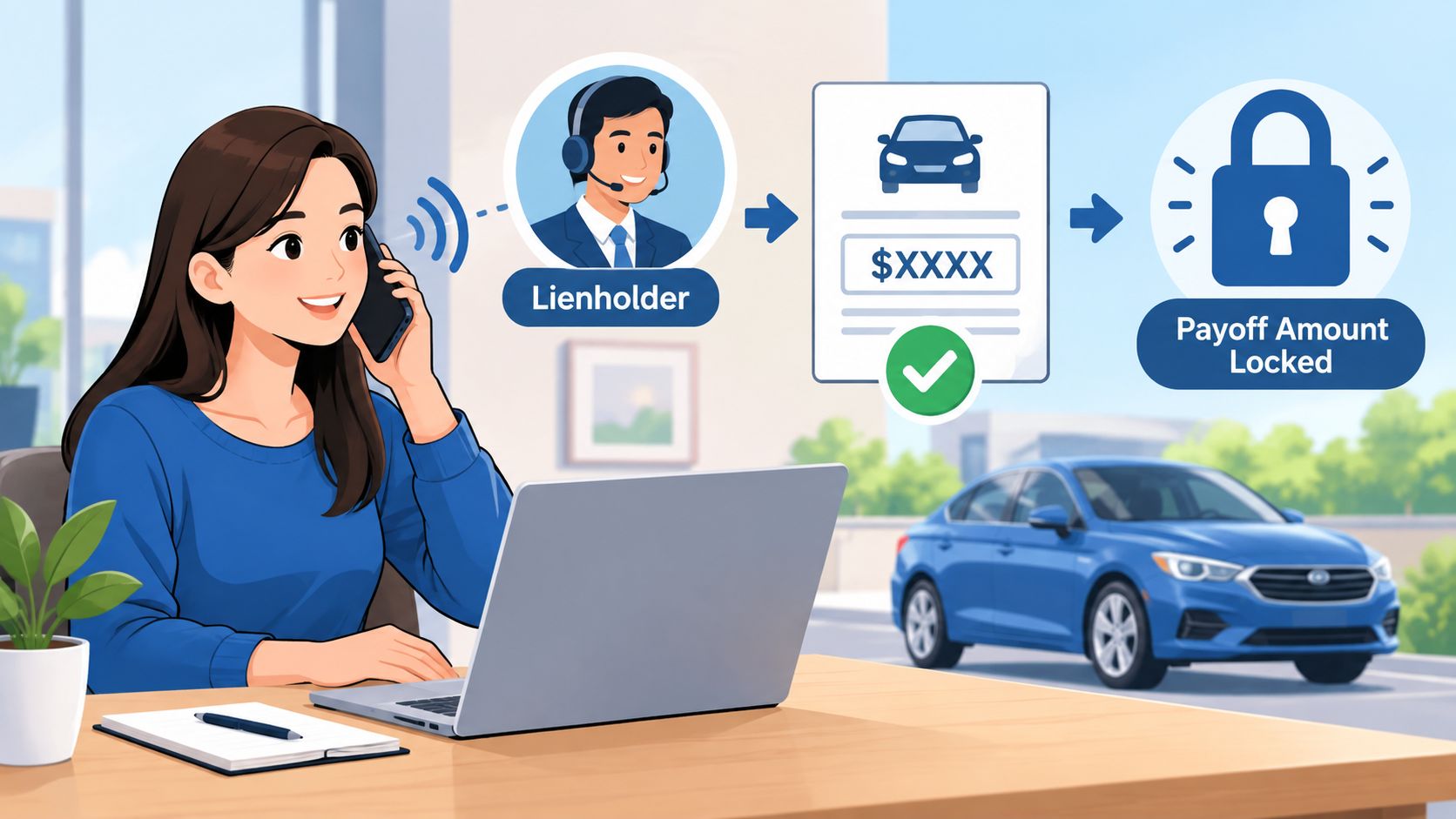
Once the lien is confirmed, get the lender involved directly. The safest private-party workflow is to treat the lienholder as the payee of record, because the payoff amount can differ from the loan balance after accrued interest and fees through a specific date (Capital One Cars, how to buy a car with a lien). If you use an outdated number, the lien may stay open and the title may not move.
Ask for the details that matter
Call the lender and keep the conversation narrow. Ask for the payoff quote, the expiration date, the exact payment instructions, and whether the release will be electronic or paper-based. If the lender can't tell you how the title gets cleared, you're not ready to pay.
A useful script sounds like this, in plain language. “I'm buying this vehicle from a private seller. Please give me the current payoff quote with the expiration date, tell me exactly who the payment should be made to, and confirm how the lien release will be issued after payment.” That keeps the call focused on the title outcome, not the seller's story.
Keep the payoff quote current
Don't let the seller hand you an old balance from their app or monthly statement. A payoff quote is a closing number, not a snapshot of what was owed last week. The safer move is to request the lender's written payoff instructions and pay only when the lender can release the title or lien electronically.
The payoff number is about timing, not just debt. One stale figure can leave the lien unpaid and turn a clean purchase into a paperwork chase.
If the lender says the release will be mailed, ask how long that usually takes and who receives it first. If the release is electronic, confirm what the DMV needs next. The point is to know where the title is going before your funds do.
Safe Ways to Pay When the Seller Still Owes the Lender
The safest structure is usually the simplest, pay the lender the payoff amount and pay the seller only the remaining equity. That split-payment approach keeps the title release tied to the lender, which is where the control sits. California DMV's private-sale payoff language fits that reality, because the title transfer depends on the seller or lienholder signature and the buyer submitting the title to DMV (California DMV title transfer guidance).
Compare the payment options
| Method | How Funds Flow | Title Release Speed | Best When |
|---|---|---|---|
| Split-payment settlement | Buyer pays lender payoff, then pays seller the remaining equity | Usually strongest when lender can release promptly | The payoff amount is known and the lender will confirm release steps |
| Meeting at the lender | Buyer, seller, and lender coordinate at one location | Often smoother if a paper title is available | The lender can receive payment in person and issue or release title paperwork |
| Full payment to seller | Buyer gives seller all funds first | Weakest, because release depends on the seller following through | Rarely the right choice in a lien deal |
| Controlled third party or escrow-style close | Funds are held until the lien release condition is met | Depends on the process setup | Useful when buyer and seller can't close at the lender |
Paying the seller in full before the lien is satisfied is the pattern that causes most trouble. The seller can disappear, the lender can delay, or the payoff quote can expire before the debt is cleared. Once that happens, you own a payment problem and still don't own the car cleanly.
What to document at the handoff
The paperwork should reflect the sequence. Get a bill of sale that states the seller, the VIN, the agreed price, and what portion goes to the lienholder. If the title is paper-based and the lender can release it immediately, make sure the title is signed the same day. If the title is electronic, make sure the release path is documented before anyone walks away.
For buyers comparing closing methods, Speedy Smog registration tips is a useful reminder to verify the registration side too, especially when the title and registration trail don't look clean. A lien deal is never just about payment, it's about making sure the DMV can follow the paperwork after the money moves.
Completing Title Transfer and Paperwork Without Delays
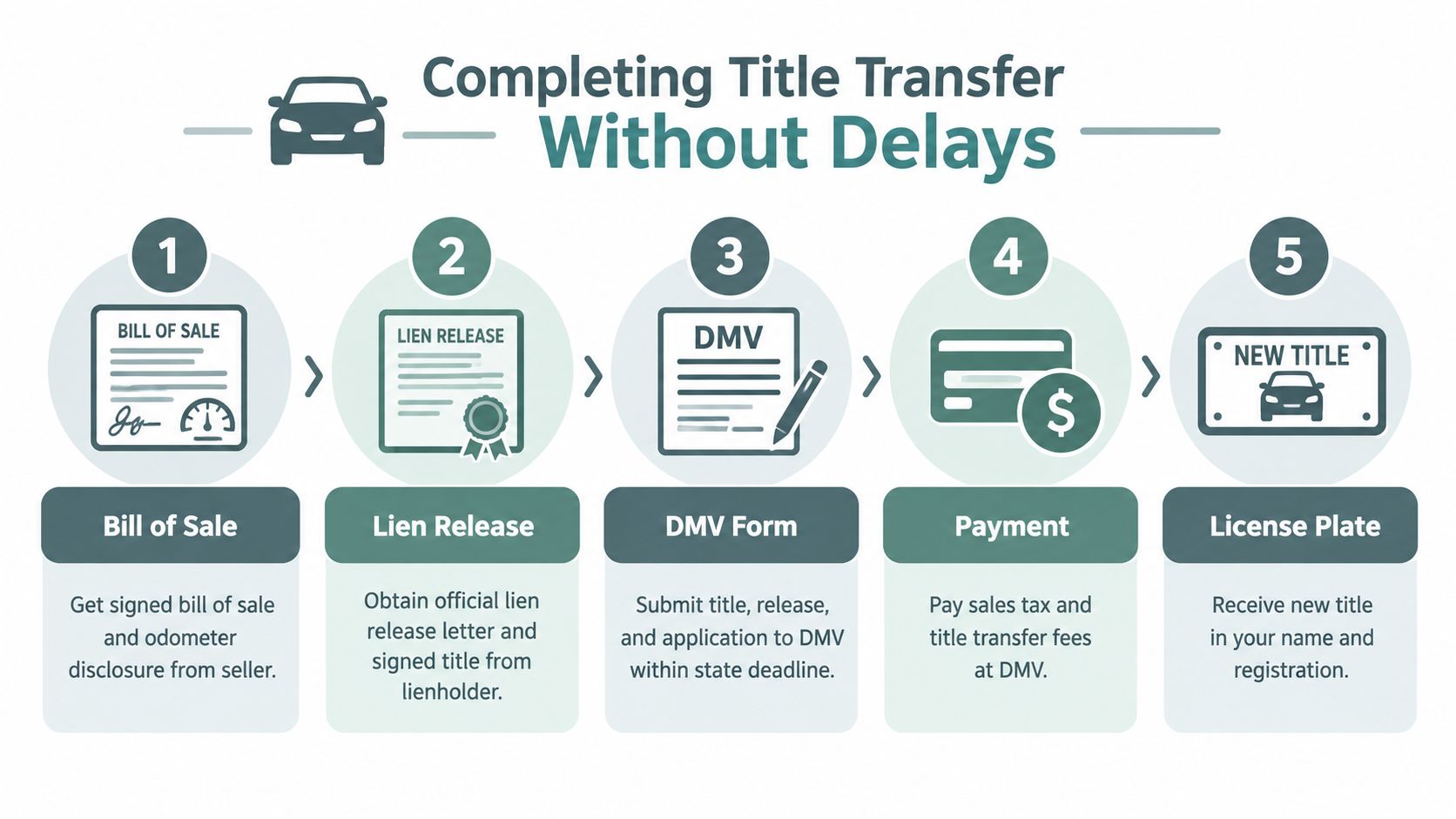
Paying off the lien is only half the job. The legal ownership changes when the title and release paperwork reach the DMV in the right form. New York DMV is unusually clear about one version of that process, the seller does not need to remove the lien before sale, because the buyer can later use the original title plus the original lien release when applying for registration and title so the DMV can remove the lien from the record (New York DMV lienholder guidance).
Know the state variation before you leave the driveway
That New York process is helpful context, but it doesn't mean every state works the same way. California's DMV points to seller or lienholder signatures and buyer submission to DMV in a loan payoff transfer, while Florida treats a private sale with an existing lien as not legal until the lien is satisfied (California DMV title transfer guidance). If the car changes hands across state lines, don't assume one state's title rules solve another state's registration problem.
Watch the title flow, not just the payment
If the lender holds a paper title, ask whether it will be signed, mailed, or released electronically after payoff. If the state uses electronic title systems, the DMV may need to update the record before a new title is printed. That's why a clean handoff often takes more than one receipt, it needs the release, the signed title or title record, and the DMV application to line up.
A simple document stack keeps the process from stalling:
- Signed bill of sale: Include the VIN, sale date, price, and both parties' names.
- Lien release: Get the lender's release letter or electronic confirmation.
- Title document: Make sure the title or title record matches the VIN.
- Registration application: Submit whatever your DMV requires for a new title and registration.
- Proof of payoff: Keep the lender confirmation in case the record lags.
If you're checking whether the car's registration trail looks current before you file, a service like Speedy Smog registration tips can help you think through the registration side before you make assumptions about the title side. I've found that buyers who track both usually have fewer surprises at the counter.
Read about getting a car lien release letter
Common Pitfalls to Avoid and What to Do If the Title Stalls
The mistakes in lien deals are usually boring, and that's exactly why they're dangerous. People pay the seller first, use an expired payoff quote, or ignore a VIN or name mismatch because they want the car. A delayed title release is also common when the lender uses an electronic workflow and the buyer expects a paper handoff that was never available.
What to do when the lien release lags
If the lender says the lien is satisfied but the DMV record still shows it, start with the lender, not the seller. Ask for a duplicate release, written confirmation, or the exact electronic transmission status. If the seller's lender can't clear the title promptly, you may need to wait for the release or file the lender's proof with the DMV, depending on the state's process.
If you're dealing with unusual payment channels or a cross-border transfer, cross-border payment issues with Suby is a good reminder that payment and settlement failures often come from process, not intent. The same idea applies here, a clean transaction still fails if the release and paperwork don't match the payment trail.
The three mistakes I'd avoid every time
- Paying the seller in full first: The seller may not forward the payoff correctly or quickly.
- Using an old payoff quote: Interest and fees can make the quote stale before you close.
- Ignoring document mismatches: VIN, titleholder name, and payoff instructions all need to line up.
If the title stalls after closing, keep your records together, payoff quote, proof of payment, bill of sale, title copy, and all lender messages. That gives you the paper trail to push the lender, correct the DMV record, or show the seller where the process broke. Before you finalize any private purchase with a lien, run the VIN or plate through a broader history check so you're not finding title problems after the money is gone.
If you want a broader look at the car before you move forward, check the VIN or plate history on Vektracer. It can help you spot title brands, accident context, odometer patterns, auction history, and other records that matter when a private seller still owes a lender.
Ready to check a vehicle?
Enter any 17-character VIN for a free instant preview — no account needed.