Is a Flood Title Car Worth the Risk? A Clear Guide to Deciding
Check a vehicle before you buy
Enter a VIN for a free instant preview — accidents, title brands, mileage, liens & open recalls.
A flood title car is a vehicle that an insurance company declared a total loss due to significant water damage. This means the cost to repair the vehicle exceeded its value, and it now has a permanent "flood" or "salvage" brand on its title. For nearly every buyer, purchasing a flood-branded car is a financial and safety gamble that is not worth the risk.
The deeply discounted price is tempting, but it hides the potential for catastrophic electrical failures, compromised safety systems like airbags, and hidden mold that poses a health risk. This guide will walk you through the real-world risks, how to spot a flood-damaged car, and the rare exceptions where it might make sense, helping you make a safe and informed decision.
3 Common Mistakes to Avoid When Considering a Flood Title Car
Sellers of flood-damaged cars count on buyers making predictable mistakes. Falling for the low price is the first one, but the errors that cause the most long-term pain are subtler. Here are the three most common traps to avoid.
Mistake 1: Trusting a "Clean" Paper Title
The most dangerous mistake is believing the physical title document in the seller's hand. A practice known as "title washing" is where a seller takes a car with a flood brand to a state with lax regulations and obtains a new title where the brand is conveniently omitted. On paper, the car looks clean.
- Real-World Scenario: A buyer in Texas purchases a used SUV after a major hurricane hits Louisiana. The Texas title looks clean, and the price is great. Six months later, the car's electronics start failing. A vehicle history report reveals the car was declared a total loss for flood damage in Louisiana and the title was washed before being sold across state lines. The buyer is now stuck with a failing vehicle and a worthless title.
The only way to see through this is with a comprehensive vehicle history report. It traces the car's life across all states, revealing the original flood brand no matter what the current paper title says.
Mistake 2: Assuming "It Looks and Runs Fine" Means It's Safe
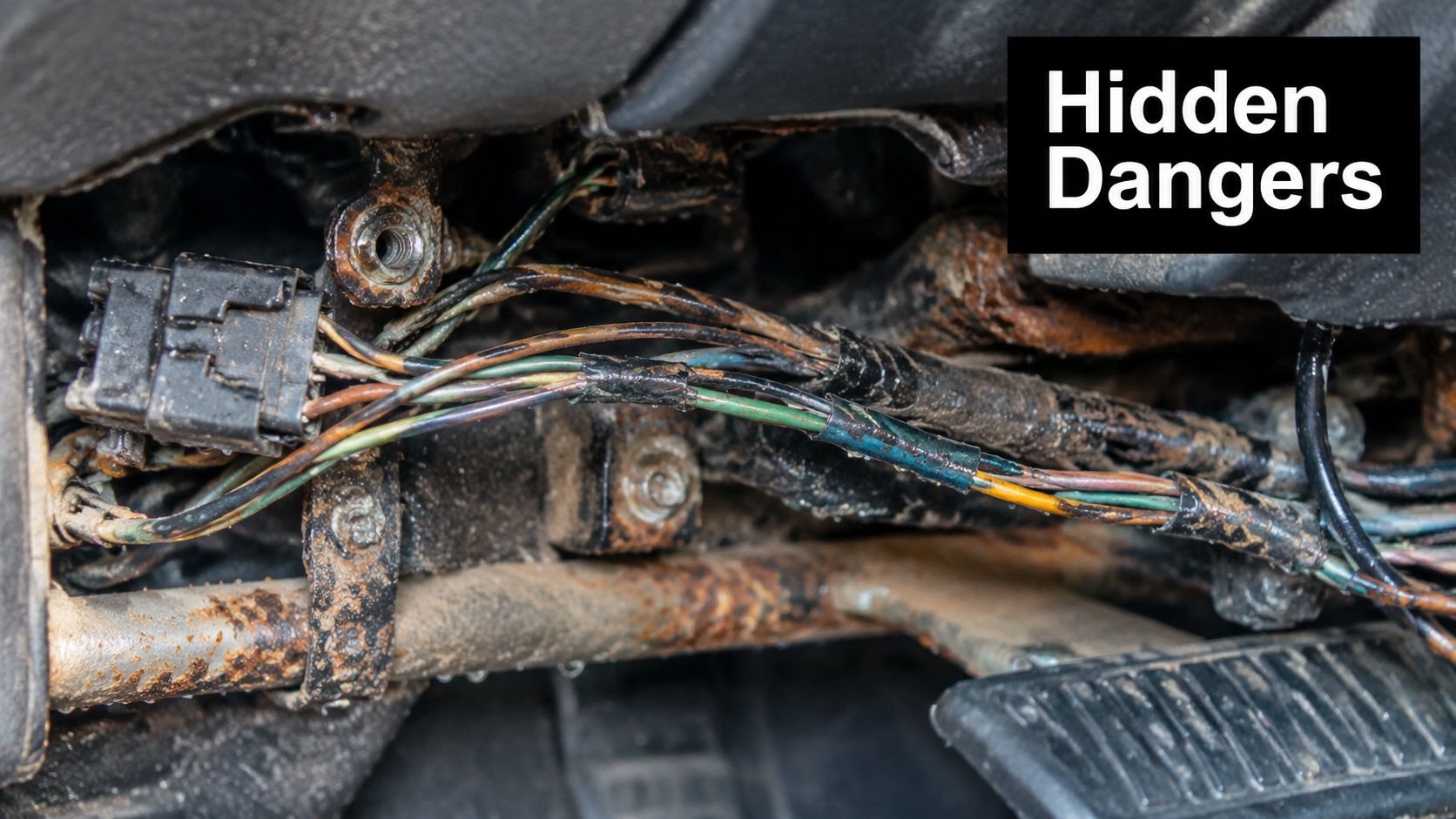
Water damage is a slow-acting poison. A flood car can be cleaned up to look pristine and may even run perfectly during a test drive. The real problems—corrosion in the wiring, failing computer modules, and rust in the structural frame—surface weeks, months, or even years later.
- Airbag Failure: Corroded sensors can cause airbags to fail to deploy in a crash.
- Engine Failure: The Engine Control Unit (ECU) can short-circuit, causing the car to stall in traffic.
- Fire Hazard: Damaged wiring is a leading cause of vehicle electrical fires.
A professional pre-purchase inspection is non-negotiable. Learn what's involved in the ultimate pre-purchase car inspection to understand what a mechanic should be looking for.
Mistake 3: Confusing "Flood" and "Salvage" Titles
While a flood car will have a salvage title, not all salvage cars have been flooded. This is a critical distinction. A what a salvage title means could be due to a collision, hail, or theft. These issues are often visible and repairable. Flood damage is systemic and hidden.
| Attribute | Flood Title | General Salvage Title (Collision) |
|---|---|---|
| Primary Risk | Widespread electrical failure, mold, hidden rust. | Localized structural or cosmetic damage. |
| Repairability | Often unrepairable due to systemic corrosion. | Repairable if done by a qualified technician. |
| Vektracer Report Focus | Look for "Flood" brand, total loss from water. | Look for accident reports, structural damage flags. |
| Is it Worth It? | Almost never. The risks are too high. | Possibly, for an expert mechanic who can verify repairs. |
Comparing services like Carfax vs. Vektracer can show you which reports offer the most detail on specific damage types, helping you differentiate the cause of a salvage title.
A Pre-Purchase Checklist for Spotting Flood Damage
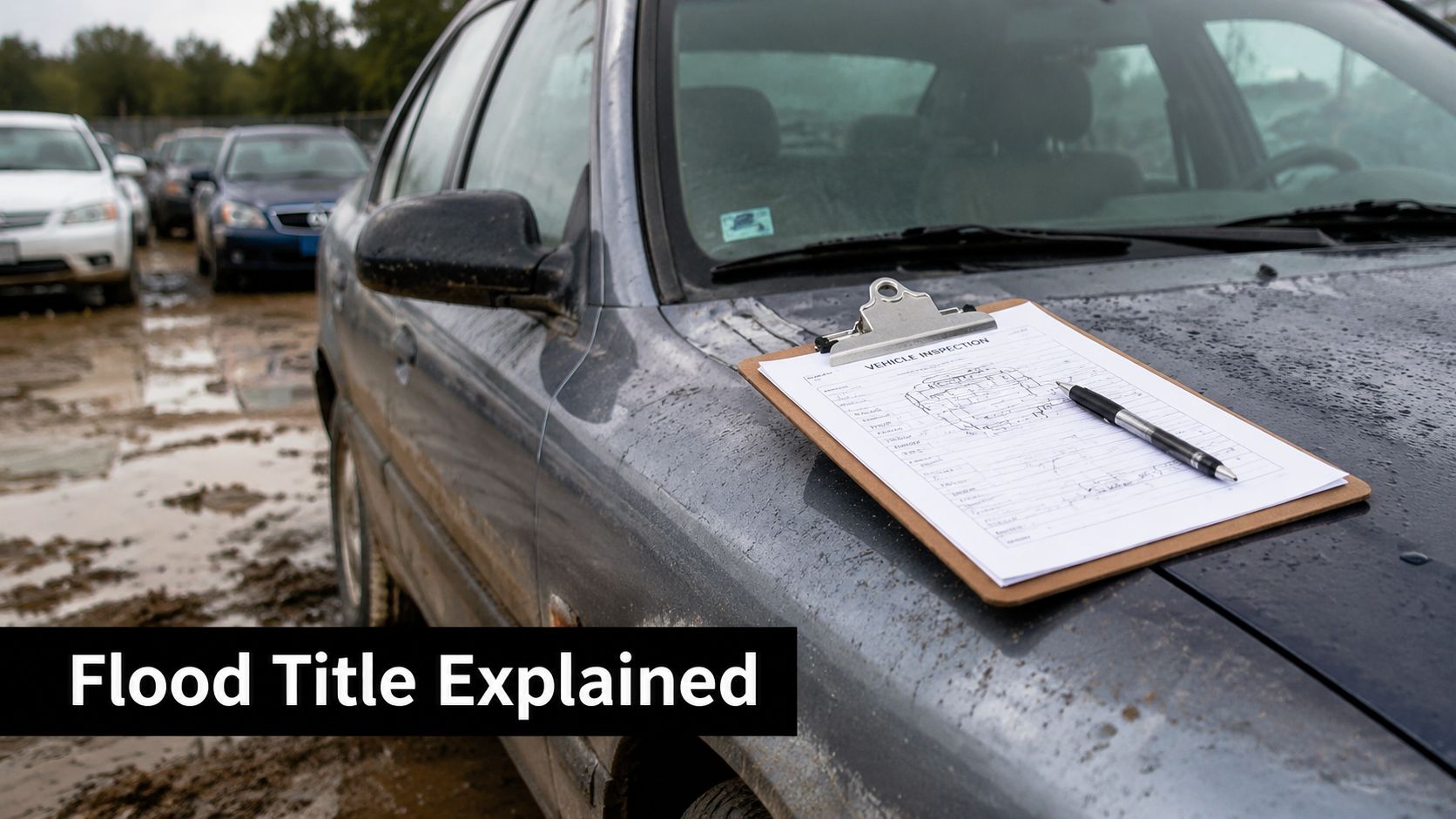
Even with a clean vehicle history report, you should always perform a hands-on inspection. Dishonest sellers are skilled at cosmetic cover-ups. Use this checklist to uncover the evidence they hope you'll miss.
- [ ] The Smell Test: Does the interior have a musty, damp, or moldy odor? Is it overwhelmed by a heavy air freshener or chemical cleaner smell? A truly clean car should smell neutral.
- [ ] The Carpet and Upholstery Check: Pull back floor mats. Are the carpets or the padding beneath them damp, stained, or mismatched? Brand-new carpet in an older car is a major red flag.
- [ ] The Hidden Debris Search: Use a flashlight to check under the seats, in the glove box, and especially in the spare tire well in the trunk. Look for fine silt, sand, mud, or water lines.
- [ ] The Rust Inspection: Examine unpainted metal parts that shouldn't rust. Check the bolts holding the seats to the floor, screws under the dashboard, and pedal brackets for any signs of corrosion.
- [ ] The Light and Lens Check: Look for condensation, fog, or a visible water line inside the headlights, taillights, and instrument cluster. This is a tell-tale sign of submersion.
- [ ] The Full Electrical Test: Systematically test every single electronic function: power windows, locks, seats, radio, A/C, heater, and all interior and exterior lights. Look for flickering, slow operation, or complete failure.
- [ ] The VIN Plate and Sticker Check: Ensure the VIN plate on the dashboard and the sticker on the driver's door jamb are present and haven't been tampered with. Run the VIN on a service like a VIN check in the USA or VIN check in Canada to verify its history.
If you find even one of these red flags, it's best to walk away. The potential for future headaches far outweighs any initial savings.
The Verdict: Is a Flood Title Car Ever a Good Idea?
For 99% of car buyers, the answer is a firm no. The immense safety risks, the near certainty of expensive electrical and mechanical failures, and the non-existent resale value make it a terrible investment. The low price is a trap, not a bargain.
The only exception is for a tiny niche of buyers: professional mechanics or expert restorers who are buying the car as a project, not as daily transportation.
This very specific buyer profile must meet all these criteria:
- Expert Skills: They have the tools and expertise to completely strip the vehicle, replace the entire electrical system, and professionally remediate any mold or rust.
- Rock-Bottom Price: The car is purchased for a fraction of its market value, accounting for the thousands of dollars and hundreds of hours needed for a full restoration.
- Full Transparency: The seller provides complete documentation of the damage, including pre-repair photos and insurance reports.
If you are not in this expert category, avoid flood title cars entirely. The risk of ending up with an unsafe, unreliable, and worthless vehicle is simply too high. Making a smart choice starts with understanding the vehicle's complete history, so consider running a VIN lookup report on any used car you're serious about.
Frequently Asked Questions About Flood Title Cars
Can I get insurance on a car with a flood title?
You will likely be unable to get comprehensive or collision insurance. Most insurance companies will only offer the state-mandated minimum liability coverage for a flood-branded vehicle. This means if the car is damaged, stolen, or suffers a mechanical failure, the cost of repair or replacement is entirely your responsibility.
Is it illegal to sell a flood title car?
It is legal to sell a car with a flood title, provided the "flood" or "salvage" brand is clearly disclosed to the buyer on the title document. It becomes illegal fraud when a seller intentionally hides this history through title washing or fails to inform the buyer of the brand.
How does a car get a flood title?
After a vehicle is submerged, the owner's insurance company assesses the damage. If the estimated cost of repairs (for the engine, electronics, interior, etc.) exceeds a certain percentage of the car's pre-damage value (typically 75-100%), the insurer declares it a total loss. They pay the owner, take possession of the car, and the state DMV issues it a permanent flood-branded title.
What's the difference between a flood title and a water damage report on a Carfax in 2026?
A "flood title" is an official, permanent brand issued by a state DMV. It legally signifies the car was a total loss due to water. A "water damage" entry on a vehicle history report from a service like Vektracer or Carfax might indicate a less severe incident where damage was reported but didn't result in a total loss. However, any mention of water damage should be treated as a serious red flag requiring a thorough professional inspection.
Don't get stuck with a waterlogged lemon. Before you buy any used car, run a comprehensive report with VekTracer to uncover hidden title brands, past damage, and auction records. Get the full story at https://vektracer.com.
Ready to check a vehicle?
Enter any 17-character VIN for a free instant preview — no account needed.