What Does Salvage Title Mean? A Buyer's Risk Guide
Check a vehicle before you buy
Enter a VIN for a free instant preview — accidents, title brands, mileage, liens & open recalls.
A salvage title means an insurance company declared the vehicle a total loss because repair costs exceeded a state-set percentage of its pre-damage value, and the car is not legal to drive on public roads in that salvage state until it's repaired and passes the required inspection. In the U.S., those total-loss thresholds can range from 50% to 95% depending on the state.
You're probably here because you found a car that looks like a steal. Clean photos, low price, decent mileage, and then one line in the listing changes everything: salvage title.
That label isn't paperwork trivia. It changes what the car is worth, whether you can insure it, whether a lender will touch it, and whether hidden damage will become your problem six months from now. If you're asking what does salvage title mean, the answer is simple: it means cheap upfront, risky afterward.
That Unbelievably Cheap Car Might Have a Salvage Title
Most buyers first meet the term when a listing price seems suspiciously low. That's usually the hook. The seller wants you focused on the discount, not the title brand.
A salvage title means the insurer looked at the car after damage, theft recovery, flood exposure, fire, hail, or another major event and decided the vehicle was a total loss. That doesn't always mean the car is crushed or twisted beyond recognition. It means the insurer decided repairing it no longer made financial sense under that state's rules.
Why this matters right away
If the title is still salvage, treat the car as a project, not transportation. You generally can't drive it, register it for normal road use, or insure it for regular use until it's repaired and retitled according to state law.
That's the first mistake buyers make. They think salvage just means “had an accident.” It means much more than that. It means the vehicle crossed a legal and financial line that clean-title cars never crossed.
Practical rule: If you need a dependable daily driver, a family car, or something you may need to finance later, start from the assumption that a salvage-title vehicle is the wrong choice.
The decision isn't about the label alone
Two salvage cars can carry completely different levels of risk. One may have cosmetic hail damage. Another may have flood damage that undermines wiring, sensors, airbags, and modules long after the body looks fine.
Before you buy, you need to answer three questions:
- What caused the salvage brand: Collision, flood, fire, theft recovery, or hail create very different risk profiles.
- What title does it hold today: Salvage and rebuilt are not the same thing.
- What do your next steps look like: Can you insure it, register it, inspect it, and eventually sell it without getting buried?
That's where most “great deals” fall apart.
The Financial Math Behind a Salvage Title
A salvage title is what happens when the numbers stop working.
The insurer compares the car's actual cash value (ACV) before the damage with the projected repair bill. If the repair cost is high enough under that state's total-loss rules, the insurer declares the vehicle a total loss and the title gets branded salvage. The exact cutoff varies by state, but the buyer's takeaway is simple. A salvage brand means the damage was expensive enough that the insurer chose payout over repair.
Cheap repairs on paper can still become an expensive car to own
A car does not need to look destroyed to cross that line. Modern vehicles rack up repair costs fast. Sensors, ADAS calibration, airbags, labor, paint blending, wiring, and hidden structural damage can turn a moderate-looking hit into a total-loss decision.
That matters because buyers shop with their eyes. Insurers total cars with spreadsheets.
A listing photo might show a bumper, hood, and one fender. The estimate behind that photo may include frame work, module replacement, suspension parts, and calibration charges that changed the whole deal.
What the math means for you
Use this framework before you get distracted by the price:
| Scenario | What it means for a buyer |
|---|---|
| Repair costs stayed below the state's total-loss threshold | The car may keep a clean title, even with a damage history |
| Repair costs crossed the threshold | The car is branded salvage, which changes value, insurance options, and resale |
| The car was repaired and approved under state rules | It may qualify for a rebuilt title, but the damage history still follows it |
The key point is practical, not technical. A salvage title is a financial warning label with legal consequences attached.
The sticker price is only the first number
Buyers either save money or fool themselves in this situation. A salvage-title car can be priced thousands below a clean-title version and still be a bad deal.
You need to add the full ownership cost. That includes a pre-purchase inspection by a shop that knows structural and electrical damage, possible reinspection fees, harder financing, limited insurance options, and lower resale value when you want out. If the car needs one more surprise repair after you buy it, the “deal” can disappear in a month.
Kelley Blue Book explains that title history and major damage reduce what a vehicle is worth in the market, which is exactly why branded-title pricing needs a much harsher discount than many sellers offer.
Compare a salvage car to your total risk, not to the clean-title asking price sitting next to it.
Why repairable does not mean smart to buy
Insurers are not deciding whether a car can be fixed. They are deciding whether fixing it makes economic sense. That distinction matters.
A repairable salvage car may still be the wrong purchase if you need reliable transportation, predictable insurance, and decent resale later. The lower purchase price is real. So are the penalties that come with it.
If you are considering one, demand enough discount to cover the hassle, the uncertainty, and the weaker exit value later. If the seller cannot justify that discount with records, photos, and repair documentation, walk away.
Top Reasons a Car Gets Branded Salvage
The cause behind the salvage title matters almost as much as the title itself. If you don't know why the car was branded, you're guessing.
Collision damage
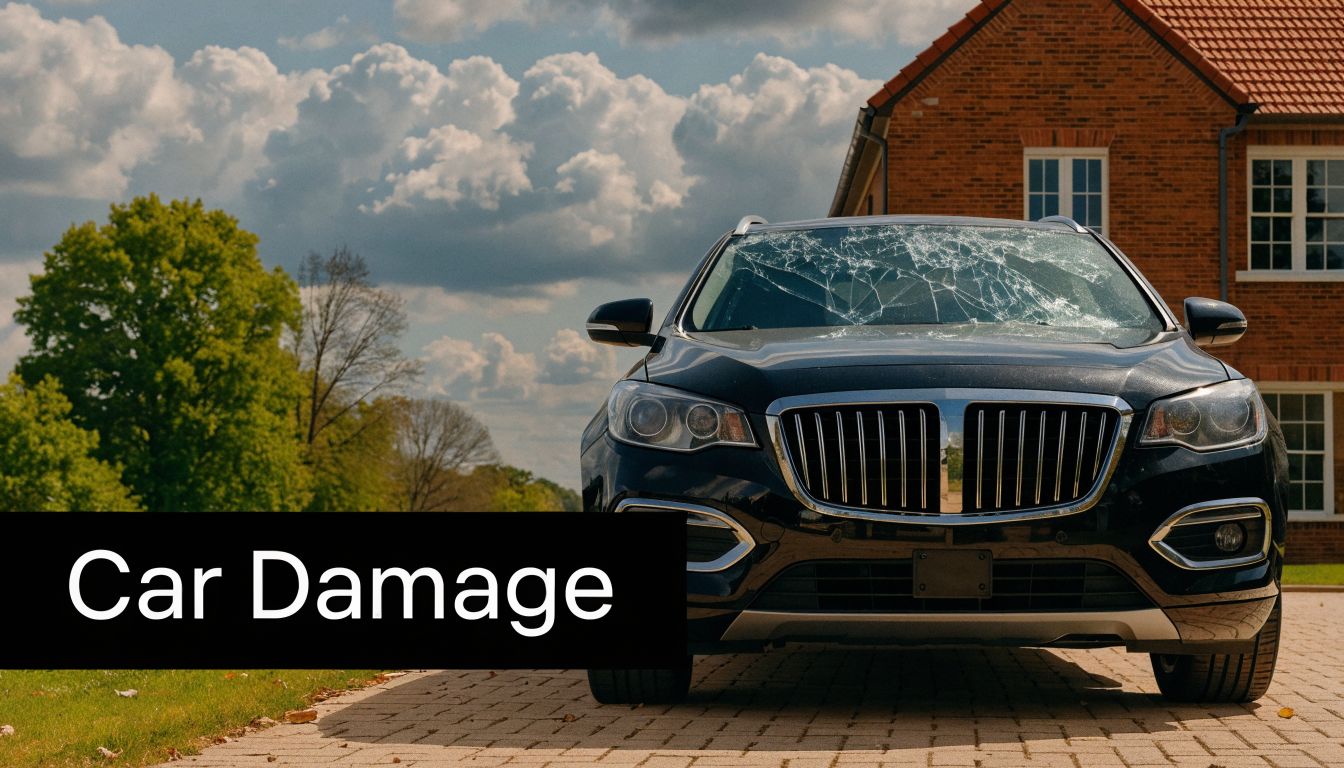
This is the classic salvage story. A late-model car gets hit hard in the front or side. The visible damage may be the hood, bumper, lights, and fender, but the underlying issue can be deeper. Frame rails, suspension pickup points, airbags, seatbelt pretensioners, cooling components, and radar or camera systems all add cost fast.
A rebuilt collision car can drive straight in a short test drive and still have problems. Tire wear may show up later. Door gaps may hint at structural movement. Alignment may never stay where it should. These are the kinds of problems that turn a “deal” into a string of repair invoices.
Flood damage
Flood cars are the ones I'd avoid first. Not because every one is instantly undrivable, but because the worst problems don't always show up when you're standing next to the car.
Water gets into connectors, wiring, modules, seat tracks, carpets, insulation, and safety systems. The seller dries it out, details the interior, and the car can look fine. Months later you get random warning lights, dead electronics, corrosion, mold smells, or intermittent starting issues that are miserable to diagnose.
A flood-damaged car can pass the eye test and still be the most expensive mistake in the lot.
Fire damage
Fire damage isn't just burned paint and melted plastic. Heat can affect wiring, seals, hoses, clips, sensors, glass, and structural components nearby. Smoke contamination also lingers in places that are often overlooked during inspections.
Even when a repair shop replaces the obvious parts, the car can carry weird electrical behavior afterward. That's the issue with fire cars. You're buying the possibility of long-term troubleshooting.
Hail damage
Hail is the one category that can tempt experienced buyers for a reason. A vehicle can be mechanically sound and still get branded if body damage is expensive enough to push repair costs over the line.
But even here, don't relax too much. Hail claims can involve broken glass, damaged trim, water intrusion, and cosmetic repairs that were done cheaply. It may be lower-risk than flood or heavy collision damage, but it still deserves a hard inspection.
Theft recovery
Theft recovery creates a different type of uncertainty. Sometimes the car comes back mostly intact. Other times it returns stripped, abused, or missing expensive components. Wiring may be cut, locks damaged, interior pieces swapped, and hidden wear accelerated by hard use.
This category can be deceptive because the car may not show one dramatic impact point. Instead, it shows a dozen smaller problems that add up.
What you should ask the seller
Don't ask, “Was it fixed well?” Ask questions that force specifics:
- What event caused the salvage brand
- Do you have pre-repair photos
- What parts were replaced versus repaired
- Who did the repair work
- What systems were calibrated or inspected afterward
- Can I see invoices, not just receipts for parts
A seller who gets slippery when you ask these questions is giving you your answer.
Salvage vs Rebuilt vs Clean Title Comparison
Most buyers mix these up. That confusion gets expensive.
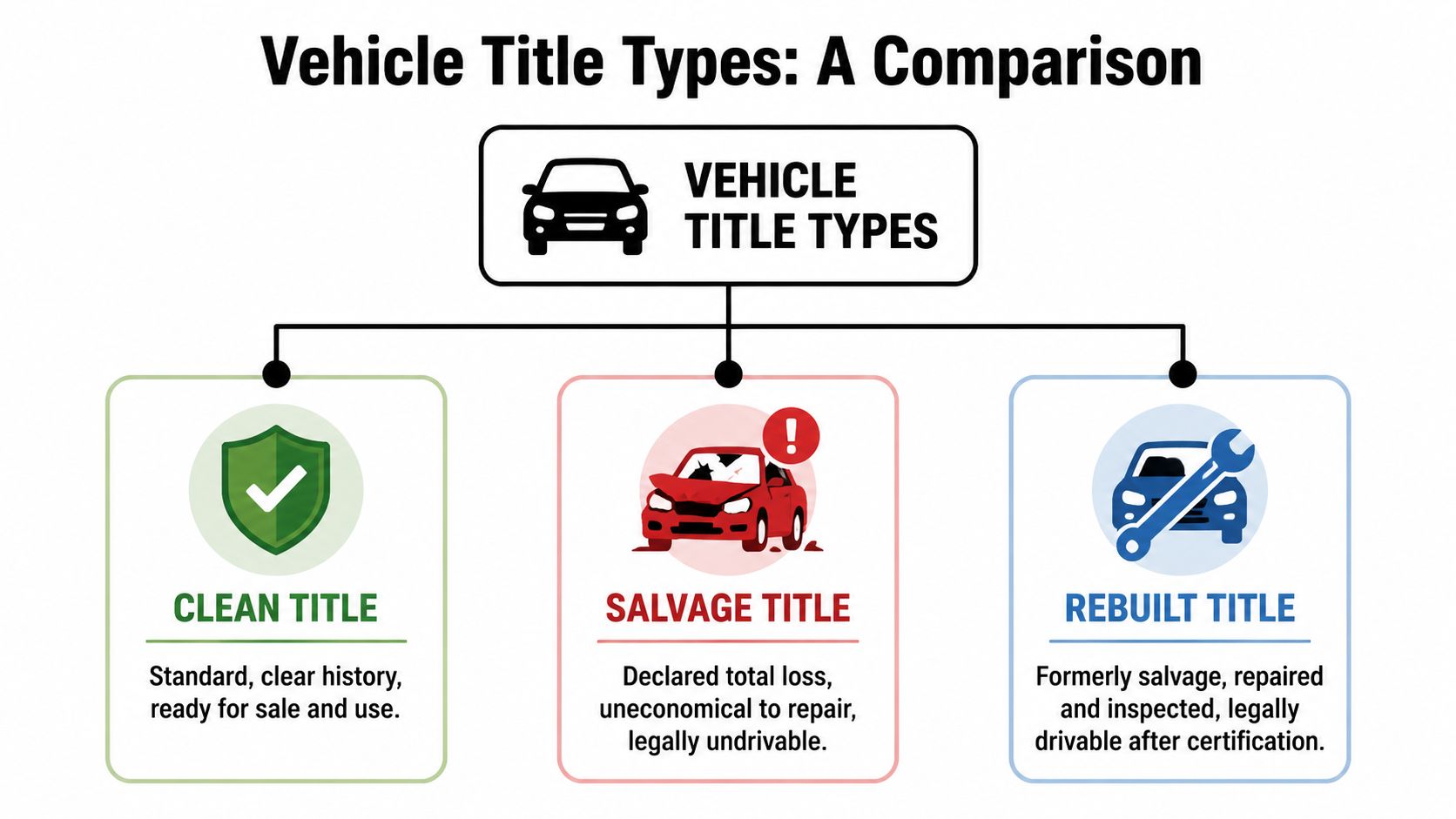
A clean title means the vehicle doesn't carry a salvage brand. A salvage title means the car was declared a total loss and is generally not road-legal in that condition. A rebuilt title means the vehicle was once salvage, then repaired and inspected under the state's process so it can return to the road.
Vehicle title status comparison
| Attribute | Clean Title | Salvage Title | Rebuilt Title |
|---|---|---|---|
| Prior total-loss event | No salvage brand | Yes | Yes |
| Legal road use | Yes | No, until repaired and state-approved | Yes, after state certification |
| Registration | Normal process | Restricted until title status changes | Allowed after inspection process |
| Insurance availability | Broadest options | Typically not for normal road use | More limited than clean title |
| Financing | Easiest | Usually very difficult | Often limited |
| Resale appeal | Highest | Lowest | Better than salvage, worse than clean |
| Buyer risk | Baseline used-car risk | Very high | Still elevated |
| Best fit | Most buyers | Parts, project, specialty use | Experienced, risk-tolerant buyers |
The title life cycle in plain English
A car usually moves through these stages:
- Clean title
- A major loss event occurs
- Insurer declares total loss
- Salvage title
- Vehicle gets repaired
- State inspection or certification happens
- Rebuilt title
That last step matters. Rebuilt doesn't erase the car's past. It only means the state allowed the car back on the road after the required process. If you want a deeper breakdown of that status, read what rebuilt title means.
Where buyers get tripped up
A rebuilt title is not a clean title with paperwork attached. It's still a branded history vehicle. The prior total-loss event stays part of the car's identity.
That means three things keep following the car:
- Buyer suspicion: Future buyers know the car crossed the total-loss line.
- Insurance friction: Coverage can be narrower.
- Lower resale value: Even if repairs look good, the branded history doesn't disappear.
If you're choosing between a rebuilt car and a clean-title car at a modest price gap, buy the clean-title car and move on.
What about a liened title
A liened title is different. That label relates to ownership and financing, not damage history. A lien means a lender or creditor still has a legal interest in the vehicle until the debt is paid.
That doesn't automatically make the car risky from a safety standpoint. It just means you need to make sure the lien gets handled properly before the sale closes.
Impact on Insurance Financing and Legal Status
You find a car priced thousands below the clean-title comps. Then the calls start. One insurer offers liability only. Two lenders pass. The DMV tells you the paperwork is not ready for normal registration. That bargain just got expensive.
Insurance gets expensive, limited, or both
Insurance is where branded-title optimism usually dies.
Carriers know these vehicles bring more uncertainty. Prior damage makes valuation harder, repair quality varies, and claims can turn into arguments over what happened before you bought the car. As Edmunds explains in its salvage title guide, rebuilt salvage vehicles represent a slice of the used market, but they are harder to insure, often cost more to cover, and can carry higher accident risk.
Get quotes before you negotiate. Not after.
Some insurers will write liability only. Some will reject the car outright. If you want full coverage, ask that question first and get the answer in writing. Otherwise, you are guessing on one of the biggest ownership costs.
Financing usually falls apart fast
Banks do not like messy collateral. A salvage or rebuilt vehicle is harder to value, harder to resell, and riskier to recover if the loan goes bad. That puts you in a weak position before you even discuss interest rate.
Cash buyers have the easiest path. Everyone else should expect fewer lender options, larger down payment demands, or terms that make the cheap purchase price far less attractive over time. If ownership records are already tangled, read this guide on how a vehicle title bond works before money changes hands.
Legal status changes what you can do with the car
This part is where buyers make preventable mistakes.
A salvage brand is a legal status, not just a warning label. Depending on your state and the car's current paperwork, you may face extra inspections, registration delays, restrictions on road use, or trouble getting plates at all.
Check these points before you buy:
- Registration rules in your state
- Required inspections or certifications
- Insurance eligibility for that exact title status
- Whether the car can be legally driven now or only after more steps
If the answer on any one of those is fuzzy, stop the deal until it is clear.
Safety problems turn into money problems
A branded title does not just affect risk on paper. It can affect how the car fits your life.
I would not buy one for a teen driver, a family hauler, or a work vehicle that cannot afford downtime. If hidden frame, flood, or electrical issues show up later, you pay twice. First in repairs, then again in lower resale, claim disputes, and fewer buyers when it is time to sell.
If you need easy insurance, normal financing, and clean resale later, a salvage-title car is usually the wrong bet.
How to Verify a Title and Uncover Hidden Risks
If you're still considering one, stop guessing and verify everything from the VIN outward.
A branded-title car lives or dies on documentation. Not on the seller's confidence. Not on shiny paint. Not on a short test drive.
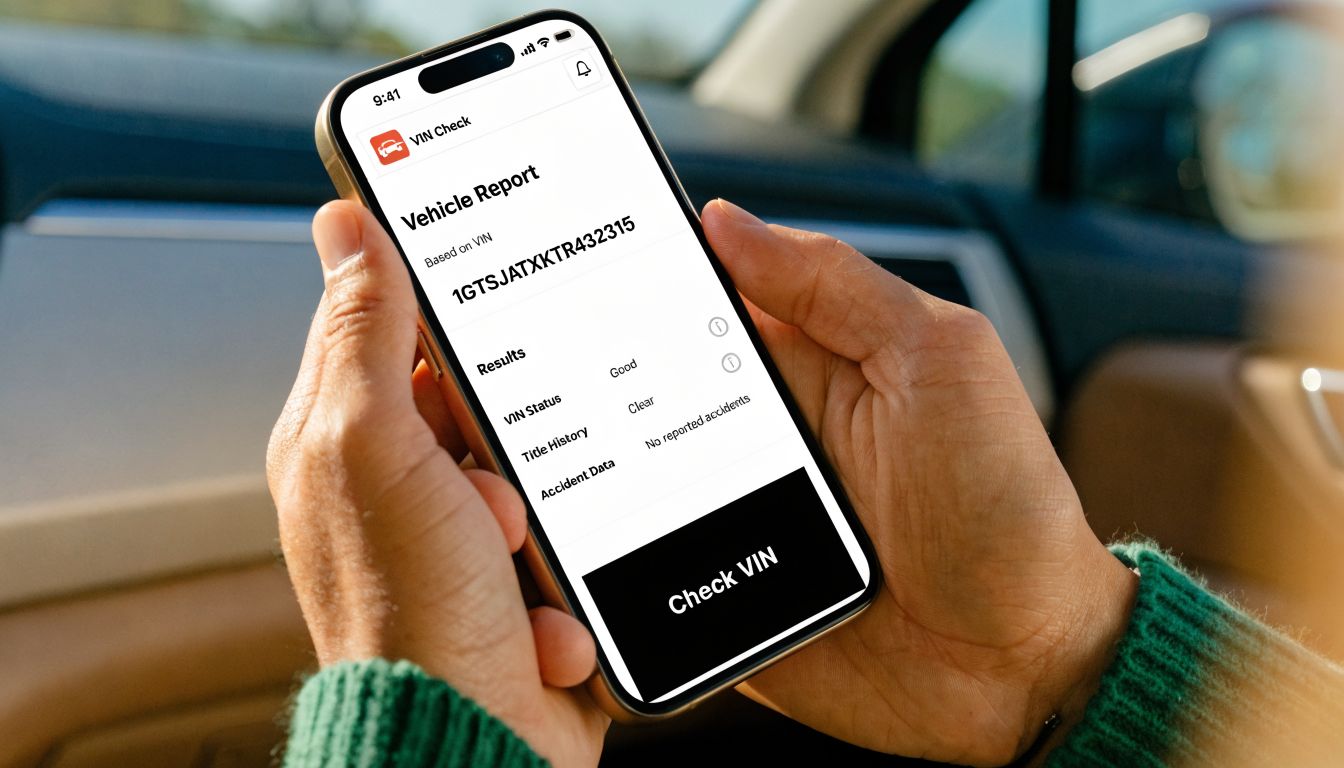
Step 1 means run a VIN check before anything else
Obtaining a vehicle history report is imperative. It can confirm whether the car was branded salvage, rebuilt, flood-damaged, or otherwise flagged.
If you're shopping across borders or marketplaces, use the right report for the market where the car has lived. Start with a proper VIN check USA if the vehicle has U.S. history, and compare reporting options if you're deciding between providers through this CARFAX comparison page.
If you want a broader walkthrough of the process, read how to check vehicle title status.
Step 2 means read beyond the title line
A salvage flag is the headline. It isn't the full story.
Look for supporting clues in the report and seller records:
- Event type: Collision, flood, hail, fire, or theft recovery
- Title progression: Salvage first, rebuilt later, or inconsistent state records
- Registration history: Multi-state movement can be worth extra scrutiny
- Damage documentation: Auction photos, repair invoices, and parts records matter
- Mileage consistency: A branded title plus mileage questions is a walk-away combination
Step 3 means use the report to rank risk, not just confirm history
A good report should help you decide, not just dump records in your lap. For example, this explanation of salvage-title legal risk notes that when cross-referencing VIN reports, a salvage history can trigger a 30 to 50 point penalty in a Risk Score model. A rebuilt salvage might score 45/100 compared with 85/100 for a similar clean-title vehicle.
That's useful because it converts title history into decision-making. One option in this category is VekTracer, which provides VIN-based history reports and uses a Risk Score to flag title risk quickly. For a buyer comparing multiple cars, that's more useful than staring at three separate listings and trying to remember which one had the cleaner history.
A low price should never outrank a bad title history unless you already know exactly why the car is cheap and exactly what repairs were done.
Step 4 means inspect the car like you expect bad news
Do not use the seller's mechanic. Use your own independent shop, ideally one that understands body, frame, and post-collision repairs.
Ask them to focus on:
- Structural signs like weld quality, rail alignment, panel gaps, and underbody repair
- Safety systems including airbags, warning lights, sensor function, and restraint components
- Electrical integrity especially in flood or theft-recovery cars
- Paint and body evidence that may reveal replaced panels or rushed repair work
Step 5 means verify your real ownership path
Before you buy, confirm:
- Can you insure it in your state
- Can you register it now
- Does the title already show rebuilt status if the car is being sold for road use
- Will your bank finance it, if needed
- Will you still want it when it's time to sell
If any of those answers are weak, the deal isn't attractive. It's just cheap.
Checklist for Buying or Selling a Branded Title Car
This is the short list that keeps people out of trouble.
If you're buying
- Confirm the exact title status: Don't accept “salvage/rebuilt” as a vague description. Ask to see the actual title.
- Run a vehicle history report first: Check title brands, prior damage flags, and registration history before scheduling a test drive.
- Demand repair records: You want invoices, parts lists, and before-photos if they exist.
- Get an independent inspection: Use a mechanic or body specialist who works for you, not the seller.
- Call insurers before making an offer: Don't assume coverage will be available on acceptable terms.
- Check your state's registration rules: A car that looks ready may still have paperwork problems.
- Price it like a risk asset: If the seller is pricing it too close to a clean-title equivalent, walk away.
- Match the car to the use case: Daily commuter, teen driver, and family hauler are bad fits for most branded-title cars.
If you're selling
- Disclose the title history clearly: Trying to soften or blur the title brand destroys trust.
- Organize every document: Repair invoices, inspection paperwork, title updates, and photos should be easy to review.
- Set realistic expectations: You're not selling a clean-title car, even if it looks excellent now.
- Expect more cash buyers: Financing friction pushes many branded-title deals into cash territory.
- Prepare for tougher questions: Serious buyers will ask who repaired it, what happened, and what proof you have.
- Avoid vague listing language: “Runs great” means nothing if the title history is the main concern.
Three buying mistakes that cost people money
| Mistake | Why it hurts |
|---|---|
| Buying based on price alone | The savings vanish if insurance, repairs, or resale go sideways |
| Skipping the inspection | Hidden structural or electrical issues are where branded-title deals go bad |
| Trusting the seller's summary | Sellers describe. Documents prove |
If you can't document the history, can't inspect the repairs, or can't insure the result, don't buy it.
Frequently Asked Questions About Salvage Titles
Is a salvage title permanent
Yes, the history is permanent in the sense that the vehicle was once branded salvage. The current title may later become rebuilt after repairs and inspection, but the prior salvage event doesn't disappear from the car's record. That's why future buyers, insurers, and lenders still treat it differently from a clean-title car.
Can you drive a car with a salvage title
Not as a normal road car in that salvage condition. A salvage vehicle generally has to be repaired and pass the required state process before it can return to public roads under a rebuilt or equivalent branded title. If the seller is offering a road-ready car, verify whether it's rebuilt rather than still salvage.
Is a salvage title ever worth buying
Sometimes, but only for a narrow group of buyers. If you're experienced, paying cash, and buying for a specific reason such as a project, a parts donor, or a lower-stakes second vehicle, it can make sense. For those who need straightforward ownership, it's not worth the hassle.
Are salvage rules the same in Canada
No. Title branding systems vary by province, just like they vary by state in the U.S. If you're shopping across borders, run a proper vehicle history report and verify the branding and registration rules where the car will be titled.
What's the best way to check insurance options
Get quotes before you buy. Don't rely on general assumptions or the seller's opinion. If you want a practical starting point for dealership-related auto coverage questions, you can compare coverage from PTL Insurance Associates, Inc. and use that as a reference point before speaking with your own carrier.
FAQ on salvage titles
| Question | Answer |
|---|---|
| Does rebuilt mean clean again | No. It means previously salvage, then repaired and certified for road use |
| Should I buy one for my kid | I wouldn't. The risk profile is wrong for an inexperienced driver |
| Can a good repair erase resale problems | No. Good repairs help. The branded history still limits resale appeal |
If you're looking at a used car and the title history feels murky, run the VIN before you do anything else. VekTracer lets you check title status, accident history, and other red flags so you can decide with facts instead of seller promises.
Ready to check a vehicle?
Enter any 17-character VIN for a free instant preview — no account needed.