Unlock Car Data with Our 2026 camaro decoder vin Guide

Check a vehicle before you buy
Enter a VIN for a free instant preview — accidents, title brands, mileage, liens & open recalls.
A Chevrolet Camaro VIN is a 17-character code on modern cars that works like the car’s fingerprint, and you decode it by reading fixed sections for the manufacturer, vehicle attributes, model year, assembly plant, and serial number. On most Camaros, start at the driver’s side dashboard or door jamb, then verify that the identifiers match before you trust anything a seller tells you.
If you’re shopping for a Camaro, this matters more than most buyers realize. The VIN doesn’t just tell you what the car is. It helps you test whether the story in the ad lines up with the story stamped on the car. That’s where a good camaro decoder vin process saves people from buying the wrong trim, the wrong year, or a car with signs of tampering.
A lot of guides stop at a chart. That’s not enough in practice. A useful decode has to answer practical questions: Was this Camaro built where the seller says it was? Does the year code fit the title? Do the physical tags match? And if you’re looking at a classic, are you even dealing with the same VIN system as a later car?
Finding Your Camaro's VIN and What to Check First
The first step is simple. The useful part is what comes next.
On a Camaro, the VIN is typically easiest to spot through the windshield on the driver’s side dashboard. You should also check the driver’s door jamb label or sticker. If you’re evaluating a car seriously, don’t stop there. Compare what you see in each physical location before you run any online lookup.
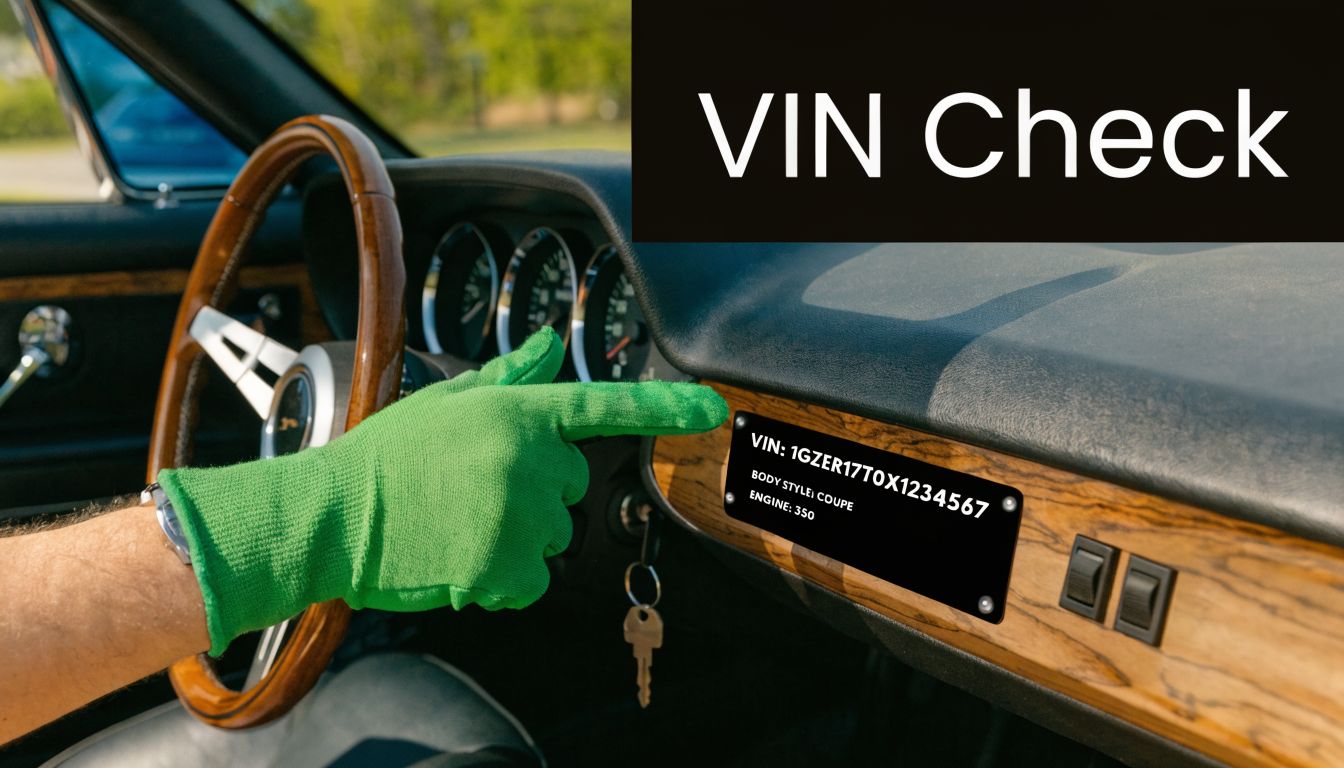
Start with a physical inspection
A seller can text you a VIN in seconds. That doesn’t mean the car in front of you is wearing the same identity cleanly.
Use this checklist:
- Dashboard VIN first: Look through the windshield and read the plate carefully. Check for scratched rivets, disturbed trim, or signs the plate has been removed and reattached.
- Door jamb confirmation: Compare the number on the door jamb label to the dashboard VIN character by character. One mismatch is enough to pause the deal.
- Title and registration match: Make sure the paperwork matches the car, not just most of it.
- Condition around tags: Fresh paint, sanding marks, glue residue, or bent tags deserve follow-up questions.
- Ask for photos in advance: Before you travel, ask the seller for clear photos of the windshield VIN, door jamb label, and title.
Practical rule: Decode after you verify the physical VIN, not before. If the physical tags don’t agree, the decode won’t save you.
That’s the part many buyers skip. They trust a listing, run a lookup, and feel reassured by a neat report. But a report is only as good as the number entered. If the wrong VIN gets used, you’re checking a different car.
Why the mismatch matters
Modern VIN validation isn’t only about reading characters. It’s also about checking consistency across the vehicle. As noted in this guide on checking vehicle history, the smartest workflow is physical verification first, database verification second.
The reason is practical. A mismatch between the windshield plate and the door jamb often points to prior body work, replacement parts, paperwork problems, or something more serious. Even when there’s an innocent explanation, that car now needs more scrutiny, not less.
If you’re buying from a private seller, this step filters out a surprising amount of risk before money changes hands.
Anatomy of a Modern Camaro VIN (1981 to 2026)
You’re standing next to a sixth-gen Camaro at a weekend sale. The seller says it’s an early car, factory-correct, and exactly what the listing promised. The VIN is where that story either holds up or starts to crack.
Modern Camaro VINs follow the 17-character system used across the industry from 1981 onward. That matters because each position has a defined job. Once you know what those positions mean, you can do more than confirm “yes, it’s a Camaro.” You can check whether the year, build origin, and basic configuration line up with the seller’s claims.
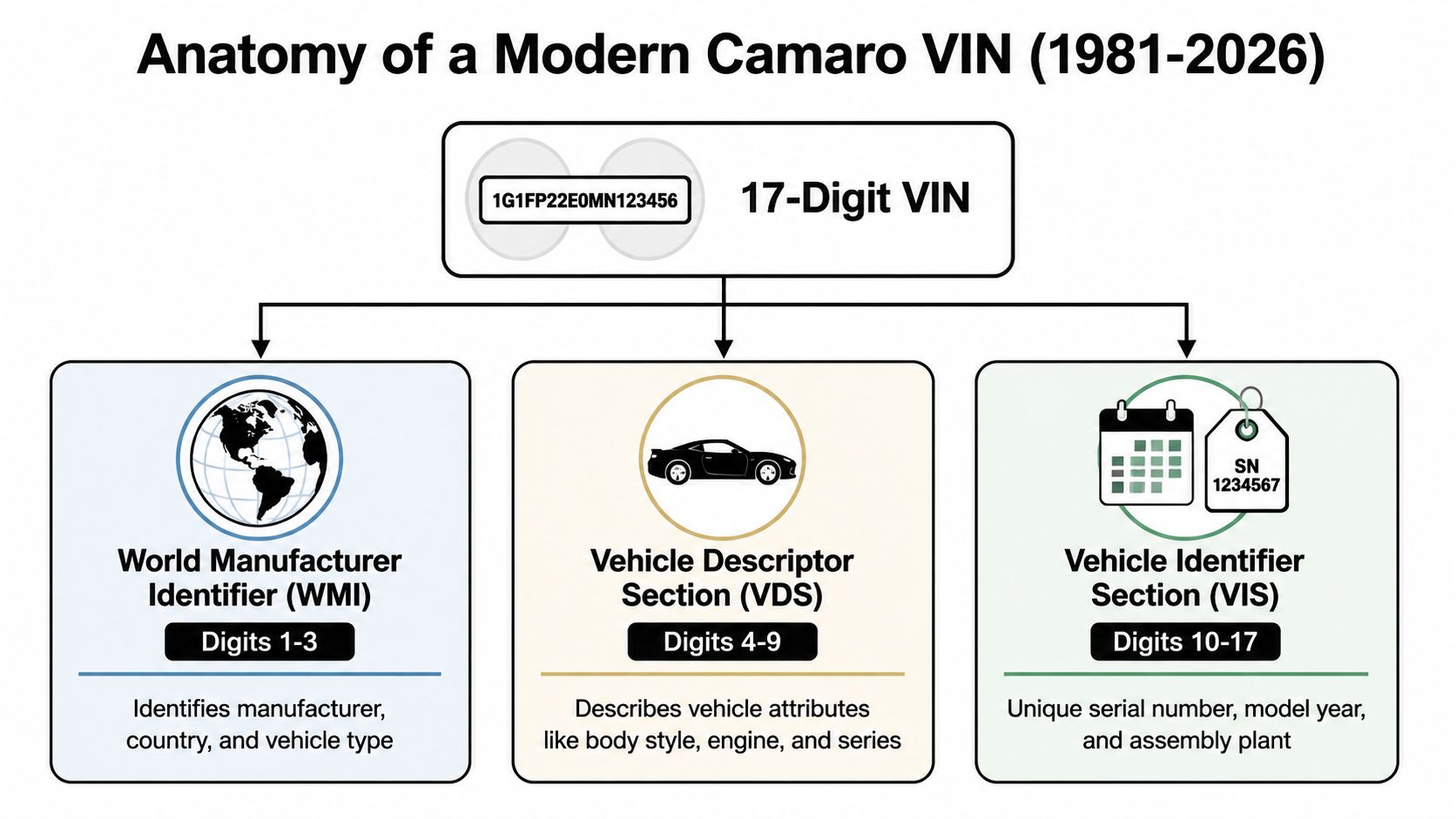
How the 17 digits are organized
A modern Camaro VIN breaks into three sections:
| Section | Digits | What it tells you |
|---|---|---|
| WMI | 1 to 3 | Manufacturer and country or region of origin |
| VDS | 4 to 9 | Body, restraint system, engine, and other vehicle attributes |
| VIS | 10 to 17 | Model year, assembly plant, and production sequence |
Read it in those chunks. Buyers who try to decode it as one long string usually miss the important part, which is how the pieces support or contradict the car in front of them.
What each part tells you in the real world
WMI, digits 1 to 3: This identifies the manufacturer. On modern Camaros, you’ll often see codes such as 2G1 on Canadian-built examples from the early fifth-generation years and 1G1 on later U.S.-built cars. That sounds minor until a seller insists a car is from one plant or one production period and the VIN says otherwise.
VDS, digits 4 to 9: A lot of decoding mistakes happen within this section. These positions describe key attributes, but they are not a shortcut for every badge, stripe package, or wheel choice added later. If a seller says “factory rare trim,” the VIN may support the body and engine family, but you may still need the RPO sticker, build sheet, or original documentation to prove the exact package.
VIS, digits 10 to 17: This is the part buyers use most. The 10th character gives the model year. The 11th identifies the assembly plant. The last six digits are the production sequence. Those final numbers do not automatically make a car collectible, but they do help test claims like “one of the first built.”
A modern Camaro example
Use this sample VIN: 2G1FT1EW1A9000033.
Break it down like this:
- 2G1 points to Chevrolet under GM, with Canadian production for that period.
- FT1EW sits in the descriptive section and identifies core vehicle attributes.
- A in the 10th position marks the 2010 model year.
- 9 in the 11th position identifies the assembly plant.
- 000033 is the sequential production number.
That last piece gets overstated all the time. A low sequence number can support an “early production” claim. It does not prove special equipment, unusual options, or higher value by itself. I’ve seen buyers pay extra for a low-number car, then find out it was just an early standard build with nothing else unusual about it.
A modern VIN is best used as a fact check on the seller’s story.
The gotchas that trip up Camaro buyers
One common mistake is mixing generations. A decode that fits a 2010 fifth-gen car does not automatically fit a 2024 sixth-gen car the same way. The 17-digit format stays consistent, but manufacturer identifiers and plant details can change across production years.
Another mistake is confusing model year with calendar year. A Camaro built late in one calendar year may decode as the next model year. That catches buyers who compare the VIN to a listing headline and assume the seller made a typo, or worse, assume the VIN is wrong.
Trim claims are another trouble spot. The VIN usually gets you to the right base identity. It does not always settle SS versus appearance package arguments, dealer-installed add-ons, or parts swapped later in the car’s life. If the car has been modified, repainted, or cloned to look like a higher trim, the VIN gives you the starting point, not the final verdict.
How to use the VIN to make a smarter purchase
Start with four questions:
- Does the model year fit the seller’s description?
- Does the plant code make sense for that generation and production period?
- Do the vehicle attributes support the engine and body style being advertised?
- Does the sequence number support, or weaken, any “early build” claim?
That approach keeps the decode practical. You’re not reading the VIN for trivia. You’re using it to catch bad assumptions before you spend money on inspection, transport, or a deal that does not add up.
If you want a plain-English reference for what each VIN position means while you work through a Camaro, this guide to VIN numbers and vehicle history verification is a useful companion.
Decoding Classic Camaro VINs (1967-1980)
A classic Camaro can look right and still be wrong on paper.
That is the trap with 1967 to 1980 cars. A seller shows you SS badges, rally wheels, or a fresh restoration, and none of that tells you whether the shell started life as the car being advertised. On classics, the VIN gives you the first hard facts. You just have to read it by the rules of its era.
Why classic VINs need a different mindset
Classic Camaro VINs are not standardized the way 1981-up VINs are. First-generation cars, especially 1967 to 1969, use shorter VINs and different position meanings. If you apply a modern decoder logic to a 1968 coupe, you can end up "confirming" details the VIN was never designed to carry.
That matters in practice. I see buyers assume an older VIN should identify every trim and performance claim the same way a modern 17-digit VIN does. It won’t. On many classics, the VIN confirms the model year, assembly plant, body series, and basic engine grouping, then you have to verify the rest with tags, stampings, paperwork, and the car itself.
According to SS396’s Camaro VIN decoding reference, a 1974 Camaro with VIN 1Q87T4N170006 decodes by era-specific positions, including the engine code, model year, assembly plant, and production sequence. That is the key lesson with 1970s cars. The format changed over time, so position meanings depend on the production period you are dealing with.
What a classic Camaro VIN can confirm
For a shopper, the classic VIN is useful because it helps answer a few immediate questions before you get pulled into the seller’s story.
- Is the car from the model year claimed in the listing?
- Does the assembly plant code fit what you would expect for that generation?
- Does the body style code support the coupe or convertible claim?
- Does the engine designation fit the broad configuration being advertised?
Those answers can save you money fast. If the VIN points to a six-cylinder car and the seller is pricing it like an original V8 performance model, you already know you need stronger proof before treating it as anything special.
First-generation cars need extra caution
For 1967 to 1969 Camaros, the VIN is only one piece of the identity puzzle. It can tell you a lot, but it does not settle every argument enthusiasts care about. That is where buyers get tripped up on tribute cars, re-stamped parts, and "restored as an SS" descriptions that sound better than they verify.
A practical example. A 1969 Camaro may wear Z/28-style stripes, have the right spoiler, and even sound the part. The VIN can still show that the car began life as a different configuration. At that point, the conversation changes from "Is this a real one?" to "What documentation supports the claim, and is the asking price adjusted for that?"
That distinction matters more on classics than on modern cars because decades of repainting, drivetrain swaps, rust repair, and clone builds blur the line between original and recreated.
Read the VIN as part of the car’s story
Classic decoding works best when you connect the VIN to the rest of the evidence. Check whether the plant code lines up with known tags and stampings. Check whether the body style in the VIN matches the shell in front of you. Check whether the seller’s "rare factory car" language is backed by more than cosmetics.
On these cars, the VIN is the opening chapter. The trim tag, drivetrain numbers, paperwork, and workmanship tell you whether the story holds together. That is the difference between decoding for trivia and decoding to buy smart.
Common Mistakes When Decoding a Camaro VIN
The biggest mistake is treating a VIN decoder like a verdict. It’s a tool, not a substitute for inspection.
A lot of buyers also assume that if a VIN looks valid at a glance, the hard part is done. It isn’t. Modern VINs include a built-in fraud filter, and ignoring it is one of the easiest ways to miss trouble.
Mistake one: trusting a single decoder result
One decoder may identify the basic vehicle correctly and still leave gaps around configuration or history. That’s normal. Different tools are stronger in different areas.
What doesn’t work is taking one clean decode and assuming the seller’s trim, package, or condition claims must be true. A VIN tells you what the vehicle identifies as. It does not verify that every badge, panel, or drivetrain part on the car still belongs there.
Mistake two: reading too much into one digit
This happens constantly with enthusiast cars. A buyer sees an engine code, hears “SS” or “Z/28” in the listing, and mentally upgrades the car before the evidence supports it.
Use the VIN to narrow the field, not to win the argument. If the car is represented as a special version, the VIN should fit the story, but you’ll often need other factory identifiers or documentation to confirm the full claim.
Mistake three: ignoring the check digit
This one matters because it catches both typos and tampering. As explained in Camaros.org’s VIN and numbers reference, the check digit in position 9 of a modern VIN uses a mathematical algorithm. If even a single character is altered, the verification fails, which makes it a strong warning sign for VIN cloning or title washing. The same reference also notes that cross-checking the VIN against door jamb tags and windshield plates is essential because mismatches often point to hidden accident or salvage issues.
Here’s the practical takeaway:
- Run the check digit logic: A failed validation isn’t something to brush off.
- Compare physical tags: Dashboard and door jamb should support each other.
- Slow down on paperwork issues: If the seller says it’s “just a typo,” verify before you proceed.
- Watch for title washing behavior: Fast sale pressure and vague ownership history make a bad sign worse.
If the VIN fails validation or the tags don’t match, you’re no longer decoding. You’re investigating.
That shift matters. At that point, the question isn’t “what model is this?” It’s “why doesn’t this identity hold together?”
Go Beyond the Code with a Full Vehicle History Report
A VIN decode tells you what the Camaro was built to be. A vehicle history report tells you what happened to it later.
That distinction matters every time a car has changed hands, crossed state or provincial lines, gone through repairs, or picked up title issues. You can manually decode the year and plant, but you can’t read accident history, theft records, title brands, or odometer concerns out of the VIN itself.
What the code won’t reveal
A clean decode can still belong to a rough car. The VIN might line up perfectly with the title and still leave you with unanswered questions about damage, mileage consistency, or open recalls.
That’s where a full history check becomes the next step, not an optional extra. It uses the VIN as the key to records beyond the plate on the dash.
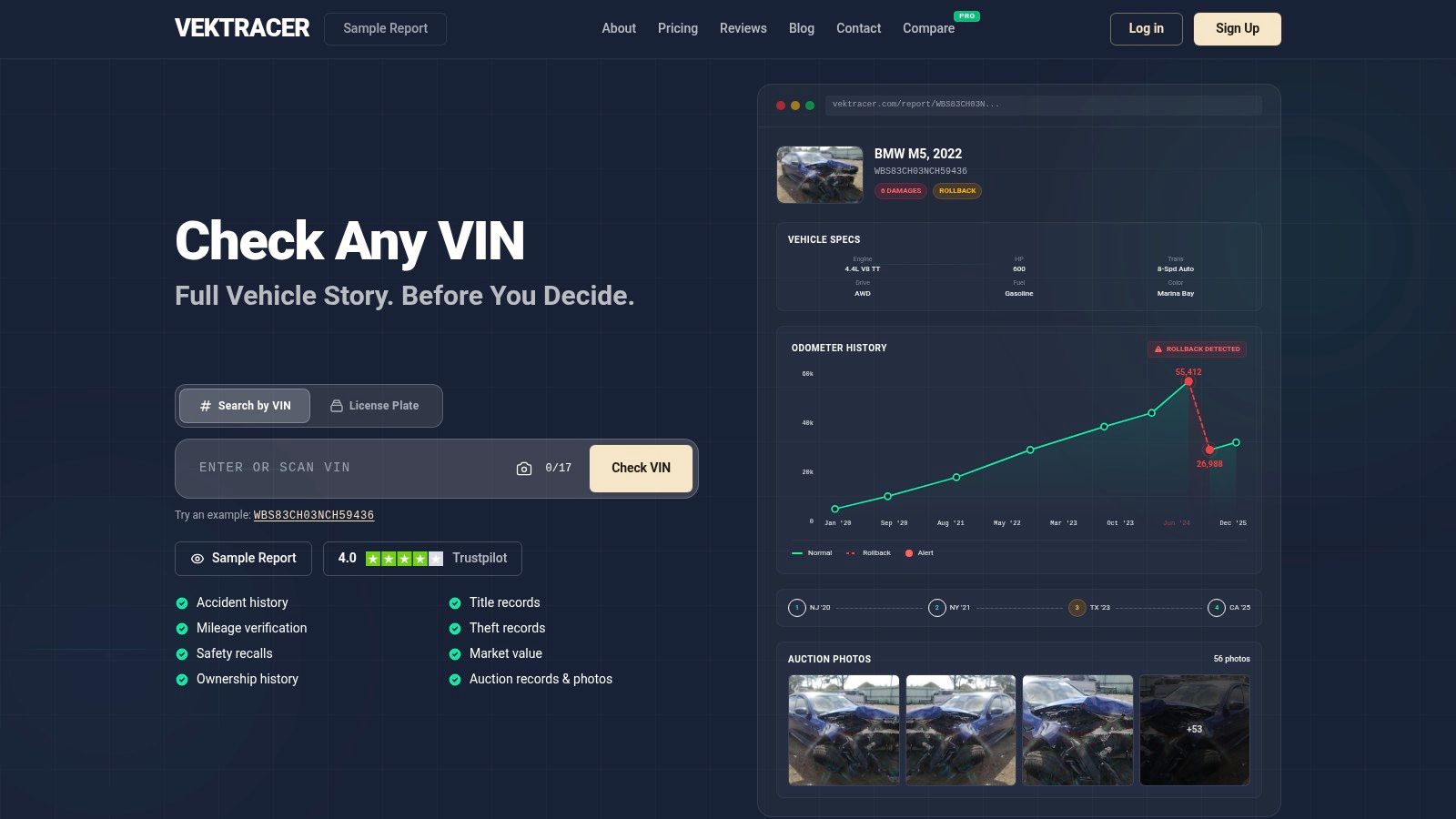
When a report earns its keep
If you’ve already decoded the basics, this is the point where a reporting platform becomes useful. Services in this category can surface accident and damage entries, title and lien details, theft checks, mileage records, and recall information tied to the VIN. VekTracer is one option in that group, and its sample vehicle history report shows how a risk summary can help a buyer scan the big issues before digging through the details.
That matters because long reports can hide the important facts in plain sight. A buyer doesn’t need more pages. A buyer needs a faster way to spot what changes the deal.
If you’re deciding between report providers, it also helps to compare pricing and coverage instead of buying on habit. The CARFAX comparison page is a sensible place to start, especially if you’re weighing cost against the level of detail you need.
Once you’ve decoded the basics, run a full check to see what the VIN isn’t telling you. If you’re shopping in the U.S., start with a VIN check USA vehicle history report before you commit to the car.
Camaro VIN Decoder FAQ
Can a VIN alone prove a Camaro is a real SS or Z/28
Usually, no. The VIN is strong evidence for identity, year, plant, and parts of the factory configuration, but it’s not a magic answer for every special package claim.
That’s why experienced buyers don’t stop with the decode. If a seller is charging a premium for a specific badge or performance version, the VIN should support the story, and the rest of the car should support it too. Badges, trim pieces, and wheels are easy to change.
Is a mismatched dashboard VIN and door sticker always a deal-breaker
It’s always a stop-and-verify situation. It might point to replacement parts, prior repairs, paperwork mistakes, or fraud. You shouldn’t normalize it.
If you see a mismatch, ask for a clear explanation and documentation before you spend money on inspection, transport, or a deposit. If the seller gets vague or defensive, walk away. There are too many Camaros on the market to force a risky one.
A seller who can't explain a VIN mismatch clearly is asking you to take their word over the car itself.
How do Canadian-market Camaros fit into VIN decoding
You need to separate factory identity from where the car is currently registered. Some Camaros were built in Canada during certain periods, and the VIN can reflect that through the manufacturer identifier discussed earlier. That doesn’t automatically make the car unusual or risky. It just means you should run the right records search for the market where the vehicle has lived.
If the Camaro has Canadian history, use a VIN check Canada report instead of assuming a U.S.-only search will show everything you need.
Can I decode a classic Camaro with the same tool I use for a newer one
Not reliably. Classic cars use older schemas, especially the 13-digit systems found on earlier Camaros. A tool designed around modern VIN logic may return limited or misleading results if you feed it an older number without historical context.
For classics, decode by generation first. Then compare the result to the car’s physical tags and restoration details.
What if the VIN decodes correctly but the car still feels off
Trust that instinct and keep checking. A correct decode only means the VIN structure makes sense. It doesn’t prove the car hasn’t had major repairs, title problems, or identity issues in the past.
That’s when inspection photos, tag comparisons, service records, and a full history report become more important than the decode itself.
If you’ve got a Camaro in front of you and want to know whether the story holds up, VekTracer can help you move from basic VIN decoding to a fuller vehicle history check before you buy.
Ready to check a vehicle?
Enter any 17-character VIN for a free instant preview — no account needed.