Bumper vs Carfax: Which Vehicle History Report Wins
Check a vehicle before you buy
Enter a VIN for a free instant preview — accidents, title brands, mileage, liens & open recalls.
The popular advice is to pick one trusted badge and stop there. That's the wrong question. Bumper vs Carfax is most useful as a cross-checking decision, not a winner-take-all contest. Both can reveal title brands, accident indicators, mileage events, and other records, but neither can guarantee a complete history. My practical recommendation is simple: use Carfax when detailed service history and long-established consumer recognition matter, use Bumper when title, auction, lien, or cross-border signals deserve more attention, and compare sources for salvage, imported, high-mileage, or unusually cheap vehicles.
A vehicle-history report is a screening tool. Before you sign, combine it with an official title or lien check where available, an NHTSA recall lookup, and an independent inspection. The federal NMVTIS vehicle-history portal is the government entry point for title and brand information, while NHTSA handles vehicle-specific safety-recall status. Commercial reports organize additional records, but they don't replace government records or a mechanic's assessment.
Table of Contents
Checking a specific vehicle?
Run its VIN for a free preview of accidents, title brands, mileage and open recalls.
- Why the Brand Showdown Misses the Real Risk
- Data Sources and Coverage Compared
- Report Depth, Accuracy, and What Each Provider Misses
- Pricing, Free Previews, and Ease of Use
- How to Read Bumper and Carfax Reports Side by Side
- Best Fit by Buyer Scenario
- Where Vektracer Fits as a Cross-Check
- Buyer Checklist and Next Step
Why the Brand Showdown Misses the Real Risk
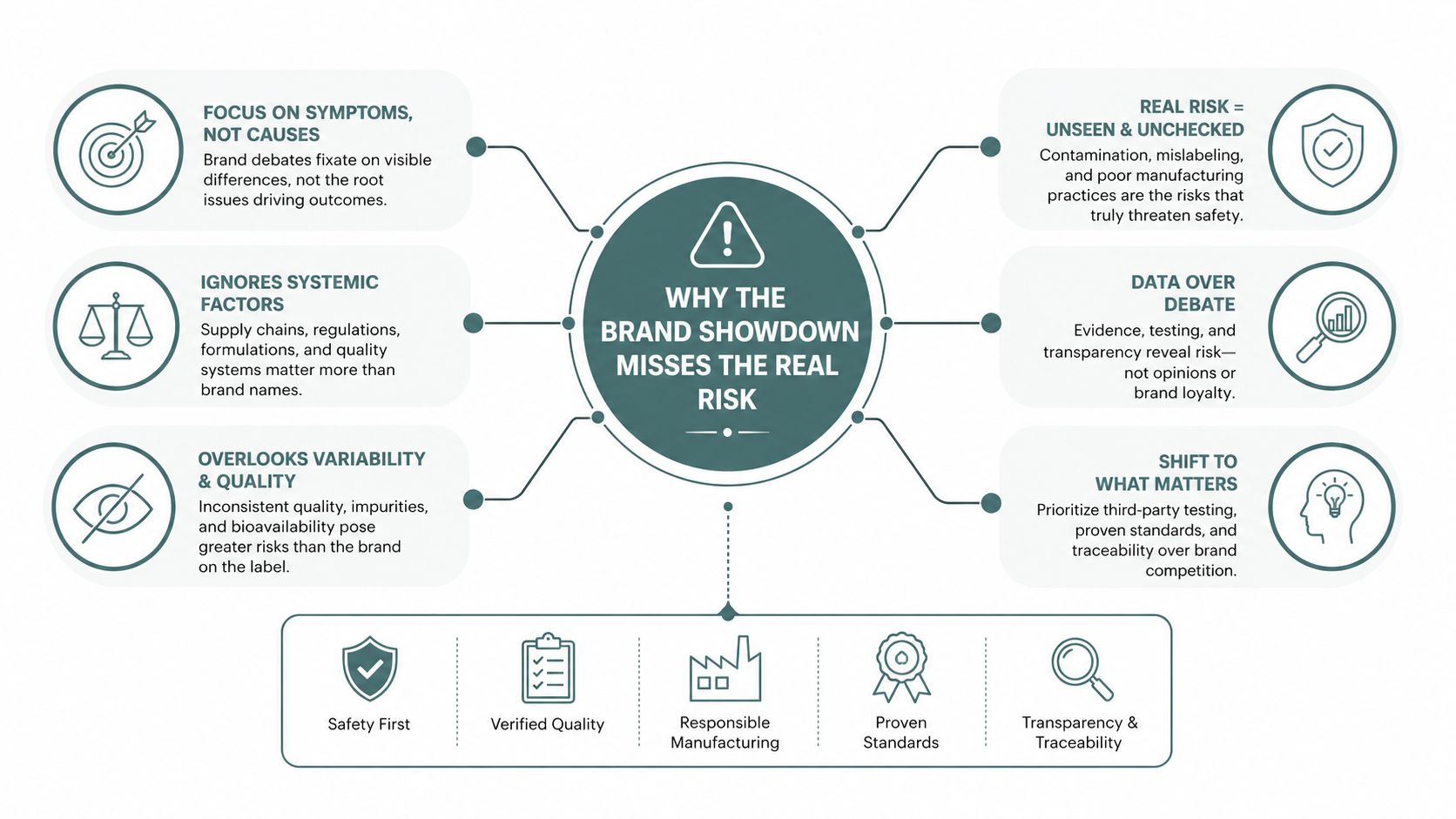
The primary risk isn't choosing the “wrong” logo. It's assuming any single report sees everything that happened to a vehicle. Title transfers, insurance losses, auction listings, police records, service invoices, and provincial or state registrations move through different systems. A delay or missing submission in one system can leave a clean-looking gap in an otherwise serious history.
That gap matters because problems can survive a single report. A cloned VIN can attach the identity of a clean vehicle to a damaged one. A branded title can resurface after registration in another state. An odometer rollback can occur between recorded readings, including during a cross-border transfer. A recall can be closed without a matching service entry in the commercial history file. These aren't reasons to panic. They're reasons to compare evidence.
What the report can and can't prove
Carfax has the advantage of legacy recognition. Carfax was founded in 1984 in Columbia, Missouri, and its acquisition by IHS Markit took place in June 2013, according to the company profile summarized by Bumper's Carfax comparison. That history helps explain why many dealers, lenders, and consumers treat it as a familiar benchmark.
Familiarity isn't completeness. Independent research summarized in Bumper's vehicle-history report analysis found that free access to history reports changed pricing and selling behavior. Reports reduced dealer selling time by 5.5 days on average, equal to a 14% decrease, and reduced the likelihood of resale within one year by 2.8 percentage points. The lesson is that history data can affect real buying and selling decisions, but data quality still depends on what gets reported.
Practical rule: If two sources disagree on title branding, mileage, ownership sequence, or auction damage, stop negotiating and investigate the contradiction before paying a deposit.
Data Sources and Coverage Compared
Bumper and CARFAX both use records connected to DMV and state registries, insurance activity, auctions, and police records. Bumper's stated differentiator is explicit use of NMVTIS for broad U.S. title coverage. Bumper says that approach covers 99% of vehicles on U.S. roads for major events such as branded titles, salvage, and title history, while describing CARFAX's NMVTIS use as more selective. That claim comes from Bumper's comparison of its coverage with CARFAX, so treat it as a provider-stated coverage position rather than a guarantee for a particular VIN.
| Source category | Bumper | Carfax |
|---|---|---|
| State and DMV records | Aggregates title and registration-related filings, with a strong emphasis on broad title coverage | Uses DMV and state-title information as part of its vehicle timeline |
| NMVTIS | Explicitly emphasizes NMVTIS title and brand data across the U.S. | Uses NMVTIS, described by Bumper as more selective |
| Insurance and police records | Draws on insurance, auction, and police-record sources where available | Draws on insurance, police, and other reporting partners |
| Auction information | Useful for salvage, auction, and vehicle-history signals where records are available | Includes major auction records and can be valuable for dealer-connected inventory |
| Service records | Usually less granular when independent or franchised shops don't report into its network | Generally stronger for dealership-linked maintenance and service entries |
| Cross-border use | Often worth checking for U.S. and Canadian vehicles with fragmented records | Familiar to U.S. shoppers, but Canadian details can be thinner for some vehicles |
The practical split is clear. A U.S. buyer focused on dealership maintenance may get more useful detail from Carfax. A buyer examining salvage inventory, auction vehicles, title brands, or a cross-border vehicle should test whether Bumper exposes records that the other report doesn't.
Import buyers also need a process beyond the report. Documentation, title handling, and post-purchase steps can affect whether the vehicle is usable and properly registered. The step 11 of the import process is a useful reference for buyers working through that stage.
For a deeper explanation of how reporting networks differ, review Vektracer's vehicle-history data sources. It's still important to verify the specific vehicle rather than assuming a provider's general coverage applies equally to every state, province, vehicle class, or record type.
Report Depth, Accuracy, and What Each Provider Misses
A report can look detailed and still leave the most important question unanswered: what happened between the recorded events? Read each section as evidence, not as a verdict.
Carfax is usually the stronger choice for a service-centered review. Its report may show an ownership timeline, dated service and mileage entries, accident records connected to police or insurer feeds, title-brand history, airbag deployments, and open-recall information. That combination is especially useful when a seller claims consistent maintenance and the vehicle has spent most of its life in dealer-supported service networks.
Bumper tends to be more useful when title branding, salvage activity, auction records, and lien information are central to the decision. Its NMVTIS emphasis can help with branded titles, salvage, and title-history review. Its accident presentation may lean more heavily on auction notes, which means a listed event needs context. An auction note can expose serious prior damage, but it may not describe the crash with the same detail as an insurer or police record.
| Report section | Bumper | Carfax | Known gap for both |
|---|---|---|---|
| Title brands | Strong focus on NMVTIS and branded-title signals | Broad title-history presentation | Private or delayed title activity may not appear immediately |
| Odometer history | Shows reported mileage points where available | Shows mileage through service, title, and other records | Neither catches every rollback between readings |
| Accident information | Can surface auction and public-record damage signals | Often useful for insurer, police, and service-linked accident entries | Unreported accidents and private repairs can remain invisible |
| Service history | May be lighter on granular maintenance intervals | Often deeper through dealer and service-network reporting | Shops that don't share data create gaps |
| Auction records | Useful for salvage and auction review, including available images or sale details | Includes auction history where its sources report it | Old or incomplete auction records may be missing |
| Recalls | Provides a broader recall view where available | Includes open-recall information | A report isn't the official repair-status record |
| Liens and legal signals | Can provide lien or related records where available | Not the primary choice for lien research | A commercial report can't replace a current state or provincial title check |
A vehicle that lived mostly outside franchised networks may show little service history on Carfax. Canadian title transfers, manual state processing, motorcycles, and heavy-duty trucks can also appear sparsely in either provider's data. Neither report reliably catches frame repairs performed privately, unreported flood damage, or an odometer change that never entered a reporting system.
For repair quality, don't rely on a label such as “repaired” or “inspected.” Compare visible damage evidence with the CAPA quality standards for repairs, then have an independent technician inspect structure, restraint systems, alignment, and corrosion.
Pricing, Free Previews, and Ease of Use
Price is where many comparisons become unreliable. Providers change offers, bundles, trial terms, and subscription conditions. Since no verified pricing schedule is provided here, don't treat an advertised amount as permanent. Read the checkout screen carefully, especially when Bumper presents a trial or recurring membership.
Carfax generally suits a buyer who wants a clearly defined report purchase. Bumper is more attractive for someone checking several vehicles during an active search, provided that person understands whether access renews and knows how to cancel. The cheapest option isn't useful if the buyer misses the renewal terms or pays for report depth that doesn't answer the core question.
| Factor | Bumper | Carfax |
|---|---|---|
| Purchase model | May offer report access through single, bundle, or membership options, depending on the current offer | Commonly positioned as a one-time report or package purchase |
| Free preview | May show basic VIN or vehicle indicators before checkout, subject to the current product flow | May show limited information before purchase, subject to the current product flow |
| Plate lookup | Availability can depend on location and the current lookup interface | VIN is the safer assumption for a vehicle-specific report |
| Mobile use | Designed for shoppers checking vehicles while browsing listings or lots | Browser and mobile access are available, with a familiar consumer workflow |
| Recurring billing | Check carefully for trial conversion and renewal terms | One-time purchases don't create the same subscription-cancellation issue |
| Refund handling | Review the current terms before paying, especially for memberships | Review the report-purchase terms before ordering |
Match the model to your shopping pattern
A private-party buyer considering one vehicle usually needs transparency more than a large database allowance. A dealer or reseller comparing inventory needs repeat access and fast screening. A salvage buyer needs the ability to examine auction traces, title brands, photos, and mileage points, not merely a polished summary.
Use the free preview to confirm that the VIN resolves correctly and that the report has meaningful coverage before paying. Then compare the checkout terms, report format, cancellation language, and refund policy. Don't enter payment details until you understand whether you're buying one report or access that continues.
How to Read Bumper and Carfax Reports Side by Side
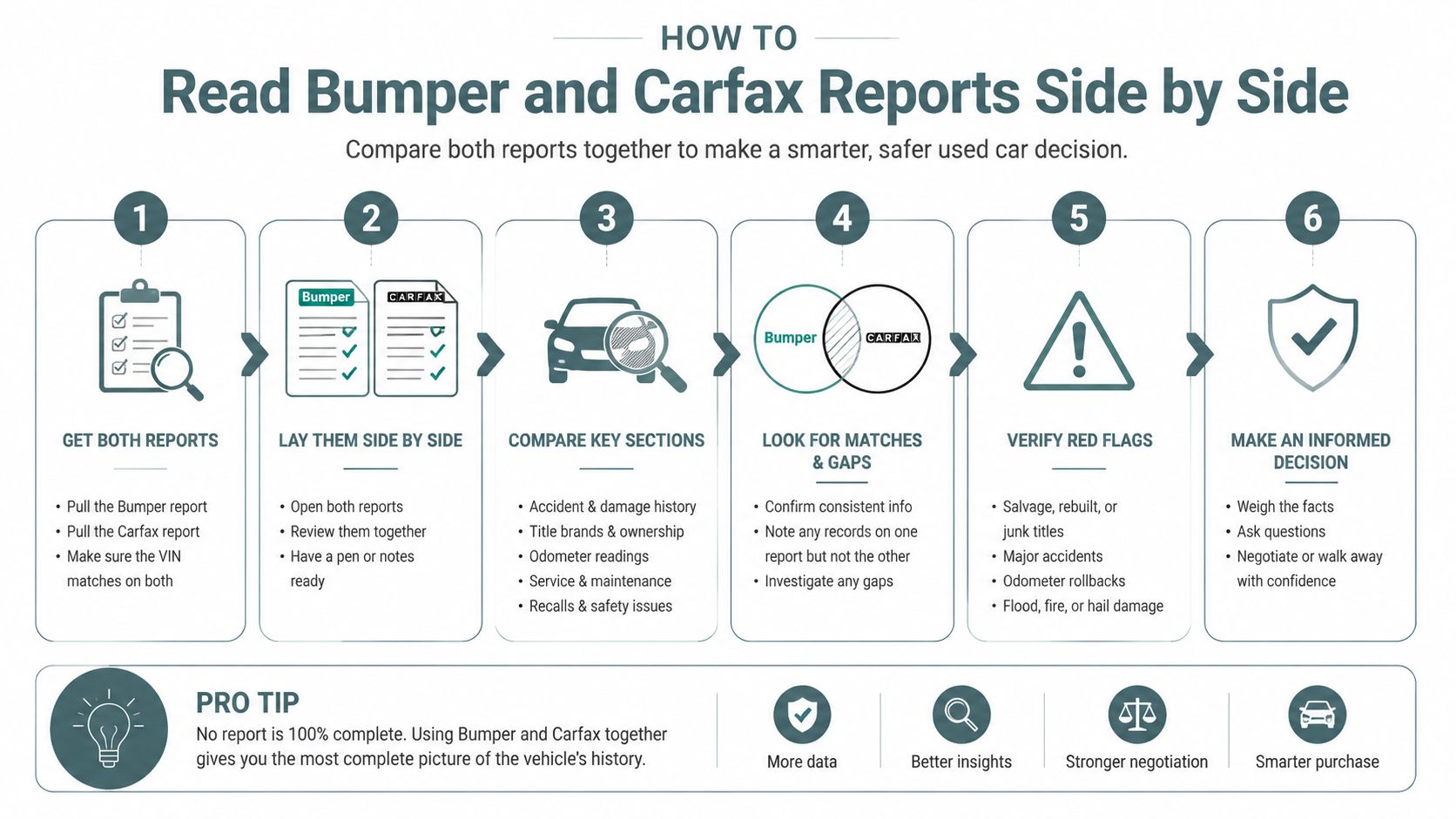
A report comparison starts with identity, not brand preference. Use the exact same VIN on both services. Photograph the VIN plate and driver-side doorjamb, then match those characters to the registration, insurance documents, and listing. NHTSA states that every vehicle has a unique 17-character VIN, commonly found at the lower left of the windshield, on the driver-side doorjamb label, or on registration and insurance documents. Refer to its official VIN guidance if any character is difficult to read.
Use a fixed comparison order
Title sequence first. Arrange title events by date. Flag salvage, rebuilt, flood, lemon, and other brands, then check whether a state change appears between events.
Compare mileage next. Match title readings with service entries, inspection records, and auction photographs. A consistent progression supports the timeline. A backward reading, unexplained jump, or long gap calls for a mechanic's review.
Separate accident counts from damage severity. One provider may count an auction note while the other records an insurer event. Read each description, date, location, and apparent damage. The count alone is not a safety rating.
Review ownership details carefully. Providers may classify registrations differently, so owner counts can disagree. Treat a contradiction as a reason to request title documents and registration history, not automatic proof of fraud.
Inspect original evidence. Auction photos, title documents, service invoices, and a pre-purchase inspection can settle conflicts that neither summary page explains. For an open safety recall, verify the vehicle independently with the NHTSA recall lookup rather than relying on either report.
Mark unresolved conflicts before negotiating. Write down differences in title status, mileage, accidents, ownership, and dates. Ask the seller for documents that address each one, and pause the purchase if the explanation does not match the records.
A practical sample vehicle-history report shows where title events, mileage points, ownership entries, accident details, and other timeline signals usually appear before you assess a live vehicle.
Agreement across two timelines increases confidence. It does not prove that an event absent from both reports never occurred, so finish with document checks and a pre-purchase inspection.
Best Fit by Buyer Scenario
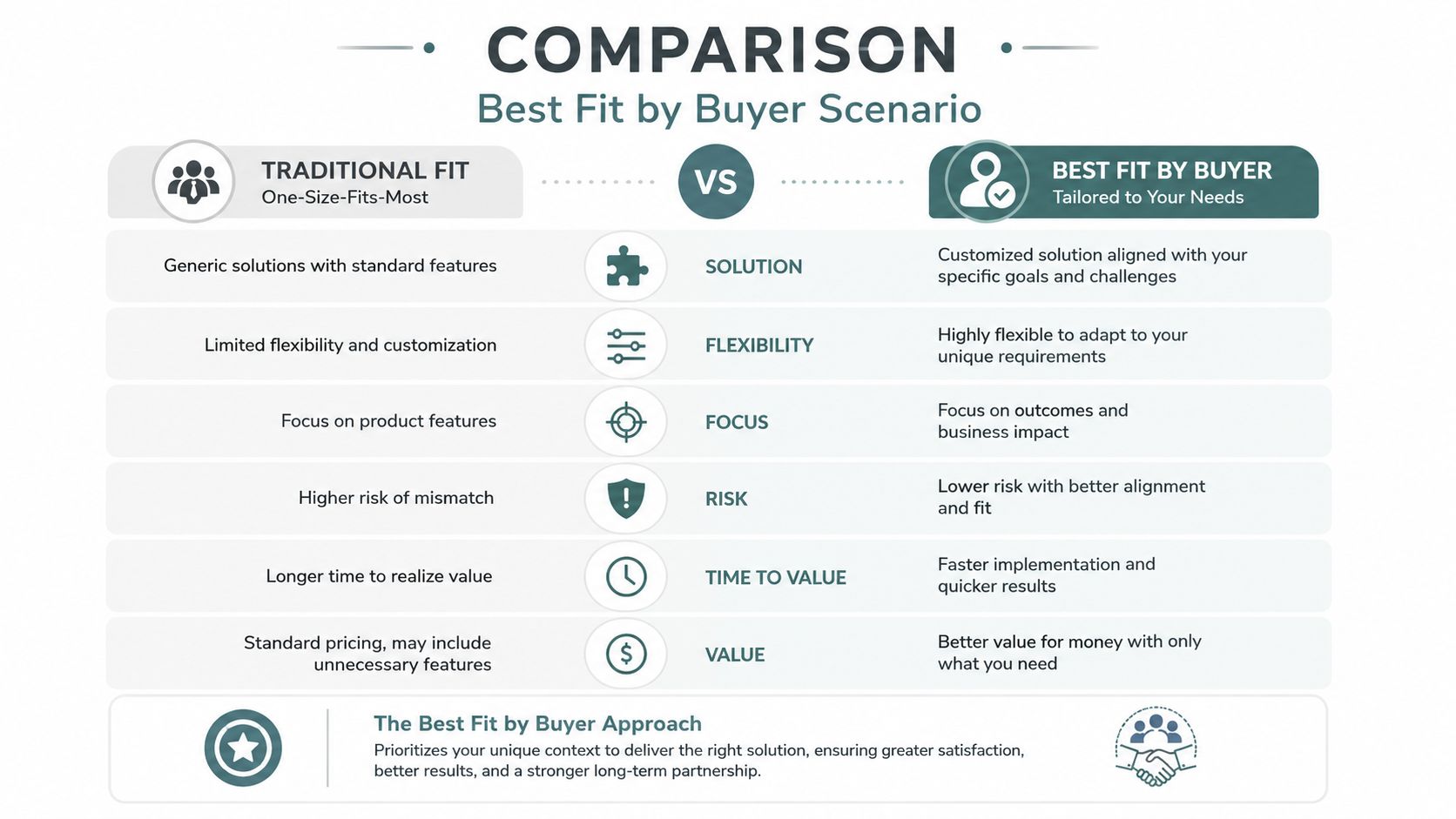
There isn't one universal winner. The best choice depends on the vehicle's risk profile and the evidence you need before making an offer.
Franchised-dealer shoppers
Choose Carfax first when the seller's maintenance story depends on dealer service records, the vehicle is relatively valuable, or the dealership already provides a Carfax report you want to verify. Carfax's long operating history and broad consumer familiarity make it the more natural workflow for buyers who want a recognized report format.
Still, don't accept the dealer's copy as the final word. Run a fresh check yourself, compare the VIN, and ask the seller to explain any difference in mileage, title branding, accident dates, or ownership history.
Private-party buyers
Choose Bumper first when you're screening several listings, prioritizing title and auction signals, or want to investigate available lien-related information. It can be a practical Carfax alternative for a buyer who doesn't need a deep dealership service timeline.
The seller should also welcome reasonable verification. Ask to see the title, confirm that the seller's name matches it, and compare the physical VIN with the report. If the seller refuses basic documentation or pressures you to skip inspection, walk away regardless of which report looks clean.
Independent dealers and resellers
Bumper can fit dealers who need repeat vehicle screening, especially when inventory includes auction purchases, salvage candidates, or vehicles moving across jurisdictions. Carfax can fit dealers whose customers expect its brand or whose acquisition process relies heavily on service-history documentation.
Salvage, auction, and imported vehicles
Run both when the vehicle has a branded title, auction history, a cross-border past, unusually high mileage, or a price that seems disconnected from its condition. Here, the question isn't which provider has the nicer interface. It's which source reveals the title sequence, images, mileage points, and damage description that the other misses.
Where Vektracer Fits as a Cross-Check
Vektracer belongs in the third-source category, not in place of every official or commercial check. Its reports compile VIN-based records into a structured history view, including accident and damage events, title and ownership information, mileage verification, theft records, recalls, auction records where available, and market-value context. That can help when a vehicle's history crosses U.S. and Canadian jurisdictions or includes salvage and auction activity.
Use it where source diversity has the highest value. A U.S.-only service history may not explain a Canadian registration period. A Canadian-focused lookup may not expose every U.S. auction event. A commercial report may show a title brand without giving enough visual context to understand the damage. Cross-border vehicles, rebuilt candidates, auction-floor purchases, and high-value imports deserve a timeline assembled from more than one channel.
Vektracer also has limits. Some service or auction records may be absent when providers or shops don't report them, and manual verification can't guarantee a perfect result. Its report should support, not replace, the official title agency, NMVTIS information, NHTSA recall check, seller documents, and an independent inspection.
| Buyer scenario | Primary report | Add Vektracer? | Why |
|---|---|---|---|
| Franchised-dealer purchase with strong service documentation | Carfax | Sometimes | Use a second source when title, mileage, or accident entries conflict |
| Private-party purchase | Bumper or Carfax | Often for a suspicious vehicle | A structured timeline can expose gaps worth investigating |
| Cross-border U.S. and Canadian vehicle | Bumper or Carfax | Yes | Records may be divided across jurisdictions |
| Salvage or rebuilt-title candidate | Bumper | Yes | Compare title brands, auction records, images, and mileage |
| Auction purchase | Bumper | Yes | A second auction and damage-history view can change the bid decision |
| Routine low-risk local purchase | One suitable report plus official checks | Optional | Add another source only when the vehicle's records are incomplete or contradictory |
For a focused explanation of how a third report can complement the two main options, see Carfax vs Vektracer vehicle-report comparison. The point isn't to collect reports endlessly. It's to add another source when the vehicle's risk or history warrants it.
Buyer Checklist and Next Step
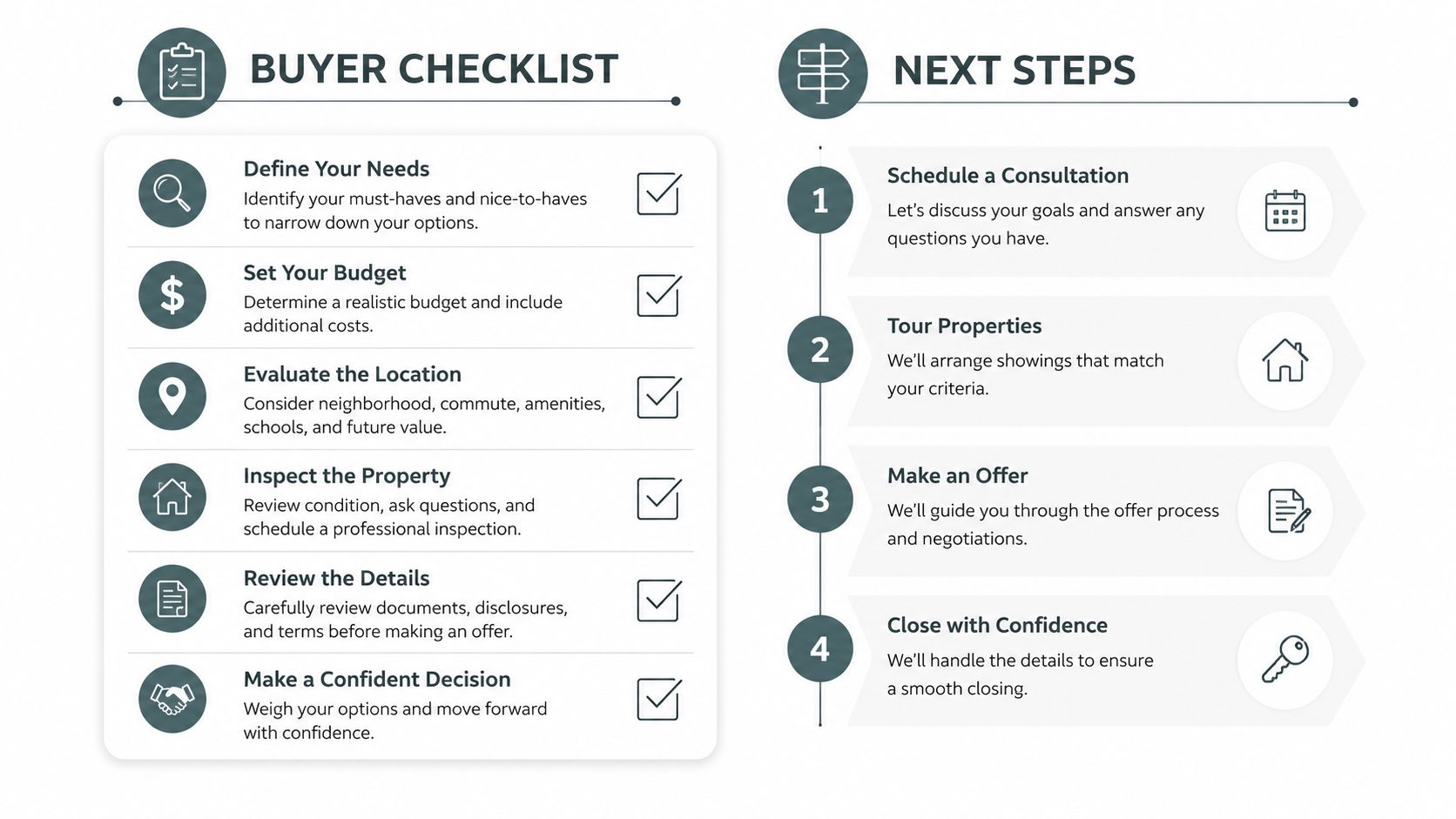
Use this workflow before signing paperwork:
Preview multiple sources. Run free previews from at least two of Bumper, Carfax, and Vektracer, where available. Confirm that the VIN matches the vehicle in front of you.
Photograph the identifiers. Capture the windshield and doorjamb VIN, license plate, title, registration, and insurance documents. Listing photos are not enough.
Match brands and mileage. Compare title status, salvage or rebuilt branding, ownership sequence, and each chronological odometer reading. Record contradictions immediately.
Recheck recalls through the official lookup covered in the side-by-side guide above. A commercial report summarizes records, while the official source confirms open safety recalls.
Review auction evidence. Examine available auction photos, sale dates, listing descriptions, and damage markers. Check for structural impact, flood exposure, airbag deployment, or cosmetic repairs that may conceal deeper damage.
Confirm the seller's identity. The seller's name should match the title. If it does not, require a clear legal explanation and transfer documents.
Book an independent inspection. Prioritize vehicles with reporting gaps, branded titles, auction history, inconsistent mileage, or major accident entries. Ask the mechanic to inspect the structure, underbody, corrosion, restraints, alignment, and repair quality.
Start with the vehicle, not the brand debate. Enter its VIN or license plate into free previews, compare results across sources, and investigate every contradiction before negotiating. Source diversity matters more than loyalty to Bumper or Carfax.
Vektracer provides a structured VIN-based view of accidents, title and ownership records, mileage, theft, recalls, auction information, and available market context. Use it to cross-check a Bumper or Carfax result, then decide whether the vehicle merits an inspection or a pass. Visit Vektracer with the VIN or plate ready and review the available preview before committing.
Ready to check a vehicle?
Enter any 17-character VIN for a free instant preview — no account needed.