Are Volkswagens Reliable?
Check a vehicle before you buy
Enter a VIN for a free instant preview — accidents, title brands, mileage, liens & open recalls.
Volkswagens are neither universally reliable nor universally risky. RepairPal rates Volkswagen at 3.5 out of 5.0 and 12th out of 32 brands, but J.D. Power places the brand at 285 problems per 100 vehicles for 3-year-old cars, which is why the answer depends on the exact model, year, and engine.
That contradiction frustrates buyers because brand advice sounds simple when the data isn’t. Some Volkswagens are strong long-term bets. Others become expensive ownership lessons. If you want the honest answer to are volkswagens reliable, stop thinking in terms of the badge and start thinking in terms of the specific vehicle in front of you.
The Contradictory Truth About Volkswagen Reliability
The wrong question is “Are Volkswagens reliable?” The useful question is “Which Volkswagen, from which year, with which engine and maintenance record?”
Brand-level ratings blur together cars that do not age the same way. A well-kept Golf with a proven powertrain can be a rational used buy. A neglected SUV with a history of electrical faults or missed service can turn the same badge into a budget problem. That spread is wider at Volkswagen than many shoppers expect, which is why broad rankings create more confidence than they deserve.
Consumer Reports has long treated Volkswagen as a mixed case rather than a consistently strong or weak brand. Its survey results for used vehicles and new-vehicle predicted reliability have pointed in different directions across recent model years, which reinforces the main point: the VW badge does not predict the ownership experience nearly as well as the model-year does. You can review that methodology and current brand reporting through Consumer Reports' car reliability overview.
Why the brand answer fails
Volkswagen’s reliability reputation gets distorted by averaging. The same brand includes simple commuter cars, turbocharged performance trims, first-year redesigns, and family SUVs with very different failure patterns. A single score cannot capture that spread.
Used-car shoppers feel that problem first. One buyer hears that German cars cost more to repair and writes off every VW. Another hears that certain Jetta, Golf, or GTI years have loyal owner followings and assumes the whole lineup is safe. Both shortcuts ignore the variables that drive costs: powertrain choice, maintenance discipline, software and electrical history, and whether the car was serviced on time.
That is why a Volkswagen should be screened in layers.
- Start with the exact model and year, not the brand.
- Check the engine and transmission combination, because the same model can change risk levels fast.
- Review maintenance records before you trust mileage.
- Verify prior damage, title events, and ownership history with a vehicle history report guide for smart used car buying.
- Price the car against likely repair exposure, not against features alone.
The practical conclusion
Volkswagen reliability is not a single truth. It is a distribution.
That distinction matters because shoppers do not buy “Volkswagen” in the abstract. They buy one used Taos, one Atlas, one Jetta, one Tiguan. The right framework is to use brand reputation as a weak screening tool, then shift quickly to model-year evidence and condition-specific checks. That is how some VWs become smart purchases, and how others reveal themselves as financial risks before you sign.
How to Deconstruct VW Reliability Ratings
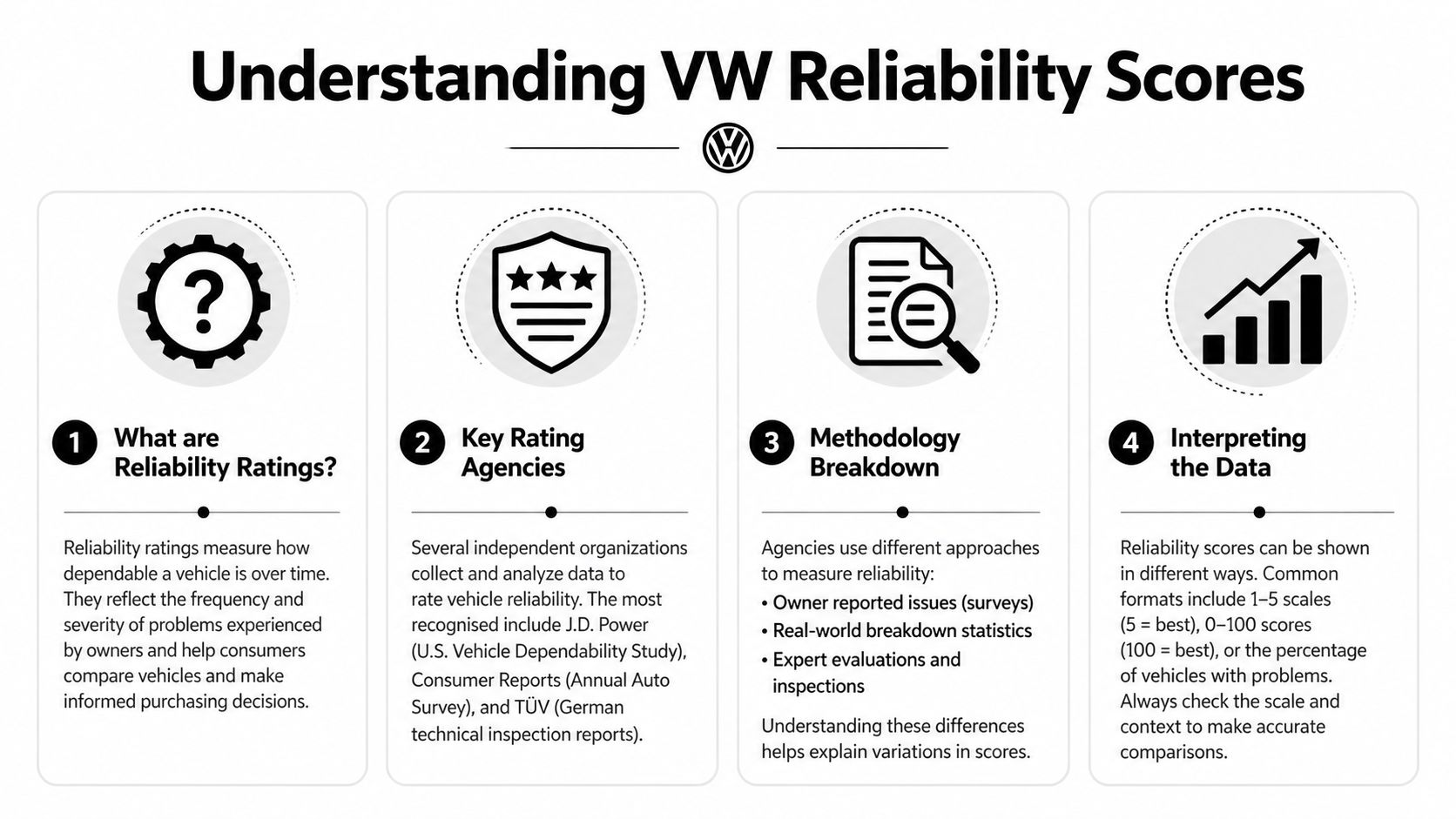
Volkswagen’s ratings look inconsistent because the major sources are measuring different failure patterns, different time horizons, and different definitions of “problem.” A buyer who treats them as interchangeable will misread the brand.
That matters more with VW than with some competitors because the spread between good and bad model-year outcomes is wide. Brand-level averages blur that spread.
Repair cost data answers one question
One lens focuses on ownership friction after the sale. Earlier data in this article already showed Volkswagen’s repair costs tend to run higher than many mainstream buyers expect, even when repair frequency is not extreme.
That distinction matters. A car can avoid constant breakdowns and still be expensive to own if the failures it does have are labor-intensive, parts-heavy, or tied to complex electronics. For a used VW shopper, that makes cost severity more important than raw problem counts.
Consumer Reports measures owner pain differently
Consumer Reports is useful for a different reason. Its survey data captures the ownership experience, including issues that may not total the engine or transmission but still waste time, trigger dealer visits, and lower confidence in the car.
For brand-level context, Consumer Reports brand rankings place Volkswagen in the middle of the pack rather than among the clear leaders. That lines up with the pattern many VW shoppers see in practice. Some models hold up well, while others collect enough electrical, software, or drivability complaints to drag down the average.
A glitchy infotainment system is a good example. It may not strand the owner. It still counts against the ownership experience, and it often shapes satisfaction more than shoppers expect.
J.D. Power is sensitive to problem volume
J.D. Power studies are often harder on brands that accumulate many smaller complaints. That creates apparent conflict with repair-cost data, but the conflict is useful.
A Volkswagen can be durable enough to stay on the road and still score poorly if owners report a steady stream of issues, such as electronics faults, interface bugs, warning lights, or trim problems. For shoppers, that means a weak score does not always predict catastrophic failure. It often signals annoyance density.
Here is the practical way to read the three systems:
| Rating lens | What it helps you answer | What it means for VW shoppers |
|---|---|---|
| Repair cost and frequency data | Will this car strain my budget after purchase? | Some VWs are manageable, but expensive repairs can erase a good purchase price |
| Consumer Reports owner surveys | What problems are owners living with over time? | Model and year matter more than the badge because owner experience varies sharply |
| J.D. Power problem counts | How often do smaller issues pile up? | A VW can keep running while still feeling troublesome to own |
Use the ratings in sequence, not as an average
The mistake is trying to combine all ratings into one final score. A better method is to ask them in order.
Start with brand-level data only as a rough filter. Then move to the exact model, year, engine, and transmission. After that, check whether the specific car’s history supports the reputation or contradicts it. A clean maintenance file and a verified ownership trail often matter more than a middling brand average, which is why a vehicle history report guide for smart used car buying belongs early in the process.
The non-obvious conclusion is simple. Volkswagen reliability ratings are not competing verdicts on one brand. They are partial views of different risks. The buyer who separates cost risk, annoyance risk, and model-year risk will judge a used VW far more accurately than the buyer who asks whether Volkswagens are reliable in general.
The Most and Least Reliable Volkswagen Models in 2026
Volkswagen does not have a single reliability profile. It has reliable pockets, expensive pockets, and a few model-year traps that can turn a good deal into a repair budget problem. That is why shoppers who ask, "Are Volkswagens reliable?" usually get conflicting answers that are all partly true.
The cleaner question is narrower. Which VW models show stronger owner-survey results, fewer reported problems in recent data sets, and a lower chance of becoming a maintenance backlog if the prior owner cut corners?
The models that look strongest
The Golf GTI has one of the better reputations in Volkswagen’s lineup, but only in the right form. Consumer Reports’ brand and model reliability materials support the broader point that Volkswagen reliability varies sharply by model, and the GTI tends to land on the stronger side of that split. For used buyers, the catch is obvious. A stock GTI with disciplined maintenance is a different risk from one with tuning, hard driving, or incomplete records.
The Tiguan also makes a rational case for buyers who want a VW crossover instead of a hatchback or sedan. Recent third-party ratings have treated it more favorably than several other VW models, which matters because crossovers often become family cars that rack up miles quickly. A Tiguan with full service documentation and no electrical gremlins showing up in the pre-purchase inspection is usually a safer VW bet than the brand average suggests.
The Jetta is the classic example of why badge-level advice fails. J.D. Power’s Volkswagen Jetta page shows stronger results than many shoppers expect, and the Auto Reliability Index page for Volkswagen Jetta also points to recent Jetta years as comparatively solid. That does not make every used Jetta low-risk. It does mean the model belongs on the shortlist if the service history is clean and the inspection confirms the car has not been neglected.
The models that need more caution
The Taos is the best example of why "Volkswagen reliability" is too blunt to be useful. Some datasets and owner feedback have treated it harshly, while others have been less negative. That kind of split usually means one thing for buyers. Do not buy the reputation. Vet the exact year, build date, maintenance file, and software-update history.
The Atlas belongs in the caution group for a different reason. J.D. Power’s 2025 Volkswagen Atlas page gives shoppers a direct model-specific reference point, and the score is less reassuring than what many buyers want from a family SUV. The Atlas can still make sense if space is the priority and the vehicle checks out mechanically, but the margin for error is thinner than it is on stronger VW nameplates.
Volkswagen model reliability snapshot
| Model | Best years | Years to scrutinize | Key strengths | Common issues |
|---|---|---|---|---|
| Jetta | Recent years with stronger third-party ratings | Any used example with missing maintenance records | One of the safer VW value plays, better recent ratings than brand stereotypes suggest | Neglect changes the ownership math quickly |
| Golf GTI | Stock examples with documented care | Modified or poorly maintained cars | Better owner-reputation profile than many VW models, strong enthusiast support | Tuning and aggressive use can raise mechanical risk |
| Tiguan | Newer years with clean histories | Cars with inconsistent service records | One of the more defensible VW crossover choices | Electronics and deferred maintenance can get expensive |
| Taos | Later examples that pass inspection cleanly | Early examples or cars with unresolved complaints | Some signs of improvement in newer data | Mixed reliability picture, needs year-specific vetting |
| Atlas | Newer versions with full records | Any example without documented service | Strong space and family practicality | Weaker confidence margin than Tiguan or Jetta |
One shortcut matters more than trim level. If two Volkswagens are priced similarly, buy the one with the complete maintenance file.
That file should show routine service done on time, using the correct fluids and parts. Buyers who need a baseline for what proper maintenance should look like can compare the records against these expert car service recommendations. On a used VW, maintenance quality often predicts ownership cost better than a feature list does.
The real pattern
The best VW buys in 2026 are not just the cheapest Jetta, the nicest GTI, or the newest Tiguan on the lot. They are the examples where three things line up. The model has a relatively favorable record, the specific year avoids known trouble spots, and the actual car shows proof of disciplined ownership.
The worst VW buys usually look attractive at first glance. They are priced below rivals, drive well on a short test route, and offer more upscale interiors than many mainstream competitors. Then the missing records, deferred service, modifications, or unresolved model-year issues erase the savings.
That is the practical framework. Judge the model first, the year second, and the individual car last but most heavily. On a Volkswagen, the third step often matters most.
Common VW Problems and True Ownership Costs
A Volkswagen can feel dependable in daily use and still cost more than expected to keep right. That’s the difference many buyers miss.
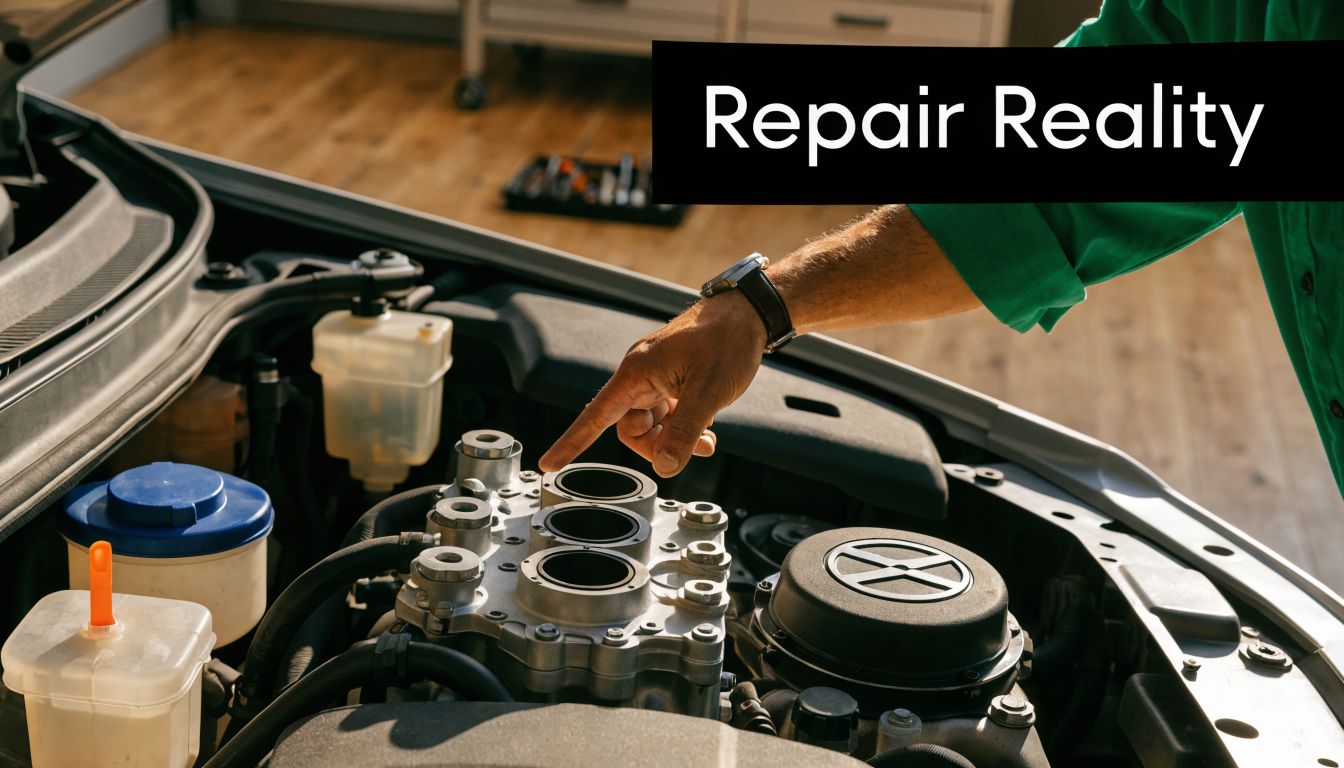
The verified data supports that tension clearly. Volkswagen of Salem County’s reliability review states that VW’s turbocharged engines can exceed 100,000 miles when maintained properly, but that longevity depends on manufacturer-specified fluids and OEM parts. The same source ties Volkswagen ownership to an average annual repair cost of $676, which places the brand in above-average ownership-cost territory.
The problem isn’t always frequency
Volkswagen’s issue isn’t merely that cars break constantly. It’s that the platform is less forgiving when maintenance slips.
Turbocharged VW engines reward owners who follow the book. They punish owners who improvise. If a prior owner used the wrong fluids, stretched intervals, skipped key services, or relied on low-quality replacement parts, your ownership experience can look very different from the experience suggested by a clean brochure or a brand average.
That’s why used VW shopping should focus less on shiny condition and more on receipts.
The most expensive “small” problems
The data in this article doesn’t provide model-by-model repair invoices, so the honest way to describe VW ownership costs is qualitatively. Budget-conscious buyers often discover that the expensive part of VW ownership isn’t always a catastrophic engine failure. It’s the accumulation of mid-level repairs, diagnostic labor, electronic issues, and parts pricing that sits above what many mainstream buyers expect.
The most common trouble areas buyers and shops watch for include:
- Infotainment bugs: These may not strand you, but they can trigger repeated dealer visits and frustration.
- Electrical gremlins: Sensors, modules, and software-related faults can be harder to diagnose than old-school mechanical failures.
- Turbo-related neglect risk: Turbo engines can last well if maintained correctly, but they’re less tolerant of sloppy service history.
- Powertrain wear on neglected cars: A used VW with gaps in maintenance records deserves caution even if it drives well today.
Reliability on a Volkswagen is often less about whether the engine design is capable and more about whether the previous owner respected the maintenance requirements.
Why service history matters more on VW
Some brands absorb neglect surprisingly well. Volkswagen usually doesn’t.
That makes preventive maintenance the center of the ownership equation. If you want a practical overview of maintenance timing and inspection habits, these expert car service recommendations from Carmedics Autowerks Inc. are a useful companion to the VW-specific point above: strict service discipline isn’t optional on a turbocharged German car.
A clean-looking used VW without records should never be treated as “probably fine.” On this brand, missing documentation is often a stronger warning sign than cosmetic wear.
What this means for long-term ownership
A well-kept Volkswagen can justify itself. You get a refined cabin, composed road manners, and a more European driving feel than many mainstream alternatives.
A neglected Volkswagen turns those same strengths into a trap. The purchase price may look attractive, but the ownership math changes the moment deferred maintenance becomes your problem. That’s why the right VW can be a smart buy, while the wrong one can feel expensive much faster than buyers expect.
Red Flags That Reliability Reports Will Not Show You
Reliability reports tell you what tends to happen across a fleet. They don’t tell you what will make your used Volkswagen a bad purchase.
That gap matters most when buyers shop by monthly payment or sticker price. Volkswagens can look like bargains on the used market because they often offer a lot of car for the money. The risk is that the low entry price distracts from the ownership profile.
The hidden budget problem
Cargurus’ Volkswagen reliability analysis notes that VW’s 11% severe repair probability is close to the 12% industry average, but the brand’s $676 average annual repair cost is still notably higher than many competitors. For a used buyer, that’s the important contradiction. A VW doesn’t need to be a disaster to become expensive.
That’s what I’d call the German engineering tax. You may not visit the shop dramatically more often than average, but when work is needed, complex systems and pricier parts can erase the savings that drew you to the car in the first place.
Three warning signs buyers overlook
- A low price with no records: Cheap Volkswagens attract buyers who assume they’ve found hidden value. Often they’ve found deferred maintenance.
- Annoyance issues that don’t show up in sales ads: Infotainment glitches and electronics problems can wear down the ownership experience even when the car still runs.
- Previous-owner shortcuts: Generic fluids, delayed service, and non-OEM parts can matter more on a turbocharged VW than on a simpler economy car.
A reliability score can tell you whether a model is risky on average. It can’t tell you whether the seller has handed you someone else’s postponed repair bill.
Why accident history changes the equation
A repaired collision isn’t automatically a deal-breaker, but with Volkswagen it deserves more scrutiny because electronic systems, sensors, and calibration quality affect both drivability and long-term ownership friction. Before buying, it’s smart to review how to check a car VIN for accidents so you can separate cosmetic history from structural or systems-related risk.
The contrarian takeaway
The best-used VW often isn’t the cheapest one on the lot. It’s the one with the strongest paper trail.
That sounds obvious, but buyers still get trapped by attractive pricing, upscale interiors, and the assumption that a decent road test proves reliability. On Volkswagen, a smooth test drive can coexist with expensive maintenance gaps. Red flags are usually administrative, not dramatic. Missing service receipts. Incomplete title history. Unclear accident disclosure. Sparse maintenance detail from the seller.
Those are the details reliability reports can’t fully price in for you.
How to Vet a Used Volkswagen Like a Pro in 2026
Volkswagen shopping gets easier once you stop treating reliability as a brand trait. A used VW should be judged as a specific machine with a specific engine, service record, ownership pattern, and repair history.
That changes the order of operations.
Start with records before you look for reasons to like the car
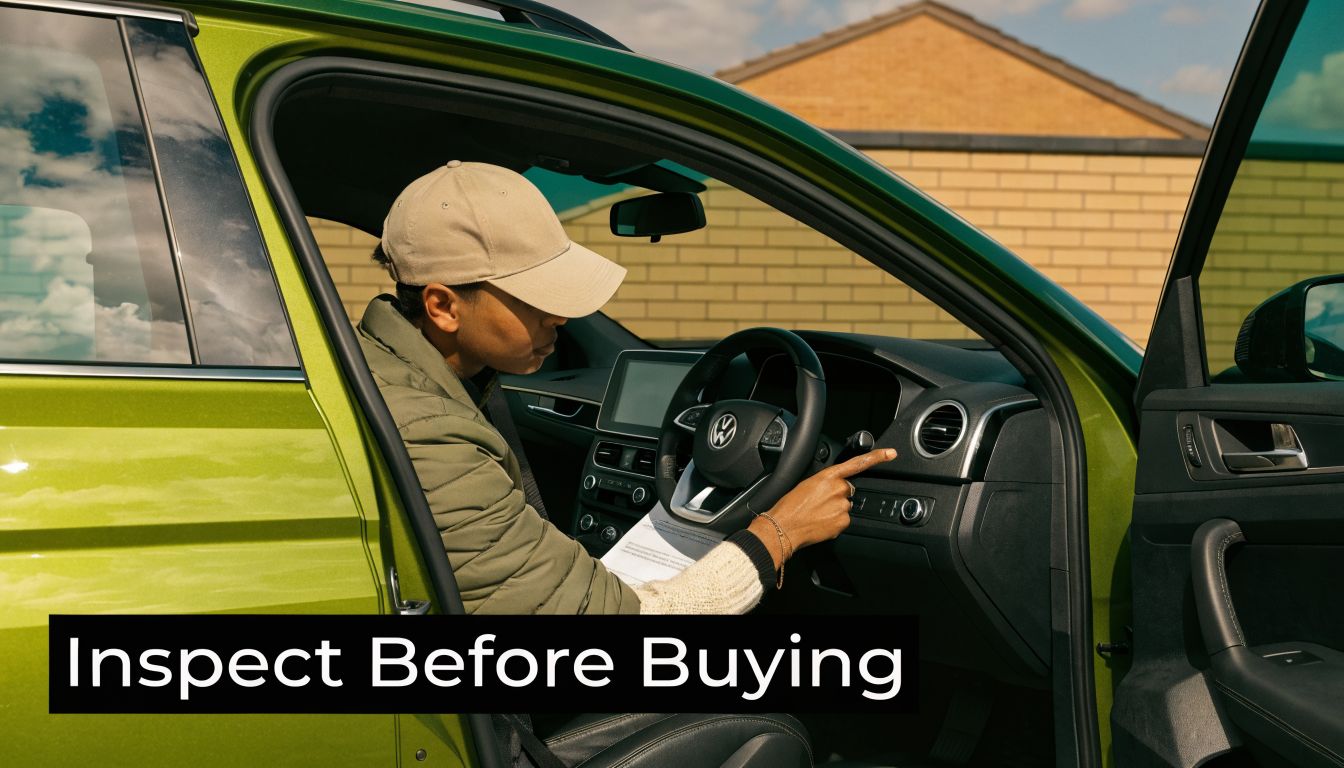
A clean interior, a quiet test drive, and a lower asking price can hide a bad ownership story. On a used Volkswagen, paperwork usually predicts risk better than cosmetics do.
Ask for service records first. Read the invoices, not the seller’s summary. You are looking for consistent oil changes, the right fluid specifications, recall completion, and evidence that repairs were handled as problems appeared rather than delayed until resale. If documentation is thin, price the car as if future catch-up maintenance is likely.
Before you contact the seller twice, run a Volkswagen VIN history check. That lets you screen for title brands, mileage inconsistencies, theft records, lien issues, open recalls, and reported accident history before emotion enters the deal.
Build a timeline, then test whether it makes sense
A strong used VW history reads like a coherent timeline. Mileage rises steadily. Service entries appear at reasonable intervals. Ownership transfers have a plausible pattern. The condition of the cabin matches the odometer.
When those pieces conflict, slow down.
Use four checks:
Mileage progression
Confirm that odometer readings increase logically across registrations, inspections, and service visits.Service spacing
Look for long gaps followed by a burst of recent maintenance. That often signals deferred work rather than careful ownership.Title and lien status
Make sure ownership is clean and transferable. Administrative problems can turn a cheap car into a time-consuming one.Recall completion
Open recalls do not always make the car a bad buy, but unresolved safety or drivability issues should be handled before purchase.
Use the test drive to confirm, not discover
The road test should verify what the records suggest. It should not be the first serious screening step.
Start the car cold if possible. Watch for rough idle, warning lights, delayed response, or behavior the seller tries to normalize as a “VW thing.” Pay close attention to transmission behavior, especially hesitation, abrupt shifts, or inconsistent low-speed response. Check the electronics too. Infotainment glitches, sensor faults, and random warning messages may not strand you, but they do affect ownership cost and daily frustration.
One seller reaction matters as much as the car itself. If the owner resists a cold start, outside inspection, or document review, treat that as a risk signal.
Separate repaired damage from acceptable damage
Accident history is not an automatic rejection. Poorly explained accident history often is.
With Volkswagen, repaired damage deserves extra scrutiny because alignment, driver-assistance sensors, and electronic calibration can affect how the car feels long after cosmetic work is finished. A vehicle can be roadworthy and still be a weak purchase if prior repairs reduce resale confidence or create future insurance disputes. For that part of the analysis, Auto Appraisal Expert's guide is a useful reference.
Compare the exact VW to the exit option
Many buyers compare one used VW with another and stop there. That misses the financial question that matters most. What else could the same money buy?
If a Tiguan has average records and a strong price, compare it with the non-VW crossover you would buy instead. If a Jetta looks appealing but the maintenance file is incomplete, compare it with a slightly older or less flashy alternative that has better documentation. Such situations highlight Volkswagen variability most clearly. The better buy is often the less desirable trim or the less trendy model year with the cleaner history.
A practical screen for 2026 buyers
Use this order:
- Pull the VIN history.
- Read service records for consistency and correct maintenance.
- Build a mileage and ownership timeline.
- Check for accident, title, lien, and recall issues.
- Get an independent pre-purchase inspection.
- Test drive the car cold and warm.
- Compare the deal with at least one non-VW alternative.
That process sounds strict because it should be. Volkswagen reliability is too uneven for shortcut buying.
A used VW earns approval one verified detail at a time.
Frequently Asked Questions About Volkswagen Reliability
Are Volkswagens reliable compared with other brands
They’re too inconsistent to answer at the brand level alone. Volkswagen sits in a respectable position in some reliability frameworks and poorly in others, which means comparison shopping only works when you narrow the question to a specific model, year, engine, and service history.
Do Volkswagens last a long time
They can. The verified data supports that VW turbocharged engines can exceed 100,000 miles with proper maintenance, and dealer-based summaries also note that many Volkswagens can go much farther when cared for correctly. The condition attached to that claim matters. Long life depends heavily on proper fluids, OEM parts, and consistent service.
Which Volkswagen models are the safest used buys
Recent evidence points most favorably toward vehicles like the Jetta, Golf GTI, and newer Tiguan examples, though the answer still depends on records and condition. A clean-history, well-documented car is usually the better buy than a more desirable model with missing documentation.
Are Volkswagens expensive to maintain
Relative to many mainstream alternatives, they can be. The key issue isn’t just whether problems happen often. It’s that maintenance discipline matters more, and repairs can cost enough to change the ownership math for budget buyers.
Is a used Volkswagen worth buying
Yes, if the car has a strong maintenance history, clear title status, consistent mileage records, and no unresolved accident or recall concerns. No, if the deal depends on optimism. Used Volkswagens reward due diligence more than impulse.
What’s the biggest mistake buyers make
They buy the cheapest Volkswagen that looks nice and drives fine for fifteen minutes. That approach ignores the details that decide ownership outcomes: service records, prior damage, title status, mileage consistency, and whether the specific model-year has a stronger or weaker track record.
Should you trust brand rankings when buying a VW
Only as a starting point. Brand rankings can tell you why people ask “are volkswagens reliable,” but they can’t tell you whether the exact vehicle in front of you is a smart purchase. For VW, that final decision should come from model-year research plus a detailed history check.
If you’re considering a used Volkswagen, VekTracer can help you verify the details that brand averages miss, including accident history, mileage consistency, title and lien status, theft records, open recalls, and a simple Risk Score that helps you judge whether a specific car is worth pursuing.
Ready to check a vehicle?
Enter any 17-character VIN for a free instant preview — no account needed.