Why comprehensive car reports matter for used car buyers

Check a vehicle before you buy
Enter a VIN for a free instant preview — accidents, title brands, mileage, liens & open recalls.
About 1 in 10 used cars has an accident history that most buyers never uncover before signing the paperwork. That’s a serious problem when you’re spending thousands of dollars on a vehicle you’re trusting to be safe and reliable. Basic checks, like a quick look at the exterior or a short test drive, simply don’t reveal what’s hiding in a car’s past. Comprehensive car reports change that. They pull together records from dozens of sources so you can see the full picture before you commit. If you want to make a smart, confident purchase, understanding what these reports include and how to use them is the first step.
Table of Contents
Key Takeaways
Point | Details |
|---|---|
Covers crucial risks | Comprehensive car reports reveal accidents, title issues, thefts, and other deal-breakers before you buy. |
Not all reports are equal | Compare what’s included, as some reports are more detailed and reliable than others. |
Combine tools and caution | Use a detailed report along with a mechanic’s inspection for the safest purchase. |
Affordable options exist | You can find thorough reports without paying premium prices if you shop smart. |
What is a comprehensive car report?
A comprehensive car report, also called a vehicle history report (VHR), is a document that gathers data about a specific vehicle from multiple official and commercial sources. Think of your car’s VIN (Vehicle Identification Number) as its fingerprint. Every event tied to that VIN, from a fender bender in 2019 to a title transfer last month, gets recorded somewhere. A good VHR pulls all of that together in one place.
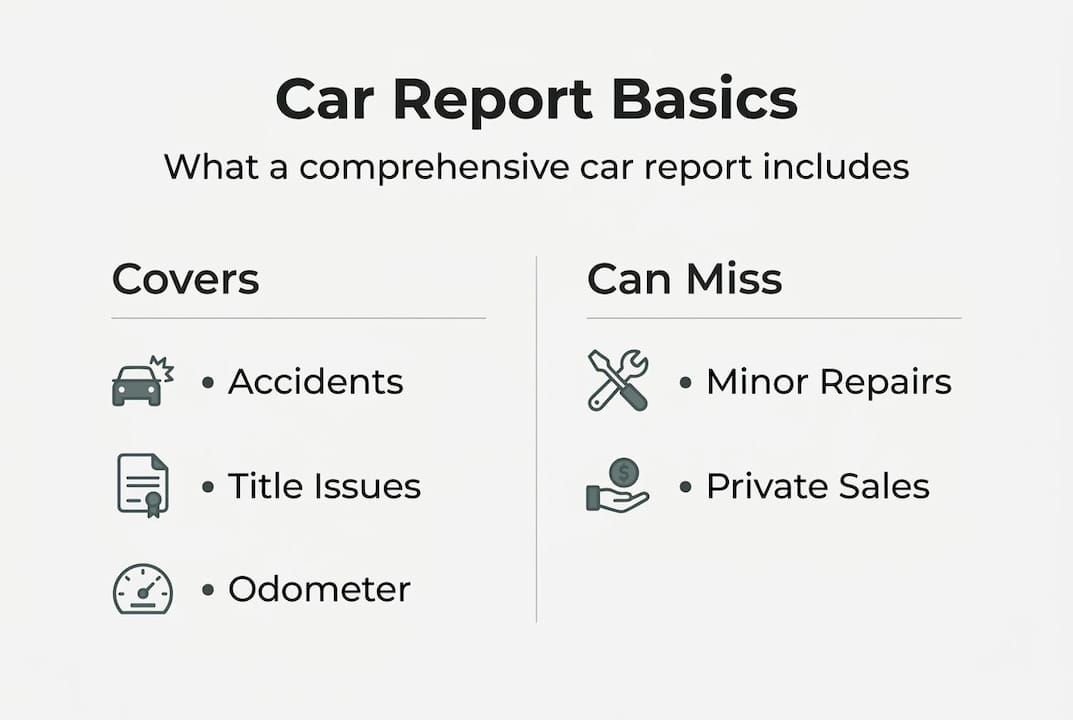
VHRs compile data from DMVs, insurers, auctions, service shops, and police to reveal accidents, title brands, odometer readings, ownership history, service records, liens, and recalls. That’s a wide net, and it’s exactly what makes these reports so useful.
Here’s what a truly comprehensive report should cover:
Accident and damage history: Reported collisions, airbag deployments, and structural damage
Title brands: Flags like salvage, flood, rebuilt, or lemon law buyback
Odometer records: A timeline of mileage readings to catch rolled-back odometers
Ownership history: How many owners, and how long each kept the vehicle
Lien records: Outstanding loans that could complicate your ownership
Recall information: Open safety recalls the manufacturer hasn’t resolved
Service and maintenance records: Oil changes, inspections, and repairs logged at shops
Not every report is created equal. Some providers offer a summary with just a few data points, while others give you a detailed, timestamped history. Before you get a vehicle history report, check what sources the provider uses and whether the report includes title brands and lien checks. A one-page summary is not the same as a full history.
Pro Tip: Always look for reports that include NMVTIS (National Motor Vehicle Title Information System) data. This federal database is one of the most reliable sources for title fraud and theft records in the U.S.
If you’re not sure what key buying questions to ask before purchasing, a comprehensive report gives you the foundation to ask the right ones.
Why car report depth and accuracy matter
Knowing what a report contains is one thing. Understanding why depth and accuracy matter is another. The stakes are high. A car with a hidden salvage title or an undisclosed flood history can cost you thousands in repairs, and in some cases, it’s a safety risk you can’t afford.
Look at what the data actually shows across a large sample of vehicle history reports:
Risk factor | Frequency in 1 million VHRs |
|---|---|
Accident history | 1 in 10 vehicles |
Theft records | 1 in 27 vehicles |
Active liens | 1 in 10 vehicles |
Salvage or junk title | 1 in 12 vehicles |
These numbers come from real VHR data across one million reports. They’re not edge cases. They’re common enough that skipping a report is a genuine gamble.
Here’s what’s at risk when you skip a thorough check:
Undisclosed accidents: A car that looks fine may have frame damage that affects safety and resale value
Title fraud: Buying a salvage-titled car without knowing it can void your insurance and tank the car’s value
Theft complications: A stolen vehicle can be seized by authorities, leaving you with no car and no refund
Ownership disputes: A lien on the title means the bank, not you, has a legal claim to the vehicle
The buyer behavior data is just as telling. A full vehicle history check reveals that 70% of buyers change their purchase decision when accident history shows up in a report. That means most people who see red flags walk away. The ones who don’t check are the ones left holding the problem.
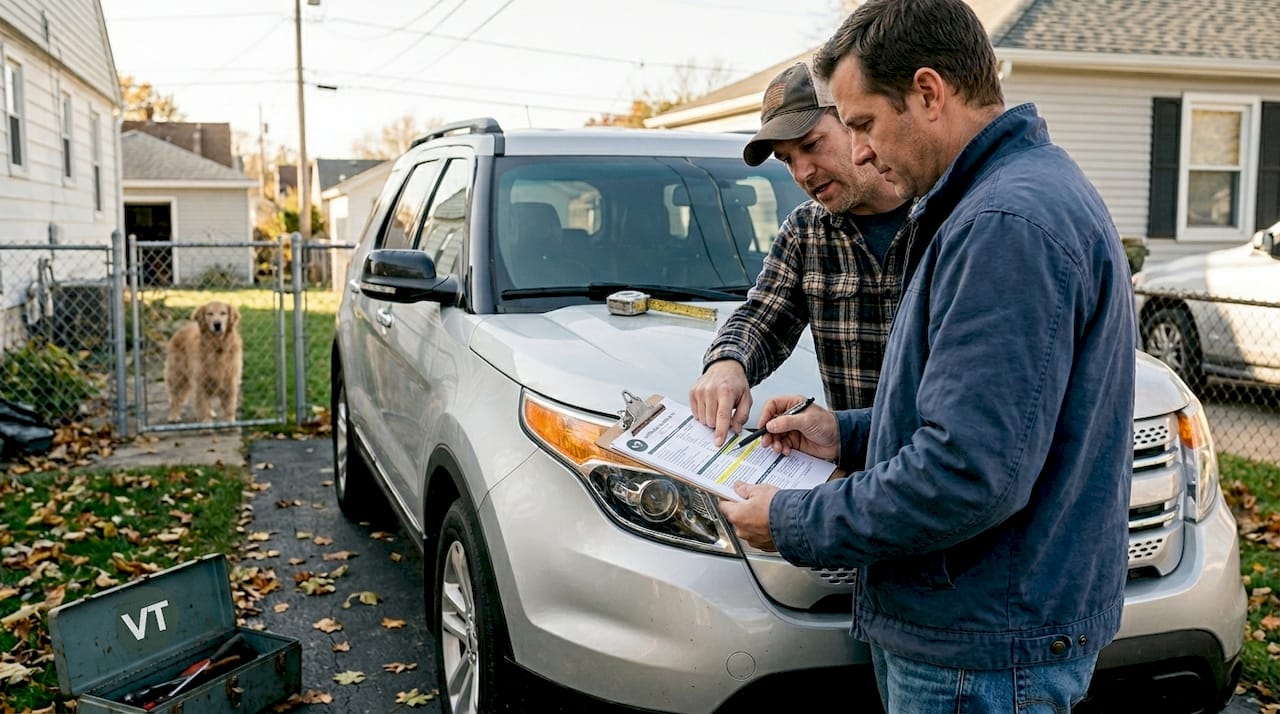
For context on how different providers stack up, the Carfax report comparison breaks down what you get versus what you pay, which matters when you’re trying to protect your investment without overspending.
What comprehensive reports show (and where they can fall short)
A solid vehicle history report gives you a lot of useful information. But it’s important to go in with realistic expectations. Reports are powerful tools, not perfect ones.
Here’s a side-by-side look at what reports typically cover versus where gaps can appear:
What reports usually show | What reports can miss |
|---|---|
Insurance-reported accidents | Minor accidents paid out of pocket |
DMV title records | Private repairs with no documentation |
Odometer readings at inspections | DIY maintenance with no shop record |
Manufacturer recall status | Recalls issued after report generation |
Theft and recovery records | Unreported theft attempts |
Report limitations include missed unreported accidents and repairs, with roughly 15 to 20% of minor incidents never appearing in any database. DIY maintenance, data lags, and voluntary reporting gaps all contribute to an incomplete picture.
That 15 to 20% gap matters. If a previous owner backed into a pole and paid $800 cash to fix it, that damage won’t show in any report. If they changed their own oil and never visited a shop, you won’t see a maintenance record. These gaps are real, and they’re why a report alone isn’t enough.
A vehicle history report is your first line of defense, not your only one. Pair it with a pre-purchase inspection from a trusted mechanic before you hand over any money.
Pro Tip: When reviewing a VIN lookup report, look at the gap between ownership periods. Long stretches with no records could mean the car sat unused, was repaired privately, or had activity that simply wasn’t logged.
If you’re comparing providers, check out Carfax alternatives to see which services offer the most complete data coverage for your budget.
How to use car reports to buy smart
Getting a report is the easy part. Knowing how to use it is where most buyers fall short. Here’s a step-by-step approach to making the most of your vehicle history report.
Get the VIN before you visit. Ask the seller for the 17-digit VIN upfront. You can check vehicle history before you ever see the car in person, which saves you a wasted trip if red flags appear.
Read the title section first. Title brands like salvage, flood, rebuilt, or lemon law buyback are deal-breakers for most buyers. If any of these appear, you need to understand exactly what happened before going further.
Check the odometer timeline. Look for sudden drops in mileage between readings. A car that showed 90,000 miles in 2022 and 75,000 miles in 2023 has a rolled-back odometer, which is illegal and a serious warning sign.
Count the owners and note the gaps. Multiple owners in a short period can signal ongoing problems. Long gaps between recorded events may mean private repairs or unreported activity.
Cross-reference with a physical inspection. VHRs compile data from DMVs, insurers, auctions, and service shops, but they can’t see what a mechanic can. Always follow up with an in-person inspection.
Use report findings to negotiate. If the report shows a prior accident, that’s leverage. You can ask for a lower price or request documentation of all repairs.
Pro Tip: If you’re on a budget, a cheap car history report from a reputable provider gives you the same core data as premium options at a fraction of the cost. Don’t pay $44.99 for something you can get for $19.99.
Red flags to act on immediately:
Major structural damage reported in any accident record
Title brands of any kind (salvage, flood, rebuilt)
Odometer rollbacks at any point in the history
Open recalls that haven’t been addressed by the manufacturer
Active liens that haven’t been released
Our take: What most car buyers miss about report value
Here’s something most articles won’t tell you: a clean report doesn’t mean a clean car. It means no bad news was officially recorded. Those are very different things. We’ve seen buyers walk away from solid vehicles because of a minor fender bender in the report, and others drive off with lemons because the history looked spotless.
The real value of a comprehensive car report isn’t just in the red flags it surfaces. It’s in how it shapes the conversation with the seller. When you show up informed, sellers know you’ve done your homework. That changes the dynamic entirely.
Another thing buyers consistently overlook: the price of the report itself. Spending $44.99 on a Carfax when affordable alternatives to Carfax offer the same core data for less is simply unnecessary. The data sources overlap significantly. What you’re often paying for is brand recognition, not better information.
Our honest advice: run a report on every car you seriously consider, pair it with a mechanic’s inspection, and don’t let a clean history make you skip the physical check.
Get a comprehensive car report for ultimate peace of mind
You now know what to look for, what to watch out for, and how to put a vehicle history report to work in your next purchase. The next step is simple: run a report before you commit to anything.
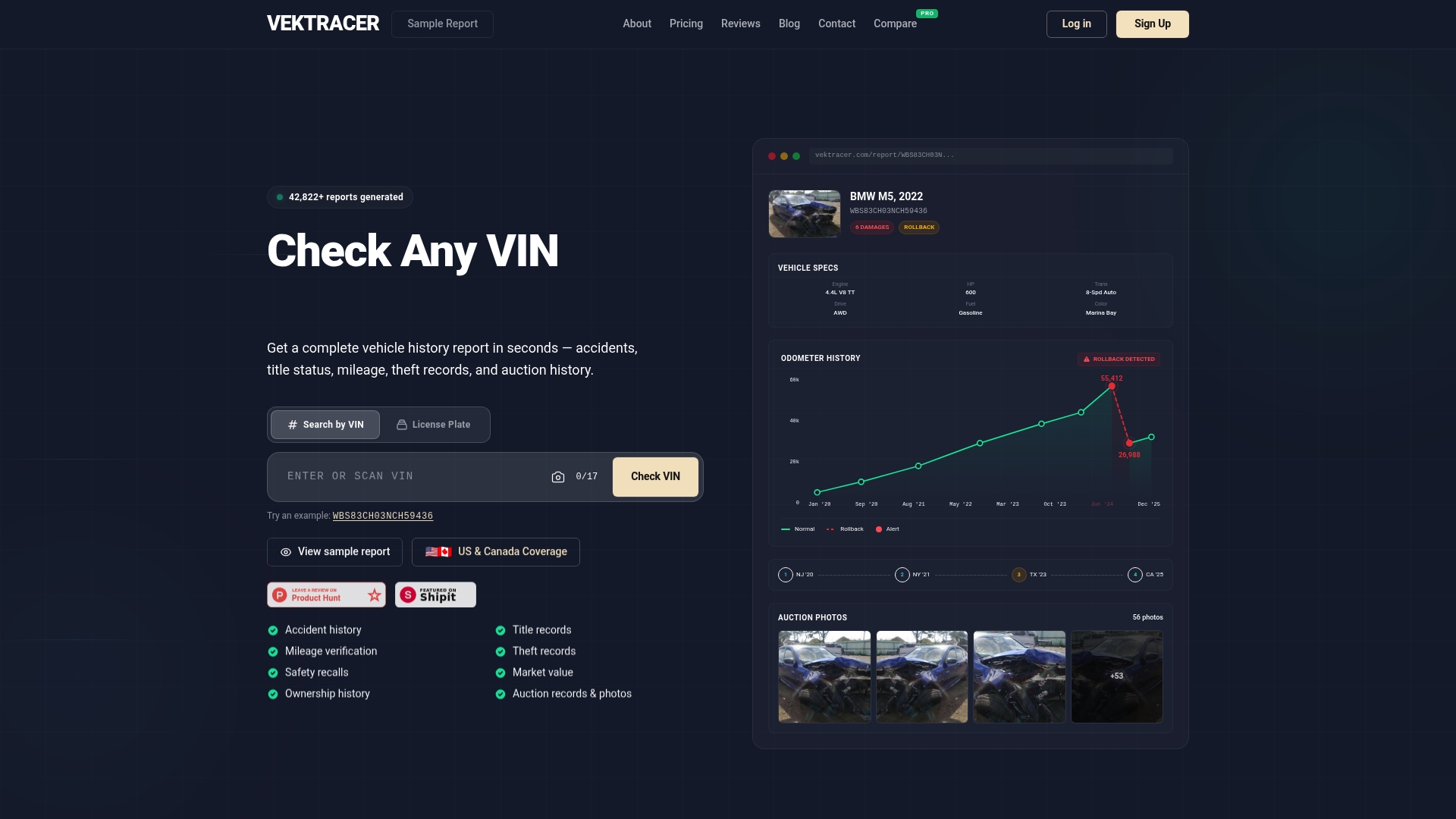
At Vektracer, we make that easy. Our reports start at just $19.99 and pull from NMVTIS-connected sources to give you accident history, title records, mileage verification, theft checks, recalls, and market value data. Want to see what you’re getting before you buy? Check out a sample report to explore the depth of data we provide. See how Vektracer works and review our transparent pricing plans to find the option that fits your needs. Don’t buy blind when the full picture is this affordable.
Frequently asked questions
What’s included in a comprehensive car report?
A full report includes accident records, title brands, odometer history, maintenance logs, recalls, and lien records pulled from DMVs, insurers, auctions, service shops, and police databases.
How reliable are accident and repair records?
Most major accidents appear in reports, but 15 to 20% of minor or privately handled repairs may not show up, so always pair a report with a professional mechanic inspection.
Is a comprehensive car report worth the cost?
Absolutely. 98% of buyers say these reports are valuable, and the majority change their purchase decision when red flags appear, making the small upfront cost well worth it.
Do all car reports come from the same sources?
Not always. Some providers use additional or more frequently updated sources, so it’s worth comparing report coverage before choosing a service to make sure you’re getting the most complete data available.
Recommended
Ready to check a vehicle?
Enter any 17-character VIN for a free instant preview — no account needed.