What Is Odometer Rollback? Detect Car Fraud in 2026
Check a vehicle before you buy
Enter a VIN for a free instant preview — accidents, title brands, mileage, liens & open recalls.
Odometer rollback is the illegal act of altering a vehicle's mileage to misrepresent its value, wear, and service life, and it's a federal crime that affects more than 450,000 vehicles sold annually in the United States. If you're buying used, the practical meaning is simple: the number on the dashboard may be false, and that can distort price, maintenance risk, and safety decisions.
Most buyers still picture an old mechanical odometer being spun backward with hand tools. That still happens, but modern fraud usually looks different. A vehicle can show a clean-looking digital cluster and still have a mileage history that doesn't add up. That's why the smart way to approach this isn't just visual inspection. It's verification.
What Is Odometer Rollback and Why It Matters
What is odometer rollback? It's the deliberate reduction or alteration of a vehicle's recorded mileage so the car appears less used than it really is. The National Highway Traffic Safety Administration defines odometer fraud as disconnecting, resetting, or altering an odometer with intent to change the miles indicated, and says more than 450,000 vehicles are sold annually with false odometer readings in the U.S. according to NHTSA's odometer fraud guidance.
That definition matters because mileage affects almost every buying decision. Buyers use it to judge wear, resale value, likely maintenance, and whether the asking price makes sense. If the mileage is false, the buyer isn't just overpaying. They're making decisions off corrupted evidence.
Why mileage fraud causes real damage
A rolled-back car can look attractive on paper while hiding the kind of age and wear that usually shows up only after purchase. Belts, suspension parts, brakes, tires, fluids, and service intervals are all judged partly by mileage. If the odometer has been manipulated, the maintenance picture gets distorted.
Practical rule: Treat odometer fraud as both a pricing problem and a safety problem. It affects what the car is worth and what the car may need right now.
Mileage also influences lender decisions, warranty assumptions, and how quickly a car will depreciate after you buy it. That's why the odometer isn't just a number. It's a trust signal.
What a cautious buyer should focus on first
Before you get lost in trim packages or cosmetic condition, verify whether the vehicle's mileage history is believable. A proper vehicle history report explanation helps you understand where mileage records come from and why gaps or reversals matter more than a polished exterior.
Classic buyer mistake: trusting the cluster because it looks untouched. Fraud investigators don't stop at the dash. They compare records, dates, wear, and electronic data points. That's the standard you want to use too.
The Motives and Escalating Threat of Mileage Fraud
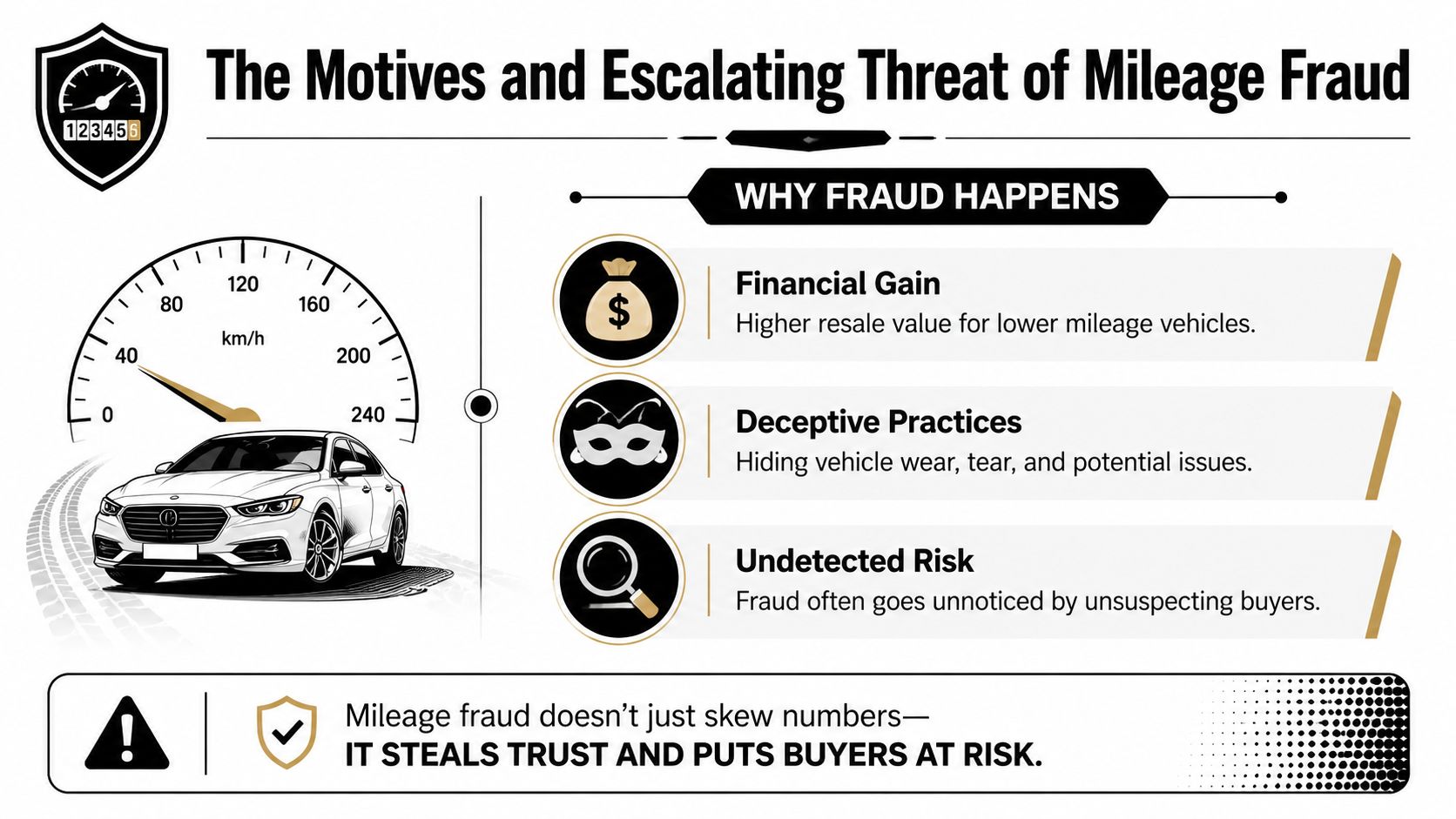
The motive behind mileage fraud is straightforward. Lower mileage usually makes a used car easier to sell and easier to justify at a higher asking price. A dishonest seller doesn't need to rebuild the engine or repair every worn component if they can make the car appear newer in use than it really is.
That incentive exists at multiple levels of the market. Private sellers can use it to dress up a tired vehicle. Dealers who don't do proper due diligence can pass the problem along. Wholesale vehicles with thin documentation are especially risky because buyers may assume the paperwork is incomplete rather than manipulated.
Why the threat is getting worse
This isn't just an old scam hanging around from the analog era. According to Carfax data on odometer fraud trends, roughly 2.1 million vehicles on U.S. roads have had their odometers rolled back, and that represents a 14% increase from the previous year.
That should change how you think about used-car risk. The problem isn't isolated to obscure lots or antique vehicles. It sits inside the mainstream market, including ordinary daily drivers with digital dashboards and clean-looking interiors.
Why buyers miss it
Most buyers still rely on the wrong signals:
- Clean cosmetics: A detailed interior can hide wear patterns that should raise questions.
- Low displayed mileage: A low number feels reassuring, even when the documentation is thin.
- Recent sale pressure: Buyers skip verification when they think someone else will grab the car first.
Fraud works because people trust the displayed number before they verify the vehicle's history.
Mileage manipulation also overlaps with other forms of deception. If you want a broader look at how fraudulent claims and misrepresentation work in vehicle-related cases, Sentry Private Investigators' insurance fraud guide is a useful companion read.
The legal point buyers shouldn't ignore
Odometer tampering isn't a harmless paperwork issue. It's fraud. That matters because a seller's explanation often tries to soften the problem with vague language like “cluster replacement” or “recording error.” Sometimes those explanations are legitimate. Sometimes they're cover stories.
The practical takeaway is this: if the mileage story is messy, your burden isn't to prove fraud on the spot. Your job is to decide whether the evidence is strong enough to trust the car. Most buyers should walk away from unclear mileage unless the documentation is unusually strong.
Mechanical vs Digital Tampering Methods
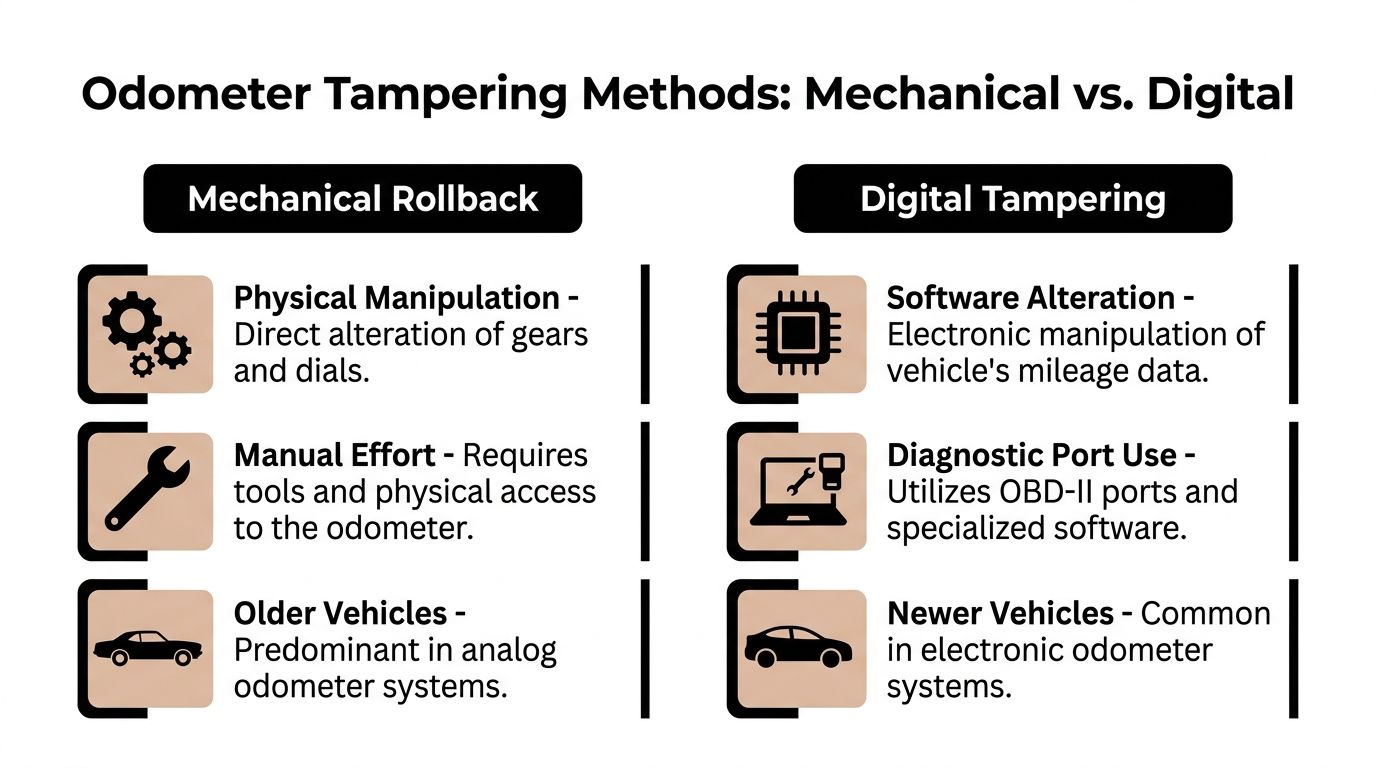
Mechanical rollback and digital rollback aim for the same result. They create a lower mileage reading than the car has traveled. But they leave different traces, and that changes how you inspect a vehicle.
How mechanical rollback usually shows up
Older vehicles with analog or mechanical odometers often reveal tampering through physical clues. Getting into the cluster usually leaves evidence, especially when the work is rushed or done by someone focused only on the number, not the finish quality.
Typical signs include:
- Misaligned digits: Numbers may sit unevenly or fail to line up cleanly in the odometer window.
- Marks around the cluster: Scratches, loose screws, or damaged trim can suggest someone removed the panel.
- Unreadable or awkward digit spacing: Mechanical odometers can show spacing that doesn't look factory-consistent.
Those clues matter, but they're strongest on older cars. On a newer used car, a buyer who relies only on visible dashboard clues is often checking the wrong battlefield.
How digital rollback works
Digital tampering is harder to spot because the dashboard can look completely normal. A fraudster may alter the mileage electronically or swap components in a way that leaves no obvious sign to the naked eye. The displayed reading may appear stable, bright, and factory-correct.
That's why digital fraud beats casual inspection. The cluster may not tell the full story. Other modules, service entries, title records, inspection records, and VIN-linked history may reveal a different one.
Here's the practical comparison:
| Method | What the buyer often sees | What actually matters |
|---|---|---|
| Mechanical rollback | Visible physical clues near the odometer or dash | Whether wear and records match the displayed miles |
| Digital rollback | A normal-looking digital display | Whether mileage data stays consistent across time and systems |
What works and what doesn't
A flashlight and a careful eye still have value. They can catch sloppy mechanical tampering. They can also reveal a cluster that's been disturbed. But they won't reliably expose digital fraud on their own.
What works better is a layered check:
- Inspect the dash and surrounding trim.
- Compare interior and exterior wear to the claimed mileage.
- Review maintenance and title mileage entries in sequence.
- Use scan-tool and VIN-based verification if available.
A believable dashboard is not the same thing as believable mileage.
That distinction matters more every year. Buyers who understand the difference between mechanical and digital tampering are less likely to be fooled by a car that “looks right” but has a false mileage story.
How to Spot the Red Flags of an Odometer Rollback
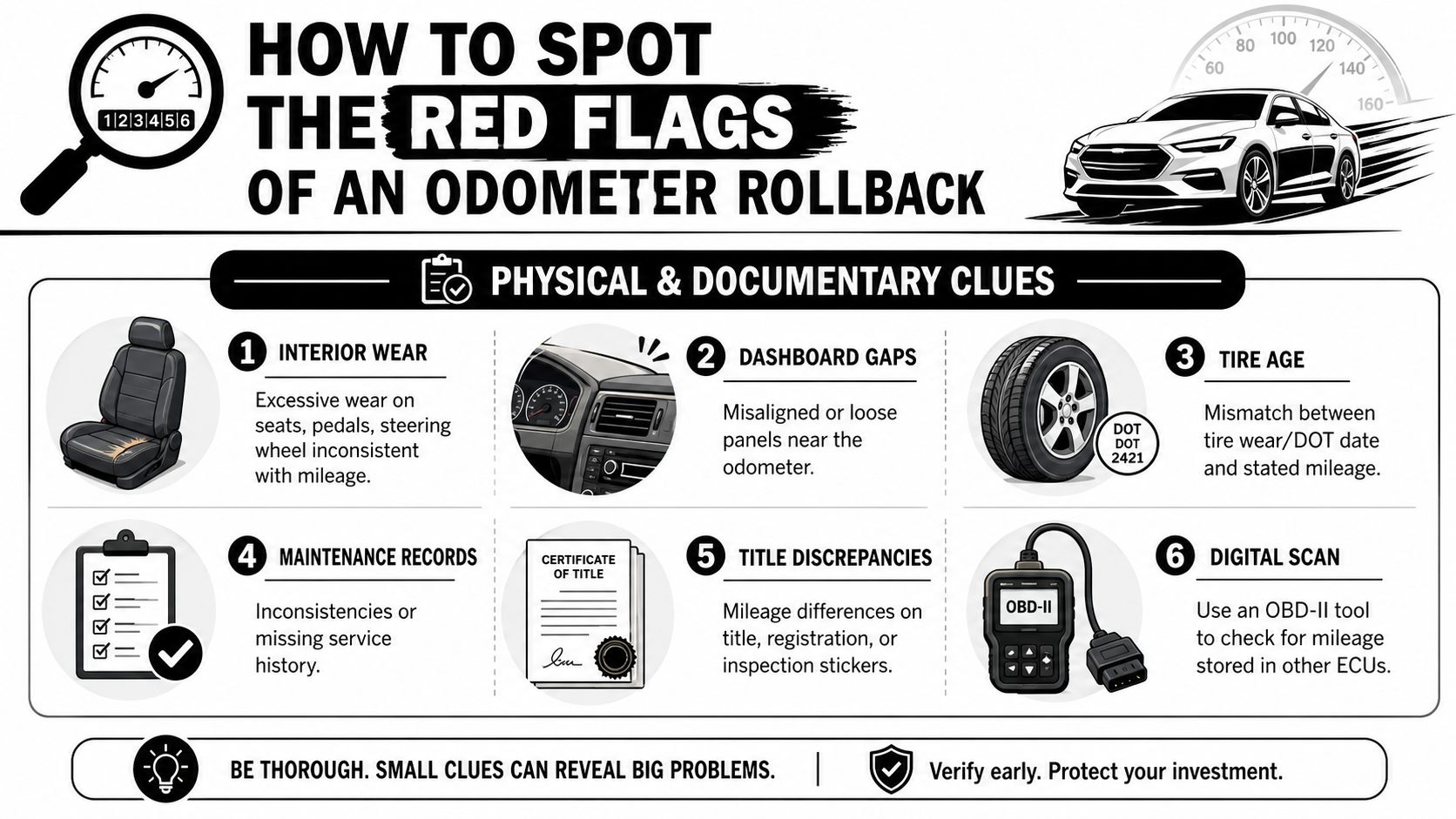
Start with the assumption that one clue is never enough. Good inspections stack evidence. A worn seat alone doesn't prove fraud. A paperwork gap alone doesn't prove fraud. But when physical wear, missing records, and mileage inconsistencies line up, the picture changes fast.
Physical clues that deserve a second look
Use the cabin and exterior as a plausibility check. You're asking whether the claimed mileage fits the car's lived condition.
Look closely at:
- Driver contact points: Seat bolsters, steering wheel finish, shift knob, pedals, and door switches tell you how much use the car has seen.
- Dash fitment: Gaps, scuffed trim, or signs the cluster was removed may indicate tampering or replacement work.
- Tire and wear consistency: If the car presents as very low mileage but the wear pattern feels far more seasoned, pause and ask why.
None of this is conclusive by itself. Some vehicles age harder than others. Some owners are rough on interiors. Some parts get replaced. That's why visual checks are screening tools, not final proof.
Documentary clues that matter more
Mileage fraud usually breaks continuity somewhere. The strongest warning sign is a mileage history that moves backward rather than forward.
A useful benchmark comes from this guide to identifying potential odometer rollback: a Potential Odometer Rollback is flagged when two consecutive odometer readings less than one year apart show the later reading is at least 3,000 miles lower than the earlier one. The same source also notes that even a drop of 1 mile lower creates an internal inconsistency worth investigating.
That shifts the question from “Does this dashboard look clean?” to “Does this mileage history make sense over time?”
A practical buyer checklist
Use this checklist before you commit to a used vehicle:
- Match title entries: Compare the title mileage, registration paperwork, inspection records, and service invoices.
- Read dates in sequence: Records can look complete at a glance while still hiding a backward jump in mileage.
- Ask about gaps directly: Missing history isn't automatic fraud, but vague answers make the risk worse.
- Check repair logic: A car claiming unusually low mileage should have a service history that feels consistent with lighter use.
- Scan if possible: An OBD-II tool or professional inspection can help identify whether the visible cluster aligns with other stored data.
- Use a VIN-based history check: That gives you the fastest way to test whether the mileage trail holds together across reported events.
If you want a focused walkthrough, this guide on how to check for odometer rollback covers the verification side in more detail.
Field note: The red flag isn't always heavy wear. Sometimes it's a car that looks unusually refreshed for the story being told. Fresh trim, replaced pedals, and a spotless cabin can be camouflage.
Common mistakes buyers make
The most common mistakes are procedural:
- Trusting the seller's explanation too quickly
- Looking only at the dashboard
- Ignoring service gaps because the price seems attractive
- Skipping a VIN history check on a private-party deal
A careful buyer doesn't need to prove intent. You just need enough confidence that the mileage story is consistent. If you can't get there, move on.
Your Modern Verification Process to Confirm True Mileage
The cleanest way to verify mileage is to combine a VIN-based history review with hands-on inspection and, when needed, module-level checks. Buyers who skip the record trail and rely only on appearance are working blind.
Step one: start with the VIN, not the seller's story
Get the full VIN before you inspect the car in person. Then pull a vehicle history report and read the mileage timeline in order. You're looking for consistency across title events, service records, inspections, and ownership changes.
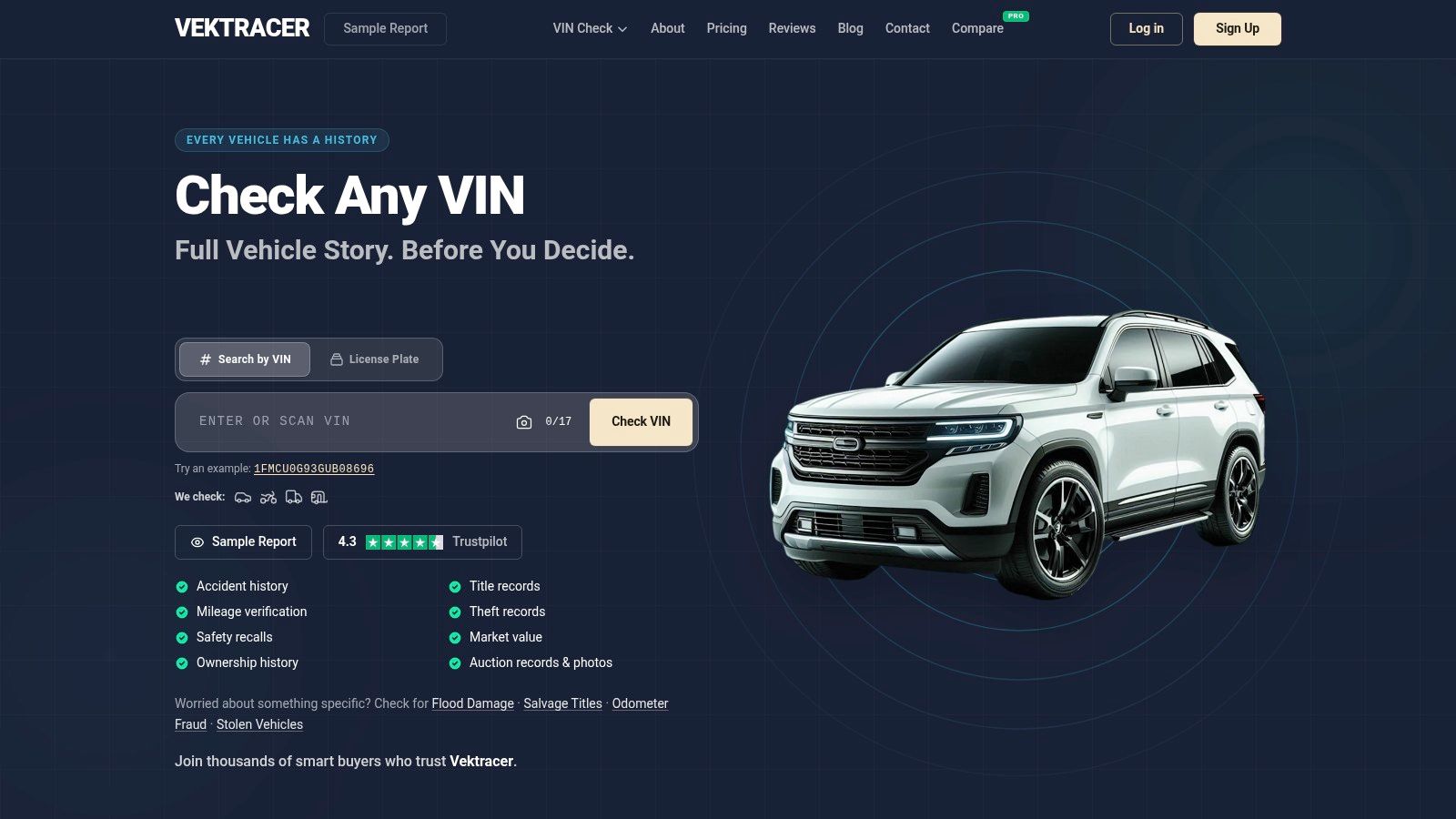
Buyers often compare options such as Carfax and other history providers. If you want to weigh reporting differences before paying, VekTracer offers VIN reports with odometer verification, rollback detection, and a Risk Score, and its Carfax comparison page is useful for side-by-side evaluation.
Step two: test the timeline against the car
Once you have the report, inspect the car with the timeline in mind. Don't ask, “Does this look clean?” Ask, “Does this condition match the documented mileage pattern?”
Focus on three comparisons:
| Check | What to compare | Why it matters |
|---|---|---|
| Interior wear | Seats, wheel, pedals vs stated mileage | High-contact wear often exposes an unrealistic story |
| Service logic | Maintenance records vs mileage progression | Major gaps or odd jumps can signal reporting issues |
| Dash and electronics | Cluster condition vs vehicle history | A clean display doesn't erase contradictory records |
If you buy or import across markets, country-specific mileage records can also help. For UK-focused checks, UK vehicle mileage history is a relevant example of the kind of supporting record buyers often look for when a car has cross-border history.
Step three: use escalation only when the car passes the basics
Not every car needs deep forensic work. If the timeline is inconsistent and the seller can't explain it with documents, that's enough reason to walk away. But if the car is promising and the records are mostly solid, a pre-purchase inspection with scan-tool access can add another layer.
Good escalation questions include:
- Was the cluster ever replaced?
- If yes, where is the documentation?
- Do service records before and after replacement remain consistent?
- Does the seller allow an independent inspection?
Buy the documentation first. Buy the car second.
Step four: make the decision like an investigator
A sound buying decision isn't based on whether you can prove tampering beyond doubt. It's based on whether the mileage claim survives reasonable scrutiny. If the records align, the wear makes sense, and the seller is transparent, you likely have a manageable risk profile. If the records conflict or the explanations keep shifting, leave it alone.
For a more detailed walkthrough of the record side, this guide on a mileage check on a car helps frame what to verify before money changes hands.
If you're on the fence about a vehicle, run the VIN history before negotiating. That's a small step compared with inheriting someone else's fraud problem.
Frequently Asked Questions About Odometer Fraud
Can a dealer sell a car with a mileage problem if they disclose it
Disclosure changes the transaction, but it doesn't automatically make the risk acceptable. A dealer may describe a vehicle as having mileage inconsistency, true mileage unknown, or a replaced cluster. The practical issue for you is whether the paperwork fully supports that explanation.
If the seller can't document why the discrepancy exists, assume resale and financing may get harder later. Even when a disclosure is technically present, the car may still be a poor purchase if the records are thin.
What should I do if I discover rollback after I buy the car
Stop relying on verbal conversations and preserve the paper trail. Save the bill of sale, listing, text messages, report copies, title documents, inspection records, and service receipts. Then compare every mileage entry in order.
A useful next step is to get the vehicle inspected and ask for written findings if the mileage inconsistency appears tied to tampering or unexplained cluster replacement. If the vehicle was sold through a business, review your state consumer protection options and talk to an attorney or consumer agency if necessary. If it was part of a commercial fleet or work vehicle history, inspection documentation such as the kind discussed in My Safety Manager's guide to DVIR can help show how operational records fit into a broader vehicle paper trail.
Are some used vehicles more exposed to mileage risk than others
Yes, but not always for the reason buyers expect. The riskiest vehicles are usually the ones with weak documentation, long ownership gaps, auction movement, cluster replacement stories, or inconsistent service history. A premium badge or clean interior doesn't reduce that risk.
Vehicles with lots of road use can also be vulnerable because mileage directly affects value. The key isn't the vehicle category by itself. It's whether the mileage history has continuity and whether the seller welcomes verification.
Is a digital odometer safer than a mechanical one
Safer to read, yes. Safer from fraud, not necessarily. Mechanical systems tend to leave more physical clues when someone tampers with them. Digital systems often require a more data-driven approach because the display can look normal even when the history is not.
That's why buyers should stop treating digital dashboards as self-authenticating. The display is just one data point.
If the mileage only looks slightly off, should I still care
Yes. Even a small inconsistency matters because mileage records should move in one direction over time. Once that continuity breaks, you need a documented explanation. Without one, you don't know whether you're looking at an innocent clerical issue, a cluster replacement, or fraud.
The decision standard is simple: if the explanation isn't supported by records, the risk stays with you.
Before you commit to any used car, run a VekTracer report and verify the mileage trail against the vehicle's condition and paperwork. A few minutes of checking can keep you from buying a car with a number on the dash that doesn't tell the truth.
Ready to check a vehicle?
Enter any 17-character VIN for a free instant preview — no account needed.